In this guide
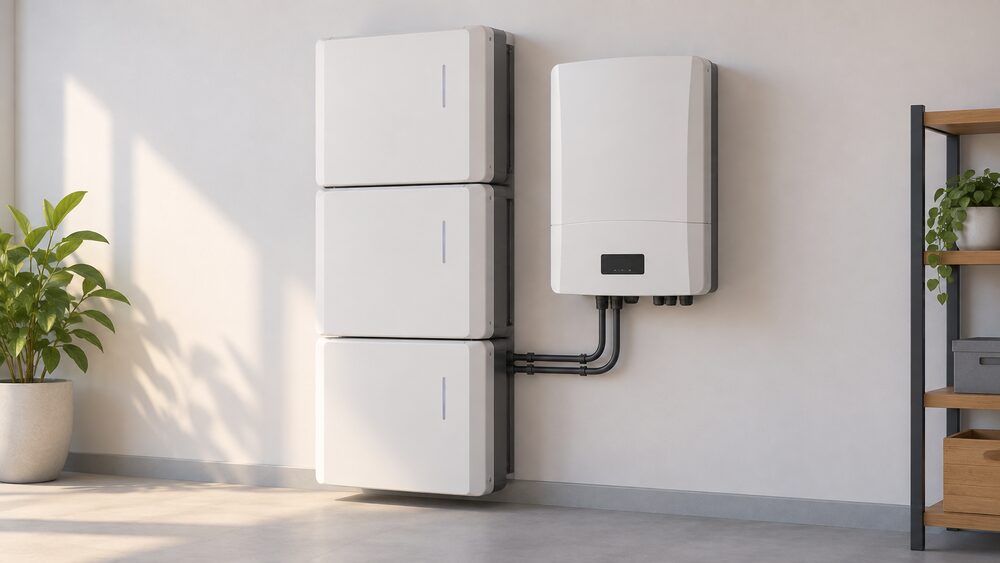
A SolarEdge battery is a modular home storage unit sold in two families, the Home Battery 48V and the Home Battery 400V, designed to work with SolarEdge's own inverters rather than as a standalone product. The 48V stacks up to five modules per inverter and the 400V up to three, and the 48V is quoted at up to 95.4% round trip efficiency based on direct DC coupling1.
The most important thing a UK buyer needs to know is not in the specification sheet. SOLAREDGE SUPPORT LTD was dissolved on 10 March 2026, so the UK support company that once handled enquiries no longer exists3. SolarEdge's own guidance to system owners is to contact the installer for further assistance4. The hardware is still sold and supported through installers, but the support chain is now the manufacturer plus whoever fitted the system.
This page sets out what the two battery families are, how they scale, what they need in order to run a home during a power cut, and where the dependence on SolarEdge as a company remains.
SolarEdge Support Ltd has been dissolved: what it means for owners
SOLAREDGE SUPPORT LTD was dissolved on 10 March 20263. That is a company status fact, and it changes the practical route for a UK household with a fault, a warranty claim or a question about monitoring.
SolarEdge's published support position is that a system owner should contact the installer for further assistance, and that the mySolarEdge app is the tool for verifying inverter production and communication4. In practice that means the first call is the firm that fitted the system, not a manufacturer support office. Where the installer has ceased trading, the household is left dealing with SolarEdge's international support structure directly.
The wider dependence is worth stating plainly. A SolarEdge battery is not a generic box that any inverter can charge. It is designed to work with named SolarEdge inverters, and the backup functions require named SolarEdge accessories. That is a closed ecosystem: it delivers tight integration and high quoted efficiency, and it also means the household's storage is tied to one manufacturer's product line, firmware releases and app.
The range at a glance: Home Battery 48V and Home Battery 400V
SolarEdge sells two home battery families in the UK and European market, and they are not interchangeable. The Home Battery 48V is designed to work with SolarEdge Home Wave and Hub Inverters in three phase form, for what the maker calls an optimal one-stop-shop solution, and it can be installed indoors or outdoors2. The Home Battery 400V is designed to work with SolarEdge Home Hub and Wave Inverters in single phase form and the Short String Inverter in three phase, is DC coupled so that excess PV is stored directly in the battery, and offers wall or floor mounting indoors or outdoors1.
The 400V also supports quick commissioning using the SetApp wizard and wireless inverter-battery communication, and is sold for both on-grid and backup applications1. The 48V carries a voltage range of 44.8 to 56.5 Vdc and measures 540 x 500 x 240mm6.
| Battery | Works with | Coupling | Mounting | Stacking |
|---|---|---|---|---|
| Home Battery 48V | Home Wave and Hub Inverters, three phase2 | DC2 | Indoor or outdoor2 | Up to 5 modules per inverter2 |
| Home Battery 400V | Home Hub and Wave Inverters, single phase; Short String Inverter, three phase1 | DC1 | Wall or floor, indoor or outdoor1 | Up to 3 batteries per inverter1 |
One availability limit matters for anyone with an older inverter. Storage support for the SolarEdge Short String Inverter is currently only available in Poland and the Netherlands, so a UK household with that inverter cannot pair it with the 400V battery on the same basis1.
Capacity and scalability: 4.6 or 4.85kWh modules, up to 5 per inverter

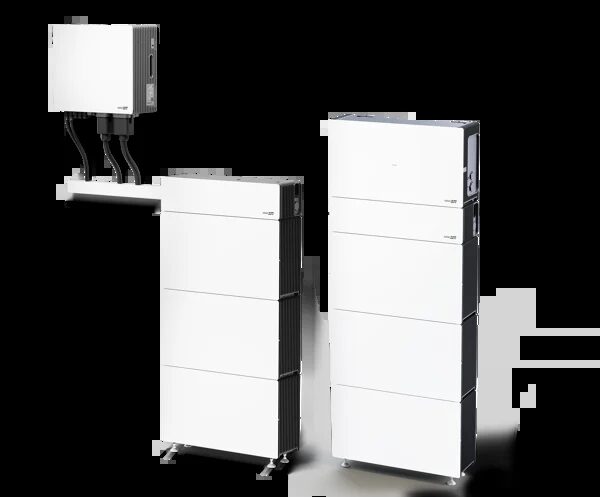
The 48V battery is a stackable module design. SolarEdge states that up to five battery modules can be stacked per inverter2. The 400V battery stacks up to three batteries per inverter1. The Home Hub Inverter range increases system capacity by connecting multiple battery modules per inverter7.
The per-module figure has moved. SolarEdge states that usable capacity rose to 4.85kWh per module, instead of the previously quoted 4.6kWh, for sites with a Backup Interface commissioned after January 20253. The 48V datasheet gives the same change a slightly different condition: as of January 2025 the 4850Wh usable energy figure is available for batteries connected to new installations of SolarEdge Home Hub three phase inverters, and it is valid for both new and existing sites6.
That distinction explains a common confusion. The higher figure is not a firmware upgrade that every existing 48V owner receives automatically. It depends on the inverter the battery is connected to and when that inverter was activated.
For context on scale, home battery sizes generally range from 4kWh to 13.5kWh8, and one energy supplier describes SolarEdge scalability as up to five modules, with up to three modules connectable per inverter9. The documents differ on the per-inverter ceiling, and the maker's own product pages are the ones that name five for the 48V and three for the 400V.
Efficiency and power output: up to 95.4% round trip, 5kW continuous
SolarEdge quotes the Home Battery 48V at up to 95.4% round trip efficiency based on direct DC coupling2, and the datasheet gives the same figure as a peak roundtrip efficiency of greater than 95.4%6. The 400V battery has a continuous output power of 5kW, meaning the battery can consistently provide that level of power5. The 48V datasheet lists continuous output power for multiple modules at 5000W charge and 5000W discharge6.
Round trip efficiency is the share of energy that survives a full charge and discharge cycle. The quoted figure is high because the battery is DC coupled: energy from the panels goes into the battery without first being converted to mains alternating current and back again. That is the same principle covered in AC-coupled and DC-coupled home batteries, and it is the main technical reason a matched SolarEdge system can quote a figure above 95%.
For comparison, a Sunsynk all-in-one battery module is quoted at a system round trip efficiency of 90% or above10. The gap between the two figures reflects different architectures and different test conditions as much as different cells, and the deeper explanation sits in round-trip efficiency and standby losses.
Power output matters separately from capacity. A 5kW continuous figure determines how many appliances can run at once from the battery, which is the subject of battery power ratings and C-rate.
Backup and the Home Hub inverter: what a full or partial-home setup needs
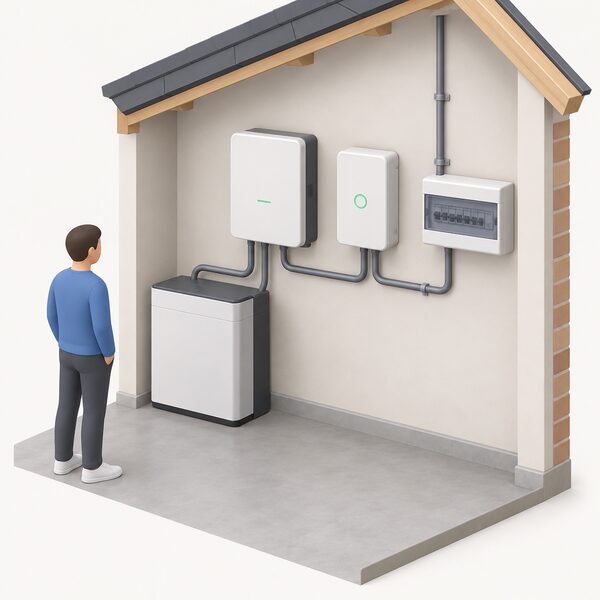
Backup is the feature most households ask about, and it has the most conditions attached. SolarEdge states that when pairing its inverters with the SolarEdge Home Battery and Backup Interface, in the event of grid interruption the system provides backup power for either full or partial home loads7. The Home Backup Interface enables full or partial home backup when the grid is down11.
The conditions are explicit. Backup applications are subject to local regulations and require connection with the SolarEdge Home Batteries and the SolarEdge Home Backup Interface7. For the 48V battery, backup applications require connections with the SolarEdge Home Hub Inverter in three phase form and the Backup Interface2. For the 400V battery, backup requires the SolarEdge Home Hub Inverter in single phase form and the Backup Interface1.
There is a further rule that catches multi-inverter installations: to produce during backup, all inverters must be SolarEdge Home Hub Inverters in three phase form7. The Home Hub range supports multi-inverter backup for up to three SolarEdge Home Hub Inverters7.
SolarEdge also describes the practical load a single 400V battery paired with the Backup Interface can carry: two or three intermittent loads and two or three continuous loads at one time for about a ten-hour period, in the context of a four or five person family in the United States5. That is a US household example, and it is the only load-duration figure the maker publishes.
The general mechanics of changeover and what stays live are covered in battery backup in a power cut.
Compatibility and coupling: which inverters work with which battery
Compatibility is the constraint that decides whether a household can buy a SolarEdge battery at all. The 48V works with Home Wave and Hub Inverters in three phase form2. The 400V works with Home Hub and Wave Inverters in single phase form and the Short String Inverter in three phase1.
The Home Wave inverter is described as working with Power Optimizers, batteries, the EV Charger and smart energy devices12. SolarEdge Sense Connect is now supported on SE12.5 to SE15K SolarEdge Home Wave three phase inverters3. The Home Hub range increases system capacity by connecting multiple battery modules per inverter7.
Both battery families are DC coupled, which is what allows excess PV to be stored directly in the battery1. The alternative architecture, where a battery sits on the AC side of an existing inverter, is explained in AC-coupled and DC-coupled home batteries.
Two further compatibility points are worth noting. SolarEdge residential and commercial products including PV inverters, batteries and Smart Energy devices now fully comply with the G100 Issue 2 Amendment 2 customer limiting scheme, introduced on 1 May 20233. And the Cellular Plug-in with Data Plan, which provides the communications route, is compatible with SetApp-enabled inverters and is installed inside the SolarEdge inverter with an external antenna included14.
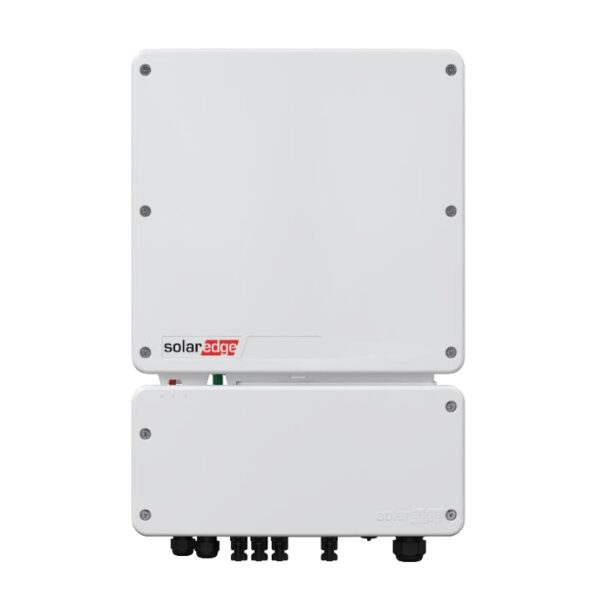
Installation, siting and safety: IP ratings, temperatures and certifications
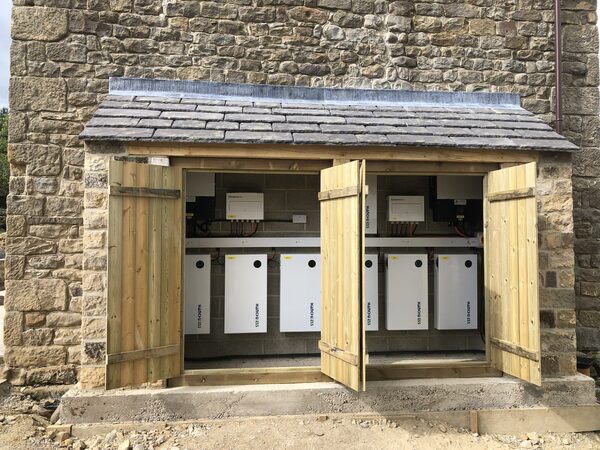
The 48V battery carries an enclosure protection rating of IP65 / NEMA 3R, described as indoor and outdoor with water and dust protection6. The 400V battery offers flexible installation on wall or floor, indoors or outdoors1. Both are therefore suitable for a garage, an outbuilding or an external wall, subject to the installer's assessment.
The 48V datasheet gives physical dimensions of 540 x 500 x 240mm for a single module, and heights that grow with the stack: 670mm with the floorstand or 620mm without for one module with top cover, 1170mm or 1120mm for two modules, and 1670mm or 1620mm for three modules6. A five-module stack is correspondingly taller, and siting needs to allow for that.
Temperature behaviour is a live issue for the 48V. SolarEdge lists an improvement to charge derating at internal battery temperature between 0 and 10 degrees C, supported only on the SolarEdge Home Hub Inverter three phase model in the EU3. That is a firmware-level response to cold-weather charging limits, and it applies to a specific inverter.
The 400V storage temperature is not settled in the documents: one datasheet gives a range of minus 30 to plus 60 degrees C for the BAT-10K1P, and the same document also gives minus 10 to plus 30 degrees C. The two figures are unresolved, so both should be treated as reported rather than as a single confirmed range.
For general siting and ventilation considerations, see ventilation, temperature and operating conditions and where a home battery can be installed.
Warranty terms and the conditions that can void them
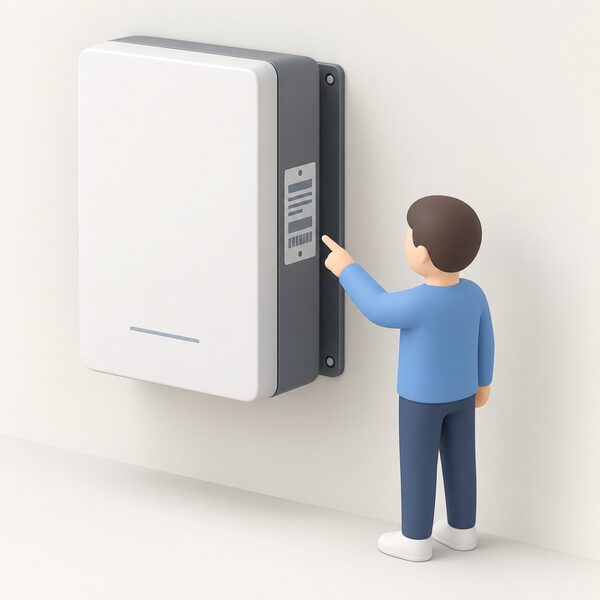
SolarEdge's 400V product page carries a warranty heading, but the term itself is not stated in the material available here1. What is stated is a condition: operating the SolarEdge Home Battery at extreme temperatures for extended durations of time may void the battery warranty coverage6. That is the maker's own wording, and it ties directly to the temperature behaviour described above.
Because SolarEdge does not publish a full warranty term in these documents, it is worth understanding how battery warranties generally work. One maker's guidance states that the warranty usually ends when either the cycle limit or the time limit is reached, whichever comes first15. That structure is common across the industry and is explained in home battery warranties.
Other makers' conditions show the kind of clauses that appear in this market. SolaX states that replacing the battery or accessories without prior consent can void a claim, and that moving a battery after its first installation, even to the same address, voids the warranty unless a qualified installer re-tests it15. Solarwatt excludes damage from improper storage or transport, improper installation or operation contrary to instructions, improper maintenance, improper modification, force majeure including lightning, fire or natural disaster, insignificant appearance changes such as bleaching, and manipulation or removal of the serial number or type plate16. Solarwatt also attaches its warranty to the modules so that it transfers to a new owner for the remainder of the term, with the original customer's warranty expiring at transfer, and applies the remaining term of the original module to any replacement16.
"Operating the SolarEdge Home Battery at extreme temperatures for extended durations of time may void the battery warranty coverage"
Firmware, monitoring and the app
SolarEdge publishes current firmware versions for each device. The Home Battery 48V is listed at 1.15023. The Home Battery 400V is listed at SMCU 1.1.57, DCDC ADI 0.1.85, DCDC SEDSP 1.1.33, BMS ADI (ST) 0.7.0, BMS SE App 2.1.4 and Mid_level 2.0.23. The Home Hub Inverter in three phase form is listed at CPU 4.24.9, DSP1 1.20.24102, DSP2 2.20.23034 and Additional 3.5.8, and the Home Wave Inverter in single phase form at CPU 4.24.9, DSP1 1.0.2205 or 1.100.2058, DSP2 2.0.1305 or 2.100.1751 and EVSE 1.51.13. The Backup Interface in single or three phase European form is listed at 10.3.2 with meter version 1.0.623.
Seamless backup transition has its own eligibility list: up to three SolarEdge Home Hub Inverters in single phase form with CPU version 4.19.12 and above and DSP1 1.100.1621 and above, up to three Home Battery 400V units per inverter, and a Backup Interface in single phase form with firmware version 1.1.3 and above3.
Two known issues are documented. The SolarEdge Home Battery 48V battery model in the mySolarEdge app and monitoring is not updated to align with the increased usable capacity for existing installations, and SolarEdge lists removing and adding back the 48V batteries as a workaround3. Separately, the backup reserve minimum value was 5% and is now 0% again3. Homeowners can set the minimum percentage of battery capacity reserved for use in an outage event, and this works with all battery modes where a backup interface is available11.
The dependence here is clear. Firmware, app display and reserve settings all run through SolarEdge's own software and, for remote access, a communications route. The Cellular Plug-in with Data Plan is installed inside the inverter and connected to an external antenna included in the package, and is compatible with SetApp-enabled inverters14. Where that data is stored is not stated in the published material. The wider picture is covered in monitoring a home battery.
What the battery does for a household's independence
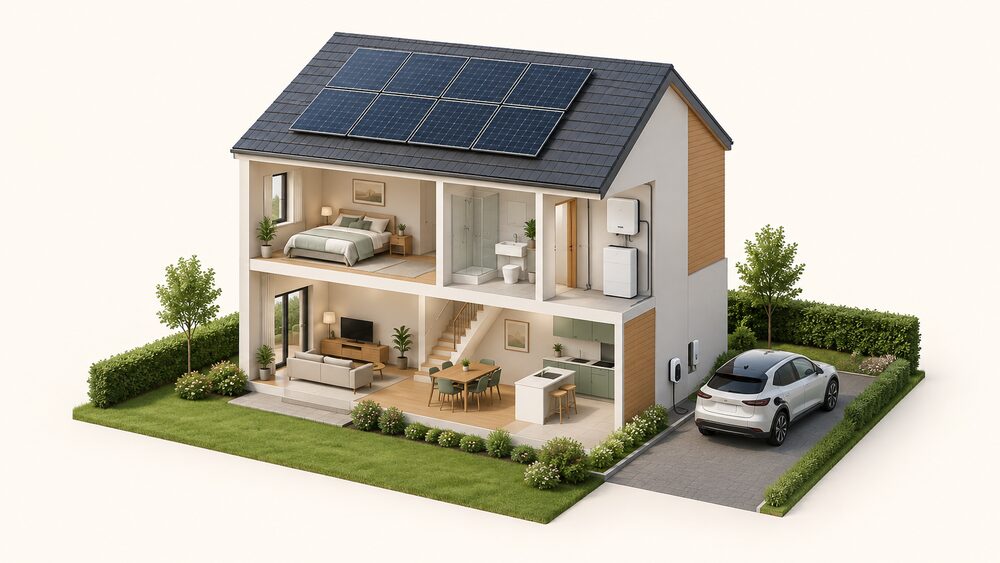
A SolarEdge battery stores excess solar energy for powering the home when rates are high or at night, and the batteries are DC coupled13. SolarEdge ONE will automatically charge the battery from solar or from the grid when utility rates are low, to save solar power for peak-rate hours11. It can also turn off non-essential appliances, store energy in the battery for upcoming weather events, and sell energy to the grid at the right times17.
What that buys a household is a reduction in the amount of electricity bought at peak price, and a degree of cover during an outage where the Backup Interface is fitted. What it does not buy is independence from the grid. The system remains connected, the inverter needs a mains reference to operate normally, and the backup function is a changeover arrangement rather than an off-grid capability.
The remaining dependences are worth naming. The household depends on SolarEdge for firmware, app and the compatibility of any future battery module. It depends on the installer for support, since SolarEdge directs owners there4. It depends on a communications route for remote monitoring. And with SOLAREDGE SUPPORT LTD dissolved3, the UK corporate presence behind the product is thinner than it was.
For households weighing storage against other options, home battery storage sets out the full picture, and home batteries and household energy independence examines what self-sufficiency actually means in a grid-connected home.
Sources17 cited
- SolarEdge Home Battery 400V, SolarEdge, 2026-09-17
- SolarEdge Home Battery 48V, SolarEdge, 2026-09-17
- Residential Inverters Firmware, SolarEdge, 2026-09-17
- Verifying Inverter Status, SolarEdge, 2026-09-17
- Battery for Home, SolarEdge, 2023-12-05
- SolarEdge Home Battery 48V Datasheet, SolarEdge, 2026-09-17
- SolarEdge Home Hub Inverters, SolarEdge, 2026-09-17
- Guide to Solar Panels and Battery Storage, EcoFlow, 2025-06-27
- The Best Solar Batteries Explained, Good Energy, 2026-07-14
- Sunsynk All-In-One Elite Battery Module, Alternergy, 2026-09-17
- SolarEdge Home Backup Interface, SolarEdge, 2026-09-17
- SolarEdge Home Wave Inverters, SolarEdge, 2026-09-17
- Residential Storage and Backup, SolarEdge, 2026-09-17
- Cellular Plug-in with Data Plan, SolarEdge, 2026-09-17
- Solar Battery Warranty Guide, SolaX, 2026-06-23
- Solarwatt Warranty Conditions, Solarwatt, 2026-07-23
- SolarEdge ONE, SolarEdge, 2024-03-14
 SolarEdge home EV chargersDoes a SolarEdge EV charger work better with your existing SolarEdge solar panels than other brands?
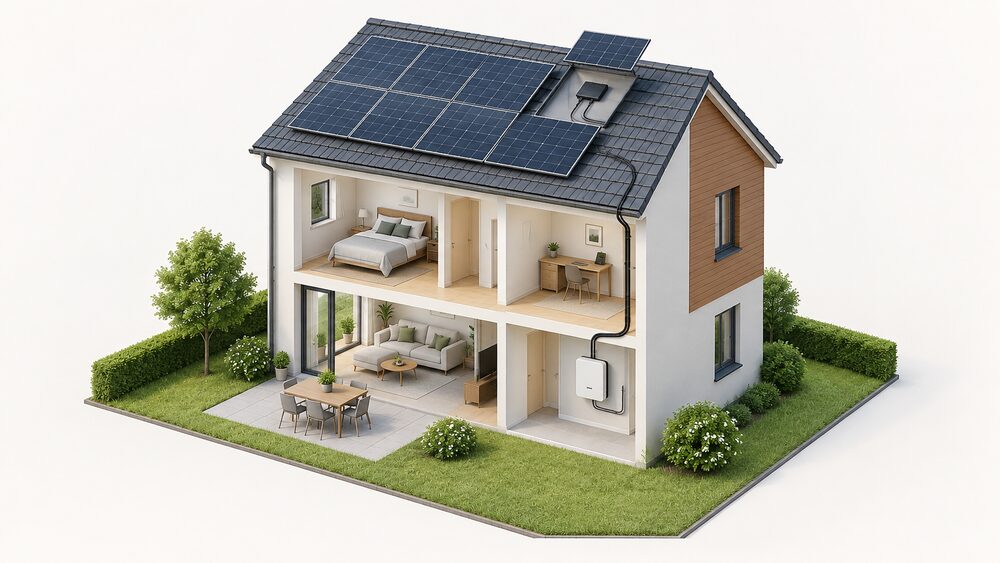 SolarEdge inverters and power optimisersSolarEdge systems pair an inverter with power optimisers on each panel.
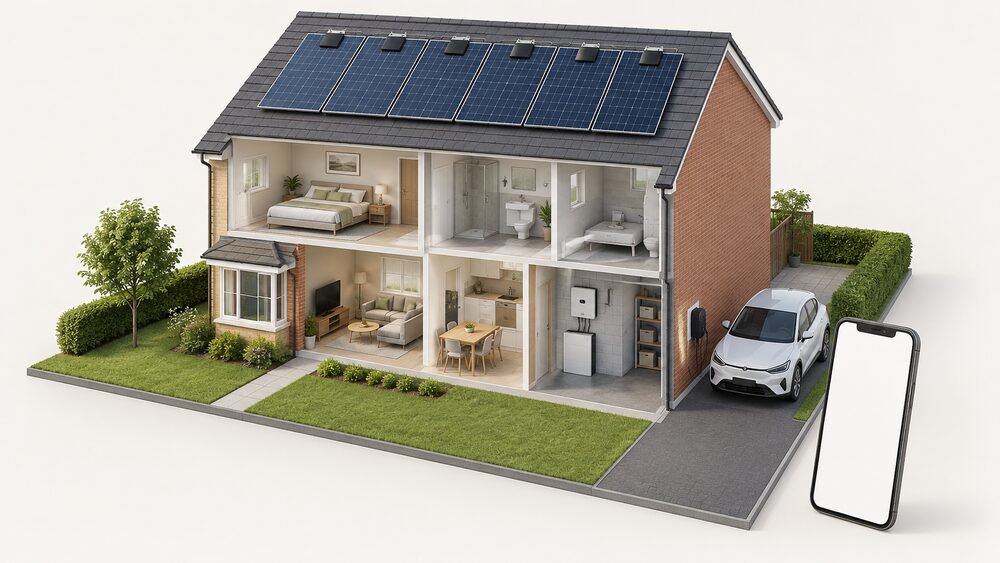 SolarEdgeIf one panel stops working, can you tell which one?
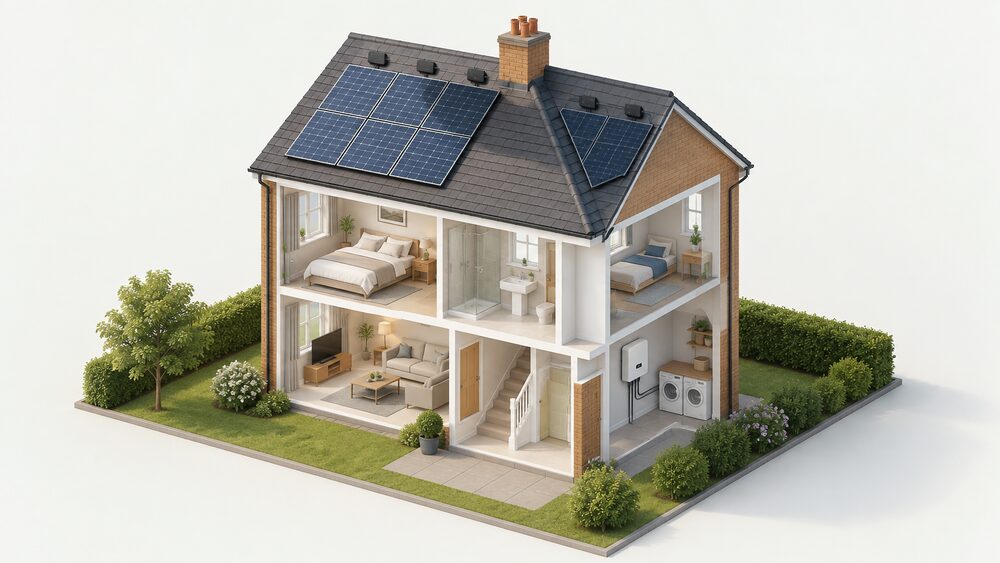 SolarEdgeIf you have been quoted a SolarEdge system, or your roof is shaded or faces two ways, you probably want to know what the black boxes on each panel actually do and what happens if the company behind them wobbles.