
In this answer
Short answer
Self-disconnection is what happens when a prepayment meter runs out of credit and the supply stops. Ofgem defines it as occurring when a consumer with a prepayment meter does not have enough money to top up and the meter cuts out, or when they do not realise the credit is running out1. Citizens Advice puts it more simply: households lose their energy supply as a result of not topping up their meter2.
The measured evidence is thinner than the scale of the problem suggests. Citizens Advice research using one methodology found 1 in 3 people using prepay had disconnected in 2019/203. Energy suppliers saw one person every 10 seconds run out of credit on their prepayment meter in the previous year because they could not afford to top up, across Great Britain4. Citizens Advice estimated that over 2 million people would disconnect because they could not afford to top up by the end of winter 20245.
What the data does show clearly is demand for help. Citizens Advice describes the number of people asking for help with self-disconnections as remaining higher than before the energy crisis2, and January 2024 was a record month for the number of people it helped who could not afford to top up their prepayment meter6.
What self-disconnection means on a prepayment meter
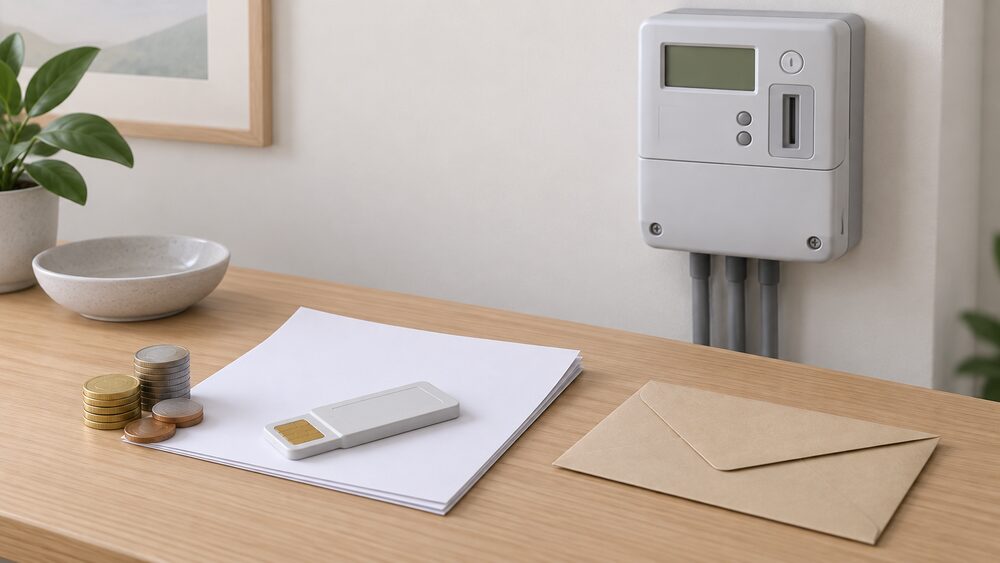
A prepayment meter requires payment for energy before it is used8. When the credit runs out, supply stops, and that is self-disconnection7. The term covers two different situations that the statistics often merge: a household that cannot afford to top up, and a household that does not realise the credit is running low1.
There is a third case that sits alongside both. Fuel poverty organisations describe unsafe energy rationing, where households try to use as little energy as possible, and even voluntary self-disconnection by those with prepayment meters in a bid to spend less6. That is a deliberate choice to go without supply, and it does not appear in top-up failure data at all.
The distinction matters for how the numbers are read. Ofgem's definition is about the meter cutting out, whether or not the household intended it1. Citizens Advice's framing is about the loss of supply as a result of not topping up2. A household that rations itself down to zero credit registers as a disconnection in both, but the cause is different from a household that simply had no money on the day.
"Self-disconnection happens when a consumer with a prepayment meter does not have enough money to top-up their meter and their meter cuts out, or when they do not realise that credit on the meter is running out"
For a household's energy independence, prepayment is the opposite of self-sufficiency: the supply depends entirely on a continuing flow of credit to a supplier, and the meter is the point at which that dependence becomes visible. A smart prepayment meter can send readings automatically to the supplier9, which improves visibility for both sides but does not change the underlying dependence on topping up.
The evidence base: Citizens Advice surveys and publications

Citizens Advice is the main independent source of self-disconnection evidence in Great Britain, and its figures come from surveys and from the casework it handles rather than from metering data. The 1 in 3 figure for 2019/20 comes from Citizens Advice research using its own methodology3, which is one reason it does not sit neatly alongside other published rates.
The organisation has published on prepayment repeatedly. Its discussion paper on the future of prepayment sets out the policy position2, and its out-of-the-cold publication covers helping people on prepayment meters stay connected through winter10. Its response to Ofgem's final proposals on self-disconnection and self-rationing is the document that carries the 1 in 3 figure3.
The policy direction Citizens Advice argues for is prevention first. Ofgem's own guidance reflects a similar ordering: any installation of prepayment meters with the explicit consent of the consumer must be explored before disconnection, which is an absolute last resort11. That framing matters for the data, because it means the measured rate of self-disconnection is partly a function of how many involuntary prepayment meters are installed in the first place.
The evidence base has a known gap. Ofgem's data on prepayment customers covers around half of the 4 million customers who have prepayment meters7, so any rate applied to the whole population is an estimate rather than a count. That limitation is worth holding onto when a headline figure is quoted without its denominator.
When help seeking for top-up meters hit record levels
The clearest signal in the data is not the disconnection rate but the volume of people asking for help. January 2024 was a record month for the number of people Citizens Advice helped who could not afford to top up their prepayment meter6, and February 2024 was another record month for the number of people helped with energy debts6. The Welsh publication records the same January 2024 record for prepayment top-up help12.
Against that, Citizens Advice's own energy data notes one exception to the general trend: the numbers helped with energy issues and people unable to top up their prepayment meter were slightly lower than at this point in 20236. That comparison is dated January 2024, so it describes a period in which the record month occurred while the year-on-year figure was marginally down. Both statements are published by the same organisation and describe different measures.
The scale of the underlying problem is captured by two independent figures. Energy suppliers saw one person every 10 seconds run out of credit on their prepayment meter in the previous year because they could not afford to top up, across Great Britain4. Citizens Advice estimated that over 2 million people would disconnect because they could not afford to top up by the end of winter 20245.
For a household, the practical meaning is that the record levels of help seeking are a lagging indicator. People contact Citizens Advice after the supply has already stopped, not before. The data therefore undercounts the households that rationed their way through a cold period without ever letting the meter reach zero.
Where the data comes from and what it covers
Self-disconnection statistics are assembled from several sources that do not share a method. Citizens Advice's own figures come from its advice casework and from surveys it commissions6. Parliamentary briefings compile the official definitions and the figures that sit behind them1.
The metering side has its own constraints. Ofgem's data cover around half of the 4 million customers who have prepayment meters7. Under electricity supply licence condition 47, where the meter is a prepayment meter, consumption data may be obtained for a single period corresponding to the period since the previous advance payment made through that meter13. That is a narrower data window than a credit meter provides, and it shapes what can be measured about consumption before a disconnection.
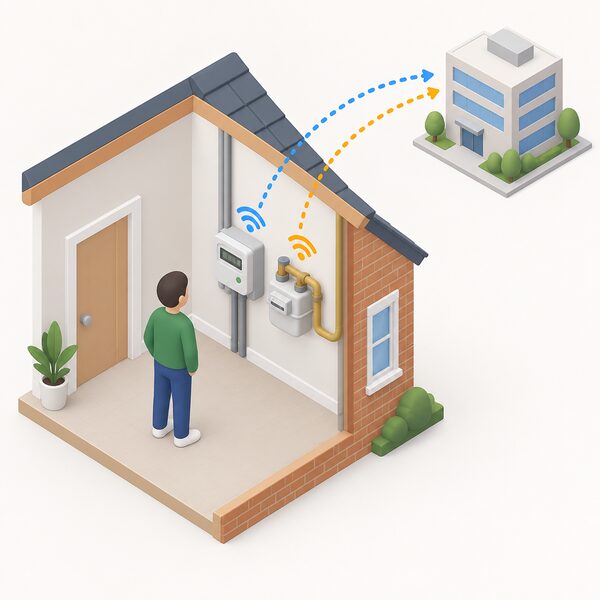
Smart prepayment meters change the picture. They measure the gas and electricity used and can send readings automatically to the supplier9, which means a supplier can see a meter running low without waiting for a top-up event. Ofgem's guidance for authorised persons requires them to monitor the usage of prepayment meters on an ongoing basis to identify any consumers who might be self-disconnecting11. That monitoring obligation is the mechanism by which a smart meter's data becomes a welfare intervention rather than just a billing record.
The coverage gap has a practical consequence for anyone reading the numbers. A rate expressed as a percentage of prepayment customers is a percentage of the customers in the dataset, not of all prepayment customers in Great Britain. Where a figure is described as modelled or estimated, that is the reason. The energy debt and arrears statistics page covers the debt side of the same population, and the fuel poverty statistics page explains how the affordability measures are produced.
Getting help: Citizens Advice services for people who cannot top up
Citizens Advice offers information and support on a range of topics, including struggling to pay bills, problems with an energy supplier or energy supply, saving energy at home, and getting a better energy deal14. The consumer helpline number is 0808 223 113315, with a textphone route of 18001 followed by the helpline number16. Opening hours are Monday to Friday, 9am to 5pm17. A Welsh language line is available on 0808 223 114417. A separate number, 0808 144 8844, is listed for England14, and 0808 278 7932 is given for free and impartial help and advice18.
The consumer service can escalate. It may refer a case to the Extra Help Unit where someone needs support with a difficult or urgent complaint, cannot deal with their energy supplier alone due to personal circumstances, is considered vulnerable, or is at risk of being disconnected from an energy supply19. That last criterion is the one that applies directly to a household that cannot top up.
Where a supplier has not met its obligations, Citizens Advice may be able to assist through its website or the consumer service21. The same route applies to smart meter installation problems: contact the energy supplier first, and if it has not met its obligations, the consumer service can take it on21.
The limits of what advice can do are worth stating plainly. Citizens Advice can help with a complaint, a referral and a supplier dispute. It cannot top up a meter, and it does not control whether a supplier installs a prepayment meter. The protection against involuntary installation sits in the supplier's obligations: at least 10 attempts to contact a household using different methods, for example phone calls, letters or text messages, before a prepayment meter is installed without permission22. Where an inappropriate installation, switch or use of a prepayment meter has occurred, compensation of £1,000 has been set23.
For a household's independence, the advice route is a backstop rather than a solution. The dependence on a supplier and a top-up remains until the meter is changed or the debt is cleared. The prepayment meter top-ups page covers how many customers run out of credit, and the prepayment versus direct debit page compares satisfaction and costs across the two payment methods.
Sources23 cited
- Self-disconnection definition, parliamentary briefing, UK Parliament, 2022
- Future of prepayment discussion paper, Citizens Advice, 2026
- Response to Ofgem's final proposals on self-disconnection and self-rationing, Citizens Advice, 2020
- 3.2m pre-payment meter customers left without heat, National Energy Action, 2023
- Shock proof: breaking the cycle of winter energy crises, Citizens Advice, 2024
- Energy data, Citizens Advice, 2024
- Prepayment meter customers, parliamentary briefing, UK Parliament, 2023
- Prepayment meter guide, Uswitch, 2026
- Smart meter benefits for prepay customers, Smart Energy GB, 2026
- Out of the cold: helping people on prepayment meters stay connected this winter, Citizens Advice
- Heat networks consumer protections draft guidance, Ofgem, 2025
- Energy data, Wales, Citizens Advice Wales, 2024
- Final proposals and standard condition: data privacy, Ofgem, 2014
- Get help with your energy bills, Ofgem, 2026
- If you were misled or pressured into buying something you didn't want, Citizens Advice, 2026
- Energy terms explained, Ofgem, 2026
- Consumer protection rights, GOV.UK, 2026
- Help with household costs, Isle of Anglesey County Council, 2026
- Complain about your energy supplier, Ofgem, 2026
- Low carbon heating, nidirect, 2026
- About the rollout, Smart Energy GB, 2026
- Check energy suppliers can install prepayment meters without household permission, Ofgem, 2026
- Compensation for installing prepayment meters without permission, Ofgem, 2025
 Prepayment Meter DebtHow debt repayment is set on a prepayment meter, the limits on the share of a top-up that can be taken, and how to have a rate reviewed.
 Disconnection and WarrantsCan your energy supplier force you onto prepayment or cut you off for debt?
 Prepayment and Vulnerable RulesThe licence obligations on energy suppliers when a household falls into debt: when a prepayment meter may be installed without consent, the warrant process, the ban covering highly vulnerable households, remote switching of smart meters, and the free help available.
 Prepayment MetersHow do you top up a prepayment meter for gas or electricity, and what happens when the credit runs out?
 Leaving the Electricity GridCan you really cut your home off the grid completely, and what does it cost to have your electricity supply removed for good?
 Smart Meter Faults and FixesYour smart meter has stopped working.