
In this answer
Short answer
No supplier publishes a live queue time, and no regulator publishes a league table of how long each one keeps you on hold. What exists instead is a quarterly score: Citizens Advice rates each supplier's contact waiting time out of five, alongside its overall customer service rating, and publishes the results in a comparison table covering 16 suppliers1. The most recent figures in this set cover January to March 2026.
On those scores, 100Green recorded 4.6 out of 5 for contact waiting time and ranked first overall with 4.33 out of 52. Outfox Energy also scored 4.4 out of 53. ScottishPower recorded 4.0 out of 5 for contact waiting time in its Scottish listing4, while Octopus Energy scored 3.6 out of 55 and Good Energy 3 out of 56. The spread is wide, and it does not track company size.
The practical point for a household is that a waiting time score is a proxy, not a stopwatch. It tells you how a supplier's contact performance compares with its peers over a three-month window. It does not tell you how long you will wait on a Tuesday morning, and it does not cover Northern Ireland, which has a separate consumer body and a separate market.
What the evidence can and cannot tell you about call waiting times
The ratings are built from supplier-reported performance data, not from a stopwatch held by a regulator. Ofgem has introduced licence requirements compelling suppliers to publish information on their Citizens Advice star rating performance8, which means the underlying figures are a regulatory obligation rather than voluntary disclosure. That is a meaningful difference: a supplier cannot quietly omit a bad quarter.
What the scores cannot do is predict your own call. A supplier scoring 4.6 out of 5 for contact waiting time across a quarter may still leave you holding for twenty minutes on the day a billing system fails. The score is an average of a period, and averages hide the tail. Ofgem's own standards work refers to suppliers taking significantly or consistently longer than specific time periods to respond to queries, giving 5 minutes on average each month to answer phone calls as an example benchmark8. That is a regulatory reference point, not a published per-supplier figure.
There is also a measurement gap. The ratings cover contact waiting time as one component of a wider customer service score, so a supplier can perform well on waiting time and poorly on complaint resolution, or the reverse. Which? found that the sector scored +48 net satisfaction on how long it takes to get in touch with a person that can help, reflecting two thirds (67%) of those making contact being satisfied and one in five (20%) dissatisfied9. That is a sector-wide figure from November 2024, not a supplier ranking, and it shows that roughly a third of contacts do not end in satisfaction even before you look at individual firms.
For a household thinking about energy independence, the honest position is that call waiting time is a dependency you cannot remove by choosing well. Every supplier is a single point of contact for billing, meter faults and credit refunds. A good score reduces friction; it does not remove the need to call.
Who measures supplier service: the Citizens Advice star ratings
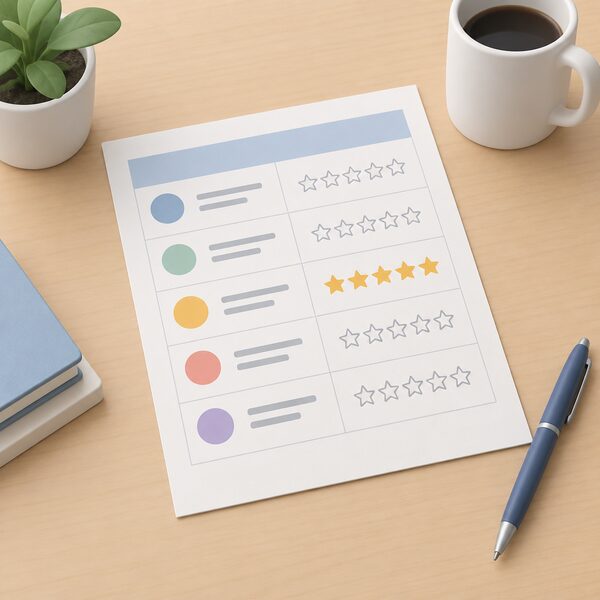
Citizens Advice runs the comparison table, scoring each supplier out of five3. The table covers 16 suppliers and is published in separate versions for England, Scotland and Wales1. The scores combine several measures, of which contact waiting time is one, and the overall rating sits alongside it.
The wider context matters because it shows how customers themselves rate their suppliers. Ofgem's research found that a majority of consumers (60%) give their supplier a rating of between 4 and 5 stars11. A separate figure of 87% appears in the same research, and the two have not been reconciled, so the proportion of customers who are broadly happy is somewhere between those two readings depending on how the question is framed.
Which? runs a parallel assessment. Its 2026 Recommended Provider status went to E (Gas & Electricity), Octopus Energy, 100Green and Sainsbury's Energy12. That is a different methodology from the Citizens Advice table and produces a different list, which is why the two should be read as complementary rather than competing.
The star ratings are not the only route. The Consumer Council in Northern Ireland handles complaints about electricity, oil and gas, and notes that suppliers' standard response time is normally 8 to 10 days13. That is a different service model from a phone queue, and it reflects the separate regulatory settlement in Northern Ireland.
The latest ratings: 100Green top, Octopus, ScottishPower and Good Energy scored
The January to March 2026 window produced a clear leader and a wide field behind it. 100Green took first place with an overall rating of 4.33 out of 5 and a contact waiting time score of 4.6 out of 52. Outfox Energy matched it closely on waiting time at 4.4 out of 53.
ScottishPower's position is the most complicated in the set. Its Scottish listing records a contact waiting time of 4.0 out of 54, and its own publication of the January to March 2026 results gives an overall score of 2.94 out of 5, ranking it 4th among large suppliers, with results excluding Northern Ireland4. A separate figure of 2.8 out of 5 for contact waiting time also appears in the ratings data, and the two have not been reconciled. 0 out of 5 and 2.8 out of 5.
Octopus Energy scored 3.67 out of 5 overall and ranked 4th in the comparison table, with a contact waiting time of 3.6 out of 55. Good Energy scored 3.49 out of 5 overall, ranked 6th, and recorded 3 out of 5 for contact waiting time6.
| Supplier | Contact waiting time | Overall rating | Rank | Period |
|---|---|---|---|---|
| 100Green | 4.6 out of 52 | 4.33 out of 52 | 1st2 | Jan to Mar 2026 |
| Outfox Energy | 4.4 out of 53 | Not stated | Not stated | Jan to Mar 2026 |
| ScottishPower | 4.0 out of 54 | 2.94 out of 54 | 10th in the comparison table4 | Jan to Mar 2026 |
| Octopus Energy | 3.6 out of 55 | 3.67 out of 55 | 4th5 | Jan to Mar 2026 |
| Good Energy | 3 out of 56 | 3.49 out of 56 | 6th6 | Jan to Mar 2026 |
The table shows why a single number is a poor guide. ScottishPower's waiting time score of 4.0 out of 5 sits above Octopus Energy's 3.6, yet its overall rating of 2.94 is well below Octopus's 3.67. Waiting time is one input among several, and a supplier can be quick to answer and slow to resolve.
Why a good customer service rating is not the same as a short wait
The two measures come apart in both directions. A supplier can score well on contact waiting time because it answers quickly, while scoring poorly overall because the person who answers cannot fix the problem. The reverse also happens: a supplier with a slower queue may resolve issues in one call.
Ofgem's position is that customer service is part of how suppliers should be operating. It expects suppliers to demonstrate excellent customer service as part of their strategies for driving down consumer energy debt14. That framing ties service quality to debt outcomes, not to queue length alone.
Ofgem's January 2026 supplier-level findings add a further dimension. A significantly lower proportion of EDF Energy, E.ON / E.ON Next, and OVO Energy customers reported they were satisfied or very satisfied with customer service than the average15. That is a satisfaction measure, not a waiting time measure, and it shows that the two can diverge sharply.
For a household, the practical implication is that a short wait is worth having but is not the same as a resolved problem. The ratings reward both, and the overall score is the better single indicator of what happens after the call connects.
Getting help without the hold: free advice lines and what they cover

There are routes that bypass the supplier queue entirely. The Citizens Advice consumer helpline covers a problem to do with your energy bills or energy supply, and advisers can help if you want support about how to complain to your energy supplier16. Lines are open Monday to Friday, 9am to 5pm16. The number is 0808 223 1133, with 0808 223 1144 for a Welsh-speaking adviser17. One support article also lists 0800 702 2020 for Wales, and the two figures have not been reconciled, so both stand.
For households with no energy at all, the National Energy Action Energy Advice and Support Service runs a separate line on 0800 304 7159, with self-referral through an online form19. The Local Energy Advice Programme offers a free telephone advice service to help with benefits, money and bill problems21.
"If you are off-supply, have no energy, then call our Energy Advice and Support Service on 0800 304 7159."
These services do not replace the supplier. They advise, refer and, in the Extra Help Unit's case, take on cases for consumers in vulnerable circumstances by referral22. Citizens Advice may refer you to the Extra Help Unit if you need support with a difficult or urgent complaint, cannot deal with your supplier on your own due to personal circumstances, are considered vulnerable, or are at risk of being disconnected from an energy supply23.
If your supplier still will not sort it: complaining and the Energy Ombudsman
The complaint route has a fixed sequence. Contact your supplier first, covering late, incorrect or missing bills, back billing, being overcharged, a faulty meter, poor customer service, and refusing to refund credit from your account24. Tell them what you want to complain about, when the problem happened, what you want to happen, and the first date you contacted them25. Suppliers must try to fix complaints in less than 8 weeks25.
If that fails, the Energy Ombudsman is free, provided the issue is not resolved after eight weeks or a deadlock letter arrives sooner7. The Ombudsman's own guidance is explicit that a complaint must go to the supplier in the first instance7, and that before contacting the service the supplier is notified and the issue worked through with them26. Sufficient evidence supports the case, including the date the complaint was raised27.
The same eight-week rule applies to heat network suppliers, who have 8 weeks to resolve a complaint before the Ombudsman can take it22. For prepayment meter complaints, you can contact the Energy Ombudsman if you are not happy with the way your supplier has handled your complaint28. Energy bill complaints follow the same escalation route29.
For Northern Ireland, the route differs. The Consumer Council handles complaints about electricity, oil and gas, and notes that suppliers' standard response time is normally 8 to 10 days13. All energy companies there are part of Quick Check 101, which allows you to call and check the identity of someone calling to your home about your gas, electricity or water supplies30.

Sources30 cited
- Compare domestic energy suppliers' customer service, Citizens Advice, 2026-09-20
- 100Green customer service details, Citizens Advice, 2026-03
- Compare domestic energy suppliers' customer service (Scotland), Citizens Advice Scotland, 2026-09-20
- ScottishPower customer service details, Citizens Advice Scotland, 2026-01
- Octopus Energy customer service details, Citizens Advice, 2026-01
- Good Energy customer service details, Citizens Advice, 2026-01
- Worried about your energy bills, Energy Ombudsman, 2026-03-24
- Consumer Standards decision, Ofgem, 2023-10-18
- Energy companies' customer service: who is failing consumers, Which?, 2024
- Compare domestic energy suppliers' customer service (Wales), Citizens Advice Wales, 2026-09
- Understanding consumers' energy tariff choices, Ofgem, 2025-07
- Which? Energy Survey results, Which?, 2026-01-19
- Complaints about electricity, oil and gas, Consumer Council for Northern Ireland, 2026
- Debt strategy update: supporting reduction of energy debt, Ofgem, 2025-11-06
- Customers' satisfaction with their supplier: supplier-level findings, Ofgem, 2026-01
- If you need more help about a consumer issue, Citizens Advice, 2026-09-17
- Problems with services, Isle of Anglesey County Council, 2025-10
- Consumer protection rights, GOV.UK, 2026-09-17
- Winter Warmth support packs, National Energy Action, 2026-06-25
- Get help, National Energy Action, 2026-06-25
- Energy saving grants and funding, Tameside Council, 2026-09-17
- Heat networks consumer protection guidance decision, Ofgem, 2026-01-13
- Complain about your energy supplier, Ofgem, 2026
- Complain about your energy supplier or network operator, Ofgem, 2026
- Complaints process easy read, Smart Energy GB, 2026-03-16
- We may be able to help resolve your energy dispute, Energy Ombudsman, 2026-09-20
- Raise a dispute: British Gas Trading, Energy Ombudsman, 2026-09-19
- Check energy suppliers can install prepayment meters, Ofgem, 2026
- Understand your electricity and gas bills, Ofgem, 2026
- Bills and metering, Consumer Council for Northern Ireland, 2026
 Customer Service RatingsWhich energy suppliers answer the phone quickly and deal with complaints properly?
 Complaining About a SupplierHow do you complain about your energy supplier, and how long should it take?
 Smart Meter InstallationCan your supplier make you have a smart meter, and how long should you wait for an appointment?
 Switching SupplierHow long does switching energy supplier actually take, and what happens if you owe money?
 Complain About Energy SupplierThe order of a complaint: the supplier's own procedure, the eight-week point or deadlock, and referral to the Energy Ombudsman in Great Britain or the Consumer Council in Northern Ireland.
 Energy Consumer BodiesWho do you call about an energy problem where you live?