
In this guide
100Green is a small, long-established UK energy supplier that sells 100% renewable electricity and 100% green gas, and it is the only supplier in the market selling gas certified as fully renewable1. It was established in 2001, formerly trading as GEUK, which makes it one of the oldest energy firms outside the traditional big suppliers1. Its electricity is generated in the UK, and it buys enough renewable electricity directly from generators to match what its customers use, including solar, wind, biomass and hydro2.
The company's standing rests on two things a household can check. It ranked first in the Citizens Advice supplier comparison table for January to March 2026, with an overall rating of 4.33 out of 53. It was also named a Which? Eco Provider for energy in 2026 and a Which? Recommended Provider, one of four named that year1. For a household weighing energy independence, the offer is unusual: a supplier that sources both fuels renewably, with no exit fees, but which remains a grid-dependent intermediary for electricity and a gas-network intermediary for gas.
100Green at a glance: who they are and what they supply
100Green trades under the licensed entity Green Energy (UK) Ltd, which is the name that appears on the official Feed-in Tariff licensee contact list7. That matters for a household because the licence holder is the entity with regulatory obligations, not the trading brand. The company describes itself as a small but long-established supplier, and independent review material repeats that description, noting it is the only supplier selling 100% green gas1.
On electricity, 100Green states that every unit it supplies comes from renewable sources generated in the UK2. The Centre for Sustainable Energy, an independent advice body, places 100Green among the most significant suppliers buying renewable electricity and REGO certificates directly from renewable generators, alongside Good Energy, Octopus and Ecotricity, and describes that group as providing significantly greater support for renewables development than suppliers that buy certificates alone8. That distinction is the practical one: buying REGO certificates supports the renewable market indirectly, while buying directly from generators supports it more directly.
On gas, the position is narrower and worth stating precisely. 100Green says it is the only supplier that certifies every drop of gas as renewable, and that all its electricity is backed by Renewable Energy Guarantee of Origin certificates while all its gas is supported by Renewable Gas Guarantee of Origin certificates2. Independent review material confirms the claim that it is the only firm from which a household can buy both 100% renewable electricity and 100% green gas1. The gas itself, according to independent guidance, comes from anaerobic waste5.
What this does for independence is limited but real. A household on 100Green still draws electricity from the national grid and gas from the gas network, and still depends on a supplier for billing and metering. What changes is where the money goes and what is certified. The dependence on the grid, on a supplier and on the gas network remains.

Green gas and electricity: what is actually certified

The certification chain is the part of a green tariff that a household can actually verify, and 100Green's claims are specific. Electricity is backed by REGO certificates, gas by RGGO certificates, and the company states that all of both is covered2. The EKO tariff goes further: it is 100% renewable in both fuels and is additionally certified as sustainable by an independent ecolabel, EKOenergy.org6. That is a third-party check on top of the certificate system, and it is the strongest certification claim in the company's range.
Independent verification supports the headline. Citizens Advice records 100Green's fuel mix as 100% renewable3. Uswitch states that 100Green is the only UK supplier offering 100% renewable energy across the board, including gas from anaerobic waste5. Which? describes it as the only firm from which you can buy both 100% renewable electricity and 100% green gas1.
The wider context is that green tariffs vary widely in what they actually deliver, which is why accreditation schemes exist. Uswitch rates the greenest tariffs by certain criteria under its Green Accreditation scheme so customers can see how green a tariff really is, ranking each into Gold, Silver and Bronze categories based on the amount of renewably-sourced energy they include9. The scheme's criteria include 100% of electricity bought directly from renewable generators, 70% of electricity sourced from renewable generation as you use it, and 10% of gas certified as renewable5. Those thresholds are the benchmark against which a 100% claim can be read.
"100Green is the only UK supplier offering 100% renewable energy across the board, including gas from anaerobic waste"
For a household, the practical question is what the certificates guarantee. A REGO or RGGO certificate proves that a matching amount of renewable generation or renewable gas was produced and attributed to the supply. It does not change the physical electrons or molecules arriving at the meter, and it does not reduce the household's dependence on the grid or the gas network. What it does is direct payment to renewable generators and, in 100Green's case, to anaerobic digestion producing the gas. More on how these schemes compare is at green energy tariffs and fuel mix disclosure.
The tariff range: six tariffs, including three time-of-use
100Green offers six unique tariffs, each tailored to suit different lifestyles, and three of those are multi-rate tariffs designed for different lifestyles2. Multi-rate tariffs are one of the three main types of energy tariff recognised by Ofgem, alongside fixed rate and standard variable tariffs10. A multi-rate or time-of-use tariff charges different rates at different times of day, which suits a household that can shift heavy use, such as charging an electric vehicle or running appliances overnight.
The EKO tariff is the one with the strongest certification: 100% renewable electricity and gas, additionally certified as sustainable by EKOenergy.org6. 100Green states it is the only place you can buy gas that is 100% backed by RGGOs2.
| Tariff feature | What 100Green states |
|---|---|
| Number of tariffs | Six unique tariffs2 |
| Multi-rate tariffs | Three, for different lifestyles1 |
| Strongest certification | EKO: 100% renewable both fuels, EKOenergy certified6 |
| Gas backing | 100% RGGO-backed, stated as unique2 |
| Electricity backing | 100% REGO-backed2 |
The range is small by design. A supplier with six tariffs is not trying to cover every household profile, and the multi-rate options assume a household willing to engage with when it uses power. For a household whose independence goal is to shift consumption to match renewable generation, a time-of-use tariff is the mechanism that makes that possible, because it prices the timing of use rather than only the volume. The limit is that the household still depends on the grid to deliver whatever it uses, whenever it uses it, and on the supplier's metering to record it.
Customer service and ratings: first in the Citizens Advice table

The independent ratings are the strongest part of 100Green's case. Citizens Advice ranked it 1st in the supplier comparison table for January to March 2026, with an overall rating of 4.33 out of 53. The same table covers 16 suppliers, and 100Green's billing and metering rating was 4.2 out of 512. Complaints to Citizens Advice Consumer Service, the Extra Help Unit, Advice Direct Scotland and the Energy Ombudsman ran at 14.4 per 10,000 customers in that quarter3.
Which? ranked 100Green first out of 17 energy companies when rated by 11,945 members of the public in its annual customer survey, and gave it four stars out of five for overall customer service1. Which? noted that 100Green was the only four suppliers to receive four stars out of five for overall customer service4. The company itself states it is rated number one for customer satisfaction by Citizens Advice2.
The limits are worth stating. A high ranking in a quarterly table reflects a period, not a permanent position, and a small supplier's complaint rate is measured across a small customer base, so a handful of cases moves the number more than it would for a large supplier. The ratings measure service quality, not price, and they say nothing about how competitive the tariffs are against the wider market. For a household, the relevant reading is that service and complaint handling are a strength, and that the comparison against other suppliers is at energy supplier customer service ratings.
Awards and accreditations: Which?, Uswitch and Ethical Consumer
100Green holds a Which? Eco Provider for energy award for 2026, and was named a Which? Recommended Provider for Energy in the same year, one of four alongside E (Gas & Electricity), Octopus Energy and Sainsbury's Energy1. The Eco Provider designation is specifically about environmental performance, while the Recommended Provider status reflects the customer survey. Holding both means the company scores well on the green criteria and on customer experience.
On the accreditation side, Uswitch's Green Accreditation scheme rates the greenest tariffs by certain criteria so customers can see how green a tariff really is, with Bronze, Silver or Gold ratings depending on various criteria9. The scheme's thresholds include 100% of electricity bought directly from renewable generators, 70% of electricity sourced from renewable generation as you use it, and 10% of gas certified as renewable5. A tariff meeting all three is doing more than one that buys certificates on the open market.
The Centre for Sustainable Energy's independent guidance places 100Green in the group of suppliers buying renewable electricity and REGO certificates directly from renewable generators, describing that group as providing significantly greater support for renewables development8. That is an independent assessment of sourcing practice rather than an award, and it is the kind of evidence that distinguishes a genuine green tariff from a rebadged standard one.
The limit on all of these is that awards and accreditations are snapshots. A Which? award covers a year, a Uswitch rating covers a tariff at a point in time, and a supplier can change its sourcing. A household checking a green claim should look at the current fuel mix disclosure and the current accreditation for the specific tariff, not the brand's award history. The wider comparison set is at green energy tariffs and challenger energy suppliers.
Switching to 100Green: timescales, cooling-off and exit fees
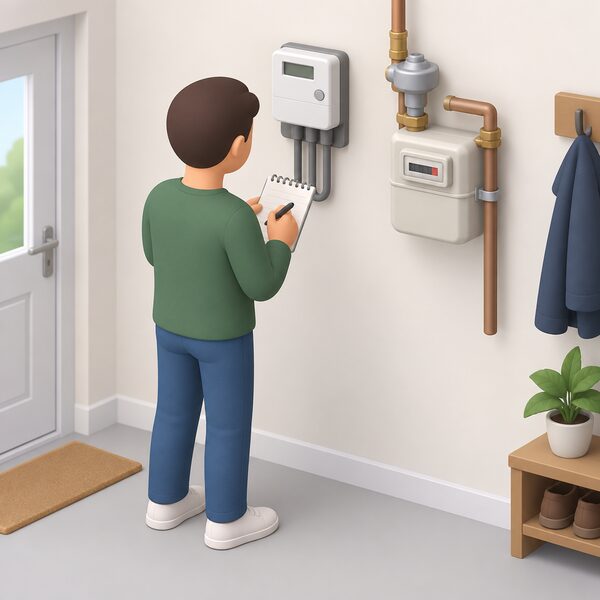
100Green states that a switch should take place within 5 working days, assuming there is no outstanding balance and all information has been provided6. That is faster than the standard switching window many households expect, and it depends on the account being clear. The switch does not interrupt supply: the gas and electricity keep flowing while the registration moves between suppliers.
There is a 14-day cooling-off period at the start of a fixed contract, and a supplier cannot charge an exit fee if the tariff is switched during it13. That protection applies regardless of the supplier's own terms. Beyond the cooling-off window, the position depends on the tariff: on a fixed-rate contract, an exit fee applies unless the household has entered the final 49 days of the tariff13.
100Green's own position is simpler than the market norm. The company states it has no exit fees and no upfront payments2. That is a meaningful difference, because fixed energy tariffs elsewhere often carry exit fees of around £100 per fuel, or typically £100 or more, for leaving before the end of the contract14. A household comparing a 100Green tariff with a cheaper fixed deal elsewhere should weigh the absence of an exit fee against the difference in unit rates, since a fee-free tariff is easier to leave if prices move.
The practical sequence for a household is: check the current tariff terms, confirm the account is clear of debt, provide the information the supplier needs, and take a meter reading on the switch date. More detail on the mechanics is at exit fees when switching and cooling off period when switching energy supplier.
Billing, Direct Debit and how price changes are notified
100Green bills monthly. When a household signs up, Direct Debits are paid from the account every month and a bill is received every month6. The company reviews how much is being paid every month, and if consumption does not match the fixed Direct Debit amount, the payment is adjusted6. That monthly review is more frequent than the annual reconciliation many suppliers run, and it means a household should expect the Direct Debit to move during the year rather than only at an annual review.
Direct Debit is accepted, and 100Green states that setting one up gives access to cheaper rates2. That is a common structure across the market: the payment method affects the unit rate. The general consumer position is that households should receive accurate bills, paying only for the energy they use15. Ofgem sets out the three main tariff types, fixed rate, standard variable and multi-rate, and how a bill is calculated from them10.
On price changes, 100Green states that if rates are going to change it will always let a household know at least 25 days in advance14. More generally, a supplier should give reasonable notice of any changes to direct debit payments and explain why the change is necessary14. The details of a household's current deal are usually found on the latest energy bill or statement, or in an app or online account14. A household wanting to track its own tariff should read the bill or account rather than rely on memory.
The dependence here is straightforward. Monthly billing and a monthly Direct Debit review tie the household to the supplier's payment schedule and to its estimate of consumption. A household that wants to control cost tightly should read the monthly bill and check the Direct Debit against actual use, because the review adjusts the payment rather than the consumption. Wider context on payment methods and their costs is at paying your energy supplier.
Smart meters, prepayment and support if you struggle to top up

100Green supports traditional prepayment meters, topped up at PayPoint, Payzone or Post Office outlets, and it accepts prepayment customers1. That is a narrower prepayment offer than a supplier with full smart prepayment support, and Which? notes that 100Green is not the best choice if you are on a pre-payment meter4. A household on prepayment should weigh that against the service ratings.
The mechanics of prepayment are set by the meter type. On a non-smart prepayment meter, top-ups are made at a local PayPoint store or Post Office using the meter's key or card, or a barcode for smart prepayment meters16. On a smart prepayment meter, top-up may be possible online or using the supplier's mobile app17. Prepayment means paying for energy before using it, by topping up a card or key in a shop, online or using a phone app18. Once credit runs out, no energy can be used until the meter is topped up again19.
If a household cannot afford to top up, the route is to contact the supplier immediately to get temporary credit, sometimes called additional support credit20. That is discretionary and arranged through the supplier. If a prepayment key or card is lost, the supplier can arrange a replacement or a barcode, and top-up continues as usual in the meantime16.
On the Warm Home Discount, the payment is a one-off £150 off the energy bill for eligible older and low-income consumers22. For winter 2025/26 the qualifying date was 24 August 202523. A household qualifies if its supplier is part of the scheme, the account holder or their partner receives certain means-tested benefits, and their name is on the electricity bill24. 100Green customers on the qualifying date with their name on the bill qualified for the payment6. The scheme operates in England, Wales and Scotland; separate arrangements apply in Northern Ireland, where the discount does not run on the same basis. More on eligibility is at the Warm Home Discount and supplier support for vulnerable customers.
Sources24 cited
- 100Green review, Which?, 2026-06-16
- Energy tariffs made simple, 100Green, 2025-08-28
- 100Green customer service details, Citizens Advice, 2026
- Which? Recommended Providers, Which?, 2026
- Green energy guide, Uswitch, 2026-09-04
- 100Green FAQs, 100Green, 2026-07-14
- FiT licensee contact details, Ofgem, 2026-09-17
- Green electricity tariffs, Centre for Sustainable Energy, 2026-07
- Energy tariffs explained, Uswitch, 2026-02-17
- Understand your electricity and gas bills, Ofgem, 2026
- How your electricity or gas bill is calculated, Ofgem, 2026
- Compare domestic energy suppliers customer service, Citizens Advice, 2026-09-20
- How to switch energy supplier, Confused.com, 2025-12-15
- How to switch energy supplier, Which?, 2026-07-30
- Smart meters: your rights and expectations, GOV.UK, 2025-08-08
- Get help with your prepayment meter, Ofgem, 2026
- Prepayment meters consumer guidance, Ofgem, 2026
- Energy debt on prepayment meters, Centre for Sustainable Energy, 2026-08
- Get help with your prepayment meter, Ofgem, 2026
- What emergency help is available for unpaid energy bills, British Gas Energy Trust, 2026-04-28
- Be winter ready, SGN, 2026
- Keeping your home warm in winter, Met Office, 2026-09-20
- The Warm Home Discount Scheme: Scotland, GOV.UK, 2026-02-26
- The Warm Home Discount Scheme: England and Wales, GOV.UK, 2026-08-23
 100Green Tariffs and Renewable Export RatesWhat does 100Green pay you for the electricity your solar panels send to the grid, and how does that compare with other suppliers?