


In this guide
100Green is a UK energy supplier whose proposition rests on two claims: that it sells 100% renewable electricity and 100% green gas, and that it is the only firm from which both can be bought together1. Its fuel mix is reported as 100% renewable and 0% fossil fuel3. The gas side is unusual. Most green tariffs certify a fraction of their gas as renewable; 100Green certifies at least 10% on all tariffs and 100% on its Ekoenergy tariff4.
For a household with solar panels, the headline number is the export rate: 12p per kWh for customers with a total installed capacity of up to 15kW, as recorded in April 20265. That sits well above the bottom of the market, where export rates run from 1p to 25p per kWh5.
The company trades under the licence name Green Energy (UK) Ltd and appears on Ofgem's Feed-in Tariff licensee contact list6. It sells three multi-rate tariffs designed for different lifestyles, alongside its standard range2. This page sets out what each part of the offer does, what it costs in terms of contract terms rather than pounds, and where the dependencies lie.
What 100Green supplies: renewable electricity and green gas
The electricity claim is the simpler of the two. 100Green's fuel mix is reported as 100% renewable with 0% fossil fuel3, and independent guidance describes it as the only UK supplier offering 100% renewable energy across the board, including gas from anaerobic waste1. The company is described as the only firm from which both 100% renewable electricity and 100% green gas can be bought2.
That combination is the distinguishing feature. Most suppliers that market a green electricity tariff do not extend the claim to gas, because renewable gas is scarcer and more expensive to source. 100Green's position is that both fuels are covered.
The licence behind the brand is Green Energy (UK) Ltd, which is the name that appears on Ofgem's Feed-in Tariff licensee contact list6. That matters for two reasons. First, it is the legal entity a household contracts with, whatever the trading name on the bill. Second, it confirms the company holds the licences needed to be a FiT licensee, which is a separate status from being a SEG supplier.
For energy independence, the position is mixed. A household buying from 100Green is still connected to the national grid and still dependent on a supplier for billing, metering and settlement. What changes is the sourcing: the electricity is matched to renewable generation and the gas to anaerobic digestion rather than to imported fossil gas. That reduces exposure to wholesale gas prices at the margin, but it does not remove the physical dependence on the network, and it does not make a home self-sustaining. The tariff is a sourcing choice, not a generating one. Households wanting to generate their own supply are looking at a different question, covered in solar and battery import tariffs and exporting from a home battery.
The tariff range: six tariffs, including three time-of-use options
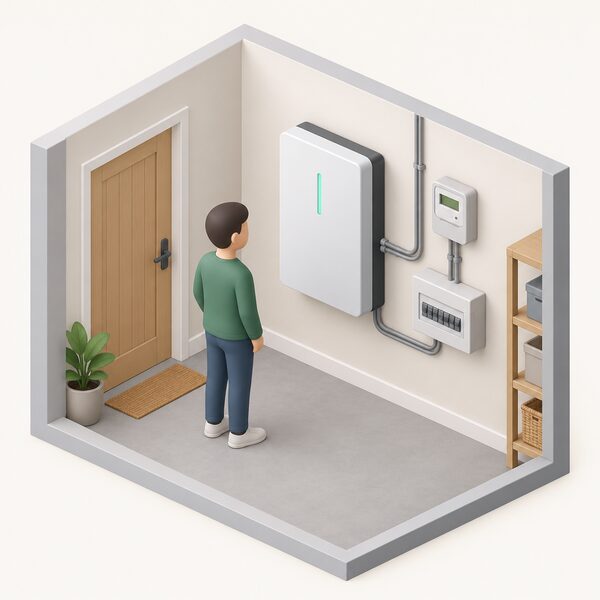
100Green sells three multi-rate tariffs designed for different lifestyles2. Multi-rate is the category that includes time-of-use pricing, where different prices apply at different times of day or on different days8. Ofgem groups domestic tariffs into three main types: fixed rate, standard variable, and multi-rate9.
Time-of-use tariffs are entirely optional, and a household can ask about flexibility in the tariff, such as the ability to switch between tariffs or opt out of time-of-use pricing11. That flexibility question is the one worth asking before signing up, because a multi-rate tariff only pays off if the household can shift load into the cheap windows.
| Tariff type | What it does | Who it tends to suit |
|---|---|---|
| Fixed rate | One price for a set term | Households wanting certainty |
| Standard variable | Price moves with the supplier's rates | Households wanting no tie-in |
| Multi-rate (three at 100Green) | Different prices at different times | Households that can shift usage2 |
The three multi-rate options are the part of the range that connects to a household's own generation and storage. A time-of-use import tariff paired with a battery allows cheap-rate electricity to be bought overnight and used during the day, and paired with solar it allows self-consumption to be maximised before export. The general mechanics are set out in time-of-use electricity tariffs and shifting electricity use to cheap-rate periods.
What the range does not do is remove the supplier relationship. Every one of these tariffs is a contract with a licensed supplier, settled through the grid, and priced by that supplier. The independence gained is in when electricity is bought, not in whether it is bought.
Green gas: how the 100% claim is certified
Green gas claims are certified through two instruments: renewable gas guarantees of origin (RGGOs) and biomethane certificates4. These are the gas-side equivalent of the certificates used on the electricity side, and they are what allows a supplier to describe gas as renewable when the molecules entering the network are indistinguishable from any others.
100Green's certification is at least 10% green gas on all tariffs and 100% on its Ekoenergy tariff4. The 10% floor is the level Uswitch's Green Accreditation scheme requires for a tariff to count its gas as certified renewable1. So the standard 100Green gas tariff meets the accreditation threshold, and the Ekoenergy tariff goes well beyond it.
The sourcing route is anaerobic digestion, the process by which organic material is broken down to produce biogas1. Independent guidance names 100Green as the only supplier offering 100% green gas achieved through anaerobic digestion13.
"The only supplier that offers 100% green gas, which it achieves through a process called anaerobic digestion, is 100Green"
The distinction between the two certification levels matters for a household weighing the claim. A tariff at 10% certified renewable gas is not a 100% green gas tariff, even if the supplier's overall marketing describes the company as offering 100% green gas. The Ekoenergy tariff is the one carrying the full claim.
On independence, green gas is a partial step. It displaces some fossil gas at the sourcing level and supports anaerobic digestion capacity in the UK, but the household remains connected to the gas grid and dependent on gas for heating and hot water unless the heating system itself changes. The fuel source is greener; the infrastructure dependence is unchanged.
The 100 Origin tariff: 100% green gas on every unit
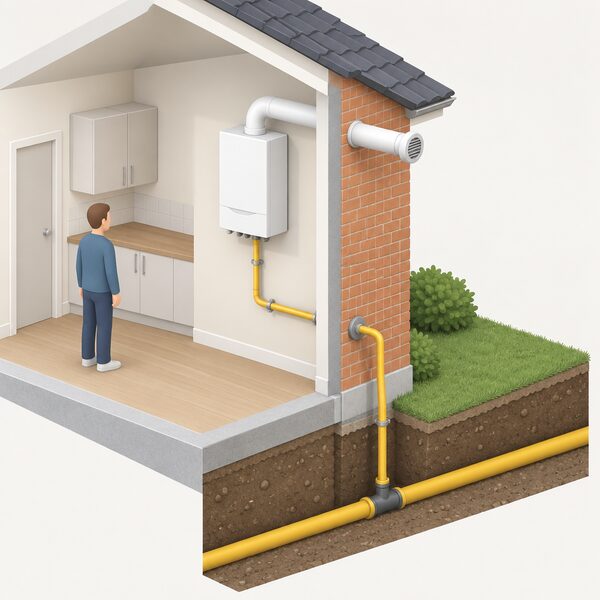
The tariff carrying the full green gas claim is the Ekoenergy tariff, certified at 100% green gas4. This is the product for a household that wants every unit of gas it burns to be matched to renewable production rather than to a 10% minimum.
The practical difference between this and the standard gas tariff is the certificate volume behind it. Both tariffs deliver the same molecules through the same pipes. What differs is how much renewable production the supplier has contracted to match the consumption, and therefore what the household is paying for.
The cost of that difference is not published in the material available here. Prices for 100Green tariffs are quoted by the supplier rather than listed in a public price table, so a household comparing the Ekoenergy tariff against the standard gas tariff is comparing two quotes rather than two published rates.
For a household thinking about independence, the Ekoenergy tariff is the strongest sourcing claim available on gas from a UK supplier, and it is still a sourcing claim. It does not reduce the volume of gas burned, does not insulate the household from gas price movements, and does not change the fact that the home depends on the gas network. Households wanting to cut gas dependence altogether are looking at electrification, and the tariff questions that follow are covered in heat pump electricity tariffs and dual fuel tariffs.
Export tariff: 12p per kWh for solar households under 15kW
The export rate is 12p per kWh for 100Green customers with a total installed capacity of up to 15kW, as recorded in April 20265. The 15kW ceiling is generous by domestic standards: most household solar arrays are well under it, so the rate is available to typical installations rather than only to the smallest.
The market context matters here. Export rates across suppliers run from 1p to 25p per kWh5, so 12p sits in the upper half of the range without being the top rate. For comparison, one variable export tariff is recorded at 15p per kWh as of May 202614.
The legal framework is the Smart Export Guarantee, which came into force on 1 January 2020 under the Smart Export Guarantee Order 201915. Under it, households with eligible generation are paid for electricity exported to the grid16. In SEG Year 5, 337.8 GWh, or 76.2% of exported electricity, was on tied tariffs, meaning tariffs where the export payment is linked to the household also buying its import electricity from the same supplier15.
That tied-tariff figure is the key to understanding the 100Green export rate. An export tariff at 12p is most valuable to a household that is also buying its import electricity from 100Green, because that is the arrangement the rate is designed around. A household exporting to one supplier while importing from another is in a different commercial position.
For independence, an export tariff is the clearest financial expression of self-generation: the household is paid for what it does not use. It does not reduce dependence on the grid for the hours when the panels are not generating, and it does not remove the supplier from the relationship. The wider picture is in the Smart Export Guarantee and SEG export rates.
Costs, billing and switching

100Green accepts Direct Debit3. Beyond that, the material available here does not publish a rate card, so costs are quoted by the supplier rather than listed. That is normal for a smaller supplier, and it means a household comparing 100Green against a larger supplier is comparing a quote against a published tariff.
On exit fees, the rules are general rather than supplier-specific. Exit fees are typically around £100 per fuel for leaving a fixed contract early17. Ofgem rules mean no exit fee applies in the final 49 days of a fixed-term contract, and the household has the right to switch freely in that window18. Standard variable tariffs carry no exit fee at all20. One survey found that 93% of consumers who thought they had an exit fee on their current contract were on a no-exit-fee deal21.
Switching itself is a 14-day process in contract terms: the cooling-off period is the 14 days after signing up within which the deal can be cancelled22. A household that changes its mind inside that window can cancel for free.
Billing and payment questions, including what happens if a supplier goes out of business, are covered in tariff rules and consumer protections and prepayment and pay as you go energy tariffs.
Prepayment support: emergency credit and Additional Support Credit
100Green supports traditional prepayment meters, topped up at PayPoint, Payzone or Post Office outlets2, and prepayment is accepted3. One consumer review notes the supplier is not the best choice if you are on a prepayment meter7, so the practical experience may differ from the formal position.
Once any debt on the account is settled, the supplier may be able to change a prepayment meter to a credit meter9. That is the route out of prepayment for a household that has cleared arrears.
Additional Support Credit is the formal mechanism for prepayment customers in vulnerable situations who have self-disconnected or are at risk of doing so12. Ofgem's expectations are that it is used as a vital tool for that group, that repayment terms are aligned with the customer's ability to pay, and that suppliers consider alternative forms of support where appropriate12.
Wider support routes exist alongside it. Suppliers offer affordable repayment plans, hardship funds and grants, debt write-off schemes, energy efficiency support, and emergency credit or payment assistance24. Trust-funded advice centres help complete grant applications to the British Gas Energy Trust and other schemes including the Warm Home Discount and ECO, and can help with Priority Services Register sign-up25. Take Charge provides energy advice, money and debt advice, benefits claims support, funding for energy saving home improvements, and emergency support including fuel, food and vouchers26.
For a household on prepayment, the independence question is sharper than for anyone else. A prepayment meter means paying for energy before using it, which removes the risk of arrears but also removes the buffer that a credit account provides. The support mechanisms above exist precisely because that buffer is absent.
Warm Home Discount and the qualifying date

The Warm Home Discount requires being a domestic customer of a participating supplier, named on the energy bill or account, and in receipt of certain qualifying benefits on the qualifying date for that year27. For winter 2025/26 the qualifying date was 24 August 202527. Housing Benefit is among the qualifying benefits28.
Customers who were with 100Green on 24 August 2025 with their name on the bill qualify for the £150 Warm Home Discount payment. The date is the one that matters: a household that switched to 100Green after that date is not in the qualifying group for that winter, whatever its circumstances.
Households in park homes have a separate route. If you live in a park home and pay your site owner for your energy, you could qualify for the Park Homes Warm Home Discount Scheme29.
The Warm Homes: Local Grant operates through an online form on GOV.UK to check eligibility, and the form may ask about benefits received, household income in one year, tax and deduction costs in one year, council tax costs in one year, and mortgage or rent costs in one year30. That is a different scheme from the Warm Home Discount and has its own assessment.
For independence, the discount is a reduction in cost rather than a change in supply. It does not alter where the energy comes from or who supplies it. It matters most to households on prepayment or low incomes, where the £150 is a meaningful share of a winter bill.
Awards, ratings and the company behind the tariffs
100Green's customer service record is the strongest part of its case. It was ranked first out of 17 energy companies when rated by 11,945 members of the public in the annual Which? customer survey7. It also ranked first in the supplier comparison table for January to March 20263.
The Which? assessment records a complaints score of 12 out of 157. SignVideo is available, which provides British Sign Language interpretation for customer contact3.
On the green claims themselves, Uswitch operates a Green Accreditation scheme that rates the greenest tariffs by certain criteria so customers can see how green a tariff really is9. That scheme's 10% renewable gas requirement is the threshold 100Green's standard gas tariff meets1.
The company behind the tariffs is Green Energy (UK) Ltd, the licence name on Ofgem's FiT licensee contact list6. The telephone number listed there is 01920 483 0456. A separate consumer listing gives 0192 048 61563, so the two published numbers differ.
For a household weighing independence, the position is this. 100Green offers a genuinely distinctive sourcing proposition on both fuels, an export rate in the upper half of the market, and a customer service record that independent surveys rate highly. What it does not offer is any reduction in the physical dependencies: the grid, the gas network, a supplier relationship, and for prepayment customers a pay-before-use arrangement. The tariff changes where the energy comes from and what a household is paid for what it exports. It does not change the infrastructure the home sits on. Households thinking about that wider question will find it set out in tariffs and household energy independence and comparing energy tariffs.
Sources31 cited
- Green energy tariffs explained, Uswitch, 2026-09-04
- 100Green energy company review, Which?, 2026-06-16
- 100Green supplier details, Citizens Advice, 2026-09-20
- Differences between green energy suppliers, Which?, 2026-06-16
- Smart Export Guarantee rates: the best and worst SEG tariffs, Which?, 2026-04
- FiT licensee contact details, Ofgem, 2026-09-17
- Which? energy survey results, Which?, 2026-01-19
- Time-of-use tariffs: the benefits, Smart Energy GB, 2026-04-24
- Energy tariffs explained, Uswitch, 2026-02-17
- Understanding your electricity and gas bills, Ofgem, 2026
- How to use a smart meter to save money, Smart Energy GB, 2026-04-24
- Additional Support Credit: our expectations, Ofgem, 2025-11-06
- Gas only energy guide, Uswitch, 2026-09-07
- Smart Export Guarantee, Solar Energy UK, 2026-05-12
- Smart Export Guarantee Annual Report Year 5, Ofgem, 2025-12
- Solar panels and retrofitting your home, Oxfordshire County Council, 2026-09-17
- How to switch energy supplier, Which?, 2026-05-15
- How to complain about your energy bill, Which?, 2026-07-30
- Understanding energy bills, StepChange, 2026-09-20
- Standard rate tariffs, Uswitch, 2026-08-26
- Understanding consumers' energy tariff choices, Ofgem, 2025-07
- How do I avoid exit fees when switching energy, Energy Helpline, 2026-09-20
- Compare energy suppliers, Uswitch, 2026-09-17
- Help with water, phone and broadband bills, British Gas Energy Trust, 2026-07-14
- Fuel and money advice, British Gas Energy Trust, 2026-08-12
- Worried about your energy bills, Electricity North West, 2026-09-19
- Warm Home Discount Scheme: England and Wales, GOV.UK, 2026-02-26
- Warm Home Discount Scheme briefing, House of Commons Library, 2026-09-17
- If you live in a home with a business energy contract, Ofgem, 2026
- Warmer homes, Greater London Authority, 2026-09-17
- Smell gas, SGN, 2026
 100GreenA profile of 100Green, the small UK supplier selling 100% renewable electricity and 100% green gas, covering its tariffs, certifications, customer service ratings, switching terms and prepayment support.