

In this answer
Short answer
A free gas safety check is a benefit attached to your gas account, not a general service. If you are vulnerable and live on your own, or if everyone who lives in your household is vulnerable, your gas supplier can arrange a free gas safety inspection for your home1. The same benefit appears on Priority Services Register listings across the gas networks, described as a free gas safety check to make sure your gas appliances are working safely, with eligibility criteria applying2.
The check itself costs nothing to the household. What it is not is a boiler service, and it is not a repair visit. It is an inspection of each gas appliance and flue for safe operation, carried out by a Gas Safe registered engineer. The cost that does exist sits on the other side of the line: where a check is not free, a gas safety appliance check has been recorded at between £40 and £705, and engineers set their own charges, with Gas Safe Register advising households to obtain quotes from three different engineers before hiring1.
The practical question is eligibility, and it turns on two things: who is in the household, and whether the home is owner occupied. Homeowners on certain benefits may be eligible for a free annual gas safety check, arranged by contacting the gas supplier to confirm6. The sections below set out the rule, the twelve month rhythm, what the visit covers, and what to do if the supplier will not arrange one.
What a free gas safety check is, and what it costs
The free check is a safety inspection of the gas appliances and flues in a home, provided at no charge to the household by the gas supplier under the terms of its licence. It exists because a gas appliance that is burning incorrectly, or a flue that is not drawing properly, is a risk to the people living with it, and the households least able to pay for an inspection are often the ones most exposed.
Cost is where the confusion starts. The check is free to the eligible household, but gas safety work in general is not. A gas safety appliance check has been recorded at between £40 and £705. That figure is old and should be read as an indication that paid checks carry a real cost rather than as a current market price. Gas Safe Register states plainly that it has no control over engineers' charges and advises obtaining quotes from three different engineers before hiring someone1.
There is a separate free service that is often confused with this one. The Health and Safety Executive runs a free Gas Safety Advice Line offering advice on gas safety1, and the National Gas Emergency Service is a free 24 hour helpline11. Neither of those inspects your appliances. Advice and emergency response are free; the inspection of your own boiler is the thing that is free only if you qualify.
For a household's energy independence, this is a small but real transfer: a safety obligation that would otherwise sit with the occupant is carried by the supplier, at the supplier's cost, for as long as the household qualifies. What it does not do is remove the dependence on the gas network itself, or on the supplier as the gatekeeper of the benefit. If the supplier changes, the arrangement moves with the account.
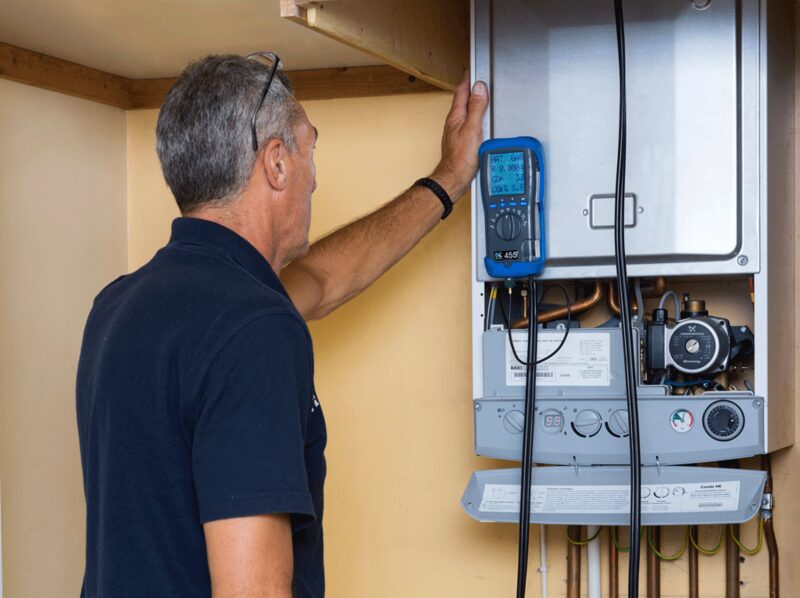
Who qualifies: vulnerable households and those living alone
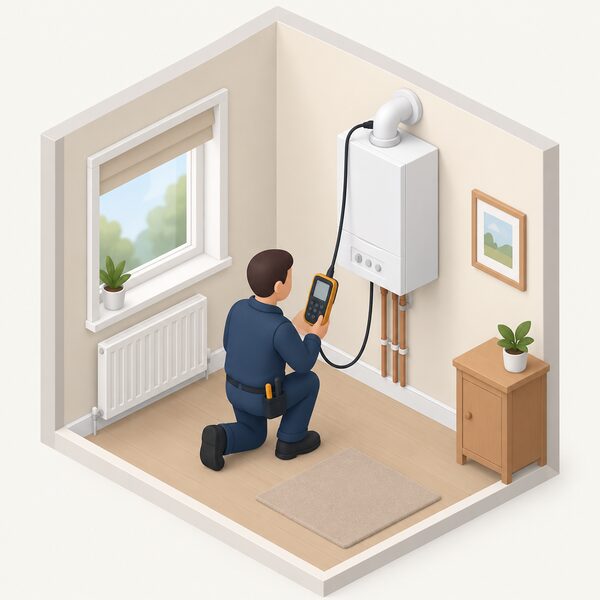
The core rule is set out in guidance for vulnerable consumers: if you are vulnerable and live on your own, or if everyone who lives in your household is vulnerable, your gas supplier can arrange a free gas safety inspection for your home1. Both limbs matter. A vulnerable person in a household with non vulnerable adults does not meet the second limb on its own, and a household of adults where nobody is vulnerable does not meet the first.
The benefit is also listed on Priority Services Register material published by the gas networks. SGN, SGN Scotland and Northern Gas Networks all describe a free gas safety check to make sure your gas appliances are working safely, with eligibility criteria applying2. The register itself is a free service that helps households that experience an unexpected interruption to gas supply12, and it is the practical route by which most people are identified.
Owner occupiers on benefits are a second qualifying group. National Energy Action states that if you are a homeowner and on certain benefits you may be eligible for a free annual gas safety check, and directs households to contact their gas supplier to check eligibility6. Citizens Advice uses the same formulation: you might be able to get a free annual gas safety check if you own your home and claim a means tested benefit7. The two descriptions differ slightly in emphasis, one saying certain benefits and the other means tested benefit, and the supplier is the body that applies the test.
"If you are vulnerable and live on your own, or if everyone who lives in your household is vulnerable, your gas supplier can arrange a free gas safety inspection for your home"
Two limits are worth stating. The benefit excludes rented accommodation where it is the landlord's duty to arrange the check13, so tenants should look to the landlord rather than the supplier for the inspection itself. And the criteria have been drawn tightly on purpose: when the standard licence condition on free gas safety checks was reviewed, the proposal was not to extend it to include pregnant women, because of the potential difficulty in identifying pregnancy alongside the already tightly drawn criteria for the service14.
The supplier's licence obligation, and the once-every-12-months rule
Free gas safety checks sit inside the standard licence conditions that govern how suppliers treat customers in vulnerable situations. Ofgem's review of that support lists providing free gas safety checks to eligible customers among the obligations14. The scheme rules for gas suppliers are also set in legislation, which defines a scheme gas supplier as a licensed gas supplier who supplied gas to GB domestic customers on 31 December preceding the start of the scheme year and was connected to a compulsory scheme electricity supplier15. In other words, the duty attaches to gas supply, and it attaches to suppliers of a certain size and standing.
The interval is twelve months. The benefit is described consistently as a free annual gas safety check6. For landlords, the parallel duty is explicit: a landlord must arrange for an annual gas safety check to be carried out within 12 months of the installation of a new appliance or flue which they provide, and annually thereafter, by a Gas Safe registered engineer16. The Health and Safety Executive states that a gas safety check must be done every year on each gas appliance or flue17, and strongly advises that gas appliances and flues are regularly checked for safety at least once every 12 months8.
There is useful flexibility in the timing. For the annual check, the check can be carried out up to two months before the date it needs to be carried out while retaining the original deadline date1. That matters for landlords managing a portfolio, and it is a reasonable guide to how the annual rhythm works in practice for anyone on a repeating cycle.
In Northern Ireland the framework is separate. Guidance there sets out that tenants should make sure gas appliances or flues they own are regularly maintained, with a safety check carried out at least once every 12 months by a Gas Safe registered installer18. The twelve month rhythm is the same; the body of rules behind it is not.
How to apply: speaking to your gas supplier
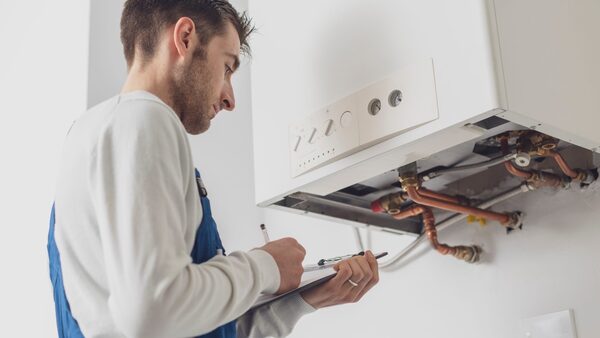
The application route is deliberately simple, and it is the same in every description: contact your gas supplier to check your eligibility9. There is no national application form and no separate body that arranges the visit. The supplier holds the account, applies the criteria and books the engineer.
Two things help the call go smoothly. First, be specific about household composition and benefit status, because those are the criteria the supplier is testing against. Second, if you are not already on the Priority Services Register, ask about it in the same call. The register is free, and free gas safety checks are listed among the benefits attached to it, subject to eligibility criteria2.
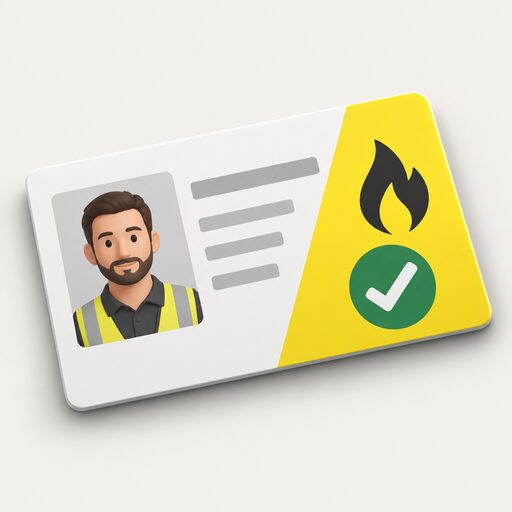
When the engineer arrives, the household has a check of its own to perform. Ask to see the engineer's Gas Safe ID card, check that they are qualified for the specific type of gas work being done, and verify the registration at the Gas Safe Register website19. If there is any doubt, the register can be reached on its freephone helpline, 0800 408 55008. The same number verifies an engineer's credentials20.
If the visit identifies a fault, the check ends and the repair begins as separate work. Nothing in the free check obliges the supplier to carry out remedial work at no cost, and the engineer's charges for that work are their own.
What the check covers, and how it differs from a service
A gas safety check examines each gas appliance and flue in the property for safe operation. It is an inspection and test, not a clean and maintain. Firms in the market treat the two as separate service lines: gas safety testing and inspection is listed as its own service alongside boiler work21. A check can identify that an appliance is unsafe or performing poorly; a service is what addresses wear, combustion settings and component condition.
The distinction has a practical consequence for households weighing up what to book. A free check satisfies the safety question for the year. It does not extend appliance life, and it does not replace manufacturer servicing recommendations. Where a household wants both, they are two pieces of work, and only one of them is free to eligible households.
There is one situation where no annual check is required at all. Where a property has no gas appliances but pipework or a flue passes through it, there is no requirement for an annual gas safety check, but the pipework must still be maintained in a safe condition and repairs carried out17. So a home with a gas supply but no appliances is not exempt from keeping the installation safe; it is exempt from the annual inspection of appliances that do not exist.
The Priority Services Register benefit is framed with the same limit: a free annual gas safety check, excluding rented accommodation where it is the landlord's duty13. Tenants in rented homes therefore get the check through the landlord's obligation rather than through their own supplier account, and the landlord's duty runs on the same twelve month cycle16.
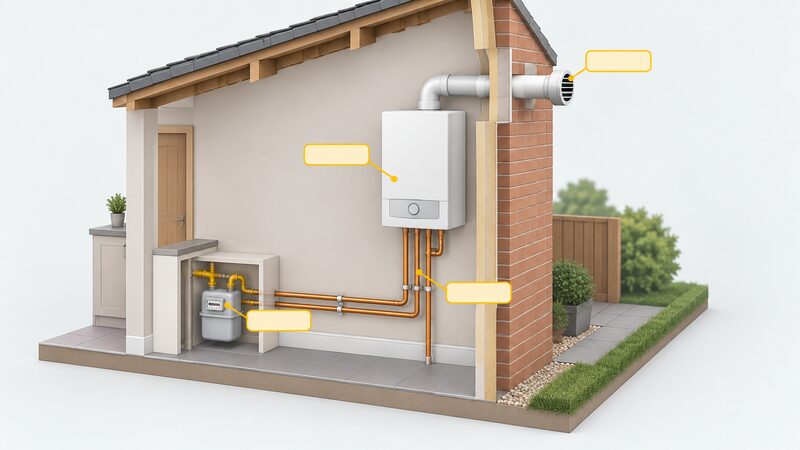
Where else to turn if your supplier won't arrange one
The first step is a complaint to the supplier. The Energy Ombudsman's rule is that a complaint must be raised with the supplier in the first instance, and if the issue is not resolved after eight weeks, or a deadlock letter is received, the Ombudsman can take it on free of charge10. That is the formal route when a supplier declines to arrange a check the household believes it qualifies for.
There is a second, separate request worth knowing about. Households can contact their gas supplier and ask for a GT1 check22. This is a distinct request from the free gas safety check and is made to the same supplier.
If the home is rented, the duty sits elsewhere. Tenants need to contact their landlord to arrange a safety check for all gas appliances and flues by a Gas Safe registered engineer23. That is the landlord's obligation, not the supplier's, and it runs annually16.
Where a check is not free and a household decides to pay for one, the market is unregulated on price. Gas Safe Register has no control over engineers' charges and advises obtaining quotes from three different engineers before hiring someone1. The same advice appears in the landlord guidance16. There is no published range to work from, so prices are installer quoted.
For households in Northern Ireland, the gas safety framework is set out separately, including the maintenance and check duties that apply to appliances and flues18. The Consumer Council for Northern Ireland and the Utility Regulator are the relevant bodies there rather than the GB arrangements described above.
Sources23 cited
- Gas safety in the home: frequently asked questions, Health and Safety Executive, 2026
- Code of Practice for Consumers in Vulnerable Circumstances, Utility Regulator, 2025
- Priority Services Register: SGN, Fuel Bank Foundation, 2025
- Priority Services Register: SGN Scotland, Fuel Bank Foundation, 2025
- Priority Services Register: Northern Gas Networks, Fuel Bank Foundation, 2025
- My boiler isn't working, Northern Gas Networks, 2026
- Gas and carbon monoxide safety, Electricity North West, 2026
- Gas safety: advice for owner occupiers, Health and Safety Executive, 2026
- Why it's vital to use a qualified gas engineer, Heating and Hotwater Industry Council, 2025
- Worried about your energy bills, Energy Ombudsman, 2026
- Get winter ready, Energy Networks Association, 2026
- Struggling with energy bills, National Energy Action, 2026
- Gas safety in rented accommodation, Health and Safety Executive, 2011
- Ofgem completes review into how suppliers support customers in vulnerable situations, Ofgem, 2022
- The Gas Safety (Management) (Amendment) Regulations 2026, legislation.gov.uk, 2026
- Gas safety checks: what they involve, Health and Safety Executive, 2026
- Getting extra support from your energy supplier, Citizens Advice, 2026
- Domestic gas installation and health and safety, nidirect, 2025
- Gas connections: FAQs and guidance, Northern Gas Networks, 2025
- Energy for those with sight loss, Uswitch, 2026
- Gas leaks and safety, Uswitch, 2026
- Getting your gas back on: repair and replacement, Cadent Gas, 2026
- Smell gas, SGN, 2026
 Gas Safety in the HomeYour landlord has to arrange a yearly gas safety check by a Gas Safe registered engineer and give you the record if you rent.
 Gas Safety RulesAnyone working on gas in your home has to be on the Gas Safe Register, whether they are installing, fixing or servicing an appliance.
 Living Off the Gas GridNo mains gas at your home?
 The Full Energy Suppliers GuideWho the UK's domestic gas and electricity suppliers are, how the market is structured across Great Britain and Northern Ireland, what a supplier is licensed and obliged to do, how the price cap limits bills, what happens when a supplier fails, and who regulates it all.
 F-Gas RulesWho is legally allowed to work on the gas in your home air conditioning?
 Energy Security for HouseholdsCan a household really protect itself from gas and electricity price shocks, and what actually makes a difference?