

In this answer
Short answer
Energy debt write-off grants are one-off awards that clear arrears on a live gas or electricity account. The largest single published figure is the British Gas Energy Trust Energy Support Grant, worth up to £1,700, with credit account customers needing to owe between £100 and £1,700 to qualify1. The Trust's Energy Support Fund has been described as helping households with up to £2,000 in fuel debt2, and hardship grants across the sector have ranged from £100 to £2,000, with no repayment required3.
The money goes to the supplier, not the household. It clears debt that already exists rather than funding new heating, insulation or appliances, and it does not reduce a bill going forward. That distinction matters for energy independence: a write-off removes a past liability and stops arrears blocking a switch or a tariff change, but it leaves the household still buying units from a supplier, still exposed to price changes, and still dependent on the grid.
Applications are made through the scheme administrator or through your own supplier. The British Gas Energy Trust runs a pre-application checker to see whether you could be eligible for its energy debt write-off grants and to access further support4. Suppliers themselves are expected to offer payment plans, payment breaks or reductions, and access to hardship funds5.
What energy debt write-off grants are, and what they are not
A write-off grant is direct relief against arrears. The Trust describes its grants as helping clear energy debts and as usually aimed at people with low incomes3. The Energy Support Grant is specifically for clearing outstanding debt on a current energy account in the applicant's name at their place of residence, and applications for closed accounts cannot be considered1. That last condition is the one that catches most people out: a household that has already left a supplier and is being pursued for an old balance is outside the scheme.
The scale of the problem these schemes address is set out in Ofgem's consultation work. Ofgem modelled a national Debt Relief Scheme that could write off £0.5 to £1 billion7, and its impact assessment expects Phase 1 to benefit between 280,000 and 400,000 accounts, writing off between £312.4 million and £472.9 million6. StepChange has described a debt relief scheme with the potential to deliver up to £1 billion in write-off for eligible customers8. Those are proposals and consultations, not open schemes, and no household can apply to them today.
What the grants are not is equally important. They do not pay ongoing bills, they do not fund insulation or heating upgrades, and they do not change the unit rate a household pays. A grant clears the past; the standing charge and the consumption charge continue. For a household thinking about energy independence, a write-off is a reset of the arrears position, not a reduction in dependence on a supplier or on the gas network.
"These grants can help clear energy debts and are usually aimed at people with low incomes."
Who runs the schemes: suppliers, trusts and the Energy Support Fund
There is no single national energy debt write-off scheme open to all households. What exists is a patchwork of supplier hardship funds and charitable trusts, each with its own rules.
The British Gas Energy Trust is the largest visible operator. It is a charity, and its grants are open to anyone, with no requirement to be a British Gas customer3. Its energy debt grants are available to eligible customers of any energy supplier9. That is the single most useful fact for a household whose own supplier has no scheme: the Trust is not restricted to one company's customers.
Suppliers run their own arrangements alongside it. Ofgem's guidance sets out that suppliers can give access to financial support called hardship funds5, and that they can agree a payment plan, a payment break or a reduction5. The Trust lists the support options as affordable repayment plans, hardship funds and grants, debt write-off schemes, energy efficiency support, and emergency credit or payment assistance9.
The Energy Support Fund is a distinct Trust scheme, separate from the Energy Support Grant, and has been described as offering debt relief grants that can help households with up to £2,000 in fuel debt2. Its eligibility rules require the applicant to be seeking a grant to clear outstanding debt on a current energy account in their name, or to be a member of the household, with the account relating to their main residence2. A related Trust fund, the Individuals and Families Fund, requires an outstanding debt on a current or open gas, electricity or dual fuel account in the applicant's name, again at their main residence2.
Some funds go further than debt. The E.ON Next Energy Fund covers debt relief and, separately or alongside it, replacement energy efficient freestanding appliances10. That is the exception rather than the rule: most schemes clear arrears only.
Eligibility: which households and which suppliers' customers qualify
Eligibility splits into two questions: whether the household fits the scheme's criteria, and whether the account is one the scheme will pay.
On the account, the pattern across the Trust's schemes is consistent. The debt must sit on a current or open account in the applicant's name, at their main residence, and closed accounts are excluded1. The Energy Support Grant adds a debt band: credit account customers must owe between £100 and £1,7001. A household owing less than £100, or more than £1,700, falls outside that particular grant even if everything else fits.
On the household, the schemes are aimed at people on low incomes3. The published criteria do not reduce to a single benefits test in the way that, say, the Warm Home Discount does. For comparison, the Warm Home Discount's Core Group 1 in England and Wales covers customers of participating suppliers who received the Guarantee Credit element of Pension Credit on the qualifying date for that scheme year11. Energy debt grants are not structured that way; they are assessed by the administering trust or supplier.
| Scheme | Maximum award | Account condition | Who can apply |
|---|---|---|---|
| Energy Support Grant | up to £1,7001 | Current account, £100 to £1,700 owed1 | Eligible customers of any supplier9 |
| Energy Support Fund | up to £2,000 in fuel debt2 | Current account in your name or household, main residence2 | Trust applicants meeting its criteria2 |
| Individuals and Families Fund | Not stated | Current or open gas, electricity or dual fuel account, main residence2 | Trust applicants meeting its criteria2 |
| E.ON Next Energy Fund | Not stated | Debt relief plus appliance replacement10 | E.ON Next customers10 |
| Supplier hardship funds | Varies | Supplier's own rules5 | That supplier's customers5 |
Where a household is not eligible for a debt write-off, the wider grant landscape may still help, though with different purposes. The Energy Company Obligation is an energy supplier led energy efficiency scheme in England, Scotland and Wales designed to tackle fuel poverty and help reduce carbon emissions, focused on supporting low-income households12. ECO Flex is run by private companies (installers) and the funding for the improvements is awarded by the energy suppliers13. Under the Great British Insulation Scheme, suppliers are responsible for meeting their obligations and ensuring that they, and any members of the supply chain acting on their behalf, comply with scheme requirements14, and suppliers can use their own energy debt data to identify and refer eligible households through local authority and supplier flex15. Those routes fund physical measures, not arrears.
How to apply, step by step

The route depends on whether the household is applying to a trust or to its own supplier.
- Check eligibility with the Trust's pre-application checker, which is designed to show whether you could be eligible for its energy debt write-off grants and to access further support4.
- Gather the account details: the debt must be on a current account in your name at your main residence, and closed accounts cannot be considered1.
- If the Trust route does not fit, ask your supplier directly. Suppliers can review your current payments and debt repayments16, agree a payment plan, a payment break or a reduction, and give access to hardship funds5.
- Where a supplier scheme requires a referral rather than a direct application, note that suppliers can use their own energy debt data to identify and refer eligible households15.
- Keep the account open throughout. A closed account removes the debt from the schemes that pay it1.
There is no published price for applying, because there is nothing to buy. These are grants, not products, and no installer or intermediary needs to be involved. A household should be wary of any service that charges a fee to obtain a debt write-off grant.
Where a grant fits in the wider picture of household energy support
A debt write-off is one instrument among several, and it is worth being clear about what each does.
Debt relief clears arrears. Energy efficiency schemes reduce consumption. Direct bill support reduces a specific bill. The Energy Bills Support Scheme, for instance, gave all households with a domestic electricity connection a £400 non-repayable grant as a credit from their supplier in Autumn 2022, automatically and without an application17. That is a different mechanism entirely: universal, automatic, and applied to a bill rather than to arrears.
Local authority services often act as the front door for the wider set. East Herts Home Energy Support Service offers information on grants and help with checking eligibility, benefits support, supplier switching advice, energy saving advice, debt advice and referral to other organisations or contractors18. In Northern Ireland, NI Energy Advice provides referrals to energy grants and other sources of help19. In Wales, Green Homes Wales offers access to grant funding alongside loans for specific energy efficiency measures, reducing out-of-pocket expenses20. Some council services are explicit about their limits: Your Home, Better does not offer grants or funding, but can identify sources that could help towards the costs of home energy projects21.
For a household carrying arrears, the practical sequence is to deal with the debt first, because arrears can block other options. A supplier may install a prepayment meter without permission where you are building up an energy debt and other ways of recovering that debt have not worked22. Clearing the balance removes that exposure. It does not, however, change the underlying position: the household still buys energy from a supplier, still depends on the grid, and still faces the same unit rates. A write-off restores the starting line; it does not move it.

If your supplier refuses or has no scheme
Suppliers are expected to help. Ofgem's guidance states that if you are struggling to pay for energy or think you may get into difficulty, you can ask your supplier to agree a payment plan, a payment break or a reduction, review your payments and debt repayments, and give access to hardship funds5.
If a supplier has no debt write-off scheme of its own, the Trust route remains open, because its energy debt grants are available to eligible customers of any energy supplier9. That is the practical answer to a refusal: the household is not limited to its own supplier's fund.
There is also a compliance dimension to the proposed national scheme. Under Ofgem's statutory consultation, any supplier who fails to demonstrate compliance with the licence changes, including by failing to respond, will be ineligible to submit a claim and will not be reimbursed24. That applies to the proposed Debt Relief Scheme rather than to today's voluntary funds, but it signals the direction of regulation.
Grants and prepayment meter debt
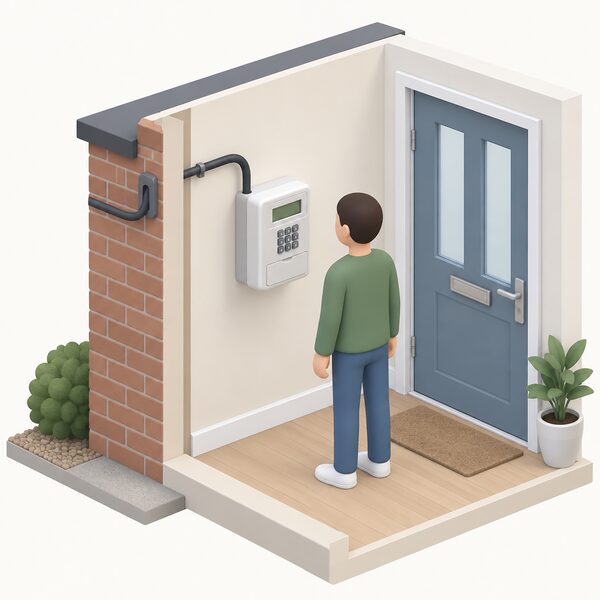
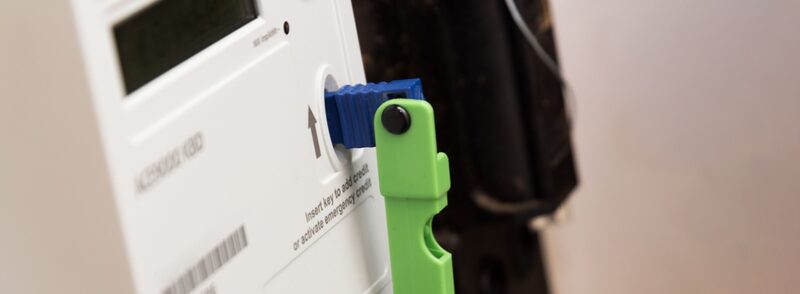
A prepayment meter account can still be a current account, which is what the Trust's schemes require1. Being on a prepayment meter does not by itself disqualify a household, provided the debt sits on a live account in the applicant's name at their main residence.
The connection between debt and prepayment meters runs the other way too. A supplier may install a prepayment meter without permission where you are building up an energy debt and other ways of recovering your debt have not worked22. Ofgem has also reviewed market compliance on prepayment meter installations25. For a household in arrears, clearing the balance through a write-off removes one of the conditions under which a forced installation can occur.
Emergency credit is a separate mechanism and does not clear debt; it defers it. Households on prepayment meters dealing with arrears should treat the two as distinct: emergency credit keeps the supply on, a write-off grant reduces what is owed.
The limits of what a write-off achieves
Three limits are worth stating plainly.
First, the schemes are discretionary and account-specific. The debt must be on a current account in the applicant's name at their main residence, and closed accounts are excluded1. A household that has already switched away, or whose debt has been sold on, is outside the main routes.
Second, the amounts are modest against the scale of the problem. A single grant of up to £1,7001 or up to £2,000 in fuel debt2 clears one household's arrears. Ofgem's modelling of a national scheme runs to £0.5 to £1 billion7, which indicates how far individual grants fall short of the aggregate need.
Third, a write-off does not change the household's energy position. The home still draws from the grid, still buys from a supplier, and still faces the same standing charges and unit rates. Where a household wants to reduce that dependence rather than just clear the past, the routes are energy efficiency measures under supplier obligations12 and the wider grant landscape described by local authority services18. Those are separate applications with separate criteria, and none of them clears arrears.
Sources25 cited
- Grants available, British Gas Energy Trust, 2026-09-17
- British Gas Energy Support Fund, British Gas Energy Trust, 2023-09-29
- What are energy hardship funds and how do they work?, British Gas Energy Trust, 2026-02-26
- Grants and help for you, British Gas Energy Trust, 2026-03-23
- Getting help if you can't afford your energy bills, Ofgem, 2026-09-17
- Debt Relief Scheme Impact Assessment, Ofgem, 2025-11-06
- Resetting the energy debt landscape: the case for a debt relief scheme, Ofgem, 2024-12-12
- Energy debt relief scheme, StepChange, 2026-09-20
- Help with water, phone and broadband bills, British Gas Energy Trust, 2026-07-14
- Individuals, Charis Grants, 2026-09-17
- Warm Home Discount Scheme: if you live in Scotland, GOV.UK, 2026-02-26
- Energy Company Obligation, House of Commons Library, 2026-09-17
- ECO4 Scheme, West Lindsey District Council, 2025-07
- Great British Insulation Scheme: energy suppliers, Ofgem, 2026-09-17
- Great British Insulation Scheme: local authorities, Ofgem, 2026-09-17
- Get help with your energy bills, Ofgem, 2026-09-17
- Energy Bills Support Scheme, House of Commons Library, 2026-09-20
- Home and business grants, schemes and advice, East Herts District Council, 2026-09-17
- Energy saving grants in your area, nidirect, 2026-09-17
- Green Homes Wales, Development Bank of Wales, 2026-09-17
- Grants and funding, Tameside Council, 2026-09-17
- Installing a prepayment meter without your permission, Ofgem, 2026
- Installing a prepayment meter without your permission, Ofgem, 2026
- Debt Relief Scheme Statutory Consultation, Ofgem, 2025-11
- Market Compliance Review: prepayment meter installations, Ofgem, 2026-06-03
 Energy Debt and ArrearsHow much do households in the UK owe their energy supplier, and how many people are behind on their bills?
 Energy Debt Repayment PlansOwe money to your energy supplier?
 The Full Grants and Schemes GuideWhich grants can you actually get right now, and how do you apply for them?
 Apply for a Home Energy GrantThe application sequence common to funded schemes: the checker, the survey or assessment, the installer, the paperwork and the sign-off.
 Check Which Energy Grants ApplyWhich energy grants can you actually get right now, and which have closed?
 Prepayment Meter DebtHow debt repayment is set on a prepayment meter, the limits on the share of a top-up that can be taken, and how to have a rate reviewed.