
In this answer
Short answer
There is no general rule that energy debt over 12 months old is written off. What the rules and the guidance actually provide is a right to repay at a pace that matches how the debt built up, and a separate, still-developing route to write-off for eligible customers. Independent guidance states that a supplier should be able to arrange for a household to repay the debt over the same time that it was built up, rather than demanding a large sum immediately1. That is the practical answer for most old balances: the debt does not vanish, but it can be spread.
The write-off route is the Energy Debt Relief Scheme, described in an independent consultation response as having the potential to deliver up to £1 billion in write-off for eligible customers2. That is a potential figure for a scheme, not a guarantee for any individual household, and eligibility sits with the scheme's own rules rather than with the age of the debt.
Alongside repayment and write-off sits a third layer: help with the debt itself. Suppliers can agree a payment plan, a payment break or a reduction, review payments and debt repayments, and give access to hardship funds3. Hardship funds can help clear energy debts and are usually aimed at people with low incomes4.
Can energy debt be written off: what the rules actually allow
The rules draw a line between how debt is collected and whether it is cancelled. On collection, the position is consistent across the guidance: a supplier should arrange repayment over the same period the debt was built up, rather than demanding a lump sum1. Independent guidance also states that suppliers must give advice and work out a payment plan which takes into account what you can afford7, and that a supplier in a debt case is required to help set up an affordable repayment plan8. Suppliers must also give information on how to avoid getting into debt, how to pay back debt, and a summary of the money owed9.
On cancellation, the Energy Debt Relief Scheme is the mechanism under discussion. An independent consultation response puts its potential at up to £1 billion in write-off for eligible customers2. The scheme is aimed at eligible customers, so the age of a debt is not the test; eligibility is.
There is also a statutory ceiling on how much debt write-off can cost. The Warm Home Discount (England and Wales) Regulations 2026 refer to the part of any costs of debt write-off in relation to an England and Wales domestic customer that exceeds £2,000 in a scheme year5. That is a cost cap on the scheme, not a limit on what a household can have written off, and it applies in England and Wales.
For a household's energy independence, the distinction matters. A repayment plan keeps the supply relationship intact and the account under the household's control. A write-off, where it applies, removes the balance but depends on a scheme and a supplier's participation rather than on anything the household can trigger alone.
Where Citizens Advice fits in when you owe your supplier

Citizens Advice is the main non-supplier route into advice and, in harder cases, into advocacy. It offers information and support on a range of topics, including struggling to pay bills, problems with your energy supplier or energy supply, saving energy at home, and getting a better energy deal3. The same scope is set out in Ofgem's advice pages10.
Its role is not limited to general guidance. Citizens Advice publishes a quarterly five star rating on energy suppliers' customer service, including complaints11, which gives a household a view of how a supplier performs before a dispute hardens. The consumer service also acts as the gateway to the Extra Help Unit, which can negotiate with a supplier on a household's behalf where a case is referred12.
The practical sequence is that a household raises the issue with the supplier first, using the supplier's own duty to review payments and debt repayments3, and brings in Citizens Advice where the supplier's response is inadequate or the household cannot manage the contact alone. Where a supplier has failed to resolve a complaint, the consumer service can consider referral onward.
"The consumer service adviser may be able to refer your case to the Extra Help Unit who can negotiate with your supplier"
Struggling to pay bills: what help is available and how to reach it
The first tier of help sits with the supplier. Where a household is struggling to pay for energy or thinks it may get into difficulty, it can ask the supplier to agree a payment plan, a payment break or a reduction, to review payments and debt repayments, and for access to hardship funds3. Supplier schemes and grants can cover energy costs, paying off energy debt, and making energy-saving improvements to the home4.
The second tier is charitable and independent. Energy hardship funds are grants from energy companies to help people struggling to pay gas and electricity bills, and they can help clear energy debts, usually aimed at people with low incomes13. In Northern Ireland, suppliers support customers who are struggling by referring them to organisations such as Advice NI, which offers free, independent debt advice14.
The third tier is local and national advice. A free telephone advice service is available to help with benefits, money and bill problems15. For energy efficiency and schemes such as the Warm Home Discount, the Simple Energy Advice website offers impartial advice to households in England and Wales16. National Energy Action offers advice and support to help people across England, Wales and Northern Ireland stay warm and manage energy costs17.
What this means for independence is straightforward: none of these routes removes the household's dependence on a supplier or on the grid, and most of them keep the account running rather than ending it. They reduce the cash pressure, which is what protects the supply.
Extra Help Unit: when Citizens Advice can take on your case
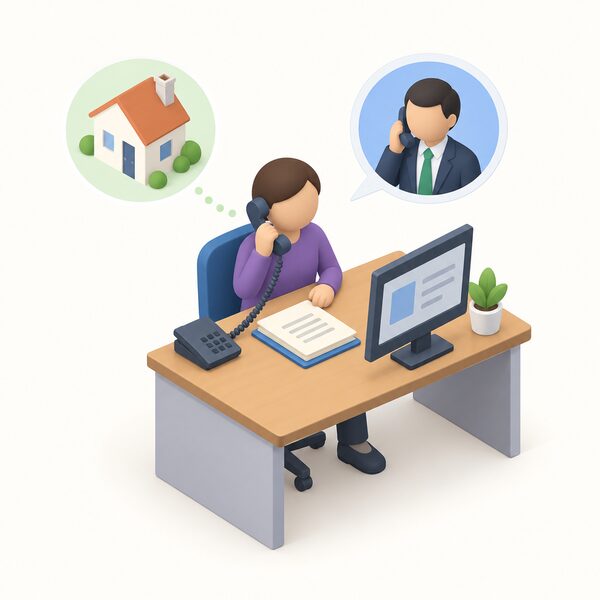
The Extra Help Unit is the escalation route for households that cannot resolve a dispute themselves. It supports vulnerable consumers by raising complaints with energy suppliers on their behalf, particularly where there is a risk of disconnection or complex personal circumstances17. It acts for consumers in vulnerable circumstances, by referral18.
The referral criteria are specific. The consumer service may refer a case where someone needs support with a difficult or urgent complaint, cannot deal with their energy supplier on their own due to personal circumstances, is considered vulnerable, or is at risk of being disconnected from an energy supply10. The unit can then negotiate with the supplier on the household's behalf12.
Two related protections sit alongside this. Where a household has a smart meter, a supplier could potentially disconnect the supply remotely without notice, but only after contacting the household to discuss options for repaying the debt, such as a repayment plan, and visiting the home to assess personal circumstances, for example whether the householder is disabled or elderly12. Separately, a text relay service is available for the hard of hearing on 18001 0300 244 400020.
Complaining to your supplier or the Energy Ombudsman
A complaint starts with the supplier. The Energy Ombudsman's own guidance is to speak to the energy supplier first to raise a complaint, and if they cannot help, the Ombudsman aims to fairly and impartially resolve the dispute21. The same escalation route is set out for energy bill complaints22 and for complaints about suppliers installing prepayment meters without permission24.
The Ombudsman can be used where a reported problem is not fixed within 8 weeks, where the household and the energy company cannot agree how to fix it, where a deadlock letter is received, or where the household is not happy with the decision received6. The outcomes available are practical action, such as crediting or cancelling an account or changing a tariff, an apology, a financial award, or a combination of these, and recommendations may be made to prevent the issue happening again25.
Heat network consumers have their own route. The Energy Ombudsman handles heat network complaints, but consumers should first notify their heat supplier and try to resolve the issue26. Heat network consumers can access the Ombudsman's free and independent dispute resolution service27.
For independence, the Ombudsman route is the point at which a household's position stops depending on the supplier's goodwill. It does not remove the dependence on the supplier for supply, but it can force a correction to the account.
England and Wales: where this help applies and who it covers
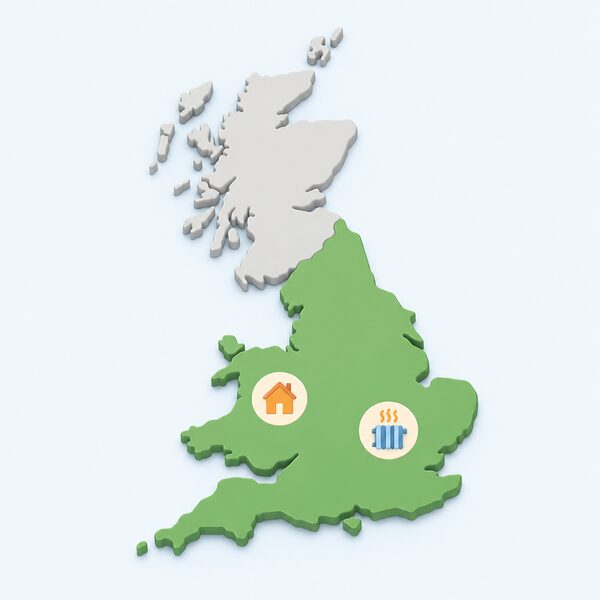
Support is not uniform across the UK, and the differences matter for anyone trying to work out which scheme applies. The Energy Bills Support Scheme applied to consumers in England, Scotland and Wales29. The Winter Fuel Payment applies to England and Wales30. The Warm Home Discount (England and Wales) Regulations 2026 provide for the further continuation in England and Wales of the scheme to reduce fuel poverty5.
Eligibility for the Warm Home Discount is defined by group. Core Group 1 in England and Wales covers customers of participating energy suppliers where the person named on the energy account received the Guarantee Credit element of Pension Credit on the qualifying date for that scheme year31. That is a benefit-linked test, not a debt test.
Advice coverage also varies. National Energy Action offers advice and support across England, Wales and Northern Ireland17. The Simple Energy Advice website covers England and Wales for energy efficiency and schemes such as the Warm Home Discount16. In Wales, government support pages cover help with home energy bills, and Business Wales covers help with small business or microbusiness energy bills32. In Northern Ireland, suppliers refer customers who are struggling to organisations such as Advice NI14.
Two different numbers appear for Welsh energy advice, 0808 223 1144 and 0800 702 2020, and no ruling settles which is current. A household in Wales can also use the Simple Energy Advice website for impartial efficiency advice16.
Sources32 cited
- Help if you're struggling to pay your energy bill, Which?, 2026-08-19
- Energy Debt Relief Scheme consultation response, StepChange, 2026-09-20
- Get help with your energy bills, Ofgem, 2026-09-17
- Getting help if you can't afford your energy bills, Ofgem, 2026-09-17
- Warm Home Discount (England and Wales) Regulations 2026, legislation.gov.uk, 2026-03-27
- Complain about your energy supplier or network operator, Ofgem, 2026
- Energy consumer rights, Uswitch, 2025-08-19
- Your home energy checklist, National Energy Action, 2026-09-10
- Energy debt guide, Uswitch, 2026-06-09
- Complain about your energy supplier, Ofgem, 2026
- Information for consumers, Consumer Scotland, 2026-08-26
- If you've been told your energy supply will be disconnected, Citizens Advice, 2026-09-17
- What are energy hardship funds and how do they work?, British Gas Energy Trust, 2026-02-26
- Advice if you're struggling to pay your energy bills, nidirect, 2026-09-17
- Grants and funding, Tameside Council, 2026-09-17
- Energy Company Obligation: homeowners and tenants, Ofgem, 2026-09-17
- Worried about your energy bills, Energy Ombudsman, 2026-03-24
- Heat networks regulation: consumer protection guidance decision, Ofgem, 2026-01-13
- Heat networks consumer protections draft guidance, Ofgem, 2025-09-05
- Benefits, Social Security Scotland, 2026-09-17
- Facilitated complaints resolution, Energy Ombudsman, 2026-09-20
- Understand your electricity and gas bills, Ofgem, 2026
- How your electricity or gas bill is calculated, Ofgem, 2026
- Check energy suppliers can install prepayment meters without household permission, Ofgem, 2026
- What to expect, Energy Ombudsman, 2026-09-19
- Heat networks consumer protections draft guidance, Ofgem, 2025-09-05
- Greenhill Housing Association dispute, Energy Ombudsman, 2026-09-19
- Metropolitan Infrastructure Limited dispute, Energy Ombudsman, 2026-09-19
- Energy Bills Support Scheme, House of Commons Library, 2026-09-20
- Winter Fuel Payment statistics for winter 2024 to 2025, GOV.UK, 2025-09-16
- Warm Home Discount Scheme, House of Commons Library, 2026-02-26
- Get help for your home or business energy bills, Ofgem, 2026-09-17
 Energy Debt Repayment PlansOwe money to your energy supplier?
 Prepayment Meter DebtHow debt repayment is set on a prepayment meter, the limits on the share of a top-up that can be taken, and how to have a rate reviewed.
 Energy Debt and ArrearsHow much do households in the UK owe their energy supplier, and how many people are behind on their bills?
 Energy Complaints and RedressMaps the routes a householder has when an energy supplier, network operator, broker or heat network gets something wrong, which body handles which dispute, and what the Energy Ombudsman can and cannot do.
 Complaining About a SupplierHow do you complain about your energy supplier, and how long should it take?
 Older People and Home EnergyOlder people often pay more to keep warm and can miss out on help they are entitled to.