
In this comparison
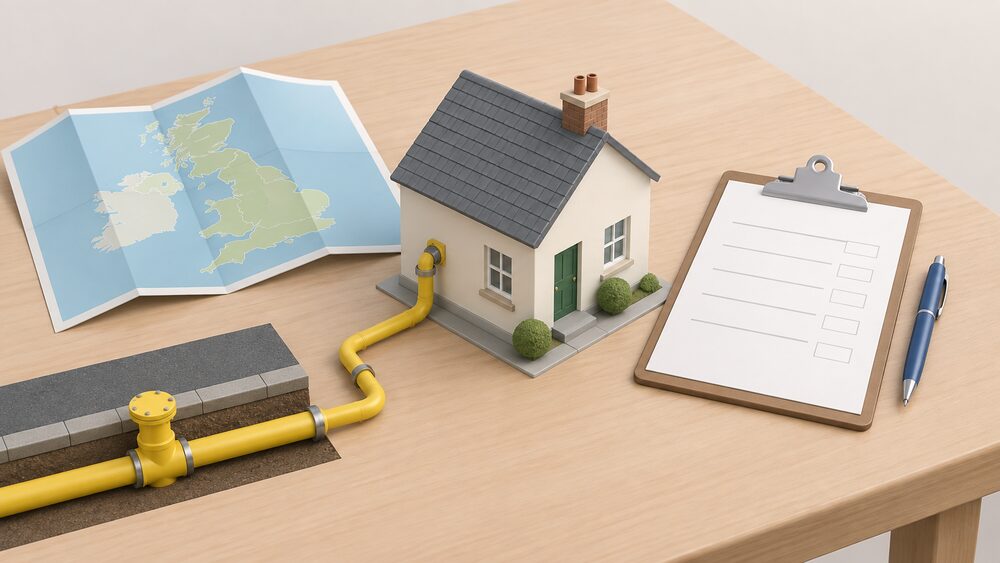
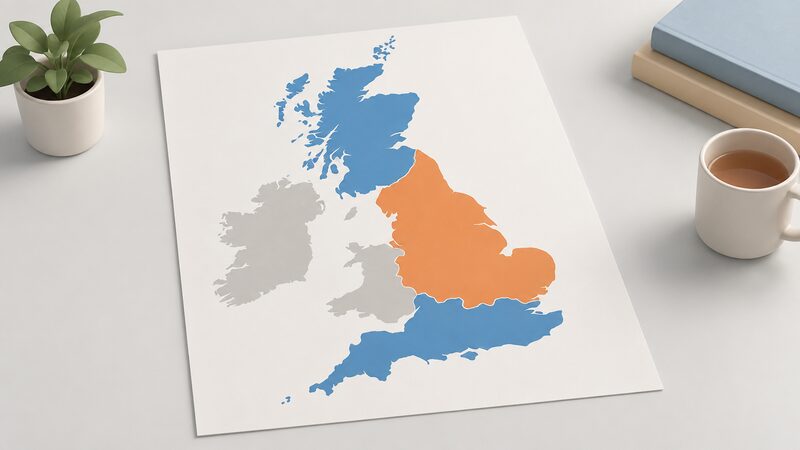
SGN and Cadent are two of the four companies that own the gas distribution pipes in Great Britain, and they do not overlap. SGN covers Scotland and southern England, including South London1. Cadent covers the North West, West Midlands, East Midlands, South Yorkshire, East of England and North London1. A householder never chooses between them: the address decides. What the householder does need to know is which one to call, which one approves work on the service pipe, and which one is responsible when something goes wrong.
The practical difference shows up in scale and in the connection process. SGN describes its pipes as delivering natural and green gas to 5.9 million homes and businesses in the south of England and across Scotland2. Cadent's own figures put it at 22 million homes, and the two documents disagree on SGN's customer count, with one SGN page stating six million homes and businesses across southern England and Scotland3. Both networks run the same national emergency line, 0800 111 999, and both hand meter work to the gas supplier rather than doing it themselves4.
For a household's energy independence, the network operator is the part of the gas chain a home cannot influence at all. The pipes are a regulated monopoly, the connection is theirs to approve, and the meter belongs to a supplier. What a household can control is the appliance, the tariff and whether it stays on gas at all. This page sets out where each network operates, what each does for a householder, and what the rules are for connections, meter moves and emergencies.
Who serves your address: SGN or Cadent
The gas distribution networks in Great Britain are owned by four groups: Cadent Gas Ltd, Northern Gas Networks Limited, SGN, and Wales & West Utilities Limited6. Gas transmission is the exception, owned and operated by National Grid Gas6. The Energy Ombudsman directs householders to the Energy Networks Association website to find out which network provider covers a given address7. That lookup matters because the network operator is not the company that sends the bill. The supplier is a separate business, and Cadent publishes a separate page to help householders work out who their gas supplier is1.
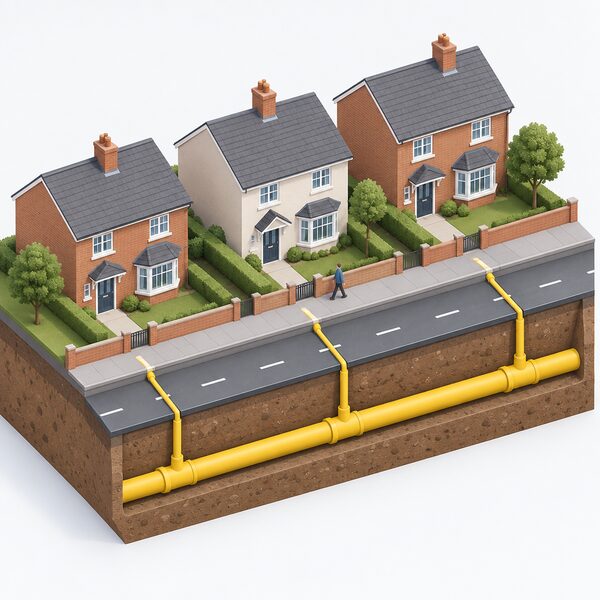
The distinction between supplier and network runs through everything that follows. The network owns the main pipe in the street and the smaller pipe branching off it that brings gas to a home or business8. The supplier buys the gas, bills for it, and is responsible for the meter5. A householder with a billing problem has a supplier issue. A householder with a leak on the service pipe, a smell of gas in the street, or a road being dug up outside has a network issue.
SGN's own description of its role is regional: it is the regional gas network provider for Scotland and the South of England9. Cadent's is the same shape in a different geography. Neither competes for domestic customers, and no householder can switch from one to the other. The only choice a household makes is whether to be connected to gas at all, which is a connection question rather than a network question.
Network areas: Scotland and southern England versus the Cadent heartlands
SGN's territory is Scotland and Southern England, including South London1. Cadent's is the North West, West Midlands, East Midlands, South Yorkshire, East of England and North London1. Between them they cover most of England and all of Scotland, with Wales & West Utilities and Northern Gas Networks filling the remaining regions6.
The geography has consequences for how work is done. SGN's published roadworks record for late 2026 shows the spread of its activity: urgent gas main replacement on the A3020 Shanklin Road after a current gas escape, planned works at Davidsons Mains providing new gas supplies to two local businesses, an emergency closure of Cramond Road South in Edinburgh, repair of third-party damage at a building site near Edinburgh Road in Cockenzie, and an approximately thirteen-week urgent main replacement on the A4074 at Chazey Heath in Reading. That is a network working simultaneously in Scottish cities and southern English towns.
Cadent's area is denser in population and in industrial gas use, which is part of why its household count is so much larger. Its published guidance covers the same ground from the householder's side: what to do if the gas goes off temporarily, how it keeps people safe on the doorstep, and how it connects homes and renewable gas suppliers to its network10.
For a household, the area map is mostly relevant at three moments: when reporting an escape, when applying for a connection or alteration, and when checking whether a road closure outside is network work. In each case the answer is determined by the address, not by preference.
Scale: 5.9 million SGN customers against 22 million Cadent homes
The size gap between the two networks is large and it shapes how each one behaves. SGN states that its pipes deliver natural and green gas to 5.9 million homes and businesses in the south of England and across Scotland2. Cadent's own material puts its coverage at 22 million homes1. Both figures are SGN's own, published at different times, and the difference is not resolved in the published material.
Scale matters to a household in a few concrete ways. A larger network has more planned mains replacement work, which is the trigger for small business compensation claims under the Gas (Streetworks) (Compensation of small businesses) Regulations 1996, and those claims apply only to planned gas mains replacement work, not to gas emergencies or escapes8. A larger network also has more simultaneous incidents, which is why Cadent states it will do its best to tell a householder in advance of a visit but that gas emergencies and other critical work may mean unannounced visits11.
SGN's scale is also visible in its green gas work. It states it has connected 35 biomethane plants to its networks, delivering clean heat to 258,000 homes12. That is a meaningful share of a 5.9 million customer base, and it is the clearest example of a distribution network changing what flows through its pipes rather than only maintaining them.
| SGN | Cadent | |
|---|---|---|
| Area | Scotland and Southern England, including South London1 | North West, West Midlands, East Midlands, South Yorkshire, East of England, North London1 |
| Households | 5.9 million homes and businesses2 | 22 million homes1 |
| Biomethane | 35 plants connected, 258,000 homes supplied12 | Connects homes and renewable gas suppliers to its network12 |
| Emergency line | 0800 111 9994 | 0800 111 9994 |
What each network does for you as a householder
Both networks do the same core job: they own and maintain the pipes that carry gas to a property, and they respond when those pipes fail. Cadent describes its role as operating the main gas pipe that supplies the street, as well as the smaller pipe branching off from it that brings gas to a home or business8. SGN's equivalent description is that its pipes deliver natural and green gas to 5.9 million homes and businesses2.
Beyond the pipes, both run support services that a householder can actually use. SGN offers extra help free of charge to people who need priority support, either temporarily or long term13. Its expert energy advice partners offer confidential, independent information about home energy efficiency, help with switching to better tariffs and support with clearing energy bill debt13. Those partners are the Centre for Sustainable Energy and the Energy Saving Trust14.
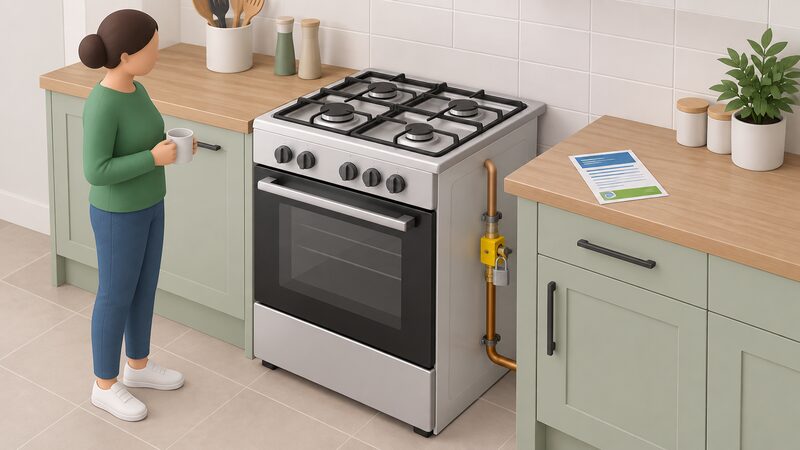
Cadent's householder-facing work includes connecting homes and renewable gas suppliers to its network, and a set of safety and winter guidance pages covering fire safety, flood advice and doorstep safety12. It also runs the locking cooker valve service, a free device that lets a householder or carer isolate a cooker supply, and it has partnered with the other UK gas distribution networks to offer that service nationwide15. Wales & West Utilities describes the same arrangement, naming Cadent, Northern Gas Networks and SGN as partners in the free nationwide service16.
The pattern is that the networks compete for nothing and cooperate on a great deal. Safety devices, priority support and the emergency line are shared infrastructure. What differs is the geography and the scale of the pipes underneath.
Connections, meter moves and disconnections: how SGN handles them
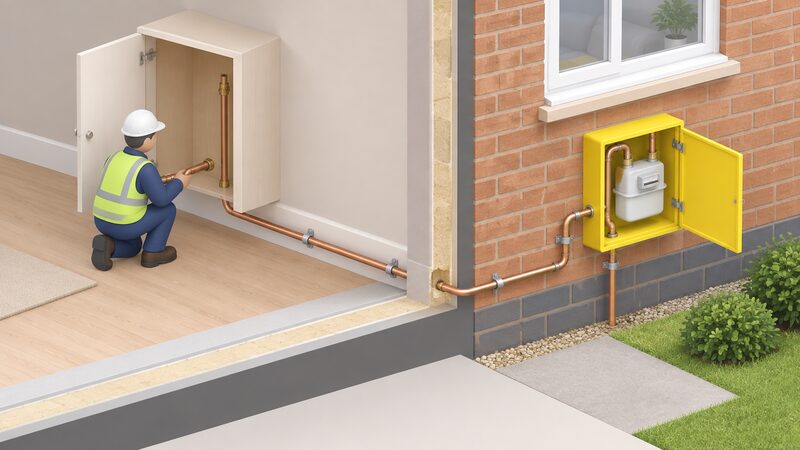
SGN offers help with a new gas connection to a property, moving a meter or existing gas pipes, and disconnection from the gas network17. It can move an existing meter or gas pipe, and it can disconnect a gas supply if the customer no longer needs it17. The common reasons for moving a meter are building work, moving the meter from inside a property to outside, and moving it so that it can be accessed more easily18.
The process runs in a fixed order. SGN states that a householder receives a quote for the work and, if happy to go ahead, can pay online; once payment is received, a dedicated team makes contact to discuss the work and arrange a date18. For a new connection, the application is made online, a site plan is needed for a new build or conversion, the land to be accessed must be owned by the applicant or written permission obtained from the landowner, and planning permission or a local authority permit must be in place if needed19.
Two limits are worth stating plainly. SGN cannot fit a new meter or upgrade an existing meter as part of a new connection job or service alteration5. For a new connection, the householder must contact a gas supplier to arrange for a meter to be fitted, and SGN provides a meter point reference number19. SGN engineers do hold contracts to replace old gas meters in certain parts of the UK, when scheduled as part of the policy meter exchange programme5.
The charges for alterations are published and vary by nation. SGN's figures are £103 +VAT to refit the meter in Scotland and £110 +VAT in Southern England inside the M25; refitting the meter and reconnecting meter outlet pipework is £207 +VAT in Scotland and £222 +VAT in Southern England inside the M2521. The documents also give two different figures for the wider alteration cost in Southern England inside the M25, £1007 +VAT and £710 +VAT, and that conflict is not resolved in the published material21. SGN's connections charges documents explain how charges are worked out for services specified in Standard Condition 4B of the Gas Transporter Licence, and the current documents take effect from 16 February 202620.
Payment for a standard quote is by debit card, credit card or PayPal. SGN accepts only Visa and Mastercard; American Express cards are not accepted and will be declined online19.
Emergency response and safety commitments
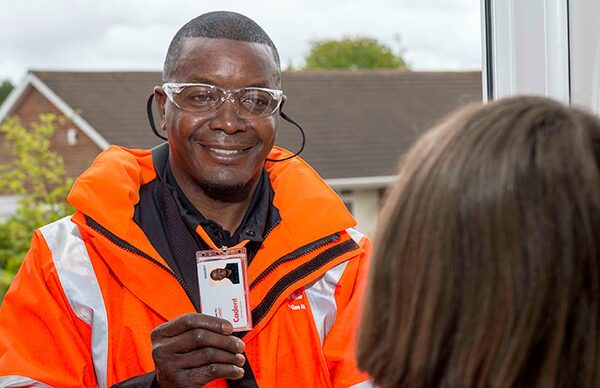
The national gas emergency line is 0800 111 999, free and available across the networks4. SGN publishes the same number and directs anyone who smells gas to call the National Gas Emergency Service immediately14. Calls to the National Gas Emergency Service and National Enquiry lines may be recorded and monitored4.
SGN's published customer promise sets out its response aims: to attend uncontrolled gas escapes within one hour and controlled escapes within two hours2. An uncontrolled escape is one where gas is escaping and cannot be isolated; a controlled escape is one where the supply has been shut off or the leak contained. Those are aims rather than guarantees, and they are the clearest published statement of what a householder should expect after reporting.
Cadent's role in the emergency service is direct. It is one of the four companies that make up the National Gas Emergency Service, and its first call operatives attend reported escapes9. Its published safety guidance covers the doorstep: engineers may need to visit, and while Cadent will do its best to tell a householder in advance, gas emergencies and other critical work may mean unannounced visits11. It also publishes a rule that matters after an incident: if an appliance has a fault, the supply will not be reconnected until it is checked by a Gas Safe engineer, and Cadent engineers are not qualified to repair appliances8.
The safety record behind these arrangements is not abstract. Published case studies describe non-fatal incidents involving gas, including a gas engineer and first call operative employed by Cadent and a member of staff at SGN, the regional gas network provider for Scotland and the South of England9.
"Aim to attend uncontrolled gas escapes within one hour and controlled escapes within two hours"
Extra help: priority services and partner support
Both networks run priority support for households that need it, and the entry point is the Priority Services Register. SGN administers the register and states that it helps identify customers who need priority support in a gas emergency or during an interruption2. Signing up is free14. SGN offers extra help free of charge to people who need priority support either temporarily or long term13.
What the register delivers is concrete. SGN provides PSR customers with alternative heating and cooking appliances when it needs to interrupt a gas supply, and access to hot food and hot water after 48 hours if the supply is off longer2. It also runs a Care and Repair service, helping eligible PSR customers with the costs of repair or replacement of gas fuelled appliances and gas pipework where SGN is required to isolate the gas supply following a gas emergency visit2. Cadent, regulated by Ofgem, states it has a responsibility to offer Priority Service customers an alternative heating or cooking supply10. Where a customer needs support beyond the items available, Cadent states it will work closely with its third-party supplier, who will look for alternative accommodation10.
Security is part of the service. Cadent operates a password scheme: passwords registered against Priority Services Register information will be shared with Cadent when an appointment is arranged through a gas supplier, so engineers can use them11.
The networks also fund shared services rather than running everything themselves. Disability Energy Support is funded by SGN, Cadent, Northern Gas Networks and Wales and West Utilities22. In Cheshire West, the network operators are SP Energy Networks for electricity and Cadent for gas, which is how a local authority describes the split to residents23. SGN's partnership network is aiming to help 500,000 vulnerable customers use energy safely, efficiently and affordably by 20263.
Hydrogen and net zero: where each network is heading
Both networks are working towards the same long-term picture, and both are at an early stage of it. Cadent states that following the government's decision on the UK heat strategy, it seeks to blend 20% hydrogen into the network, and that its network would look to move to 100% hydrogen by 2050, with hydrogen production becoming greener over time24. The government's own target is net zero by 205025.
SGN's nearer-term commitments are dated and specific. It aims to ensure all its business operations have net zero climate impact by 2045, to reduce natural gas emissions by maintaining and upgrading its cast iron pipes by 2032, and to develop biodiversity projects on its sites by 20262. It also commits to replacing its fleet with electric, hybrid or hydrogen fuel cell-powered vehicles as soon as possible2.
The green gas already flowing is biomethane rather than hydrogen. SGN has connected 35 biomethane plants to its networks, delivering clean heat to 258,000 homes12. That is the part of the transition a householder is most likely to be using without knowing it, since biomethane enters the same pipes as natural gas.
For a household, the honest reading is that the gas network is being maintained and incrementally decarbonised, not replaced. The pipes will still be there, the connection will still be the network's to approve, and the meter will still belong to a supplier. Independence from the network is not available to a gas-connected home; what is available is a clearer understanding of who does what, and of the support that exists when the supply fails.
Sources25 cited
- Who is my gas supplier, Cadent Gas, 2026
- Our customer promises, SGN, 2026
- 5,000 free carbon monoxide alarms and energy advice for older people in southern England, SGN, 2025
- Frequently asked questions, Cadent Gas, 2026
- Meter exchange, SGN, 2026
- Energy terms explained, Ofgem, 2026
- How we can help with network operators, Energy Ombudsman, 2026
- Under your feet, Cadent Gas, 2026
- Non-fatal case studies, CO-Gas Safety, 2020
- Support if you are temporarily off gas, Cadent Gas, 2026
- Keeping you safe on your doorstep, Cadent Gas, 2026
- Biomethane, SGN, 2026
- Extra help, SGN, 2026
- Reducing your energy usage, SGN, 2026
- Locking cooker valves, Cadent Gas, 2026
- Supporting you, Wales & West Utilities, 2026
- Gas connections for household customers, SGN, 2026
- Move your gas meter, SGN, 2026
- Apply for a new gas connection, SGN, 2026
- Connections documents and charges, SGN, 2026
- Alter your gas connection, SGN, 2026
- Disability Energy Support, Scope, 2026
- Support schemes, Cheshire West and Chester Council, 2026
- Future of gas, Cadent Gas, 2026
- Electricity distribution networks study: government response, GOV.UK, 2025
 Gas Distribution NetworksWho actually owns the pipes under your street, and who do you call when gas smells or the supply fails?
 Heat Network SuppliersWho supplies the heating in your home if it runs on a communal or district system?
 Getting a New Gas ConnectionHow a household applies for a new or upgraded gas connection, who carries out the work, the quotation and contribution rules, typical timescales, and what a connection means for a home's energy independence.
 Gas Safety in the HomeYour landlord has to arrange a yearly gas safety check by a Gas Safe registered engineer and give you the record if you rent.
 Who Supplies Your Energy?Not sure who bills you for gas or electricity?
 Gas Safety RulesAnyone working on gas in your home has to be on the Gas Safe Register, whether they are installing, fixing or servicing an appliance.