
In this guide
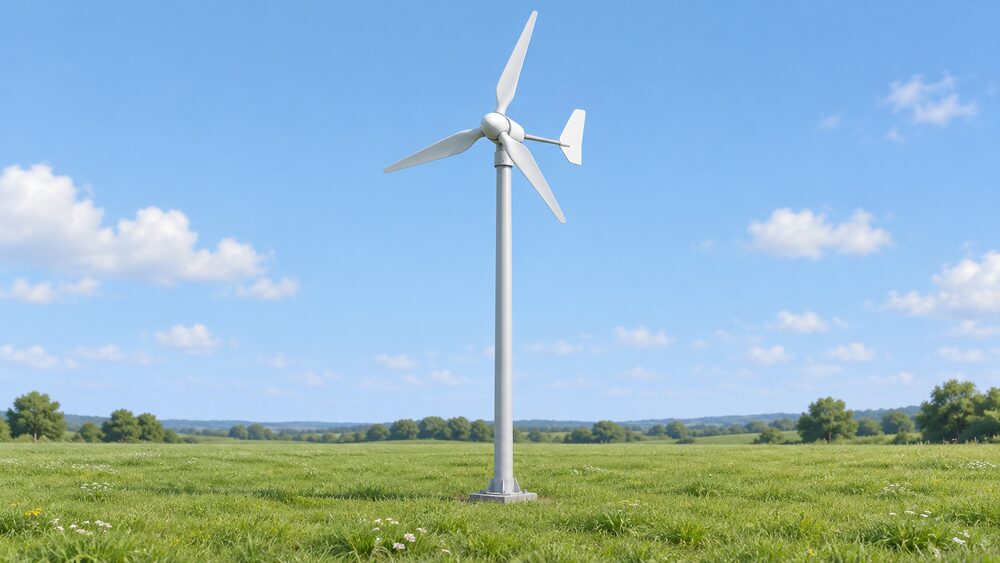
A Leading Edge wind turbine is a small wind machine from a British maker that has designed and built turbines since 2009, sold to householders, smallholders and off-grid sites rather than through a national retail chain. The company's own account places its British-designed and manufactured machines from that year. For a household weighing one up, the practical questions are what the machine produces, what it costs, what the warranty covers and whether the maker will still be there to support it.
The wider context is that wind is already a major UK resource: there are around 10,000 wind turbines in the UK including on and off shore, with enough capacity to meet 20% of the UK's electricity demand1. Small-scale turbines generate electricity from wind, and output depends on wind speed and location2. That single sentence is the whole commercial case and the whole risk: a Leading Edge machine on a windy, well-sited plot produces useful power, and the same machine in poor wind produces very little.
Costs are site-specific. Independent guidance puts a 6kW pole-mounted wind turbine system at around £31,0001, which is the figure to hold in mind for a mid-sized pole-mounted installation rather than a small off-grid machine. Wind turbines qualify for a lower rate of VAT in Great Britain only3, and wind and water turbines have been permanently added to the list of qualifying energy-saving materials4.
What a Leading Edge turbine offers a UK household
The offer is a British-made small wind turbine sold directly to the end user. That direct route matters for a technology where siting decides everything: a maker selling into a specific plot can size the machine to the site rather than to a catalogue. The company states its British-designed and manufactured turbines date from 2009, which places it among the longer-established names in a sector where several UK small wind firms have failed.
What the machine does is straightforward. Small-scale turbines generate electricity from wind, and output depends on wind speed and location2. There is no fuel, no flue and no gas connection. For a rural property with a good exposure, that means generation during the hours the wind blows, which in the UK is often not the hours of peak household demand.
The national picture supports the case for wind as a resource. The UK has around 10,000 wind turbines including on and off shore, with enough capacity to meet 20% of the UK's electricity demand1. The government's response to the Climate Change Committee's 2024 progress report notes the UK holds the largest pipeline of floating wind projects worldwide based on confirmed seabed exclusivity, at over 25 GW6. That is utility-scale context, not a household proposition, but it confirms that wind resource, not wind technology, is the constraint in most UK locations.
For a household, the honest framing is this: a Leading Edge turbine is a generation asset, not a supply contract. It reduces the amount of electricity bought from a supplier in proportion to how much the wind blows at that specific site. It does not remove the grid connection, the supplier relationship or the standing charge, and it does not remove the need for a back-up supply in a genuinely off-grid setting. The sections that follow set out the specifications, warranty, cost and company position that determine whether that trade is worth making.
Specifications and what drives output
The specification that matters most is not on the datasheet. Independent guidance states that an optimum wind speed of around five metres per second is needed1. A turbine rated at a given peak output will only reach that output in strong wind; at lower speeds, output falls away sharply. Two identical machines on two sites a few miles apart can differ by a factor of several in annual generation.
That is why site assessment dominates. Wind speed and location determine output2, and the practical sequence is to establish the average wind speed at the proposed hub height before choosing a machine. A pole-mounted installation raises the turbine into cleaner, faster air than a roof-mounted one, which is why the pole-mounted format dominates small wind.
Planning is the second specification constraint. In England, stand-alone wind turbines fall under permitted development only if the installation complies with Microgeneration Certification Scheme Planning Standards or equivalent standards5. Guidance for England notes that the policy in Wales may differ5, and Wales publishes its own planning permission guidance for wind turbines7. Scotland and Northern Ireland operate separate regimes again. The practical consequence is that the same machine can be permitted development in one nation and require a full application in another.
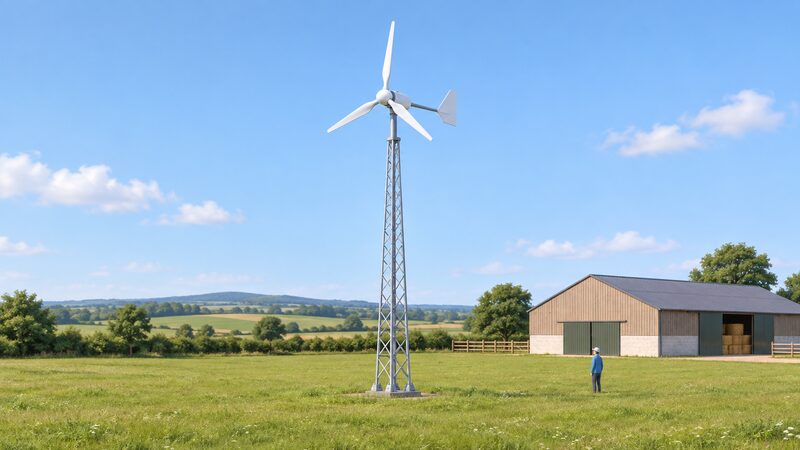
On the electrical side, a grid-connected turbine needs a connection agreement with the distribution network operator, and an off-grid one needs a charge controller, a battery bank and a dump load to absorb surplus. Those components, not the turbine, usually determine how much of the generated electricity a household actually gets to use.
Warranty and what it covers
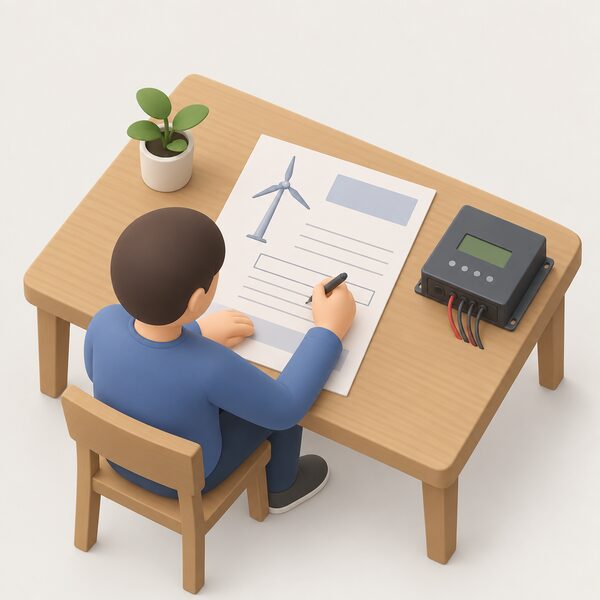
Warranty terms for small wind turbines are set by the maker and vary by product, so the terms for a specific Leading Edge model should be read before purchase rather than assumed from the sector. What the wider microgeneration market shows is that warranty expectations can be long where a scheme requires them. One approved innovation measure under the Energy Company Obligation requires that a warranty has been registered for the solar PV array, including system components, covering over at least a 25-year period8. That is a solar requirement, not a wind one, but it sets the benchmark against which a wind turbine warranty looks short.
For a wind turbine, the components that fail are usually mechanical and electrical rather than structural: bearings, yaw mechanisms, inverters and controllers. A warranty that covers the turbine but not the inverter, or that requires an annual service by an approved party to remain valid, shifts real cost back to the owner. The terms should be read for what is excluded as carefully as for the headline period.
There is also a practical registration step. Warranties on microgeneration equipment commonly require the installation to be registered, often through the installer or the maker's portal, with the serial number recorded. Missing that step can void cover even where the equipment is sound. For a household, the warranty question is therefore not only how long it runs but who has to do what, and by when, for it to remain valid.
What a Leading Edge turbine costs
There is no published list price for a Leading Edge machine, and prices are quoted per site. The figure that exists in independent guidance is for a comparable system: a 6kW pole-mounted wind turbine system costs around £31,0001. That covers a mid-sized pole-mounted installation as a complete system, not a small off-grid machine, and it is the number to use when comparing small wind against other generation.
Two things move a quote. The first is the tower and its foundations, which for a pole-mounted machine can be a substantial civil works item depending on ground conditions. The second is the electrical work: the run to the connection point, the inverter, and for off-grid sites the battery bank and controller. A turbine that looks affordable on a specification sheet can be dominated by these balance-of-system costs.
VAT treatment helps at the margin. Wind turbines qualify for a lower rate of VAT in Great Britain only3, and wind and water turbines have been permanently added to the list of qualifying energy-saving materials4. The Great Britain limitation means the relief does not extend to Northern Ireland under the published guidance, so a buyer there faces a different final figure for the same equipment.
| Cost element | What it covers | Basis |
|---|---|---|
| Turbine and tower | Machine, pole, foundations | Site-quoted |
| 6kW pole-mounted system | Complete installed system | Around £31,0001 |
| Electrical and controls | Inverter, cabling, connection | Site-quoted |
| Off-grid extras | Batteries, controller, dump load | Site-quoted |
| VAT | Lower rate, Great Britain only3 | Relief applies4 |
Against that outlay, the return is the electricity generated at the site's wind speed, valued at whatever the household would otherwise pay per unit, plus any export payment. Because output depends on wind speed and location2, the payback calculation is site-specific and cannot be read off a national average.
The company's status and what it means for buyers
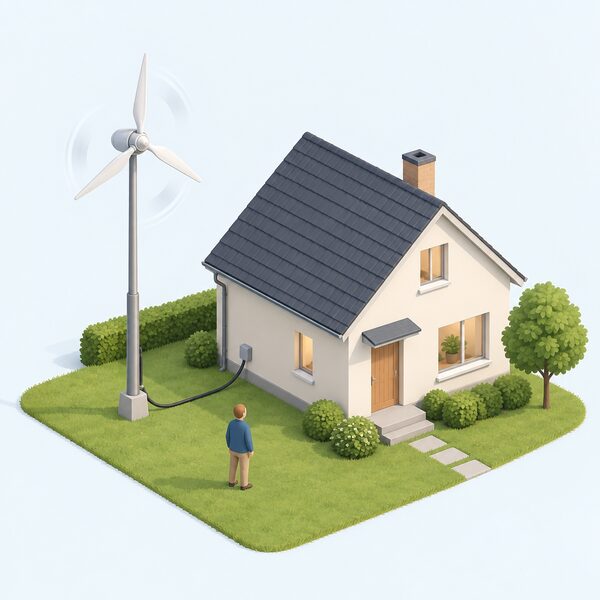
The company states it has designed and built small wind turbines since 2009, and its British-designed and manufactured machines date from that year. That is a long run in a sector with a poor survival record: several UK small wind manufacturers have failed or withdrawn from the market, leaving owners with orphaned equipment and no source of spares.
That history is the reason company status deserves its own section on a page like this. A wind turbine is a mechanical asset expected to run for many years, and its owner will need bearings, controllers and possibly a replacement inverter over that life. Where a maker has ceased trading, those parts become unavailable and the asset's value falls sharply, regardless of how well it performed when new.
For a prospective buyer, the practical checks are whether the maker is currently trading, whether spare parts are held, whether a service network exists and whether the warranty is backed by a company that will still exist to honour it. Those questions are not answered by a specification sheet, and they carry more weight for a turbine than for a product with a short service life.
"Small-scale turbines generate electricity from wind. these depend on wind speed and location"
What it means for household energy independence
A Leading Edge turbine delivers a genuine but partial form of independence. It generates electricity on site from a resource the household does not buy, which reduces the units drawn from a supplier in proportion to the wind at that location2. There is no fuel to purchase and no combustion, so the running cost after installation is maintenance rather than consumption.
What remains is substantial. A grid-connected turbine still depends on the distribution network for the connection, on a supplier for the import and export arrangements, and on the grid for the hours when the wind does not blow. The household still pays a standing charge and still buys electricity. Independence here means generating a share of consumption, not leaving the system.
An off-grid installation changes the balance but does not remove dependence. It trades the grid for a battery bank, a charge controller and a back-up generator, and it adds a dependence on the maker for spares and on the owner for maintenance. Because output depends on wind speed and location2, an off-grid site with a poor wind resource needs a larger battery and a larger back-up than one with a good exposure.
The national direction of travel is toward more wind, not less: the UK already has around 10,000 turbines meeting 20% of electricity demand1, and the government points to the largest pipeline of floating wind projects worldwide at over 25 GW6. For a household, the realistic position is that a small turbine is a hedge against purchased electricity, sized to a site, with the grid or a battery still doing the work when the wind drops.
Sources8 cited
- Wind power, Electricity North West, 2026-09-19
- Sustainable home energy solutions, Planning Portal, 2024-09-02
- Tax on shopping and services: energy-saving products, GOV.UK, 2026-09-17
- The Energy Saving Materials (Relief from VAT) Regulations 2022: explanatory memorandum, legislation.gov.uk, 2026-09-17
- Planning permission: stand-alone wind turbines, Planning Portal, 2026-09-17
- Accelerating to net zero: responding to the CCC progress report, GOV.UK, 2024-12-17
- Planning permission: wind turbines, Welsh Government, 2026-09-17
- ECO4 Innovation Approved Innovation Measures v1.5, Ofgem, 2023-10