
In this comparison
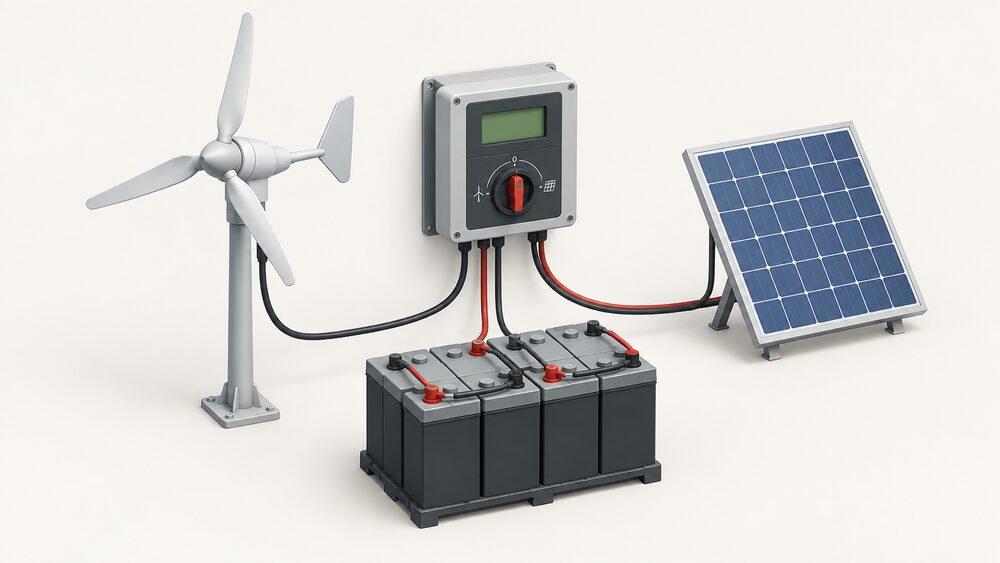
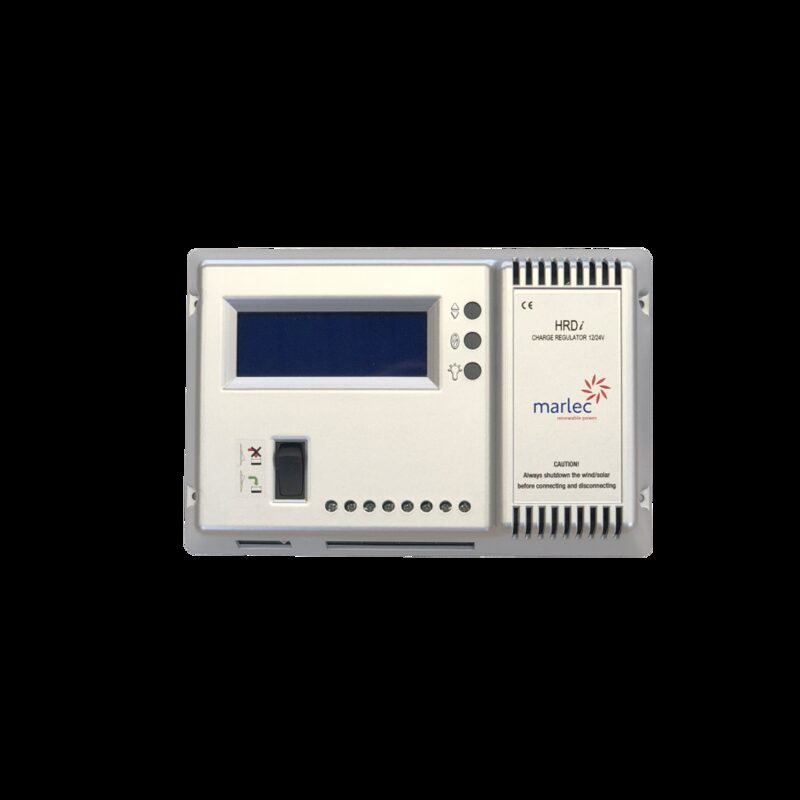
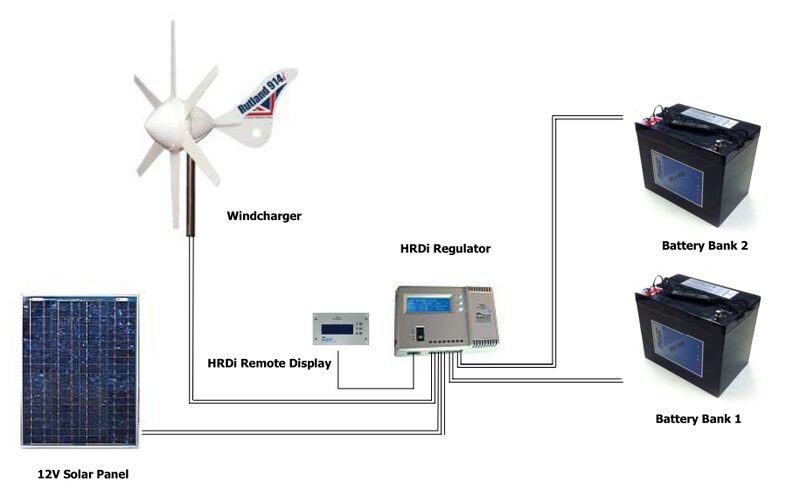
The HRDi is Marlec's wind and solar charge regulator, the box that sits between a small turbine, a PV array and the battery bank, and it is the current model in a line that has served off-grid homes and boats for years. Marlec describes it as "the latest wind and solar regulator from Marlec", designed for use with the Rutland 504, 914i or FM910-4 Windchargers and up to 160W of solar panels1. It configures itself automatically to a 12 or 24 V supply and can be connected to two independent battery banks1.
The comparison that matters is not really HRDi against HRSi as two competing controllers. The HRDi is the controller; the HRDi Remote Display is an accessory that repeats its information elsewhere and can stall the Windcharger1. Buyers weighing the two are usually deciding whether to add the remote panel, not choosing between rival regulators.
What the HRDi does for a household is narrow but real. It lets a small wind turbine and a modest PV array charge a battery bank without a grid connection, which is genuine independence at the level of a shed, a boat, a remote outbuilding or an off-grid cabin. What it does not do is remove dependence on the battery bank, on the turbine maker for spares and support, or on the site's wind and light. This page sets out what the HRDi is, how it differs from the HRSi, what a regulator does, which system each fits, the specifications to compare, and what ownership involves in the UK.
What the HRDi is: a wind and solar charge regulator from Marlec
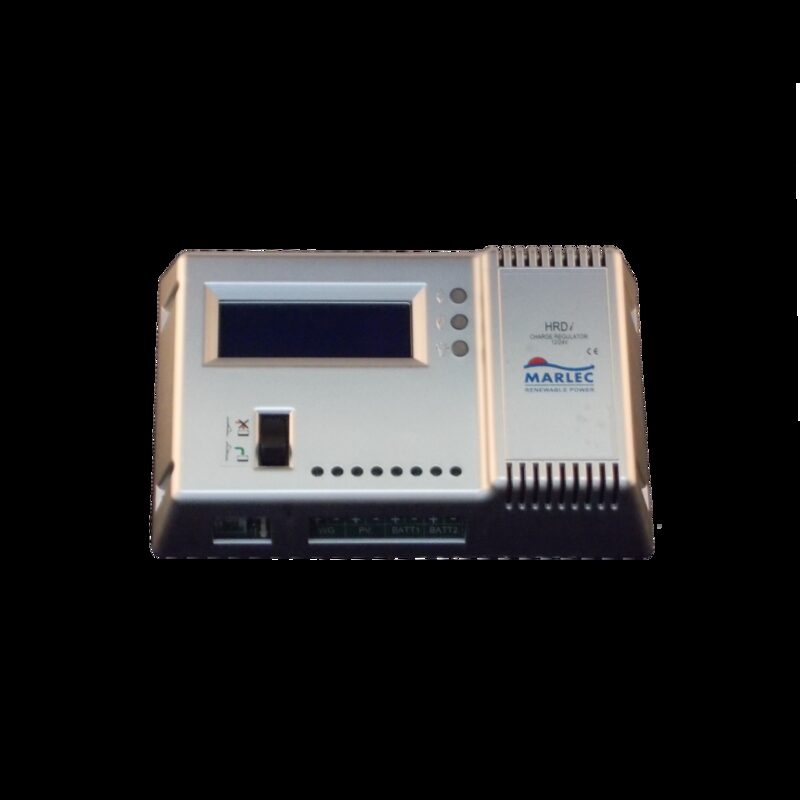
The HRDi Charge Controller is a single box that takes power from a small wind turbine and from a solar array and feeds it into a battery bank at the correct voltage. Marlec's own description is specific about the turbine side: it is designed for use with the Rutland 504, 914i or FM910-4 Windchargers, and for up to 160W of solar panels1. That pairing is the whole point of the product. A site with one turbine and a small PV array can use one regulator rather than two.
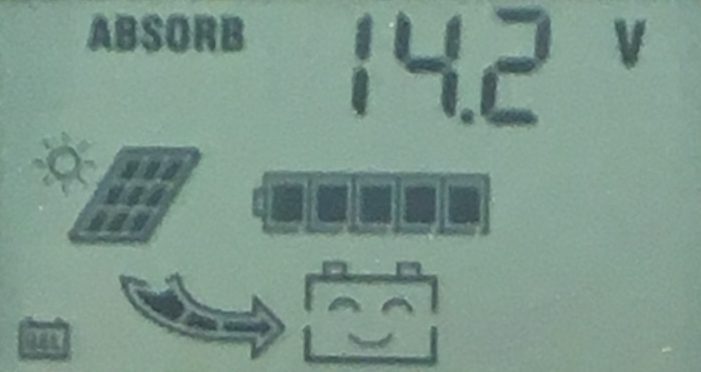
The controller carries a clear alpha-numeric digital LCD screen with user display options, so the state of charge and the input behaviour can be read at the unit1. It has a manual turbine and solar shutdown switch, which allows the turbine to be stopped deliberately rather than left spinning into a full battery1. A micro controller based system shuts the wind charger down when the batteries are full, which is the protection that keeps a small turbine from overcharging a bank it can no longer usefully charge1.
The HRDi is also reprogrammable, and an optional Remote Display can be added through a dedicated port1. That port is what makes the HRSi question arise at all, because the remote unit is sold as a companion rather than a replacement.
For a household, the significance is that the HRDi is a component in an off-grid chain rather than a grid-connected generator. It does not export, it does not earn a tariff, and it does not interact with a licensed supplier. It manages energy that is already on site. That is the same logic that runs through off-grid wind power, where controllers and batteries sit between the turbine and the load.
HRDi vs HRSi: how the two regulators differ
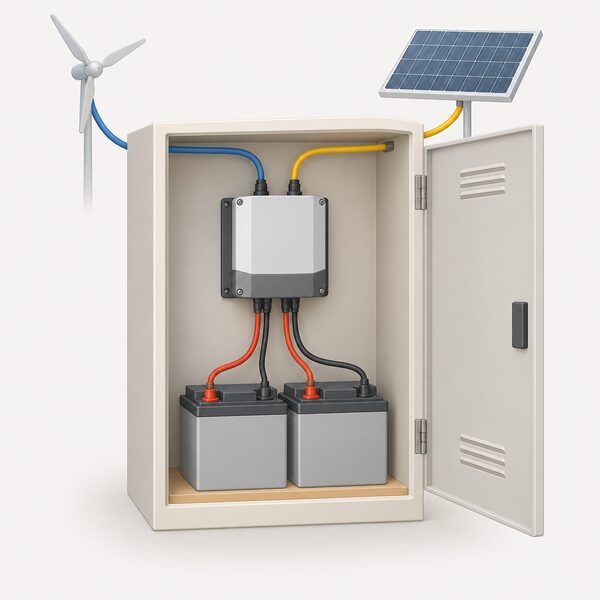
The distinction between the HRDi and the HRSi is one of role rather than rivalry. The HRDi is the charge controller: it takes the turbine and solar inputs, manages the charging stages and protects the battery. The HRDi Remote Display is a separate item that lets the owner "view the display information of the HRDi controller at a more convenient location such as the instrument panel or the cabin of your boat"1. It can also be used to stall the Windcharger for convenience1.
So the practical difference is location and control. A controller mounted near the battery bank is often in a cupboard, a locker or an equipment bay where reading a screen is awkward. The remote display moves that information to where the owner actually is. The stall function on the remote is a convenience version of the manual shutdown switch on the controller itself.
There is a second, more consequential difference that buyers should check before assuming compatibility. Marlec states that if a household currently has an HRDi controller, it should be a Rev 2 model to be compatible with the latest turbine, and advises checking the revision1. That is a version question within the HRDi line, not a difference between HRDi and HRSi, but it is the compatibility point most likely to catch out a second-hand buyer or someone pairing an older controller with a newer machine.
The wider context is that small wind and solar hybrid systems are a recognised arrangement. Independent guidance notes that a wind solar hybrid system means a site is covered in low light and wind conditions, which is exactly the gap the HRDi's dual input is designed to fill2. The regulator is the component that makes that hybrid possible at small scale.
What a charge regulator does in a wind and solar setup
A charge regulator sits between the generating sources and the battery, and its job is to deliver charge without damaging the bank. In the HRDi's case that means bulk and float charging stages for best battery performance, which is the standard two-stage approach for lead acid chemistry1. Bulk charging pushes current in while the battery is depleted; float charging holds it at a maintenance voltage once it is full.
The wind side needs more than voltage regulation. A small turbine in a gust can produce more power than a full battery can absorb, so the HRDi's micro controller based system shuts the wind charger down when the batteries are full1. That is the difference between a regulator built for wind and a simple solar controller: the turbine has to be stopped or stalled rather than simply disconnected, because an unloaded turbine can overspeed.
The HRDi also handles two battery banks, with priority charging of the lowest battery1. That suits installations with a main bank and a secondary one, such as a boat with a starter battery and a domestic bank, or an off-grid building with a separate circuit. The controller decides which needs the charge more.
Battery chemistry matters here. The HRDi is suitable for lead acid, AGM and Gel batteries, and can be configured for other battery types using the Marlec Interface Cable1. That cable is the route to lithium and other chemistries, and it is worth confirming the exact configuration with Marlec before buying batteries, because the charging stages described are the lead acid pattern.
"Latest micro controller based system shuts wind charger down when batteries are full"
Which regulator fits which system
The HRDi fits a specific scale of system: one Rutland 504, 914i or FM910-4 Windcharger, up to 160W of solar panels, and a 12 or 24 V battery bank1. That is a small off-grid installation, not a whole-house grid-tied array. A household with a larger PV array, or a turbine outside the Rutland range, is outside what the HRDi is specified for.
The 160W solar ceiling is the figure that most often decides the question. A single 160W panel, or a pair of smaller panels summing to that, is the limit. Beyond it, the controller is being asked to handle more than it is rated for, and a larger regulator is the appropriate route.
The turbine compatibility list is equally specific. The Rutland 504, 914i and FM910-4 are the machines the HRDi is designed for1. Owners of other small turbines, including the Leading Edge and FuturEnergy machines, are not covered by that list and would need to check with the maker. The Rutland 914i Windcharger page sets out what that machine produces, which is the input side of the pairing.
For a household deciding between a wind and solar hybrid and a solar-only off-grid system, the HRDi's dual input is the argument for hybrid. Independent guidance is clear that a wind solar hybrid system covers a site in low light and wind conditions, so the two sources complement each other across the year2. A solar-only system with the same battery bank will be short in winter; a wind-only system will be short in calm summer spells.
The revision point applies to system matching as well as to the controller itself. An HRDi should be a Rev 2 model to be compatible with the latest turbine, so a household buying a used controller to pair with a new machine should verify the revision before committing1.
Specifications to compare before choosing
The HRDi's published specification is short, and the table below sets out every figure Marlec gives for it. There is no published price in the documents available here, so prices are installer-quoted and no range is given.
| Specification | HRDi Charge Controller |
|---|---|
| Product type | Wind and solar regulator1 |
| Compatible Windchargers | Rutland 504, 914i, FM910-41 |
| Solar input | Up to 160W of solar panels1 |
| Supply voltage | Auto configuration to 12 or 24 V1 |
| Battery banks | Two independent banks1 |
| Charging priority | Lowest battery charged first1 |
| Battery types | Lead acid, AGM, Gel; others via Marlec Interface Cable1 |
| Charging stages | Bulk and float1 |
| Display | Alpha-numeric digital LCD with user display options1 |
| Shutdown | Manual turbine and solar shutdown switch1 |
| Overcharge protection | Micro controller shuts wind charger down when batteries are full1 |
| Remote display | Optional, via dedicated port1 |
| Revision requirement | Rev 2 for compatibility with the latest turbine1 |
Two of these rows carry more weight than the rest. The 160W solar limit and the two-bank capability define what the controller can be asked to do. The revision requirement defines whether a particular unit will work with a particular turbine.
The HRDi Remote Display adds its own functions: viewing the controller's display information at a more convenient location, and stalling the Windcharger1. It is reprogrammable, which means its behaviour can be adjusted rather than fixed at manufacture1.
Buying and owning a Marlec regulator in the UK
Marlec is a UK maker, and the HRDi is sold through its own product pages and through the marine and off-grid trade. The documents available here do not give a published price for the HRDi or the remote display, so any figure a household sees will be a quote from a supplier or installer rather than a list price.
Warranty registration is the point where buyers most often look for a deadline and find none stated. The documents available here do not set out a Marlec registration period. Where UK renewable schemes do impose one, the pattern is short: the Barcud Solar Panel Installation Scheme Specification requires inverter product registrations to activate guarantees and warranties to be completed within 48 hours of commissioning3. That is a scheme rule rather than a Marlec rule, but it shows how tight registration windows can be, and it is the reason to register promptly whatever the maker's own terms say.
On faults, the general UK route for installation-related problems is to raise the issue with the installer first, then the installer's consumer code such as HIES or RECC, or the MCS installation quality complaints process4. For a product fault rather than an installation fault, the maker is the first contact. Marlec's own support details are published on its product pages.
The serial number question is one the documents available here do not answer. Marlec advises checking the revision of an HRDi, because it should be a Rev 2 model to be compatible with the latest turbine1, but the location of the serial number on the casing is not stated in the material available. The maker's support line is the place to confirm it.
What owning a regulator means for energy independence
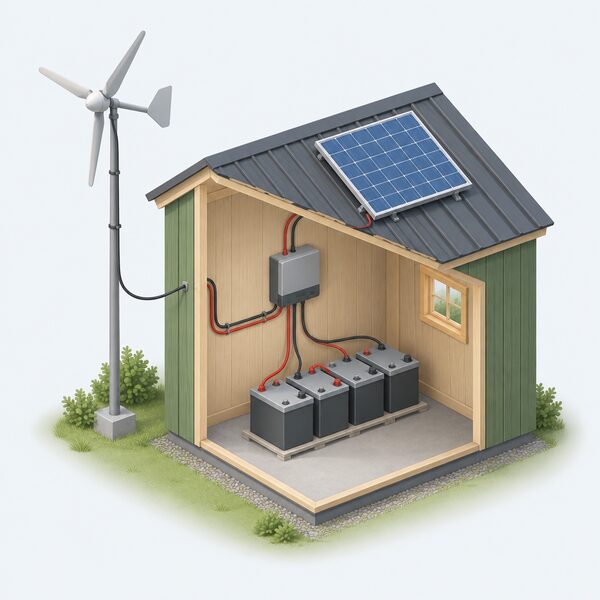
A charge regulator is one of the least glamorous components in a home energy system and one of the most consequential for independence. The HRDi lets a household capture energy from a small turbine and a modest PV array and store it in a battery bank it owns, with no supplier, no meter and no export contract in the chain1. For an off-grid outbuilding, a boat or a remote cabin, that is real autonomy at the scale the equipment can serve.
The dependence that remains is worth stating plainly. The household depends on the battery bank, which is the consumable part of the system and the one that will need replacing. It depends on the turbine continuing to work and on Marlec continuing to supply spares and support for the Rutland range. It depends on the site having usable wind and light, which no regulator can manufacture. And it depends on the controller being correctly configured for the battery chemistry in use, which for anything other than lead acid, AGM or Gel means the Marlec Interface Cable and a conversation with the maker1.
There is also a scheme dimension that does not apply to the HRDi but is worth understanding for anyone comparing it with larger renewable heating or generation equipment. The Domestic Renewable Heat Incentive, administered by Ofgem, requires applicants to own the renewable heating system at the application stage and throughout membership5. The Feed-in Tariff, now closed to new applicants, used the ROO-FIT accreditation pathway for solar PV and wind installations with a capacity greater than 50kW, and for all hydro and anaerobic digestion installations7. Neither scheme reaches a small off-grid regulator, which is precisely why the HRDi sits in the independence column rather than the subsidy column.
The honest summary is that the HRDi buys a household control over a small amount of its own energy, at the cost of maintaining the batteries and the turbine that feed it. It is a component for people who want the system to be theirs, not a route to cutting a grid bill on a typical mains-connected home.
Sources7 cited
- HRDi Charge Controller, Marlec
- Small wind turbines, MCS Certified, 2026-08-18
- Barcud Solar Panel Installation Scheme Specification, Sell2Wales, 2026-06-15
- Boiler Upgrade Scheme guidance for property owners, Ofgem, 2026-03-25
- Domestic Renewable Heat Incentive: participants, Ofgem, 2026
- Domestic RHI: key terms explained, Ofgem, 2026-09-17
- Feed-in Tariffs Annual Report Scheme Year 13, Ofgem, 2023-12
 Electric Radiator ControlsElectric heaters cost far more to run than gas, so the controls really matter.
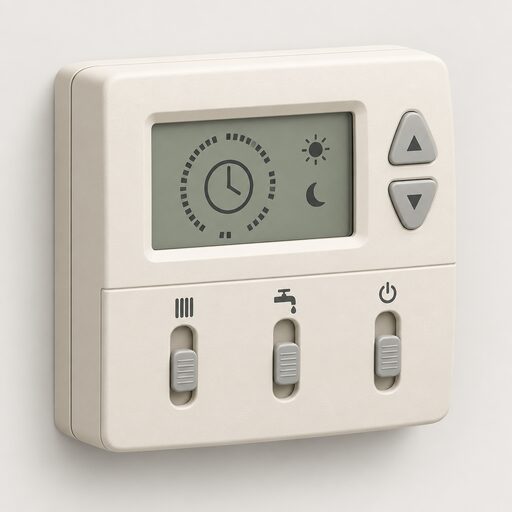 Controls, Thermostats and TRVsWhich heating controls actually cut your bills, and what does each one do?
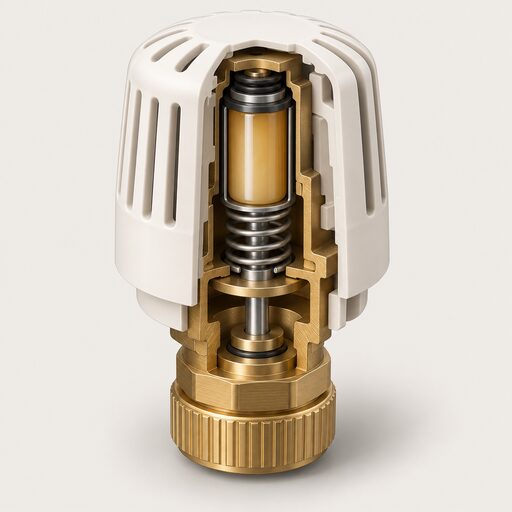 Thermostatic Radiator ValvesHow a thermostatic radiator valve senses room air temperature and throttles flow to a single radiator, what the numbered settings mean, where TRVs should and should not be fitted, and what the Building Regulations require across the UK.
 The Full Heating Controls GuideA room thermostat, a programmer and valves on your radiators are the basics.
 G98 and G99 Grid ConnectionConnecting a wind turbine, hydro turbine or micro-CHP unit at home raises the question of whether it needs G98 or G99.
 Electric Heating CostsHow to work out what electric radiators, panel heaters, infrared and storage heaters cost to run per hour and per season.