
In this guide
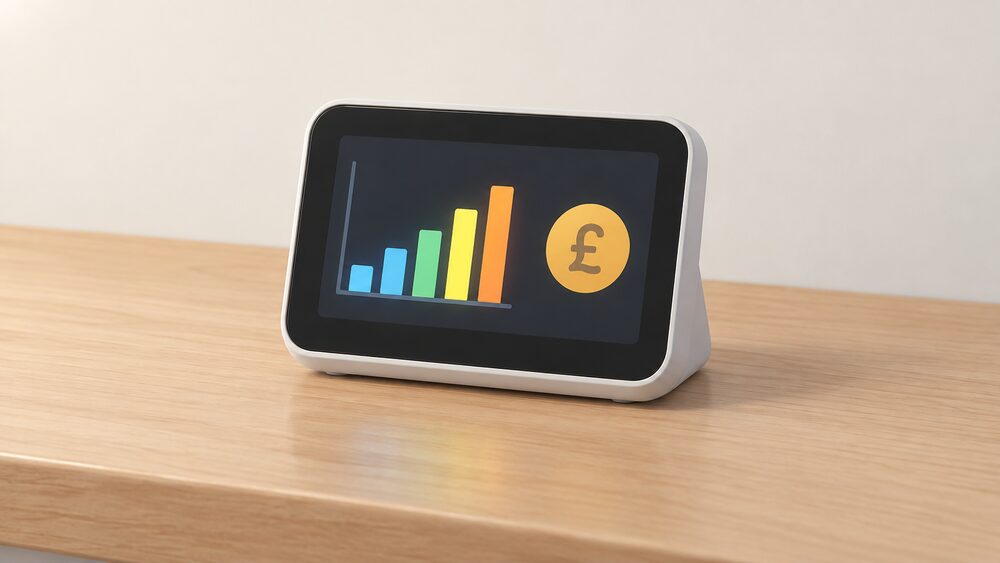
A British Gas smart meter is fitted by the supplier at no extra cost, and the visit normally takes about 90 minutes1. The installation includes the meter itself, an in-home display and a communications hub, and the appointment must be offered within six weeks of the request being made2. The display shows gas and electricity use in kilowatt hours and its cost in as near to real time as the technology allows4.
The display is the part of the package a household actually lives with. It has two modes depending on how energy is paid for, credit or prepay, and it carries a 12-month repair or replacement obligation from the installation date5. After that period, replacement depends on voluntary principles agreed with industry rather than a statutory duty7.
This page covers what the installation includes, what the display shows in each mode, the cost position, how booking works, the warranty and replacement route, the limits around solar, moving house and opting out, and the rollout timetable including the 2G and 3G switch-off.
What a British Gas smart meter installation includes
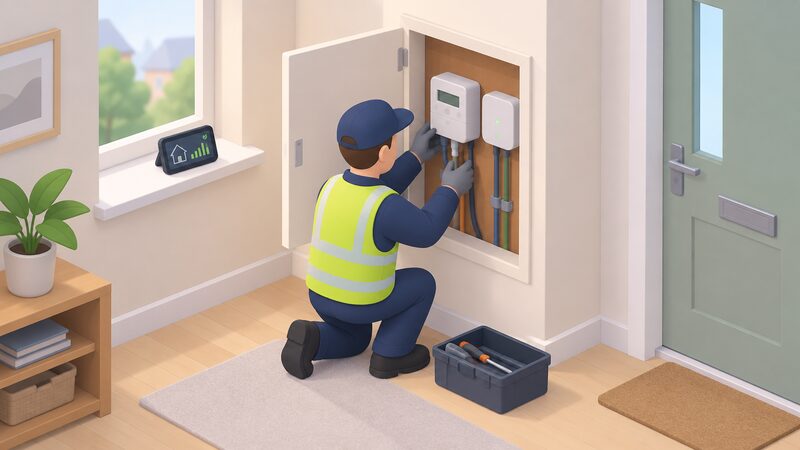
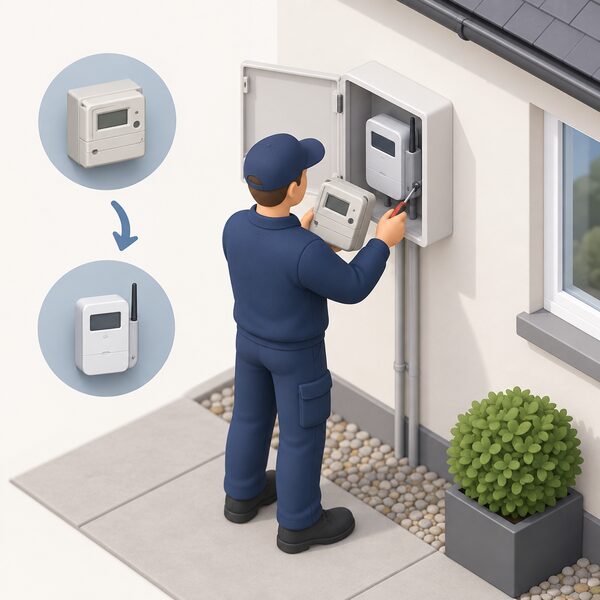
The funded package is three items: an electricity and/or gas smart meter, an in-home display, and a communications hub3. The meter replaces the analogue gas or electricity meter as part of a national infrastructure upgrade intended to modernise Great Britain's energy system10. The communications hub is what links the meters to the wider network, and it is the component that carries the mobile connection rather than the household's broadband.
During the appointment, suppliers are expected to carry out key safety checks and to offer and demonstrate the in-home display10. The work is meant to be done with minimal disruption. Each supply has to be switched off during the changeover, which is why a dual-fuel visit takes longer than a single-meter one11.
British Gas has been part of the reporting framework for the rollout since its early statistical releases, which named the larger energy suppliers including British Gas among those whose installation numbers were tracked12. That is a matter of record rather than a statement about current performance.
What the in-home display shows: kWh, pounds and pence, in near real time
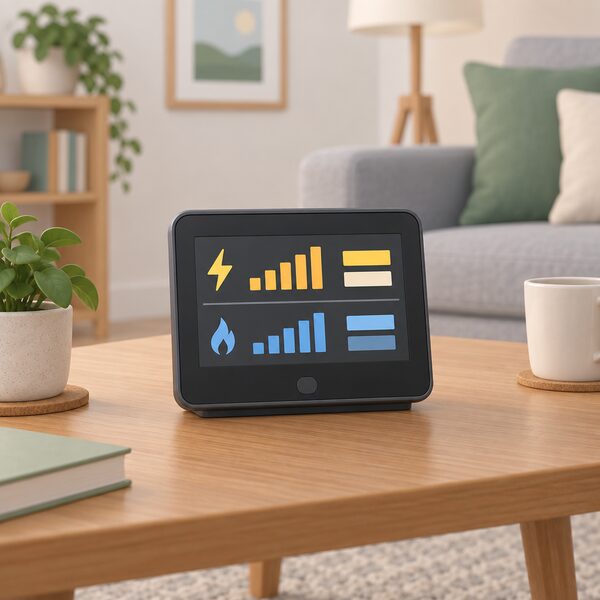
The display shows how much gas and electricity is being used in kilowatt hours and its cost in as near to real time as possible4. It also shows how much energy is being used during the day13. The point of the device is that near real-time data lets a household see exactly how much energy is being used, which is the basis for any saving that follows5.
The limits are worth stating plainly. The display is a monitoring device, not a control device: it does not switch anything on or off, and it does not by itself reduce consumption. Its figures depend on the meter communicating, and where communication fails the display can fall behind. One recorded case in Scotland found information on an in-home display that was out of date by two weeks14. That is an extreme example rather than a typical one, but it shows the dependency: the display is only as current as the link between meter, hub and network.
For a household thinking about independence, the display is the least dependent part of the smart metering chain. It works in the home, on a local radio link to the meter, and does not need broadband, a supplier app or a cloud account to show a reading. What it cannot do is give the household control over supply, price or the fuel itself. More on what these devices show is at in-home displays.
Credit mode and prepay mode: two ways the display works
The display has two modes depending on how energy is paid for5. In credit mode, where the bill is paid at the end of each month or quarterly, it shows daily use and cost5. In prepay mode it shows the available balance for each fuel and how close the household is to the next top-up5. Both modes allow budgets to be set, and many models allow alerts when a limit is approached or when consumption and spending rise suddenly5.
Smart meters can operate in credit or prepayment mode, and the mode is a setting rather than a different meter10. A prepayment meter is one used to pay for electricity or gas in advance rather than after use15. In Northern Ireland, the older prepayment arrangement uses a smart card, key or token, or sometimes coins, to pay as energy is used16. On a smart meter in prepayment mode, credit can be added automatically or without a visit to a shop13.
Switching from an existing gas or electricity prepay meter to a smart credit meter is straightforward for customers who meet the supplier's conditions11. Households using prepayment meters can switch supplier as long as they do not owe more than £500 on the account, with the limit applying separately to gas and electricity meters17. That figure is from Scottish Government guidance and is a debt threshold, not a smart meter rule.
| Display mode | What it shows | Budget features |
|---|---|---|
| Credit | Daily use and cost5 | Budgets and alerts on many models5 |
| Prepay | Available balance per fuel, distance to next top-up5 | Budgets and alerts on many models5 |
Cost: free to install, less than £2 a year to run
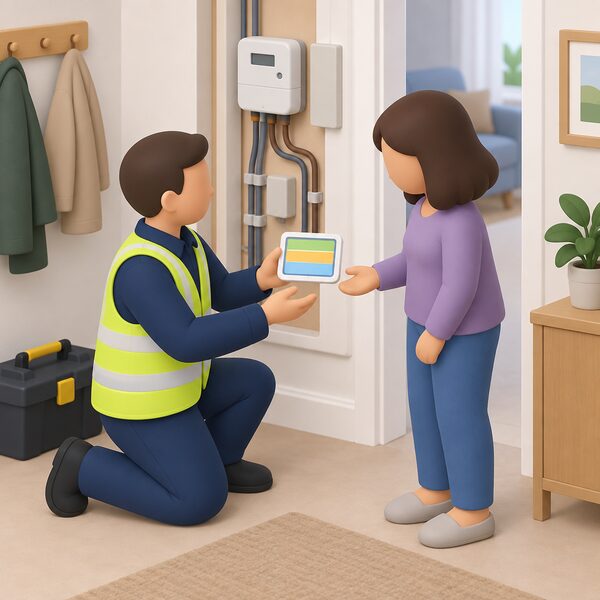
Installation is at no extra cost to the household3. The same position is stated across official and independent guidance: a smart meter can be obtained from the supplier at no extra cost, and getting one installed is free for UK energy customers3. In Wales, the same free installation position is set out in the devolved guidance1.
The cost of the programme is recovered through bills rather than charged as a separate installation fee, which is why the household sees no line item. The 2025 costs and benefits report treats the rollout as a national programme with costs and benefits assessed across it20. No figure for the per-household running cost of the display appears in the material available here, so no annual running figure is given.
What the household should expect in practice is a visit at no charge, a display left in the home, and no change to the standing charge or unit rate arising from the installation itself. Any tariff change is a separate decision. The cost page at smart meter cost covers the wider question of who ultimately pays.
Booking the installation: appointments, duration and what happens on the day
The supplier must offer an appointment to take place within six weeks of the request being made2. That deadline appears in the Guaranteed Standards of Performance for first time or new smart meter installation appointments, and it is repeated in the statutory consultation and the March 2025 standards document21. Ofgem intends to review the outcomes of these standards in the first quarter of 20272.
In practice, suppliers telephone or email to agree a time to come and change over the meter19. Where gas and electricity come from separate suppliers, two appointments are needed, and it is recommended that the electricity meter is changed first11. The rights and expectations guidance covers the whole process, from arranging an installation appointment to resolving issues after installation23.
On duration, the figures differ by source and by scope. Welsh Government guidance puts a typical installation at about 90 minutes1. Independent guidance puts it at around one hour for each smart meter installation24. Where both fuels are involved, the visit takes a couple of hours and each supply must be switched off during the changeover11. Small business installations are given as normally about two hours25.
Households should tell the energy company about unusual home or meter circumstances when making the appointment, or at least several days before the installation24. That covers things like a meter in an awkward position, access restrictions or existing damage. The installation day itself is covered in more detail at smart meter installation.
The 12-month warranty and getting a faulty display replaced
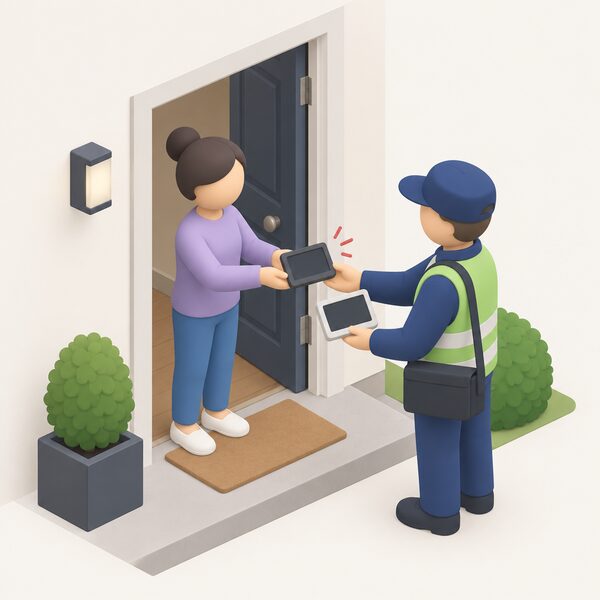
If a fault with the in-home display is reported within 12 months of the date of installation, and the supplier is satisfied it is not due to the household failing to keep the display in good working order, the supplier must repair or replace it free of charge6. That is the statutory position for the first year.
After 12 months, the obligation period has elapsed and the route changes. Voluntary replacement principles were developed with industry and the support of consumer groups to ensure that consumers can access a replacement in-home display after the 12-month obligation period has elapsed7. These are voluntary, which means the replacement is not guaranteed in the way the first-year repair is.
For the meter itself, the position is different and simpler: if a smart meter stops working, the household contacts the supplier, which is responsible for maintenance and will fix or replace the meter as needed25. Suppliers are responsible for providing and fitting smart meters for everyone in Britain at no extra cost to the household19.
New rules brought forward by Ofgem and announced in March 2026 cover delayed or failed installations and other service failures, with compensation of £40 in the covered cases9. That sits alongside the standards rather than replacing them.
Limits to know before you book: solar, moving house and opting out
Three practical limits are worth understanding before booking.
Solar and export. A smart meter is not the same thing as an export meter, and the technologies supported under the Smart Export Guarantee include solar photovoltaics, wind, micro-combined heat and power, hydropower and anaerobic digestion, up to 5 megawatts in capacity, or up to 50 kW for micro-CHP, with installations located in Great Britain26. Planning rules for solar have been changing: non-domestic solar installations in England are allowed to exceed 1 megawatt in capacity subject to prior approval, where that was previously the total limit27. The government has also committed to reviewing the practical planning barriers households face when installing energy efficiency measures, including in conservation areas and listed buildings28. The interaction between a smart meter and a solar installation is covered at smart meter with solar panels.
Moving house. The in-home display should be left behind for the next resident, because the device is paired with the meter in that property and will not normally work in a different property25. The meter stays with the supply point.
Opting out and meter generation. First-generation smart meters, known as SMETS1, do not always allow the consumer to change energy supplier without losing the ability to send meter readings automatically11. That is a limitation of the older device rather than of smart metering as a whole, and it is covered at SMETS1 and SMETS2 meters.
The rollout timetable and what happens when 2G and 3G close
The rollout framework that ran from 1 January 2022 to 31 December 2025 has closed, and the target framework that ran for four years to 31 December 2025 has also ended29. As of the end of March 2025 there were 39 million smart meters in domestic and non-domestic premises across Great Britain, over two thirds of all meters20. The network is intended to reach 99.25% of Great Britain by the end of the rollout25.
The completion deadline now in view is the end of 2030, by which point the rollout is to be completed8. Suppliers are required to take all reasonable steps to install smart meters in all remaining domestic premises by that date31.
The 2G and 3G transition is the part that affects existing installations. Suppliers are required to replace all smart meters that are still connected to 2G and 3G before the services are switched off by 20339. The costs and benefits assessment maintains a distinction between the original rollout and the technological upgrade from 2G and 3G networks to 4G, and the benefits for 2034 were reduced to reflect the 2G and 3G switch-off20. The DCC has published work on supporting customers with non-communicating smart meters in the meantime8.
For a household, the timetable matters in one practical way: a meter fitted today should be 4G-capable, and an older meter may need a further visit within the decade. The switch-off page at smart meter 3G switch-off sets out what to check.
What the smart meter does for a household's energy independence
A smart meter changes what a household can see, not what it can generate or store. The data it produces puts the household in control of its energy usage, meaning energy-saving steps can be taken to reduce CO2 emissions32. That is a real gain in visibility: half-hourly consumption data is the basis for understanding where energy goes, and it is what makes time-of-use tariffs and flexibility schemes usable at all.
The dependence that remains is substantial and worth naming. The meter communicates over a network the household does not control, through a communications hub that carries a mobile connection. The in-home display depends on that link for its figures. The meter itself remains the property and responsibility of the supplier, which maintains and replaces it. The household cannot read or export its own data without going through the supplier or a consumer access device. And the meter measures imported gas and electricity, so it does nothing to reduce reliance on the grid or on a gas supplier.
Where the display helps independence is narrow but genuine: it works locally, without broadband or an app, and it gives a household the consumption figures it needs to size a solar, battery or heat pump system sensibly. That use of the data is covered at using energy data to size a system, and the wider picture is at smart meters and energy independence.
Sources32 cited
- Smart meters, Welsh Government, 2026
- Final decision: smart meter Guaranteed Standards of Performance, Ofgem, 2026-01-30
- Do you have to have a smart meter by law?, Smart DCC, 2026
- Does a smart meter need Wi-Fi?, Smart DCC, 2026
- How do smart meters save energy?, Smart DCC, 2026
- Smart meters, Energy Ombudsman, 2026-09-20
- Smart meter in-home display voluntary replacement principles, GOV.UK, 2024-02-23
- How we're working to support customers to address non-communicating smart meters, Smart DCC, 2026
- Tough new rules force suppliers to fix faulty smart meters, GOV.UK, 2026-03-10
- Smart meters: your rights and expectations, GOV.UK, 2025-08-08
- How to get a smart meter, Smart DCC, 2026
- Statistical release and data: smart meters, Great Britain, quarter 4 2014, GOV.UK, 2015-03-19
- Get help with your smart meter, Ofgem, 2026-09-17
- Research on the lived experience of fuel poverty in Scotland, Scottish Government, 2020-09-03
- Get help with your prepayment meter, Ofgem, 2026
- Overdue utility bills, nidirect, 2026-09-17
- Tackling fuel poverty in Scotland: a strategic approach, Scottish Government, 2021-12-23
- Getting a smart meter, Ofgem, 2026
- How to get a smart meter, Smart Energy GB, 2026-08-03
- Smart Metering 2025 Costs and Benefits Report, Parliament, 2025
- Smart Meter Guaranteed Standard statutory consultation, Ofgem, 2025-08-08
- Smart Meter Guaranteed Standards of Performance, Ofgem, 2025-03-28
- Smart meters: your rights and expectations, GOV.UK, 2025-08-08
- Smart meter installation, Which?, 2026-02-26
- Smart Energy GB FAQs, Smart Energy GB, 2025-08-08
- Research briefing CBP-9585, House of Commons Library, 2026-05-13
- Updates in December to permitted development rights for solar panels, Planning Portal, 2023-12-21
- Adapting historic homes for energy efficiency: a review of the barriers, GOV.UK, 2024-01-03
- Supplier smart metering installation targets, Ofgem, 2026-09-17
- Research briefing CBP-9865, House of Commons Library, 2023-09-26
- Major acceleration of homegrown power in Britain's plan for greater energy independence, GOV.UK, 2026-09-20
- Smart meters and decarbonisation, Smart DCC, 2026
 British Gas Home Energy InstallationsBritish Gas fits heat pumps and boilers through a national service, with HomeCare cover, a Warm Home Promise and grant-funded installations.
 British GasBritish Gas is the UK's largest household energy supplier, part of Centrica, serving more than 8 million homes and businesses with gas and electricity, plus boiler cover through HomeCare.
 British Gas TariffsBritish Gas is the UK's largest supplier, and its tariff range covers standard fixes, EV rates, storage heater deals and export payments.