
In this guide
Rointe is an electric heating manufacturer. Its UK and Ireland range covers electric radiators, designer towel dryers, electric water heaters, portable air conditioners and infrared outdoor heaters. Two of those products, the FIORE PRO and ALGHERO portable air conditioners, are sold with heat pump capability1. Nothing else in the range is a heat pump.
That distinction matters for anyone searching for a Rointe heat pump cylinder. Rointe does not make one. Its water heater guide discusses heat pump water heaters as a technology, noting they can use up to 60% less electricity than traditional heaters, but the cylinders Rointe itself sells are electric, and its own recommendation for a two-person household is the Galilee or Coralia WiFi electric water heater at 50 to 100 litres4.
So the honest position is narrow. Rointe offers a route into electric heating that can run on self-generated electricity, and two portable units that genuinely move heat rather than convert it. It does not offer a central heating heat pump, an air-to-water system or a hot water heat pump cylinder. A household wanting those has to look elsewhere, and the wider subject is covered in the full UK heat pump guide.
What Rointe actually makes: electric heating, not heat pump boilers
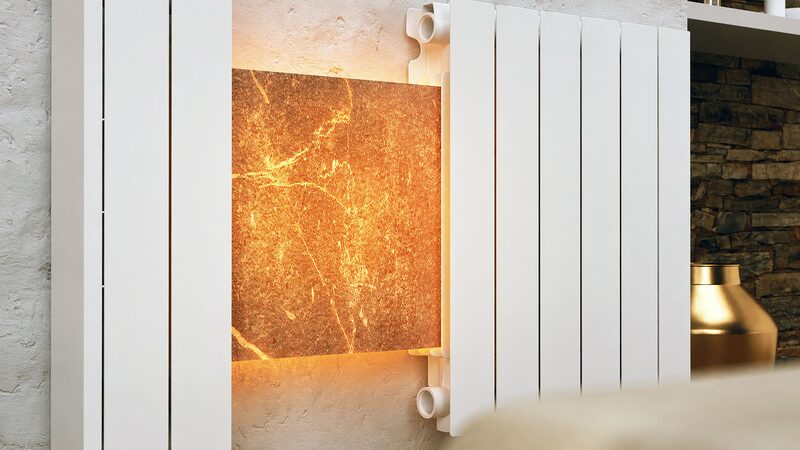
Rointe's core products are resistive electric heaters. The electric radiators use an armoured steel electric resistance to transform electrical energy into heat, and the Thermal Fluid Tech models are filled with a high-efficiency heat transfer fluid1. The designer towel dryers work the same way: they are electrically powered and filled with a specially formulated thermal fluid, heated by an electric element made of armoured steel2. The same description applies to the electric towel rails in the product FAQ8.
That is a different physical process from a heat pump. A heat pump moves existing heat from air, ground or water and delivers more heat energy than the electricity it consumes. A resistive element converts electricity into heat at, in Rointe's own words, 99.9% conversion of the energy consumed6. The Energy Saving Trust makes the distinction explicitly: although heat pumps use electricity, they are not normally thought of as electric heating systems9.
Rointe's water heater guide sets out the categories it recognises. Electric water heaters are described as widely available, compatible with tank, tankless and heat pump designs, converting all the energy used into heat and requiring less maintenance than gas heaters4. Heat pump water heaters are described separately, as using up to 60% less electricity than traditional heaters but being large and not working well in cold spaces or very cold climates for long periods4. Rointe sells the first category, not the second.
Heat pump capability in the portable air conditioner range: FIORE PRO and ALGHERO
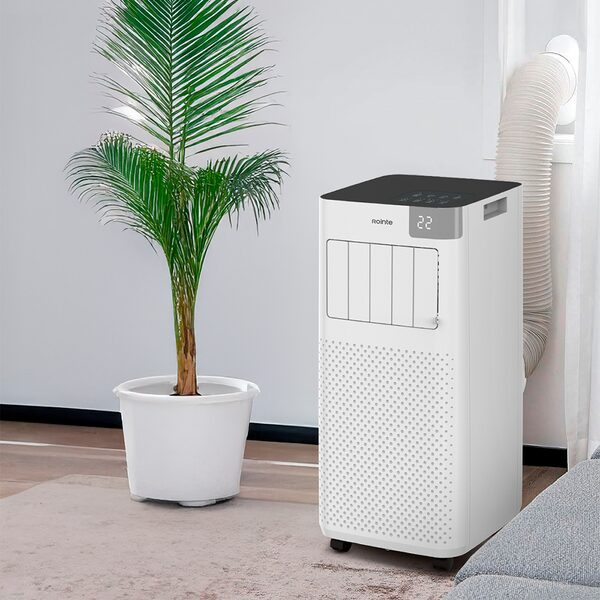
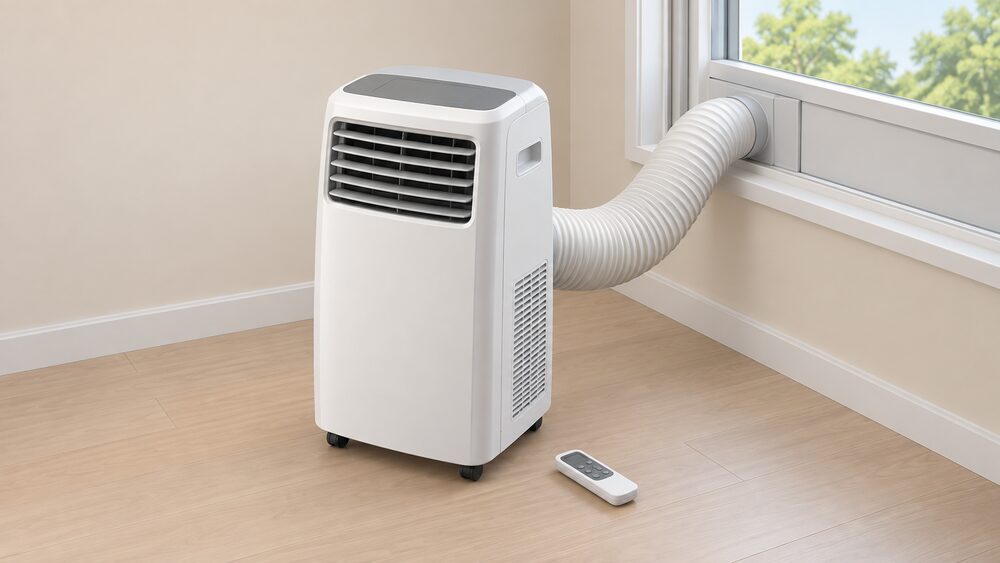
The only Rointe products described as heat pumps are two portable air conditioners. The FIORE PRO is listed as a portable air conditioner and heat pump, available in 9000 BTU, with Ultra Silent technology3. The ALGHERO Inverter is listed as a 12000 BTU portable air conditioner with heat pump, Class A+ energy efficiency and inverter technology3.
Both are plug-in portable units. Every unit includes a remote control, touch LED display, programmable timer and window kit, and the range carries a built-in dehumidifier function and an Ultra Silent system3. Rointe also sells evaporative coolers, which are a different product again: those come with remote control, timer, wide-angle oscillation, purifying filters and an ice compartment in some models10.
| Model | Type | Capacity | Efficiency class | Heat pump |
|---|---|---|---|---|
| FIORE PRO | Portable air conditioner and heat pump | 9000 BTU3 | Not stated | Yes3 |
| ALGHERO Inverter | Portable air conditioner with heat pump | 12000 BTU3 | Class A+5 | Yes3 |
| Evaporative coolers | Evaporative cooler | Not stated | Not stated | No10 |
The heat pump capability is real but limited in scope. Independent guidance notes that air-to-air heat pumps are programmable, often with a remote or smart wi-fi option, and that many offer dehumidification and air purification functions11. Which makes the portable units a recognisable, if small, example of the category. The wider picture is set out in air-to-air heat pumps and heating with air conditioning.
Infrared outdoor heaters: the other side of Rointe's heating technology
Rointe's outdoor heaters are manufactured with infrared technology, and the company states that this technology does not heat the air but objects and people directly7. It describes them as providing immediate and uniform heat without generating waste or emissions, with many models including remote control and intelligent programming options, and a design that allows wall, ceiling or portable installation7.
Independent guidance describes the same mechanism. Infrared heating systems provide heat via radiation, with heat radiating outwards from the heater and warming any surfaces it comes into contact with12. Which describes infrared as using radiant heat to warm people or objects rather than the air, which it says means it uses energy more efficiently than traditional heating13.
The practical consequence is that infrared warms what it points at, not the room as a whole. That suits a patio or a workshop bay and suits a whole house poorly. It is also worth noting that the outdoor heater page sits on Rointe's Irish site, so UK availability of specific outdoor models is not established by that page7.
"This technology does not heat the air, but objects and people directly"
Rointe's electric heating and what it means for household energy independence
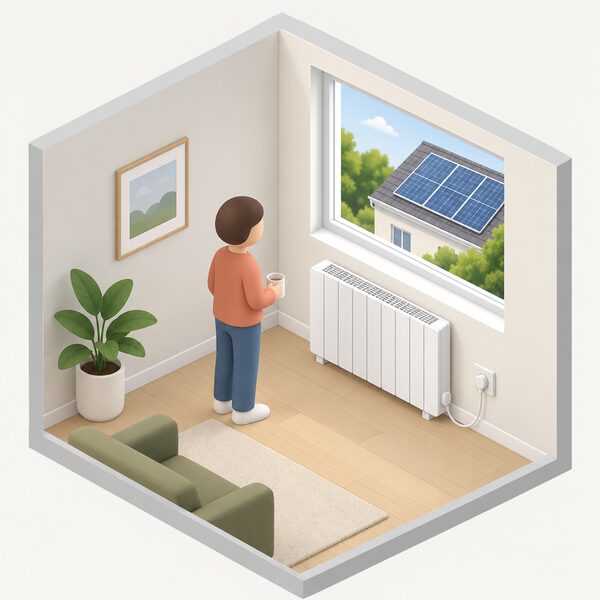
The independence case for Rointe's electric products rests on one property: they run on electricity, and electricity can be generated at home. Rointe states that all its products are 100% electric and compatible with renewable energies such as solar1. Its guidance goes further, describing products as fully compatible with renewable energy systems such as solar panels and wind turbines, with 100% recyclable packaging, trees planted through reforestation initiatives on product registration, and products manufactured using renewable energy from the company's own solar panels4.
What that compatibility does and does not mean is worth separating. An electric radiator can run on power from a home solar array, which removes the gas supplier and the gas grid from the heating chain. It does not reduce the amount of electricity the home needs, and it does not store heat. A heat pump, by contrast, delivers more heat per unit of electricity, which is why the two are not interchangeable on running cost. The Energy Saving Trust notes that solar panels can help power a heat pump and reduce electricity use14, and the same logic applies to any electric appliance, including Rointe's.
The dependence that remains is on the electricity grid and an electricity supplier for every hour the sun is not generating, plus the manufacturer for controls and app features. Rointe's connected devices pair to a wi-fi network through Bluetooth Link pairing in three steps via the Rointe Nexa App6, and its LST radiators use a surface temperature sensor with an adjustable surface temperature limit set through the same app6. Local control continues without a connection; app-based features do not. More on this subject sits in heat pumps and household energy independence.
Heat pumps and solar panels: what Rointe's own guidance says
Rointe's water heater guide covers solar water heating directly. It describes the technology as heating water naturally using solar panels, requiring more space and a high initial investment, but providing significant savings on energy bills in sunny regions4. That is a fair summary of the technology's trade-offs, and it is a maker's guidance rather than an independent assessment.
Official planning guidance takes a similar line for self-build homes, advising consideration of solar panels to generate electricity or solar water heating systems for hot water needs15. Independent guidance adds a condition that applies to any heat pump installation: heat pumps are best suited to buildings with good insulation levels, and insulation may need to be added internally or externally where homes do not already have good levels16.
For a household weighing Rointe electric heating against a heat pump, the insulation point is the hinge. A well-insulated home with solar generation can run electric heating at low carbon intensity, though at a higher running cost per unit of heat than a heat pump. A poorly insulated home will struggle with either. Independent consultation work on heat pump scale-up argues for a combination of regulation, impartial advice for householders and attractive customer propositions17, which is a reminder that the technology choice sits inside a wider set of decisions about the building.
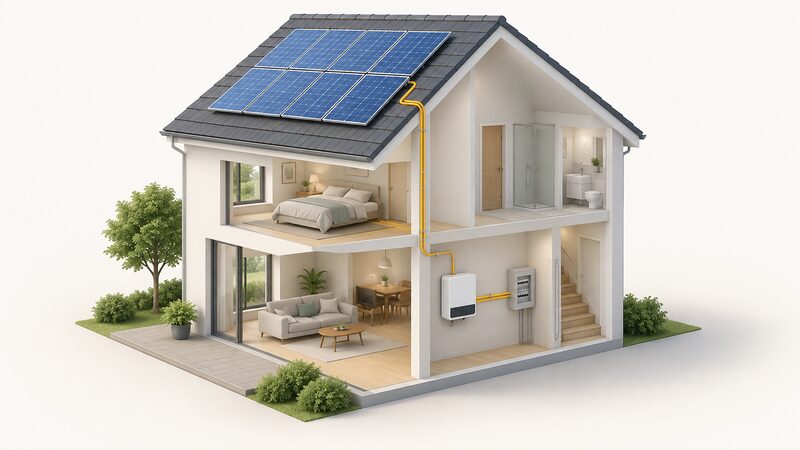
Comparing home heating systems: where Rointe positions itself against gas boilers
Rointe published a comparison of electric, gas, aerothermal and geothermal heating for homes in April 2025, arguing that the UK and other countries have announced progressive bans on gas boilers in new homes18. It is a maker's article making a case for electric heating, and it should be read as such.
Independent and official sources give a more mixed picture. The Environmental Audit Committee has considered the merits and drawbacks of rolling out heat pumps19, and heat pumps were described in 2020 as currently more expensive than conventional options such as gas-fired boilers19. That cost position has moved since, and the current picture is covered in heat pump vs gas boiler running costs.
Rointe's own product range also contains a reminder that not everything electric is independent of a boiler. Its hydraulic towel rails are connected to the central heating system of the home, using the hot water generated by the boiler8. So a household can buy Rointe products that run entirely on electricity and Rointe products that depend on a gas boiler, depending on the model.
| System | Heat source | Independence position |
|---|---|---|
| Rointe electric radiator | Resistive element, 99.9% conversion6 | Runs on electricity; can use home generation1 |
| Rointe hydraulic towel rail | Hot water from the boiler8 | Depends on the boiler and its fuel |
| Rointe portable A/C with heat pump | Moves heat, FIORE PRO and ALGHERO3 | Runs on electricity; portable, not a whole-home system |
| Air-to-water heat pump | Electricity, heats water for radiators20 | Runs on electricity; needs a cylinder and good insulation16 |
Choosing a Rointe product: which unit fits which need
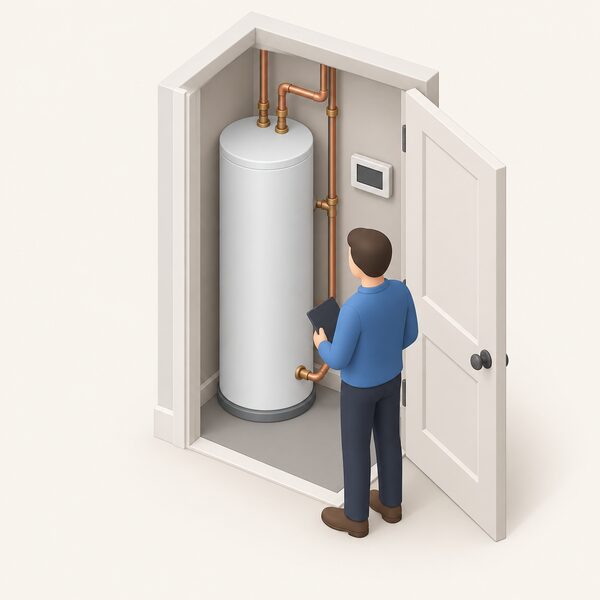
Rointe's own guidance gives one worked recommendation. For two users needing a sink and shower supply at 50 to 100 litres capacity, it suggests the Galilee or the Coralia WiFi electric water heater4. The Iris water heater is described as the intermediate option, ideal for medium-sized homes, balancing capacity and efficiency8. The models feature high-precision digital thermostats to maintain the ideal temperature and save energy8.
Beyond that, the range divides by function rather than by output. Electric radiators and towel dryers provide space and bathroom heating from a resistive element1. Portable air conditioners with heat pump capability provide local heating and cooling in a single room3. Infrared outdoor heaters provide directed warmth outdoors7. Evaporative coolers provide cooling without a heat pump10.
Where a household needs a whole-home heat pump, a hot water heat pump cylinder or a system that heats radiators and hot water together, Rointe does not supply it. Most heat pump manufacturers require the use of a cylinder, because it lets the heat pump run more efficiently by heating the water over a longer period21. That is a different product category, covered in hot water heat pumps: heat pump cylinders for water only.
Sources22 cited
- Electric radiators, Rointe, 2026-09-20
- Designer towel dryers, Rointe, 2025-09-25
- Portable air conditioners, Rointe, 2025-09-25
- How do I choose the best water heater?, Rointe, 2024-12-18
- Portable air conditioners (Ireland), Rointe, 2025-06-17
- WiFi electric radiators, Rointe, 2026-09-20
- Indoor and outdoor heating, Rointe, 2025-06-17
- Products FAQ, Rointe, 2026-06-03
- Electric heating, Energy Saving Trust, 2026-07-01
- Evaporative coolers, Rointe, 2025-05-14
- How a heat pump can cool your home, Which?, 2026-07-17
- Infrared heating explained, Energy Saving Trust, 2026-03-13
- Electric central heating, Which?, 2025-09-22
- What do people think about energy, Energy Saving Trust, 2026-01-09
- Self-build homes: sustainability, Planning Portal, 2026
- Heat pumps, New Forest District Council, 2026-09-17
- Consultation response to BEIS Committee inquiry into heat pumps, Energy Saving Trust, 2026-02-19
- What is the best heating system for your home?, Rointe, 2025-04-03
- MPs to consider the merits and drawbacks of rolling out heat pumps, Environmental Audit Committee, 2020-10-12
- Renewable energy, Consumer Council for Northern Ireland, 2026
- Heating and heat pump factsheets, CIBSE, 2026-09-17
- Approved Document L Volume 1 consultation version, Welsh Government, 2026-09-17
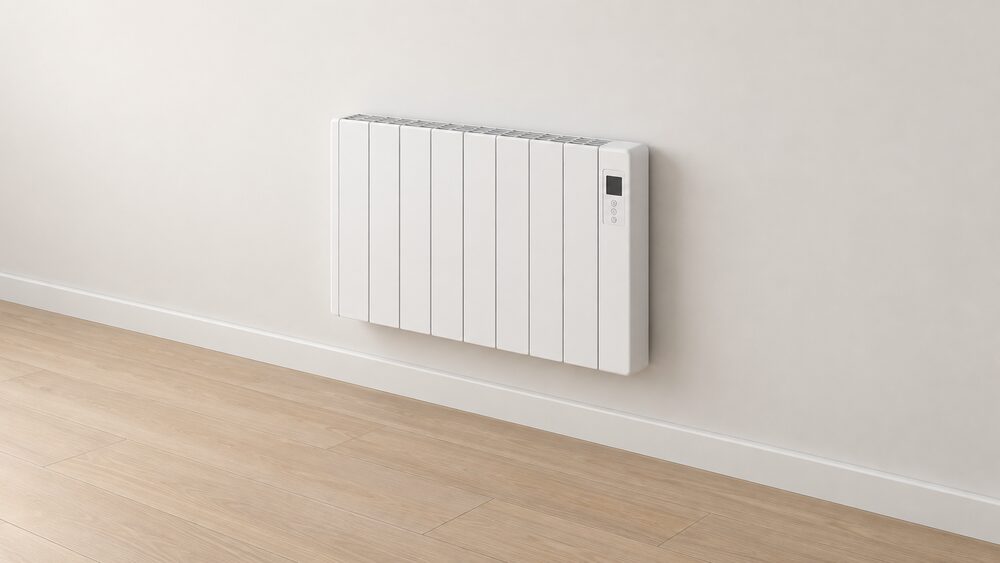 Rointe electric radiators and heatingRointe electric radiators run on electricity alone, with no gas or pipework, so are they cheap to run and do they heat a room well?
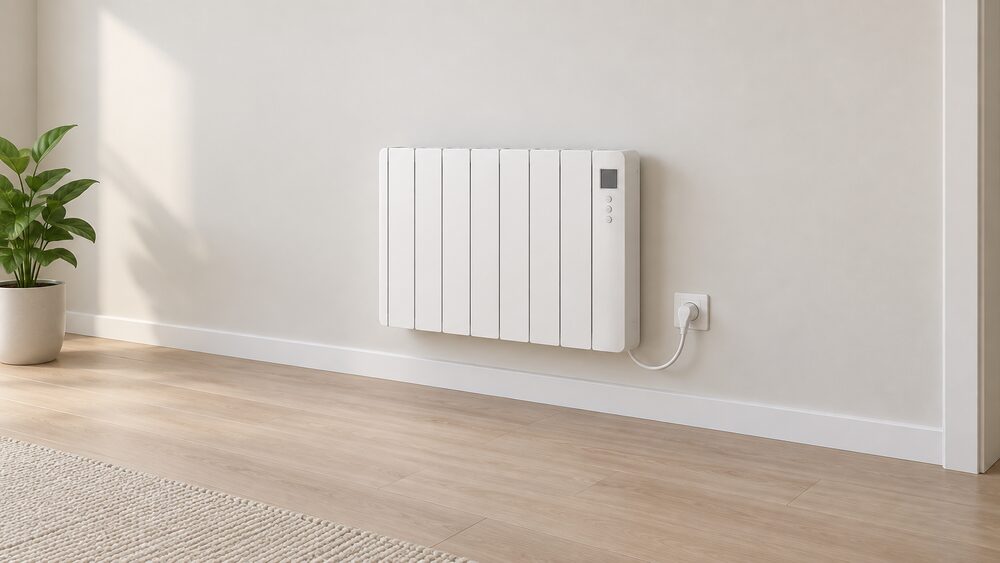 Rointe electric radiatorsRointe's D and Belize radiators run on electricity alone, so there's no boiler, gas supply or flue to worry about.
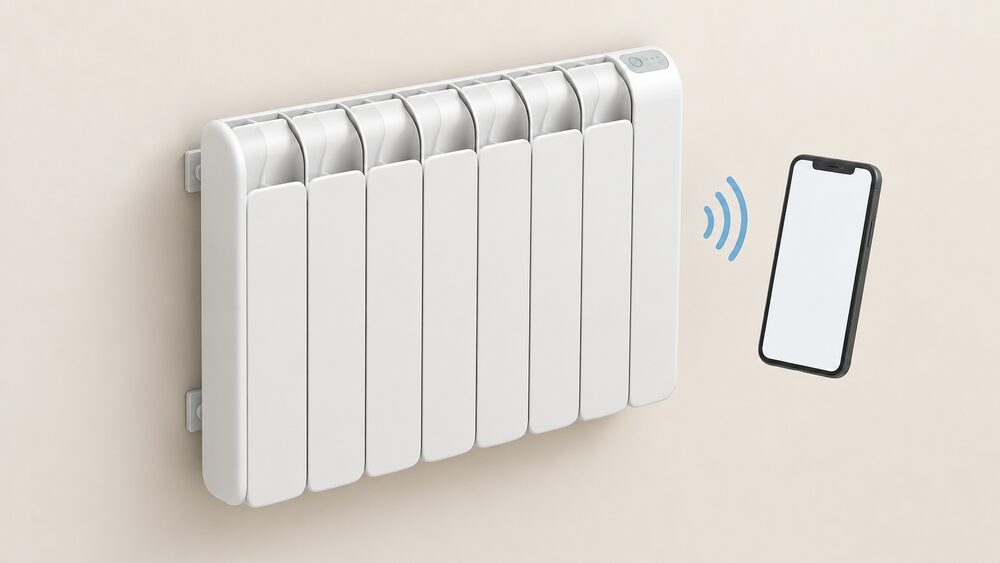 Rointe Radiator Controls and the Nexa AppRointe radiators work with the Nexa app, but do you need the app at all, and what happens if your WiFi drops?