
In this guide
Ariston is a domestic gas boiler brand sold to UK householders, and the questions that follow a purchase are practical ones: what the range covers, how long the warranty runs, what servicing it depends on, and what to do when the boiler locks out. On warranty, Ariston extended cover on Clas One combi boilers to 10 years as a limited-time offer announced in February 20261. Terms differ by model, so the length attached to a specific appliance is confirmed at the point of purchase rather than assumed across the range.
On servicing, the position is the same as for any gas appliance. Many boiler warranties require regular servicing to remain valid, and independent guidance states that a guarantee may require the boiler to be serviced at least once a year, otherwise it is invalidated2. Servicing and any repair work must be done by a Gas Safe registered engineer3. That single condition does more to determine whether a claim succeeds than any other part of the paperwork.
On faults, Ariston's own support guidance treats the reset as often the first recommended step when the boiler does not respond to commands or has a temporary fault1. The button is usually on the front panel, marked with a symbol or the word Reset, and is held for a few seconds until a light signal or a click confirms it1. If the error code persists, the boiler does not start, or it stops again after a short time, the maker's guidance is to call a technician1.
The Ariston range: combi, system and electric boilers
The UK domestic boiler market is built around three appliance types, and a brand's range is normally described in those terms: combi, system and heat only boilers5. A combi provides hot water on demand as well as heating, drawing directly from the mains and removing the need for a stored cylinder. A system boiler works with a separate hot water cylinder, and a heat only or regular boiler works with both a cylinder and a feed and expansion tank. Electric boilers sit outside that gas structure entirely and are covered separately in electric boilers.
What the evidence supports for Ariston specifically is narrower than the general market structure. The brand's own published guidance covers resetting, operating modes, condensate production, expansion vessels, radiator temperatures and water heaters, and its UK-facing material includes the Clas One combi range1. The wider range architecture, and how combi, system and regular types differ in practice, is set out in combi boilers, system boilers and regular boilers.
| Type | Hot water source | Stored cylinder | Typical fit |
|---|---|---|---|
| Combi | Mains, on demand | No | Smaller homes, one bathroom in use at a time |
| System | Separate cylinder | Yes | Homes needing stored hot water |
| Regular (heat only) | Cylinder plus feed and expansion tank | Yes | Vented systems, older installations |
| Electric | Appliance, no gas | Varies | Properties off the gas grid |
For a household, the choice of type matters more than the badge. A combi removes the cylinder and the loft tank, which reduces the number of components that can fail and frees space, but it ties hot water delivery to mains pressure and flow rate. A system or regular boiler keeps a stored volume of hot water, which suits homes with several bathrooms in simultaneous use, at the cost of a cylinder that needs its own maintenance and, in a vented arrangement, a tank in the roof. Sizing is the other variable: an undersized appliance will not meet demand however good its controls, and the method is set out in boiler sizing.
Warranty: 10 years on Clas One, model by model elsewhere
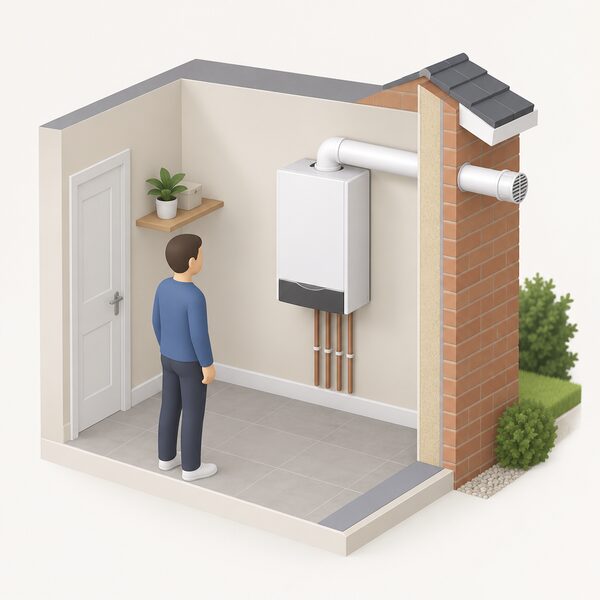
Ariston extended the warranty on Clas One combi boilers to 10 years as a limited-time offer announced in February 20261. That is the clearest warranty figure the brand publishes for a UK domestic boiler, and it is a promotional term rather than a permanent one, which means the date of purchase matters as much as the model.
For context on what long warranties look like across the market, Ideal Heating advertises protection lasting up to 12 years on its boilers5, and ATAG states that its iC Economiser Plus boilers come with 10 years as standard with an option up to 18 years6. Worcester Bosch conventional gas boilers are described as carrying a 12-year guarantee when installed by an accredited installer7. These are other makers' terms, given here only to show the range of what is offered, not as a comparison to be won.
| Brand | Advertised term | Condition attached |
|---|---|---|
| Ariston | 10 years on Clas One combi1 | Limited-time offer, February 20261 |
| Ideal Heating | Up to 12 years5 | Not stated |
| ATAG | 10 years standard, up to 186 | Not stated |
| Worcester Bosch | 12 years7 | Accredited installer7 |
The practical point is that a headline warranty figure is almost always conditional. The conditions typically attach to who installs the appliance, whether it is registered, and whether it is serviced annually. A guarantee registration process exists for most brands and is covered in boiler warranties. Where a warranty is described as limited-time, the household should expect to evidence the purchase date if a claim is ever made.
Keeping the warranty valid: annual Gas Safe servicing
The servicing requirement is not a formality. Independent guidance states that many boiler warranties require regular servicing to remain valid2, and that a guarantee may require the boiler to be serviced at least once a year, otherwise it is invalidated2. Many manufacturers also require an annual service in order to keep the warranty valid7. For a household, that makes the service record part of the asset, not an optional extra.
The work itself must be done by the right person. A boiler service is carried out by a Gas Safe registered engineer, who performs maintenance checks on all the key parts of the boiler8. Northern Gas Networks advises getting the boiler and gas appliances serviced every year to make sure they are safe and working properly, and using only a Gas Safe registered engineer3. SGN gives the same instruction: arrange an annual service for the boiler or other gas appliances with a Gas Safe registered engineer9.
There is a safety dimension beyond the warranty. Appliances that can produce carbon monoxide include boilers and gas cookers, gas fires and stoves, and fireplaces, barbecues and patio heaters10. A service is the point at which combustion is checked, which is why the annual interval exists at all. The wider safety picture is covered in carbon monoxide safety and gas safety in the home.
Servicing costs vary by region and provider, and the evidence on typical charges is set out in boiler servicing and maintenance. What matters for warranty purposes is not the price paid but that the service happened, on time, by a registered engineer, and that it is documented.
Operating modes: OFF, SUMMER and WINTER
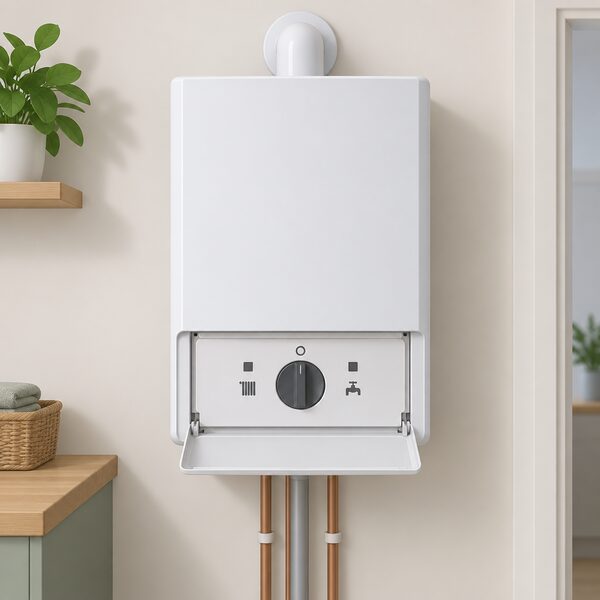
Boilers generally have two modes, summer and winter11. The distinction is straightforward in principle: winter mode runs the heating and the hot water, summer mode runs hot water only, with the heating circuit left off. A separate off position shuts the appliance down completely, using the button or switch on the control panel1.
| Mode | Heating circuit | Hot water | When it applies |
|---|---|---|---|
| Winter | On | On | Cold months, space heating wanted |
| Summer | Off | On | Warm months, hot water only |
| Off | Off | Off | Appliance shut down at the control panel |
The value of summer mode is that it stops the heating circuit firing on a warm day when only hot water is wanted. That is a control question rather than a boiler question, and the wider subject of scheduling and thermostats is covered in heating controls and thermostats. A wireless thermostat works by sending a signal to a receiver connected to the boiler, which then tells the boiler when to turn the heating on or off, without a direct wired connection between the two12. A weather compensator goes further, adjusting the boiler temperature in line with the outside temperature so it uses less fuel when it is warmer outside13.
For a household thinking about independence, the mode setting is a small lever with a real effect. It determines whether the appliance is burning gas for space heating in months when it is not needed, and it is the one control that requires no app, no broadband and no manufacturer's server. The limits of that independence are covered in heating and energy independence.
Resetting the boiler: the button under the display
Ariston's own guidance describes the reset as often the first recommended step when the boiler does not respond to commands or has a temporary fault1. It can resolve minor problems related to system lockout or the display of error codes, and some error codes indicate minor malfunctions such as communication problems between sensors or temporary software errors1.
The procedure is short:
- Locate the reset button on the front panel, marked with a symbol or the word Reset1.
- Hold it for a few seconds until a light signal or a click indicates the reset has been completed1.
- Check that water pressure and settings are within the recommended limits1.
- Confirm the boiler starts normally and no longer displays the previous errors1.
A reset is also recommended after repairs or servicing so that the system resumes operation within optimum parameters1. Some boilers are reset differently. Domestic gas boilers are often reset by poking the end of a pen into a button sunk into the control panel, or by switching the boiler off and on again to reboot the system14. The manual for the specific model confirms which applies.
When to call a Gas Safe engineer instead
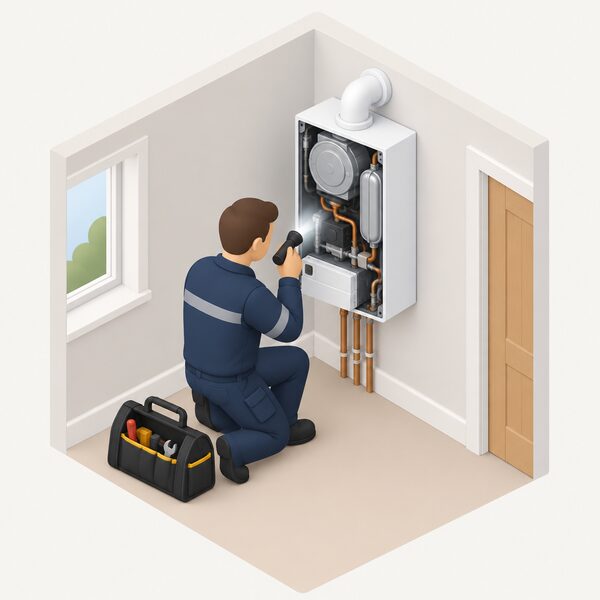
The line between a householder action and an engineer's job is drawn by gas safety law and by the warranty. For gas appliance and boiler problems, the Gas Safe Register can be contacted on 0800 408 5500 or through its website4. If a boiler is not working and the cause is unrelated to a power cut, a Gas Safe Registered engineer is needed15. If there is an issue with a gas boiler or any other gas appliance, the advice is to call a Gas Safe Registered engineer or the gas supplier16.
Attempting repairs carries a specific warranty risk. Attempting repairs or a boiler installation yourself, or using someone who is not properly qualified, could void the boiler warranty in the likely event it causes damage17. That is the practical reason the boundary matters: the saving on a callout is small against the cost of an invalidated guarantee.
"Attempting repairs or a boiler installation yourself, or using someone who is not properly qualified, could void the boiler warranty in the likely event it causes damage."
There is also a safety boundary. Gas appliances should always be fitted, fixed and checked by a Gas Safe registered engineer18. Any extra work on appliances such as ovens, boilers and fires after a gas emergency requires a Gas Safe Registered Engineer19. If a boiler is not working, a Gas Safe registered engineer should be contacted to check it15. Fault diagnosis and the meaning of error codes are covered in boiler faults and fault codes, and pressure problems in boiler pressure.
Beyond boilers: heat pumps and hybrid systems
A hybrid heat pump is a system that uses a standard heat pump with another heat source, usually a gas, oil or LPG boiler20. Hybrid heat pumps can work with another heating system in a building, such as a gas boiler21, and the configuration combines an air source heat pump with another type of heating system such as a gas boiler22. Oil and LPG boilers can also be used in a hybrid arrangement23.
The appeal is staged replacement. Hybrid heat pumps can be upgraded easily to a range of future low or carbon-free heating options, including an all-electric heat pump, an electric-hydrogen hybrid, an electric-biofuel hybrid, or an electric heat pump with instantaneous electric heating23. A regular hybrid system, with a regular boiler, hot water cylinder and electric heat pump, can optimise for different conditions23.
The constraint is the heat emitter side. Heat pumps can work with radiators or underfloor heating, and some types can work without either24, distributing heat to radiators, underfloor heating or a hot water tank depending on the setup25. But when replacing a boiler, it is probable that radiators will have to be changed for larger ones to produce an equivalent heat output, unless a high temperature output heat pump is installed26. That is the cost that decides whether a hybrid route is practical in a given house. The comparison is set out in heat pumps vs boilers.
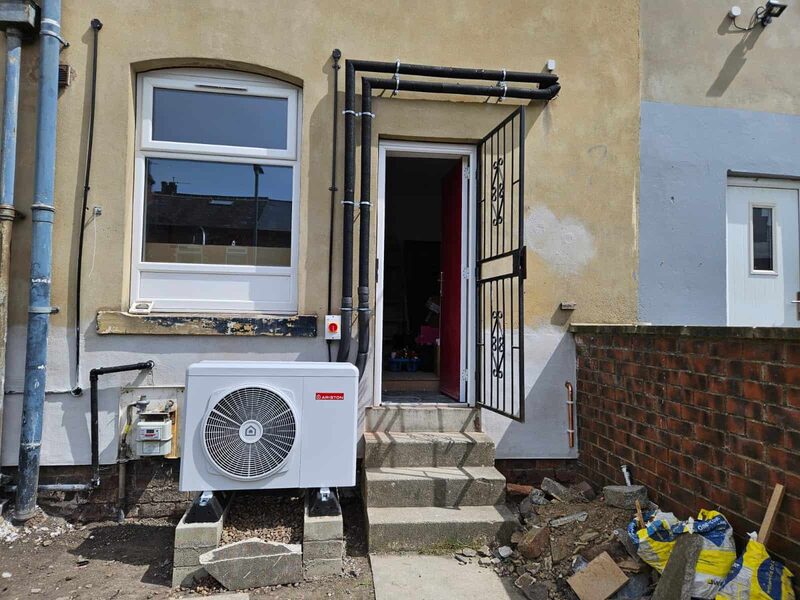
What the brand means for a household's independence
Brand heritage is a claim that needs evidence, and the evidence available here is thin on Ariston specifically. What can be said with support is that Ariston operates across boilers and water heating, with published guidance on condensing and non-condensing appliances, expansion vessels, condensate production and water heater ranges, and a UK-facing Clas One combi line1.
For a household, heritage matters less than the two things that determine what happens after installation: whether the manufacturer keeps parts and service capacity for the model, and whether the warranty terms are honoured. The first is a supply chain question, the second a paperwork question. Neither is settled by how long a company has been trading.
What the evidence does support is the shape of the dependence a gas boiler creates. An Ariston boiler keeps a home on the gas grid and on a gas supplier, with an electrical dependence for ignition, controls and pumping. Servicing and any repair depend on a continuing relationship with a Gas Safe registered engineer, and the longest warranty terms depend on the conditions attached to them being met and recorded. Alternatives that change the fuel rather than the appliance are covered in gas boilers, electric boilers and off-grid home heating.
Sources26 cited
- How to reset your Ariston boiler manually, Ariston, 2026-07-28
- Boiler maintenance guide, Uswitch, 2026-09-03
- Energy efficiency advice, Northern Gas Networks, 2026-06-25
- Make the right call, Cadent Gas, 2026-09-20
- Boilers, Ideal Heating, 2026-09-17
- ATAG iC Economiser Plus boilers, Quiet Mark, 2026-09-17
- How long does a boiler last?, Uswitch, 2024-11-13
- Boiler servicing guide, Confused.com, 2025-07-23
- Take no chances with gas safety, Northern Gas Networks, 2026-09-14
- Staying safe this winter: IGEM supports Carbon Monoxide Awareness Week 2025, IGEM, 2025-11
- Should you turn your gas boiler off this summer?, Netatmo, 2026-09-20
- What is a smart thermostat?, Smart Energy GB, 2026-08-19
- Upgrading and replacing your boiler, Centre for Sustainable Energy, 2026-06
- Boiler not working: find out why and how to fix it, Ideal Heating, 2026-09-17
- My boiler isn't working, SGN, 2026
- Winter safety, WW Utilities, 2026-09-20
- Five reasons households should not attempt DIY repairs, OFTEC, 2026-08-17
- Carbon monoxide safety, SGN, 2026
- Smell gas, Cadent Gas, 2026-09-20
- Hybrid heat pumps, Energy Saving Trust, 2026-07-16
- Heat pumps, nidirect, 2025-02-24
- Electrification of heat: heat pump user guides, Energy Systems Catapult, 2024-02-22
- Hybrid heat pumps, HHIC, 2026-09-17
- Heating your home, Energy Saving Trust, 2026-05-19
- How heat pumps work: a guide for homeowners, NICEIC, 2025-09-17
- Your home guide to heat pumps, OFTEC, 2026-09-17
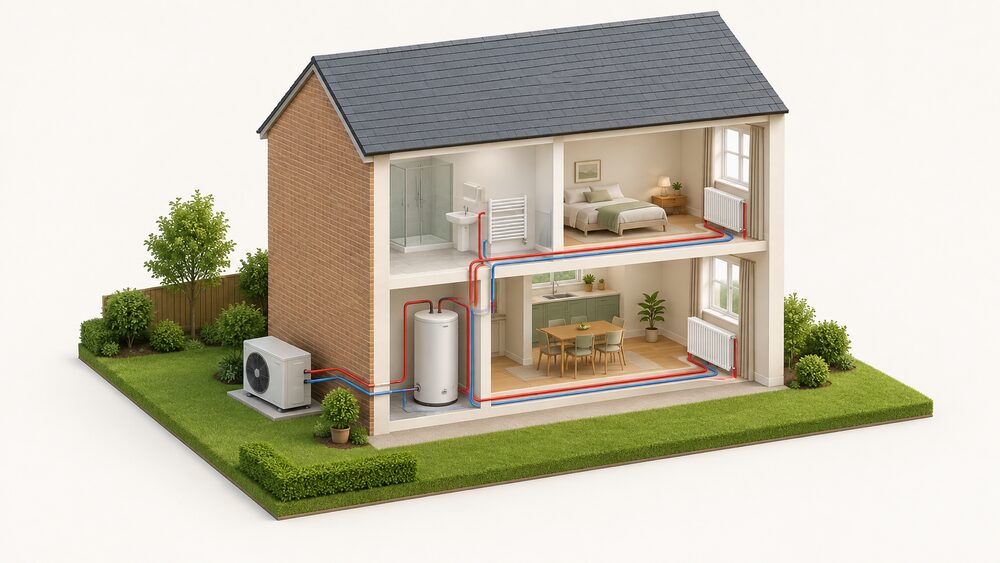 Ariston heat pumps and hot waterAriston heat pumps and hot water: what do the Nimbus models cost to run, how long is the warranty, and are they any good for an older or smaller house?
 Ariston Heating ControlsCan you control your Ariston boiler from your phone, and what do you need fitted for that to work?