
In this guide
Ariston is a heating manufacturer with a UK presence in boilers, cylinders and heat pumps, and it is positioned at the affordable end of the market. Independent testing describes it as "a budget-focused boiler brand", and its gas boilers carry a four-star customer score with 86% of owners saying they are satisfied, four percentage points above the average satisfaction score of 82%1. That is the commercial context for anyone weighing an Ariston heat pump: a value brand with a decent satisfaction record, entering a market where the technology, not the badge, decides most of the outcome.
The heat pump side of the business is documented most fully through the Nimbus range. Ariston Thermo Nimbus heat pumps are supported by 10 years of data enabling access to Active Care, and the system includes an MCS certified air-to-water air source heat pump carrying a 10-year warranty2. That is a longer warranty than most of the market offers, and it is the single most concrete fact about the range in the UK.
What follows sets out what Ariston sells, how hybrids and heat pump water heaters work, what the independent evidence says about satisfaction and cost, and where the limits sit. The wider picture is in the full UK heat pump guide.
What Ariston offers: heat pumps, hybrids and boilers
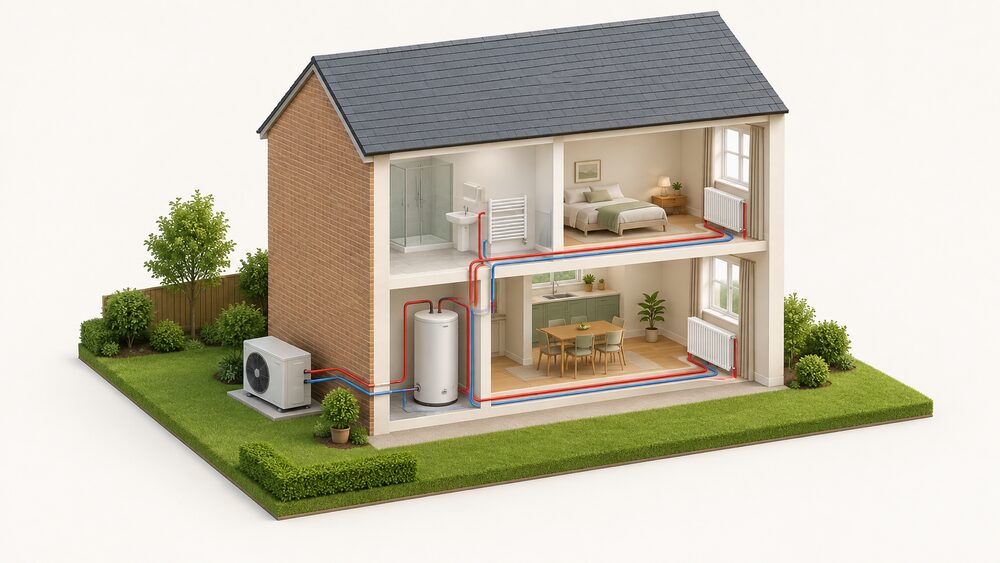
Ariston's UK catalogue spans gas boilers, hot water cylinders and heat pumps, with the heat pump line built around air-to-water equipment. Air-to-water heat pumps are the type that can be a direct replacement for a gas or oil boiler, because they heat water that then runs through radiators, underfloor loops or a cylinder rather than blowing warm air5. That is the category the Nimbus sits in.
The wider market context matters for understanding what a household is choosing between. Heat pumps come as air source, ground source or water source units, and developers can install any of the three depending on the needs and location of the property6. Air source is by far the dominant choice in the UK: 98% of government-supported heat pump installations in the year ending December 2024 were air source, up from 87% in the year ending December 20197. Ground source accounted for 13.2% of accreditations since the domestic scheme launched, against 67.4% for air source, 11.1% for biomass and 8.3% for solar thermal8.
For a household, the practical distinction is that an air source unit needs outdoor space and a noise assessment, while a ground source unit needs land or a borehole. Ariston's documented UK heat pump offer is air-to-water, which places it in the same category as most of the market. The air-to-water heat pump page covers how wet systems work, and air source heat pumps covers the dominant type in detail.
The Nimbus heat pump range
The Nimbus range is Ariston's headline heat pump line, and the facts that matter most are the warranty and the monitoring. The system includes an MCS certified air-to-water air source heat pump which comes with a 10-year warranty, and it is backed by 10 years of data which enables access to Active Care2. MCS certification is the gate to the Boiler Upgrade Scheme and to most installer routes, so it is not a marketing detail.
Ariston has published material describing the Nimbus range's functions, efficiency and smart features, and a separate guide presenting its Nimbus and NUOS PLUS ranges for the Romanian market9. The Romanian-language material is the maker's own explanation of how the range is positioned, and it is worth treating as a maker's claim rather than independent evidence. The UK-facing facts are the warranty term, the MCS certification and the Active Care data service.
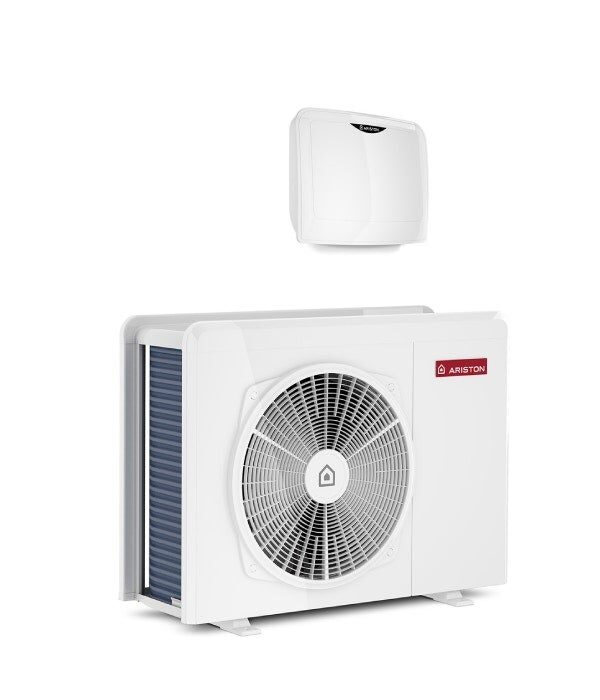
On lifespan, independent guidance puts heat pumps at 20+ years3. That is a general figure for the technology rather than a Nimbus-specific one, and it assumes servicing and a correctly sized system. The heat pump servicing and maintenance page sets out what that involves, and heat pump servicing and warranty covers how servicing interacts with guarantee terms.
Hybrid systems: heat pump plus boiler in one setup
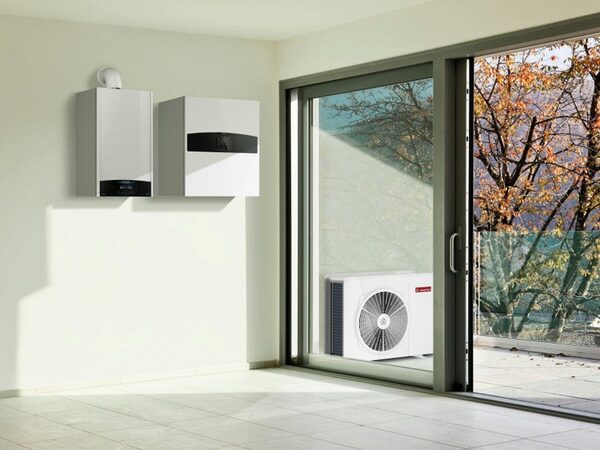
A hybrid heat pump combines two technologies in a single heating system: a heat pump and a gas boiler10. More precisely, it is a standard heat pump with another heat source, usually a gas, oil or LPG boiler11. The idea is that the heat pump covers the mild majority of the year and the boiler takes over in cold weather or when hot water demand spikes.
The configurations vary. Packaged systems put the heat pump and boiler in a single unit11. In a hybrid combination system, the existing heat generator is replaced with a hybrid heat pump and intelligent control, with hot water supplied by the boiler and the boiler supporting during cold periods12. A regular hybrid system, with a regular boiler, hot water cylinder and electric heat pump, can optimise for different conditions12. Heat pump and hybrid controls can be fitted to different heat sources and boiler types, including regular or combination boilers12.
Hybrids are also presented as a stepping stone. Hybrid heat pumps can be upgraded easily to a range of future low- or carbon-free heating options, including an all-electric heat pump, an electric-hydrogen hybrid, an electric-biofuel hybrid, or an electric heat pump with instantaneous electric hot water12. Northern Ireland guidance confirms hybrid heat pumps can work with another heating system in a building, such as a gas boiler13.
Heat pump water heaters: how hot water is covered
Hot water is where heat pumps need explaining, because the cylinder temperature is lower than a gas boiler's. Most heat pumps will heat hot water to 50-55°C very efficiently, and then the sterilisation cycle raises the temperature further14. Many heat pumps can provide hot water over 60°C consistently, which is the minimum temperature the hot water cylinder needs to reach for sterilisation14.
That two-stage pattern is normal and not a fault. The heat pump does the bulk of the work at a temperature it can reach efficiently, and an immersion heater or a high-temperature cycle finishes the job periodically to guard against legionella. For grant-funded installations, the heat pump or biomass boiler must provide both space and hot water heating and be capable of meeting the full space heating and hot water heating demands of the property15.
Ariston's water heating line includes the NUOS PLUS range alongside Nimbus, presented together in the maker's air-to-water guide9. Ariston has also published an explainer on how heat pump water heaters work and when they are a cost-effective choice9. For households weighing a cylinder-only heat pump against a full system, the hot water heat pumps page covers cylinders for water only, and hot water cylinders for heat pumps covers sizing and coil specification.
Customer score and satisfaction: four stars and 86%
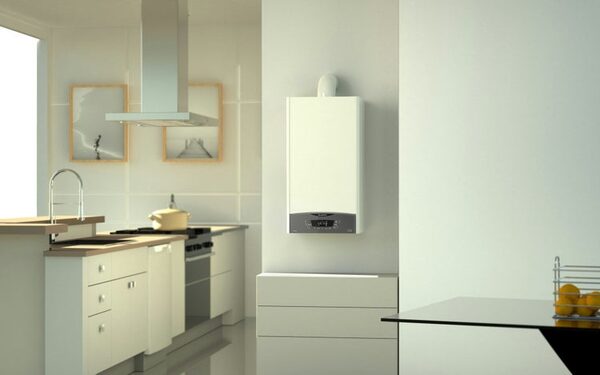
The satisfaction evidence for Ariston comes from boiler owners rather than heat pump owners, and that distinction matters. Ariston has a good rate of owner satisfaction, with a four-star customer score, and 86% of Ariston gas boiler owners said they are satisfied with their boiler, which is four percentage points above the average satisfaction score of 82%1. That is a solid record for the brand's combustion products.
For heat pumps as a category, the independent evidence is also positive. Among people who have had a heat pump installed in their current home, 81% are as satisfied or more satisfied with heat pumps compared to their previous heating system4. The figure is similar, 83%, when looking at heat pump owners in Victorian or older properties4. On noise, 85% of heat pump owners are satisfied with noise levels16.
| Measure | Figure | Basis |
|---|---|---|
| Ariston customer score | Four stars1 | Gas boiler owners |
| Ariston owner satisfaction | 86%1 | Gas boiler owners |
| Heat pump owner satisfaction | 81%4 | Heat pump owners, current home |
| Victorian or older properties | 83%4 | Heat pump owners |
| Noise satisfaction | 85%16 | Heat pump owners |
The gap between the two sets of figures is worth naming: the Ariston score is about boilers, and the heat pump figures are about the technology across all brands. Neither tells a household how a specific Ariston heat pump will perform in a specific house. For that, the performance in UK homes page and the open monitoring data at heatpumpmonitor.org are more useful.
Price position: the budget end of the scale
Ariston is priced at the lower end of the scale as a budget-focused boiler brand1. That positioning is the commercial reason a household might look at the brand, and it is also the reason to check the specification carefully rather than assuming the cheapest quote is equivalent.
Heat pump costs generally are substantial. Independent guidance puts heat pumps at £7,000 to £14,0003, with potential energy savings of £3853. Median costs for some property archetypes are approximately £9,700 for flats, £12,000 for semi-detached and terraced houses17. In the baseline scenario, the price of a heat pump for an average home goes down to about £10,000 by 203017.
Attitudes data shows the affordability barrier clearly. In Summer 2025, between 24% and 30% of owner-occupiers with income bands of £30,000 or over said they were likely to install an air source heat pump, compared with between 14% and 17% of those with an income below £30,00018.
Warranty: minimum 2, maximum 10 years
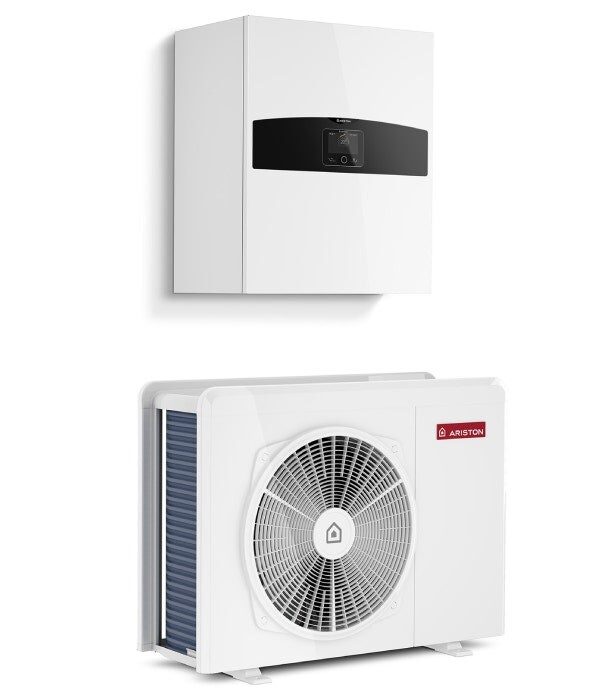
Warranty terms are where a heat pump purchase is won or lost over its life, and the Ariston position is documented at the top end. The Nimbus system includes an MCS certified air-to-water air source heat pump which comes with a 10-year warranty2. That is the longest term in the material available for this brand.
The wider market range runs from 2 years at the bottom to 10 years at the top, and the term usually depends on registration and on who commissioned the system. A warranty is only as good as the conditions attached to it, and the common conditions are annual servicing by a competent person, registration within a set window, and evidence of commissioning. The heat pump servicing and warranty page sets out how those conditions typically work.
Suitability for old houses and small homes
The evidence on old buildings is more encouraging than the common assumption. Parliamentary research states heat pumps are technically suitable for most UK homes if installed appropriately19. Independent survey work found 83% of heat pump owners in Victorian or older properties were as satisfied or more satisfied than with their previous system4. Heat pumps can work with radiators or underfloor heating, and some types can work without either20.
Insulation still matters. Local authority guidance notes heat pumps are best suited to buildings with good insulation levels, and insulation may need to be added internally or externally if homes do not already have good levels20. That is a statement about fabric and heat loss, not about the age of the walls.
For smaller homes, air source heat pumps are suitable for residential homes, apartments and small commercial buildings13. The constraint in a flat or a small house is usually outdoor space for the unit, the noise assessment, and the cylinder position rather than the technology itself. The which homes suit a heat pump page covers property types, and Victorian houses and flats have their own pages.
Faults, short cycling and getting support

Ariston publishes a UK customer service line on 0333 240 8777 and a Republic of Ireland line on 00353 1 691 732321. For an installed system, the installer who commissioned it is normally the first point of contact, because the commissioning record is what a warranty claim is checked against.
On faults, Ariston's own support material groups the reasons a heat pump may fail to start into preliminary checks, compressor-related causes and other technical reasons9. Short cycling, the frequent starting and stopping that Ariston describes as a known phenomenon, has a documented list of causes: insufficient refrigerant charge affecting the system's ability to hold temperature, loose connections or failed components, an uncalibrated thermostat or one sited in an area with temperature swings, clogged air filters reducing airflow and causing overheating, an oversized unit that heats the space too quickly and stops before the cycle completes, and incorrect sensor readings producing unnecessary start cycles9.
"oprirea sistemului pentru câteva minute și apoi repornirea acestuia poate ajuta la resetarea senzorilor și la eliminarea defecțiunilor minore"
On operation, official guidance is that heat pumps usually work best if turned on at a lower temperature for a longer period of time13. Ariston has published advice on when switching a heat pump off is justified, recommending thermostat control instead9. The faults and troubleshooting page covers diagnosis in more depth, and controls and weather compensation covers how to run a system steadily.
What Ariston means for household energy independence
A heat pump changes what a household depends on. Running one shifts space heating and hot water from gas to electricity, which removes the gas connection and the gas supplier from the equation for those loads, and it makes the home compatible with a rooftop solar array and a battery in a way a gas boiler is not. The heat pumps and energy independence page sets out the full picture.
The dependence that remains is real. A heat pump runs on grid electricity unless the household generates its own, so the electricity supplier and the grid connection stay. A hybrid system keeps the gas boiler and therefore the gas supply as well10. Smart features and remote monitoring add a dependence on broadband and on the manufacturer's servers and app, and the Active Care service on the Nimbus range is a manufacturer-run function2. A long warranty depends on a continuing relationship with an approved installer and on annual servicing.
For a household, the honest position is that an Ariston heat pump reduces reliance on imported gas and on a gas supplier, and increases reliance on electricity, on the installer network and, for the monitoring features, on the maker's platform. That is a shift in the shape of dependence rather than its removal. The full UK heat pump guide covers the alternatives, and replacing a gas boiler covers the conversion route.
Sources21 cited
- Ariston boilers review, Which?, 2025-09-17
- ECO4 innovation approved measures, Ofgem, 2026-01
- Heat pumps vs boilers, CPA, 2025-02-18
- Nesta launches nationwide Visit a Heat Pump service, Nesta, 2024-04-11
- Would a heat pump work for your home, Which?, 2024-11-19
- What the Future Homes Standard means for homeowners, NICEIC, 2026-04-22
- Heat pump deployment quarterly statistics, UK 2024 Q4, DESNZ, 2024
- Domestic RHI annual report 2023-24, Ofgem, 2024-07
- Why my heat pump starts and stops repeatedly, Ariston, 2026-07-28
- Hybrid heat pumps, SGN, 2026
- Hybrid heat pumps, Energy Saving Trust, 2026-07-16
- Heat pump and hybrid guidance, HHIC, 2026-09-17
- Heat pumps, nidirect, 2025-02-24
- Heat pump myths, Energy Saving Trust, 2025-09-02
- Boiler Upgrade Scheme guidance, Ofgem, 2023-09-25
- Heat pumps: expert guide for homeowners, Development Bank of Wales, 2024-11-07
- How to make heat pumps more affordable: assumptions and methods, Nesta, 2024-06-13
- Public attitudes tracker: heat and energy use in the home, DESNZ, 2025
- Heat pumps, UK Parliament POST, 2026-09-19
- Heat pumps, New Forest District Council, 2026-09-17
- Ariston smart home, Ariston, 2026-09-17
 Ariston boilersHow long does an Ariston boiler warranty last, and does it depend on the model?
 Ariston Heating ControlsCan you control your Ariston boiler from your phone, and what do you need fitted for that to work?