
In this guide
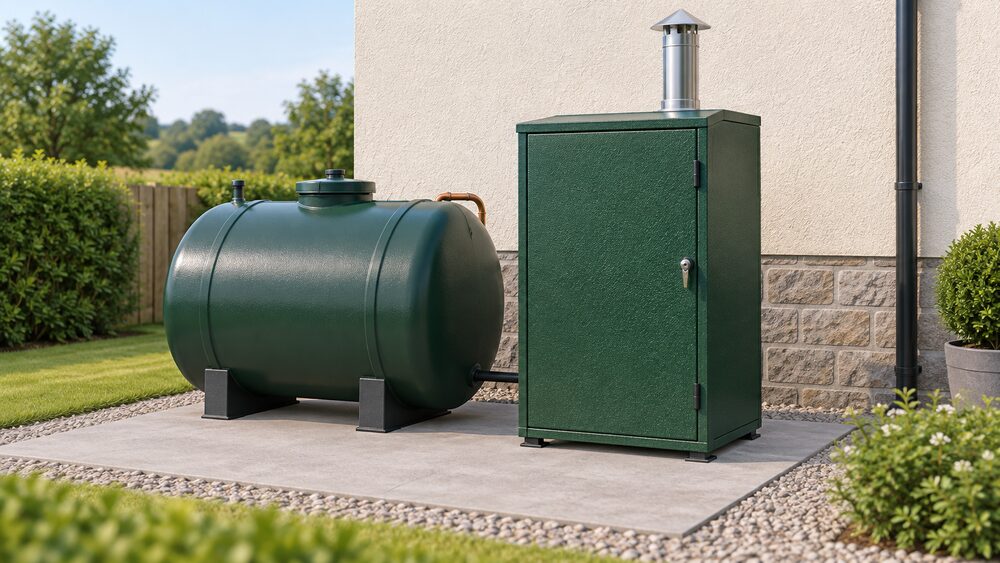
Mistral Energy Products is a Telford firm that has spent over forty years in oil firing, and it builds its boilers in the UK under a quality control system to ISO90011. The range is unusual among British oil makers in one respect: Mistral states that it can offer every boiler as indoor, outdoor, condensing or non condensing, so a household is not forced into a single casing or siting arrangement1.
That matters because oil boilers serve a specific market. An estimated four million homes in the UK have no access to mains gas, and oil boilers are the alternative form of fuel for many of them2. Oil boilers typically use kerosene delivered to the home, which means a storage tank, a delivery arrangement and a technician who can service both3.
Mistral's published figures put top efficiency on its non condensing boilers at up to 88.3%, tested at 3 Star European Rated, with condensing models running up to 41kW in a casing that still fits under a work surface1. The boilers comply with the EC low voltage, electromagnetic compatibility and efficiency directives, and the maker fits Riello burners, Grundfos pumps and Honeywell controls1.
Who makes Mistral boilers: a Telford firm with over forty years in oil firing
Mistral Energy Products is based in Telford and describes over forty years of experience in oil firing1. That is a long run in a niche market. Oil heating sits outside the mains gas network, so the firms that serve it tend to be specialists rather than the large gas boiler manufacturers, and the independent guidance on new boilers names Worcester Bosch, Vaillant, Alpha, Viessmann and Ideal as the brands a UK household is most likely to be offered, none of them oil-first businesses3.
The practical consequence of a specialist maker is that the product line is built around the constraints of off-grid homes: fuel stored on site, a tank that needs inspection, and a technician who understands both the burner and the tank. Mistral's own component choices reflect that. The company states it fits Riello burners, Grundfos pumps and Honeywell controls, describing these as the highest quality products available in the market1. Those are named, widely available components rather than proprietary parts, which affects how easily a local engineer can source replacements.
For a household, the maker's identity matters less than the support chain behind it. A boiler from a firm with a long oil history and a UK base is easier to keep running than one whose parts must be imported, particularly when the boiler is the only source of heat and hot water in a home with no gas connection. The wider context on fuel choice for homes without a gas supply is set out in heating a home off the gas grid.
The range: heat only, sealed system and combi boilers
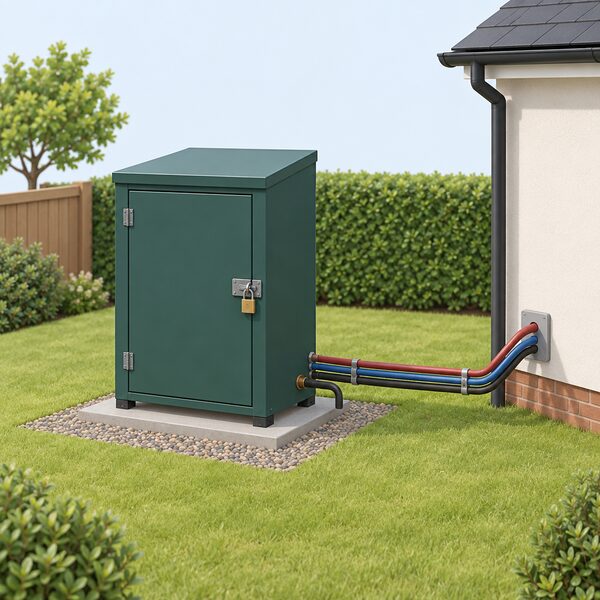
Mistral's range covers the three arrangements a household is likely to be choosing between. Heat-only boilers, also called regular or conventional boilers, work in a similar way to system boilers and rely on a separate cylinder for hot water6. Condensing boilers come in both combination and system models7. Mistral's own claim is broader than most: every boiler is available as indoor, outdoor, condensing or non condensing1.
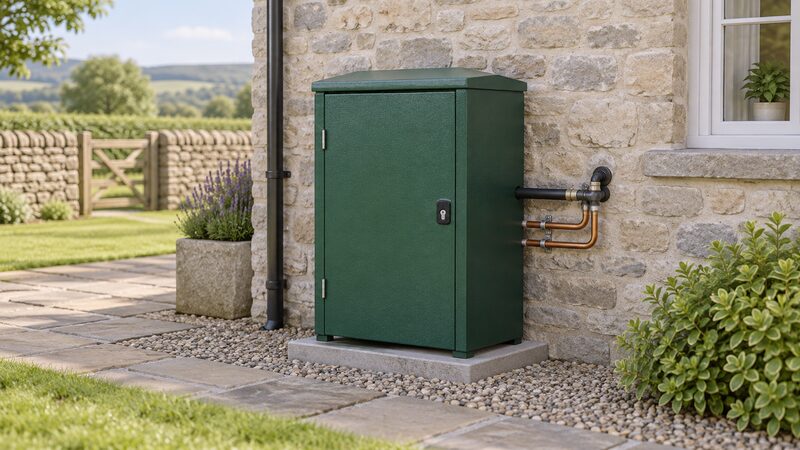
The outdoor models are the distinctive part of the line. Mistral outdoor boilers have a lockable cabinet door, which matters for a unit sited away from the house where fuel and controls need protection4. The condensing side runs up to 41kW in a casing that still fits under a work surface, and the non condensing side is tested at 3 Star European Rated1.
| Arrangement | What it means in the home | Mistral availability |
|---|---|---|
| Heat only (regular) | Separate hot water cylinder, tank-fed or sealed | Indoor or outdoor, condensing or non condensing1 |
| System | Sealed system, cylinder heated directly | Indoor or outdoor, condensing or non condensing1 |
| Combi | Hot water on demand, no cylinder | Indoor or outdoor, condensing or non condensing1 |
| Output range | Non condensing tested at 3 Star European Rated; up to 41kW condensing | Fits under a work surface at the top of the range1 |
The choice between them turns on hot water demand and space. A combi removes the cylinder but limits simultaneous draw-off; a heat-only or system boiler keeps a stored supply. The differences are set out in combi boilers explained, system boilers explained and regular, heat-only and conventional boilers. Sizing is covered in boiler sizing.
British manufacture and what it means for spares and support
Mistral's boilers are British-made, with all manufacturing carried out under a quality control system to ISO90011. UK manufacture is not a marketing point on its own; it changes the practicalities. Parts travel a shorter distance, a UK technical line can be reached in the same time zone, and an engineer ordering a replacement component is dealing with a domestic supply chain rather than an import schedule.
The comparison with the wider market is instructive. Independent guidance notes that both Baxi heating boilers and Glow Worm boilers are British-made, so Mistral is not alone in manufacturing here2. But the oil segment is thinner than the gas segment, and a household off the gas grid has fewer brands to choose from in the first place.
What British manufacture does not change is the dependence on a local technician. An oil boiler needs commissioning, an annual service and, when it fails, a repair visit. The trade body for the sector recommends that oil households arrange for the boiler and tank to be serviced at least once a year by an OFTEC technician, including any underground pipework5. That is a relationship with a registered business, not with the manufacturer, and it is the part of oil heating a household cannot do without. Registration and what it covers are explained in OFTEC registration and oil heating technicians.
Standards and compliance: ISO9001 and EC directives
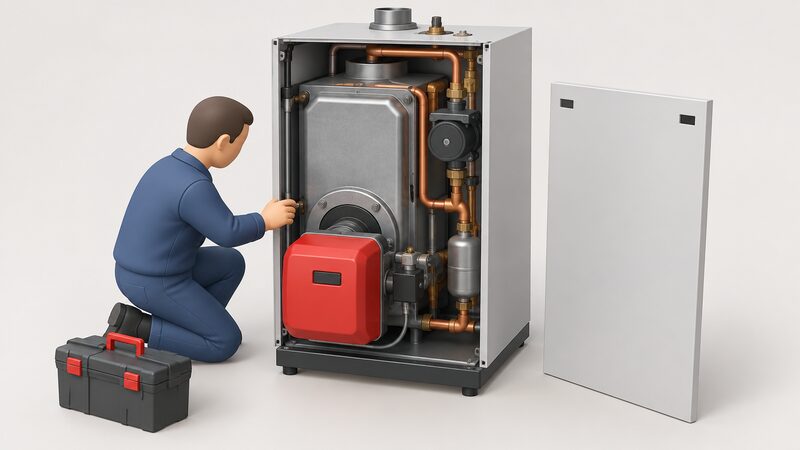
Mistral states that all its manufacturing is carried out under a stringent quality control system to ISO9001, and that its boilers comply with the EC low voltage, electromagnetic compatibility and efficiency directives1. Its non condensing boilers are tested at 3 Star European Rated, with top efficiency of up to 88.3%1.
Those are the maker's own statements about its own products, and they sit alongside a wider regulatory picture that applies to oil appliances regardless of brand. Official guidance for combustion installations covers oils meeting the specifications for Class C2 (kerosene) and Class D (gas oil) given in BS 2869:2006 or equivalent, liquid biofuel conforming to EN 14213:2003, and blends of mineral oil and liquid biofuel8. A condensing boiler with pressure-jet burners, including a combination boiler, is listed as running on Class D oil (heating oil)8.
Certification of the body assessing products is a separate matter. The Boiler Upgrade Scheme regulations in England and Wales require conformity assessment bodies to meet BS EN ISO/IEC 17065:20129. Metering rules for oil inputs, where a hybrid system with an integrated oil boiler requires an oil meter, specify a resolution of 0.1 litres or equivalent and Class 1 of the Measuring Instruments Directive10.
The Scottish picture is worth noting for households north of the border. In 2024, 4% of gas and oil boilers met the minimum efficiencies specified by the current Building Standards in Scotland11. That is a compliance figure about the installed stock, not about any one maker, and it indicates how much of the existing oil and gas boiler population falls short of current standards. The general framework is covered in heating appliance standards, marking and certification.
Casing colours and special-order options
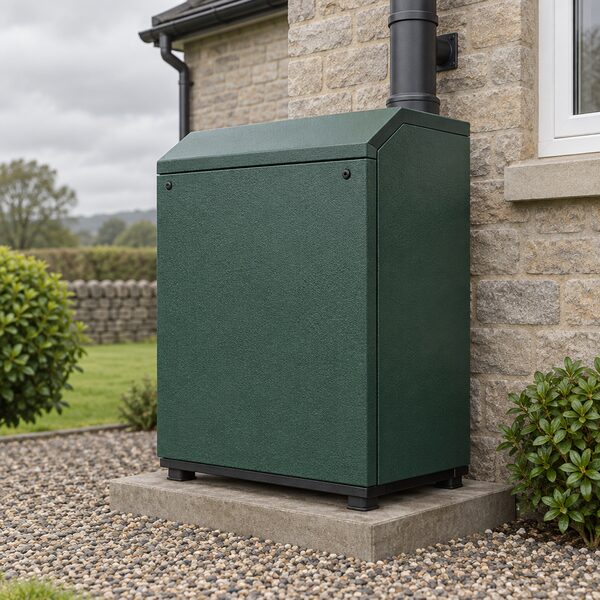
The standard finish on Mistral outdoor boilers is a green texture. The casing is zinc phosphated for optimum corrosion protection and then polyester coated in a highly durable green texture finish4. That is a specification aimed at a unit living outside through British weather, and the phosphating stage is the part that matters for longevity: it prepares the steel so the polyester coat adheres and resists corrosion.
Special-order colours are not documented in Mistral's published material. The comparison point in the wider heating market is wood burning stoves, where colour choice is a normal part of the purchase. One British stove maker offers charcoal, light charcoal, Mojave red, forest green and honey-glo brown among its options12. That is a different product category with a different manufacturing model, and it does not establish that an oil boiler can be ordered in a matching finish.
A householder wanting a Mistral boiler in a colour other than the standard green would need to ask the maker directly. The published pages describe one finish, and no alternative is listed. For an indoor installation the casing is less exposed and the question is largely cosmetic; for an outdoor unit the corrosion protection matters more than the shade.
Oil boilers and household energy independence
An oil boiler gives a household a specific kind of independence and leaves a specific kind of dependence. The independence is in the fuel: kerosene is delivered to the home and stored on site, so the household is not connected to the mains gas network and is not buying gas from a supplier on a standing charge. Wood burning stoves are described in the trade press as offering fuel independence and helping households avoid sudden tariff changes and standing-charge pressures13. An oil tank does something similar, in that the fuel is bought in bulk and held.
The dependence is on delivery, on a supplier, and on electricity. Even gas and oil boilers rely on electricity to start up and tend to have safety mechanisms in place to stop them functioning without power14. A power cut therefore stops an oil boiler, which is a point worth understanding before treating stored fuel as full independence. Preparing for that scenario is covered in preparing for a power cut.
There is also a control dimension. Heating controls can be upgraded or installed independently of the boiler, so a household is not locked into the controls supplied with the appliance15. That is a genuine independence gain, because it means the scheduling and zoning side of the system can be improved without replacing the heat source. The wider picture is in home heating and energy independence and heating controls, thermostats and TRVs.
On the national picture, analysis of household energy buying argues that insulating homes and running electric heat pumps and cars on an ever-greener grid would boost energy independence16. That is a system-level claim about the direction of travel, not a statement about any individual oil boiler. For a household on oil today, the practical position is a stored fuel supply, a delivery relationship and an electrical dependence for ignition, pumping and controls.
Servicing: why summer matters
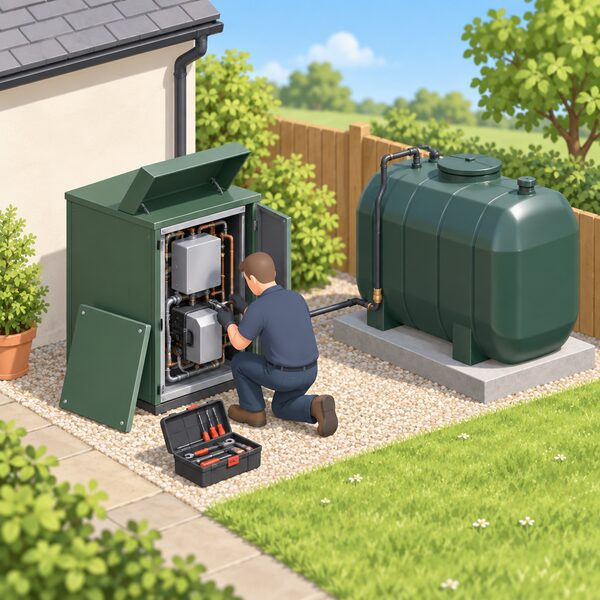
Oil boilers need an annual service, and the recommendation is consistent across sources. Official guidance for oil households is to arrange for the boiler and tank to be serviced at least once a year by an OFTEC technician, including any underground pipework5. The trade body repeats the point: the boiler should be serviced at least once a year to make sure it is working correctly and efficiently17. General boiler guidance puts the interval at least once a year, in other words every 12 months18, and the Energy Saving Trust recommends getting a boiler or heat pump serviced every year to make sure it is running properly19.
The duration is worth knowing when booking. A service on an oil boiler typically takes one to two hours20. That is longer than a gas boiler service, reflecting the burner, the nozzle and the tank-side checks.
Summer is the practical window. The best time for a boiler service is usually in the summer21. Mistral itself urged oil fired boiler owners to use the warmer summer months for their annual heating system check-up in June 20171. The reasoning is straightforward: heating professionals tend to have more flexible schedules compared to the busy winter season22, and a fault found in July can be fixed before the first cold spell rather than during it. A spring plumbing and heating checklist makes the same case, that regular maintenance improves efficiency, extends the lifespan of the system and helps catch small issues before they become large ones23.
Lifespan expectations sit behind the servicing case. Gas and oil boilers tend to last for at least ten years and are therefore only replaced very infrequently23, and most boilers are designed to last around 15 years24. Annual servicing is the main lever a household has over where in that range its own boiler lands. The full process is covered in boiler servicing and maintenance, and the tank side in domestic heating oil tanks.
Sources24 cited
- Mistral boiler information, Mistral Boilers, 2016-08-22
- Different boiler types, Uswitch, 2026-09-18
- New boiler cost, Uswitch, 2024-11-06
- Mistral exterior combi boilers, Mistral Boilers, 2022-09-21
- Check your oil tank, nidirect, 2026-09-17
- Boilers, Energy Saving Trust, 2026-05-20
- Upgrading and replacing your boiler, Centre for Sustainable Energy, 2026-06
- Building Regulations guidance Part J: heat producing appliances, Welsh Government, 2026-09-17
- Domestic RHI guide to metering, Ofgem, 2026
- New legislation for wood and manufactured solid fuels, HETAS, 2024-08-19
- Scottish House Condition Survey 2024 key findings, Scottish Government, 2026-02
- SAP 10.3 full specification, BRE Group, 2026-01-13
- Energy Savers Week: cutting heating costs with your wood burner, HETAS, 2026
- Preparing for a power cut, Centre for Sustainable Energy, 2026-08
- Thermostats and heating controls, Home Energy Scotland, 2026-09-20
- Household energy buying British, Energy and Climate Intelligence Unit, 2024-04-15
- Five important heating checks for oil households, OFTEC, 2026-08-13
- Boiler maintenance, Uswitch, 2026-09-03
- Take control of your heating at home, Energy Saving Trust, 2026-09-11
- How much does a boiler service cost, Uswitch, 2026-09-03
- How long does a boiler last, Uswitch, 2024-11-13
- Spring into home care, APHC, 2025-05-07
- Boiler retirement: trigger points for energy upgrades, Which?, 2026-07-10
- Hot water, Uswitch, 2025-01-31