
In this guide
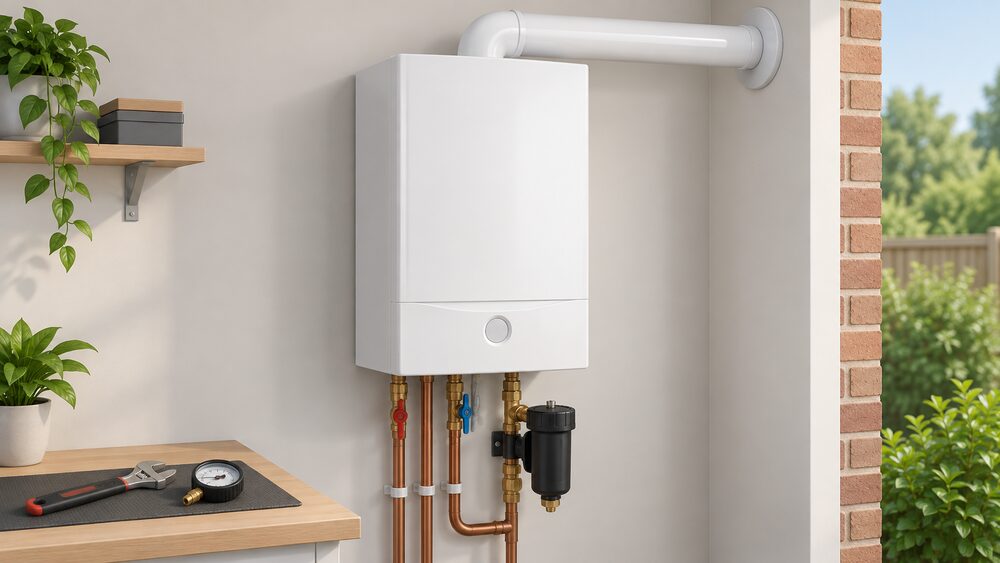
Glow-Worm is a British boiler brand with a heritage dating back to 1934, when it began producing boilers at the Derwent Foundry in Derbyshire. The brand remains rooted in Belper, and it sits inside Vaillant Group UK, which manufactures heating and hot water solutions under two brands, Vaillant and Glow-worm, and makes high-efficiency boilers and heat pumps at Belper in Derbyshire1.
For a household, the practical questions are what the range covers, what it costs, how long it lasts and what it commits the home to. Glow-Worm boilers are gas appliances, so they keep a home on the gas grid and on a gas supplier, and they must be installed and serviced by a Gas Safe-registered engineer, since only they are legally allowed to install boilers3. Independent guidance describes both Baxi and Glow-Worm boilers as British-made4.
On efficiency, the figures that apply to modern A-rated condensing boilers sit at 92 to 94%, while a gas boiler's efficiency is put at around 90% in independent guidance5. Lifespan is consistently given as 10 to 15 years, with spares and servicing arrangements shaping what happens at the end of that period7.
A UK maker since 1934, now based in Belper
Glow-Worm's own brand history places the start of boiler production at the Derwent Foundry in Derbyshire, with a heritage dating back to 1934, and states that the brand remains rooted in Belper today1. That makes it one of the longer-established names in British domestic heating, with more than 90 years of designing and manufacturing heating systems behind it1.
The ownership position matters more than the heritage for a buyer. Vaillant Group UK manufactures heating and hot water solutions under two brands, Vaillant and Glow-worm, and its UK manufacturing site at Belper in Derbyshire produces high-efficiency boilers and heat pumps2. Vaillant describes its boilers and heat pumps as hand-built at the Belper factory10. Glow-Worm therefore shares a parent, a manufacturing footprint and a supply chain with Vaillant, which is relevant to parts availability and to how long a model stays supported.
Independent guidance lists Glow-Worm alongside Baxi as British-made boilers4, and the brand appears in the installer networks of the larger energy suppliers: OVO's installation service works with Worcester Bosch, Vaillant and Glow-Worm11. That distribution reach is part of why the brand is widely installed, and it also means an owner is not tied to a single national installer for servicing.
For household energy independence, the manufacturing location changes little on its own. A boiler built in Derbyshire still burns gas delivered through a national network by a supplier the household does not choose at the appliance level. What UK manufacturing does affect is the parts chain and the speed of support, which is a resilience question rather than a sovereignty one.
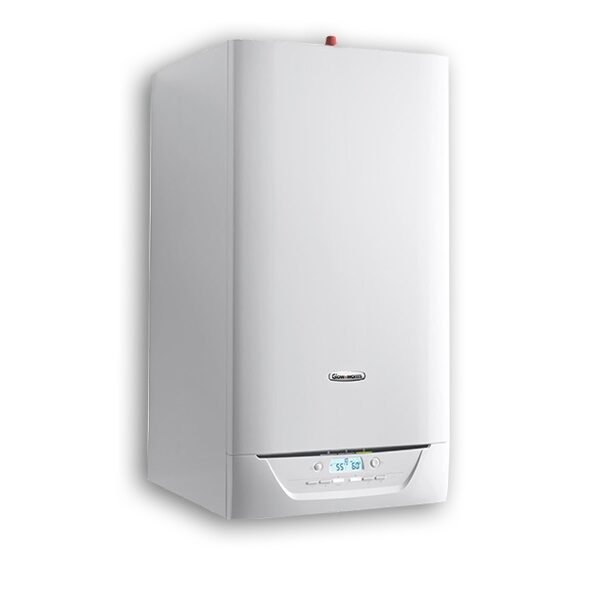
The range: combi, system and regular boilers
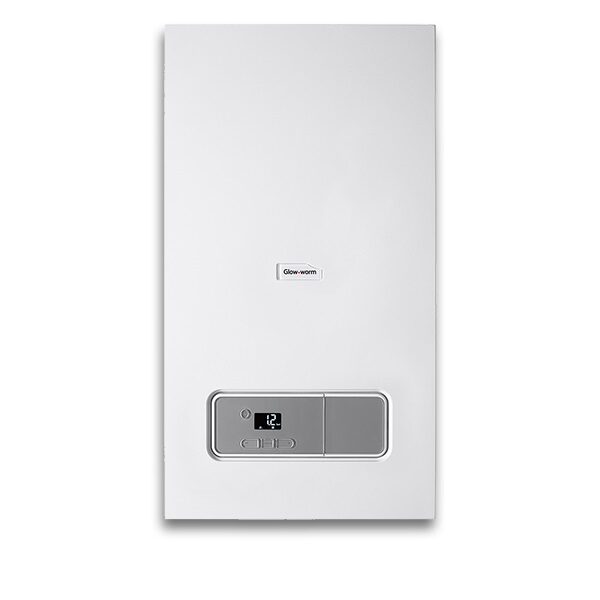
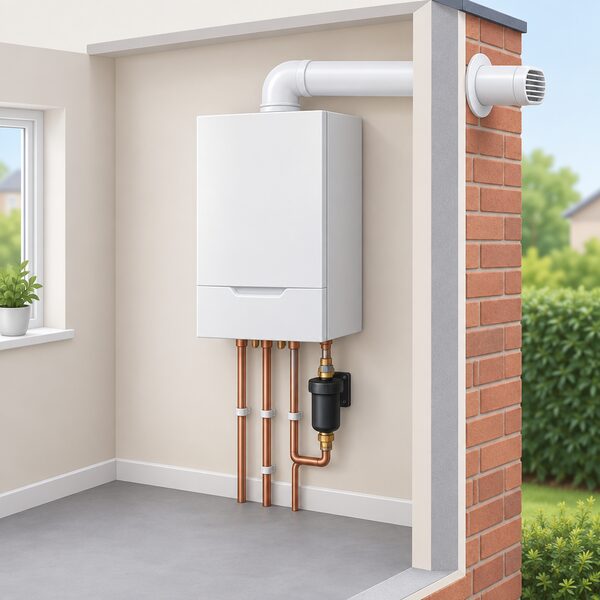
Glow-Worm's domestic output follows the standard three-way split of the UK gas boiler market. Nearly all boiler systems have a flue, including combi, system and regular boiler systems, so the choice of type does not remove the need for a flue route and the siting rules that come with it12. The differences between the three types are covered in more detail in combi boilers, system boilers and regular boilers.
A combi heats water on demand and needs no cylinder, which suits flats and smaller houses where space is tight and hot water demand is modest. A system boiler pairs with a stored cylinder and suits larger households with more than one bathroom, and independent guidance notes that a system boiler, suited to larger households, can last 10 to 15 years7. A regular or heat-only boiler works with a feed and expansion tank as well as a cylinder, and is the usual replacement where an older installation already has that arrangement.
The type chosen drives the rest of the quote far more than the badge does. A like-for-like swap of the same type is the cheapest job; converting from regular to combi involves removing tanks, rerouting pipework and often moving the appliance, which is why relocation is priced separately. Where the boiler type stays the same but the position changes, the extra is put at £300 to £80011.
Glow-Worm also appears in the heat pump market. The GeniaAir air source heat pump carries a warranty extension of up to 5 years when installed by a qualified installer with a HydraCyl cylinder and registered on myREWARDS13. That is the route by which a Glow-Worm household could move off gas, and it is a different proposition from a boiler replacement: it changes the fuel, the emitters and often the controls. The wider comparison is set out in heat pumps compared with boilers.
Efficiency: A-rated at around 94%
The efficiency figures for modern gas boilers cluster in a narrow band, and the sources differ mainly in how they round. Independent guidance states that an A-rated condensing boiler runs at 92 to 94% efficiency5. The same independent guidance puts a gas boiler's efficiency at around 90%6. Energy supplier guidance frames the same point as a comparison between generations: modern A-rated boilers are 90% efficient, older G-rated boilers are 70% efficient14.
The gap between 90% and 94% is a matter of test basis and rounding rather than a dispute about how the appliances perform. What determines the figure in a real house is whether the boiler actually condenses, and that depends on the return water temperature rather than the rating on the label. A condensing boiler recovers heat from flue gases only when the water coming back to it is cool enough.
Flow temperature is the control that decides this. The Energy Saving Trust suggests turning a conventional boiler's flow temperature down to 65 degrees16. Nesta states that most condensing boilers in use across the UK are set with flow temperatures of 70 to 80°C, which is higher than the range at which they condense most effectively17. Industry guidance for heat pump systems notes that existing modern condensing boiler systems tend to deliver space heating circulation at higher flow temperatures, typically up to 75°C18.
The documents differ on the ideal setting, and the difference is worth stating plainly: the lower the flow temperature, the more of the rated efficiency a household actually captures, provided the radiators are sized to deliver the heat the house needs at that temperature. The mechanics are covered in boiler flow temperature and condensing boilers.
Prices: supply only and installed
There is no manufacturer list price for a Glow-Worm boiler fitted in a home. The published figures fall into two groups: supply-only prices from distributors, and installed prices from suppliers and installers.
| Item | Price | Basis |
|---|---|---|
| Glow-Worm Micracom 24kW combi with horizontal flue and Plumbright filter | £643.20 including VAT | Supply only9 |
| Glow-Worm Micracom 24kW combi with vertical flue and Plumbright filter | £676.80 including VAT | Supply only9 |
| Glow-Worm Micracom 28kW combi with vertical flue and Plumbright filter | £752.40 including VAT | Supply only9 |
Those distributor prices cover the appliance, the flue and a filter, and they are quoted including VAT9. They are not installation prices. Labour, any system flush, controls, condensate routing and making good are quoted separately by the installer after a survey.
For installed costs, the comparable figures in the market are broader. Worcester Bosch prices start at around £2,500 and go up to about £3,70019, and hydrogen boilers are estimated at £2,300 to £3,800 to install20. A heat-only oil boiler is put at £1,200 to £2,450 for the unit, £500 to £2,000 for installation and £3,075 as an average total cost21. These are different fuels and different jobs, so they frame the market rather than price a Glow-Worm. The general cost picture is set out in new boiler cost.
Two things move a Glow-Worm quote most: the output and flue configuration, and whether the system type is changing. A power flush, where the existing system is dirty, is a separate line item. Prices are installer-quoted, and the figures above should be read as quoted rather than as confirmed VAT-inclusive installation prices.
Lifespan: 10 to 15 years, with spares stocked after production
The lifespan figures across the sources agree closely. The average lifespan of a boiler is 10 to 15 years8, and a boiler typically lasts 10 to 15 years in an average household if it has been regularly serviced and looked after7. The same source notes that in some cases boilers can go longer than 15 years and even up to 20 years7. Energy supplier guidance states that a well-maintained boiler can last up to 15 years22, and that most boilers are designed to last around 15 years23. Industry guidance is consistent: most people in the industry expect a boiler to last 10 to 15 years, assuming it has been looked after and serviced regularly19.
The type of boiler does not change the range much. A combi should last around 10 to 15 years, and a system boiler, suited to larger households, can last 10 to 15 years7. What varies is the cost of the end of life: a combi replacement is a simpler job than replacing a system or regular boiler that also involves a cylinder and tanks.
Servicing is the main lever a household controls. During a service a Gas Safe registered engineer carries out maintenance checks on all the key parts of the boiler24. Annual servicing is also what keeps the manufacturer's warranty valid in most cases, and it is the point at which a failing component is caught before it becomes a breakdown. The servicing regime is covered in boiler servicing and maintenance.
Spares availability is the other half of the lifespan question. A brand with UK manufacturing and a long production history is generally better placed to supply parts for older models, and Glow-Worm's position inside Vaillant Group UK, with boilers and heat pumps made at Belper2, supports that. The wider picture on how long appliances last is in how long do boilers last.
Flow temperature: typically 65°C to 75°C
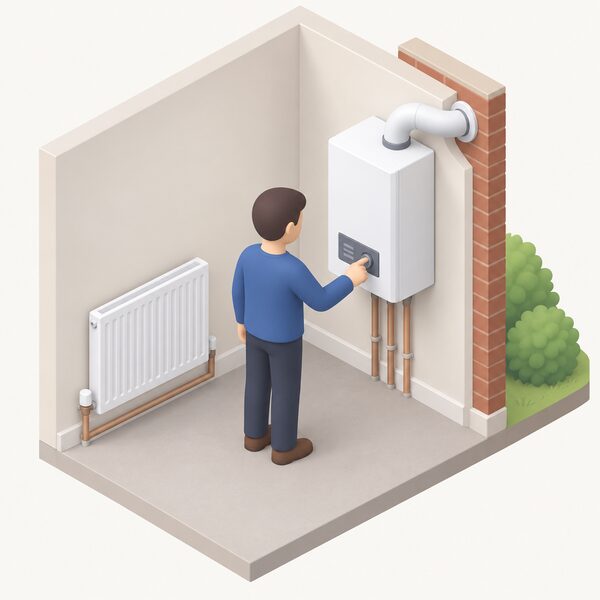
Flow temperature is the setting that decides whether a condensing boiler earns its rating. The Energy Saving Trust suggests turning a conventional boiler's flow temperature down to 65 degrees16. Nesta reports that most condensing boilers in use across the UK are set with flow temperatures of 70 to 80°C17. Industry guidance for heat pump systems notes that existing modern condensing boiler systems tend to deliver space heating circulation at higher flow temperatures, typically up to 75°C18.
Read together, the practical band for a Glow-Worm condensing boiler is roughly 65°C to 75°C, with the lower end giving more condensing and the upper end giving faster warm-up. The documents differ on the ideal figure, and the difference reflects the trade-off rather than a disagreement about physics: a lower flow temperature returns cooler water to the boiler, which lets more heat be recovered from the flue gases, but it also means the radiators must be large enough to heat the rooms at that temperature.
Two limits apply. First, hot water production on a combi is a separate function from space heating, and the flow temperature setting for radiators does not govern the domestic hot water temperature. Second, a household with undersized radiators may find that lowering the flow temperature leaves rooms slow to warm, which is a system design issue rather than a boiler fault. The setting and its effects are covered in boiler flow temperature and radiators and heat emitters.
Frost protection and what modern models include
Frost protection is a standard feature of modern boiler controls rather than a distinguishing one. ATAG's iC Economiser Plus boilers, for example, are listed with a built-in frost protection device25, which is typical of the category. The function works by running the pump and, where needed, firing the boiler briefly to keep water moving and above freezing when the temperature around the appliance drops.
That protection has limits. It guards the boiler and the immediate pipework, not the whole system, and it depends on the boiler having power and gas. A household that leaves a property empty in winter, or loses power during a cold spell, can still suffer frozen condensate pipes and burst pipework elsewhere in the house. The condensate route in particular is a common cause of winter callouts, since a frozen condensate pipe stops the boiler from running.
Modern Glow-Worm models also carry the controls and safety features expected of current gas appliances: modulating output, electronic ignition, and fault reporting through codes. Glow-Worm boilers tell you about problems by showing fault codes, which begin with the letter F26. That diagnostic route is useful but it is not a repair instruction, and gas appliance work is restricted to registered engineers. The common codes and what they indicate are covered in boiler faults and fault codes.
Noise is a secondary consideration that some models address. Quiet Mark certification is held by several boilers in the market, including ATAG's iC Economiser Plus range25, and Glow-Worm's GeniaAir heat pump also appears in the Quiet Mark listings13. Certification of that kind is a third-party assessment of measured noise rather than a manufacturer's claim.
Warranty, registration and the Gas Safe requirement
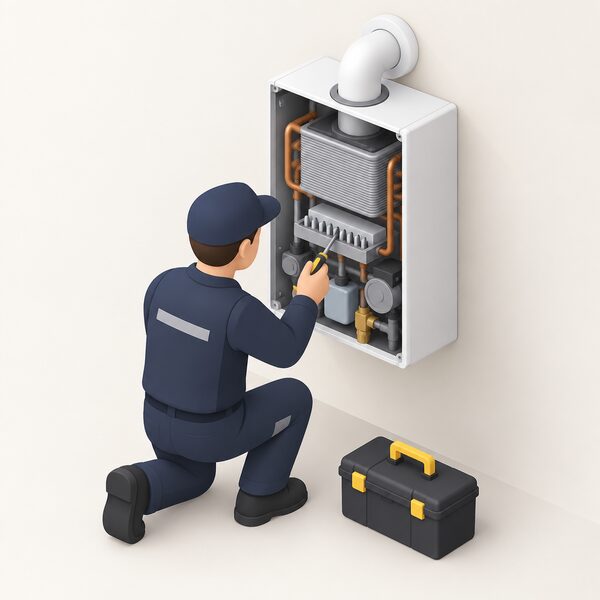
Warranty terms in this sector are activated by registration rather than by purchase. The manufacturer's own paperwork for a comparable appliance states that the appliance must be registered to activate the 2 year warranty on the boiler27. Registration also carries a consent point: by registering the appliance for warranty, the customer acknowledges that the manufacturer may contact them about the appliance, its warranty and service reminders27. That is a data consent term attached to the warranty, not a condition of the appliance working.
The Glow-Worm heat pump terms show how extensions are structured. The GeniaAir carries a warranty extension of up to 5 years when installed by a qualified installer with a HydraCyl cylinder and registered on myREWARDS13. The pattern is common across the industry: a standard term, an extension conditional on who installs the appliance, and registration as the trigger. The general rules are set out in boiler warranties and guarantee registration.
The registration process itself is normally handled by the installing engineer, who records the installation details, the serial number and the benchmark logbook entry. The serial number is found on the appliance data badge and in the logbook, and it is the reference used for both warranty claims and spare parts. Fault codes beginning with F are the other piece of information an engineer will ask for26.
What owning a Glow-Worm means for household energy independence
A Glow-Worm gas boiler keeps a household on the gas grid and on a gas supplier. That is the central fact of ownership, and no feature of the appliance changes it. The boiler needs gas delivered through a national network, electricity for ignition, controls and pumping, and a registered engineer for anything involving the gas side of the appliance.
The dependencies stack up in a particular order. The fuel comes from a supplier the household chooses but cannot substitute at the appliance level. The installation and servicing relationship is restricted by law to Gas Safe-registered engineers3. The warranty depends on registration and, for extensions, on who carried out the installation13. Parts and support depend on the manufacturer remaining in the market, which for Glow-Worm means Vaillant Group UK and its Belper manufacturing site2.
Some of these dependencies are softer than they look. A household can change gas supplier without touching the boiler, and support services exist that operate regardless of which supplier a home uses: one utility states that it provides its priority services regardless of the customer's gas supplier, and that the customer does not need to change energy supplier or inform their supplier of the device29. That is a small but real degree of independence in the service layer.
The larger independence question is the fuel. Moving off gas means changing the appliance, and Glow-Worm's own route is the GeniaAir heat pump, with warranty terms tied to a HydraCyl cylinder and myREWARDS registration13. Grant funding has historically supported this kind of change: the Green Homes Grant voucher scheme provided grants to homeowners and landlords to make energy efficient improvements to homes30. For solid fuel appliances, official guidance sets minimum efficiency at 75% for independent boilers burning wood logs, and 75% at nominal load with 70% at part load for auto-fed wood, pellet and chip boilers31. Those are different technologies with different constraints, and the comparison across fuels is set out in home heating and energy independence and gas boilers.
Sources31 cited
- Glow-Worm brand page, Quiet Mark, 2026-09-17
- Sustainability Report 2025, Vaillant, 2026-09-17
- How long does it take to fit a boiler, Uswitch, 2026-09-16
- Different boiler types, Uswitch, 2026-09-18
- Best boilers guide, Confused.com, 2025-11-03
- The real cost of a heat pump, Low Carbon Hub, 2025-10-30
- How long does a boiler last, Uswitch, 2024-11-13
- Tips to improve the EPC rating of your home, Energy Saving Trust, 2026-08-03
- Flash sale boilers, City Plumbing, 2026-09-17
- Upgrade your heating London, Vaillant, 2026
- Boiler installation: how long to fit a boiler, OVO Energy, 2023-09-25
- What is a boiler flue, Vaillant, 2026
- Glow-Worm GeniaAir 5kW air source heat pump, Quiet Mark, 2026-09-17
- Storage heaters explained, EDF Energy, 2026-09-17
- Electric radiators, EDF Energy, 2026
- Should I turn my boiler's flow temperature down, Energy Saving Trust, 2026-05-20
- Lowering boiler flow temperature to reduce emissions, Nesta, 2026-09-17
- Controls Guide for Air Water Heat Pump Systems, BEAMA, 2024-10
- Boiler replacement costs, EDF Energy, 2026-09-17
- Savanta Cadent consumer choice, Cadent Gas, 2026
- Boiler statistics, Uswitch, 2024-01-04
- New boiler, Uswitch, 2025-03-21
- Hot water guide, Uswitch, 2025-01-31
- Boiler servicing guide, Confused.com, 2025-07-23
- ATAG iC Economiser Plus boilers, Quiet Mark, 2026-09-17
- How to reset a boiler, OVO Energy, 2023-10-04
- Boiler warranty terms, HRM Boilers, 2026
- What pressure should your boiler be, Uswitch, 2024-11-13
- Supporting you, WW Utilities, 2026-09-20
- Heat pump deployment quarterly statistics, UK 2025 Q1, Department for Energy Security and Net Zero, 2025-06-05
- Approved Document L draft consultation, Welsh Government, 2019-12
 Glow-worm boilers and heat pumpsGlow-worm is a British heating brand owned by Vaillant, selling the GeniaAir air source heat pump range alongside its boilers.