
In this guide
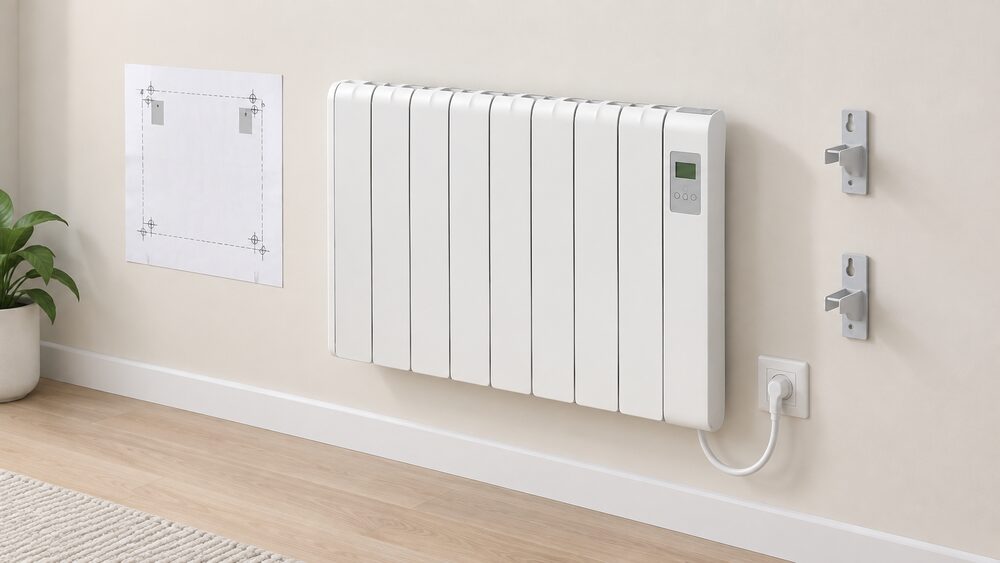
Haverland electric radiators are direct acting electric heaters: they use electricity at the moment heat is wanted, rather than storing it overnight. The RCES range comes in five sizes and thermal powers from 600 W to 1800 W, built around an aluminium block and supplied with wall fixing brackets, a wall template and a UK power cable on the bottom right hand side1. There is no pipework, no flue and no gas connection, so the heat source sits entirely inside the room it serves.
That is the independence the product offers. A household running Haverland radiators is off the gas grid by choice, is not tied to a boiler, a cylinder or a wet central heating circuit, and can heat one room without heating the whole house. What remains is a dependence on electricity: on a supplier, on the grid, and on the tariff the electricity is bought at. Direct electric heating is described as simple and cheap to install because it needs no pipes, radiators or underfloor systems, and as needing very little maintenance2.
The sections below set out how the radiators deliver heat, why they run silently, what installation involves, how the controls work, what the range includes and how to size a unit for a room.
Haverland: a UK electric radiator brand
Haverland's UK operation sells electric radiators and heaters into the British market, with the RCES as one of its documented ranges and a published heating calculator for sizing. The brand sits in the same category as the other electric heating names sold here, and the wider UK radiator trade is a mix of established European manufacturers and specialist electric brands. Hudevad, for example, is described as a Danish brand offering high quality and long-lasting radiators, which shows the kind of European manufacturing pedigree that sits behind much of the UK radiator market4.
For a household, the practical question is not the brand's country of origin but what the appliance does for energy independence. An electric radiator removes the gas connection, the boiler, the flue and the annual gas safety check from the property. It does not remove the electricity meter, the standing charge or the supplier. A home heated entirely this way is still connected to the grid, and its running cost tracks the electricity price rather than the gas price.
That trade-off is the central one for anyone weighing electric radiators against a boiler. The appliance is simple, room-by-room and controllable; the fuel is more expensive per unit of heat than gas in most UK circumstances, and the pages on electric heating running costs and direct acting electric heating versus storage heaters set out how that comparison works in practice. Haverland's own range is one option within a broader category covered on electric radiators and panel heaters.
How an aluminium radiator heats a room
Electric space heating covers direct acting forms including panel convector heaters, electric radiators, fan heaters and underfloor heating3. The RCES is built around an aluminium block, and aluminium is chosen because it conducts heat quickly into the body of the radiator and then into the room1. Heat leaves the appliance in two ways: radiation from the hot surface directly to people and objects, and convection as air passes over the heated body, warms and rises.
That combination is not unique to electric radiators. Underfloor heating transfers heat through both convection and radiation, helping to create a comfortable and constant temperature5. What differs is the temperature and the speed. A radiator surface runs hot and delivers heat quickly to the space around it; underfloor heating runs cooler across a larger area.
For contrast, convection heaters heat the air in the room using a coil of wire, with heated air rising and being replaced by cooler air that is also heated6. Oil-filled radiators also use a coil of wire, but to heat a reservoir of oil which circulates around the appliance to heat metal fins6. An aluminium electric radiator sits between these: it has no oil reservoir and no fan, and the metal body itself is the heat exchanger.
The practical consequence is that an electric radiator heats the room it is in, when it is switched on. Electric radiators use electricity when heat is wanted, rather than charging a store overnight7. That makes them responsive and easy to zone, and it also means every hour of heat is an hour of electricity bought at the prevailing rate.
Silent operation: no fans, no noise
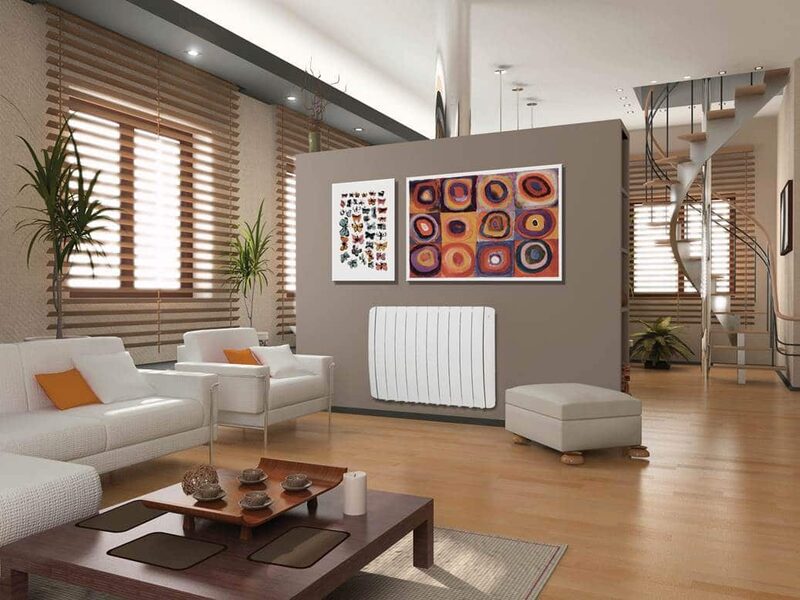
Electric space heating is described as clean, quiet in operation and requiring no regular maintenance3. Haverland's radiators have no fan, so there is no fan noise, no whirring and no forced air movement across the room. Heat is delivered by the heated aluminium body, which is why the appliance is silent in use.
That matters more than it sounds. Fan heaters and ceramic fan heaters are marketed on quiet operation as a feature, which tells you that noise is the norm in that category: one De'Longhi ceramic fan heater lists quiet operation among its attributes8. A fan-free radiator removes the issue entirely rather than reducing it.
Silence also has a control implication. Because there is no fan to push warm air around, an electric radiator relies on natural convection and radiation, so siting matters: a radiator placed behind furniture or under a shelf will heat that furniture rather than the room. Free air movement around the appliance is what allows the convection current to establish.
For bedrooms, studies and rooms used for concentrated work, the absence of a fan is often the deciding factor between an electric radiator and a fan heater. The pages on infrared heating and storage heaters cover the other fan-free and fan-assisted options in more detail.
Installation: no pipework, done by the householder
Direct electric heating such as panel heaters is described as simple and cheap to install because it does not need pipes, radiators or underfloor systems, meaning wet central heating2. Electric space heaters need no regular maintenance3, and electric heating generally needs very little maintenance2. There is no water to treat, no inhibitor to add, no annual service and no gas safety check.
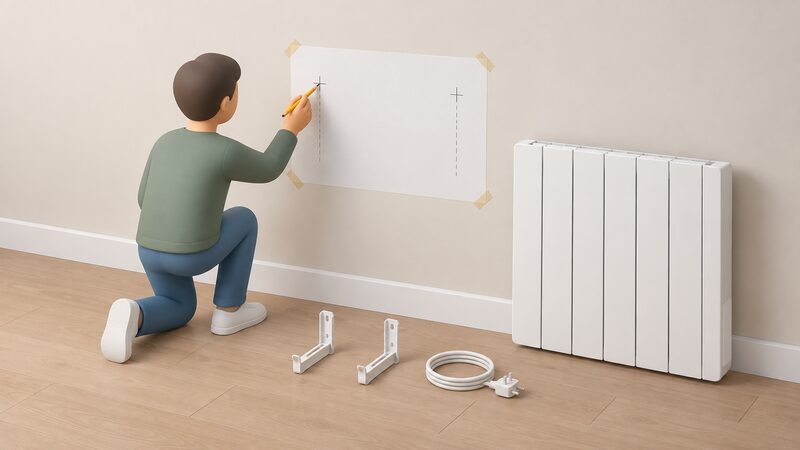
Haverland supports householder installation directly. The RCES is supplied with wall fixing brackets, a wall template and a power cord, with the cable on the lower right side of the radiator, and the same product page states that all Haverland UK electric radiators come with wall fixing brackets, a wall template and a power cord1. The wall template is what allows the bracket positions to be marked accurately before drilling.
The contrast with wet systems is stark. Water underfloor heating requires professional installation and it is inadvisable to install it yourself unless you are a professional plumber10. Underfloor heating systems generally, wet or electric, are always best installed by a professional9. An immersion heater fitted to a new or replacement hot water cylinder needs a professional plumber or heating engineer11. Haverland radiators avoid all of that because there is no water circuit at all.
Control: the RCMS thermostat and programming
Haverland's controls are built into the radiator rather than run from a separate hub. The RCES carries a tamper-proof keyboard and a safety thermal limiter1. The RCMS digital thermostat and the TOD programmer are the control references for the range, and Haverland UK published a TOD Simplified Programming Guide in 2020, posting it as a resource on 23 December 2021.
Good control is what separates an efficient electric heating setup from an expensive one. Independent guidance on heating controls sets out the minimum core for a central heating system as a programmer for time control, at least one room thermostat and thermostatic radiator valves12. Home Energy Scotland's recommended set is a time-controlled programmer, at least one room thermostat, thermostatic radiator valves if there are radiators, and a cylinder thermostat where there is a hot water cylinder13. Cadent describes a full set as a programmer, thermostatic radiator valves and a room thermostat14.
Electric radiators carry their own time and temperature control, which is why they can be zoned room by room without additional valves. Programmable thermostatic radiator valves go further, letting each radiator be set to come on at different times, and some models can connect via Wi-Fi to smart heating controls to create a new zone for each room12. Central heating system controls, including thermostatic radiator valves, are listed as energy-saving materials in the legislation that sets the reduced VAT rate15.
Emissions and what the heater does not release

An electric radiator releases nothing at the point of use. There is no combustion, no flue, no carbon monoxide risk and no local nitrogen oxide or particulate output. That is the same position as other zero point-of-use emission technologies: solar heating and Passivhaus-standard measures are described as producing no emissions at the point of use17.
The emissions sit upstream, at the power station or in the wind farm, and they depend on how the electricity was generated. Approved Document L defines the heating plant emission rate as the annual CO2 emissions from the fuel and power consumed by the heating plant to deliver space heating and hot water, offset by emissions saved from any electricity generated by the plant, divided by the heat output over a year18. For a direct electric radiator there is no on-site generation to offset, so the figure reflects the grid mix at the time the electricity is used.
Policy is moving in the same direction. The New Build Heat Standard in Scotland will prohibit heating and cooling systems within the curtilage of any new building that produce more than a negligible level of greenhouse gas emissions at the point of combustion19. A direct electric radiator has no point of combustion, so it is not caught by that prohibition in the way a gas boiler is.
What an electric radiator does not do is produce hot water. Electric wallpaper, a comparable direct electric surface, can heat a room but will not produce hot water17. Solar water heating does not send hot water to radiators, so another way of heating the home is needed20. A heat interface unit does not produce heat at all21. A Haverland radiator heats its own room and nothing else, and hot water remains a separate system.
Range and what comes in the box: the RCES example
The RCES is the documented Haverland range in the UK. It offers a choice between five sizes of radiators and thermal powers from 600 W to 1800 W, is built on an aluminium block, and is coated in white across all sizes1. The control panel has a tamper-proof keyboard, and the appliance includes a safety thermal limiter1.
| Feature | RCES specification |
|---|---|
| Sizes and outputs | Five sizes, 600 W to 1800 W1 |
| Construction | Aluminium block1 |
| Finish | White, all radiators1 |
| Controls | Tamper-proof keyboard1 |
| Safety | Safety thermal limiter1 |
| Supplied with | Wall fixing brackets, wall template, power cord1 |
| Power cable position | Bottom right hand side, UK cable1 |
The supplied contents are the practical detail that decides how quickly a radiator can go on a wall. Brackets, template and cable together mean the unit arrives ready to mount, with no separate fixing kit to source. The cable position on the lower right is worth checking against the nearest socket before the bracket goes up, because it fixes where the radiator can sit relative to a power source.
For comparison within the wider category, portable electric heaters carry their own safety considerations. An oil-filled radiator is given as an example of a heater relatively low risk in terms of igniting nearby items6. Fixed electric radiators remove the trailing lead and the tip-over risk that come with portable units, which is one reason they are specified for permanent room heating rather than occasional top-up.
Availability and sizing: wholesalers and the heating calculator

Haverland sells through wholesalers and heating merchants across the UK rather than through a single national retail chain, and the brand publishes its own heating calculator to help size a unit to a room. Sizing properly matters more with direct electric heating than with a wet system, because an undersized radiator will run continuously and still not reach temperature.
The professional route to sizing is a heat loss calculation. Stelrad's heat loss calculator and radiator sizing software is used by installers and specifiers across the UK heating sector, and the updated version adds a feature whereby the user can choose between hot water or electrical heating and display products accordingly, with the updated versions ready to access from the website13. That electrical option is what makes the tool relevant to a direct electric installation rather than only to wet systems.
The UK radiator trade itself is active and competitive, which supports availability. Henrad launched its Compact Vertical range as a response to demand from installers who chose to install Henrad radiators on their projects and from independent merchants23. That kind of trade-driven launch shows how merchant demand shapes what is stocked, and the same channel logic applies to Haverland's wholesaler route.
Prices for Haverland radiators are quoted by the seller rather than published as a national list price, so a household should expect to confirm cost and availability with a local merchant or wholesaler. For the wider cost picture across electric heating, the pages on electric heating running costs and heating running costs by fuel set out how electricity compares with gas, oil and LPG.
Where electric radiators fit in a home's energy independence
The independence an electric radiator delivers is real but partial, and it is worth being exact about which parts. On the positive side, the appliance removes the gas connection, the boiler, the flue, the cylinder and the annual service from the property. It needs no pipework, so it can be added room by room without touching the rest of the house. It is silent, needs very little maintenance, and releases nothing at the point of use3.
What remains is the electricity supply. A home heated entirely by direct electric radiators is still on the grid and still buying from a supplier, and its running cost moves with the electricity price rather than the gas price. One industry assessment puts direct electric appliance efficiency at 75%, which reflects losses across the wider system rather than the conversion at the appliance24. That is the number to hold alongside any claim about electric heating efficiency.
There is also a manufacturer dependence, though a lighter one than a cloud-connected boiler. Haverland's controls are on the appliance, so heating continues to work without a broadband connection or an app. The TOD programming guide is a document rather than a service, and the RCES keyboard is tamper-proof and local1. Nothing about the heating depends on a server staying online.
For a household weighing this against alternatives, the honest summary is that electric radiators trade a fuel dependence for an equipment independence. They suit well-insulated rooms, room-by-room heating, off-gas properties and situations where a boiler replacement is not wanted. They are a poor fit for a large, poorly insulated house heated throughout, where the unit cost of electricity dominates. The pages on heating and energy independence and off-grid home heating develop that comparison, and heating by home type sets out which systems suit which properties.
Sources24 cited
- RCES electric radiator, Haverland UK, 2025-01-13
- Electric heating, Energy Saving Trust, 2026-07-01
- Electric space heating, BEAMA, 2026-09-19
- Stelrad launches Hudevad models, CIPHE, 2025-02-13
- Underfloor heating, Centre for Sustainable Energy, 2025-11
- Portable heaters, Electrical Safety First, 2026-09-17
- Renewable heat: right for your home, Energy Saving Trust, 2026-05-19
- De'Longhi Capsule desk personal fan ceramic heater, Quiet Mark, 2026-09-17
- Underfloor heating system, NICEIC, 2026-09-17
- Underfloor heating guide, Uswitch, 2025-12-10
- Immersion heaters, Which?, 2026-06-01
- Thermostats and heating controls, Energy Saving Trust, 2026-02-10
- Heat loss calculator and radiator sizing software, CIPHE, 2026-01-21
- Thermostats and heating controls, Home Energy Scotland, 2026-09-20
- Dimplex Quantum night storage heaters, Centre for Sustainable Energy, 2026-06
- Protect pipes in winter, Home Energy Scotland, 2025-12
- Electric wallpaper explained, Energy Saving Trust, 2026-03-26
- Approved Document L, conservation of fuel and power, HM Government, 2026-09-17
- New Build Heat Standard, part two, Scottish Government, 2026-09-20
- Could solar water heating work for you, Energy Saving Trust, 2026-05-20
- Struggling to pay your heat network bills, Citizens Advice, 2026-09-17
- Edinburgh LHEES, City of Edinburgh Council, 2023-12
- Henrad Compact Vertical radiators launched, CIPHE, 2024-03-01
- From carbon to competitiveness, Heat Pump Association, 2026-01