In this guide
Elnur is a Spanish-founded electric heating manufacturer that has been making heaters since 1973 and runs its UK operation from Brown Street North in Leigh, Lancashire1. Its UK catalogue covers storage heaters, thermal inertia radiators, panel heaters, towel rails and the Mattira range of electric boilers, all of which run on electricity rather than gas. For a household, that means no gas supply, no flue and no gas boiler, but a continuing dependence on an electricity supplier and the grid.
The company's own figures put its production on a partly renewable footing, and it holds an ISO 9001:2015 quality management certification1. Support runs through a UK sales and technical line on 01942 670 119, with technical help by email at technical@elnur.co.uk2. Warranties for new appliances are registered on the Elnur website and must be completed within 28 days of installation, or the extended terms fall back to a standard 12 month parts only warranty4.
Elnur: a heating maker since 1973, with a UK base in Leigh
Elnur's UK operation is based at Brown Street North, Leigh, in Lancashire, and the company describes itself as having manufactured heating since 19731. That UK address matters for a householder because it is where the sales and technical functions sit, and it is the address that appears on the warranty terms governing appliances sold here.
The warranty document sets out the territory plainly: cover is only valid in the UK mainland and Northern Ireland4. That is a narrower footprint than the sales reach of some competitors, and it means an appliance taken to the Channel Islands, the Isle of Man or abroad falls outside the terms. Within the UK, Elnur states that it runs an Authorised Technical Services Network providing technical assistance all over the country, so warranty work is not confined to the Leigh site1.
The company also holds an ISO 9001:2015 Quality Control Management System certification, which it says certifies the implementation and maintenance of the system, and references an ISO 14001:2015 Environmental Management System1. Both are management system standards describing how the business is run rather than a performance rating for any individual heater, and the two are separate certifications rather than one combined award.
For a household, the practical value of a UK base is the support route rather than the badge. A fault on an Elnur appliance is handled through a UK phone line and a UK technical email address, and the warranty terms are written for UK installations, including the specific treatment of government scheme work described below.
The range: storage heaters, thermal radiators and the Mattira models
Elnur's UK catalogue spans several product families. The storage heater line includes the HHR-PLUS, which Elnur describes as its SOLAR High Heat Retention model and as the first storage heater on the market that can utilise a household's solar or other renewable generation1. Alongside the storage heaters sit thermal inertia radiators, panel heaters and towel rails, the last of which carry an additional 2 hour timer mode for boost1.
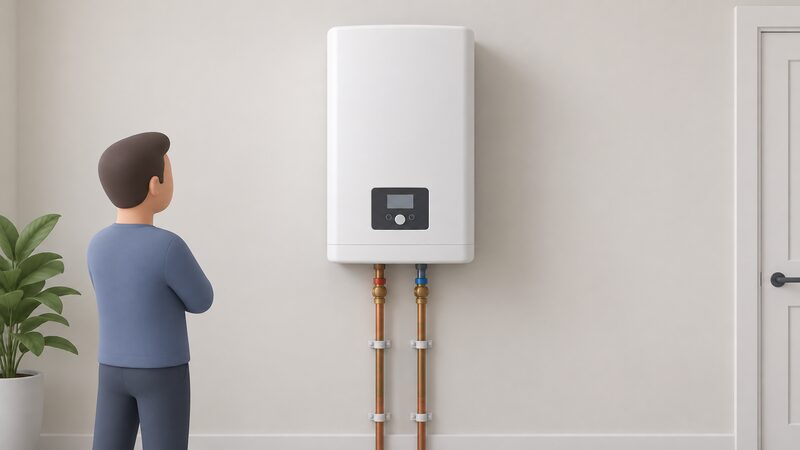
The Mattira range is the boiler side of the business. The Mattira MAS15 is a wall mounted heating only boiler made of insulated steel, with a 6 litre heating expansion vessel, a 100C heating temperature limiter, an auto air vent and silent TRIAC power switches2. It uses modulating electronic control of the heater by SEM system, which Elnur expands as Smart Electronic Modulating System2. It is compatible with underfloor heating and with the Elnur Connected range2.
The Mattira MAC15 is a different appliance altogether. It carries an integral 50 litre store of water with user adjustable temperature regulation and is described by the maker as ideal for single bathroom properties3. It has an insulation class of 13. The distinction matters when comparing the two: the MAS15 is a heating only boiler for a wet system, while the MAC15 combines heating with a stored hot water supply.
| Model | Type | Key specification | Source |
|---|---|---|---|
| Mattira MAS15 | Heating only boiler | 6L expansion vessel, 100C limiter, TRIAC switches | 2 |
| Mattira MAC15 | Boiler with hot water store | Integral 50 litre store, insulation class 1 | 3 |
| HHR-PLUS | High heat retention storage heater | Can use household solar or other renewable generation | 1 |
| Towel rails | Electric towel rail | Additional 2 hour timer mode for boost | 1 |
Elnur Connected: Wi-Fi compatible heaters and what they add
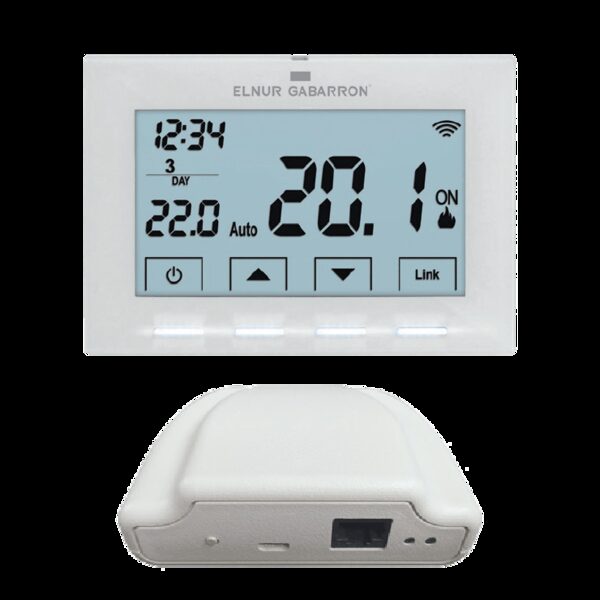
Elnur Connected is the company's remote management layer. On the Mattira MAS15, connectivity in home heating can be completed by using any chronothermostat from the CTM WiFi range, and the boiler is listed as compatible with the Elnur Connected range2. The same compatibility is stated for the MAS15 system boiler page2.
What that adds is scheduling and remote management rather than a change to how the heat is produced. The heater still draws electricity from the mains and still heats water or air in the same way; the connected layer moves the timing and setpoint controls onto a phone or a networked thermostat. That is a genuine convenience for a household that is out during the day, and it is also the point at which a dependence on a home broadband connection and a manufacturer's app enters the picture.
Storage heaters have moved in the same direction independently of any one brand. The Energy Saving Trust describes storage heaters as having two phases, a charging phase and a heating phase, and notes that modern heaters use sensors and smart controls to store just the right amount of heat5. That is the same principle Elnur applies across its range: charge when electricity is cheap, release heat when the house needs it.
The independence question here is straightforward. A connected heater keeps working as a heater if the broadband drops, because the element and the thermostat are local. What stops is the remote scheduling, the app view and any diagnostics that run through the manufacturer's servers. A household that wants the controls to survive an outage should expect to set the schedule at the appliance itself.
Renewable energy in production: up to 86% of the energy consumed
Elnur states that up to 86% of the energy consumed in its production comes from renewable sources1. That is a manufacturing claim about the factory, not a claim about the electricity a household uses to run the heater, and the two should not be conflated. A heater made in a partly renewable factory still runs on whatever mix the local grid supplies.
The wider grid context is worth stating because it shapes what an electric heater actually draws. Renewables provided 53.1% of electricity generation by Major Power Producers in the three months to May 20266, and 53.3% in the three months to April 20267. The two official statistical releases cover overlapping periods and give slightly different figures, so the share should be read as a little over half rather than as a fixed number.
Heating is where most of a home's energy goes. More than 80 per cent of home energy use is for heating and hot water, a figure stated in official guidance for Northern Ireland8. That is why the choice of heating fuel dominates a household's energy position, and why an electric heating system tied to a grid that is now majority low carbon in generation terms is a different proposition from one tied to a gas boiler.
For comparison, the Welsh Government's approved document gives a minimum efficiency of 86% for a wet heating system with a combi-boiler10. That is a combustion efficiency figure for a gas appliance and is not directly comparable with an electric heater, which converts electricity to heat at the point of use. The comparison that matters for a household is running cost and carbon intensity of the fuel, not the nominal efficiency percentage.
Mattira: the model range and its certifications
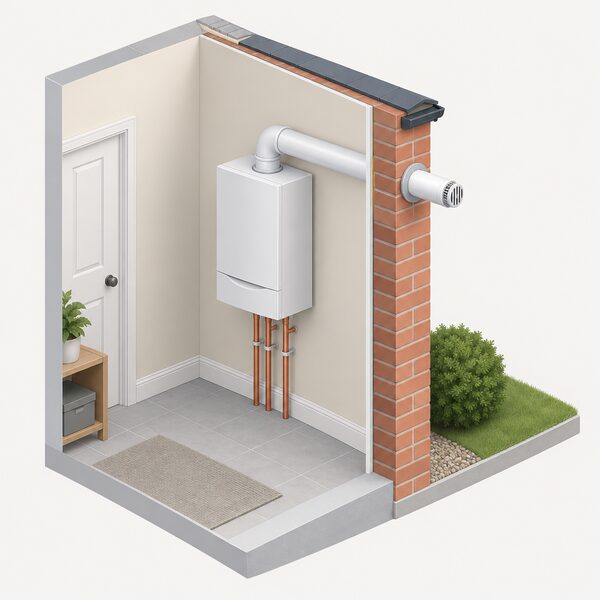
The Mattira name covers more than one appliance, and the certifications attached to each differ. The Mattira MAS15 is a heating only boiler, wall mounted and made of insulated steel, with a 6 litre heating expansion vessel and a 100C heating temperature limiter2. It uses silent TRIAC power switches and modulating electronic control through the SEM system2. It is compatible with underfloor heating and with the Elnur Connected range2.
The Mattira MAC15 is a boiler with an integral 50 litre store of water and user adjustable temperature regulation, described as ideal for single bathroom properties, with an insulation class of 13. The two models therefore serve different jobs: one feeds a wet heating circuit, the other also holds a volume of hot water ready for use.
Both models carry a Declaration of Conformity issued by ELNUR, S.A. The MAS15 and MAS18 models were covered by a declaration dated 28 October 2016, and the MATTIRA MAC15C by a declaration dated 1 March 2019. These are the manufacturer's own conformity documents, and they sit alongside the ISO management certifications rather than replacing them.
Quality standards and after-sales support across the country
Elnur's quality position rests on two things: the ISO 9001:2015 certification covering its quality control management system, and an Authorised Technical Services Network that the company says provides technical assistance all over the country1. The network is the part a householder actually meets, because it is the route through which warranty work is carried out away from the Leigh base.
The warranty terms set out what is covered and what is not. Cover applies to any material or manufacturing defect of the appliance, provided the instructions for its assembly, installation and use have been followed precisely, and it funds all materials used in the construction of the appliance plus the cost of labour and travel4. The warranty period runs from the date of purchase, or from the date of installation if the appliance was installed under a government scheme4.
Exclusions are specific. Faults caused by negligence or misuse by the end user or the installer, transport damage, external chemical agents, unforeseen circumstances, accidental damage, floods or other geological phenomena, electrical overloads, improper installation, industrial or non-domestic installations, and lack of routine maintenance all fall outside cover4. Non-domestic installations are excluded outright4.
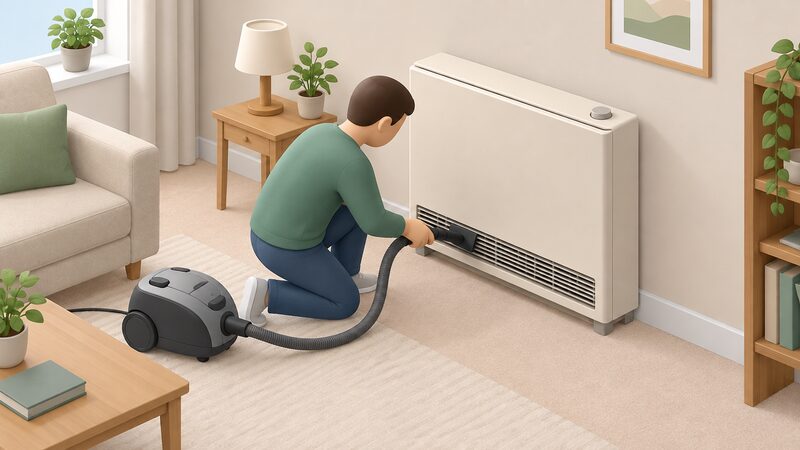
Maintenance requirements vary by product. Elnur states that HHR storage heaters and LST radiators require maintenance and cleaning of the fan air intake, recommended every six months, and that boilers require maintenance of external filters and softeners yearly, while standard panel heaters, standard radiators and standard storage heaters require no maintenance4. For Eco Scheme installations, Elnur UK Ltd states it is only responsible for the heaters themselves and only provided they have been fitted in accordance with manufacturing instructions4. The installers remain responsible for the work they carried out for at least 12 months after installation4.
What owning an Elnur heater means for household energy independence
An Elnur heater changes the fuel a home uses, and that is the whole of its independence story. There is no gas connection, no gas boiler, no flue and no gas standing charge. What remains is electricity, which arrives from a supplier over the grid, and the heater's controls, timers and any connected features depend on mains power to run.
The grid itself is now substantially low carbon in generation terms, with renewables providing 53.1% of electricity generation by Major Power Producers in the three months to May 20266 and 53.3% in the three months to April 20267. The two official releases disagree slightly on the overlapping period, and both are generation shares rather than a statement about any one household's supply.
Take-up of renewable heating remains small. Less than 1% of households reported heating their home using solely renewable energy, according to a parliamentary committee report11. Ofgem's archetype work found that of households using other main heating fuels, 22% use bulk LPG, 15% use solid fuel and 9% use renewables12. EPC register data for 2024 records 8% of new domestic properties with other electric heating13.
Attitudes in Northern Ireland point the other way. A Consumer Council survey found 78% of respondents supporting the use of renewable energy for Northern Ireland's power, heat and transport14, and a later survey put support at 70%15. The two surveys are a year apart and the figures differ, so the direction is clearer than the level.
Two practical constraints apply to electric heating generally. Storage heaters are only an option for park homes with their own electricity supply, as otherwise the household cannot take advantage of a cheaper off-peak tariff16. And standalone plug-in heaters are described by the National Energy Action as not effectively heating a home and being very expensive to run17. The Energy Saving Trust notes that standalone electric heaters tend to be more energy efficient if they have thermostatic controls that switch off at a set temperature, with a separate plug-in thermostat available as an upgrade18.
All-electric homes also need more electrical capacity. Guidance on the Future Homes Standard states that all-electric homes require greater electrical capacity for heating, hot water, EV charging and the export of PV generation, and that early engagement with network operators is essential19. For a household, that is the practical limit on the independence an electric heating system delivers: the fuel changes, the connection to a network does not.
Sources19 cited
- Elnur product brochure, March 2025, Elnur, 2025-03
- Mattira MAS15 electric system boiler, Elnur, 2026-06-24
- Mattira MAC15 electric combi boiler, Elnur, 2026-06-24
- Elnur UK warranty terms and conditions, Elnur, 2026-01-13
- A guide to using electric storage heater controls, Energy Saving Trust, 2026-05-21
- Energy trends and prices, 30 July 2026, Department for Energy Security and Net Zero, 2026-07-30
- Energy trends and prices, 30 June 2026, Department for Energy Security and Net Zero, 2026-06-30
- Home energy use for heating and hot water, nidirect, 2026-09-02
- Insulation, nidirect, 2026-09-02
- Approved Document L Volume 1 consultation, Welsh Government, 2025-08
- Heat pumps and renewable heating inquiry, House of Commons Environmental Audit Committee, 2025-05-09
- Ofgem archetypes update 2024, Ofgem, 2024-02
- Heat in buildings progress report 2025, Scottish Government, 2025
- Attitudes to the Energy Transition, Consumer Council for Northern Ireland, 2023-12
- Attitudes to the Energy Transition 2024-2025, Consumer Council for Northern Ireland, 2024-11
- Advice for park homes, Centre for Sustainable Energy, 2026-07
- Top energy savings tips, National Energy Action, 2026-07-13
- Energy efficient heaters, Uswitch, 2026-07-01
- Future Homes Standard ready, Future Homes Hub, 2026-09-17
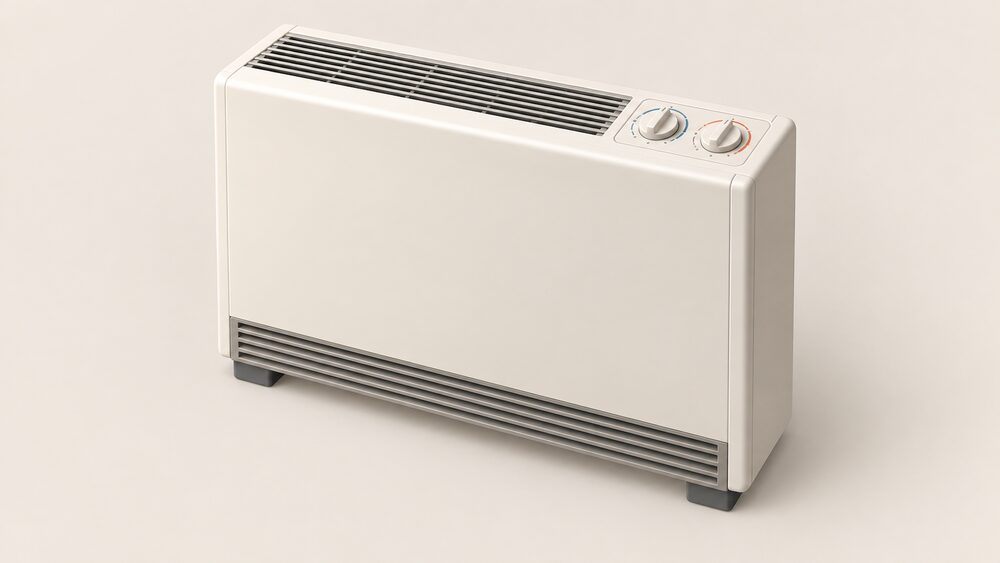 Elnur Heater Controls and ProgrammersHow Elnur and Gabarron electric heater controls work, from the G-Control Hub and WiFi app to storage heater input and output dials, with the timing limits of off-peak charging.