
In this guide
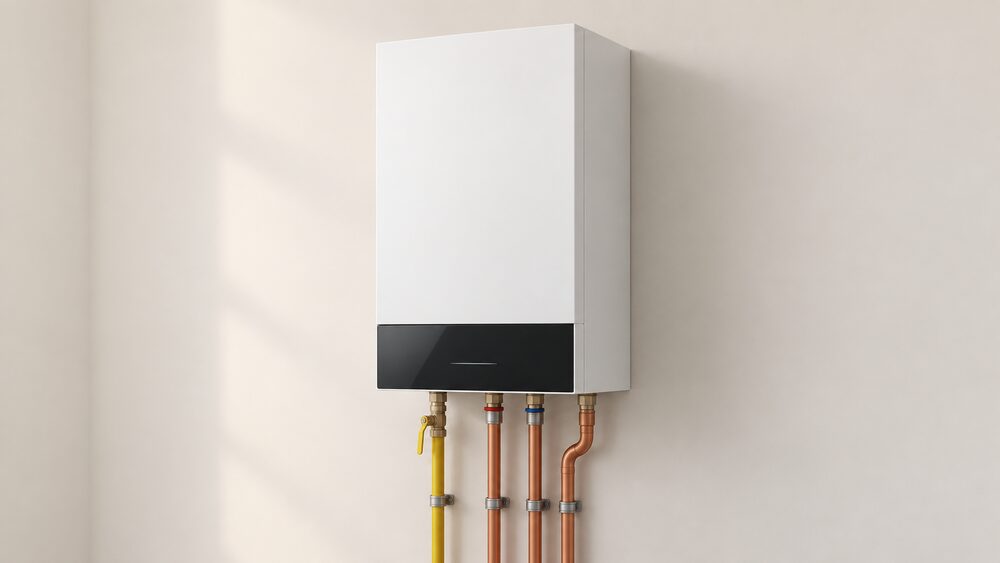
The Viessmann Vitodens 100-W is a wall-mounted gas condensing boiler sold in the UK as a combi, a system boiler and a heat-only model, with a rated heating output spanning 3.2 to 35 kW across the family1. It is the entry point to the Vitodens range, which Viessmann describes as its best selling family of gas condensing boilers3. The combi and system bodies share one casing: 360 mm deep, 400 mm wide and 700 mm high4.
Efficiency is quoted two ways. Viessmann lists the Vitodens 100-W at 94% ErP efficiency, Class A, and states that up to 94% of the fuel used is converted into heat1. The heat-only model is listed with a standard seasonal efficiency to DIN of 98% (Hs) gross cv, a different test basis that produces a higher number2.
The warranty is where the model needs reading carefully. Viessmann's product pages state a 12 year standard warranty when registered via VPlus1, while its warranty registration guidance gives a 7 year standard term for the Vitodens 100-W when installed and registered within 30 days, with chargeable upgrades to 10 or 12 years5. Both figures are published by the maker and they are not reconciled.
What the Vitodens 100-W is and which homes it suits
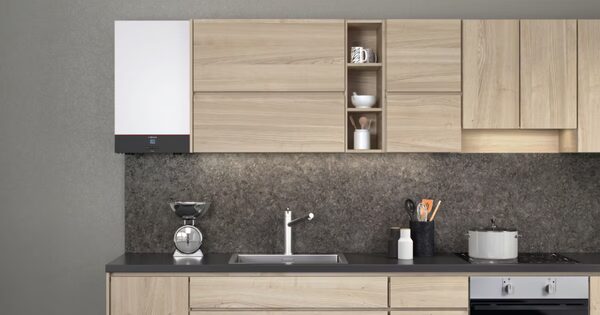
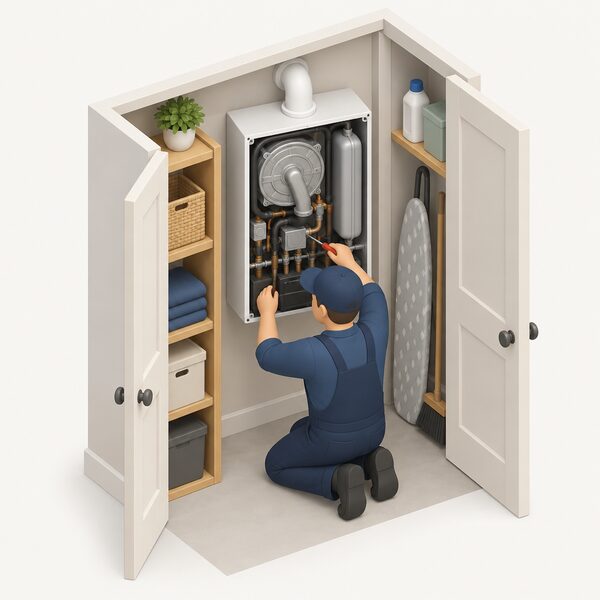
The 100-W is a domestic gas condensing boiler, wall mounted, and Viessmann lists its application area as detached and terraced houses and apartments, for both new build and modernisation1. It sits below the Vitodens 200-W in the range, and Viessmann describes the 100-W as popular for smaller homes7. The heat-only version is described as ideal for installation in the living space because of low operating noise and compact dimensions, and the datasheet notes a low minimum static height requirement that makes it suitable for bungalow installations, with the ability to fit within 300 mm kitchen cupboards2.
The range carries a Which? Best Buy award, according to Viessmann, and includes a low 11 kW output model9. That low minimum matters more than the headline maximum for most households: the 11 kW models modulate down to 3.2 kW, which is the figure that determines how often the boiler cycles in a well-insulated home with a modest heat load9.
For a household thinking about energy independence, the position is direct: this is a gas appliance. It keeps the home on the gas grid and on a gas supplier, with an electrical dependence for ignition, the pump, the fan and the controls. It does not reduce dependence on a fuel that is imported, and it does not generate anything. What it can do is lower the quantity of gas burned per unit of heat delivered, which is a running cost and emissions question rather than a sovereignty one. Households weighing a change of fuel rather than a change of boiler have other routes, set out in heat pumps compared with boilers and heating and energy independence.
Combi, system or heat-only: the variants and outputs
Viessmann sells the 100-W in three configurations. The combi and system versions are listed together as wall-mounted gas condensing boilers with a rated heating output of 3.2 to 35 kW1, and the combi and system brochure gives the output range as 3.2 to 32 kW4. The heat-only model is listed separately with rated outputs of 11 kW, 16 kW, 19 kW, 25 kW and 32 kW2.
The combi comes in three sizes, and the published figures distinguish between flow and return temperatures. At 50/30 degrees C the three combi sizes are rated 3.2 to 19.0 kW, 3.2 to 25.0 kW and 3.2 to 32.0 kW; at 80/60 degrees C the same three are 2.9 to 17.5 kW, 2.9 to 23.0 kW and 2.9 to 29.3 kW4. The lower figures at the higher flow temperature reflect the physics of condensing rather than a different appliance.
Domestic hot water output is separate from heating output. The three combi sizes give continuous DHW outputs of 26.3 kW, 30.0 kW and 34.4 kW4. The system boiler sizes start at 3.2 to 11.0 kW at 50/30 degrees C, or 2.9 to 10.1 kW at 80/60 degrees C, for the first size4.
| Variant | Outputs | Notes |
|---|---|---|
| Combi | 3.2 to 19.0, 3.2 to 25.0, 3.2 to 32.0 kW at 50/30 degrees C4 | DHW 26.3, 30.0, 34.4 kW4 |
| System | From 3.2 to 11.0 kW at 50/30 degrees C4 | ErP class A heating and water4 |
| Heat-only | 11, 16, 19, 25 and 32 kW2 | MatriX-Plus burner2 |
Which one suits which home is a system design question rather than a model question. A combi serves hot water on demand with no cylinder, which suits a home with limited space and modest simultaneous demand. A system boiler works with a stored cylinder, and a heat-only model works with a feed and expansion tank and a cylinder, which is the arrangement many older installations already have. The differences are set out in combi boilers explained, system boilers explained and regular, heat-only and conventional boilers.
Efficiency: up to 94% ErP, with a 98% seasonal figure
Viessmann lists the Vitodens 100-W at 94% ErP efficiency, Class A, and states that up to 94% of the fuel used is converted into heat1. The combi and system brochure records ErP class A for both heating and water heating across all sizes4. The heat-only model carries energy efficiency class A and a standard seasonal efficiency to DIN of 98% (Hs) gross cv2.
Those two numbers are not in conflict so much as measured differently. The ErP figure is the regulatory label basis; the DIN seasonal efficiency is a gross calorific value calculation that produces a higher percentage for the same appliance. Viessmann uses the 98% figure across the Vitodens family, including the Vitodens classic and the Vitodens 025-W10. The Vitodens 200-W is listed at 94% ErP Class A on its product page and at up to 98% ErP in a separate press release, which shows how loosely the two bases are used even within one maker's material12.
What determines real-world efficiency is whether the boiler condenses, and that depends on return water temperature. Viessmann's own guidance on central heating pumps notes that the Vitodens 050-W, 100-W and 111-W combi boilers and the Vitodens 200 Series are fully compliant as standard when connected with a weather compensation sensor14. That is the control that keeps flow temperature low enough to condense, and it is the single largest lever on the running efficiency of a fitted 100-W. The wider principles are covered in boiler efficiency, ErP ratings and SEDBUK and boiler flow temperature.
Key specifications: dimensions, weight, flow rate and heat exchanger
The combi and system bodies share identical external dimensions across every size: 360 mm depth, 400 mm width and 700 mm height4. The system boiler's ventilation air connection is 100 mm diameter across all sizes4. Viessmann states that no side service clearances are required because all connections are accessible from the front, which is a meaningful constraint in a kitchen cupboard or a narrow utility space1.
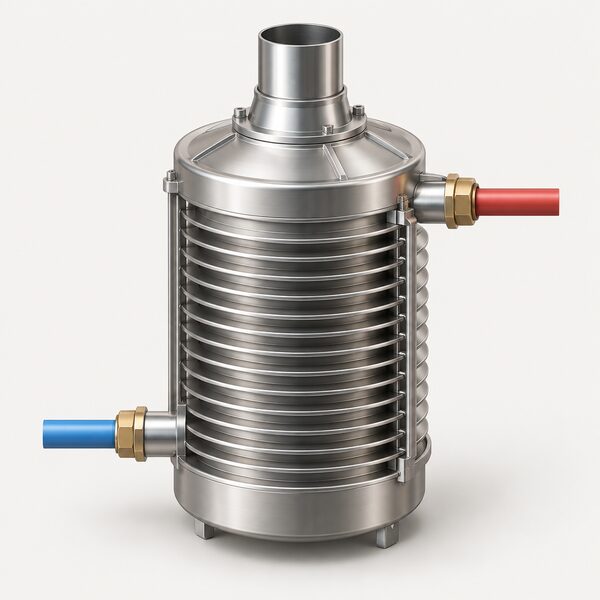
The heat exchanger is a corrosion-resistant stainless steel Inox-Radial unit, described by Viessmann as the heart of the boiler, and it appears in both the combi and system listing and the heat-only listing1. A separate 10 year warranty applies to stainless steel heat exchangers in gas condensing boilers up to 150 kW4. The burner is a MatriX-Plus unit with a Lambda Pro combustion controller, which Viessmann states adapts automatically to all gas types and maintains clean combustion1.
Domestic hot water flow rates are published at two temperature rises. At a 35 degrees C rise the three combi sizes deliver 10, 12 and 14 litres per minute continuously; at a 30 K rise under EN13203-1 they deliver 13.26, 15.59 and 17.04 litres per minute4. The expansion vessel holds 8 litres1. The circulation pump is an integral variable speed high efficiency unit, and the fan is variable speed, which Viessmann links to quiet operation9.
| Specification | Figure |
|---|---|
| Dimensions, combi and system | 360 mm depth x 400 mm width x 700 mm height4 |
| Ventilation air connection, system | 100 mm diameter4 |
| Heat exchanger | Stainless steel Inox-Radial1 |
| Burner | MatriX-Plus with Lambda Pro controller1 |
| DHW flow, three combi sizes | 10, 12, 14 l/min at 35 degrees C rise4 |
| Expansion vessel | 8 litres1 |
| Fuel | Natural gas and LPG1 |
Warranty: 7 years standard, up to 12 with VPlus
The warranty terms published for this model do not agree with each other, and both sets come from Viessmann. The product pages state a 12 year standard warranty when registered via VPlus, repeated on the Vitodens 100-W and 111-W page, the Vitodens range page and the combi and system brochure1. The warranty registration guidance gives a 7 year standard term for the Vitodens 100-W when installed and registered within 30 days, with chargeable upgrades to 10 or 12 years5. A household should read the terms attached to the specific registration route used rather than assume the longer figure.
The VPlus route is the one that carries the longest terms across the range. The Vitodens 200-W is listed at 10 years when registered via VPlus, the Vitodens 111-W storage combi at 10 years, the Vitodens 050-W at 10 years, the Vitodens 025-W at 5 years and the Vitodens classic at 5 years3. The pattern shows that the term is a commercial decision attached to the model and the registration route, not a property of the appliance.
Registration runs through the installer, who logs the installation on the Viessmann Installer Portal, or through the VPlus route5. The serial number needed to complete it is a 16-digit number, found on the Vitodens 100-W and 111-W by taking off the front panel of the boiler15. The same 16-digit format applies across the Vitodens range16. The wider registration process is explained in boiler warranties and guarantee registration.
Cost: what the figures show and what they do not
No manufacturer list price is published for a supplied and fitted Vitodens 100-W, and no installed price range appears in the material for this model. Prices are installer-quoted after a survey, and the figures that do exist are for servicing and repair rather than installation.
Viessmann publishes its own aftercare prices. An annual maintenance service for the Vitodens 025-W, 050-W, 100-W and 111-W is £162.00, and the same group of models carries a fixed price repair at £372.00 or a fixed price repair plus service at £450.006. For comparison, the Vitodens 200-W and 222-W up to 35 kW carry a service price of £186.00 and a repair plus service price of £498.006. These are maker prices as of 4 September 2026 and are the clearest cost figures attached to the model.
Three things move an installation quote: the output and variant chosen, whether the system type is changing, and flue or siting work. A like-for-like replacement of an existing boiler is a different job from a conversion between system types. The 100-W's front-access servicing and lack of side clearance requirements reduce the space needed but do not by themselves determine cost1. Wider cost context sits in new boiler cost in the UK and boiler installation.
Controls and connectivity: ViCare, WiFi and weather compensation
The Vitodens 100-W has an integral WiFi interface and is described by Viessmann as web-enabled for use with the ViCare app, which the brochure states is compatible with almost all iOS and Android devices1. Local operation is through an LED screen with a seven-segment display and touch buttons, or through a mobile device1.
Compatibility with Viessmann's own controls is published and specific. The Vitotrol 100-E is listed as suitable for the Vitodens 100-W combi and system, but only with a four-pipe system, and for the Vitodens 111-W storage combi and the Vitodens 050 combi in new models only17. The Vitotrol 200-E is listed for the Vitodens 300-W, not the 100-W17. A third-party compatibility checker lists the Vitodens 100-W as not compatible with its smart valve product18.
Weather compensation is the control that matters most for efficiency. Viessmann states that the Vitodens 050-W, 100-W and 111-W combi boilers are fully compliant as standard when connected with a weather compensation sensor14. The same principle appears in Viessmann's case study material for the Vitodens 200-W, where integrated weather compensation adjusts flow temperature in response to outside air temperature19. The requirements are set out in Boiler Plus: the control requirements explained and heating controls, thermostats and TRVs.
This is the clearest dependence the model creates beyond gas. Remote scheduling, energy monitoring and app-based control depend on a home broadband connection, Viessmann's servers and the ViCare app. Local control at the boiler continues without any of that.
Reliability, reviews and what owning one means for energy independence
Viessmann states that the Vitodens 100-W and 200-W range carries a Which? Best Buy award9. A case study of a 25 kW heat-only installation in a four-bedroom detached house quotes the householder describing the boiler as "it's efficient, compact, quiet and affordable"19. That is a single reported user description from a maker's own case study, not an independent survey, and it should be read as such.
The maker's wider engineering claims are worth separating from the model. Viessmann states it introduced the first heat pump in 1981, 45 years of German engineering13. That is company history, not a statement about the 100-W, which is a gas appliance.
On independence, the position is straightforward and worth stating plainly. A Vitodens 100-W keeps a home on the gas grid and on a gas supplier, with an electrical dependence for ignition, the pump, the fan and the controls, and a broadband and app dependence for the remote features. It reduces the gas burned per unit of heat through condensing and weather compensation, and it does nothing to reduce exposure to gas prices or imports. Households looking at the fuel rather than the appliance have other options, covered in gas boilers: types, efficiency and fuel, hydrogen-ready boilers: what the claim means and Viessmann boilers and the Vitodens family.
Sources19 cited
- Vitodens 100-W and Vitodens 111-W, Viessmann, 2026-08-24
- Vitodens 100-W heat only, Viessmann, 2026-08-24
- Vitodens gas condensing boilers, Viessmann, 2026-03-11
- Vitodens 100-111 brochure, November 2025, Viessmann, 2025-11
- Boiler warranty registration, Viessmann, 2025-03-31
- Product service and aftercare prices, Viessmann, 2026-09-04
- System boilers, Viessmann, 2023-10-23
- Vitodens 100-W heat only datasheet, 2024, Viessmann, 2021-08
- Installers consider lower output boilers, Viessmann, 2024-01-31
- Vitodens classic, Viessmann, 2026-08-24
- Vitodens 025-W, Viessmann, 2026-08-24
- Vitodens 200-W, Viessmann, 2026-08-24
- 10-year warranty for the Vitodens 200-W, Viessmann, 2025-09-29
- How does a central heating pump work, Viessmann, 2023-07-12
- Serial number locator, Vitodens 100-W and 111-W, Viessmann, 2023-03-21
- Viessmann warranty, Viessmann, 2025-10-31
- Vitotrol 100-E, Viessmann, 2024-12-09
- Boiler compatibility check, Genius Hub, 2026-02-05
- Four-bedroom detached new boiler case study, Viessmann, 2022-10-13
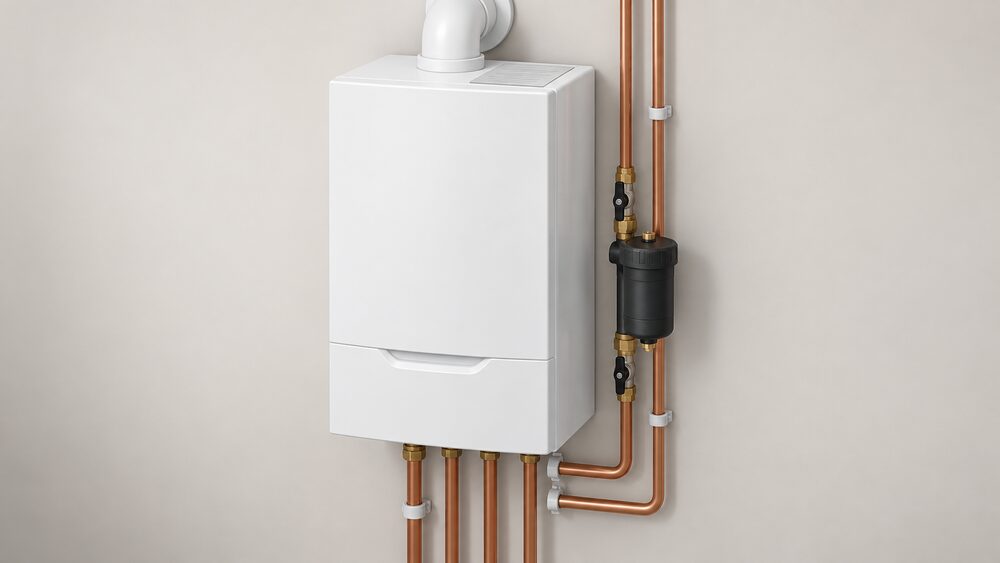 Viessmann boilers and the Vitodens familyViessmann boilers are German made and sold in the UK as combi, open vent and storage models, mostly in the Vitodens range.
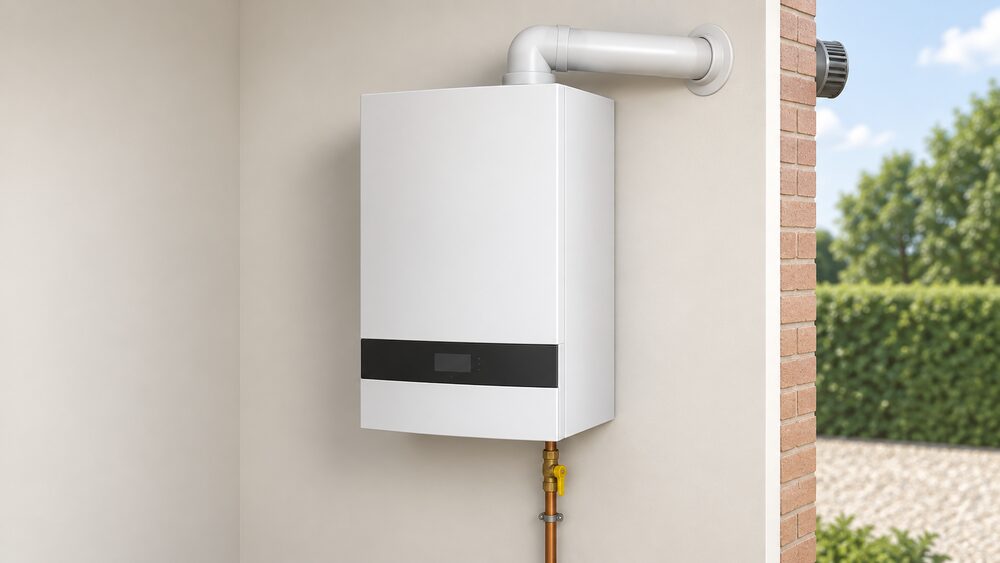 Viessmann Vitovalor Fuel Cell BoilerThe domestic fuel cell boiler UK buyers still search for, now withdrawn.
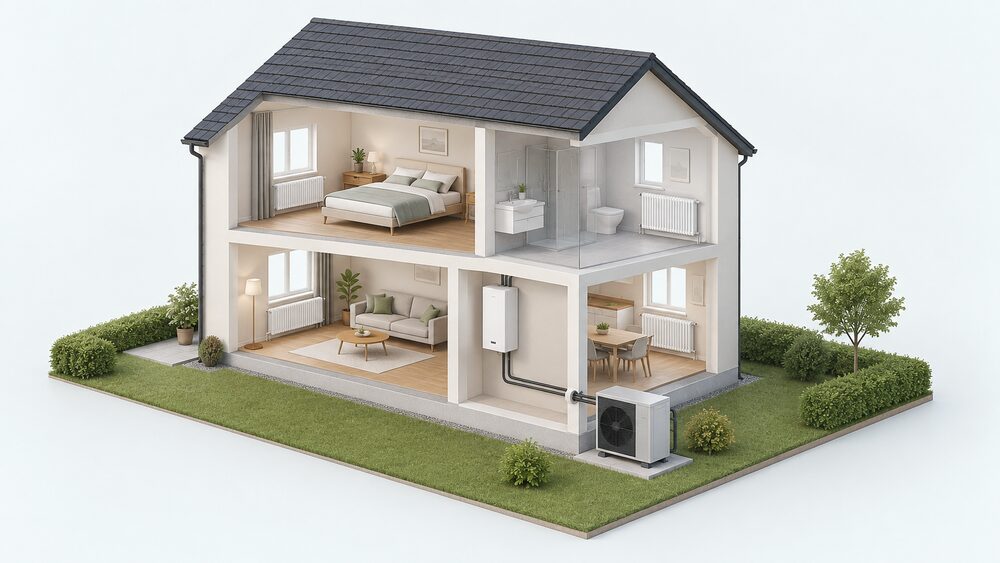 Viessmann Vitocal heat pumpsThinking about a Viessmann Vitocal heat pump for your home?
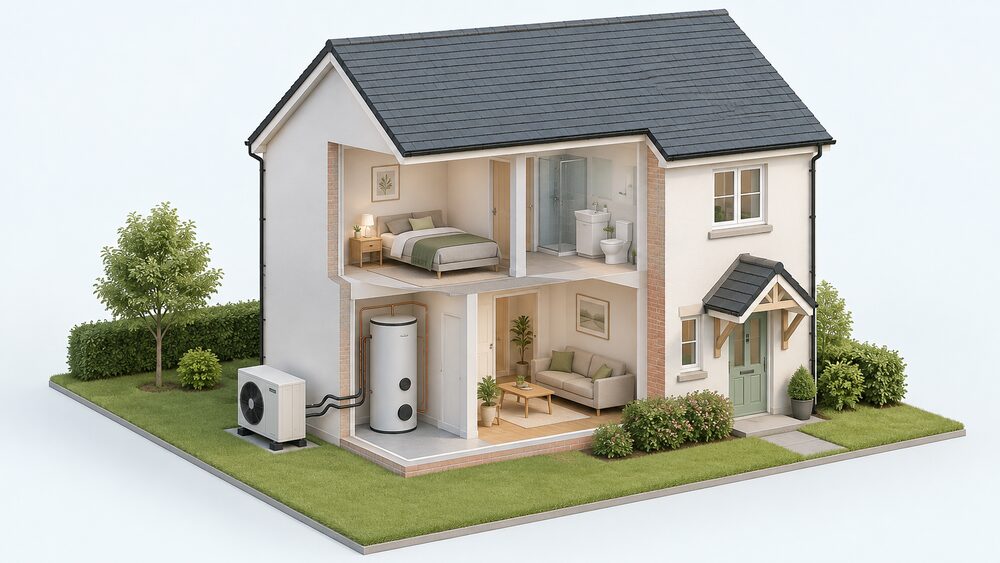 Viessmann Vitocal heat pump rangeThe Viessmann Vitocal range in the UK: current models, flow temperatures, warranty terms, servicing and what the brand's heat pump heritage means for a household.
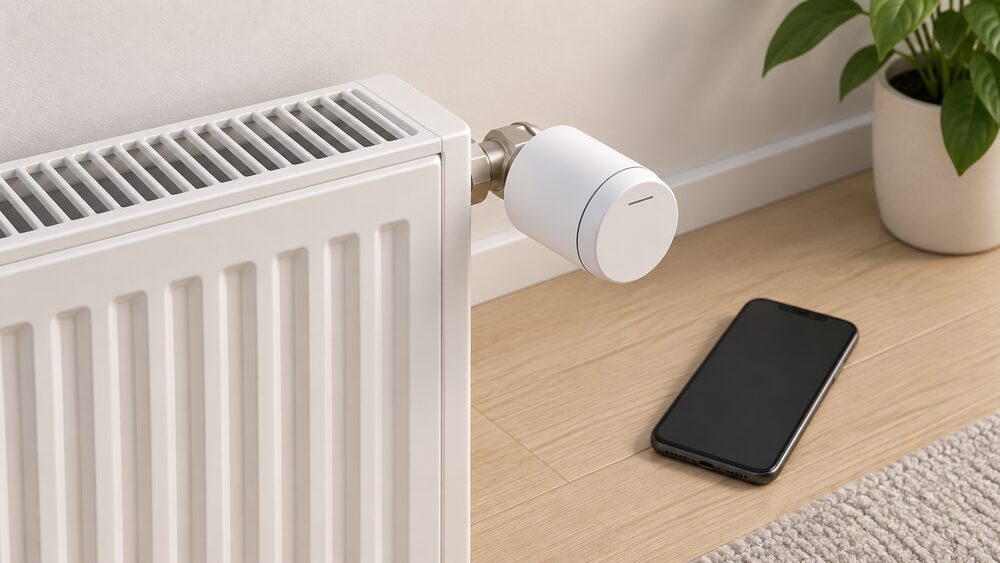 Viessmann Heating Controls and the ViCare AppHow Viessmann's ViCare app, Vitoconnect gateway and room controls work in UK homes, what they control, what they depend on, and what they cost to run.
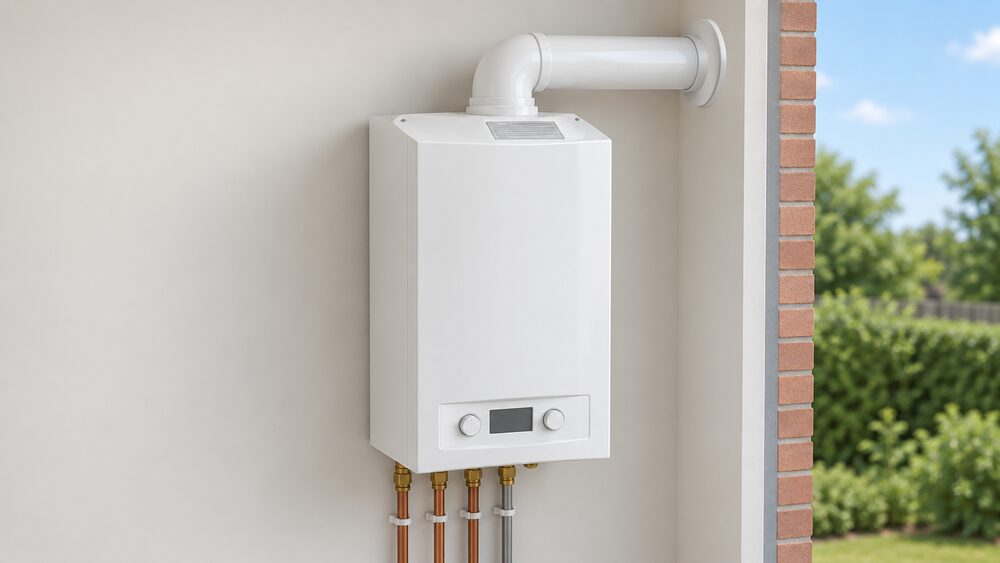 Viessmann boilers and heat pumps in the UKAre Viessmann boilers any good, and how long do they last?
 Viessmann VitovalorThinking about a Viessmann Vitovalor usually comes down to a few things.