
In this guide
Viessmann is a German manufacturer that has sold heating equipment in the UK since 1989, and its Vitocal range is the company's domestic heat pump line. The range covers air source and ground source models, with the newest addition, the Vitocal 200-A ie, launched to the UK market at InstallerSHOW at the NEC Birmingham on 23 June 2026 and available from autumn 20261. Viessmann states it introduced its first heat pump in 1981, giving 45 years of development behind the current products1.
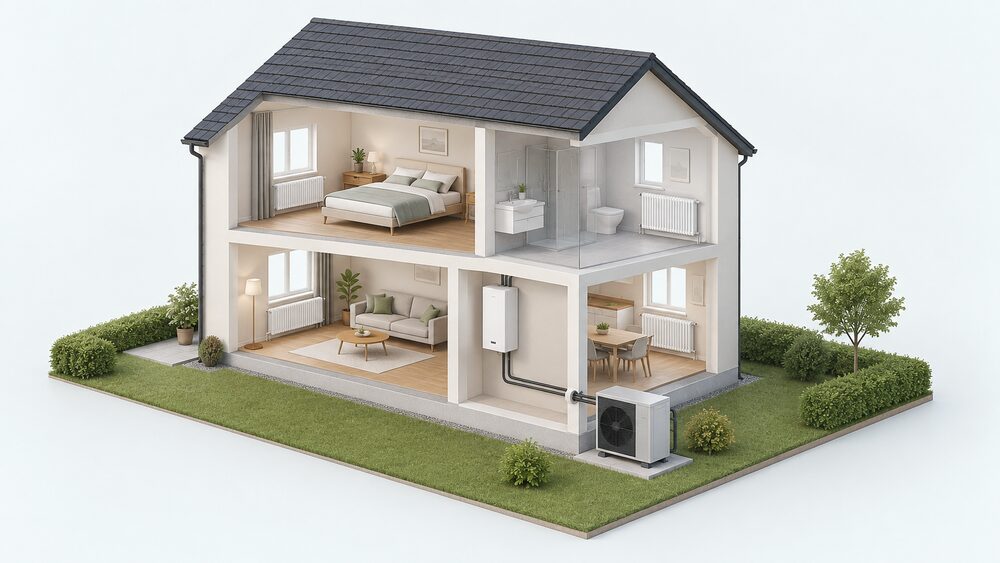
For a household, the appeal is straightforward: a Vitocal replaces a gas or oil boiler with a unit that runs on electricity, and it can be paired with a photovoltaic system so that self-generated electricity powers the heat pump2. The dependence that remains is on the electricity grid and an electricity supplier, plus the manufacturer for warranty, servicing and, where used, remote support. Viessmann does not publish an installed price, so costs come from installer quotes.
The Vitocal range at a glance: 150-A, 200-A ie and beyond
The Vitocal family spans air source and ground source heat pumps, and Viessmann describes the range as covering heating, cooling and hot water supply2. The air source side includes the Vitocal 150-A, the compact model sold to UK homes, and the newer Vitocal 200-A ie. The ground source side includes the Vitocal 200-G and the Vitocal 350-G, the latter a high temperature unit intended for larger existing buildings with radiator heating2.
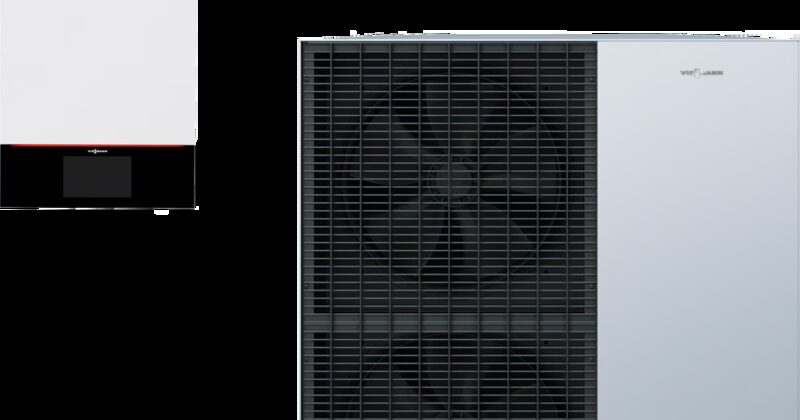
The 200-A ie is the most recent air-to-water addition. Viessmann launched it with a new, improved range of four indoor units, matching the existing Vitocal 150-A indoor unit line-up, and states that up to four heat pumps can be cascaded to provide a maximum 48 kW output installation, requiring only one indoor unit and one wall breakthrough1. That cascade capability matters for larger properties or where a single unit cannot meet the load.
At the top of the air source range, the Vitocal 350-A carries an integral cascade function for up to five air source heat pumps, with heating output levels of up to 92.5 kW2. This is commercial-scale capacity rather than a typical domestic installation, but it shows the range extends well beyond a single house.
| Model | Type | Key figure |
|---|---|---|
| Vitocal 150-A | Air source with integral instantaneous heating-water heater | Coefficient of performance as high as 4.7 at ideal design conditions, 8 kW model7 |
| Vitocal 200-A ie | Air-to-water, launched June 2026 | Up to four cascaded, 48 kW maximum1 |
| Vitocal 200-G | Ground source | Flow temperature up to 60°C2 |
| Vitocal 350-G | Ground source, high temperature | Aimed at larger existing buildings with radiator heating2 |
| Vitocal 350-A | Air source, cascade | Up to five units, 92.5 kW2 |
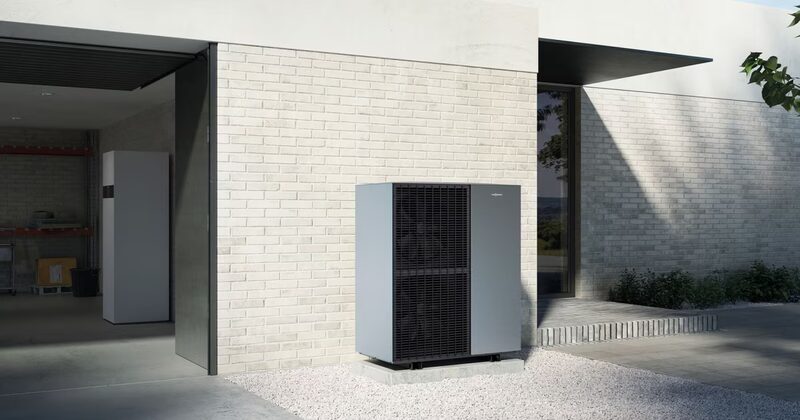
Vitocal 200-A ie: the newest air-to-water heat pump for UK homes
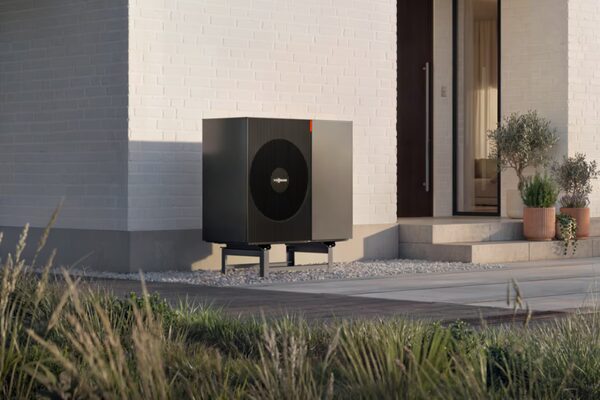
The Vitocal 200-A ie was launched to the UK market at InstallerSHOW at the NEC Birmingham on 23 June 2026, with availability in autumn 20261. Viessmann positions it as a gateway to the fully electrified home, and the launch presentation was scheduled for 1pm on 23 June at stand 5D201. The "ie" stands for intelligent energy.
The headline technical point is scalability. Viessmann states that up to four heat pumps can be cascaded to provide a maximum 48 kW output installation, requiring only one indoor unit and one wall breakthrough1. For a household, that means a single indoor unit can serve a system built from multiple outdoor units, which suits larger or harder-to-heat properties where one unit would be stretched.
The 200-A ie shares its indoor unit architecture with the existing Vitocal 150-A range, described by Viessmann as a new, improved range of four indoor units1. Sharing the indoor platform across two outdoor generations simplifies parts and servicing for installers already familiar with the 150-A.
Because the model was only launched in June 2026 and becomes available in autumn 2026, there is no independent performance data for it in UK homes. Any figures quoted for it at this stage are the maker's own. Households weighing it against the established 150-A are comparing a proven model with a newer one whose real-world performance is not yet documented.
Vitocal 150-A: the compact air source heat pump
The Vitocal 150-A is the model with the most UK evidence behind it. A Viessmann case study in Dorset records a 13kW Vitocal 150-A air source heat pump with an integral instantaneous heating-water heater, paired with solar panels7. The integral hot water heater means the unit produces domestic hot water without a separate cylinder in that configuration, though the design flow temperature recorded for the system is 55C7.
On price, Viessmann publishes no list price for an installed Vitocal. One distributor lists a Vitocal 150-A from £5,445.70, and a second listing puts it from £5,588.31; the two figures disagree and neither is confirmed as VAT-inclusive, so they should be read as indicative equipment prices rather than installed costs. Independent figures for air source installation sit higher: £8,000 to £12,0004, and official guidance puts the figure at around £6,500 to £11,500 including VAT, labour costs and the Boiler Upgrade Scheme grant8. A separate independent estimate for air source heat pumps under the Boiler Upgrade Scheme gives a range of £10,870 to £15,4229.
Flow temperatures and radiators: what Vitocal needs from your home
Flow temperature is the single figure that decides whether a heat pump works well in an existing home. Viessmann states that a heating system with radiators requires temperatures of up to 70°C, while underfloor heating systems manage with a much lower figure, around 30°C2. That gap explains why the same machine can look efficient in one house and mediocre in another: the emitters, not the heat pump, set the temperature the compressor has to reach, and every degree of lift costs electricity.
Independent guidance sits lower than the radiator figure Viessmann quotes. A maximum flow temperature of 55°C is typically recommended for efficiency in a domestic wet system10, and heat pumps are generally expected to run below that for space heating through most of the year, lifting only in the coldest weather11. For hot water generation, independent guidance suggests flow temperatures of 55°C or greater, which is why cylinder reheat is normally the least efficient part of a heat pump's duty cycle12.
The documents differ, and the difference is one of design intent rather than dispute. A system designed around the lower independent figure will be more efficient than one pushed to the radiator maximum Viessmann quotes, but the higher ceiling gives headroom on the coldest days and allows more existing radiators to stay in place without replacement. Viessmann's high temperature ground source model, the Vitocal 350-G, is aimed squarely at larger existing buildings equipped with radiator heating systems for that reason2, while the Vitocal 200-G is specified for lower flow temperatures2. Which figure applies to a given household depends on the heat loss calculation and the emitters already fitted3.
"With a maximum flow temperature of 70oC, it works with almost all of their existing radiators"
Heat pumps in old houses and multi-mode systems
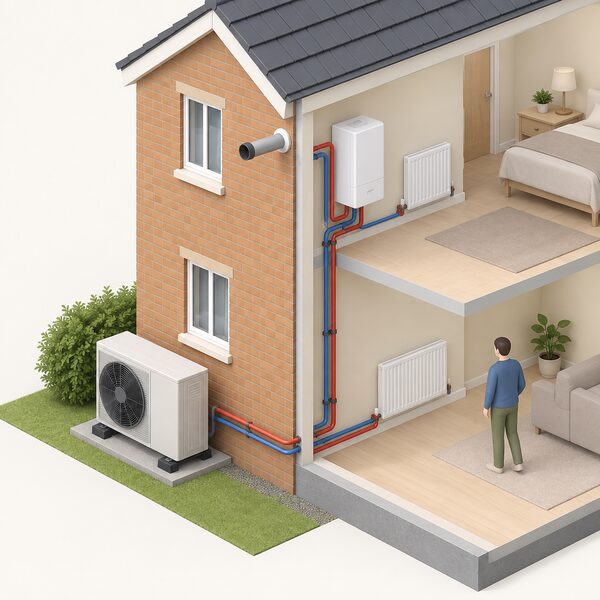
Viessmann states that its heat pumps can be used in new build and modernisation projects, and operated together with existing oil or gas heating systems2. That is multi-mode, or hybrid, operation: the heat pump carries the bulk of the heating load and the existing boiler provides backup or top-up, typically on the coldest days or where the heat pump alone cannot meet demand.
Independent guidance supports the arrangement. Oil and LPG boilers can also be used in hybrid systems13, and in many cases a gas, oil, LPG, electric or biomass boiler can be swapped out and replaced with a heat pump14. The choice between a full replacement and a hybrid depends on the property's heat loss, the existing emitter sizes and the electrical supply, not on the brand.
For older properties, the practical question is whether the fabric and the emitters can be brought to a standard the heat pump can work with. Independent guidance notes that heat pumps can work with radiators or underfloor heating, and that some types can work without either15, while air-to-water heat pumps are described as working well with large radiators and underfloor pipes16. Viessmann's own guidance on heat pumps in old houses confirms they can be installed with insulation, radiator and controls upgrades.
Ground source models add a further option for properties with land. All of Viessmann's ground source heat pumps can be used in both open and closed circuits3, which covers both borehole and horizontal loop installations. Ground source units carry a Coefficient of Performance of between four and five according to Viessmann, making them more efficient than air source in the company's description3.
Cooling, solar thermal and PV: what a Vitocal can pair with
Viessmann states that the Vitocal range can offer heating, cooling and hot water supply2. Cooling is not available on every model: the Vitocal 200-G ground source unit is listed with a cooling function, alongside a rated heating output of 5.8 to 22.6 kW, a small footprint and barely audible operation3.
On solar, the pairing runs two ways. Viessmann states that Vitocal heat pumps can be combined with a photovoltaic system, with the self-generated electricity used to power the heat pump2. The Vitocal 200-G is described as already prepared for the utilisation of more affordable power generated on site by a photovoltaic system2. The Dorset case study pairs a 13kW Vitocal 150-A with solar panels7.
Viessmann also states that its heat pumps can be operated together with solar thermal systems2. Solar thermal provides hot water rather than electricity, so it complements rather than replaces the heat pump's own hot water production.
For a household, the PV pairing is the clearest route to reducing running cost dependence on a supplier, because self-generated electricity displaces bought electricity. It does not remove the grid connection: a heat pump still draws from the grid when the panels are not generating, and in winter that is most of the time. The independence gained is partial and seasonal.
Warranty, servicing and installer support
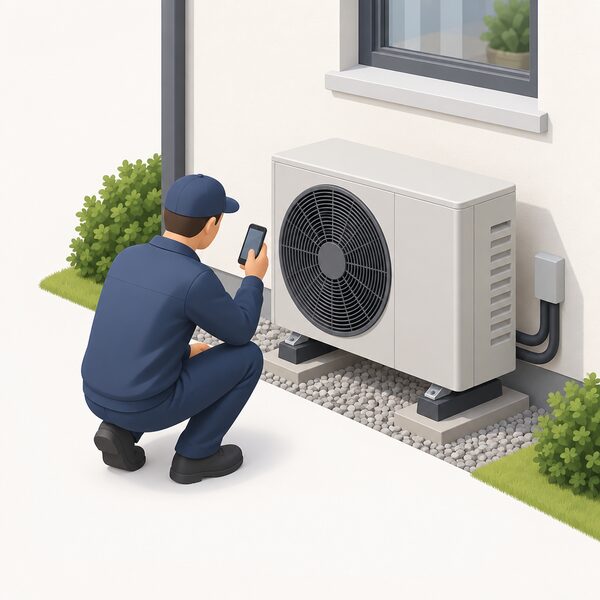
Viessmann states that all its heat pumps come with a standard warranty of two years, which can be extended if installed by a registered Viessmann installer3. Independent guidance puts most heat pump systems at a two to three-year warranty17, and notes that heat pumps usually come with warranties lasting two to three years, which can often be extended for a fee18. Vitocal cylinders carry a 25 year cylinder warranty and a 2 year parts warranty2.
Servicing is annual. Independent guidance is that a heat pump should be serviced according to the manufacturer's advice, usually once a year, at a typical cost of around £1505. The cost varies with the type of heat pump.
On support, Viessmann Climate Solutions UK adopted TechSee's remote visual assistance platform in July 2025 to support customers and installers, and the same integration led to adoption in five further countries1. Remote visual assistance allows an engineer to see the installation through a phone camera, which can resolve some faults without a site visit.
For grant-funded work, the installer applies for the Boiler Upgrade Scheme grant on the householder's behalf through Ofgem, and quotes can be obtained through the MCS find a heat pump installer tool or from an energy supplier19.
Viessmann as a manufacturer: history, reputation and UK presence
Viessmann has operated in the UK since 19891, and states it introduced the first heat pump in 1981, giving over 45 years of development1. The company is German, and its UK arm trades as Viessmann Climate Solutions.
Independent reputation data is mixed and covers boilers rather than heat pumps. Which? gives Viessmann a three-star rating for its customer score, with 80% of owners reporting satisfaction with their boiler, lower than the average satisfaction rate of 82%, while 81% of Viessmann customers said they were likely to recommend the brand to someone else6. Viessmann also responded to Which? questions about Christmas boiler breakdowns and common breakdown causes20, which indicates an engaged service operation.
On the installer side, Freedom Heat Pumps is described as one of the UK's largest dedicated heat pump distributors, with a reputation for a full range of heat pumps, complementary accessories and cylinders21. The Heat Pump Association's membership includes manufacturers providing over 85% of the heat pumps in the UK22. Independent consumer resources such as GetAHeatPump.org.uk offer a quiz to help people find the right heat pump for their home, installation guides and case studies23.
For a household, the manufacturer's UK presence and its installer network matter more than the brand's history. A heat pump is a long-lived appliance whose warranty, parts and servicing depend on the maker staying in the market and supporting the installers who fit it.
Where the Vitocal range has limits
The clearest limit is price transparency. Viessmann publishes no installed price, and the two distributor figures for the Vitocal 150-A disagree, at £5,445.70 and £5,588.31. Independent installation figures range from £8,000 to £12,0004, £6,500 to £11,500 including the grant8, £10,870 to £15,422 under the Boiler Upgrade Scheme9, and a wider £14,000 to £28,000 depending on type21. A separate estimate puts the total at £6,800 to £17,700 with an average of £13,00022, and another at around £11,700 on average23. These are estimates across the market, not Viessmann-specific quotes.
Running costs are also estimated rather than fixed. Official statistics put heat pump annual heating cost at £2,100 to £2,500 for a three-bed semi-detached house in Great Britain regions24, while independent guidance puts heat pumps at around £800 to £1,050 a year to run, making them one of the cheapest electric heating options25. The two figures differ because they measure different things and cover different periods.
The dependence that remains after installation is on the electricity grid and a supplier, on the manufacturer for warranty and parts, and on an installer network for servicing. Where a Vitocal is paired with PV, some of that electricity dependence is offset, but not removed. The heat pump itself does not store energy, so it draws from the grid whenever it runs and the panels are not generating.
Sources25 cited
- Vitocal 200-A ie is Gateway to the Fully Electrified Home, Viessmann, 2026-06-23
- Vitocal range, Viessmann, 2025-12-04
- Ground source heat pumps, Viessmann, 2023-11-07
- The real cost of a heat pump, Low Carbon Hub, 2025-10-30
- Heat pump questions answered, Energy Saving Trust, 2026-05-27
- Viessmann boilers review, Which?, 2025-09-17
- Air source heat pump and solar panel, Dorset, Viessmann, 2024-07-30
- Heat pumps explained: experts answer your questions, GOV.UK, 2024-03-28
- Boiler statistics, Uswitch, 2023
- My property and heat pumps, Renewables First, 2026-03-23
- Heat pump systems, CIPHE, 2026-09-17
- Domestic heat pump guide, MCS Certified, 2024-04-02
- Domestic heat pump guide, HHIC, 2026-09-17
- The best heating for your home, Which?, 2025-09-22
- Heating your home, Energy Saving Trust, 2026-05-19
- How heat pumps work: a guide for homeowners, NICEIC, 2025-09-17
- Heat pumps, Home Energy Scotland, 2026-09-20
- Living with a heat pump, Home Energy Scotland, 2024-02
- Heat pump, Clean Energy Campaign, 2026-09-10
- What to do if your boiler breaks down at Christmas, Which?, 2025-12-12
- How do heat pumps work, Smart Energy GB, 2026-03-16
- Savanta Cadent consumer choice, Cadent, 2026
- Renewable technologies: what really cuts energy bills, Energy Saving Trust, 2026-08-12
- Research briefing CBP-9838, House of Commons Library, 2026
- Electric heating, Centre for Sustainable Energy, 2026-06
 Viessmann boilers and the Vitodens familyViessmann boilers are German made and sold in the UK as combi, open vent and storage models, mostly in the Vitodens range.
 Viessmann Vitodens 100-WHow long does the Viessmann Vitodens 100-W warranty last, and what do you need to do to get the longer cover?
 Viessmann Vitovalor Fuel Cell BoilerThe domestic fuel cell boiler UK buyers still search for, now withdrawn.
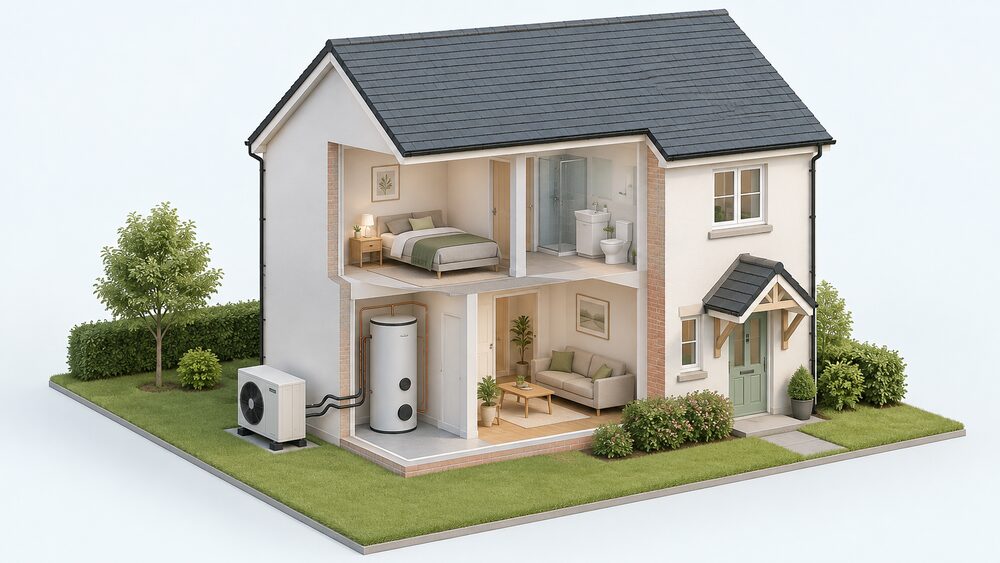 Viessmann Vitocal heat pump rangeThe Viessmann Vitocal range in the UK: current models, flow temperatures, warranty terms, servicing and what the brand's heat pump heritage means for a household.
 Viessmann Heating Controls and the ViCare AppHow Viessmann's ViCare app, Vitoconnect gateway and room controls work in UK homes, what they control, what they depend on, and what they cost to run.
 Viessmann boilers and heat pumps in the UKAre Viessmann boilers any good, and how long do they last?
 Viessmann VitovalorThinking about a Viessmann Vitovalor usually comes down to a few things.