
In this guide
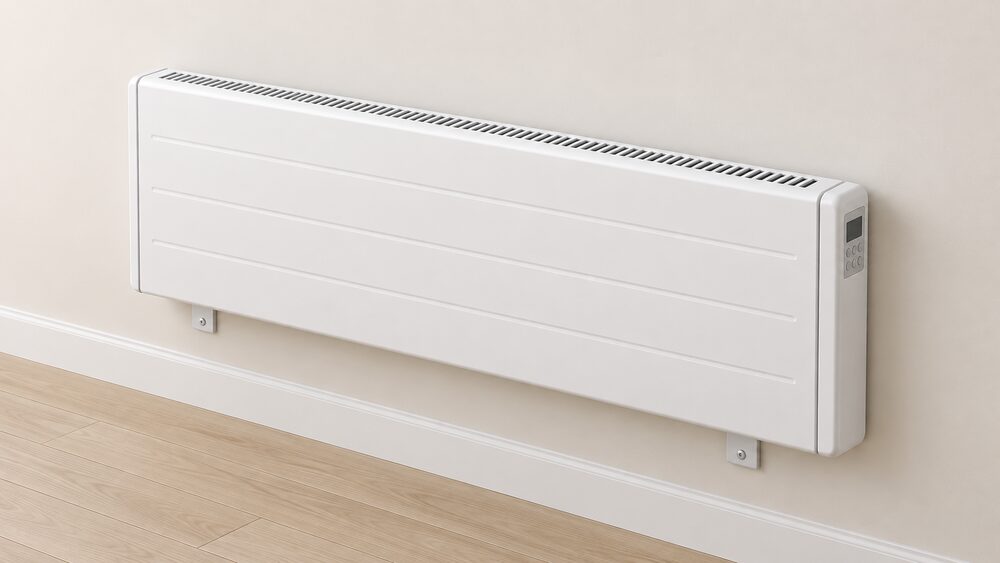
Myson is a long-established UK radiator maker with a broad electric range: panel, plan, column and decorative models, plus hydronic and electric vertical radiators and towel warmers1. The Finesse is its electric panel radiator, oil or fluid filled, sold in white with outputs from 500 to 2000 W and described as providing the benefits of central heating without a plumbed in system, which suits off-gas projects or rooms with no central heating pipes2.
The specification that matters most for running cost is control. Myson states that almost all its electric radiators include thermostats with a precision of 0.2 degrees C, open window detection and programming, and that every radiator can be controlled separately so a household heats only the rooms in use3. The Finesse itself is a wall-mounted horizontal model, 250 mm wide, 300 mm high and 81 mm deep, with a class 1 electrical protection rating and UK manufacture2.
On warranty, Myson states that its radiators are guaranteed against all manufacturing defects for 10 years from the date of purchase, with galvanised radiators at 6 years4. No published price appears in the material available here, so Myson electric radiators are quoted by stockists and installers rather than sold at a fixed list price.
What Myson offers in the UK
Myson's electric range is wider than a single product line. Independent guidance describes a comprehensive range of electric radiators covering panel, plan, column and decorative models1, and the company's own product pages confirm hydronic and electric options in the Column range and both hydronic and electric vertical radiators6. The Finesse sits in the panel group: an electric panel radiator, oil or fluid filled, in white, with a class 1 electrical protection rating and UK manufacture2.
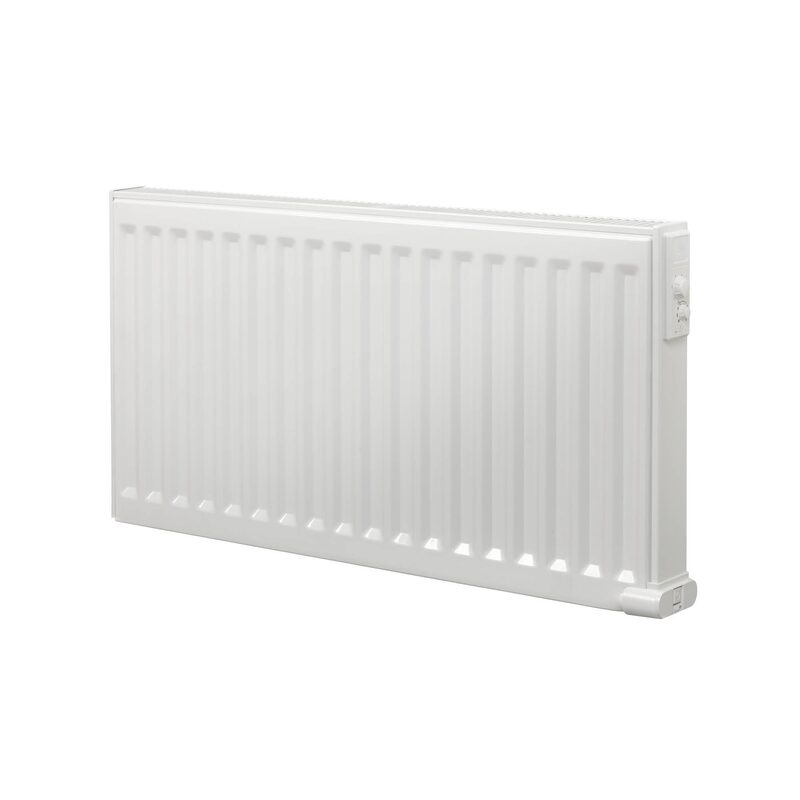
The construction matters for how the heat feels. Myson states that its electric radiators are oil filled, so they transmit lower temperatures and are subject to the same low thermal inertia as low temperature radiators8. The fill fluid is described as biodegradable vegetable oils9. That combination, a lower surface temperature and a relatively quick response, is what makes an oil-filled electric radiator different from a storage heater, which charges overnight and releases heat slowly.
Myson also positions itself beyond radiators. It describes its scope as radiators, underfloor heating, ceiling convectors and towel warmers, and calls itself the UK's only total heating solutions provider10. For a household, that breadth matters mainly at the point of specification: the same maker can supply the emitters for a wet system, an electric system or a mixed layout, which is relevant where a home is being renovated room by room rather than all at once11.
Specifications: Finesse, Column and the wider range
The Finesse is specified for domestic wall mounting. It runs on 230 V at 50 Hz, connects by terminals, and is a horizontal wall model in the low size band of 30 to 50 cm2. Its controls include a mechanical power control, a digital indication, a time switch clock, a frost protection circuit and overheating protection, with the control panel on the side2. It is not listed as suitable for wireless remote control, so remote operation is not part of this model's specification2.
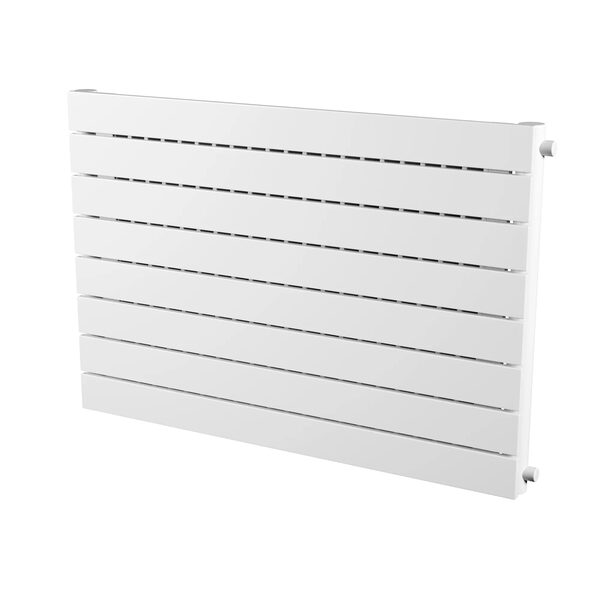
The Column range is a different proposition: steel construction, white, RAL 9016, with 6 to 36 elements, heights from 300 to 2000 mm and a length of 1800 mm on the listed variant6. It comes in horizontal and vertical variants and in both hydronic and electric options, with an electronic thermostat and wireless control, and can be wall or floor mounted6. The Décor Horizontal and Décor Vertical models are straight designs in the same decorative family12.
| Model | Type | Key specification |
|---|---|---|
| Finesse | Electric panel, oil or fluid filled | 500 to 2000 W; 250 x 300 x 81 mm; IP44; 230 V, 50 Hz2 |
| Column | Hydronic and electric | Steel; 6 to 36 elements; 300 to 2000 mm high; RAL 90166 |
| Décor Horizontal | Decorative | Straight design12 |
| Décor Vertical | Decorative | Straight design13 |
Across the electric range, Myson states that every one of its electric radiators meets all the requirements of the ecodesign directive5. All Myson radiators and convectors are CE marked based on the harmonised standard EN4424. Sizing is the variable a household controls: Myson publishes a product calculator for matching radiator output to a room14, and states that radiators must be sized correctly for the rooms they are placed in11.
Warranty: 10 years, with conditions
Myson states that its radiators are guaranteed against all manufacturing defects for 10 years from the date of purchase4. Galvanised radiators carry a shorter term of 6 years4. Vertical radiators are described as carrying a 10-year guarantee7.
The conditions are set out plainly, and they are worth reading before purchase:
"The warranty does not apply to defects caused by installation or handling errors, misuse or factors external to the radiator"
In full, the warranty applies provided the radiators are operated in compliance with national standards and regulations for a heating system with hot water, and it excludes defects caused by installation or handling errors, misuse, or external factors such as water quality or oxygen-permeable pipes4. That last exclusion is the one that catches wet systems rather than electric ones: water quality and pipe specification are system-level issues, not radiator faults.
For comparison, one electric radiator retailer describes its own guarantee as covering all the integral workings including the elements, fireclay panels, thermal switches and electrical wiring as well as the metal casing15. That is a different maker's term, not Myson's, and it illustrates that what a guarantee covers varies by brand as much as by length.
What Myson electric radiators cost
No published price for Myson electric radiators appears in the material available for this page. Prices are quoted by stockists and installers rather than set at a manufacturer list price, and they vary with the model, the output, the finish and the quantity ordered. A household should expect to ask a supplier for a written quote rather than work from a published figure.
What drives the quote is mostly specification. Output is the first variable: the Finesse spans 500 to 2000 W, so a small room and a large one take different units2. The Column range spans 6 to 36 elements and heights from 300 to 2000 mm, which is a far wider spread of material and cost6. Finish and mounting add to it: the Column range can be wall or floor mounted, and brackets are supplied for classes 2, 3 and partly class 46.
Running cost is separate from purchase cost and depends on the electricity price and the hours each radiator runs. Myson states that electric radiators convert every watt of electricity into usable heat, making them very efficient from the moment they switch on9, and elsewhere describes them as 100% energy efficient and controllable17. That is a statement about conversion at the radiator, not about what a kilowatt hour costs or how much carbon it carries. The lever a household actually holds is control: Myson states that every radiator can be controlled separately, so users can save money and minimise energy waste by only heating the rooms they are actually using3.
Company status and UK manufacturing

Myson is an Industrial Associate of CIPHE, the Chartered Institute of Plumbing and Heating Engineering, a membership status confirmed in independent guidance and in the institute's own news pages1. That is a trade-body affiliation rather than a certification of any individual product, but it indicates an established position in the UK heating trade.
Manufacturing is domestic. The Finesse is manufactured in the UK2, and Myson states that as of April 2024 it started production of carbon offset steel electric radiators at its Myson factory in Gateshead5. For that production it cooperates with Arcelor Mittal, whose XCarb programme supplies steel with a green steel certificate: for a recent purchase of 16 tonnes of steel, Myson states it received a certificate recording a saving of 35 tonnes of CO25. The company states that it is one of the few in its industry to set greenhouse gas reduction targets approved by the Science Based Targets initiative, and that it aims for carbon neutrality by 20505. It also states that from 2026 it will receive near zero carbon-emission steel from H2 Green Steel5.
Two further points of status are worth separating from product claims. Myson describes itself as a specialist in low temperature heating solutions and as heat pump ready18, and it states that it is working behind the scenes on a solution that will open up towel radiators to the same possibility20. Those are statements of direction rather than products a household can buy today.
What it means for energy independence
An electric radiator changes where a household's heat comes from, and that cuts both ways. The Finesse is described as providing the benefits of central heating without a plumbed in system, suited to off-gas projects or spaces with no central heating pipes2. A home with no gas connection, or a room that a wet system does not reach, can be heated without a boiler, a cylinder or a pipe run. That removes a gas supply, a gas boiler and the flue and servicing that go with them.
What remains is electricity. An electric radiator is only as independent as the supply behind it: it draws from the grid and from whichever supplier the household buys from, and it carries the carbon and the price of that electricity. The measure that matters here is self-sufficiency, defined in independent guidance as the percentage of electricity consumed in the property over a year which is met by either behind the meter solar or electrical energy storage21. An electric radiator can raise that percentage only if the home generates or stores its own power. Independent consultation work makes the same link in the other direction: more homegrown energy means greater energy independence22.
Control is the second half of the picture. Myson states that every radiator can be controlled separately, so users can save money and minimise energy waste by only heating the rooms they are actually using3, and that temperature settings can be managed via a tablet or smartphone5. Where a home automation system such as Google Home or Amazon Alexa is installed, Myson states that its electric radiators can even be voice controlled3. That is a dependence as well as a convenience: app and voice control rely on a home network, a manufacturer's platform and the devices themselves, while local controls at the radiator continue to work without them.
For a household weighing this up, the position is straightforward. An electric radiator removes the gas connection and the boiler, and gives room-by-room control that a single boiler thermostat cannot. It keeps the home on the electricity grid and on an electricity supplier, and it makes running cost a function of the electricity price and the hours each unit runs. Where a wet system is being replaced or a heat pump is planned, Myson's own guidance is that the existing heat source is very likely to be updated to a modern condensing boiler or a heat pump with lower flow temperatures, so distribution and heat emitters should be reviewed at the same time11. Radiators, in Myson's account, are just as well suited to low system temperatures as underfloor heating, and in some cases more energy efficient according to independent studies14.
Sources22 cited
- Myson: low temperature heating, CIPHE, 2024-01-25
- Finesse electric panel radiator, Myson, 2026-09-20
- The future of home heating: energy efficiency in electric radiators, Myson, 2025-08-21
- Myson knowledge: FAQ, Myson, 2026-09-20
- Electric heating: greener than most people think, Myson, 2024-07-28
- Column radiator, Myson, 2026-09-20
- Sustainable procurement: an important leg of our journey to a better future, Myson, 2024-06-11
- 5 reasons why vertical radiators stand out, Myson, 2024-08-01
- Electric heating: 7 reasons to choose oil filled electric radiators, Myson, 2023-08-30
- Sustainable energy efficient solutions, Myson, 2026-09-20
- Finding the best radiators for heat output with the Myson product calculator, Myson, 2024-08-30
- Décor Horizontal radiator, Myson, 2026-09-20
- Décor Vertical radiator, Myson, 2026-09-20
- The pros and cons of low temperature heating, Myson, 2022-09-14
- Electric radiators for your conservatory, Electrorad, 2024-12-12
- The importance of radiator brackets for safe installations, Myson, 2023-06-07
- Myson iVector S2, CIPHE, 2025-12-12
- Replacing a boiler: don't forget the radiators, Myson, 2026-09-20
- New build solutions for private housing, Myson, 2026-09-20
- Expert insights on choosing the best towel radiator, Myson, 2026-09-20
- MCS 032 2025 V1.0, MCS Certified, 2025-01-01
- Solar Energy Scotland manifesto, Solar Energy UK, 2026-09-17
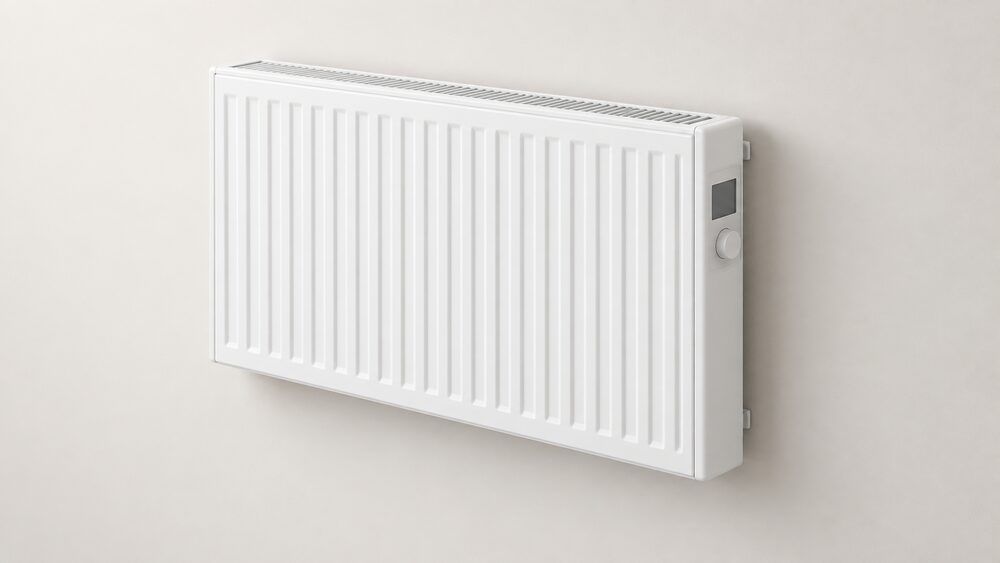 Myson Controls and Electric RadiatorsMyson makes radiators and heating controls for UK homes, including electric radiators you can set room by room and fan convectors that work well with heat pumps.