
In this guide
Myson is a UK radiator and heating controls manufacturer whose current catalogue spans hydronic radiators, electric radiators, fan convectors, fan coil units and underfloor heating, alongside control products such as the MEP1C programmer1. The company is an Industrial Associate of CIPHE, the Chartered Institute of Plumbing and Heating Engineering, and its published contact number for product and order enquiries is 0330 041 54 742.
The commercial case for the range rests on three claims the company makes about its own products. Fan convectors are described as a great match for low temperature heating systems, whether or not combined with a heat pump, offering high heat dissipation at low installation heights3. Electric radiators are presented as individually controllable room by room, with thermostats accurate to 0.2°C, open window detection and programming built into almost all models4. And the company positions renovation as the moment to move to low temperature heating, which it says significantly reduces energy consumption, saves money and reduces emissions, especially in properly insulated buildings5.
What follows sets out what Myson makes, how its controls work, what the efficiency claims rest on, and where the dependence on a manufacturer, a fuel or a grid connection remains.
Myson at a glance: a UK radiator maker with a controls line
Myson's documented control product is the MEP1C programmer, listed with a backlit screen, a display and a 3- or 4-wire connection, and a control characteristic suitable for heating1. That is a conventional wired programmer rather than a connected thermostat, and it sits alongside the electronic thermostat and wireless control offered on the Column radiator8.
The company's standing in the trade is corporate rather than individual. CIPHE lists Myson as an Industrial Associate, a category that also includes Viessmann Climate Solutions UK, Resideo, Triton Showers and Luthmore2. Industrial Associate status is an affiliation between a manufacturer and the institute; it is not an accreditation of any particular installer, and it does not certify a product.
Myson publishes its own technical guidance through CIPHE's news and advice channel, including a guest blog on low temperature heating2. That is a manufacturer explaining its own positioning to the trade, and it should be read as such: useful for understanding what the products are designed to do, not as independent verification that they do it.
For a household, the practical significance of a UK-based radiator maker is the supply chain. Radiators are bulky, low-value-per-kilogram items, and domestic manufacture shortens replacement times and reduces the shipping footprint. It does not, on its own, change how a home is heated or where its energy comes from.
The range: radiators, electric models, fan convectors and underfloor heating

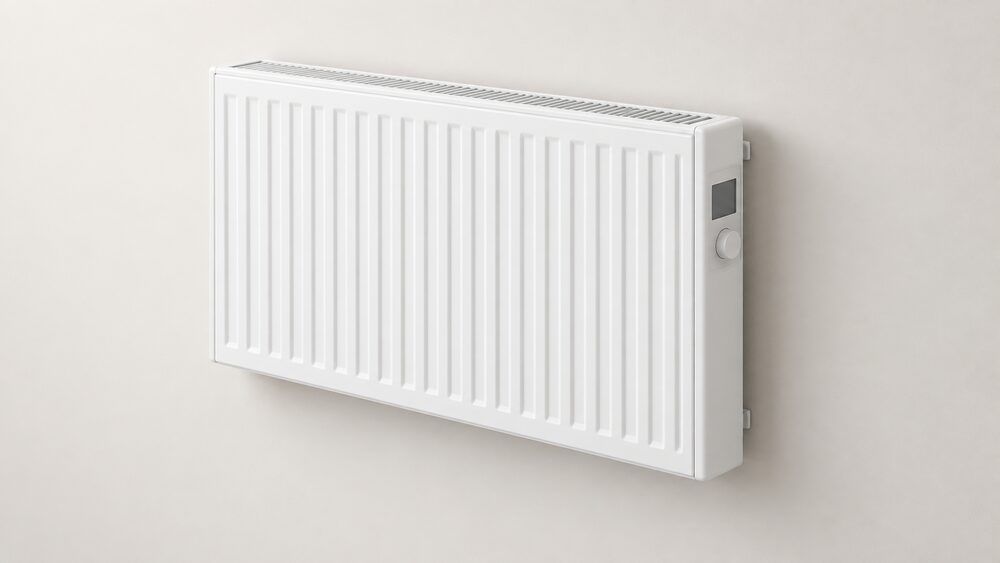
Myson's electric radiator range covers panel, plan, column and decorative models2. The Finesse is an electric panel radiator that the company describes as providing all the benefits of central heating without the need for a plumbed in system, suited to off-gas projects or spaces with no central heating pipes6. Its heating capacity runs from 500 to 2000 W, it is programmable, its control panel sits on the side, its power control is mechanical, and its front material is steel in RAL 90166.
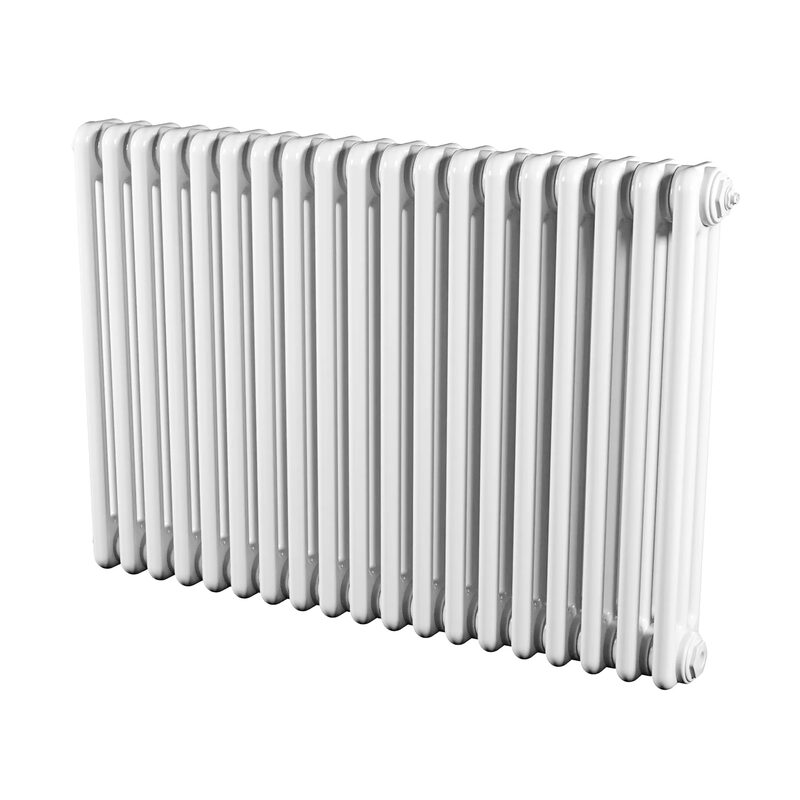
The Column radiator is the more configurable product. It comes in hydronic and electric options, in horizontal and vertical variants, in white, with an internal thread connection, wall or floor mounting, a de-aerator, and no blind plugs8. The electronic thermostat and wireless control are listed among its features8.
Fan convectors and fan coil units form a separate family. Myson describes floor-mounted and underfloor convectors as allowing maximum flexibility in interior design, and calls convectors the most efficient compact heating solution3. In December 2025 the company updated its fan convectors for low temperature heating systems, reducing minimum operating temperatures for the Kickspace, Hi Line RC and Lo Line RC models12.
Underfloor heating appears in Myson's guidance as one of the emitters to pair with a heat pump in a low temperature system, alongside low temperature radiators and fan convectors5. Independent guidance from NICEIC notes that zoning allows control of individual room temperatures, and that smart, programmable thermostats can keep a home heated on a schedule to help minimise bills13.
| Product | Type | Key published attributes |
|---|---|---|
| Finesse | Electric panel radiator | 500 to 2000 W, mechanical power control, programmable, RAL 90166 |
| Column | Hydronic or electric | Internal thread connection, wall or floor mount, de-aerator, electronic thermostat and wireless control8 |
| Fan convectors | Fan-assisted | Low temperature compatible, high heat dissipation, low installation height3 |
| MEP1C | Programmer | Backlit screen, display, 3-/4-wire connection1 |
Controls and the Myson Touch: thermostats, wireless control and zoning
The control story across the range is room-by-room rather than whole-house. Myson states that every electric radiator can be controlled separately, so users can save money and minimise energy waste by only heating the rooms they are actually using4. Almost all its electric radiators carry thermostats with a precision of 0.2°C, open window detection and programming4. Where a home automation system such as Google Home or Amazon Alexa is installed, the company states its electric radiators can be voice controlled4.
That is a different architecture from a central programmer driving a boiler and a set of zone valves. It is closer to what the heating controls field calls zoning, and the official definition is worth holding onto: time and temperature zone controls enable independent programming of temperature and heating times in at least two different areas or zones of a premises14. A set of individually programmable electric radiators meets that description functionally, though it does so without a boiler interlock, because there is no boiler to interlock with.
For hydronic systems, the MEP1C programmer provides the time control, with a backlit screen and a 3- or 4-wire connection1. The Column radiator's electronic thermostat and wireless control provide local room control on the electric version8.
The dependence here is worth stating plainly. Individually controlled electric radiators give a household genuine room-level autonomy and no reliance on a boiler, a gas supply or a central programmer. What they do not remove is the electricity supply, the tariff behind it, or the grid. Voice control adds a further dependence on a home network and on a third-party assistant platform. More on how zoning is wired and configured is at heating zoning and smart TRVs.
Low temperature heating: why Myson positions itself as heat pump ready
Myson's argument is that renovations are the ideal chance to switch to a low temperature heating system, which it says significantly reduces energy consumption, saves money and reduces emissions, especially in properly insulated buildings5. Where insulation is renewed or improved, the company suggests investing in a low temperature system combining a heat pump with underfloor heating, low temperature radiators or fan convectors, plus modern controls5.
The emitter side of that is where Myson's products fit. Fan convectors are described as a great match for low temperature heating systems, whether or not combined with a heat pump, because they dissipate a lot of heat from a small, low-profile unit3. That matters because a heat pump delivers heat at lower flow temperatures than a boiler, and a conventional radiator sized for a boiler's flow temperature will under-deliver on a lower one.
Independent and official sources support the general principle. Which? states that air source heat pumps are designed to work at low temperatures down to minus 10C, sufficient for most parts of the UK15. The Welsh Government states that heat pumps run on electricity and work efficiently even on cold days, down to temperatures as low as minus 20°C16. Which? also notes that a ground source heat pump produces low-temperature heat, so is best connected to a system designed for this, such as underfloor heating17. The Energy Saving Trust notes that heat pumps have a heating boost setting that can give a little boost of energy when the temperature is particularly low, using a little more electricity18.
Myson's own guidance for a mid-scale renovation is to install a modern condensing boiler if a heat pump is not yet an option, combined with low temperature radiators, or to install modern electric radiators, noting that both work on fossil fuel and sustainable energy and ease a later heat pump transition5. That is a staged approach: change the emitters now, change the heat source later.

Renovation or new build: which Myson solutions fit which project

Myson states that it offers a wide range of heating and cooling solutions for both new builds and renovations5. The distinction that matters is how much of the system is being replaced.
On a minor renovation, the company's guidance is that older hydronic or electric radiators can be exchanged with modern, more efficient ones, provided the radiators are sized correctly for the rooms they are placed in5. Sizing is the condition, and it is the one most often skipped: a like-for-like swap on output assumes the original radiator was correctly sized, which is not guaranteed in older housing.
On a major renovation, where insulation is renewed or improved, Myson recommends a low temperature heating system combining a heat pump with underfloor heating, low temperature radiators or fan convectors, plus modern controls5. On a mid-scale renovation, the recommendation is a modern condensing boiler if a heat pump is not yet an option, combined with low temperature radiators, or modern electric radiators5.
For new build, the same emitter range applies, and the design freedom is greater because pipework and floor build-up can be planned around underfloor heating or floor-mounted convectors5. Building Regulations for new homes in England set the framework for this through the Future Homes and Buildings Standard11.
The practical sequence for a household is: establish the heat source first, then size the emitters to the flow temperature that source will run at. A radiator chosen for a boiler's flow temperature will not perform the same duty on a heat pump's lower flow, and Myson's own low temperature guidance is built around that constraint5.
Efficiency: what the claimed savings of up to 30% rest on
The efficiency claims in this field come from several different places and are not interchangeable. Myson's electric radiator guidance rests on room-level control: every radiator controlled separately, so only occupied rooms are heated4. That is a behavioural and zoning argument, not a conversion efficiency one.
Independent figures for smart thermostats are specific to particular products. uSwitch reports that tado° thermostats, according to the manufacturer, can help users save up to 31% on their energy bills19. That is a manufacturer's claim reported by an independent publisher, and it is tied to one brand.
The 30% figure that appears in the wider heating literature belongs to a different subject: OFTEC states that with condensing appliances you could achieve fuel savings of up to 30% compared with non-condensing models20. That is a comparison between boiler generations, not between control strategies, and it does not transfer to electric radiators or to zoning.
Myson's own published simulation work reports energy cost savings of 12% for zone control and 24% for eTRV control compared with a base single-thermostat system21. Those are modelled results from the manufacturer, and they should be read as such: simulations of a control strategy, not measured outcomes in a particular house.
The honest position for a household is that control-based savings depend on occupancy patterns, the thermal performance of the building, and whether the previous controls were being used well. A home that already heats only the rooms in use has less to gain than one that heats the whole house to a single setpoint. The general evidence on whether controls save money is set out at do heating controls save money.
Sustainability: carbon offset steel, green steel and science-based targets

Myson states a goal to achieve carbon neutrality by 2050, and that it is one of the few in its industry to set targets for reducing greenhouse gas emissions, which have been approved by the Science Based Targets initiative7. As of April 2024, the company started production of carbon offset steel electric radiators at its Myson factory in Gateshead7.
The offsetting mechanism is a steel supply arrangement. Myson cooperates with Arcelor Mittal, which has set up XCarb, described as a global steelmaking innovation programme7. Myson states it received a green steel certificate stating that it had saved 35 tonnes of CO27. It also states that once it starts to receive near zero carbon-emission steel from H2 Green Steel in 2026, its electric radiator range will be first in line for that material7.
Two things are worth separating. Carbon offset steel means the emissions associated with producing the steel have been offset elsewhere; it does not mean the steel was made without emissions. Near zero carbon-emission steel, expected from 2026, is a different proposition, and Myson's own wording distinguishes the two7.
The wider policy context is that decarbonising steel is a named priority in Scotland's climate plan, which lists decarbonised traditional industries including chemicals, paper and steel among its opportunity areas22. The UK Green Finance Strategy supports the delivery of a modern Industrial Strategy alongside domestic and international climate commitments23. Regional retrofit programmes in the West Midlands list secondary outcomes covering health and wellbeing, skills, housing decency, supply chain capability and market growth24. The Climate Change Committee's advice on a net zero Northern Ireland sets out a stretch ambition pathway including engineered removals from biomass and anaerobic digestion with carbon capture and storage25.
For a household, the material provenance of a radiator is a minor factor next to how the heat is generated. A carbon offset steel radiator in a home heated by a gas boiler still runs on gas.
Owning Myson products in the UK: availability, support and contact
Myson's products are sold in the UK, and the company's published contact number for product and order enquiries is 0330 041 54 742. Technical attributes for individual products, including connection type, control characteristic, mounting method and material, are published on the product pages1.
The support model is manufacturer-led. Myson publishes its own guidance through CIPHE's channels, including the low temperature heating guest blog and the December 2025 fan convector update2. That means the technical positioning for the range comes from the maker rather than from an independent test body, and there is no independent efficiency or reliability rating for Myson products in the material available here.
On controls specifically, the documented products are the MEP1C programmer and the electronic thermostat and wireless control on the Column radiator1. Where a household wants app-based scheduling, energy monitoring or remote diagnostics, those features are not documented for the Myson control line in the same way they are for the connected thermostat brands. The general landscape of what connected controls offer, and what they depend on, is covered at smart thermostats and heating controls and energy independence.
The dependence position for a Myson installation is straightforward. A hydronic Myson radiator keeps a home on whatever heat source and fuel it already uses, with the usual dependence on a boiler, a fuel supply and a grid or tanker delivery. An electric Myson radiator removes the boiler and the gas supply but increases reliance on electricity and on the tariff behind it. Individually programmable electric radiators give real room-level autonomy; they do not give independence from the grid. And the control features that depend on a home network or a voice assistant add a further layer of third-party dependence that a mechanical thermostat does not have.
Sources25 cited
- MEP1C Programmer, Myson, 2026-09-20
- Myson: Low Temperature Heating, CIPHE, 2024-01-25
- Fan Convectors and Fan Coil Units, Myson, 2026-09-20
- The Future of Home Heating: Energy Efficiency in Electric Radiators, Myson, 2025-08-21
- Renovation Solutions for Private Housing, Myson, 2026-09-20
- Myson Finesse, Myson, 2026-09-20
- Sustainable Procurement: Our Journey to a Better Future, Myson, 2024-06-11
- Myson Column, Myson, 2026-09-20
- Viessmann Enhances Installer Support, CIPHE, 2025-07-15
- Smart Heating, Zoning and Training at InstallerShow 2026, CIPHE, 2026-06-09
- Building Regulations: The Future Homes and Buildings Standard, CIBSE
- Fan Convectors, CIPHE, 2025-12-12
- Underfloor Heating Systems, NICEIC, 2026-09-17
- ECO4 New Measures and Products Guidance v3.0, Ofgem, 2026-03-26
- Air Source Heat Pumps Explained, Which?, 2026-04-14
- Your Essential Guide to Heat Pumps, Welsh Government, 2025-02-20
- Installing a Ground Source Heat Pump, Which?, 2025-09-22
- Heat Pump Fact Check, Energy Saving Trust, 2026-07-01
- What Are Smart Thermostats?, Uswitch, 2026-02-05
- Your Home Guide to Liquid Fuel Heating, OFTEC, 2026-09-20
- Energy Efficient Heating with Zone Temperature Control, Myson, 2025-02-12
- Scotland's Climate Change Plan 2026-2040, Scottish Government, 2025-11-06
- What Is Green Finance, Energy Saving Trust, 2026-02-19
- WMCA Devolved Retrofit Pilot FAQs, West Midlands Combined Authority, 2026-09-17
- Advice Report: The Path to a Net Zero Northern Ireland, Climate Change Committee, 2026-09-19
 Myson electric radiatorsLong-standing UK radiator and electric heater maker with a large electric range.