
In this guide
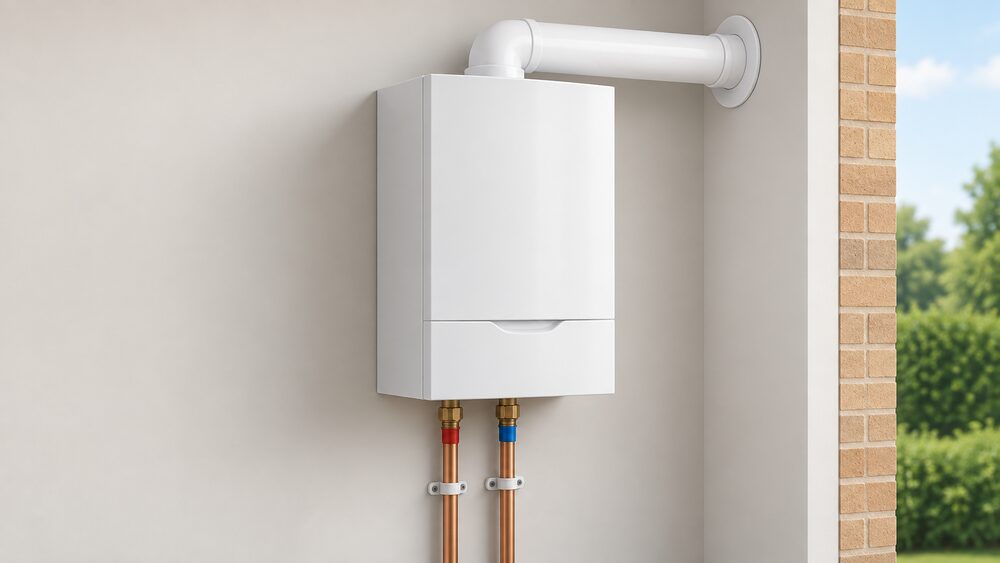
Ferroli is an Italian heating manufacturer whose UK domestic boilers are condensing models, sold in wall-hung and floor-standing forms for home heating and domestic hot water production1. The company's UK arm, Ferroli Limited, is registered in England under company number 03335187, with its registered office at The Granary, Borough Hill Farm, Catton Road, Walton on Trent, Derbyshire, DE12 8LL3.
The range is straightforward rather than sprawling. Wall-hung boilers are described as compact and efficient condensing units suitable for homes from apartments to detached houses, while floor-standing condensing boilers are aimed at larger properties and systems with high heat demand, and are said to deliver greater output than wall-hung models4. Ferroli positions its condensing boilers as adaptable, stating that they "adapt to the requirements of any heating system" and are compatible with a wide range of system configurations2.
Ferroli does not appear among the brands an independent UK guide expects a householder to encounter most often, which lists Worcester Bosch, Vaillant, Alpha, Viessmann and Ideal6. That places Ferroli in the budget and second-tier part of the UK market rather than the volume mainstream, and it shapes what a household can expect on installer familiarity, parts and resale.
The UK range: wall-hung and floor-standing condensing boilers
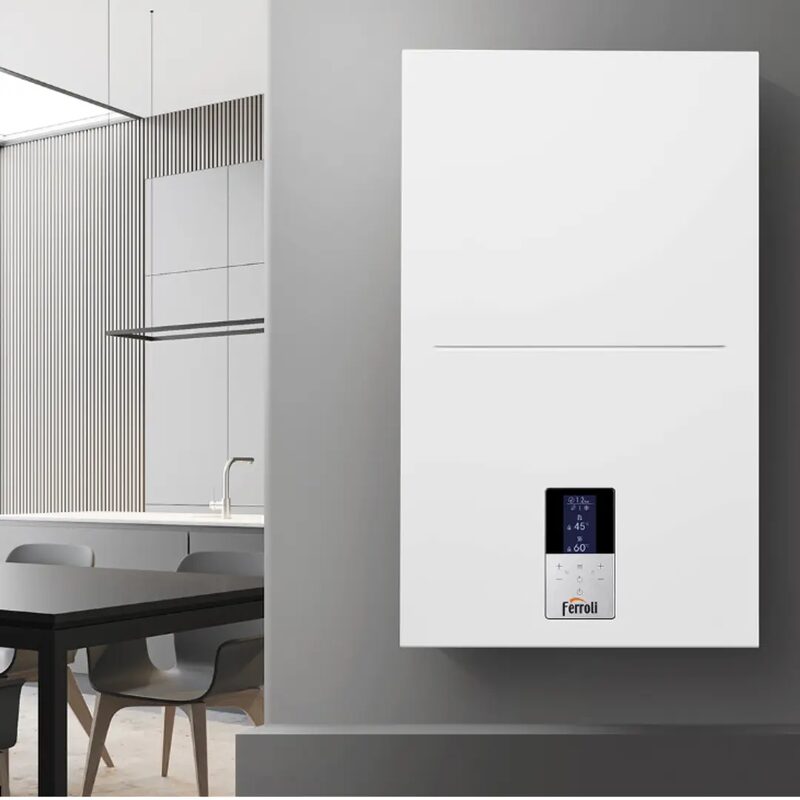
Ferroli's domestic boiler range divides into two physical formats. Wall-hung boilers are the compact option, described by the maker as providing a practical and efficient solution for domestic heating and domestic hot water production, and as suitable for a wide range of homes from apartments to detached houses4. Floor-standing condensing boilers sit at the other end: Ferroli describes them as offering high energy efficiency and optimised consumption, and as ideal for large homes and heating systems with high heat demand5.
The distinction matters more than the badge. A floor-standing condensing boiler is described as delivering greater output than wall-hung models, which is why the maker points it at larger properties and at applications with high domestic hot water demand5. A wall-hung unit suits a home where space is tight and demand is moderate. Both formats are condensing, so both recover heat from flue gases when the system is set up to allow it, and both are described as integrating easily with existing heating systems4.
Ferroli also states that its floor-standing condensing boilers comply with the latest environmental regulations while helping to reduce emissions5. That is the maker's own compliance statement rather than an independently published efficiency figure, and no model-level efficiency percentage appears in the material available here. For how condensing operation actually works in a fitted system, and what determines whether a boiler condenses in practice, condensing boilers sets out the mechanism.
Technology: condensing operation with automatic output modulation
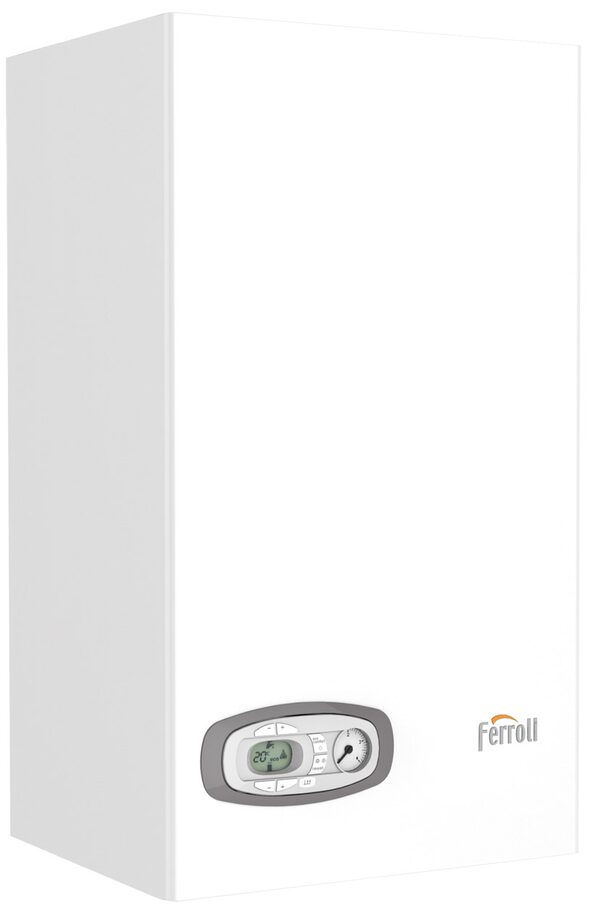
The technology claim Ferroli makes most consistently is automatic output modulation. The maker states that, thanks to advanced technologies and automatic output modulation, its condensing boilers adapt to the requirements of any heating system2. In plain terms, the boiler varies its firing rate to match demand rather than running flat out and cycling.
Building regulations guidance defines the term precisely. A modulating boiler is one with the capability to vary the fuel burning rate while maintaining continuous burner firing, to achieve a heat output no greater than 30% of nominal heat output10. That 30% floor is the benchmark: a boiler that can turn down to roughly a third of its rated output can hold a steady low flame through mild weather instead of switching on and off.
Ferroli applies the same idea across other products. Its fan coil units use modulating fan control, which the maker says helps optimise energy consumption11. Its temperature control devices are described as enabling modulating control that improves seasonal energy efficiency and helps achieve higher ErP performance classes12. Controls and modulation work together: the boiler can only turn down if the control system tells it to.
Ferroli's biomass boilers take a different route, incorporating advanced combustion technologies, with intelligent electronic controls on many versions, automatic burner cleaning and automatic fuel feeding on many versions13. Those are features of a fuel-fed appliance rather than a gas boiler, and they address the labour that biomass heating otherwise demands.
Applications: home heating and domestic hot water
Ferroli's boilers are described as offering an efficient and reliable solution for home heating and domestic hot water production, and the same wording appears on both the UK and international product pages1. Wall-hung models are described as providing a practical and efficient solution for domestic heating and domestic hot water production4. Floor-standing condensing models are pointed at larger properties and at applications with high domestic hot water demand5.
That is the standard domestic brief: a boiler that heats radiators or underfloor circuits and supplies hot water. Ferroli's wider catalogue extends the same functions into other products. Its heat pumps are described as serving heating, cooling and domestic hot water production in both residential and professional applications14, and its split heat pumps as compatible with underfloor heating, fan coils and low-temperature radiators, making them suitable for renovation projects and new constructions15. Its solar thermal systems are described as providing an efficient solution for domestic hot water production by harnessing renewable solar energy16.
For hot water specifically, Ferroli sells electric, gas and heat pump water heaters for a constant supply of domestic hot water17. Gas water heaters are described as providing continuous hot water and comfort at any time of the day, and as suitable for apartments, detached homes and properties with frequent hot water use19. Heat pump water heaters are described as ideal for single-family homes and residential applications17.
The practical point for a household is that Ferroli's domestic boiler is a conventional gas appliance serving space heating and hot water. It does not change the fuel, the grid connection or the supplier relationship. What it changes is the equipment on the wall. For the wider picture of how a boiler fits into a home's energy position, home heating and energy independence sets out where dependence remains.
System compatibility and high-output models
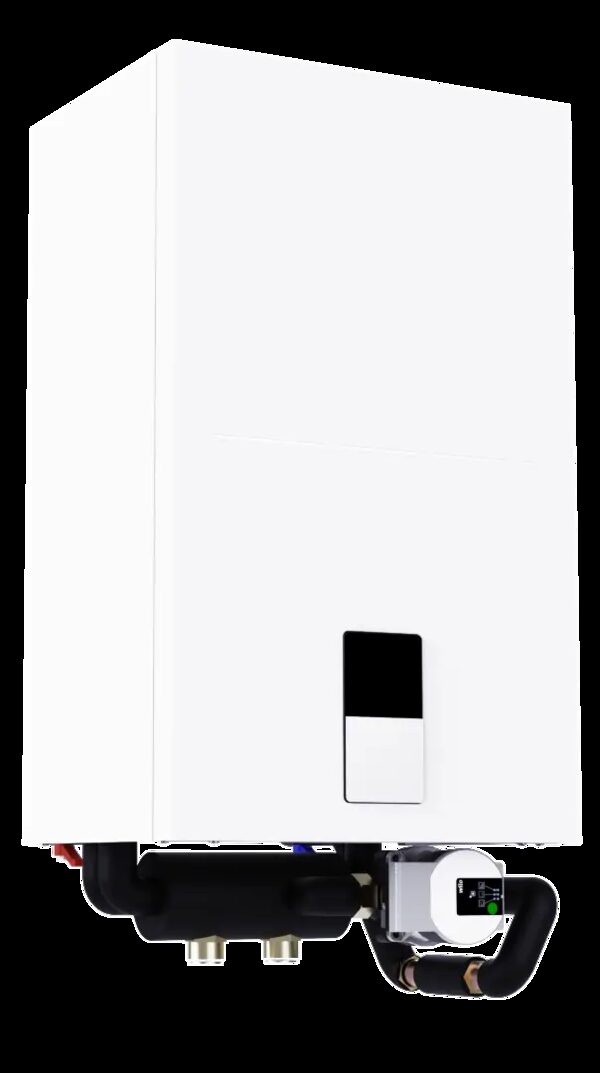
Ferroli states that its condensing boilers adapt to the requirements of any heating system, are easy to install and are compatible with a wide range of system configurations2. Wall-hung models are said to integrate easily with existing systems4, and floor-standing condensing models to integrate easily with existing heating systems9. Those are maker claims about its own products, and they describe a range designed to slot into existing pipework rather than to require a system rebuild.
The same compatibility language runs through Ferroli's components. Its plate exchangers are described as adapting easily to different system configurations, with high heat transfer efficiency, and as serving applications from heating and domestic hot water systems to industrial processes21. Its radiators are described as suitable for low-temperature installations, including those paired with heat pumps, as well as for home heating22. Its fan coils are designed for easy integration with hydronic systems such as heat pumps and boilers, and are said to allow seamless integration into both new-build and renovation projects11.
Above the domestic range, Ferroli states that the range also includes high-output boilers, ideal for applications requiring greater performance, from residential buildings and multi-family properties to commercial environments1. Its fan coils are offered for both residential and commercial applications11, and its temperature control systems for managing indoor comfort in both residential and professional applications12.
| Product group | Stated application | Source |
|---|---|---|
| Wall-hung condensing boilers | Domestic heating and hot water, apartments to detached houses | 4 |
| Floor-standing condensing boilers | Larger properties, high heat demand, high hot water demand | 5 |
| High-output boilers | Residential, multi-family and commercial settings | 1 |
| Fan coils | Residential and commercial, new-build and renovation | 11 |
| Plate exchangers | Heating, domestic hot water and industrial processes | 21 |
For a household, the compatibility claim is the useful part and the limit is the same as with any boiler: the appliance has to be sized to the property and the flue route has to work. Boiler sizing covers how output is matched to a home, and boiler flues covers the siting rules.
Hydro stoves: pellet heating with fan coils
Ferroli's hydro stoves are a different product category from its gas boilers. They are designed primarily for pellet operation, and the maker lists high thermal efficiency, low emissions, high energy performance and long operating autonomy among their characteristics23. They can be paired with fan coils, and Ferroli describes easy integration with existing heating systems and the ability to produce domestic hot water23. Selected models also feature digital controls, and the range includes models with different outputs23.
The pairing with fan coils is the notable part. Fan coils are described as operating efficiently with low-temperature systems, and models are available with both AC and DC inverter fan motors11. A pellet stove feeding a hydronic circuit through fan coils is a different proposition from a gas boiler on a radiator system: it burns a delivered fuel rather than drawing gas from the grid, which changes both the household's supply chain and its storage requirements.
Ferroli's wider biomass range follows the same logic. Its biomass boilers are described as suitable for both domestic installations and smaller commercial applications, incorporating advanced combustion technologies to optimise energy efficiency and reduce pollutant emissions, with models in different capacities and configurations13. Its biomass stoves are described as providing a versatile and efficient solution for residential heating, with reduced emissions, reduced consumption and lower heating costs compared to traditional fuels, in models from compact solutions for smaller spaces to high-performance versions for larger rooms24.
"Designed primarily for pellet operation"
Biomass sits in a different regulatory and cost landscape from gas. The Boiler Upgrade Scheme statistics for July 2026 record a lower quartile reported biomass boiler installation cost of £11,679 in England and Wales, in 2026 Q28. That figure is for the scheme's supported installations and is not a Ferroli price. Biomass boilers and wood stoves covers the technology and its conditions.
Cost and market position: a budget option
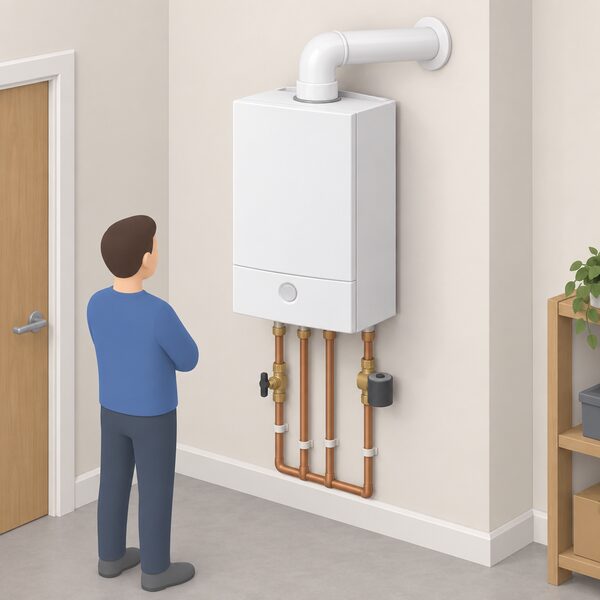
Ferroli does not appear in the list of brands an independent UK guide expects a householder to meet most often, which names Worcester Bosch, Vaillant, Alpha, Viessmann and Ideal6. That absence is the clearest available signal of market position: Ferroli sits outside the volume mainstream in the UK, which typically means fewer installers carry the brand, parts availability is narrower, and resale and familiarity are lower than for the leading names.
No Ferroli list price appears in the material available here, and prices for a supplied and fitted boiler are installer-quoted after a survey. For context on what drives a quote, the type of boiler is the first variable: a heat-only boiler is described as the cheapest type of boiler to buy6. Fuel choice moves running costs more than brand does. Biomass is described as typically cheaper to run than gas and oil, at around £400 to £600 a year6, while electric heating sits at the other end: storage boilers around £2,689 per year on Economy 7 for an average home, and an electric boiler at £2,690 per year on Economy 7 for an average flat or small home25.
The wider European picture is that more than 50% of installed boilers are ranked in C or lower energy classes on the Energy Label, described as very inefficient26. That is a statement about the installed base rather than about any one maker, and it is the reason replacement efficiency matters more than the badge on the old unit.
For how a Ferroli quote compares with the wider market, new boiler cost sets out the components of a fitted price, and boiler warranties covers what a guarantee typically does and does not cover.
What Ferroli means for a household's energy independence
A Ferroli gas boiler does what any gas boiler does for a home's energy position: it keeps the property on the gas grid and on a gas supplier, with an electrical dependence for ignition, controls and pumping. The maker's claims about low emissions and compliance with environmental standards describe the appliance, not the fuel2. Nothing in the range changes where the energy comes from.
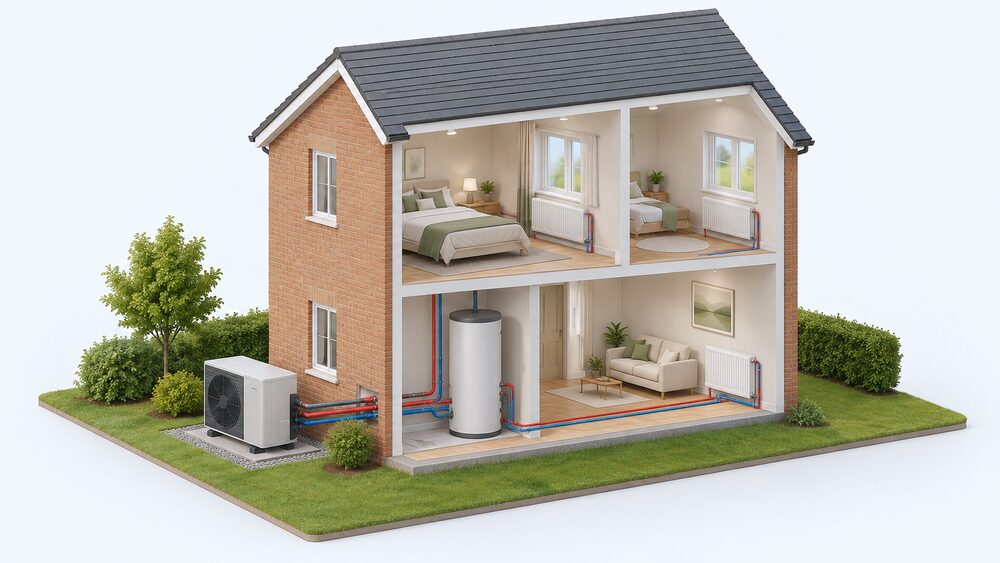
Where Ferroli offers something different is at the edges of its catalogue. Its heat pumps, split heat pumps, solar thermal systems and biomass products move a household onto electricity, solar or a delivered solid fuel, each with its own dependence: electricity still comes from a supplier and the grid, solar thermal needs a cylinder and a backup, and biomass needs fuel deliveries and storage. Ferroli describes its compact hybrid systems as fully compatible with existing heating systems, with the boiler able to provide instantaneous domestic hot water even while the heat pump is operating in heating or cooling mode27. That is a hybrid arrangement rather than independence.
The dependence that remains with any boiler is the same: the gas network, a supplier, a flue, an installer and a service chain. Ferroli's smaller UK footprint makes the service chain the part worth checking locally. For alternatives that change the fuel rather than the appliance, heat pumps compared with boilers and heating a home off the gas grid set out the options and their conditions.
Sources27 cited
- Ferroli boilers, UK product page, Ferroli, 2026-09-17
- Ferroli boilers, international product page, Ferroli, 2026-09-17
- Book an engineer, Ferroli, 2026-09-17
- Ferroli wall-hung boilers, Ferroli, 2026-09-17
- Ferroli floor-standing boilers, international, Ferroli, 2026-09-17
- New boiler cost guide, Uswitch, 2024-11-06
- Boiler market report, January 2019, Solar Heat Europe, 2019-01
- Boiler Upgrade Scheme statistics, July 2026, Department for Energy Security and Net Zero, 2026
- Ferroli floor-standing boilers, UK, Ferroli, 2026-09-17
- Condensing boiler guide, Netatmo, 2026-09-20
- Ferroli terminal units and fan coils, Ferroli, 2026-09-17
- Ferroli connectivity and thermoregulation, Ferroli, 2026-09-17
- Ferroli biomass boilers, Ferroli, 2026-09-17
- Ferroli heat pumps, Ferroli, 2026-09-17
- Ferroli split heat pumps, Ferroli, 2026-09-17
- Ferroli solar thermal, Ferroli, 2026-09-17
- Ferroli water heaters, Ferroli, 2026-09-17
- Ferroli water heaters, UK, Ferroli, 2026-09-17
- Ferroli gas water heaters, Ferroli, 2026-09-17
- Ferroli gas water heaters, UK, Ferroli, 2026-09-17
- Ferroli system components and plate exchangers, Ferroli, 2026-09-17
- Ferroli terminal units and radiators, Ferroli, 2026-09-17
- Ferroli biomass hydro stoves, Ferroli, 2026-09-17
- Ferroli biomass stoves, Ferroli, 2026-09-17
- Electric heating advice, Centre for Sustainable Energy, 2026-06
- Phasing out fossil fuel boilers, Solar Heat Europe, 2025-02-11
- Ferroli compact hybrid systems, Ferroli, 2026-09-17
 Ferroli heat pumps and cylindersFerroli heat pumps run on electricity instead of gas, so what do they cost to run and are they reliable?