

In this guide
Ferroli sells reversible air-to-water heat pumps in both monobloc and split form, alongside heat pump water heaters and cylinders, for heating, cooling and domestic hot water1. The units are air-source, drawing thermal energy from outdoor air even at low temperatures, and the maker lists them as suitable for new-build and renovation work2. The range is positioned as a budget option, and the independent evidence on the brand is mixed: Ferroli comes bottom of an independent boiler brand table, and engineers surveyed for the same research said build quality is poor and parts are often tricky to find3.
That tension is the thing a household needs to hold in view. The product literature describes high performance, low emissions and compliance with environmental standards4. The servicing picture is less comfortable. For a household weighing energy independence, a Ferroli heat pump shifts space heating and hot water off gas and onto electricity, which removes the gas supplier from the equation but leaves the grid, and it leaves a long-term dependence on a manufacturer whose spares and engineer reputation is the weakest part of the case.
Ferroli at a glance: a budget brand with a weak independent record
Ferroli's own product pages make the usual claims: high performance, reduced energy consumption, lower running costs and low emissions, with heat pumps using renewable energy sources such as air1. The company describes its heat pumps as delivering year-round comfort while fully complying with the latest environmental standards, and says the same of its water heaters and heat pump water heaters4.
Independent assessment is harsher. In a boiler brand comparison, Ferroli comes bottom of the table, and the engineers surveyed for that work "really didn't rate them, saying the build quality is poor and that it's often tricky to find parts and to do repairs"3. That finding is about Ferroli boilers rather than its heat pumps, and it is a survey of engineer opinion rather than a measured failure rate, but it is the strongest independent signal available on the brand in the UK.
For context on what heat pump owners generally report, a Nesta survey of heat pump users found a median recommendation score of 8 out of 10, against 9 out of 10 for gas boiler users, with 85% satisfied with reliability, 89% with hot water heating and 92% with safety9. A separate Nesta release found over 80% of owners who had previously used electric heating, oil or LPG were as satisfied or more satisfied with their heat pumps10. Those figures describe heat pumps as a category, not Ferroli specifically.
The practical reading is that the technology is sound and the brand is the variable. A household choosing Ferroli is choosing a lower-cost appliance from a maker whose independent servicing reputation is the weakest part of the offer.
What Ferroli heat pumps are: air-to-water units for heating, cooling and hot water
Ferroli's heat pumps are air-to-water machines. They extract thermal energy from outdoor air, even at low temperatures, and deliver it to a wet heating system and a hot water cylinder2. The maker describes them as an energy-efficient solution for heating, cooling and domestic hot water production, available in both monobloc and split configurations to adapt to a wide range of system requirements4.
The monobloc range is described as reversible air-to-water, combining heating, cooling and domestic hot water production in a single compact system5. Models using R290 refrigerant are noted as allowing high flow temperatures, which matters where a household wants to keep existing radiators rather than move to underfloor heating5. The same range is listed as suitable for both new-build projects and energy renovation applications11.
The split range uses the same air-to-water principle, with an outdoor unit connected to an indoor unit, and Ferroli lists it for heating, cooling and domestic hot water production in residential buildings2. Both configurations are reversible, so cooling is a genuine function rather than an afterthought5.
Independent guidance supports the general principle while adding a caveat. Reversible units can provide both heating and cooling, but not all units do this, so the specific model matters12. Where a heat pump is operated in reverse it removes heat in the same way as an air conditioner13, and in hot weather some models can be used this way to cool a home14. For a household, that means a Ferroli heat pump can in principle cover summer cooling as well as winter heating, subject to the model and the emitter system.
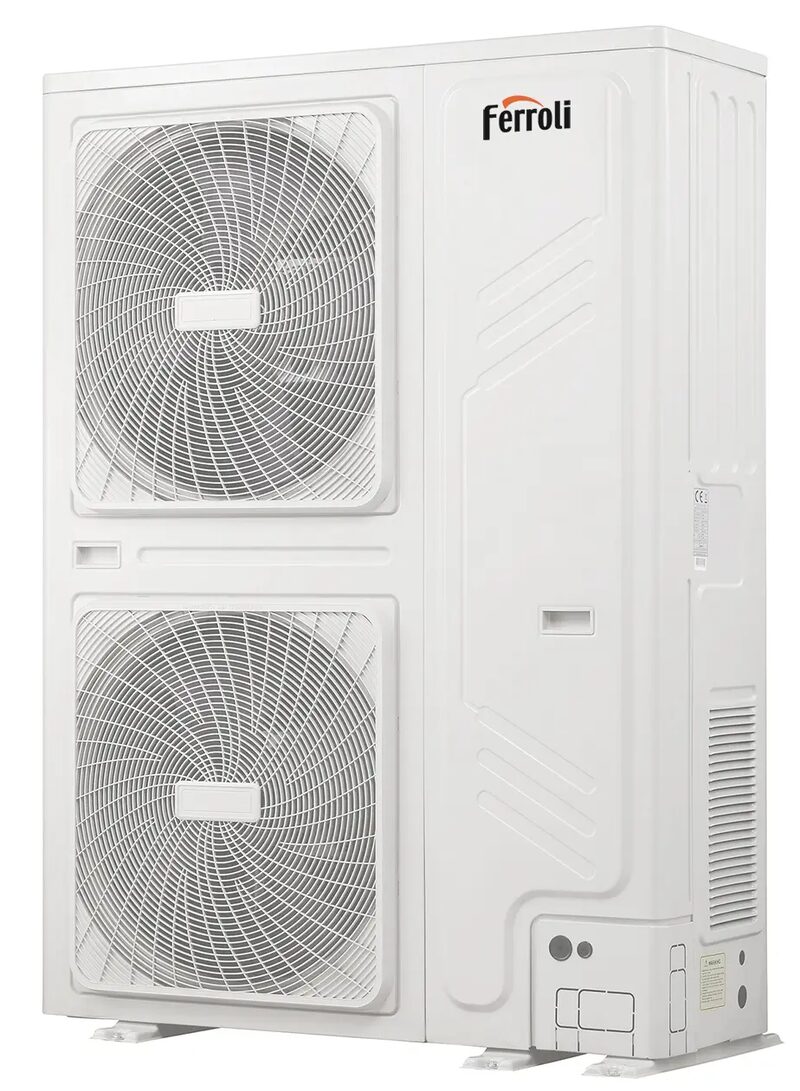
Monobloc or split: which configuration fits which home

The two configurations differ in where the working parts sit and what that means for installation. In a monobloc, all key components are integrated within a single outdoor unit, which Ferroli says simplifies installation and reduces commissioning time, and eliminates the need for refrigerant pipe connections between indoor and outdoor units5. That last point is the significant one for a UK household: no refrigerant work inside the property means no F-gas handling on site beyond the factory charge.
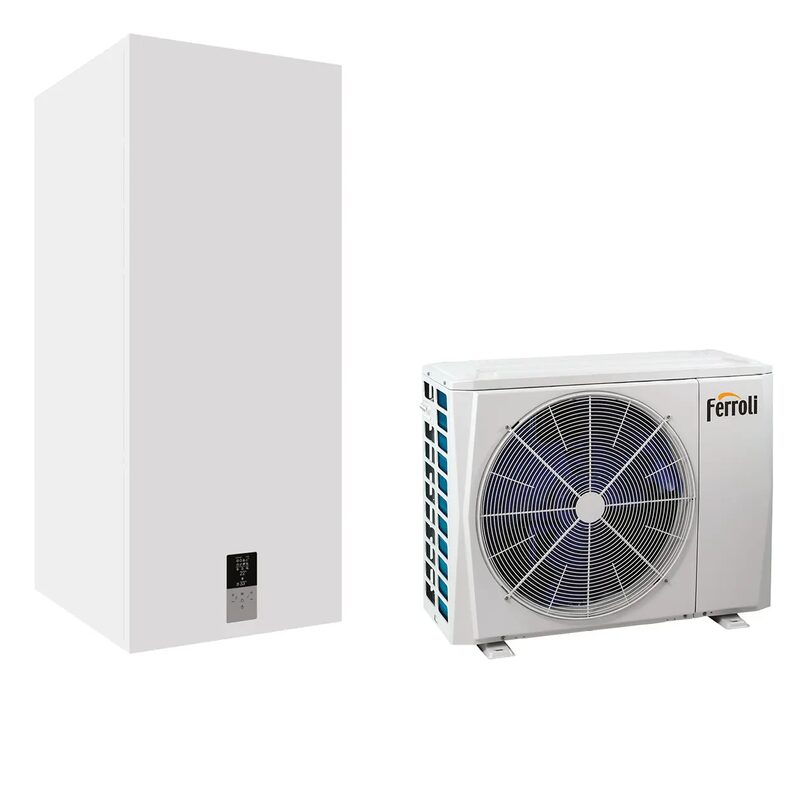
A split system pairs an outdoor unit with an indoor unit. Ferroli describes the split configuration as offering greater installation flexibility while reducing the space required inside the property2. That suits homes where the outdoor position is constrained or where an indoor unit can be sited in a utility room or cupboard.
| Feature | Monobloc | Split |
|---|---|---|
| Component location | All key components in one outdoor unit5 | Outdoor unit plus indoor unit2 |
| Refrigerant pipework indoors | Not required5 | Required between units2 |
| Installation | Simplified, reduced commissioning time5 | Greater installation flexibility2 |
| Indoor space | Not stated | Reduced space required inside2 |
| Reversible | Yes5 | Yes2 |
Monobloc is the dominant form in UK new-build heat pump work: in an official consultation, all heat pump installations in new homes from 2025 are monoblocs15. Older official guidance on hybrid heat pumps lists both monobloc and split models across several makers, so both configurations are established in the UK market16. For a household, the choice usually follows the property: monobloc where there is a sensible external position and a straightforward route for insulated pipework, split where internal space or external siting pushes the other way. More on the distinction is at monobloc and split heat pumps.
Compatibility with underfloor heating, fan coils and low-temperature emitters
Ferroli states that its monobloc heat pumps integrate seamlessly with underfloor heating systems, fan coils and low-temperature emitters5. The split range is listed as compatible with underfloor heating, fan coils and low-temperature radiators, and as suitable for renovation projects and new constructions2. The Romanian-language monobloc page gives the same list in different words: underfloor radiant heating systems, fan convectors and other low-temperature systems17.
The wider Ferroli ecosystem is built around the same assumption. The company's fan coils are described as designed for easy integration with hydronic systems such as heat pumps and boilers, with an ability to operate efficiently with low-temperature systems18. Its thermostats are listed as ideal for use with boilers, heat pumps and hybrid systems19. Its plate exchangers cover heating and domestic hot water systems20.
What this means in practice is that a Ferroli heat pump is designed to run at the flow temperatures that underfloor heating and fan coils naturally use, and at the lower end of what radiators can deliver. Independent guidance is clear that domestic hot water cylinders used with heat pumps must have heat exchangers suitable for the temperatures and outputs derived from the selected heat pump15. That is a cylinder specification point rather than a Ferroli one, but it applies to any Ferroli installation producing hot water.
The emitter question is where heat pump projects most often need work. Independent guidance notes that historically UK installations have suffered from poor quality work where installers do not size systems correctly, upgrade radiators, replace narrow bore pipework or properly insulate pipework, though these issues are much less common as standards have tightened16. A Ferroli heat pump will only perform as well as the emitters and pipework around it. More detail is at radiators and emitters for heat pumps.
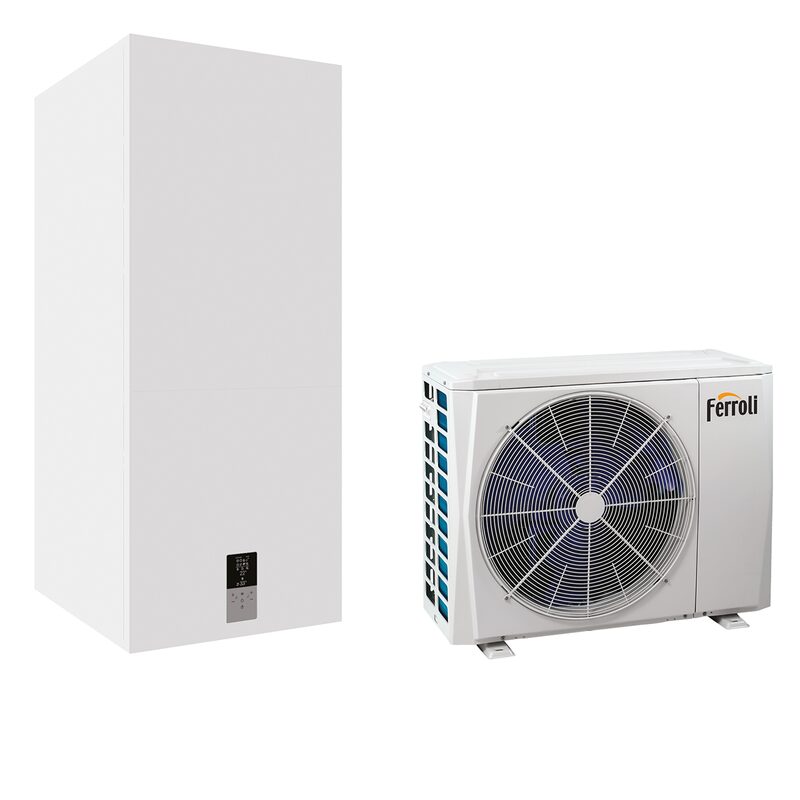
Heat pump water heaters and cylinders for domestic hot water
Ferroli's hot water range spans three technologies: heat pump, electric and gas water heaters7. The heat pump water heaters are described as an innovative and highly efficient solution for domestic hot water production, ideal for single-family homes and residential applications, with advanced technology that automatically adapts operation to demand8. The company says the range complies with the latest environmental standards8.
The wider water heater range is described as combining high efficiency with low emissions and compliance with the latest environmental standards, available in a range of technologies7. Ferroli's gas water heaters are listed as available in a variety of configurations that adapt to different household requirements, providing continuous hot water at any time of day, with low emissions21. The company's boilers are described as offering an efficient and reliable solution for home heating and domestic hot water production22.
Ferroli also makes hydro stoves, which can produce domestic hot water and offer high thermal efficiency, fan coil compatibility, installation flexibility and smart management functions on selected models23. Plate exchangers cover heating and domestic hot water systems as well as industrial processes, with high heat transfer efficiency and low pressure losses20.
For a household, the important distinction is between a heat pump that also does hot water and a standalone heat pump cylinder. A Ferroli air-to-water heat pump can produce domestic hot water as part of the same system5. A dedicated heat pump water heater does hot water only8. Independent guidance on cylinders applies either way: the cylinder must have a heat exchanger suited to the temperatures and outputs of the chosen heat pump15. More is at hot water cylinders for heat pumps and hot water heat pumps.
Smart controls, installation flexibility and running costs
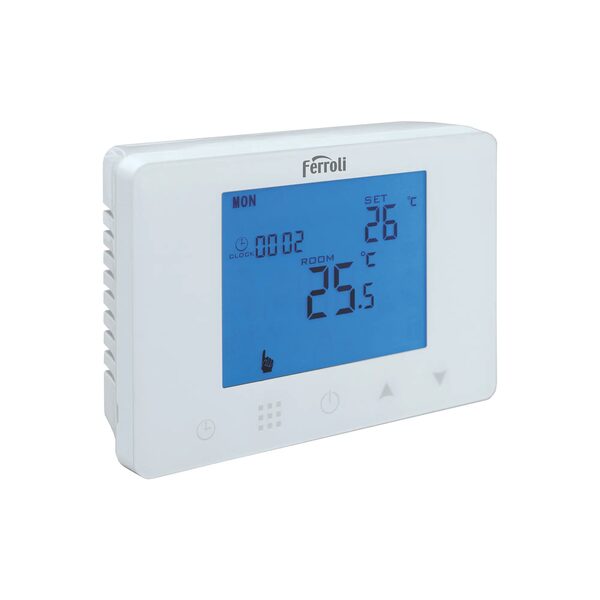
Ferroli's control offer runs across thermostats, connectivity products and hybrid system logic. Its smart control solutions are described as ideal for heat pump systems and multi-zone installations, with remote management via Wi-Fi and dedicated apps, and are intended for managing indoor comfort in both residential and professional applications24. Its thermostats integrate with smart systems and Wi-Fi connectivity, and the most advanced solutions offer simple and precise regulation19.
The split range is listed with advanced smart control systems that enhance comfort and system efficiency2. The monobloc range is described as having advanced smart controls and connectivity that further optimise energy consumption while enhancing indoor comfort11. Ferroli's compact hybrid systems use intelligent control logic that automatically optimises the use of both energy sources, electricity and gas, selecting the most cost-effective operating mode according to weather conditions and energy prices25.
That hybrid logic is the clearest statement of what the controls are for: deciding, hour by hour, whether to run the heat pump or a gas boiler. It is also the clearest statement of the dependence involved. Remote management runs through Wi-Fi and dedicated apps24, so scheduling from away and remote diagnostics depend on a home broadband connection and the manufacturer's servers. Local control at the thermostat continues without them.
On running costs, Ferroli claims its heat pumps reduce energy consumption and help lower running costs1. No independent running cost figure for Ferroli specifically is available here. Wider running cost context is at heat pump running costs.
Warranty: 10 years, and what the brand's boiler record means for heat pump owners
Ferroli's warranty position is stated in independent news coverage as a minimum of 10 years and a maximum of 10 years26. That is a flat term rather than a ladder, and it sits at the top of the range for the sector: independent guidance notes that gas boiler manufacturers can offer warranties lasting up to 10 years or more27, and other coverage notes that some manufacturers offer 10-year or even 12-year warranties26.
The comparison that matters for a household is between a long warranty and a serviceable appliance. In independent research on why heat pumps feel like a gamble, one participant contrasted a 10-year warranty on an oil boiler with what they expected from a heat pump system, saying they would probably have got a 2-year warranty28. A 10-year Ferroli term is therefore a meaningful commitment on paper.
Servicing is a condition of keeping cover in good order. Ferroli's own support guidance states that a boiler must be serviced every 12 months after installation6. The same annual discipline applies to heat pumps generally, and servicing records are what a warranty claim rests on. More is at heat pump servicing and warranty.
Ferroli Limited's registered office is The Granary, Borough Hill Farm, Catton Road, Walton on Trent, Derbyshire, DE12 8LL, with the place of registration given as Walton-upon-Trent, Derbyshire6. That is the UK administrative base. The material available here does not give a founding date for the company, so none is stated.
Sources28 cited
- Heat pumps product range, Ferroli, 2026-09-17
- Split heat pumps, Ferroli, 2026-09-17
- Best gas and oil boiler brands, Which?, 2025-05
- Heat pumps UK, Ferroli, 2026-09-17
- Monobloc heat pumps, Ferroli, 2026-09-17
- Book an engineer, Ferroli, 2026-09-17
- Water heaters, Ferroli, 2026-09-17
- DHW heat pumps, Ferroli, 2026-09-17
- Heat pumps: a user survey, Nesta, 2023-05-23
- Heat pumps get thumbs up from British owners, Nesta, 2023-05-30
- Monobloc heat pumps UK, Ferroli, 2026-09-17
- How a heat pump can cool your home, Which?, 2026-07-17
- Heat pumps campaign, CIBSE, 2026-09-17
- What heating options are available off the grid, OFTEC, 2026-09-20
- Domestic Heat Pump Guide, MCS Certified, 2024-04-02
- Heat pump questions answered, Energy Saving Trust, 2026-05-27
- Pompe de caldura monobloc, Ferroli, 2026-09-17
- Terminal units and fan coils, Ferroli, 2026-09-17
- Thermostats, Ferroli, 2026-09-17
- System components and plate exchangers, Ferroli, 2026-09-17
- Gas water heaters UK, Ferroli, 2026-09-17
- Boilers UK, Ferroli, 2026-09-17
- Biomass and hydro stoves, Ferroli, 2026-09-17
- Connectivity and thermoregulation, Ferroli, 2026-09-17
- Compact hybrid systems, Ferroli, 2026-09-17
- British Gas engineer strikes: what can you do if your boiler breaks down, Which?, 2020-02-11
- Will your boiler break this winter, Which?, 2025-09-17
- Beyond affordability: why heat pumps feel like a gamble, Which?, 2026-07-02
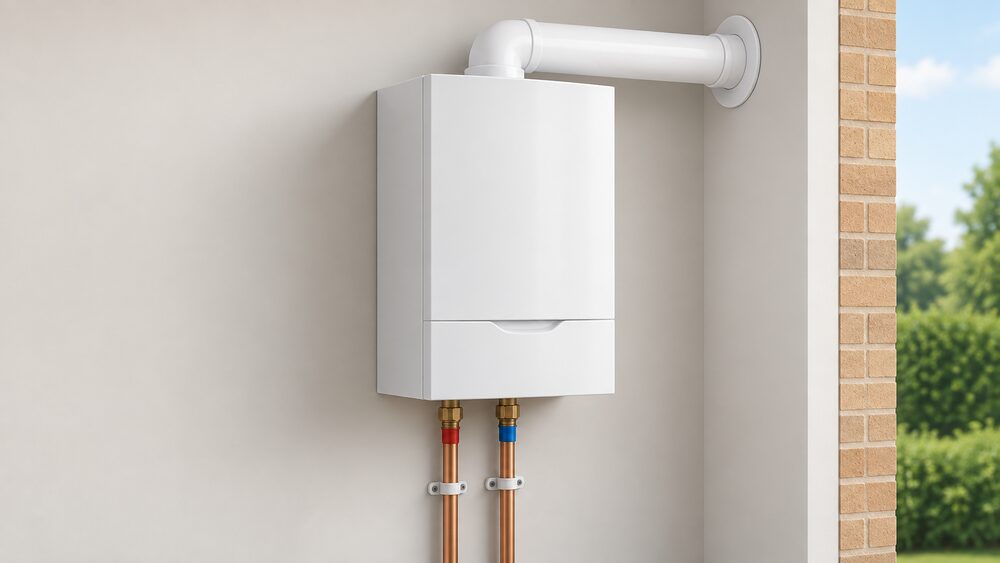 Ferroli boilersFerroli is an Italian heating maker whose UK boilers are condensing wall-hung and floor-standing models, sold as a budget option and supported from a Derbyshire base.