In this guide
Vokèra is a gas boiler brand sold in the UK as part of the global Riello Group, offering what it describes as a full range of gas boilers providing high levels of efficiency and comfort1. The range spans combi, system, open vent (regular) and commercial boilers, so most UK homes have a Vokèra type that fits the existing system3. The best known domestic models are the Compact A entry level combi, the Easi-Heat i in combi and system forms, the Vision system and combi, the Pinnacle S, the Synergy and the Fuelsaver flue gas heat recovery device4.
Warranty terms sit at 5 years parts and labour on the Compact A, Easi-Heat i, Vision and Fuelsaver, and 7 years on the Synergy4. An annual service must be undertaken to validate any manufacturer warranty1. Vokèra does not publish a list price for a supplied and fitted boiler, so costs are installer-quoted; independent figures for gas boilers generally put a small property at £2,500 upfront and system boiler prices including installation at £1,580 to £5,00011.
The brand's main technical selling point is that most Vokèra models come with weather compensation technology built in, which the maker states increases system efficiency by 2%13. Independent guidance puts the gain from a weather compensator on a gas boiler higher, at 10 to 15%15. The two figures measure different things, so the size of the benefit is unresolved.
Vokèra at a glance: a budget brand with a full gas range
Vokèra positions itself on breadth rather than on a single flagship appliance. The company states that it offers a full range of gas boilers providing high levels of efficiency and comfort, and its trade pages describe a comprehensive range covering combi boilers, system boilers, open vent (regular) boilers and commercial boilers1. That spread matters for a household because it means a Vokèra can usually be specified without changing the system type: a home with a hot water cylinder does not have to convert to a combi to stay with the brand, and a home with a combi does not have to add a cylinder.
The brand sits within the global Riello Group, and Vokèra's own catalogue describes it as recognised for the quality and reliability of its products2. That document dates from 2011 and records more than 1.5 million boilers installed around the UK and Ireland, which gives a sense of the installed base but is not a current figure2. No newer installed-base number appears in the material available.
For a household, the practical consequence of a broad range is that the choice is driven by the property rather than by the brand. The type of boiler a home needs depends on whether it has a cylinder, how many bathrooms it serves and how much space there is for a flue and a cupboard. Vokèra covers all three main domestic types, so the decision sits with the system design rather than with availability. The wider explanation of how the three types differ is at combi boilers, system boilers and regular boilers.
The range: Compact A, Easi-Heat i, Vision, Pinnacle S and Synergy
The Compact A is described by Vokèra as its entry level condensing combi boiler, simple and easy to operate, providing instantaneous heating and hot water4. It is the model most likely to appear in a quote for a small flat or a two-bedroom house where a combi already fits.
The Easi-Heat i comes in two forms. The combi version is available in both natural gas and LPG models, with an LPG version as a standard code on the combi only, and it has a test point for the expansion vessel outside the boiler casing for easier servicing and maintenance5. The system version is described as a compact and efficient heating solution with front access for servicing6.
The Vision is a high efficiency system boiler for central heating only, able to provide domestic hot water when installed with a water cylinder, and it is also available as a combi boiler9. It can be converted to LPG with an LPG kit9. The Pinnacle S is offered as natural gas or LPG out of the box, with a system boiler also available8. The Synergy is listed with quick and stable hot water and high efficiency10.
| Model | Type | Fuel | Warranty |
|---|---|---|---|
| Compact A | Entry level condensing combi | Natural gas, LPG conversion kit3 | 5 years parts and labour4 |
| Easi-Heat i | Combi and system | Natural gas and LPG models5 | 5 years parts and labour5 |
| Vision | System, also as combi | Natural gas, LPG kit9 | 5 years parts and labour9 |
| Pinnacle S | Combi, system also available | Natural gas or LPG out of the box8 | Not stated |
| Synergy | Combi | Not stated | 7 years10 |
| Fuelsaver | Passive flue gas heat recovery device | Fits Unica i, Vision C, Compact A combis10 | 5 years parts and labour10 |
Combi, system and heat only: what each range covers
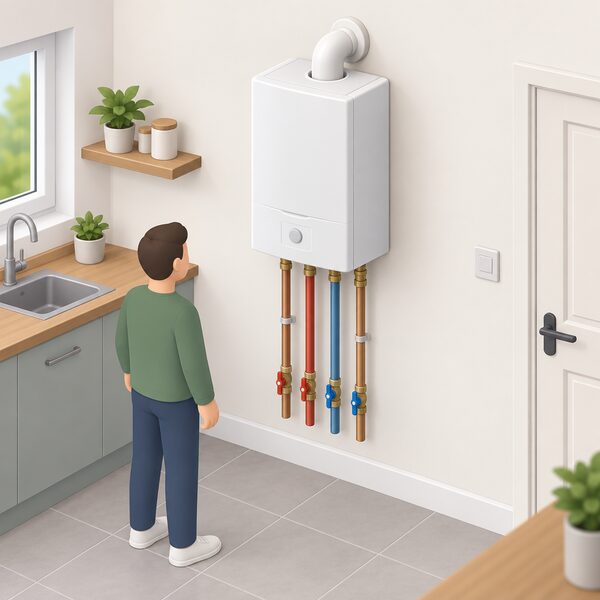
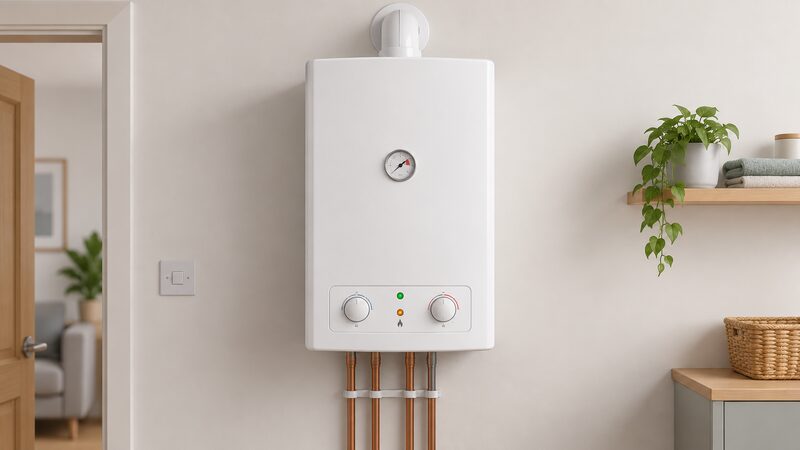
Vokèra's range maps onto the three standard domestic boiler types. A combi heats water on demand with no cylinder, which is what the Compact A does4. A system boiler heats the radiators and charges a separate cylinder, which is the Vision's role: central heating only, with domestic hot water provided when installed with a water cylinder9. An open vent or regular boiler works with a feed and expansion tank as well as a cylinder, and Vokèra lists open vent boilers within its range3.
The distinction between sealed and open vent systems is not the same as the distinction between boiler types. Independent guidance notes that the three types of gas boilers, combi, heat only and system, can all work on a sealed system16. So a household does not have to choose a combi purely to get a sealed system, and a system boiler does not require a tank in the loft.
For a home with more than one bathroom, or with high simultaneous hot water demand, the cylinder-based options remain relevant. For a home with one bathroom and limited space, a combi removes the cylinder and the loft tank. The trade-off is that a combi has no stored hot water, so simultaneous demand from two outlets reduces flow at each. The fuller comparison is at combi boilers and system boilers, and the sizing question is covered at boiler sizing.
Warranty: 5 years on most models, 7 on the Synergy
Vokèra's warranty terms are unusually consistent across the domestic range. The Compact A carries a 5 year parts and labour warranty4. The Easi-Heat i carries a 5 year parts and labour warranty in both its combi and system forms5. The Vision carries a 5 year parts and labour warranty9. The Fuelsaver carries a 5 year parts and labour warranty10. The Synergy is the outlier at 7 years10.
The condition attached to all of them is the same, and it is the one that catches households out. Vokèra states that an annual service must be undertaken to validate any manufacturer warranty you have1. That makes the service record, not the purchase date, the thing that keeps the cover alive.
Once a boiler is out of warranty, Vokèra offers fixed price repair plans and repair plus 1 year warranty plans1. The Repair & Care plan is described as a maintenance and support plan for a broken-down boiler, providing a one-off repair followed by ongoing maintenance and support for the boiler and controls, with a no fix no fee promise17. A separate fixed price repair service covers the call-out, labour and any required parts17. The general rules on registration and what voids cover are at boiler warranties.
Cost: what a Vokèra installation is likely to come to
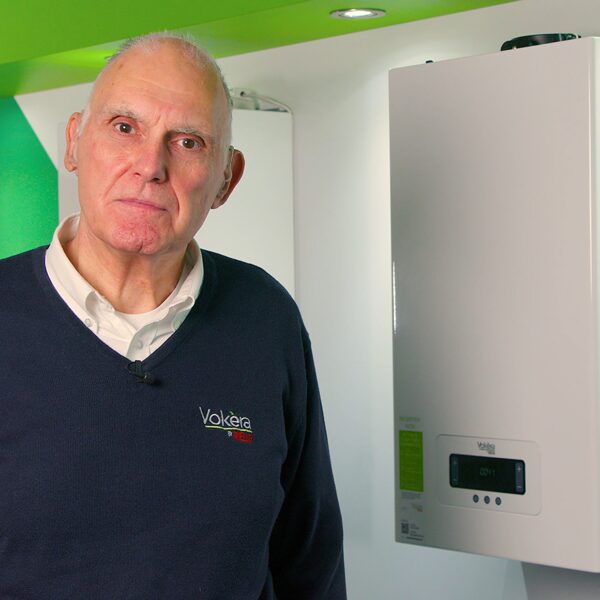
Vokèra publishes no list price for a supplied and fitted boiler, so any figure a household sees is installer-quoted after a survey. The independent figures that exist are for gas boilers generally rather than for Vokèra specifically. Nesta's guidance puts a gas boiler in a small property at £2,500 upfront11. A comparison of new boiler prices puts system boilers at £1,580 to £5,000 including installation12. Installation costs alone may be up to £2,000 on top of the appliance19.
For a regular boiler replacement, one energy supplier quotes prices starting from £2,886 depending on the complexity of the installation, including a hot water cylinder and cold water tank20. That is a supplier's own installed price for its own service, not a Vokèra figure, and it is included only to show the shape of the market.
Three things move a quote: the boiler output and model, whether the system type is changing, and flue or siting work. A like-for-like combi swap is the least disruptive. A conversion from a regular system to a combi involves removing the cylinder and tanks and is more work. The process and the rules on who may carry out the work are at boiler installation, and the wider cost picture is at new boiler cost.
Controls built in: OpenTherm and weather compensation as standard
Vokèra's control position is the strongest part of its offer. Most Vokèra models come with weather compensation technology built in, according to the maker14. The outside weather compensation sensor works by regulating boiler flow depending on the outside weather conditions, lowering the boiler operating temperature in line with external air temperature14. It can also be installed with the Vokèra OpenTherm programmable room thermostat or BeSMART for greater energy savings, and an RF wireless outside weather compensation sensor using a photovoltaic cell is also available14.
The Fuelsaver is compatible with a weather compensation sensor to further improve efficiency10. Vokèra's controls page repeats the 2% system efficiency increase figure13.
Weather compensation matters because it addresses the thing that actually determines whether a condensing boiler condenses. A weather compensator adjusts the boiler temperature in line with the outside temperature, so it uses less fuel when it is warmer outside21. Independent guidance describes load and weather compensation as adjusting the boiler flow temperature to maximise boiler efficiency, and notes that a smart thermostat is probably the easiest way to add compensation to an existing system22. The Energy Saving Trust states that doing this will give you the maximum possible savings from adjusting the temperature of your boiler23. The general principles are set out at heating controls and thermostats and boiler flow temperature.
Efficiency: a 2% maker figure against 10 to 15% independent
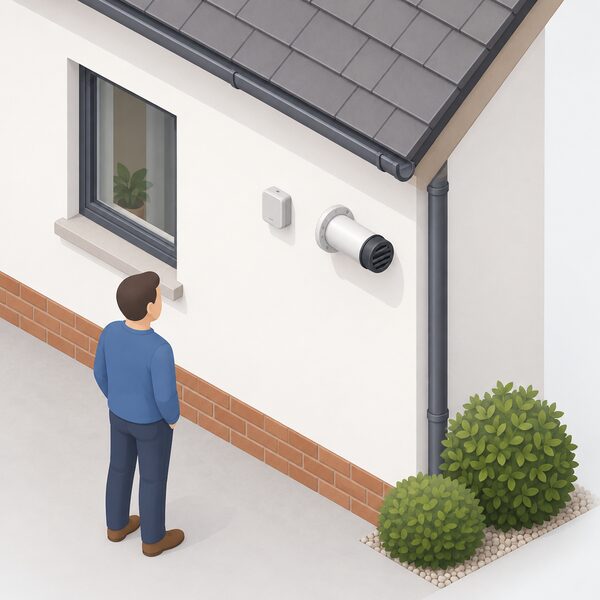
The efficiency gain from weather compensation is where the sources diverge most sharply. Vokèra states that the outside weather compensation sensor increases system efficiency by 2%13. Independent guidance from the Low Carbon Hub states that installing a weather compensator on a gas boiler can improve its energy efficiency by 10 to 15%15.
Part of the difference is what is being measured. A 2% figure may describe the change in system efficiency from the sensor alone on a boiler already running at reasonable flow temperatures. A 10 to 15% figure may describe the change from a poorly set constant flow temperature to proper compensation across a heating season. The starting point determines the size of the saving.
What is not in dispute is the mechanism. Lowering flow temperature in mild weather lets the boiler condense for more of the year, and condensing is where the efficiency comes from. The Energy Saving Trust's advice on turning a boiler's flow temperature down points the same way23. The wider context on ratings and test bases is at boiler efficiency and ErP ratings.
Servicing, repairs and support
Vokèra states that it has fully trained and qualified directly employed engineers and specially selected agents to undertake any maintenance and repair1. It also states that a Vokèra boiler or renewable product should be serviced annually to ensure it continues to work to its maximum efficiency, including routine safety checks1.
The contact route for service and repairs is 0344 391 0999 or by email17. For a boiler that has broken down, Repair & Care provides a one-off repair followed by ongoing maintenance and support for the boiler and controls, with a no fix no fee promise17. A fixed price repair service is available as a one-off, including the call-out, labour and any required parts17.
On documentation, an independent readability assessment scored Vokèra manuals at 54.93 out of 100 across 17 manuals, ranking the brand ninth24. That places the manuals mid-table: not the clearest in the field, not the worst. Servicing access is a separate question from manual clarity, and the Easi-Heat i is designed with front access for servicing and a test point for the expansion vessel outside the boiler casing5.
The Fuelsaver is worth noting here because it changes the servicing picture slightly. It is a passive flue gas heat recovery device that does not require any electrical supply and has zero parasitical energy consumption, and it needs no separate condensate because condensate fluid is collected and discharged via the boiler10. The general servicing regime is covered at boiler servicing and maintenance, and cover products at boiler cover and service plans.
LPG and off-grid use
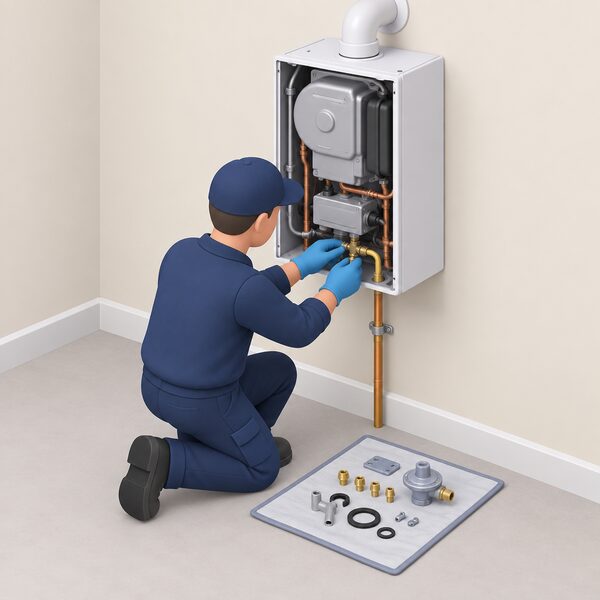
Vokèra boilers are available as natural gas with kits available to allow simple conversion to LPG3. That single statement covers the range broadly, and individual models confirm it. The Easi-Heat i is available in both natural gas and LPG models, with an LPG version as a standard code on the combi only5. The Pinnacle S is offered as natural gas or LPG out of the box8. The Vision can be converted to LPG with an LPG kit9.
For a household off the gas grid, that matters. LPG is one of the fuels available where mains gas does not reach, alongside oil and electricity, and a boiler that can be converted rather than replaced widens the options. The conversion is not a householder task: it is a change to the fuel supply and the appliance, and it falls within the work a registered gas engineer carries out. The wider picture is at LPG boilers and LPG heating and heating a home off the gas grid.
What owning a Vokèra means for energy independence
A Vokèra gas boiler keeps a home on the mains gas grid and on a gas supplier. That is the central fact of the ownership proposition, and it does not change with the model. The boiler itself is efficient and, on most models, comes with the compensation controls that let it run near its condensing potential, but the fuel still arrives through a pipe owned by someone else and is billed by a supplier the household does not choose to depend on.
The dependencies stack up in a familiar order. There is the gas supply and the supplier. There is electricity for ignition, controls and pumping. There is the annual service that keeps the warranty valid, which ties the household to a registered engineer. There is the manufacturer for parts, fault diagnosis and out-of-warranty repair, through the fixed price repair route or the Repair & Care plan17. The Fuelsaver is the one component that reduces rather than adds to this list, since it requires no electrical supply and has zero parasitical energy consumption16.
What a Vokèra does not do is change the fuel. It is a gas appliance, and the alternatives that change the fuel, heat pumps, electric boilers, biomass and solar thermal, sit outside the range. A household weighing independence should read the Vokèra decision as a decision about which gas boiler, not about whether to remain on gas. The wider context is at home heating and energy independence and heat pumps compared with boilers.
Sources24 cited
- Why choose Vokèra, Vokèra, 2026
- UK product catalogue 2012, Vokèra, 2011
- Vokèra trade professionals boilers, Vokèra, 2026
- Compact A, Vokèra, 2026
- Easi-Heat i, Vokèra, 2026
- Easi-Heat i system, Vokèra, 2026
- Easi-Heat i system, trade, Vokèra, 2026
- Pinnacle S, Vokèra, 2026
- Vision system information sheet, Vokèra, 2026
- Fuelsaver datasheet, Vokèra, 2026
- Gas boiler counterfactual, Nesta, 2025
- New boiler, Uswitch, 2025
- Controls, Vokèra, 2026
- Outside weather compensation sensor, Vokèra, 2026
- No cost low cost energy saving, Low Carbon Hub, 2026
- Fuelsaver ErP, Vokèra, 2015
- Service and repairs, Vokèra, 2026
- Repair and care plans, Vokèra, 2026
- Worcester Bosch boilers guide, Uswitch, 2024
- Boiler cost, E.ON Next, 2026
- Upgrading and replacing your boiler, Centre for Sustainable Energy, 2026
- Smart homes lower carbon footprint, Energy Saving Trust, 2026
- Should I turn my boiler's flow temperature down, Energy Saving Trust, 2026
- Boiler statistics, Uswitch, 2024