In this guide
Fischer Future Heat sells electric radiators, storage heaters, hot water units and, since 7 November 2024, a heat only electric boiler1. The radiators are the core of the offer: hand-built units using a perforated 40mm HeatCore in the front panel, sold with a stated 10 year manufacturer warranty on the body and a 2 year warranty on electronic components2. The brand describes more than 75 years of German electric heating behind it2.
The efficiency claim that drives most of the marketing is accurate but narrow. Fischer states that electric radiators and heaters are "100% efficient at the point of use"2, and that wording is matched by official guidance, which assumes electric resistance heating to be 100% efficient3, and by the trade body BEAMA, which says all electric resistance heating products are 100% efficient at point-of-use5. What that means is that every unit of electricity entering the heater leaves it as heat. It says nothing about how much that electricity costs, how much of the heat stays in the room, or how the home is supplied.
The running cost question is where the range attracts the most scrutiny. Fischer's own storage heater page claims the Elektrostore is "Up to 27% cheaper to run than a standard storage heater", calculated using SAP 20126. That is a modelled comparison against one alternative, not a measured bill. A separate dispute between Fischer and a rival manufacturer over running cost claims went to the Advertising Standards Authority in 2018, which ruled that a competitor's statement that there can be no differences in running costs and energy use between the two products was absolutely correct.
What Fischer Future Heat makes and who is behind it
Fischer Future Heat is a UK-facing seller of electric heating built around a single piece of engineering: the 40mm HeatCore. On the electric radiator range, heat is distributed from a concealed element at the base of the radiator and flows through the perforated HeatCore2. The same core appears across the product families, including the Elektrostore high heat retention storage heater, which is built with the 40mm HeatCore to prevent heat escaping through the back wall6.
The construction detail matters more than it sounds. Fischer states that its electric radiators are individually crafted by hand and use a perforated 40mm Core installed in the front panel, and that the heaters include an inbuilt convecting chamber which, unlike traditional night storage heaters, produces up to a 30°C difference between the front and back panel2. That temperature difference is the mechanism behind the claim that less heat is lost through the wall behind the unit.
The brand positions itself on German engineering heritage, stating that the Fischer name has more than 75 years in German electric heating behind it2. The Tide range is described as made to order in house, German manufactured with durable steel and a powder coated finish7. The company sells direct to households through its own website and a full installation service rather than through a retail network8.
For a household, the practical point is that Fischer is a single-brand electric heating supplier, not a boiler manufacturer with a dealer network. Parts, warranty administration and service all run through one company, which concentrates the relationship but also concentrates the risk if that company's support arrangements change.
The range: Classic radiators, Aquafficient and the Heat Only electric boiler
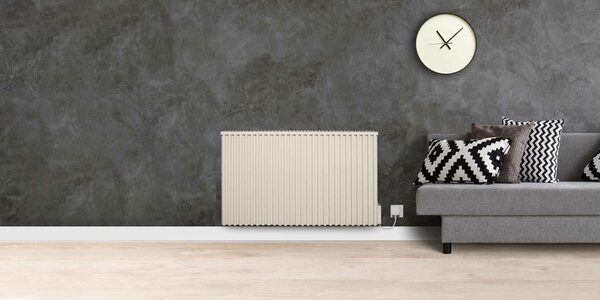
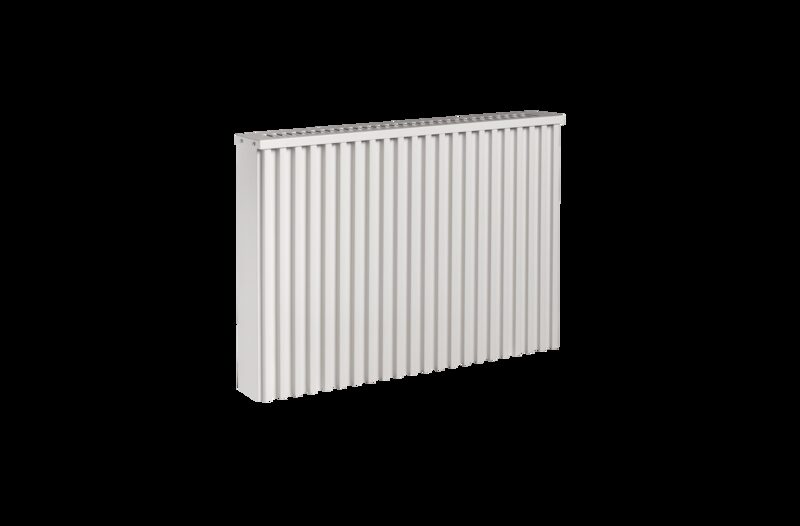
The Classic range is the longest-standing part of the line. Fischer's 40mm HeatCore classic radiators are manufactured with a convection chamber that draws cold air from the floor and then distributes heat evenly throughout the room8. Each radiator is individually controlled, allowing specific temperatures to be set in different rooms, and the range uses an exclusive wireless thermostat8.
The Elektrostore high heat retention storage heater is the tariff-sensitive product. It is built around the same 40mm HeatCore, carries a 10 year guarantee, and includes a geolocation function that automatically reduces temperature when the household is away from home6. Fischer describes it as suited to Economy 7 or Economy 10 tariffs, and it can work in conjunction with the HeatCore radiators or be installed individually6.
The Aquafficient sits on the hot water side. Fischer pairs an Air Source Compact Heat Pump with the Aquafficient Eco+, and states that both products work seamlessly with existing radiators to provide heating and hot water9. The Tide range is the design-led option, a direct-acting heater rather than a night storage heater, which Fischer says delivers warmth exactly when it is needed7.
The newest addition is the heat only electric boiler, introduced on 7 November 20241. Heat only boilers are the cheapest type of boiler to buy according to independent guidance, though that relates to purchase cost rather than running cost1. Fischer also sells hybrid arrangements: a Hybrid Heat Pump that connects to gas or oil boilers and is described as enabling the heat pump to provide up to 90% of winter heating, and a Split System Hybrid Heating Solution for larger homes using two Air Source Compact Heat Pumps, a dual tank cylinder and 40mm HeatCore electric heaters, which can run on a single phase supply instead of the three phase supply usually required for large electrically heated homes9.
| Product | Type | Key stated detail |
|---|---|---|
| Classic radiators | Direct electric radiator | 40mm HeatCore, wireless thermostat, 10 year warranty8 |
| Elektrostore | High heat retention storage heater | 40mm HeatCore, geolocation, Economy 7 or 106 |
| Tide | Direct-acting electric radiator | Made to order, German manufactured7 |
| Aquafficient Eco+ | Electric hot water | Paired with Air Source Compact Heat Pump9 |
| Heat Only electric boiler | Electric boiler | Launched 7 November 20241 |
| Hybrid Heat Pump | Hybrid | Connects to gas or oil boilers9 |
Efficiency: what the 100% claim means and what it does not
The 100% figure is a point-of-use statement and it is correct on its own terms. Fischer says electric radiators and heaters are all 100% efficient at the point of use2. BEAMA, the trade body for the electric heating sector, states that all electric resistance heating products are 100% efficient at point-of-use5. Approved Document L, the building regulations guidance for England, assumes electric resistance heating to be 100% efficient4, and the Welsh equivalent uses the same assumption3.
What the figure does not cover is the rest of the chain. A gas-fired wet heating system in a new dwelling must meet a minimum efficiency of 92% as defined in ErP, and an oil-fired regular boiler 91%, under the same guidance3. Those are combustion efficiencies, measured at the appliance, and they are lower than 100% because heat leaves up the flue. An electric radiator has no flue, so nothing is lost at the appliance. The comparison that matters to a bill is not appliance efficiency but the price of the fuel and how much heat the building needs.
There is also a divergence in how electric heating is modelled. The Heat Pump Association's figures use a direct electric appliance efficiency of 75%11, a system-level figure that accounts for the way direct electric heating is used and controlled rather than the physics of the element. That is a different measurement basis from the 100% point-of-use claim, and the two are not in conflict so much as answering different questions.
For a household, the honest reading is this: a Fischer radiator converts all the electricity it draws into heat, and no electric resistance heater can do better than that. Whether that heat is affordable depends on the tariff, the fabric of the home and the pattern of use, not on the heater's efficiency rating.
"Electric resistance heating is assumed to be 100% efficient"
Running costs: the ASA ruling and the Electrorad comparison
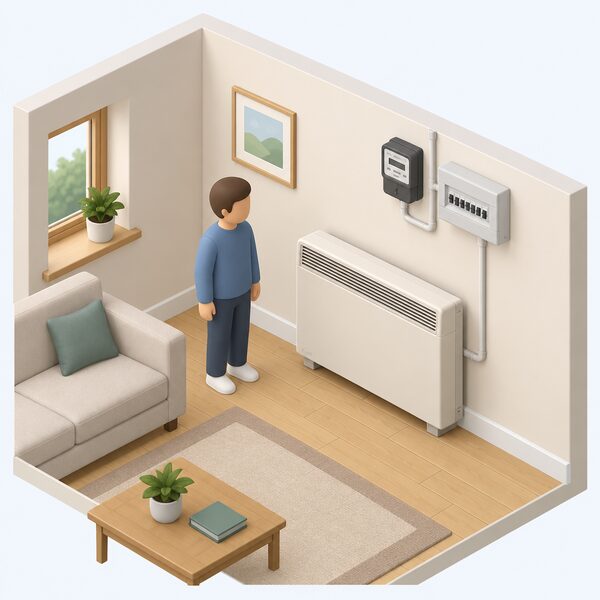
Fischer's headline running cost claim is on the storage heater page: the Elektrostore is "Up to 27% cheaper to run than a standard storage heater", calculated using SAP 20126. That is a modelled comparison against a defined baseline, and it is the kind of claim that has been tested before.
In June 2016, Electrorad published a comparison of its Aeroflow radiators and Fischer Future Heat radiators, stating that the Aeroflow would have exactly the same running cost and energy use as the Fischer units. In 2018 the Advertising Standards Authority ruled on the dispute and found that Electrorad's statement that there can be no differences in running costs and energy use was absolutely correct. The ruling is a useful anchor: two electric resistance heaters of comparable output, used in comparable ways, convert electricity to heat at the same rate, so the running cost difference between them is small or nil.
What genuinely changes a running cost is the tariff and the timing of use. Economy 7 remains on offer as a tariff from most energy suppliers12, and it is typically used with electric storage heaters but available to anyone13. It suits homes that only use electricity, or use a very large amount of electricity, and is not suitable for everyone14. Independent guidance notes that dynamic storage heaters do not work with Economy 7, which is why running costs for those units stay higher than for night storage heaters15. The Elektrostore, by contrast, is explicitly described as suited to Economy 7 or Economy 106.
Other factors sit outside the heater entirely. Drying wet clothes on radiators makes the boiler work harder and could cost as much as running a tumble dryer, while creating a lot of condensation16. Reflective radiator panels are claimed by the Energy Saving Trust to save money on heating bills and reduce household energy consumption17. Neither is a Fischer-specific point, but both bear on what a household actually pays.
Installation: what the full service covers
Fischer offers a full installation service on its radiator ranges, listed on both the Classic and Tide product pages8. That is the maker's own route rather than a network of independent installers, which means the same company supplies the product and fits it.
The wider market for heating installation and aftercare is organised differently, and the contrast is instructive. British Gas HomeCare Essential includes everything offered by HomeCare Basic and extends protection to repairs to central heating including radiators, pipework and hot water cylinder, with the Essential, Classic and Complete packages providing repair and replacement services for central heating that in certain circumstances include a radiator if it cannot be repaired18. Independent firms in the market list immersion heaters among their services19.
For an electric radiator installation, the work is lighter than a boiler swap: no flue, no gas supply, no combustion air. What it does require is a suitable electrical supply and, in larger electrically heated homes, enough capacity. Fischer's Split System Hybrid Heating Solution is designed for larger properties and can run on a single phase supply instead of the three phase supply usually required to move a large electrically heated home9. That is a meaningful constraint in practice, because a home that needs a supply upgrade faces a cost that has nothing to do with the radiators.
Electrical safety advice for heating appliances is published by Electrical Safety First, including guidance on portable heaters and product recalls20. Any fixed electric heating installation falls within the electrical safety regime for the home, and the supply capacity question should be settled before purchase rather than after.
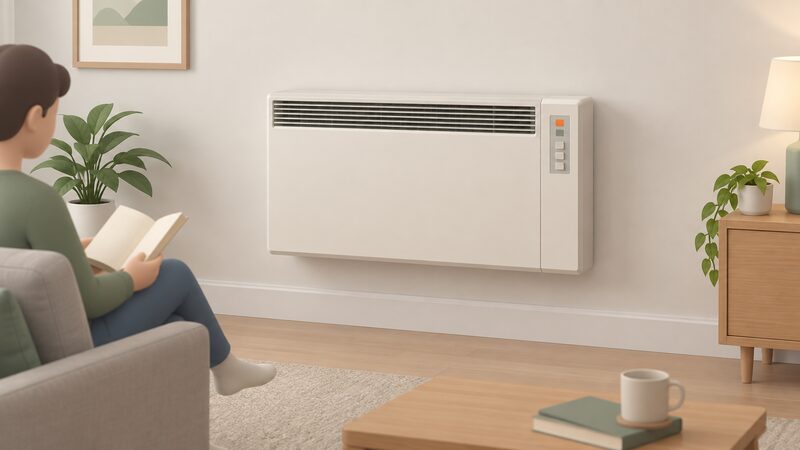
What Fischer radiators mean for household energy independence
The independence case for electric radiators is real but partial, and it is worth stating both halves plainly.
On the positive side, an electric radiator removes several dependencies at once. There is no gas supply, no gas boiler, no flue and no combustion. Fischer states that electric radiators emit zero emissions at the point of use2. Room-by-room control means heat is delivered where it is wanted, and the Classic range allows specific temperatures to be set in different rooms8. Fischer markets a Warm Home Guarantee alongside that room-by-room control8. Where a household has its own generation, direct electric radiators are described in independent guidance as a suitable option where there is a requirement for rapid response or intermittent heating, and as particularly sustainable with self-generated energy such as from photovoltaic panels22.
On the other side, the dependencies that remain are significant. An electric radiator keeps the home on the electricity grid and on an electricity supplier. The 100% efficiency figure does not reduce the amount of electricity the home must buy; it only means none of it is wasted at the appliance. A home that switches from gas to direct electric heating typically increases its electricity demand substantially, which is why the supply capacity question arises for larger properties9. The Elektrostore's value depends on a time-of-use tariff being available and suitable, and Economy 7 is not suitable for every household14.
Policy is moving in the same direction as the technology. The Future Homes Standard requires that all new homes will be fossil fuel-free, reliant on low-temperature heating systems, and in most cases equipped with photovoltaic panels23. The government's consultation states that fossil fuel heating will not meet the standard, including hydrogen-ready and hybrid boilers24, and the sector's own reading is that the standard centres on a move away from fossil-fuel boilers to low carbon heating systems, often in the form of heat pumps25. That context favours electric heating in new build, but it does not change the running cost arithmetic in an existing home.
Choosing Fischer or an alternative electric heating route
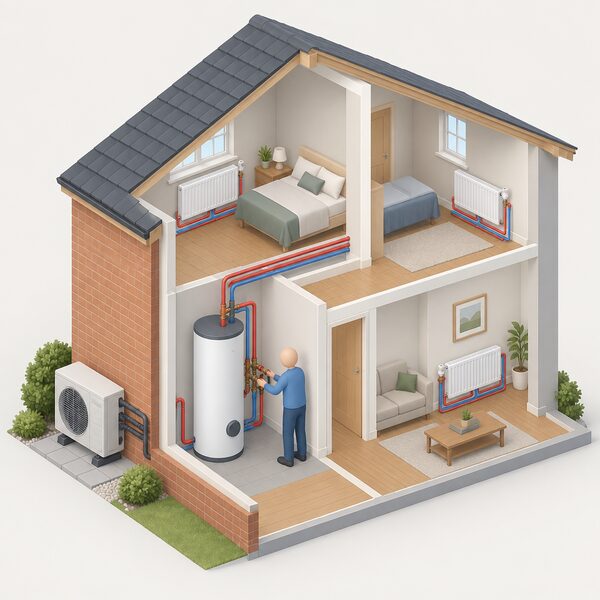
Fischer's electric radiators can be integrated with a range of Fischer electric heating products including electric boilers, air source heat pumps and electric storage heaters2, and the Elektrostore can be used in conjunction with the HeatCore radiators or installed individually6. That integration is the main argument for staying within one brand: the products are designed to work together, and the warranty and service relationship is single-source.
The alternative routes are covered elsewhere on this site. For a straight comparison of direct acting electric heating against night storage, see direct acting electric heating vs storage heaters. For the tariff question that decides most of the running cost, see Economy 7, Economy 10 and heating tariffs, and for the wider cost picture, electric heating running costs. Households weighing a wet system against electric should read electric boilers explained and heat pumps compared with boilers.
Two structural points apply to any electric heating choice. First, low-temperature heating design is becoming the norm: existing radiators retained in a low-temperature design are assessed in accordance with the Heat Emitter Supplement to the Domestic Heat Design Guide26, and the Future Homes Standard's indicative specification assumes low temperature heating with regular radiators27. Second, the standards regime for heating appliances and their certification applies to electric products as much as to gas ones, and is set out in heating appliance standards and certification.
The Decent Homes Standard in Northern Ireland recognises similarly efficient heating systems developed in the future as qualifying as efficient heating28, which is a reminder that the definition of acceptable heating is not fixed. Central heating system controls, including thermostatic radiator valves, are treated as energy-saving materials under the relevant legislation29. The Future of Heat consultation sought views from consumers, installers and the supply chain on measures and policy options, and evidence on the costs and benefits of wider domestic and non-domestic central heating system performance improvements30.
For a household, the decision comes down to three questions the evidence can answer: what tariff the home can get, what electrical capacity it has, and how the rooms are used. Fischer's range addresses the third well and the first two only partly.
Sources30 cited
- Different boiler types, Uswitch, 2026-09-18
- Electric heaters range, Fischer Future Heat, 2026-08-17
- Approved Document L, Volume 1, consultation version, Welsh Government, 2026-09-17
- Approved Document L, Volume 1, Dwellings, UK Government, 2026
- Benefits of electric space and water heating, BEAMA, 2026-09-17
- Storage heaters, Fischer Future Heat, 2026-08-14
- Fischer Tide radiators, Fischer Future Heat, 2026-05-20
- Fischer Classic radiators, Fischer Future Heat, 2024-10-09
- Electric hybrid heating, Fischer Future Heat, 2024-10-14
- Approved Document L, 2021 edition incorporating 2023 amendments, UK Government, 2026-09-17
- From Carbon to Competitiveness, Heat Pump Association, 2026-01
- Economy 7 guide, Uswitch, 2026-09-08
- Tariffs for renewable technology, Energy Saving Trust, 2026-08-12
- Understanding energy flexibility, Smart Energy GB, 2026-08-17
- Electric heating advice, Centre for Sustainable Energy, 2026-06
- Dealing with condensation and mould, National Energy Action, 2026-07-13
- Radiator panels, Smart Energy GB, 2026-04-22
- British Gas HomeCare guide, Uswitch, 2026-06-01
- BPI Boiler Plumbing Installations, Which? Trusted Traders, 2026-09-17
- Portable heaters safety advice, Electrical Safety First, 2026-09-17
- Fireball Turbofan 3000 recall, Electrical Safety First, 2026-09-17
- Low temperature heating, CIPHE, 2024-01-25
- Future Homes Standard ready, Future Homes Hub, 2026-09-17
- The Future Homes and Buildings Standards 2023 consultation, UK Government, 2026-09-17
- UK new homes sector unites on low energy homes, Future Homes Hub, 2026-03-04
- Low temperature heating, SAP, NCM PCDB, 2026-09-17
- Government response to Future Homes Standard consultation, UK Government, 2021-01
- Current Decent Homes Standard summary table, Northern Ireland Department for Communities, 2025-08-05
- Energy-saving materials, legislation, legislation.gov.uk, 2026-09-17
- The Future of Heat: Domestic buildings, CIBSE, 2026-09-17