
In this guide
KIASA is a UK supplier of infrared heating panels, sold direct through its own site rather than through a merchant network. The company states it has spent over nine years helping homeowners with infrared heating, and that it has supplied 26 or more countries across Europe, the Middle East, Asia and Africa1. Its domestic range is built around three shapes: fully customisable image panels, printed picture panels, and portable panels that can be moved between rooms or stood on feet.
Outputs run from 350W to 960W. The custom image panels come in 350W, 450W, 720W and 960W versions, the picture panels in 350W, 500W, 600W and 750W, and the portable panels in 600W, 720W and 960W2. Every panel in the range uses a carbon crystal heating element and is described as producing no light and no sound in use3. Most are IP54 rated for bathrooms and wet areas, while the custom image panels and the portable models carry IP655.
What the panels do for a household's energy position is narrower than the marketing suggests. They run on electricity, so they keep a home on the grid and on a supplier, and they do not remove the standing charge or the network dependence that comes with any mains-powered heater. What they change is where the heat goes: radiant warmth is directed at occupied areas rather than at the air in the whole house, and individual room zoning means an unused room need not be heated1. That is a control advantage, not a fuel switch.
What KIASA is and how long it has been making panels
KIASA Heating describes itself as having spent over nine years helping homeowners and families create warmer homes with infrared heating, and lists 26 or more countries served across Europe, the Middle East, Asia and Africa1. That is a supplier's own account of its history and reach, and it is the only figure available on either point. The company sells direct to householders through its own online shop, with a separate KIASA Projects route for commercial and development work.
The product architecture is consistent across the range. Panels are flat, wall or ceiling mounted, and finished either with a customer's own image, a stock printed picture, or a plain surface. The heater bar collection, a separate product line, contains two items and is made from aluminium, with an IP rating of 44, which is lower than the panel range and not intended for the same wet-zone use8.
For a household, the practical significance of the company's age and reach is limited but not zero. A supplier with a decade of trading and an export book is more likely to be around to honour a fault claim than a brand that appeared last year, but no warranty term for the KIASA panel range appears in the material reviewed here, and no independent reliability survey or engineer approval rating is published for the brand. Buyers weighing the panels against better-documented alternatives can compare the wider field at infrared heating and against a named competitor at Herschel Infrared.
The range: custom image, picture and portable panels
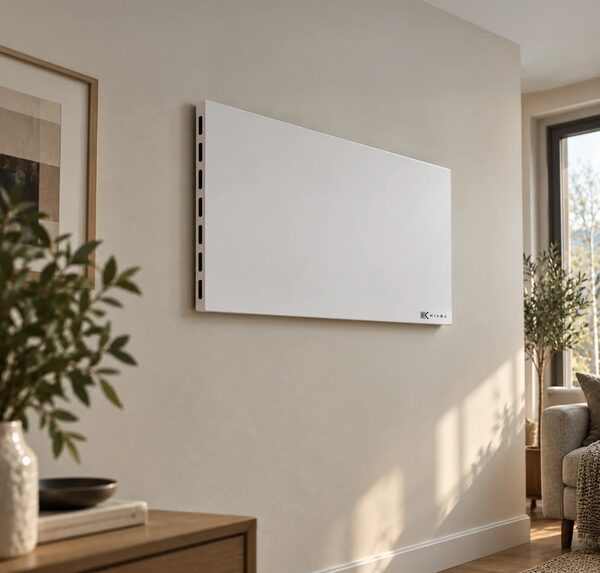
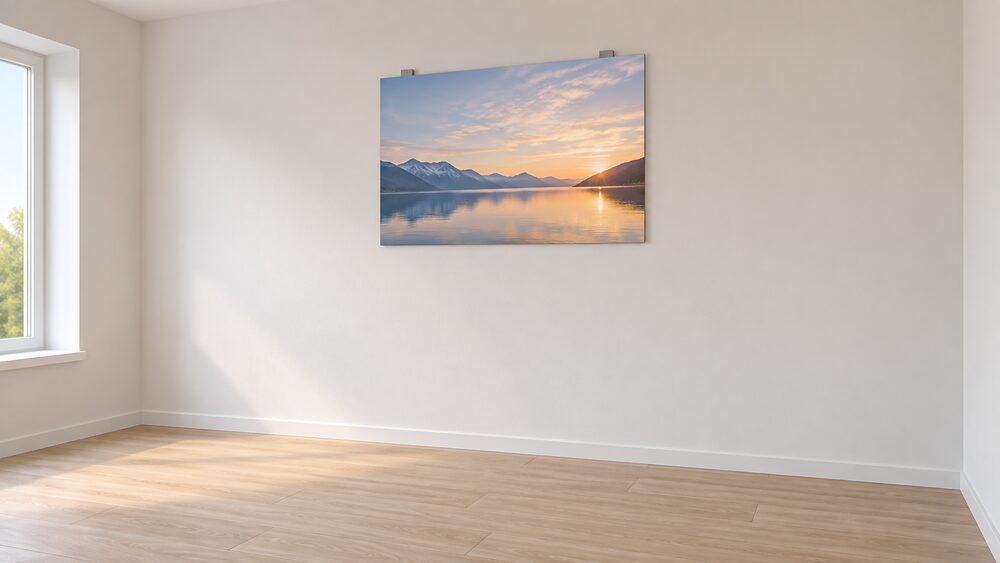
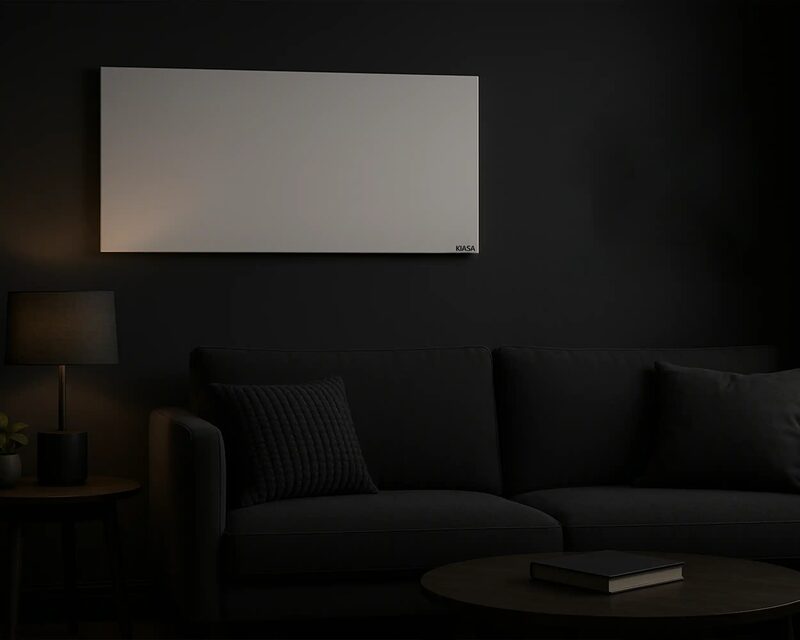
The custom image panels are the most configurable part of the range. The 350W version measures 60 x 60 x 2.2cm and is described as ideal for utility rooms, box rooms and office rooms, with individual room zoning and the ability to link multiple panels to a single smart controller3. The 450W panel measures 50 x 90 x 2.2cm and is described as suitable for small to large rooms as a primary heating solution4. The 720W and 960W versions extend the same idea to larger spaces, with the 960W custom panel built at 120 x 80cm5.
The picture panels are the same hardware with a printed image on the face. Outputs in this group run at 350W, 500W, 600W and 750W, with sizes from 80cm x 60cm up to 120cm x 60cm2. The 600W Buddha panel is listed at £159.99, taxes included, and the 600W smart portable panel at £197.33, taxes included7. Prices for the rest of the range are not published in the material reviewed here.
The portable panels are the third group. The 600W, 720W and 960W models are all listed as portable, as suitable for individual room zoning, and as DIY installation9. The 960W unit measures 10 x 80 x 2.2cm and is stated to heat 8 to 15m²10. The maker's panel standing feet are sold separately, come as two separate feet that clamp onto the bottom of the frame, and are described as adapted for use with any KIASA infrared heating panel12.
| Group | Outputs listed | Mounting | IP rating |
|---|---|---|---|
| Custom image | 350W, 450W, 720W, 960W | Wall or ceiling, kits included3 | IP653 |
| Picture | 350W, 500W, 600W, 750W | Wall mounted, kit included13 | IP5413 |
| Portable | 600W, 720W, 960W | Wall or ceiling, or on feet9 | IP65 on 600W and 960W9 |
Outputs and sizes: 350W to 960W and what each suits
The published outputs span 350W to 960W, and the maker's own room guidance is the clearest signal of what each is for. The 350W custom panel is aimed at utility rooms, box rooms and offices3. The 450W custom panel is described as ideal for small to large rooms as a primary heating solution4. The 720W custom panel is listed for utility rooms, box rooms and offices, and also for bedrooms, dining areas and small to medium-sized offices5. The 960W portable panel is the only model with a stated floor area, at 8 to 15m²10.
That is a wide spread for a single product family, and it reflects the fact that infrared output is sized to the space and the level of insulation, not to a whole-house figure. A 350W panel in a box room and a 960W panel in an open living area are doing different jobs with the same technology. The maker does not publish a watt-per-square-metre rule in the material reviewed here, so the room descriptions and the single 8 to 15m² figure are the only sizing guidance available from the supplier.
The portable collection adds a further wrinkle: the smart infrared panel support legs with wheels are stated to fit Kiasa smart infrared panels in 350W, 450W, 600W, 720W and 800W variants15. That list includes an 800W size that does not appear among the panel outputs described elsewhere, so the accessory compatibility list and the product range do not line up exactly. A household matching feet or wheels to a panel should confirm the fit with the supplier rather than rely on the collection page alone.
For a household, output choice is the main determinant of running cost, because an electric panel draws its rated wattage whenever it is on. A 350W panel running for an hour uses less than half the electricity of a 960W panel over the same period, but it also delivers less heat. The trade-off is between room size and hours of use, and it is the reason zoning matters more with panels than with a central system.
Carbon crystal heating element and how the panels warm a room
Every panel in the range is described as using a carbon crystal element and as delivering instant infrared heat3. The maker's framing is that this produces radiant warmth directed towards occupied areas, in contrast with traditional heating that warms the surrounding air1. That is the standard description of radiant heating: the panel warms surfaces and people in line of sight rather than the air mass of the room.
The practical consequences follow from that. Radiant heat is felt quickly by anyone in front of the panel, which is why the maker describes the warmth as instant, but it does not travel around corners or through furniture, and it does not warm the fabric of a room in the way a radiator or a heat pump does over a long run. A panel mounted high on a wall or on a ceiling radiates downwards into the occupied zone, which is the logic behind the maker's ceiling mounting options and the suspension kit14.
The panels are also stated to run without visible glowing elements during normal use, and individual models are listed as producing no light and no sound3. That matters for bedrooms and for anyone who finds the orange glow of a bar heater intrusive. It also means there is no visual cue that the panel is on, which is why the overheat protection and the controls carry more of the safety burden than they would on a visibly glowing appliance.
"KIASA's residential systems operate without visible glowing elements during normal use."
DIY installation: wall, ceiling or on feet, in 1 to 4 days
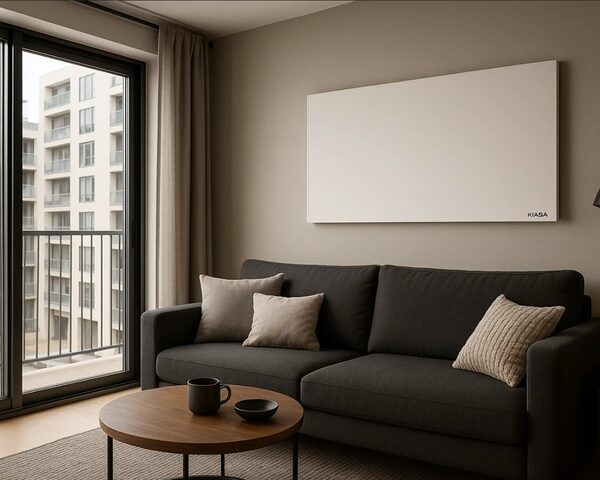
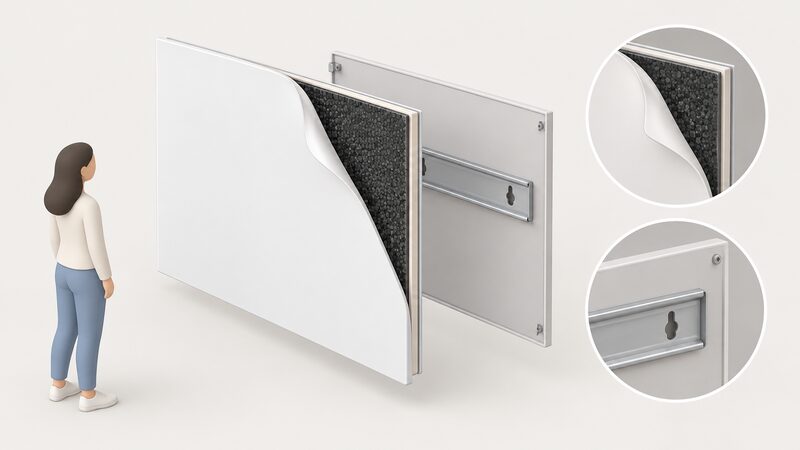
KIASA states 1 to 4 days from installation to first use, and describes the panels as DIY installation across the custom, picture and portable ranges1. The mounting hardware differs by model. The 350W custom panel is wall mounted with the kit included3. The 450W and 720W custom panels are listed as wall or ceiling mounted with kits included for both, and the 450W also offers ceiling suspension as an additional purchase of a suspension kit4. The picture panels are wall mounted with the kit included13. The portable panels are listed as wall or ceiling mounted and can also be used freestanding on feet9.
The suspension mounting kit is a separate product, described as a way to suspend a KIASA infrared panel from the ceiling to optimise the heating experience14. The panel standing feet are also separate, supplied as two feet that clamp onto the bottom of the frame12.
For context on what 1 to 4 days means, solar panel installation is typically quoted at one to two days, with larger or more complex jobs taking longer, and one installer notes that once scaffolding is up the panels can go on in less than a day17. A solar and battery installation in one documented case took around four days20. The KIASA figure sits in the same band as a solar array, which is a reminder that it covers the whole job, not just the moment a panel goes on a wall.
Independent guidance on infrared panel installation describes panels as quick and easy to fit on walls and ceilings without specialist trades, and one supplier sets out a five-step mounting process using an enclosed mounting rail21. That is consistent with the KIASA DIY framing, though any fixed electrical connection still falls under the usual rules for electrical work in the home, covered at electrical safety for electric heating.
Bathroom and wet-zone suitability: IP54 and IP65
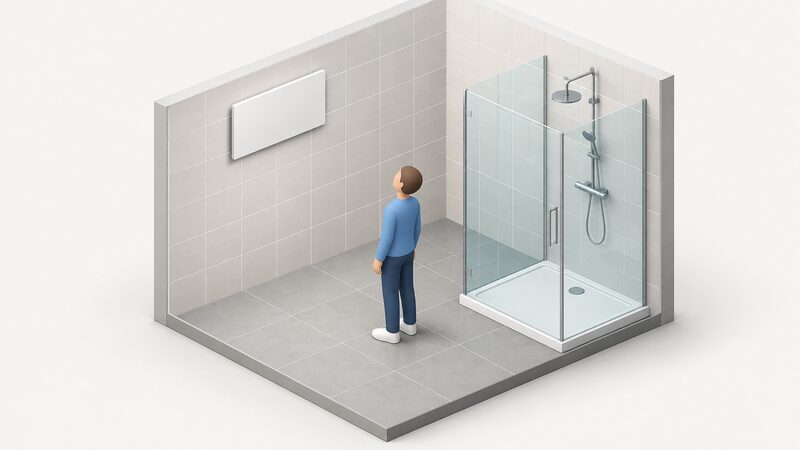
The panel range splits into two IP ratings. Most of the picture panels are IP54 rated and described as suitable for bathrooms and wet areas, including the 350W Poppies, the 600W Buddha, the 600W Lake, the 600W Sand and Water, the 600W Blossom Trees, the 750W Edinburgh, the 750W Birds Eye Beach, the 500W Beach and Sea and the 500W Still Life13. The custom image panels carry IP65, as do the 600W smart portable and the 960W portable3.
The difference matters in a bathroom. IP54 protects against dust and splashing water from any direction, which covers the ordinary conditions of a bathroom wall away from the shower. IP65 adds protection against water projected by a nozzle, which is a higher jet resistance. Neither rating is a statement about where in a bathroom a panel may legally be placed: the zones around a bath or shower are set by wiring regulations, and the maker's "suitable for bathrooms" wording is a product claim rather than a zone assessment. Independent guidance on infrared panels in bathrooms is available from another maker's technical pages29.
The heater bar collection sits outside this group. Those bars are made from aluminium and carry an IP rating of 44, which is splash resistance only and lower than the panel range8. A household looking at the bars for a bathroom should treat the rating as the limiting factor.
Zoning, overheat protection and running costs alongside solar
Built-in overheat protection is listed across the panel range, including the 350W, 450W, 720W and 960W custom panels, the 600W, 720W and 960W portables, and the picture panels3. Individual room zoning is listed on the custom panels and the portables, and the 350W custom panel can link multiple panels to a single smart controller3. The 720W portable can be hardwired together with others to control multiple heaters as one, and is compatible with a WiFi-controlled system, a timer switch or a wall-mounted thermostat controller11. The 600W Buddha panel is controlled through the Smart Life or TUYA app, with hourly, daily or weekly schedules, target temperature adjustment and multi-room heater management7.
On running costs, the maker's position is deliberately cautious. KIASA states that running costs depend on the property, the energy tariff and how the system is used, and that it avoids making blanket savings claims because every home is different1. That sits alongside a separate claim on the panels collection page that infrared panel efficiency can provide a saving of up to 60% on heating bills2. The two statements are in tension, and the 60% figure is not supported by any independent UK evidence in the material reviewed here. A household should treat it as a maker's claim, not a measured outcome.
The solar pairing is the part of the proposition with the most substance. KIASA states it has helped deliver infrared alongside solar on a range of new-build developments across the UK1. That combination makes sense on its own terms: a solar array generates electricity during daylight, and a panel heater converts electricity to heat directly, so self-consumed generation displaces imported units. The limits are the familiar ones. Solar output is seasonal and weather-dependent, panels need roof space and a suitable aspect, and installation typically takes one to two days17. A solar and battery installation in one documented case took around four days20. Without a battery, the panels run on imported electricity after dark, which is when heating demand is highest. The wider picture is at solar thermal water heating and heating and energy independence.
Kiasa's track record: new builds, wellness studios and 26 countries
The track record the maker publishes is a delivery record rather than a certification or an independent rating. KIASA states it has helped deliver infrared alongside solar on a range of new-build developments across the UK, and that it has served 26 or more countries across Europe, the Middle East, Asia and Africa1. The Kore Lyte infrared panel is listed as available exclusively through KIASA Projects, which is the route for development and commercial work rather than retail30.
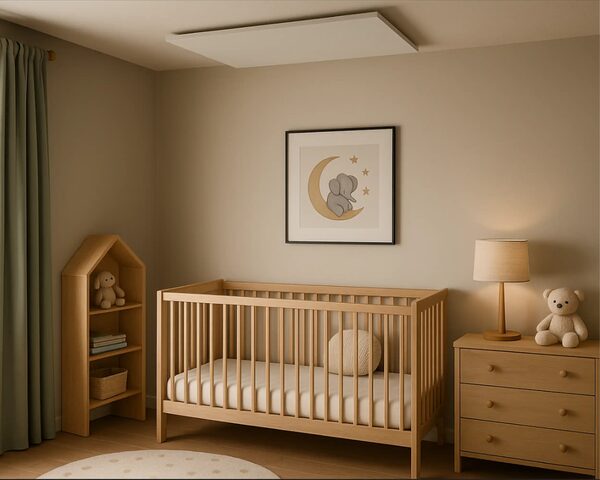
The Kore collection is the project-facing line. The Kore Prime panel is shown installed on a wall in a flat and on the ceiling of a nursery, and product images show 450W, 550W, 700W, 900W and 1100W variants31. Those outputs sit above the retail panel range, which is consistent with a commercial and development product line.
What is missing from the record is as important as what is in it. There is no independent reliability survey, no engineer approval rating, no published warranty term for the panel range, and no third-party test result in the material reviewed here. The 26-country figure is the company's own. For a household, that means the brand's history is a reasonable signal of trading continuity but not evidence about how long a panel will last or how a fault will be handled. Buyers comparing the brand with better-documented alternatives can look at Herschel Infrared, Sundirect infrared and Devola infrared, and at the general field at infrared heating.
Where the range has limits
The clearest limit is the fuel. Every KIASA panel runs on electricity, so a household using them remains connected to the grid and to an electricity supplier, and pays whatever tariff applies. Infrared panels do not reduce the standing charge, do not generate anything, and do not store heat. Where a home already has a heat pump or a gas boiler, adding panels means adding a second electric heating load rather than replacing the first.
The second limit is documentation. No warranty term for the panel range is published in the material reviewed here, and no independent performance or reliability data exists for the brand. The 60% savings claim on the collection page is contradicted by the maker's own statement that it avoids blanket savings claims1. The accessory compatibility list mentions an 800W panel size that does not appear in the panel range15.
The third is the nature of radiant heat itself. Panels warm people and surfaces in line of sight, not the air in the room, so a panel behind furniture or around a corner does little. Independent guidance notes that a professionally installed infrared system may be designed for safe overnight use, but advises checking with the installer first and keeping panels at a safe height, out of reach of young children or pets32. That is a siting condition, not a defect, but it shapes where a panel can usefully go.
Sources32 cited
- KIASA residential infrared heating, KIASA, 2026-09-20
- Infrared heating panels and bars collection, KIASA, 2026-09-20
- 350W custom image infrared heating panel, KIASA, 2026-09-20
- 450W custom infrared heating panel, KIASA, 2026-09-20
- 720W custom image infrared heating panel, KIASA, 2026-09-20
- 960W custom infrared heating panel, KIASA, 2026-09-20
- 600W picture infrared panel, Buddha, KIASA, 2026-09-20
- KIASA heater bar collection, KIASA, 2026-09-20
- 600W smart portable infrared panel heater with feet, KIASA, 2026-09-20
- 960W portable infrared panel heater with feet, KIASA, 2026-09-20
- 720W portable infrared panel heater with feet, KIASA, 2026-09-20
- KIASA panel standing feet, KIASA, 2026-09-20
- 750W picture infrared panel, Edinburgh, KIASA, 2026-09-20
- 600W picture infrared panel, Lake, KIASA, 2026-09-20
- Portable infrared panels collection, KIASA, 2026-09-20
- 600W picture infrared panel, Sand and Water, KIASA, 2026-09-20
- Solar panels, Home Energy Scotland, 2026-09-20
- Solar power facts, Energy Saving Trust, 2026-08-13
- Solar panel installation, Which?, 2026-08-12
- Beth Martin's solar panel and electric vehicle story, Energy Saving Trust, 2025-03-03
- Replacing storage heaters with infrared heaters, Sundirect, 2017-02-22
- How to install infrared heating panels, Sundirect, 2017-11-29
- 350W picture infrared panel, Poppies, KIASA, 2026-09-20
- 500W picture infrared panel, Beach and Sea, KIASA, 2026-09-20
- 500W picture infrared panel, Still Life, KIASA, 2026-09-20
- 600W picture infrared panel, Blossom Trees, KIASA, 2026-09-20
- 750W picture infrared panel, Birds Eye Beach, KIASA, 2026-09-20
- 750W picture infrared panel, Palm Tree, KIASA, 2026-09-20
- Infrared heating for bathrooms, Herschel Infrared
- KIASA Kore Lyte infrared panel, KIASA, 2026-09-20
- Kore infrared panel collection, KIASA, 2026-09-20
- Infrared heating explained, Energy Saving Trust, 2026-03-13