
In this answer
Short answer
Eligibility for the Priority Services Register turns on personal circumstances, not on income, tariff or supplier. The register is a record of consumers who have requested it, or who have been identified and agreed to be on it, because of their personal circumstances or because they are in a vulnerable situation1. It is free to join, and it does not change who you pay your bill to or how your energy is supplied2.
The recognised reasons are broad. They include reliance on medical equipment that needs electricity or water, or a need for refrigerated medicines; children under five at home; serious or chronic illness; anxiety, depression or another mental health condition; disability; pensionable age; being blind or partially sighted; being deaf or hard of hearing; a lost or reduced sense of smell; needing support with language or communication; and short-term extra support after a life change such as recovering from hospital or a bereavement3. Older and disabled people, and anyone who depends on electricity to keep medical or mobility equipment running, are named in official guidance for households preparing for a power cut1.
What the register does is practical rather than financial. It helps network operators prioritise getting help to you during a power cut or other energy emergency, and it unlocks services such as advance notice of planned interruptions, accessible formats, password identification schemes and nominee arrangements for bills4.
What the register is and who it is for
The Priority Services Register is a statutory-style record rather than a discretionary favour. Authorised persons are required to establish and maintain a Priority Services Register, a record of consumers who have requested, or been identified and agreed to be on the Register due to their personal circumstances or being in a vulnerable situation7. Heat network suppliers carry the same duty: they are required to establish and maintain a Priority Services Register for consumers who require Priority Services because of their personal circumstances or because they are in a vulnerable situation8.
In practice the register is the mechanism by which a household's circumstances reach the people who restore supplies. Energy network operators run it so that support reaches the right homes if there is a power cut or other energy emergency2. Registering also helps operators prioritise getting help to you, which matters when a storm or a fault affects a wide area at once9.
The eligibility categories are deliberately wide, and they overlap. Guidance for households lists disability as a qualifying reason10, and network operators list being deaf or hard of hearing among the circumstances they recognise11. Independent advice for disabled people describes the register as the route to extra services from energy suppliers5, and consumer bodies group it with the wider set of support available to households in difficulty6. The register is not means-tested: a household can qualify on health, age, disability or communication grounds regardless of what it pays for energy.
"Authorised persons are required to establish and maintain a Priority Services Register."
Who can join: yourself, someone else or with a referral

A household can join in more than one way. Registration forms commonly ask whether the application is for yourself or is being completed on behalf of someone else, such as a family member or friend12. Care givers and family members can register a person on their behalf13, and network operators state plainly that you can register on behalf of a family member, friend or someone you care for11.
The qualifying circumstances themselves are broad enough that most households with a health or care need will find a route in. Independent guidance lists having a physical or mental health condition, being over 60, or having young children in the home among the criteria suppliers use14. Network operators describe a similar set: over 65s, families with children under five, those who rely on medical equipment or have a disability, people who are hearing, sight or speech impaired, patients leaving hospital, and people with any physical or mental health condition15. People with mobility impairments and those with high levels of anxiety or other mental health issues are able to join16. Older official guidance names being over 60, chronically sick, disabled, deaf or hearing-impaired, or blind or visually impaired17.
There is also a referral route. Network operators work through community organisations and referral partners to reach households that would not apply on their own initiative; UK Power Networks alone reports over 250 referral networks across its areas18. That matters for independence: a household that is on the register is known to the operator before an outage, so support does not depend on someone noticing a problem after the lights go out.
Where the register applies: your network operator decides
There is no single national register. Each energy supplier and network operator maintains its own register4, so the record that matters during a power cut is the one held by the operator whose wires reach your home. That is why the address, not the supplier, usually determines where a household applies.
The practical consequence is that eligibility rules are consistent in substance but the application route is local. UK Power Networks, for example, covers London, the East of England and the South East, and states that being on its register ensures support in its area19. Its storm communications direct households to register free at its own address, with the email psr@ukpowernetworks.co.uk20. Its Priority Services phone line is free to call from a mobile or landline and lines are open 24 hours21. The same operator publishes psr@ukpowernetworks.co.uk for organisations promoting the register18.
Elsewhere the operator is different, and so is the form. SSEN directs households to register online using their postcode22, and its sight-specific guidance sets out what the register provides for blind and partially sighted customers11. National Grid's electricity distribution business runs its own register with a choice between registering yourself and registering someone else12. Wales Water Utilities publishes a Priority Services Register promise for its customers13, and Cadent and SGN run registers on the gas side3. In Wales, council guidance points households to their utility suppliers directly to sign up23.
Medical equipment, communication needs and other qualifying reasons
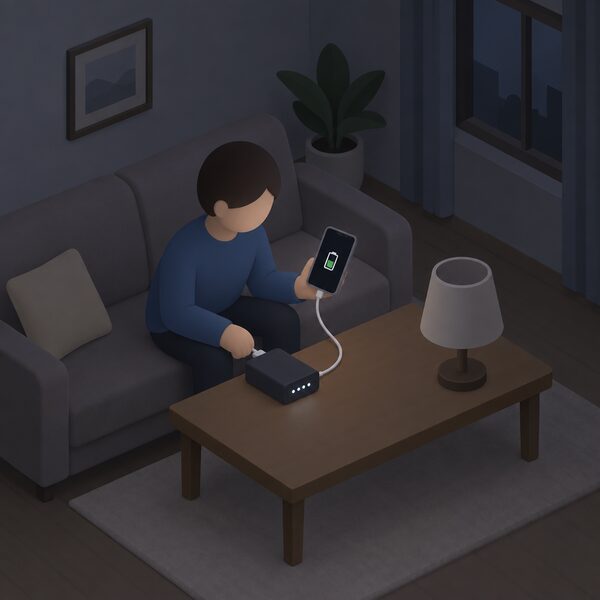
Reliance on medical equipment is one of the clearest routes onto the register. The recognised reasons include relying on medical equipment that needs electricity or water, or needing refrigerated medicines3. Official guidance for power cuts names households that depend on electricity to keep medical or mobility equipment running1, and network operators list using medical equipment reliant on electricity or water among their criteria22.
What that unlocks is concrete. For both planned and unplanned power cuts, network operators must offer customers on the priority service register extra help, for example giving them battery packs so that they can still charge phones or medical equipment1. That obligation sits with the operator, not with the household's supplier, and it applies whether the interruption was scheduled or sudden.
Communication and sensory needs are equally recognised. Being deaf or hard of hearing is a listed circumstance11, as are being blind or partially sighted and having a lost or reduced sense of smell3. The register also covers households that need support with language or communication, and those needing short-term extra support after a life change such as recovering from hospital or a bereavement3. Independent advice for disabled people sets out the extra services suppliers provide through the register5, and disability energy support services treat it as a standard part of the help available24.
The register is not only for permanent conditions. Short-term circumstances count, and independent guidance notes that a household might still be able to sign up for other reasons, for example if recently bereaved or having returned to living independently after some time in residential care6. For a household's energy independence, the register does not reduce dependence on the grid, but it does mean the operator knows who needs priority restoration and what form of contact works.
How to apply, what happens next and moving house
Applying is a short process, but it is worth doing deliberately.
- Identify the network operator for your postcode, since that is the body that holds the register used during a power cut4.
- Apply to that operator, and to your energy supplier, using the online form, phone line or email address it publishes22.
- State whether the application is for yourself or on behalf of someone else12.
- Keep the confirmation. Once registered you will be contacted to confirm your details are accurate and up to date13, and your energy network operator should contact you by email or post to confirm your registration25.
- If nothing arrives, chase it. It is worth calling your energy companies if you have not heard anything within 2 weeks6.
Moving house is the point where eligibility has to be re-established. If you move house but stay with the same company, you remain on their register, but you will need to update your details5. If the new home is covered by a different electricity network, you need to apply for priority services again6. Because the register is held per operator, a household that moves across a network boundary starts again with the new operator even though nothing about its circumstances has changed.
What the register does and does not change
The register changes how a household is treated during an interruption, not what it pays or who supplies it. Who you pay your bill to for your energy will not change, and you will be added to your energy supplier's Priority Services record11. Registering once sends the request to your energy supplier and your regional network companies, including electricity, gas and water24.
The services attached to the register are practical: information in an accessible format; notice of planned power cuts or water supply issues; identification schemes where companies give you a password; nominee schemes where they send your bills to a family member or carer of your choice; and help with meter readings5. Network operators describe the register as the way they prioritise getting help to households during an emergency9.
What remains is dependence on the network itself. The register does not restore power, does not provide a supply of its own, and does not remove the need for a household to plan for an outage. It is a communication and priority list held by the operator, and its value depends on the details being current. Households that rely on powered medical equipment, or that want a supply that keeps running when the grid does not, sit at the intersection of this register and backup power for UK homes, where the options for keeping essential loads running are set out.
Sources26 cited
- Plan for a power cut, Ofgem, 2026
- Customers, Energy Networks Association, 2026
- Priority Services Register, Cadent Gas, 2026
- Struggling with energy bills, National Energy Action, 2026
- Priority Services Register: extra services from energy suppliers, Scope, 2026
- Getting extra support from your energy supplier, Citizens Advice, 2026
- Heat networks consumer protection guidance: decision, Ofgem, 2026
- Heat networks consumer protections: draft guidance, Ofgem, 2025
- Storms and bad weather, Energy Networks Association, 2026
- Priority Services Register, SGN, 2026
- Priority Services: sight, SSEN Distribution, 2026
- Priority Services Register, National Grid Electricity Distribution, 2026
- Priority Services Register promise, Wales Water Utilities, 2026
- Energy debt on credit meters, Centre for Sustainable Energy, 2026
- Residents risk missing out on free emergency support, UK Power Networks, 2026
- Unequal EV technology viability and future services for vulnerable customers, Energy Systems Catapult, 2023
- Working with electricity safety, Health and Safety Executive, 2011
- Promote the Priority Services Register, UK Power Networks, 2026
- About the Priority Services Register, UK Power Networks, 2026
- Power network prepares for storms Dudley and Eunice, UK Power Networks, 2026
- Additional services, UK Power Networks, 2026
- Community toolkit, SSEN Distribution, 2026
- Heating your home, Carmarthenshire County Council, 2026
- Disability energy support, Scope, 2026
- Priority services, Energy Systems Catapult, 2025
- How to find out if there's a power cut, Which?, 2026
 Prepare a Home for a Power CutA household checklist for before, during and after an outage: what to keep charged and to hand, which appliances to switch off, how long food stays safe and what to do about medical equipment.
 Gas Safety RulesAnyone working on gas in your home has to be on the Gas Safe Register, whether they are installing, fixing or servicing an appliance.
 Moving Home Energy ChecklistThe immediate energy tasks on moving in: finding the supplier and meters, taking opening readings, checking whether the meters are smart, setting up billing, prepayment top-ups, the Priority Services Register, and your rights as a buyer or renter.
 Moving Home Energy AccountsMoving home means you get a new energy supplier whether you choose one or not, so who supplies your new place and what happens to your old account?
 Smart Meter Data and Who Sees ItWhat does your smart meter actually record, and who gets to see it?
 Using an Installer in EnglandHow do you check an installer is registered to sign off their own work, and what happens if they are not?