
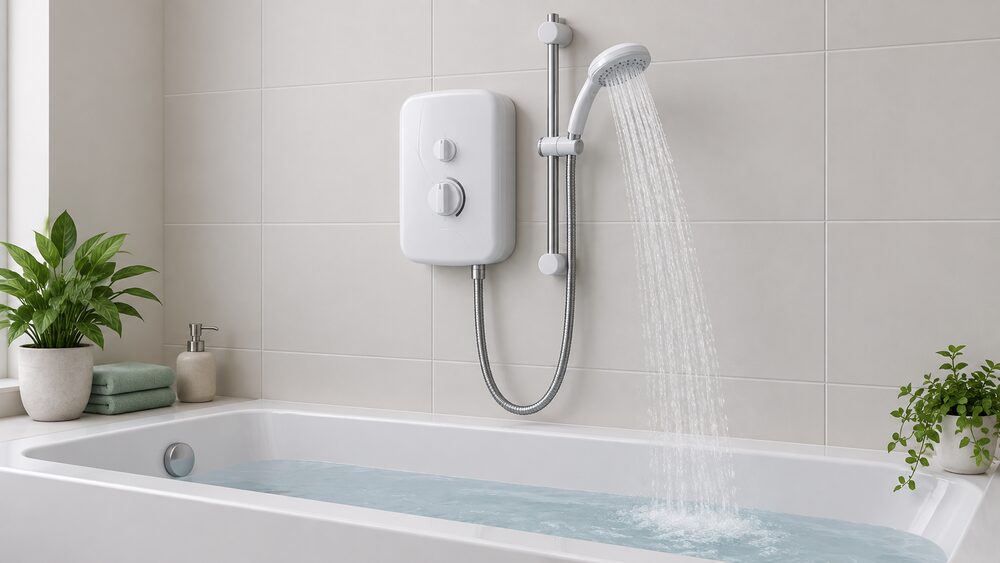
In this answer
Short answer
An electric shower heats its own water with a resistance element, so its running cost is set almost entirely by how long it runs and what the household pays per kilowatt hour. Independent guidance puts a ten-minute shower at 31p on a 7.5kW unit and 39p on a 9kW unit, with older figures giving 38p for ten minutes1. A 9kW shower is priced at £2.34 an hour of continuous use2.
Annual costs depend on use. Five minutes a day is put at around £68 a year on average, and ten minutes a day at around £137 a year4. A separate average across all households gives £3.73 a week, or £193.91 a year, under the January 2025 price cap1. The spread is wide because it reflects both the minutes run and the unit rate paid.
The comparison that matters most is with gas. Electricity costs around four times as much as gas per kWh, and gas costs far less than electricity under the current price cap, so a mixer or power shower fed by a gas boiler is cheaper to run than an electric shower5. What an electric shower buys is independence from the boiler and the cylinder: most electric showers heat their own water, so a storage heater or immersion does not need to be switched on for one job6.
What an electric shower costs to run: the headline figures
The headline is that an electric shower is one of the more expensive ways to heat water in a home, because it does the heating itself, at the moment of use, on the most expensive fuel most households buy. Guidance for households preparing for winter states plainly that using an electric shower can be really expensive7. That is not a comment on the appliance's quality but on the physics: a high-power element running for minutes at a time draws a large load, and electricity is priced well above gas.
The figures cluster into two groups. Per-use costs sit between 21p and 39p depending on the power rating and the tariff. A 7.5kW shower is put at 21p on a fixed tariff and 26p on a standard tariff, both for a single use8. A ten-minute shower on the same 7.5kW rating is put at 31p3. A 9kW shower is put at 39p for ten minutes and £2.34 for a full hour2. Older guidance gives 38p for ten minutes and £2.25 an hour4.
Annual figures are wider still, because they depend on how many people shower and for how long. Five minutes a day is around £68 a year and ten minutes a day around £137 a year4. The household average of £3.73 a week, or £193.91 a year, sits above both, which suggests it reflects more than one shower a day or longer showers than the per-use examples assume1. For context, a dishwasher is put at £68 a year and a washing machine at £64 a year, so a daily ten-minute electric shower costs roughly twice what either appliance does9.
For a household's energy independence, the electric shower is a mixed picture. It removes dependence on a boiler, a cylinder and a gas supply for one of the most frequent hot-water jobs in the home, and it works on electricity the household can generate itself. What remains is dependence on the grid and a supplier for a large, short, high-power load, and on electricity being priced far above gas.
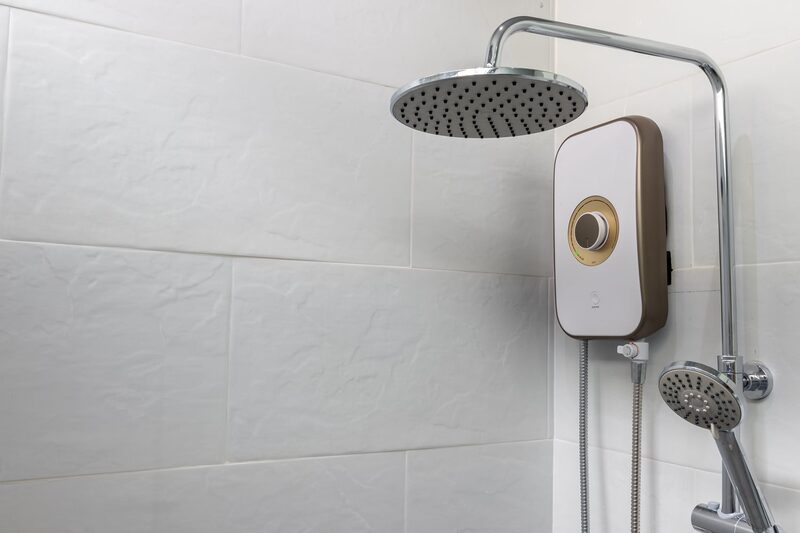
Cost per shower: 10 minutes at around 38p to 50p
The per-shower figure is the one most households want, and the honest answer is a range rather than a number. The lowest published figure for a single use is 21p on a fixed tariff for a 7.5kW shower, rising to 26p on a standard tariff8. A ten-minute shower on the same rating is put at 31p3. On a 9kW unit, ten minutes is 39p2. Older guidance gives 38p for ten minutes4. Northern Ireland guidance gives a wider band of £2.16 to £3.25 an hour, which at ten minutes would sit at the top of the range11.
Two things drive the spread. The first is the power rating: a 9kW shower draws more than a 7.5kW one, so the same ten minutes costs more. The second is the unit rate: a fixed tariff, a standard variable tariff and a regional rate all price the same kilowatt hour differently.
| Shower | Duration | Cost | Source basis |
|---|---|---|---|
| 7.5kW, fixed tariff | Single use | 21p | 8 |
| 7.5kW, standard tariff | Single use | 26p | 8 |
| 7.5kW | Ten minutes | 31p | 3 |
| 9kW | Ten minutes | 39p | 2 |
| 9kW | One hour | £2.34 | 2 |
| Not stated | Ten minutes | 38p | 4 |
Water use is a separate cost that households often overlook. An average ten-minute shower uses 120 to 150 litres12. Where water is metered, that volume carries a charge on top of the energy cost, and where it is heated by gas instead, the gas bill carries it. A power shower typically uses four to five litres per minute1.
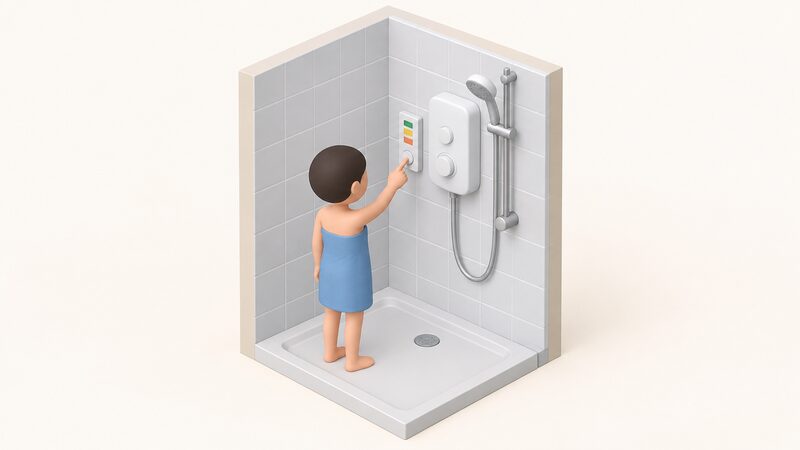
Annual running costs: from £64 to £193.91 depending on use
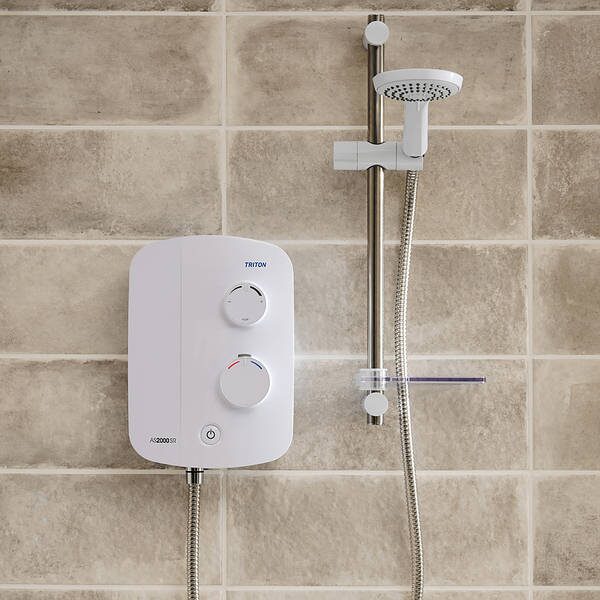
Running costs vary widely by appliance and by how often it is used. A dishwasher costs £68 a year on average, based on five cycles a week, and a washing machine £64 a year on average, based on four washes a week (208 a year)10. A standard sized dishwasher typically costs up to £70 in GB and up to £90 in NI to run each year11. An electric shower costs an average of £3.73 per week, or £193.91 a year, under the January 2025 price cap9. The extra cost of showering adds another £16 to the household bill annually for a 7.5kW unit2. For context, direct electric heating used as a stand-in for electric wallpaper in a typical three-bed semi-detached house, space heating only, runs to £2,700 a year12.
Annual cost is where the range becomes genuinely wide, and the reason is arithmetic rather than disagreement. Five minutes a day is put at around £68 a year on average, and ten minutes a day at around £137 a year4. The household average of £3.73 a week, or £193.91 a year, is higher than both1. That gap is explained by household size and habit: more showers, longer showers, or both.
The comparison with other appliances puts the figure in context. A dishwasher is put at £68 a year based on five runs a week, and a washing machine at £64 a year based on four washes a week9. A standard-sized dishwasher is put at up to £70 a year in Great Britain and up to £90 a year in Northern Ireland10. A daily ten-minute electric shower at around £137 a year therefore costs roughly twice what a dishwasher or washing machine does, for a single daily task.
There is also a behavioural figure worth knowing. Households that let a hot or warm shower keep running while they are not in it are put at £22 a year for that habit alone, and 38% of households were found to do it13. That is a cost with no benefit attached.
For households in Northern Ireland, the Consumer Council's guidance puts keeping a shower to four minutes at £45 a year, and the same figure is given for Great Britain14. That is lower than the £70 a year figure given elsewhere for the same four-minute habit, and the two documents disagree on the size of the saving16. Both agree on the direction: minutes are the lever.
How the 0% VAT on electricity changes the running cost
VAT on electricity falls from 5% to 0% from 1 October 2026, and the typical cost figures shown already reflect that change17. For an electric shower, that is a reduction at the margin on every kilowatt hour the element draws. It does not change the unit rate itself, which is set by the tariff and capped by the price cap, but it removes the tax layer that sat on top of it.
The VAT position on energy-saving products installed in a home is separate and more complicated, and it matters if a household is having work done rather than just running an appliance. In Great Britain, 0% VAT applies to certain products supplied by an installer and to the cost of all work to install those products in the home18. In Northern Ireland, 5% VAT applies to everything if the cost of the products, excluding VAT, is 60% or less of the total installation cost, excluding VAT18. Where products cost more than 60% of the total, the position is not resolved18. The reduced rate of 5% will no longer apply to the installation of wind and water turbines18.
The reduced rate of VAT for energy-saving materials remains 5% for most qualifying installations, and the reduced rate no longer applies to the installation of wind and water turbines16. None of this changes the running cost of an electric shower directly, because a shower is not an energy-saving material. It matters to the wider question of what a household pays to reduce its dependence on bought energy, and it is worth separating the two: the 0% on electricity lowers the running cost of everything a household plugs in, while the product VAT rules affect the cost of installing generation or efficiency measures.
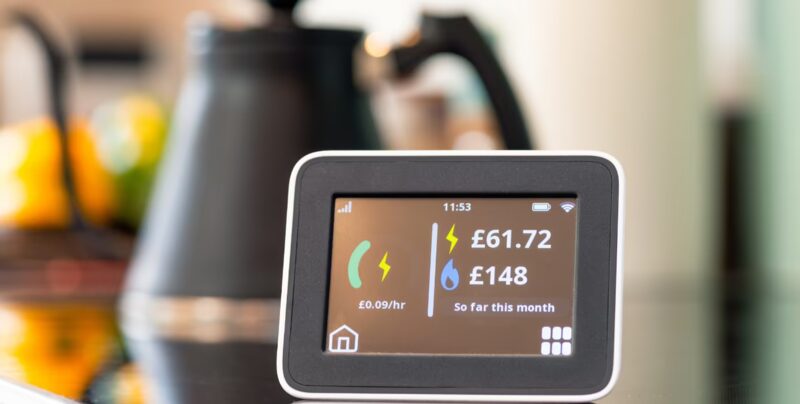
Does an electric shower use more electricity than a kettle?
Both appliances heat water with a resistance element, so the comparison is really about duration and sustained draw rather than technology. A 15-minute electric shower uses 2.4kWh19. A kettle boils for a couple of minutes at a time and then stops. Heating water using electricity is more expensive than using gas, and electricity costs around four times as much as gas per kWh19. Most electric showers heat up their own water, so the storage heater does not need to be switched on for this19.
The more useful comparison is with other electric heating loads. Electric heaters use around 2.5kWh on average per hour and cost 64p an hour20. An immersion heater costs around 78p to run for an hour21. An electric blanket costs about 39p an hour20. A fan costs around 3p an hour22. An electric mower costs 4p per ten minutes2. Against those, a ten-minute electric shower at 31p to 39p is a short, intense load rather than a long, low one.
The comparison that carries the most weight for a household is with gas. Heating water using electricity is more expensive than using gas21. Electricity costs around four times as much as gas per kWh5. An electric boiler is a similar size and price to a gas boiler but costs much more to run because of the higher price of electricity5. Electric wallpaper, which runs on the same principle, is more expensive to run than a gas boiler and also more expensive than a heat pump23. Heat pumps, by contrast, are put at £800 to £1,050 a year to run and described as one of the cheapest electric heating options24.
The independence point follows from that. An electric shower gives a household hot water without a boiler, a cylinder or a gas supply, and it will run on self-generated electricity. What it does not give is a cheap way to heat water, because the fuel it uses is the most expensive one on the market.
Is an electric shower cheaper than a mixer shower with a gas boiler?
No, and the sources are consistent on this. Gas costs far less than electricity under the current price cap, so a mixer or power shower should be more cost-effective to run1. Electricity costs around four times as much as gas per kWh5. Heating water using electricity is more expensive than using gas21.
The counter-argument is about what the shower displaces. Most electric showers heat up their own water, so a storage heater or immersion does not need to be switched on for this job6. For a household on an Economy 7 or restricted meter, running an immersion heater to fill a cylinder for one shower is a poor use of a large, slow load, and an electric shower avoids it. For a household with a gas boiler already running for heating, the mixer shower adds little.
| Setup | Fuel | Relative running cost |
|---|---|---|
| Electric shower | Electricity | Higher |
| Mixer or power shower on a gas boiler | Gas | Lower |
| Immersion heater and cylinder | Electricity | Around 78p an hour21 |
| Heat pump | Electricity | £800 to £1,050 a year24 |
The choice is therefore not only about cost. An electric shower is independent of the boiler, the cylinder and the gas supply, and it works when the boiler is off or broken. A mixer shower is cheaper to run but depends on the boiler, the gas supply and, in a power cut, on electricity for the boiler's pumps, fans and controls. Gas supplies and meters usually continue to work normally during a power cut, but most boilers may not work because they use electricity for pumps, fans and electronic controls25.
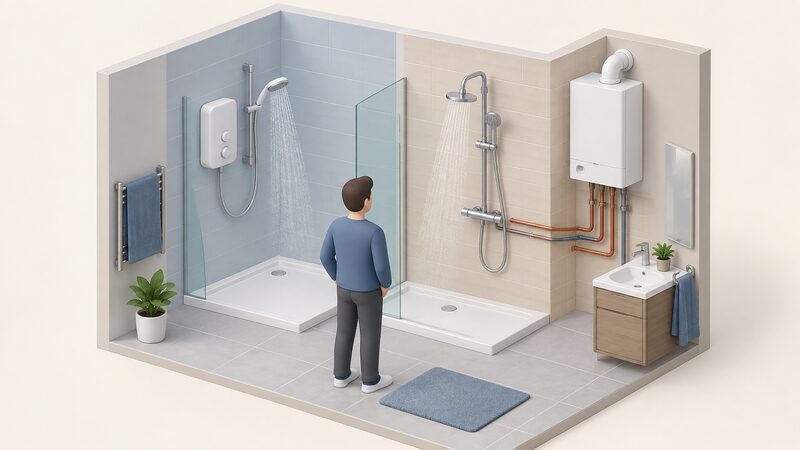
How can I reduce the cost of running my electric shower?

The measure that applies to an electric shower is time. Keeping a shower to four minutes is put at £70 a year for a typical household16. The same four-minute habit is put at £45 a year in Northern Ireland and £45 a year in Great Britain in separate guidance14. The two figures disagree on the size of the saving, and both are given here rather than one being chosen.
Water-efficient shower heads are the obvious next measure, and they do not apply here. Water-efficient shower heads are not recommended for electric showers, and the cost-saving benefits outlined for them cannot be achieved with an electric shower26. That is a firm limit: the fitting that cuts hot water use on a mixer shower is not a route to savings on an electric one. Where a household has a mixer shower, an energy-efficient shower head uses up to 40% less hot water27.
Other measures that bear on the wider bill rather than the shower itself include shifting a high-power load to a cheaper window. Electric shower use for 15 minutes is put at 2.4kWh19, which is a large enough block to matter on a time-of-use tariff. Households on a demand flexibility service can be paid for shifting load away from peak times, and the service is designed around exactly this kind of short, flexible draw19.
Do electric showers work during a power cut?
No. An electric shower heats water with its own element and needs mains electricity to run, so it stops the moment power is lost. That is the clearest limit on what an electric shower does for a household's independence: it removes dependence on gas and on a boiler, but it deepens dependence on the electricity supply, because it is the only route to a hot shower in a home that has no cylinder and no gas.
The wider picture during an outage is that gas supplies and meters usually continue to work normally, but most boilers may not work because they use electricity for pumps, fans and electronic controls25. So a household with a gas boiler and a mixer shower may also lose hot water in a power cut, for a different reason. Power cuts can happen during storms28. In an emergency, customers could lose power for around three hours per day during the emergency, on an area-by-area basis29.
For a household weighing independence, that is the trade to hold in view. An electric shower gives hot water without a boiler, a cylinder or a gas supply, and it will run on electricity a household generates itself. It gives nothing at all when the grid is down, and it costs more per shower than gas while the grid is up. A cylinder heated by a heat pump or an immersion, or a gas boiler with a mixer shower, each carries its own dependencies: a fuel, a supplier, a boiler, or a large slow electric load.
Sources29 cited
- Hot water guide, Uswitch, 2025-01-31
- How much electricity am I using?, Centre for Sustainable Energy, 2026-07
- Eight hours of free electricity over the early May bank holiday weekend, Uswitch, 2026-03
- Save money using your electrical appliances, Citizens Advice, 2023-05-10
- Electric central heating, Which?, 2025-09-22
- Getting the most from Economy 7, National Energy Action, 2026-09-10
- Preparing for winter, National Energy Action, 2025-10-14
- The price cap: why one household appliance will cost you 10p more than your neighbour, Uswitch, 2026-04-22
- How much your appliances cost to run, Which?, 2026-10-01
- Home appliances, Energy Saving Trust, 2026-05-20
- NI electrical items cost, National Energy Action, 2025-04
- 10 effective and easy ways to save water at home, Smart Energy GB, 2026-08-17
- Quick tips to save energy, Energy Saving Trust, 2026-01-08
- Energy efficiency, Consumer Council, 2026
- Save energy and money, Consumer Council, 2026
- Explanatory memorandum: VAT reduced rate energy-saving materials order 2019, legislation.gov.uk, 2026-09-17
- Price cap support centre, ScottishPower, 2026-10-01
- Tax on shopping: energy-saving products, GOV.UK, 2026-09-17
- Taking part in the demand flexibility service, Centre for Sustainable Energy, 2024-02
- What appliances use more electricity, Smart Energy GB, 2026-03-16
- Immersion heaters, Which?, 2026-06-01
- How to keep your home cool in hot weather, Centre for Sustainable Energy, 2026-07
- Electric wallpaper explained, Energy Saving Trust, 2026-03-26
- Electric heating, Centre for Sustainable Energy, 2026-06
- Gas supply updates, SGN, 2026
- Water-efficient shower heads, Smart Energy GB, 2026-04-22
- Home and business grants, schemes and advice, East Herts Council, 2026-09-17
- Get winter ready resources, Energy Networks Association, 2026-09-17
- Emergency planning portal for residential customers, SSEN, 2026-09-19
 How Much Does a Heat Pump CostA heat pump usually costs around eleven thousand pounds installed, though quotes vary a lot depending on your home.
 Cost to Charge an EV at HomeHow home charging cost is worked out from battery size, efficiency, the unit rate paid and the tariff behind it, with full-charge costs of about £8 to £17, cost per mile, annual running costs and what changes for EV owners from April 2028.
 Home Battery CostA home battery usually costs between one and a half and ten thousand pounds fitted, depending on size.
 Running CostsA portable air conditioner costs roughly twenty to forty pence for every hour it runs, while a fixed unit uses far less electricity for the same cooling.
 Portable Power Station CostHow much does a portable power station cost in the UK, and what does the money actually buy?
 Solar Panel CostsA typical UK home pays somewhere between four and eleven thousand pounds for solar panels fitted, with most landing in the middle.