

In this comparison
Heat pumps can work with radiators or underfloor heating, and some types can work without either1. Underfloor heating is often installed in combination with a heat pump and works with all types of heating systems2. The choice between the two emitters is not about whether a heat pump will function, but about how efficiently it will run and what the installation will cost.
The core principle is flow temperature. Underfloor heating typically runs at around 35°C compared with 55 to 65°C or higher for radiators3. With underfloor heating, the flow temperature can be lower than with radiators, and this should result in the heat pump running much more efficiently4. Independent guidance puts the efficiency gain at 40% more efficient when running from a heat pump5, while one maker states underfloor heating is 45% more efficient than radiators when paired with heat pumps6.
Radiators are not ruled out. Existing radiators may need upgrading or resizing, and underfloor heating systems work particularly well with heat pumps because they provide consistent warmth at lower temperatures7. One case study puts it plainly: you do not need underfloor heating with a heat pump, but you might need larger radiators and some new pipework8.
Why heat pumps favour low flow temperatures
A heat pump's efficiency depends heavily on the temperature it has to produce. The lower the flow temperature, the less work the compressor does, and the better the coefficient of performance. This is why emitter choice matters more with a heat pump than with a gas boiler.
Underfloor heating has a much larger surface area than radiators, so it can heat a home at lower boiler or heat pump flow temperatures, saving money on energy bills4. Independent guidance gives a typical underfloor flow temperature of around 35°C compared with 55 to 65°C or even higher for radiators3. The Centre for Alternative Technology puts underfloor heating at a flow temperature of 35°C to 40°C10. One source gives the flow temperature of underfloor heating as around 45°C11.
Heat pumps themselves are designed around these lower temperatures. Air-to-water heat pumps typically send hot water to radiators at a lower temperature than an equivalent fossil fuel central heating system, often between 35 and 45°C12. Independent guidance describes sizing a system to supply flow temperatures of only 40 to 45 degrees to radiators when it is minus 3 degrees outside10. A maker states that heat pumps supply hot water at a lower flow temperature, typically 40°C to 45°C, than a boiler6. Underfloor heating runs lower still, typically 35°C compared with 55-65°C or higher for radiators9.
Ground source heat pumps produce heat at a lower temperature than other forms of heating and work best with underfloor heating, which requires lower flow temperatures than radiators13. The same principle applies across heat pump types: the emitter must be able to deliver the required heat output at the temperature the heat pump can economically produce.
For a household, this translates into a straightforward trade-off. Underfloor heating unlocks the lowest flow temperatures and therefore the best running efficiency, but it requires either new build or significant floor work. Radiators can work, but they may need to be larger, and the heat pump will run at a higher flow temperature to compensate, which reduces efficiency. The radiators and emitters page covers the sizing detail.
Efficiency: up to 40% more efficient when underfloor heating is paired with a heat pump
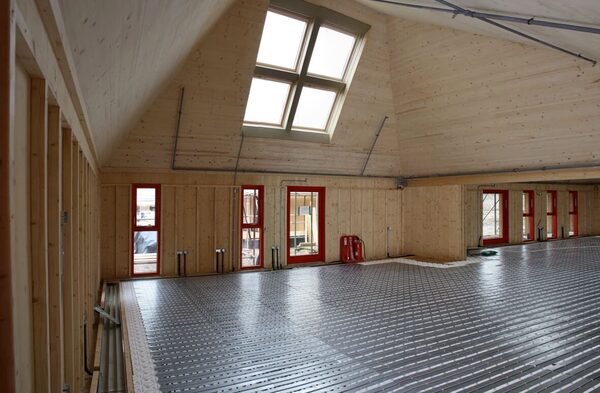
The efficiency case for underfloor heating with a heat pump rests on two independent figures and one maker claim. Independent guidance states that wet underfloor heating is 40% more efficient when running from a heat pump5. A maker states underfloor heating is 45% more efficient than radiators when paired with heat pumps6. The two figures differ, but both point in the same direction.
Water underfloor heating has higher efficiency than electric underfloor heating and radiators because the system runs at a lower temperature14. This is the mechanism behind the percentage gains: lower flow temperature means a higher seasonal performance factor for the heat pump.
The comparison is not only between underfloor and radiators, but between types of underfloor heating. Electric underfloor heating is generally more expensive than radiators to run because gas is cheaper than electric3. Water underfloor heating, by contrast, is generally always cheaper to heat a room with than radiators3. The running cost advantage belongs to water-based systems, not electric ones.
| System | Installation cost | Running cost | Efficiency |
|---|---|---|---|
| Water underfloor heating | Higher14 | Lower14 | Higher than electric and radiators, as it runs at a lower temperature14 |
| Electric underfloor heating | Lower14 | Higher14 | Lower than water underfloor heating14 |
| Radiators | Lower than water underfloor9 | Higher than water underfloor3 | Lower than water underfloor14 |
The efficiency gain is not automatic. It depends on the underfloor system being well designed and the home being well insulated. If you have a well-designed underfloor heating system and a well-insulated home, underfloor heating may be able to replace radiators efficiently15. Without those conditions, the theoretical gain does not materialise.
For a household's energy independence, the efficiency difference matters because it reduces the electricity the heat pump draws for the same heat output. A lower flow temperature means less imported electricity, which means less exposure to grid prices and supplier tariffs. The heat pump efficiency page explains how COP and SCOP are measured.
Wet or electric underfloor heating: which suits which home
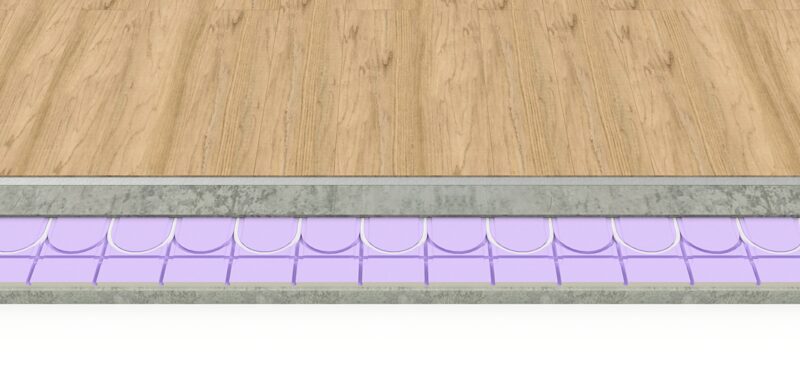
Underfloor heating can be either a wet system that pumps warm water through pipes, or a dry system of electric coils under the floor16. The two have different cost profiles and suit different situations.
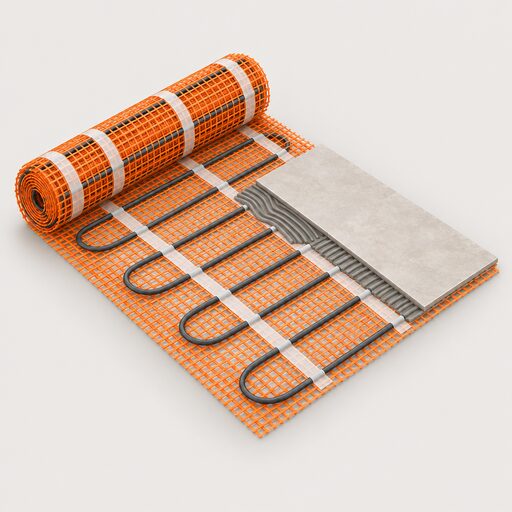
Electric underfloor heating tends to be cheaper than water underfloor heating to install, but has higher running costs15. It is more expensive than radiators both in terms of installation and running costs, with an exception for heating a single room where radiators cannot be zoned9. This makes electric underfloor heating a niche option: a bathroom, a kitchen extension, or a room where extending the wet circuit is impractical.
Wet underfloor heating is more expensive than radiators to install, but cheaper to run9. It is particularly suitable for new-build properties or when work is already being done on the floor16. For a heat pump installation, the wet system is the one that delivers the efficiency gain, because it can run at the low flow temperatures the heat pump produces.
A maker guidance note makes an important point for homes with both radiators and underfloor heating: connect each system independently to the boiler because radiators run at higher flow temperatures than underfloor heating6. This applies equally to a heat pump. Mixing the two on a single circuit without separation means the underfloor circuit receives water that is too hot, or the radiator circuit receives water that is too cool.
Independent guidance on heat pump suitability notes that heat pumps work best with underfloor heating, so this needs to be factored into the cost17. Having underfloor heating usually works well for heat pumps18. The decision between wet and electric is therefore not just about floor construction, but about whether the system will contribute to the heat pump's efficiency or simply provide local comfort.
Can existing radiators work with a heat pump, or do they need upgrading?
Existing radiators can work with a heat pump, but they often need to be larger. Independent guidance states that heat pumps benefit from the use of larger radiators or underfloor heating19. Possible upgrades include upgrading pipework, installing underfloor heating, or putting in larger radiators20.
The reason is surface area. Bigger radiators have more surface area, which could mean using a double or triple panel radiator21. Radiators that were fine with a boiler at 75°C may not be big enough at 45°C22. You can get radiators that do not take up extra wall space, in the form of double or triple panel radiators22.
It is not mandatory to change radiators, but bigger radiators could hugely improve how well a heat pump can heat your home21. The decision depends on the heat loss calculation for each room and the flow temperature the heat pump is designed to run at. A well-insulated home with oversized existing radiators may need no changes at all. A poorly insulated home with small radiators will need upgrades.
Independent guidance also notes that more radiators are often needed or improved building insulation is required when a heat pump is installed in place of a liquid fuel or gas heating system23. This is because heat pumps are most efficient when producing heat at lower temperatures than conventional boilers23.
For a household, the practical question is whether the existing radiators can deliver the required heat output at the design flow temperature. If they cannot, the options are larger radiators, additional radiators, or a switch to underfloor heating where floor conditions allow. The do I need new radiators page covers the assessment in more detail.
Where underfloor heating falls short: retrofit cost, insulation and slow response
Underfloor heating is expensive and disruptive to retrofit, and is usually only a good option if significant building work is already being undertaken16. This is the single biggest limitation for existing homes. Lifting floors, laying insulation, installing pipework and pouring screed is a major project, and it is not compatible with occupied rooms.
Insulation is a prerequisite, not an optional extra. For the system to provide adequate heat and be cost-effective, it is critical to ensure the property is well insulated and draught-proofed16. When underfloor heating is the only source of heat in a room, insulation boards need to be installed beneath it to reduce the amount of heat being lost downwards3. The system should cover between 80% and 90% of the room's total floor area, wall to wall3.
In an old property with solid walls and few energy-saving measures, such as no loft insulation or single-glazed windows, it is unlikely that underfloor heating will be sufficient to heat a room on its own3. This is a firm limit, not a matter of system sizing. The heat loss from the fabric of the building exceeds what the floor can deliver at a safe surface temperature.
Response time is the other practical drawback. Underfloor heating takes between an hour and 90 minutes to heat a room, with electric underfloor heating slightly quicker than water3. Wet systems generally take much longer to heat up and cool down than traditional radiators, partly due to the screed or concrete in which most systems are embedded16. An underfloor heating system takes longer to heat a room, so it is vital to combine it with a timer25.
This makes underfloor heating best left on a low temperature for a longer period, generally more suited to homes where people are in most of the day; if only used morning and evening, it alone may not provide sufficient warmth16. A household with a conventional on-and-off pattern may find radiators more responsive, even if they run at a higher flow temperature.

Floor coverings, furniture and floor surface temperature limits
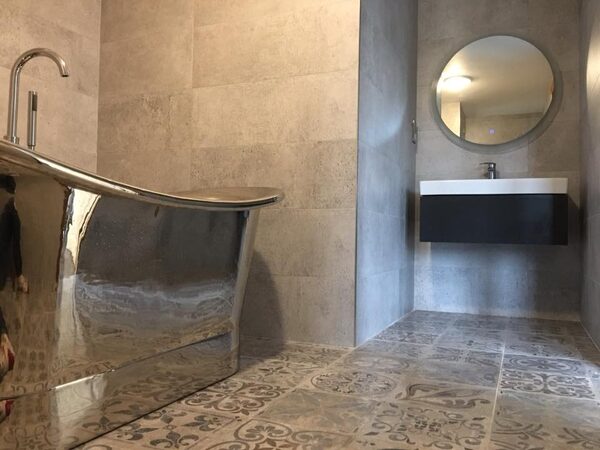
The floor covering is part of the heating system, not a separate finish. Official guidance states that the overall design needs to take account of the thermal resistance of the floor covering, rather than setting a specific U-value, with third party guidance referenced26. In practice, this means the floor build-up must be designed around the covering that will sit on top.
Tiles and stone are the best flooring for underfloor heating, because they conduct heat efficiently3. Most types of thin carpet, engineered wood, vinyl and laminate are compatible3. Thick carpet should not be used because it traps too much heat, and solid wood should not be used because it becomes warped by the temperature changes3.
Furniture placement is a real constraint. Underfloor heating systems can restrict what you can place on the floor, as they cannot sit under particular fittings and items of furniture16. A thick rug or a low sofa with a solid base acts as insulation, trapping heat in the floor and reducing the output into the room. This is the opposite of the radiator situation, where the advice is to keep radiators completely unblocked so they radiate their heat into rooms more easily27.
For radiators, the maintenance advice is to keep them clear of clutter, because when a radiator is blocked by clothes and furniture, the warm air cannot circulate and the radiator works even harder to heat the room28. Moving furniture away from radiators and turning radiators off in unused rooms are both suggested efficiency measures29.
Underfloor heating systems rarely fail during normal working conditions, as they are safely encased by insulation, screed and flooring3. They are more likely to be damaged during installation than in day-to-day use3. Specialist engineers can pinpoint faults under a finished floor to within a few millimetres3. Some companies provide warranties and guarantees, and some offer lifetime guarantees or cover accidental damage as well as systemic failures3.
Comfort, control and what owning each system means day to day
Underfloor heating warms a home from the ground up by turning the floor into a large radiator2. As the heat radiates from the floor, it enters the room evenly and provides a consistent temperature4. It transfers heat through both convection and radiation, helping to create a comfortable and constant temperature16. This even distribution is the main comfort argument for underfloor heating over radiators, which tend to create convection currents and warmer air near the ceiling.
Control is room by room. One case study describes having a thermostat in each room, which reduces the temperature overnight31. This level of zoning is possible with radiators too, using thermostatic valves, but underfloor heating lends itself to per-room control because each circuit can be regulated independently at the manifold.
Radiators require more routine attention. Checking radiators at least once a year to see if they need bleeding is standard advice32. Some sources suggest bleeding at least once a year, but preferably every few months33. Others suggest about once a year, ideally before winter when the heating is used more regularly34. One source suggests a couple of times a year, but checking before the cold hits27. Bleeding radiators often removes air pockets and improves heating system efficiency28.
If a radiator is hot at the top and cold at the bottom, it needs a power flush rather than bleeding32. To bleed a radiator, use a radiator key to open the small valve at the top and to the side slightly until water begins to drain out29.
Underfloor heating has an effect on property value. It is an extremely desirable feature for home buyers, so a property including it will be worth more when sold16. This is a market observation rather than a guarantee, but it reflects the perceived comfort and efficiency benefits.
For energy independence, the picture is mixed. Underfloor heating paired with a heat pump reduces the electricity drawn per unit of heat, which reduces exposure to grid prices. But the household remains dependent on the electricity grid and a supplier, and on the heat pump manufacturer for parts and service. Underfloor heating itself has no moving parts and rarely fails, which reduces one category of dependence, but the heat pump and its controls remain the critical system. The heat pumps and energy independence page sets out the wider picture.
Sources34 cited
- Renewable heat: right for your home, Energy Saving Trust
- Underfloor heating system, NICEIC
- Underfloor heating pros and cons, Which?
- Underfloor heating, Energy Saving Trust
- Home electrical infrastructure of the future, BEAMA
- Underfloor heating for new build, Nu-Heat
- Is your home suitable for a heat pump?, CPA
- Russell and Kate's story: solar panels and heat pump, Energy Saving Trust
- Underfloor heating costs, Which?
- Heat pumps, CAT
- Energy saving upgrades for home renovation, Energy Saving Trust
- Heat pump installation: a step by step guide, Energy Saving Trust
- Ground source heat pump costs and savings, Which?
- Electric vs water underfloor heating, Which?
- Heat pump inheritance, Energy Saving Trust
- Underfloor heating, CSE
- Consumers, RECC
- In-depth guide to heat pumps, Energy Saving Trust
- Air source heat pumps, Energy Saving Trust
- How heat pumps work: a guide for homeowners, NICEIC
- Heat pump fact check, Energy Saving Trust
- How to ensure a heat pump runs efficiently, Energy Saving Trust
- Future liquid fuels, UKIFDA
- RDSAP conventions v12, BRE Group
- Underfloor heating guide, Uswitch
- Future Homes and Buildings Standards consultation response, UK Government
- Cold weather energy saving: your top tips, Energy Saving Trust
- Reduce your heating bill tips, ivie
- Winter advice, Cadent Gas
- Approved Document L Volume 1 consultation version, Welsh Government
- Air source heat pump for rural off-gas home, Energy Saving Trust
- Boiler maintenance, Uswitch
- How to bleed a radiator, Uswitch
- How to bleed a radiator, Smart Energy GB
 Underfloor Heating SystemsWhich rooms suit electric underfloor heating and which need a wet system?
 Radiators and EmittersWill your radiators still heat the house properly with a heat pump?
 Heat Pumps vs BoilersWill a heat pump actually cost less to run than my boiler, and does it heat the house as well?
 Which Homes Suit a Heat PumpMost UK homes can have a heat pump fitted, so the real question is whether yours makes it easy or expensive.
 Heat Pump Running CostsWhat does a heat pump cost to run each year, and is it cheaper than a gas boiler?
 Using a Heat Pump for CoolingCan a heat pump cool your home in summer as well as heat it in winter?