In this guide
EcoFlow is one of the main providers of plug-in solar in the UK, and its product line runs from portable power stations through folding solar panels to a plug-in home battery system1. The company sells into the UK through its own online store, where stock has at times been tight: many EcoFlow products were already sold out online as of April 20261.
The two products that matter most for household backup are the DELTA Pro 3, built for whole-home backup and heavy-duty use, and the RIVER 3 Plus, aimed at smaller loads and sensitive electronics2. The DELTA Pro 3 runs a 10ms UPS mode that keeps sensitive devices protected during outages, and it can be expanded to 12kWh with Smart Extra Batteries2. The RIVER 3 Plus is the entry point for a household that wants a few circuits covered rather than the whole board.
What follows is what the kit does, what it costs in GBP, what it depends on, and where it stops.
What EcoFlow sells in the UK: power stations, solar panels and home backup
EcoFlow's UK catalogue splits into three groups. The first is portable power stations, the DELTA and RIVER families, which store energy in a battery and deliver it through AC, USB and DC outlets. The second is portable solar panels, from small folding units up to the 400W panel, which charge those stations directly. The third is the STREAM series, a plug-in solar and battery product sold in the UK as an all-in-one hybrid system with battery storage and a microinverter, described as a plug-and-play solution that does not require rewiring7.
That third group is the one that changes the household's relationship with its electricity supply rather than just covering an outage. Plug-in solar panels are now available to buy and use across Great Britain, helping households generate some of their own electricity8. Solar panels are the most common domestic renewable energy source in the UK, so the category is well established9.
The distinction matters for how each product is used. A portable power station is a backup device: it sits charged and idle until the mains fails, then runs a chosen set of loads. A plug-in solar and battery system works every day, offsetting imported units and storing surplus for the evening. EcoFlow sells into both markets, and the buying decision turns on which of those two jobs the household actually has.
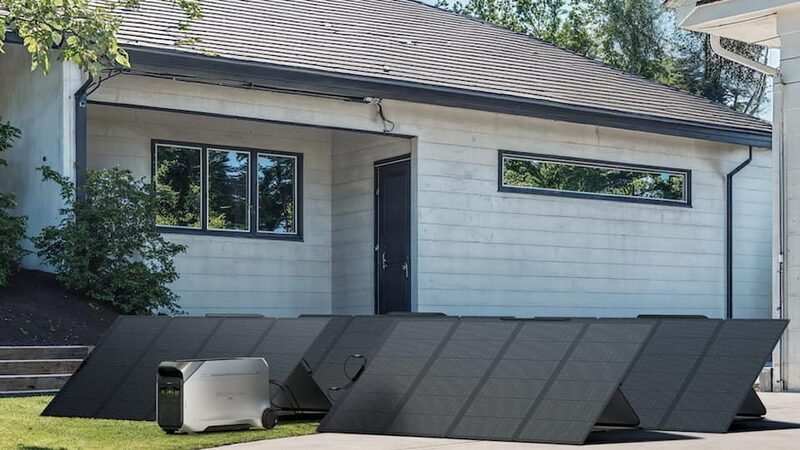
The range at a glance: DELTA Pro 3 for whole-home backup, RIVER 3 Plus for smaller loads
EcoFlow positions its stations by use case rather than by a single specification ladder. The DELTA Pro 3 is listed for whole-home backup, outdoor power and high-demand jobsites11. The DELTA 3 Plus is listed for smart homes and sensitive electronics2. The RIVER 3 Plus sits below both, for light backup and travel2.
| Product | Positioned for | Key figures |
|---|---|---|
| DELTA Pro 3 | Whole-home and heavy-duty use2 | 4,000W continuous, 6,000W peak, expandable to 12kWh2 |
| DELTA Pro 3 + Smart Extra Battery | Multi-day outages, critical appliances, off-grid emergencies11 | 4,096Wh extra battery, about 8kWh total, up to 2,600W solar input5 |
| DELTA 3 Plus | Smart homes and sensitive electronics2 | 10ms UPS mode2 |
| RIVER 3 Plus | Light backup and travel2 | Sub-10ms switchover for sensitive electronics2 |
The DELTA Pro 3 carries a full suite of ports: five AC outlets, multiple USB-A and USB-C ports, a car socket and an Anderson port3. That port set is what makes it usable as a household device rather than a camping accessory, because it can run a router, a laptop, a lamp and a fridge from the same unit without adapters.
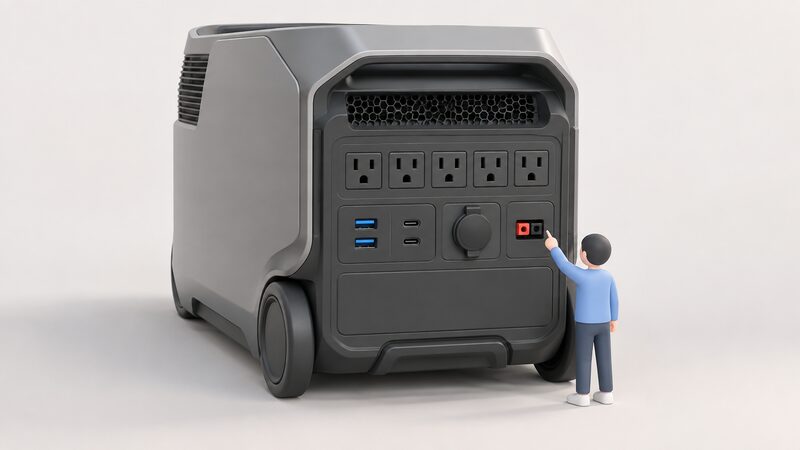
DELTA Pro 3: built for whole-home backup with a Manual Transfer Switch
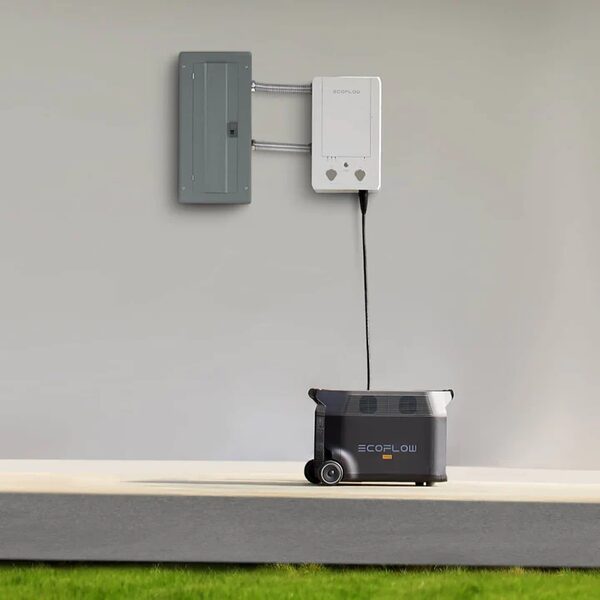
The DELTA Pro 3 is the model EcoFlow describes as built for whole-home backup, and the mechanism is a Manual Transfer Switch. Adding one lets the station support key home circuits as soon as the power drops, rather than requiring the household to run extension leads to individual appliances4. That is a meaningful difference in a real outage: circuits stay live, and the household does not have to decide in the dark which four things to plug in.
The electrical case for the transfer switch is straightforward. A station connected to fixed wiring needs a changeover arrangement so that it cannot feed the network while the network is down. The DELTA Pro 3's 10ms UPS mode keeps sensitive devices protected during outages, which covers the electronics side, but the transfer switch is what covers the circuits2.
Capacity is where the whole-home claim meets its limit. The base unit expands to 12kWh with Smart Extra Batteries2. A single Smart Extra Battery is rated at 4,096Wh and takes total capacity to roughly 8kWh, with support for up to 2,600W of solar input5. Output does not change when a battery is added: the same 4,000W continuous and 6,000W peak comes from the main unit4.
Cycle life is quoted at over 4,000 charge cycles3. That figure is the maker's, and it describes the battery under test conditions rather than a guarantee of service life in a particular house.
RIVER 3 Plus: sub-10 ms UPS switchover for sensitive electronics
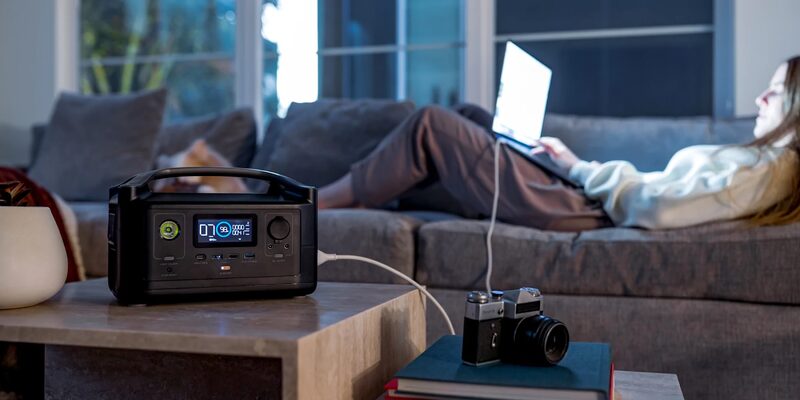
The RIVER 3 Plus is the smaller end of the range, and its defining figure is switchover speed. EcoFlow lists sub-10ms switchover for sensitive electronics, which is the same order of speed as the DELTA Pro 3's 10ms UPS mode2. For a desktop computer, a NAS drive or a broadband router, that is fast enough that the device does not restart.
The practical use is narrower than the DELTA Pro 3's. A RIVER 3 Plus is sized for light backup and travel, so it covers a router, a laptop, a phone charger and a lamp rather than a fridge or a heating pump2. In a short outage that is often exactly what a household needs: the broadband stays up, the phone charges, and the room stays lit.
The comparison worth drawing is with a conventional UPS. A dedicated UPS does the same switchover job for a single device and nothing else. A RIVER 3 Plus does it for several devices and can be carried to another room or taken away, which is why the two categories overlap in the market. The trade-off is that a power station's runtime depends on the load, and a small station running a router and a laptop will last far longer than the same station running a heater.
Charging options: solar panels from 100W to 400W
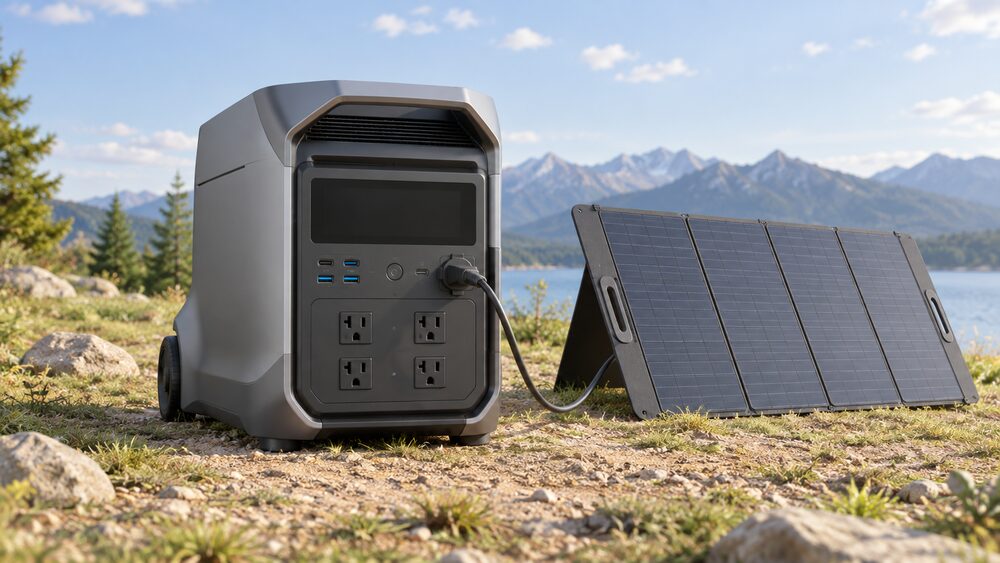
EcoFlow's solar panels have power ratings ranging from 100W to 400W1. The 400W Portable Solar Panel delivers up to 400W of solar input at 23% conversion efficiency and carries an IP68 waterproof rating for off-grid use2. The 400W Rigid Solar Panel is also rated at 23% efficiency and is sold in the UK as a two-piece set for balcony systems, at £3693. Rigid panels in the range are suited to outbuildings and roofs, with the 400W rigid model designed to lay flat and described as suitable for roofs or ground-mounted systems5.
Portable power stations set the ceiling on what a panel array can deliver. Depending on the model, EcoFlow's stations support anywhere from one 100W rigid solar panel to eight 400W rigid panels, a maximum of 3,200W with two DELTA Pros chained through a dual voltage hub7. The STREAM Ultra X is compatible with EcoFlow's high-efficiency 400W, 450W and 520W panels8. The 400W Portable Solar Panel is described as designed to withstand harsh UK weather9.
EcoFlow's portable solar panels are the charging route that removes the fuel dependency entirely. The largest in the range is the 400W portable panel, which delivers up to 400W of solar input at 23% conversion efficiency and carries an IP68 waterproof rating for reliable off-grid use12. The DELTA Pro 3 with a Smart Extra Battery supports up to 2,600W of solar input, so several panels can be combined5.
The honest limit is the UK climate. Solar panels can charge an electric car, but solar power alone is unlikely to be relied on year-round in the UK, especially in winter13. The same constraint applies to charging a power station: a 400W panel in December produces a fraction of its rated output, and a household that plans to run on solar alone through a winter outage will be disappointed.
That is why the stations also charge from the mains, and why the sensible pattern is to keep the unit topped up from the grid and treat solar as a top-up and an off-grid option. Planning permission is a separate question for fixed panels, and EcoFlow publishes guidance on it12.
"This panel delivers up to 400W of solar input at 23 % conversion efficiency"
What owning an EcoFlow kit means for household energy independence
The independence an EcoFlow station buys is real but partial, and it is worth being precise about which part.
What it removes is the immediate consequence of a grid failure. A charged station with a transfer switch keeps selected circuits live, and a station with solar input can be recharged without the grid. For a household on the Priority Services Register, or one with medical equipment, that is the difference between a manageable evening and a crisis. Network operators run their own support schemes for exactly this group, and SSEN's Home Battery Pack scheme is the clearest example: a six-month trial gave batteries to 28 customers who rely on powered medical equipment, and the EcoFlow Delta 3 was the model selected14. More than six thousand customers have already accepted a free Home Battery Pack under the wider scheme, which opened at the beginning of February 202614. The HOMEFlex Project is run in partnership with SSEN16.
What remains is dependence on the grid for recharging, on a supplier for the electricity that fills the battery, and on the manufacturer for the app, the firmware and the warranty. A station is a buffer, not a supply. It shifts when a household uses energy and covers the gap when the network fails; it does not generate a household's annual demand unless the solar array is large and the climate cooperative.
For households in Scotland, the support landscape differs. Home Energy Scotland runs a free advice hub with tools to start an energy saving journey, and the Scottish Government's grant and loan scheme provides grants and loans to all domestic owner-occupiers in Scotland to install clean heat and energy efficiency measures17. Heat pumps in Scotland can cut annual carbon emissions by up to 90% thanks to the clean electricity supply there19. None of that is EcoFlow kit, but it is the wider context in which a household decides whether to spend on a battery or on fabric and heating first.
UK availability: the online store, pricing in GBP and stock levels
EcoFlow sells through its own UK online store and through authorised UK dealers. Stock has been a constraint: many EcoFlow products were already sold out online as of April 20261.
Prices are published in GBP for the products where EcoFlow lists them. The STREAM Ultra was listed on the official EcoFlow UK store at an RRP of £949 for the single unit, and authorised UK dealers sometimes list it under £900 during special offers7. The STREAM Pro is listed at a sale price of £799 against a stated £1,2996. The STREAM Ultra also appears at a sale price of £8996.
| Product | Published price | Date |
|---|---|---|
| STREAM Ultra | £949 RRP single unit7 | 2025-09-01 |
| STREAM Ultra | £899 sale price6 | 2026-09-17 |
| STREAM Pro | £799 sale price, stated £1,2996 | 2026-09-17 |
The DELTA and RIVER stations are not given published GBP prices in the same way, so those are quoted by the retailer or dealer at the point of sale. Where a price is not published, treat it as a quote rather than a list price, and check the VAT position with the seller.
App and monitoring: whole-home energy data, scheduling and analysis
EcoFlow's app is the monitoring layer, and it is where the dependence on the manufacturer becomes visible. The app pairs with the station, reports state of charge, input and output, and on the STREAM system it provides whole-home energy data, scheduling and analysis.
The comparison worth making is with what a smart meter already provides. The free ivie app connects to a home's smart meter to give a better idea of how and where energy is used in the home20. That data comes from the meter, not from a battery, and it covers the whole house rather than the circuits behind a station.
The two are complementary rather than competing. A smart meter feed shows total household consumption; an EcoFlow app shows what the battery is doing and what it is carrying. Neither works without a live connection to the manufacturer's or supplier's systems, and neither replaces the other.
Where the range has limits
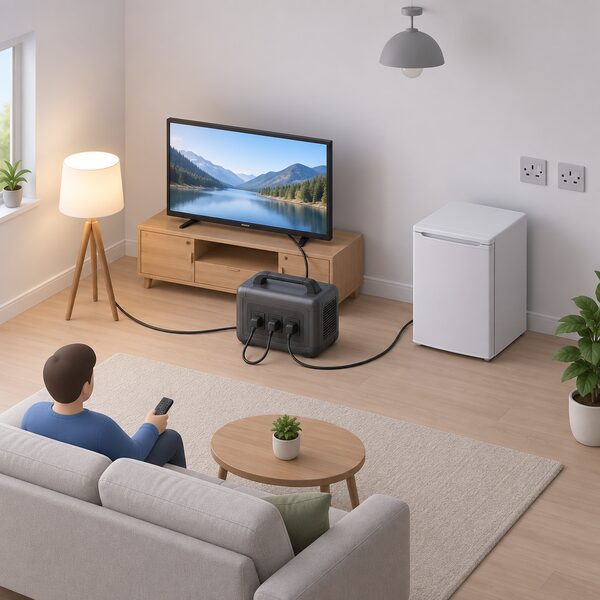
Three limits are worth stating plainly.
The first is capacity against load. A DELTA Pro 3 expanded to 12kWh is a substantial battery, but a household running an electric shower, an immersion heater or a heat pump will exhaust it quickly2. The whole-home backup claim is about key circuits, not about running a house as normal.
The second is the transfer switch requirement. Without one, a station covers appliances plugged into it and nothing else. With one, the installation is electrical work on fixed wiring, and the changeover arrangement has to prevent the station feeding the network while the network is down4.
The third is the company relationship. Warranty, app features and firmware all run through EcoFlow. The STREAM Ultra carries a 10 year warranty, which is the longest term the maker publishes for its UK home energy products6. That is a strong term, and it is also a term that depends on the company continuing to honour it.
For a household weighing the purchase, the useful question is not whether the kit works, but which loads it must carry and for how long. That is a sizing question before it is a brand question, and it is answered by listing the circuits that matter and the hours they need to run.
Sources20 cited
- How plug-in solar can save UK homes £1,100 on energy bills, Carbon Brief, 2026-04-02
- EcoFlow DELTA 3 series buying guide, EcoFlow, 2025-06-23
- EcoFlow DELTA 2 vs DELTA 3, EcoFlow, 2025-06-25
- Power cuts in Hartlepool, EcoFlow, 2025-11-26
- Bootle power outage, EcoFlow, 2025-11-17
- STREAM Series plug-in solar battery, EcoFlow, 2026-09-17
- EcoFlow STREAM Ultra, EcoFlow, 2025-09-01
- Simple tips for a greener Easter, Home Energy Scotland, 2026-03
- Generating renewable electricity, Energy Saving Trust, 2025-12-11
- Top energy saving ideas for your home improvement project, Energy Saving Trust, 2026-08-03
- Power cuts in Edinburgh, EcoFlow, 2025-11-26
- Planning permission for solar panels, EcoFlow, 2025-07-23
- Can solar panels charge electric cars?, The CPA, 2026-04-15
- Home battery packs, SSEN, 2026-09-17
- SSEN gives 20,000 home battery packs to customers who need the most support, SSEN, 2026-02-24
- About the HOMEFlex project, FlexAssure, 2026-09-19
- Discover advice hub, Home Energy Scotland, 2026-01
- Heat in buildings progress report 2024, Scottish Government, 2024-10-10
- Accelerating zero carbon heat in Scotland, MCS Foundation, 2026-09-20
- Celebrating the little wins with ivie points, ivie, 2026-09-20
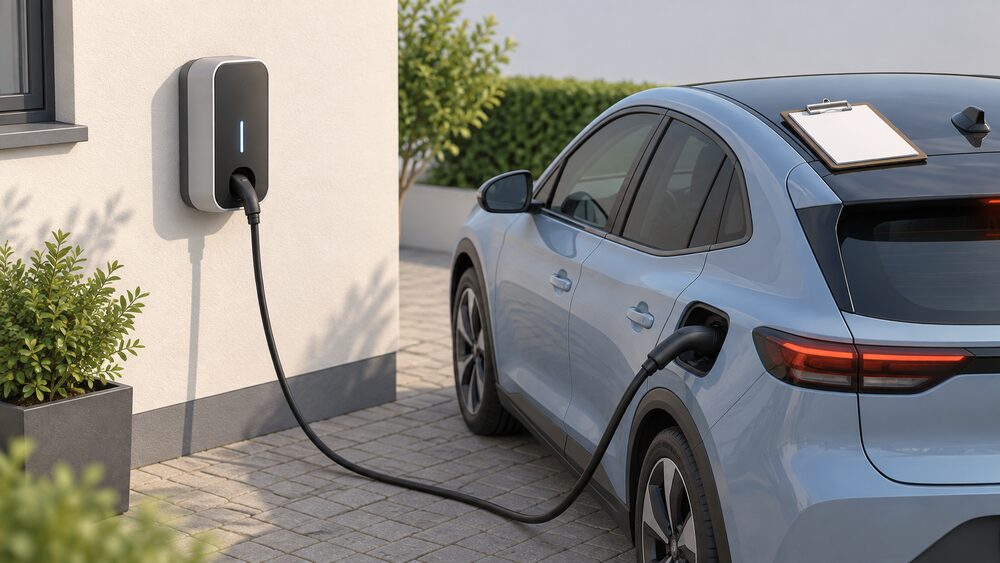 EcoFlow EV chargersEcoFlow makes portable power stations and solar gear, and now a home EV charger called the PowerPulse 2.
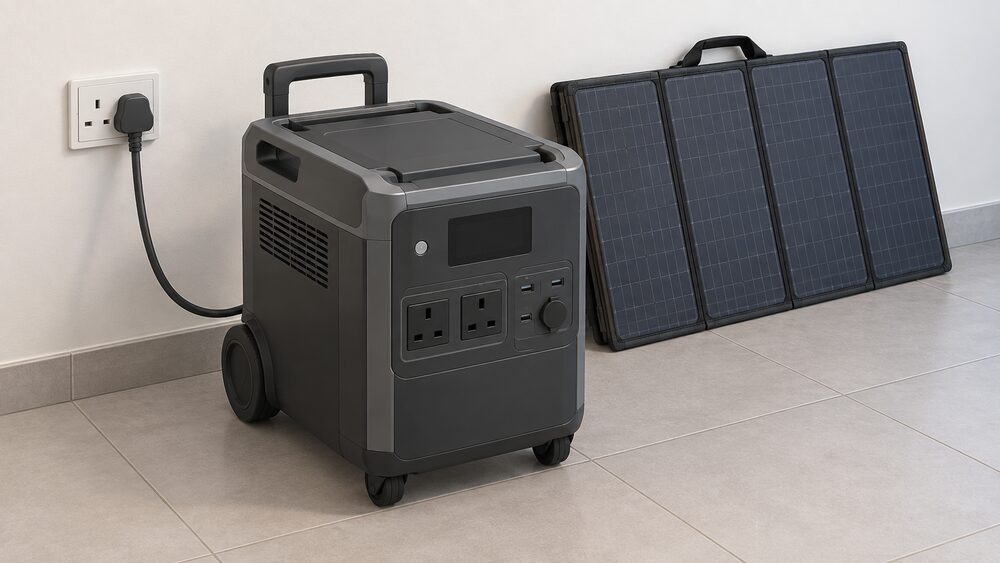 EcoFlow Home Batteries and Portable Power StationsEcoFlow sells both portable power stations you can carry and fixed home batteries wired into your house.
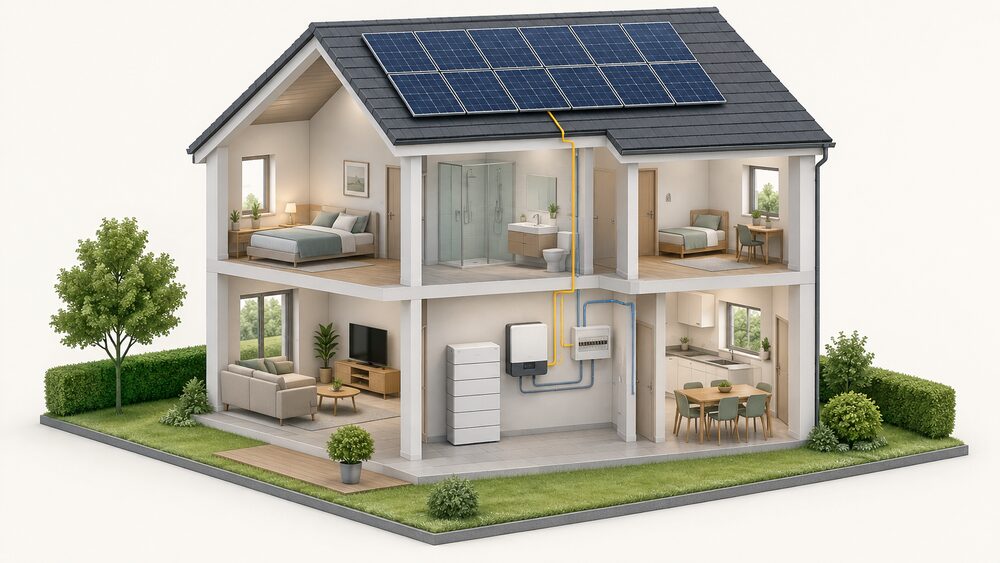 EcoFlow PowerOceanIf you are trying to find out what EcoFlow's PowerOcean actually is, whether you can buy it in the UK and what it costs, the short answer is that it is a hard-wired home battery system sold through distributors rather than a plug-in device.