In this guide
EcoFlow is a portable power brand that has extended into domestic EV charging, and the distinction matters for anyone weighing a home charge point. Its wallbox is a 7kW single-phase unit, the PowerPulse 2, sold through UK wholesale distribution with grid connection certificates available on request1. Around it sits a family of portable power stations, solar generators and power kits that share one app and one approach to energy management2.
The headline numbers are modest and familiar. A 7kW single-phase charger adds roughly 20 to 30 miles of range per hour, and a typical EV with a 60kWh battery takes just under 8 hours to charge fully3. Official guidance groups fast chargers at 7 to 22kW, with four to eight hours for a full charge3. Nothing about the EcoFlow unit changes those physics; what it changes is how the charger sits inside a wider home energy picture.
That picture is where the brand's claim rests. EcoFlow states that it is dedicated to helping users optimise home energy management, improve power efficiency, save on electricity bills and eventually move toward a power-independent life1. The evidence for that in the UK is strongest on the portable side, where the company's products are widely sold, and thinner on the fixed wallbox side, where the charger is one grid-connected appliance among many.
What EcoFlow makes: portable power first, EV charging as part of an ecosystem
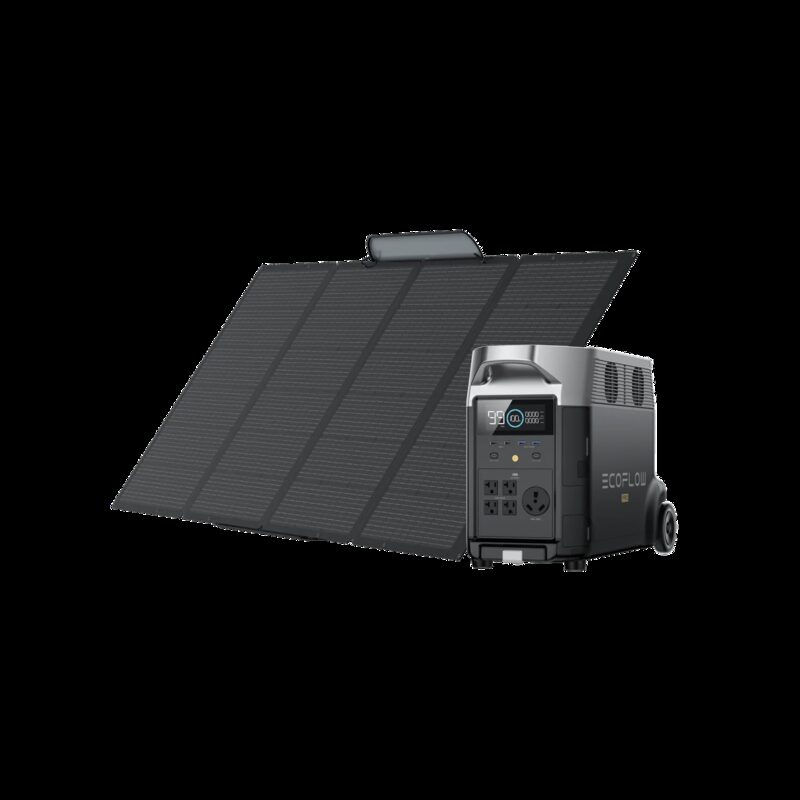
EcoFlow's product line began with portable power stations and solar generators, and that remains the centre of gravity. Its portable power stations offer solar panels as a charging option, and the inverter is built into the portable power stations, solar generators and power kits rather than supplied separately2. The RIVER 3 offers four charging options: wall, solar, car or generator7. The DELTA Pro lists charging options spanning solar, AC, car charger, smart home panel, EV charge station and a dual fuel smart generator8.
That breadth is the point. A household buying into EcoFlow is buying into a system where the same batteries, panels and app serve camping, backup power and, at the edge, vehicle charging. The DELTA Pro and DELTA 2 Max can be used to partially charge an electric vehicle using a Portable Power Station Grounding Adapter, which is a long way from a wallbox but shows the intended direction6. The DELTA also supports fast charging from AC level 2 EV stations, so the relationship runs both ways7.
The EV charger itself is a later addition to that family. It is a fixed, grid-connected appliance, and it does not depend on the portable products to function. What the ecosystem offers is a single app and a single brand relationship across backup power, monitoring and charging, rather than a charger with unusual technical capability.
PowerPulse 2: a 7kW single-phase home charger
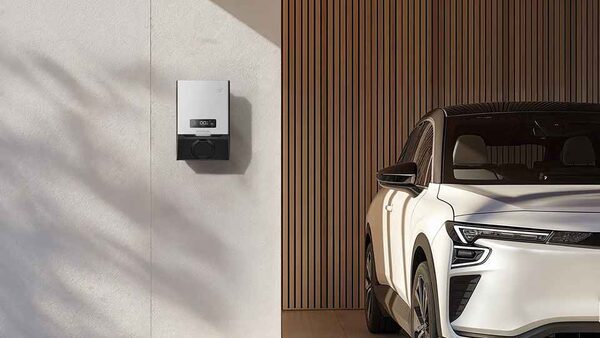
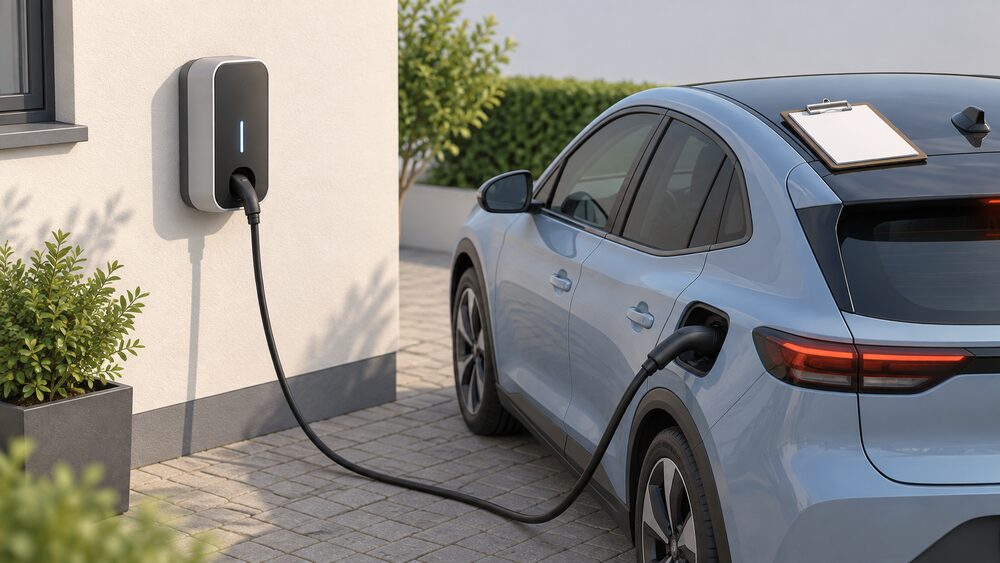
The PowerPulse 2 is a 7kW single-phase wallbox. Single-phase 7kW is the standard UK domestic charging rate, and it corresponds to a 32 amp supply on one phase9. That places it in the same class as most home charge points sold in the UK, and it means the unit is suited to a typical single-phase domestic supply rather than to a three-phase property.
The practical consequence is that charging speed is set by the car as much as by the wallbox. A 7kW charger delivers around 20 to 30 miles of range per hour, and a 60kWh battery takes just under 8 hours to fill3. Official guidance describes fast chargers as delivering 7 to 22kW and taking four to eight hours to charge an EV battery3. A car with a smaller onboard charger will accept less than the wallbox can supply, and a car with a larger one will still be limited by the 7kW ceiling.
Installation is not a DIY job. Guidance for householders is to hire an electrician registered with a recognised certification body, such as NICEIC4. The charger also needs to be notified to the network operator, and the paperwork that supports that notification is where the certificates come in.
| Specification | Value |
|---|---|
| Charger type | 7kW single-phase home wallbox1 |
| Supply | 1-phase, 32 amps9 |
| Range added per hour | around 20 to 30 miles3 |
| Full charge, 60kWh battery | just under 8 hours3 |
| Grid certificates | G98, G99 and G100 available via distributor1 |
| Installer | registered electrician, such as NICEIC-registered4 |
Grid connection certificates: G98, G99 and G100
The three certificate types cover different things, and the distinction is worth understanding before an installer raises them. G98 and G99 relate to connecting generation or export-capable equipment to the distribution network. G100 relates to export limitation, which is how a site caps what it sends back to the grid.
The rule that catches people out is that type tested equipment does not remove the need to apply. Distribution network guidance states plainly that chargers using EREC G99 type tested equipment still need to apply for a connection10. For vehicle-to-grid capable chargers, the requirement is tighter: chargers must be type tested to EREC G98 specifications to be eligible for connect and notify11.
EcoFlow's UK distributor lists G98, G99 and G100 certificates as available through its explanation guide, which is the practical route to the documentation an installer needs1. On the Northern Ireland side, a fast track connection application requires a compliance certificate with test results12. Separately, building regulations approval for electrical work in England and Wales is evidenced by a compliance certificate proving the work complies with building regulations13.
Charging from your own solar and storage
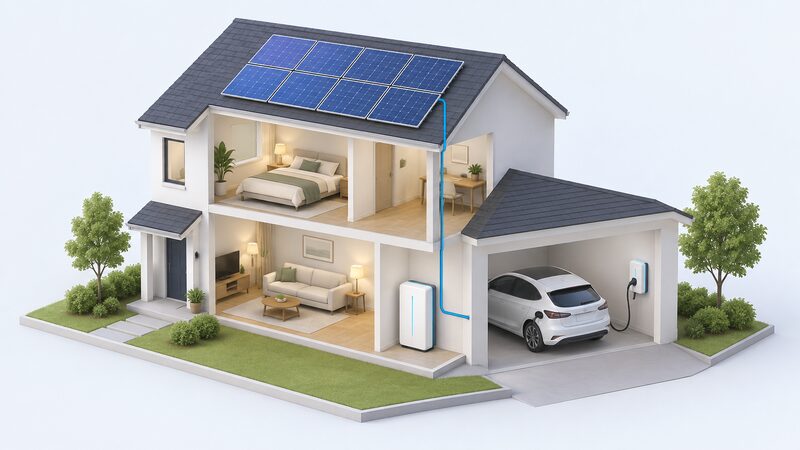
Solar-aware charging is well established in the UK market, and the pattern is consistent across makers. SolarEdge states that its smart home EV chargers use available solar energy for EV charging14. Sync Energy's Auto Solar Charge enables the EV charger to automatically access and use surplus solar energy for charging15. That is the standard model: the charger watches for export and diverts it to the car instead.
EcoFlow's documented solar capability sits mainly on the portable side. The DELTA 2 supports up to 500W of solar, with an input range of 11 to 60V7. The RIVER 2 can be recharged from outlets, car adaptors and solar panels sold separately6. The DELTA 2 Max lists solar, AC and car charger among its charging options8. The Power Kits use a DC-to-DC battery charger with an integrated MPPT solar controller and two additional MPPT solar charge controllers16.
What is not documented in the same terms is a surplus-diversion mode on the wallbox itself. A household wanting to charge a car from rooftop solar through an EcoFlow charger should treat that as a question for the installer and the maker, not as a stated feature. The portable route, charging a power station from panels and then using it, is a different and much slower proposition.
The app: whole-home energy data and scheduling
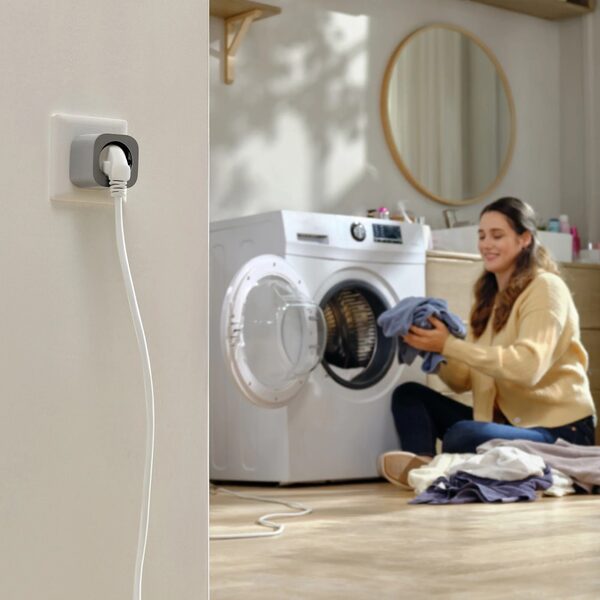
The EcoFlow app is the connective tissue across the range. It provides smart energy management for the DELTA Pro Ultra, which also offers five rapid charging methods17. The Smart Plug integrates with the app for real-time energy tracking, aimed at homeowners, renters and businesses wanting to increase power efficiency and reduce energy use18. The DELTA Mini can be controlled and monitored for power consumption through the app7. The WAVE 2 air conditioner runs from the app or from manual controls on the unit7.
For comparison, other makers in this space tie charging and home energy into one interface. Sync Energy's app manages EV charging and its Flow home energy system in one place, with full charging history for both, on Apple and Google platforms19. SolarEdge offers control and optimisation of all household energy, including EV charging, from a single app14. Sync Energy's homeowner features include Auto Solar Charge, tariff optimisation and real-time energy insights15.
The dependence this creates is worth naming. App-based monitoring and scheduling rely on a home broadband connection, the manufacturer's servers and a continuing software relationship. Local charging continues without any of that, but the data layer does not.
UK availability and buying an EcoFlow charger
EcoFlow sells into the UK through its own store and through wholesale distribution, and the charger appears in distributor catalogues rather than on a single retail shelf1. Stock has been a live issue: independent reporting in April 2026 noted that many EcoFlow products, including its plug-in solar range, were already sold out online21.
On cost, the published guidance is broad. Official guidance states that an EV charger can be up to £1,0005. That figure covers the hardware and does not account for the installation variables that move a quote: cable run, whether a new circuit is needed, earthing arrangements and any groundworks. Prices for a specific EcoFlow unit are installer-quoted, and no manufacturer list price for a supplied-and-fitted installation is published.
The wider charging landscape is worth keeping in view. Public charge points can be found at public car parks, on-street, coffee shops, supermarkets, hotels, workplaces and service stations22. For households without off-street parking, cross-pavement solutions exist and carry their own conditions, including a requirement in at least one scheme for the householder to install a dedicated EV charger and provide an electrical safety certificate to verify it23. ChargeUK, which describes itself as the voice of the UK's EV charging industry, has published research on accelerating the rollout of charge points24.
What an EcoFlow charger means for household energy independence
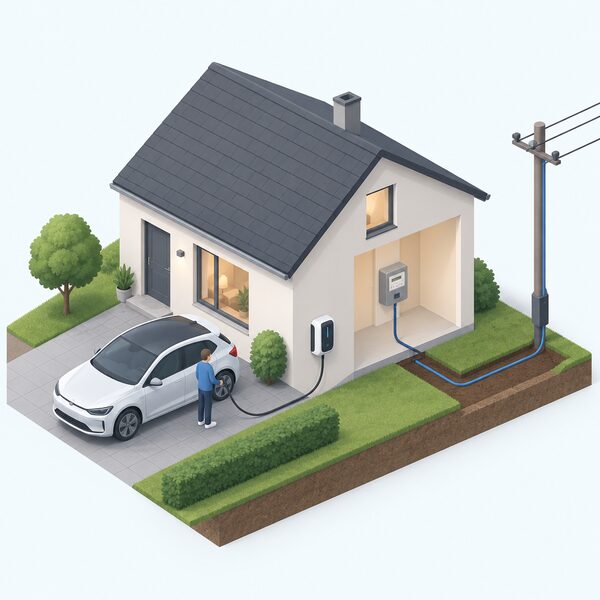
The honest position is that a grid-connected wallbox does not deliver energy independence on its own. It draws from the grid, through a supplier, at whatever tariff applies. What it can do is shift when that electricity is drawn, and the app layer is what makes the shifting visible.
EcoFlow's own framing is ambitious: the company states it is dedicated to helping users optimise home energy management, improve power efficiency, save on electricity bills and eventually move toward a smart, sustainable, power-independent life1. Its stated mission is to provide smart and eco-friendly energy solutions for individuals, families and society at large1. Those are maker claims about direction, not measured outcomes.
The dependencies that remain are concrete. The charger needs a grid connection and a supplier. The app needs broadband and the manufacturer's servers. Solar diversion, if it is available at all on this unit, depends on the inverter and the installer's configuration. And the portable products that give the brand its independence story are a separate purchase from the wallbox.
Where the ecosystem genuinely helps is in visibility. A household running EcoFlow batteries, a Smart Plug and the app sees more of its own consumption than one with a plain wallbox18. That is a real if modest contribution to independence: knowing what a home uses is the precondition for changing it. The rest, including any move off gas or toward self-generation, sits with the wider system rather than with the charger.
Sources24 cited
- EcoFlow EV chargers, Midsummer Wholesale, 2026
- How to set up a solar backup generator, EcoFlow, 2025
- Electric vehicle charging, SMMT, 2025
- EV charger installation and maintenance, NICEIC, 2025
- Electric vehicles, nidirect, 2026
- Best portable power station, EcoFlow, 2025
- Portable power station 1000W, EcoFlow, 2025
- Best solar products for homes in the UK, EcoFlow, 2025
- How to choose the right EV charger, E.ON Next, 2026
- Apply for a new connection: electric vehicles, Electricity North West, 2026
- Commercial viability of V2G, Cenex, 2021
- What you need to start your G99 application, NIE Networks, 2026
- Electric vehicle charging: building regulations, Planning Portal, 2026
- Residential EV charging, SolarEdge, 2026
- Sync Energy app for homeowners, Sync Energy, 2026
- What is a DC to DC battery converter, EcoFlow, 2025
- Dealing with an electricity power cut, EcoFlow, 2025
- How to monitor home electricity usage, EcoFlow, 2025
- Sync Energy app, Sync Energy, 2026
- OpenEVSE overview, OpenEnergyMonitor, 2026
- How plug-in solar can save UK homes, Carbon Brief, 2026
- Electric vehicles for home charging, Electricity North West, 2026
- Cross-pavement charging solutions, Energy Saving Trust, 2025
- Accelerating the rollout of charge points, ChargeUK, 2026
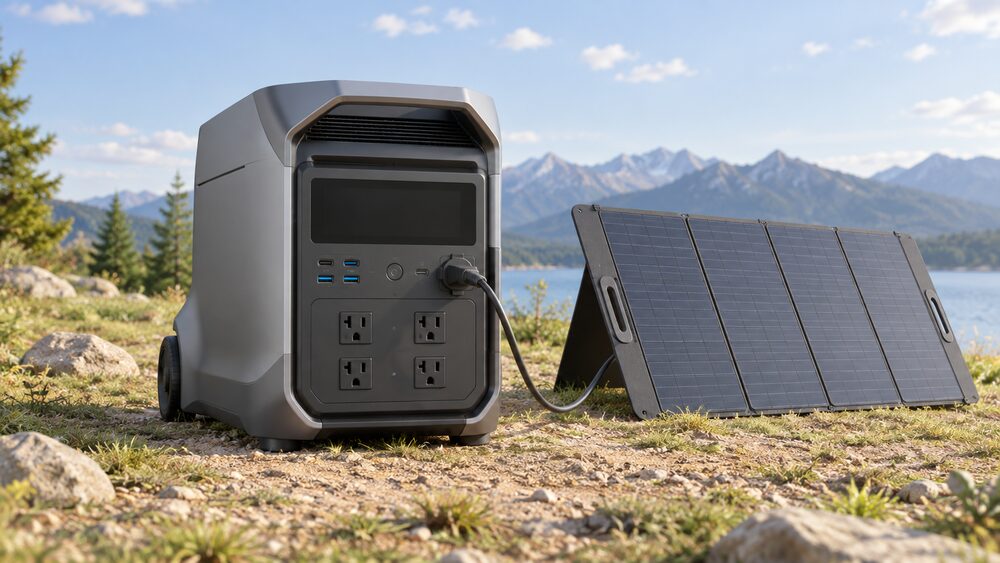 EcoFlow portable power stations and home backup kitEcoFlow is one of the three biggest portable power station makers sold to UK households, with the DELTA Pro 3 for whole-home backup and the RIVER 3 Plus for smaller loads.
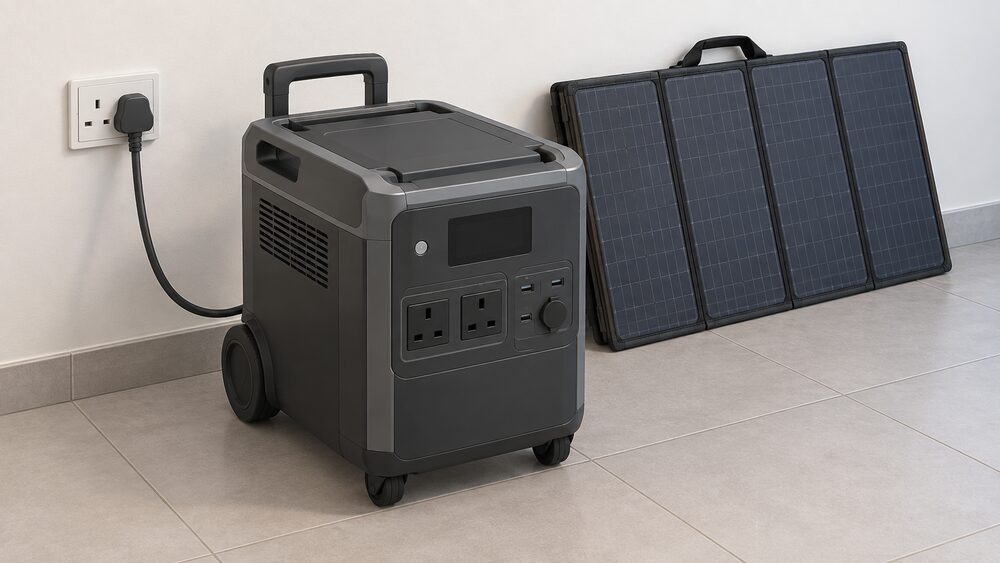 EcoFlow Home Batteries and Portable Power StationsEcoFlow sells both portable power stations you can carry and fixed home batteries wired into your house.
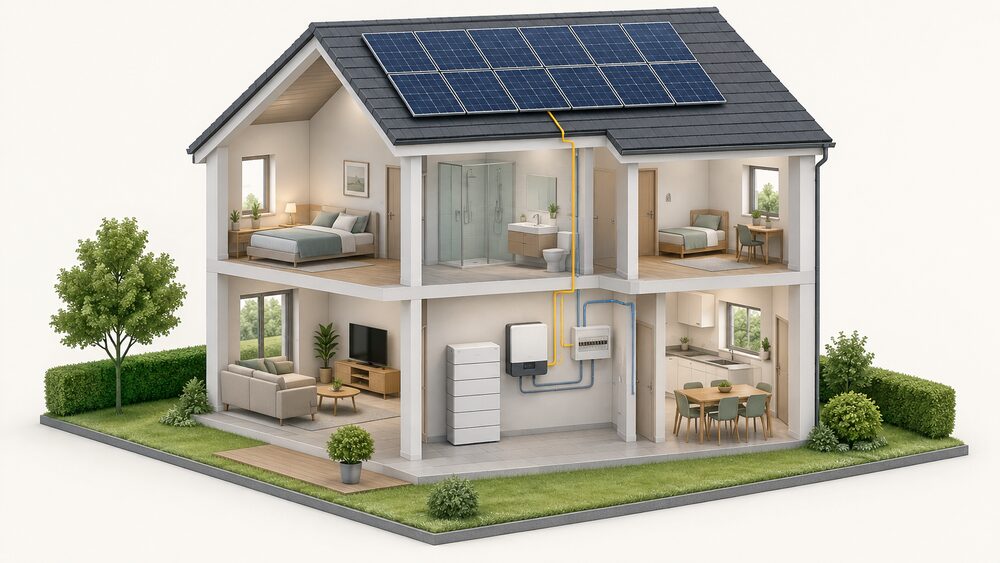 EcoFlow PowerOceanIf you are trying to find out what EcoFlow's PowerOcean actually is, whether you can buy it in the UK and what it costs, the short answer is that it is a hard-wired home battery system sold through distributors rather than a plug-in device.