In this guide
EcoFlow is a battery brand launched in 2017 by two battery engineers, now selling portable power stations, plug-in solar batteries and whole-home storage in the UK. It states that Frost & Sullivan ranked it number one globally among smart home energy storage solution brands based on 2024 sales, in research completed in December 20251. The range runs from the RIVER series, with 500W output on the RIVER 2 Max, up to the DELTA Pro 3, which delivers a continuous 4,000W output, 6,000W via X-Boost, and switches to backup power within 10 milliseconds during an outage2.
The distinction that matters for a household is between a portable power station and a home battery. A power station is a self-contained unit with sockets, charged from a wall outlet, a car adaptor or solar panels sold separately, and moved between rooms or taken away4. A home battery is fixed, wired into the installation and, in EcoFlow's case, paired with an app that tracks time-of-use prices and shifts charging to cheap periods5. The STREAM series sits between the two: a plug-in solar battery with a stable 2,300W output and 99% solar panel compatibility, designed for balconies, terraces, gardens and small flats6.
What follows is what each part of the range covers, what the figures actually mean, and where the dependence on a supplier, a grid connection and a manufacturer's app remains.
A battery brand launched by engineers, now ranked number one
EcoFlow was launched in 2017 by two battery engineers and has since expanded into a global business. The company's stated mission is to provide smart and eco-friendly energy solutions for individuals, families and society at large, and it describes its aim as helping users optimise home energy management, improve power efficiency, save on electricity bills and move towards what it calls a power-independent life1.
The ranking claim is specific and worth reading carefully. EcoFlow states it ranked number one globally among smart home energy storage solution brands based on 2024 sales, citing Frost & Sullivan's Global Smart Home Energy Storage Solutions Industry Research Report, with the research completed in December 20251. That is a market share position across a category, not a reliability score, an efficiency measure or a warranty comparison. It is also the maker's own citation of a third-party report, and the report itself is not published in full on the page.
The chemistry behind most of the range is lithium iron phosphate, abbreviated LFP or LiFePO4. EcoFlow states that most of its portable power stations use it, including the RIVER 2, DELTA 2, DELTA Pro and Power Kits4. LFP is the same family used across most fixed home batteries sold in the UK, and it is chosen for cycle life rather than energy density. The DELTA Pro 3 uses automotive-grade LFP cells rated for over 4,000 charge cycles11. Cycle life is covered in more depth in home battery cycle life and degradation.
For a household, the brand's origin matters less than its product categories. EcoFlow sells three things that bear on energy independence: portable power stations that can run appliances during an outage, plug-in solar batteries that store generation without a fixed installation, and app-based energy management that shifts consumption to cheaper hours. Each carries a different kind of dependence, and the sections below take them in turn.
Portable power stations and home batteries: what the range covers
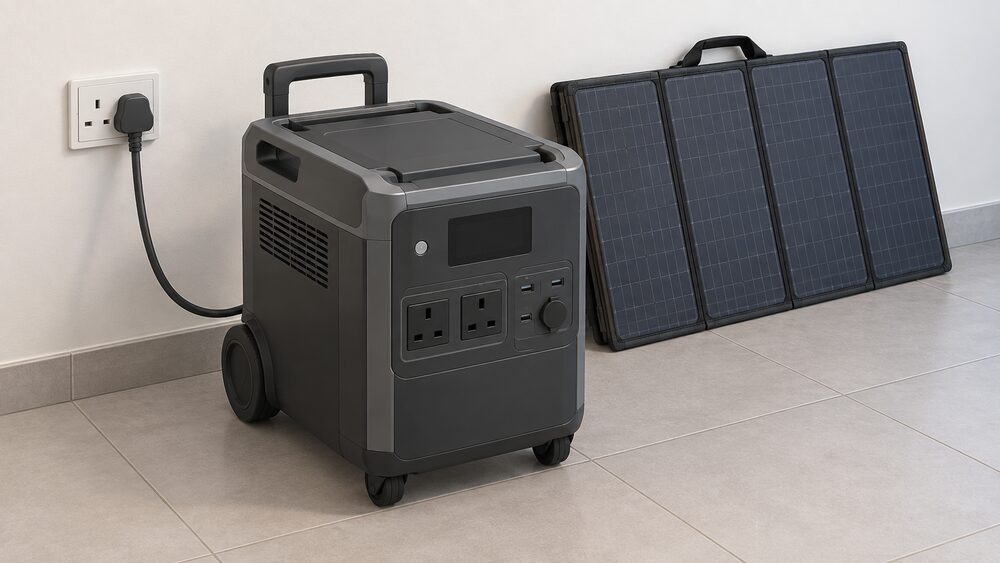
The portable range splits into two families. The RIVER series is the smaller, lighter end: the RIVER 2 Max pairs a 512Wh LiFePO4 battery with 500W output and is rated for about 3,000+ cycles, while the RIVER 3 Plus uses integrated LiFePO4 cells delivering over 3,000 cycles before capacity drops to 80%12. The RIVER 3 offers four charging options: wall, solar, car or generator13.
The DELTA series is the larger end. The DELTA 2 carries a 1,024Wh LFP battery with four AC sockets, USB-A fast charge, dual 100W USB-C, a 12V car socket and DC outputs14. The DELTA 2 Max is rated for 3,000 cycles to 80% or better capacity, and the DELTA 3 Plus for roughly 4,000 cycles13. All three DELTA 3 models run on LFP batteries and can be controlled through the EcoFlow app15.
| Product | Battery | Cycle life | Output |
|---|---|---|---|
| RIVER 2 Max | 512Wh LiFePO4 | about 3,000+ cycles12 | 500W12 |
| RIVER 3 Plus | LiFePO4 | over 3,000 cycles to 80%12 | Not stated |
| DELTA 2 | 1,024Wh LFP | Not stated | Four AC sockets14 |
| DELTA 2 Max | LFP | 3,000 cycles to 80%+13 | Not stated |
| DELTA 3 Plus | LFP | roughly 4,000 cycles14 | Not stated |
| DELTA Pro 3 | Automotive-grade LFP | over 4,000 cycles11 | 4,000W, 6,000W X-Boost3 |
The distinction between these and a fixed home battery is not capacity alone. A portable power station is charged from a socket, a car or a panel, and its output is delivered through its own sockets rather than through the house wiring. A fixed battery is wired in, works with the consumer unit, and can be sized against the home's annual consumption. EcoFlow's own guidance notes that a smart home ecosystem option offers expandable power capacity supporting high solar input and high-wattage output, which is the bridge between the two categories4. Sizing a fixed system is covered in what size home battery do you need.
DELTA Pro 3: whole-home backup for multi-day outages
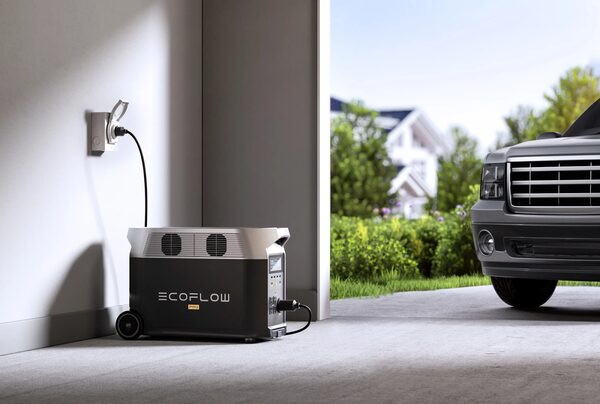
The DELTA Pro 3 is the unit EcoFlow positions for whole-home backup, outdoor power and high-demand jobsites8. Its headline figures are a continuous 4,000W output, rising to 6,000W via X-Boost, a nominal capacity of about 8,192Wh, expandable to 12kWh with Smart Extra Batteries, and support for up to 2,600W of solar input3. The maker describes it as suitable for multi-day outages, critical home appliances and off-grid emergencies8.
The switchover figure is the one that decides what it can protect. EcoFlow states that the unit switches to backup power within 10 milliseconds during an outage, and describes a 10ms UPS mode that keeps sensitive devices protected2. That is fast enough for most electronic equipment, and it is the same order of magnitude claimed by fixed home batteries with an emergency power supply function. What that means in practice, and the difference between a UPS socket and a backed-up circuit, is set out in battery backup in a power cut.
Whole-home backup here does not mean the whole installation. EcoFlow's own guidance is that a more hands-off setup uses a Manual Transfer Switch to let the unit support key home circuits as soon as the power drops9. That is a selected-circuits arrangement, not a like-for-like replacement for a grid supply, and it requires an electrician to install the transfer switch. The unit also carries IP65 weatherproofing, which allows outdoor siting16.
The capacity arithmetic is worth stating plainly. The base unit is expandable from 4 kWh to 12 kWh with Smart Extra Batteries for longer backup8. A household's usable runtime depends entirely on what is plugged in: a fridge, a router and lighting draw far less than an electric heater or a heat pump. EcoFlow's own content on running costs notes how much an electric heater costs to run, which is the load that empties a battery fastest17.
Charging from solar panels: the off-grid route
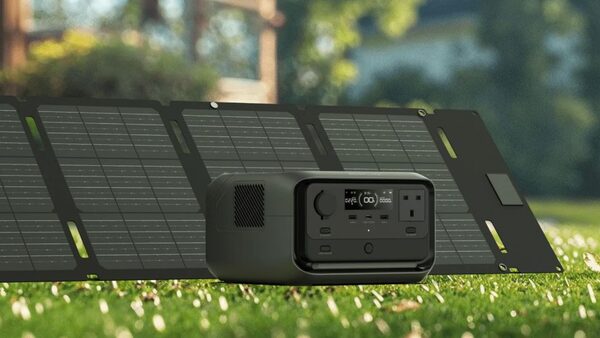
Solar charging is available across the range, with the panel sold separately. EcoFlow states that its portable power stations offer solar panels as a charging option, and the RIVER 3 lists wall, solar, car and generator among four charging methods4. The DELTA 3 supports solar and car charging when off-grid15. The DELTA Pro accepts portable or fixed solar panels within an 11 to 150V, 15A window and up to 1,600W of solar input18.
The voltage and current window matters more than the wattage headline. A panel or string outside the 11 to 150V range will not charge the unit efficiently, or at all, so panel choice is constrained by the input specification rather than by physical size. The DELTA Pro 3's higher ceiling of up to 2,600W of solar input gives more headroom, but only where the array can actually deliver it10.
Independent guidance on solar battery storage describes the general principle: batteries can be charged using excess electricity generated from solar panels or other home generation, from the mains electricity supply, or from off-peak grid electricity on a time-of-use tariff19. Official guidance from a local authority planning page makes the same point in simpler terms, that solar panels are used to charge up an on-site battery storage system20. EcoFlow's solar charging sits within that pattern, with the difference that the battery is portable rather than fixed.
"You can charge the batteries using excess electricity generated from solar panels or other home generation."
The limits are practical. Solar charging depends on daylight, panel orientation and weather, and a portable panel deployed on a balcony or in a garden produces less than a roof array of the same nominal rating. Off-grid use is covered further in off-grid battery systems, and the general relationship between generation and storage in solar battery self-sufficiency.
The STREAM series and plug-in solar in the UK
The STREAM series is EcoFlow's plug-in solar battery. It integrates an energy storage system and a microinverter into one compact unit with plug-and-play installation, a stable 2,300W output and compatibility with over 99% of solar panels6. The STREAM Ultra adds 800W more through third-party microinverters, and uses a 1.92kWh LiFePO4 battery7. EcoFlow sells it in bundles for balconies, terraces, gardens, flat or pitched roofs and vertical façades, and describes it as ideal for balconies and small flats21.
This is the category the UK government moved to legalise. In March 2026 the government announced it would legalise plug-in solar, working with retailers including Lidl and Iceland and manufacturers including EcoFlow. The STREAM series is the product line that sits directly in that change. Plug-in and balcony storage is covered in more depth in plug-in and balcony battery storage in the UK.
The STREAM series carries a customer review rating based on 76 reviews on EcoFlow's own product page, and is labelled a user favourite7. That is a maker-hosted rating, not an independent survey, and should be read as such.
| STREAM feature | Figure |
|---|---|
| Output | stable 2,300W6 |
| Panel compatibility | over 99% of solar panels6 |
| Extra input via third-party microinverters | 800W more7 |
| Battery chemistry | 1.92kWh LiFePO4 (STREAM Ultra)17 |
| Installation | plug-and-play6 |
| Typical siting | balconies, terraces, gardens, roofs, façades21 |
The independence this offers is partial by design. A plug-in system generates and stores without a fixed installation, an MCS-certified installer or a roof, which lowers the barrier for renters and flats. It does not remove the grid connection, and it does not remove the supplier: the household still draws from the grid when the battery is empty and still exports or imports under whatever arrangement applies. The safety considerations for plug-in units are set out in are plug-in batteries safe for UK homes.
App control: energy data, scheduling and hot water temperature
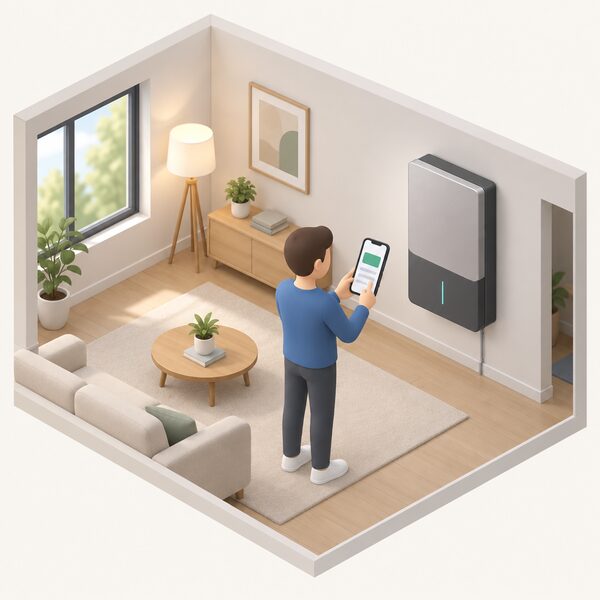
The EcoFlow app is the control layer across the range. EcoFlow states that it gives complete visibility of whole-home energy data, allows analysis of heating power, and permits adjustment of temperature for rooms and hot water, along with scheduling of heating and cooling5. On the STREAM series, all units connect to the app, which uses AI energy management and Solcast solar forecasts, tracking time-of-use prices from suppliers including Octopus, charging when prices are low and discharging when rates rise5.
The tariff data sources named for the STREAM series are Nord Pool, Epex Spot, Rabot Energy and Octopus7. The DELTA Pro Ultra connects to the app for scheduling charging and tracking savings23. The DELTA 2 can be controlled remotely through the app, and all three DELTA 3 models run on LFP batteries and can be controlled through the app13.
This is the clearest dependence the brand creates, and it is the same one that applies to fixed home batteries with cloud platforms. The app is what turns a battery into a tariff-arbitrage device: without scheduling, the unit charges when it is plugged in rather than when electricity is cheapest. EcoFlow's own content on the cheapest standing charge and on energy price cap predictions sets out the tariff context the app is designed to exploit23. Monitoring arrangements across brands are compared in monitoring a home battery, and tariff stacking in batteries and smart tariffs.
What EcoFlow ownership means for household independence
The honest position is that EcoFlow products reduce some dependencies and create others. On the positive side, a portable power station keeps selected appliances running through an outage without a generator, and EcoFlow's own comparison of gas generators against portable power stations makes the case that a battery avoids fuel storage and exhaust25. A plug-in solar battery generates and stores without a fixed installation. Paired with the EcoFlow app and smart plugs, EcoFlow states that the STREAM series can raise solar self-consumption to over 90%22.
The dependencies that remain are worth naming. The household stays connected to the grid and to a supplier for the electricity it does not generate. The app-based features depend on broadband and on EcoFlow's servers. The units depend on the manufacturer for spares, firmware and support. And the capacity is finite: a DELTA Pro 3 expanded to 12kWh is a substantial amount of stored energy, but it is not a whole-house supply for an indefinite period9.
There is also a safety dimension that applies to any lithium-ion product in the home. Official fire service guidance notes that the average UK household has many rechargeable items containing lithium-ion batteries, including laptops, mobile phones, e-scooters, e-cigarettes and mobility vehicles26. EcoFlow's own maintenance guidance is to charge the unit regularly, avoid extreme temperatures, store it in a cool dry place away from direct sunlight, and use it at least once every few months4. Fire safety for fixed storage is covered in home battery fire safety.
For households in fuel poverty or on low incomes, separate support exists. The Energy Company Obligation (ECO4) is the government's programme to make UK homes more energy-efficient and is focused exclusively on households with low incomes or living in fuel poverty27. TrustMark's retrofit guidance covers how to approach a whole-home retrofit28. Network operators also run priority services: one distribution network operator notes that, subject to approval from the manufacturers of specialist in-home medical equipment, a home battery may keep those devices operating for longer during a power cut29.
On availability, the facts available do not record any EcoFlow product as sold out in the UK. Sold-out listings in the same market appear against BLUETTI models, including the AC300 with B300 home battery backup, the EB55 and the EB7031. EcoFlow's DELTA 2 is recorded as a best seller in Outdoor Generators and Garden on Amazon UK13. For a household weighing a fixed system instead, the wider market is covered in home battery storage for UK homes and in the comparison of EcoFlow PowerOcean.
Sources31 cited
- EcoFlow PowerOcean, EcoFlow, 2026
- How much does an electric heater cost to run, EcoFlow, 2025
- Emergency backup generator, EcoFlow, 2025
- Upgrade EcoFlow battery capacity, EcoFlow, 2025
- EcoFlow heat, Midsummer Wholesale, 2026
- Energy saving tips, EcoFlow, 2025
- STREAM series plug-in solar battery, EcoFlow, 2026
- Power cuts in Edinburgh, EcoFlow, 2025
- Power cuts Hartlepool, EcoFlow, 2025
- Bootle power outage, EcoFlow, 2025
- EcoFlow DELTA 2 vs DELTA 3, EcoFlow, 2025
- EcoFlow RIVER 2 vs RIVER 3, EcoFlow, 2025
- Best portable power station, EcoFlow, 2025
- Portable power station 1000W, EcoFlow, 2025
- EcoFlow DELTA 3 series buying guide, EcoFlow, 2025
- Top quiet generators, EcoFlow, 2025
- How to reduce electricity bill in UK, EcoFlow, 2025
- Off-grid solar system, EcoFlow, 2025
- Solar panel battery storage, Which?, 2026
- Solar panels, East Herts Council, 2026
- Solar panel payback, EcoFlow, 2025
- Guide to solar panels and battery storage, EcoFlow, 2025
- Energy price cap predictions, EcoFlow, 2025
- Cheapest standing charge electricity UK, EcoFlow, 2025
- Gas generators vs portable power stations, EcoFlow, 2025
- Lithium-ion batteries, North Wales Fire and Rescue Service, 2026
- Retrofit your home, TrustMark, 2026
- Home battery packs, SSEN, 2026
- ECOflow copper hot water cylinder datasheet, McDonald Water Storage, 2026
- Best seller, BLUETTI UK, 2026
- Home battery storage UK without solar, EcoFlow, 2025
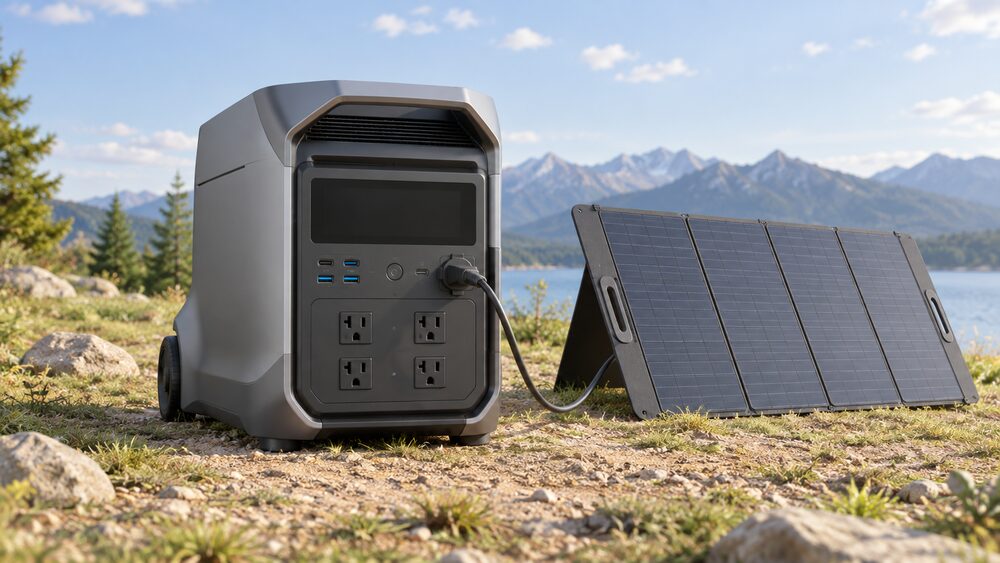 EcoFlow portable power stations and home backup kitEcoFlow is one of the three biggest portable power station makers sold to UK households, with the DELTA Pro 3 for whole-home backup and the RIVER 3 Plus for smaller loads.
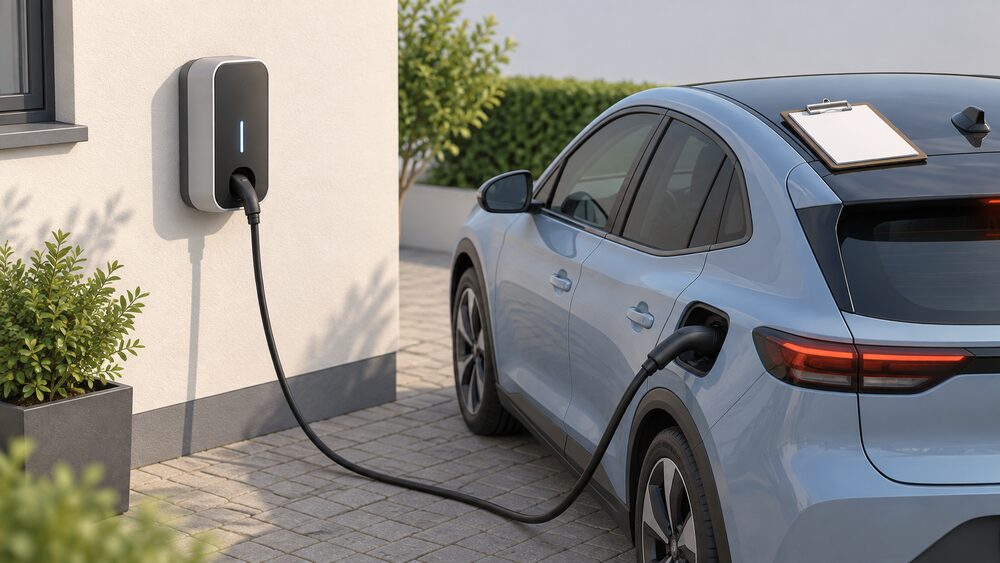 EcoFlow EV chargersEcoFlow makes portable power stations and solar gear, and now a home EV charger called the PowerPulse 2.
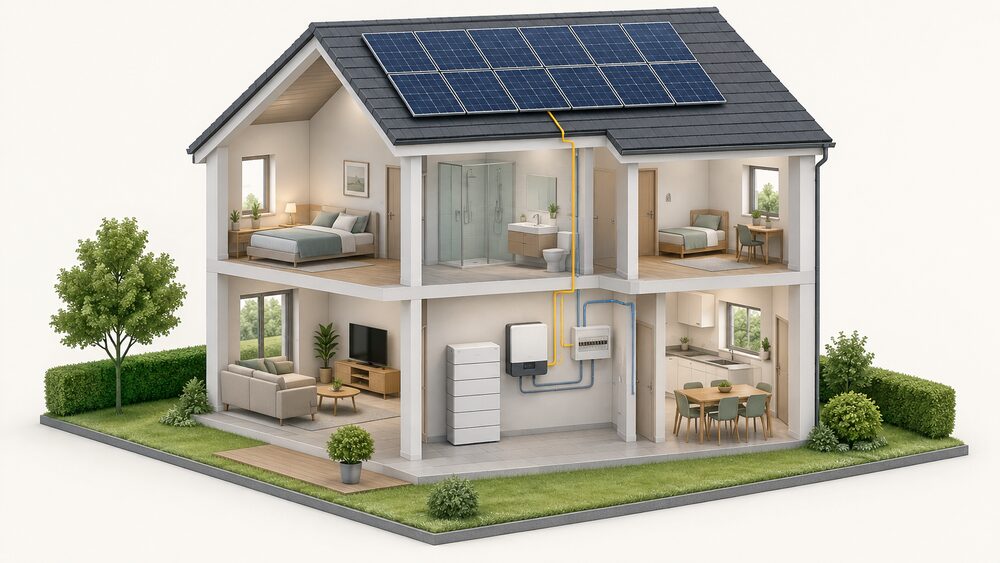 EcoFlow PowerOceanIf you are trying to find out what EcoFlow's PowerOcean actually is, whether you can buy it in the UK and what it costs, the short answer is that it is a hard-wired home battery system sold through distributors rather than a plug-in device.