
In this guide
EcoFlow's PowerOcean is the company's hard-wired home battery system, sold in the UK through distributors rather than through a general retailer. It is a different product from the plug-in STREAM range that made EcoFlow well known in Britain, and it is searched for separately. The Battery Base is listed by a UK distributor under stock code 5012704001, and the single-phase hybrid inverters that go with it carry their own codes1.
The price position is a trade one. The Battery Base is quoted at £665.00 plus VAT, so VAT is added rather than included1. That is the figure a householder will see on a distributor listing, and it is not the same as an installed price, which is quoted by an installer after a survey.
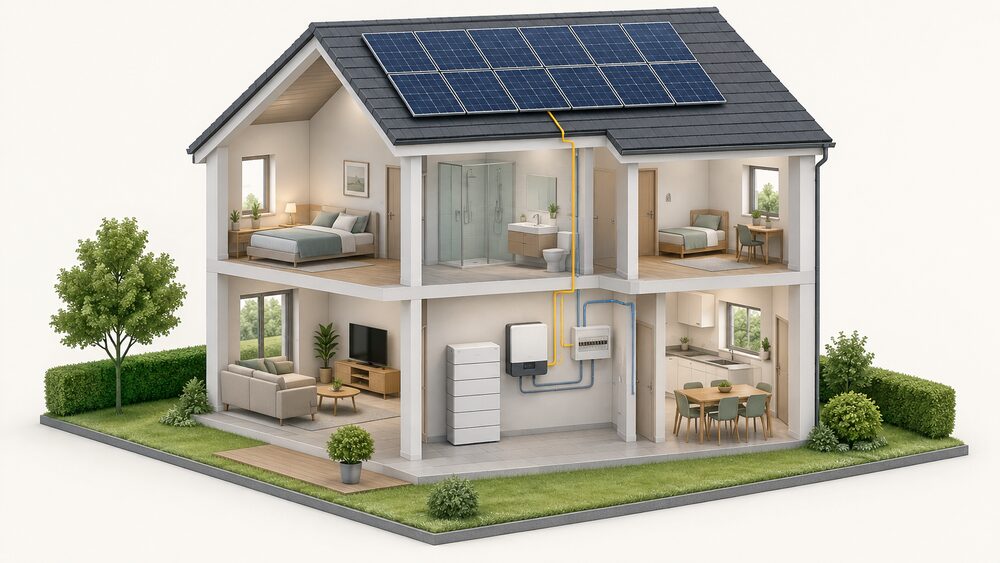
What the PowerOcean offers a household is a route to storing its own generation and running on it, which is the same promise every home battery makes. What it does not remove is the grid connection, the electricity supplier, or the manufacturer's role in the system's software and support. The sections below set out what is documented about the product, the company behind it, and what remains uncertain.
What the PowerOcean is, and how it differs from EcoFlow's plug-in range
The PowerOcean is EcoFlow's whole-home battery and backup system. It is a fixed installation, wired into the property, and it sits in a different category from the plug-in products that carry the EcoFlow name in the UK. The distinction matters because the two are often confused in searches, and the buying routes, the installation work and the prices are not comparable.
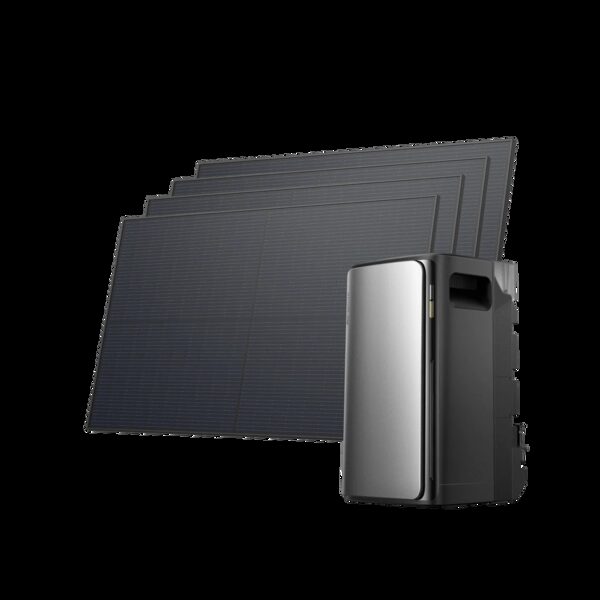
The plug-in side of the business is the STREAM series. In the UK, the STREAM Ultra is sold as an all-in-one hybrid system with battery storage and a microinverter, described by the maker as a plug-and-play solution that does not require rewiring2. Its battery capacity is 1.92kWh3. Two units can be run in Parallel mode using EcoFlow's Parallel Cable, sharing solar generation and storage, and in that arrangement they can power appliances up to 2,300W entirely from solar during the day2. The STREAM Ultra also works with third-party microinverters, and connecting to the solar battery adds 800W more3.
That is a fundamentally different proposition from a hard-wired battery. A plug-in system can be added without an electrician and without notifying the network operator in the way a fixed battery requires. A whole-home system is installed by a qualified person, wired into the consumer unit, and treated as part of the property's electrical installation. The PowerOcean belongs to the second group.
The practical consequence for a household is that the PowerOcean is not a self-install product and not a quick purchase. It is specified, ordered through a distributor, and fitted. The plug-in range is the opposite: bought online, plugged in, and moved if the household moves house.
The company behind it: EcoFlow's background and standing
EcoFlow was launched in 2017 by two battery engineers and has since expanded into a global business. Its move into home energy came later than its portable power station business: the PowerStream balcony solar system was announced for a UK launch at the end of May 2023, which is the point at which the brand became a household name in British plug-in solar.
The company now positions itself as a smart home energy storage brand. Research completed in December 2025 by Frost and Sullivan ranked EcoFlow number one globally among smart home energy storage solution brands based on 2024 sales, a claim the company makes on its own product pages. That is a maker's statement about a market position, not an independent endorsement of any individual product, and it should be read as such.
EcoFlow's standing in the UK plug-in market is real but not uncomplicated. Independent reporting in April 2026 noted that many of the products from EcoFlow, described as one of the main providers of plug-in solar in the UK, were already sold out online4. That is a stock and supply observation rather than a judgement on the products, but it is relevant to anyone planning a purchase: availability has been a live issue on the plug-in side of the range.
The company's product line has continued to widen. At IFA Berlin on 4th September 2026, EcoFlow unveiled the RIVER 260 Gen4 and RIVER 520 Gen4 portable power stations, which shows a business still expanding across portable and home categories rather than concentrating on one.
For a household, the relevant question is not the brand's size but its longevity in a product category where warranties run for years and software support matters. EcoFlow is a young company by the standards of the established heating and electrical brands, and the PowerOcean is a newer line within it.
The range: Battery Base, inverters and related components
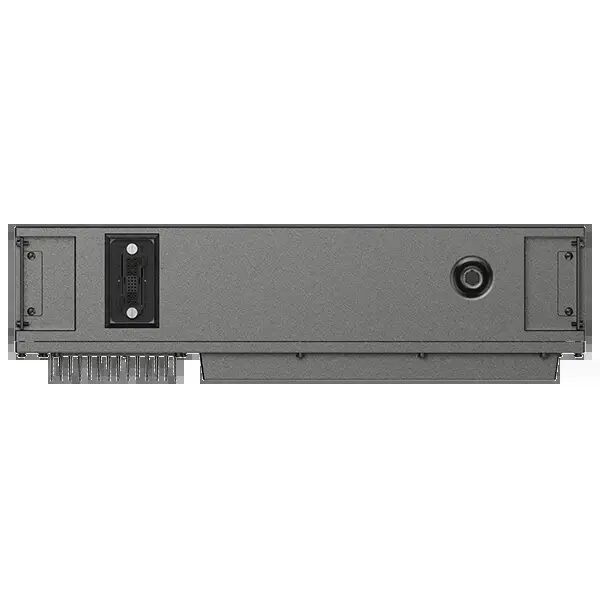
The PowerOcean range as documented in UK distribution consists of a Battery Base and a set of hybrid inverters. The Battery Base is the storage unit, listed under stock code 50127040011. The inverters are the conversion equipment that connects the battery to the property's supply and to solar generation.
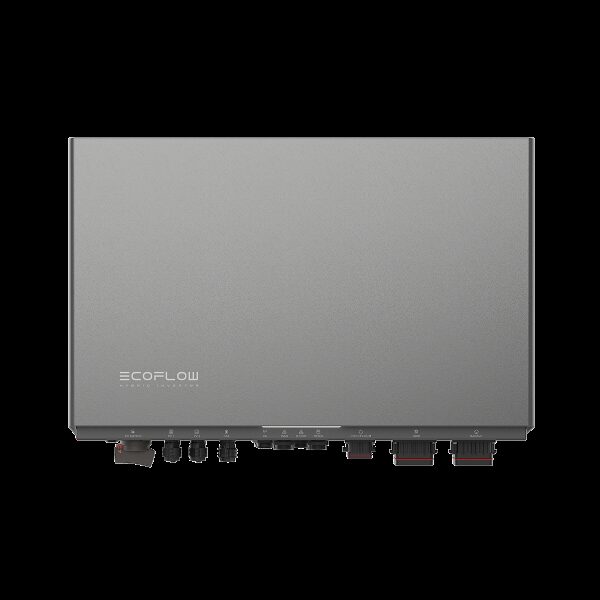
The single-phase hybrid inverters are listed by a UK distributor alongside the Battery Base, each with its own stock code1. The choice between them turns on the property's supply type and the size of the array and battery it has to serve, which is a matter for the installer's design rather than a household decision made in isolation.
| Component | Type | Stock code |
|---|---|---|
| PowerOcean Battery Base | Storage unit | 50127040011 |
| PowerOcean Hybrid Inverter | Single-phase | 50136010011 |
| PowerOcean Hybrid Inverter | Single-phase | 50136010031 |
| PowerOcean Hybrid Inverter | Single-phase | 50136010051 |
The stock codes are the practical detail that matters when ordering. A distributor or installer uses them to identify the exact part, and a householder checking a quotation can use them to confirm that the quoted item is the one intended. Where a quotation names a component without a code, that is worth clarifying before an order is placed.
The available material does not describe a component sold under the name DC-Fit Single-Phase Converter. What is documented is the set of single-phase hybrid inverters above. A householder who has seen that name in a quotation or a listing is most likely looking at one of these inverter units, and the exact part should be confirmed with the distributor rather than assumed.
The range has since been extended. EcoFlow introduced its Ocean 2 8 kWh battery, which is compatible with existing PowerOcean and Ocean 2 systems, and the Ocean 2 range now comprises three-phase and single-phase options with scalable capacity ranging from 8 kWh to 96 kWh5. The 8 kWh unit has a usable capacity of 7.76 kWh, 4.1 kW nominal charging and discharging power, and a maximum discharging power of 6.4 kW5. Up to six batteries can be connected in series in one tower and expanded to two towers, 12 batteries, via a junction box, and the peak 96 kWh capacity is reached by connecting Ocean 2 three-phase with 12 Ocean 2 LFP batteries5. The batteries hold an IP66 rating and can be installed indoors or outdoors5.
Price: £665.00 plus VAT through UK distributors
The Battery Base is quoted at £665.00 plus VAT on a UK distributor listing1. That is the clearest published figure for the product, and it is a trade quotation: VAT is added on top, and it is not an installed price.
The distinction between a price that includes VAT and one that does not is easy to miss. Where a maker's price list states a figure as including VAT, it says so explicitly, as with a SuperFOIL product listed at £106.00 including VAT6. The PowerOcean Battery Base figure is stated the other way, as plus VAT, which means the amount a householder actually pays will be higher once VAT is applied.
There is no published installed price for a PowerOcean system. Installation costs depend on the property, the inverter chosen, the siting of the battery, and the electrical work required, and they are quoted by an installer after a survey. The distributor price covers the hardware only.
For context on how home battery pricing is usually presented in the UK, the market offers a range of routes. Some systems are sold direct by the manufacturer, as with the Tesla Powerwall, which is available direct from Tesla7. Others are sold through UK installers, as with the Enphase AC Battery7. The PowerOcean sits in the distributor-and-installer route, which means the householder's first point of contact is normally an installer rather than a checkout page.
Specifications and what the Battery Base provides
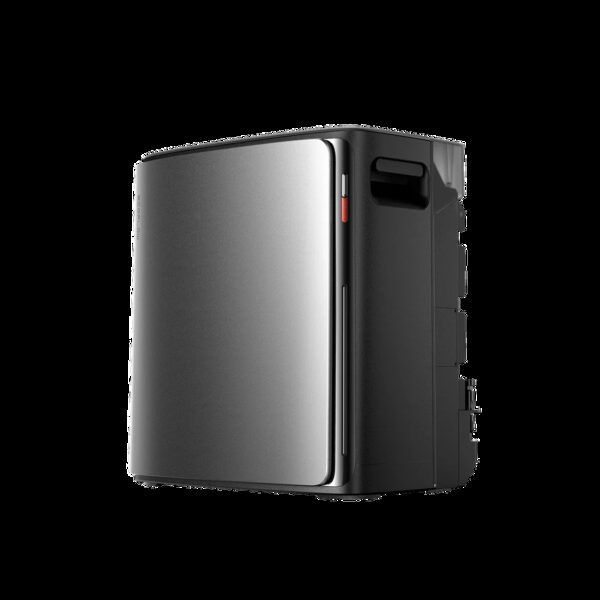
The documented specification for the PowerOcean Battery Base in the available material is limited to its stock code and its price. The capacity, power rating, chemistry, cycle life and warranty terms for the unit are not set out in the sources available here, and no figure should be assumed for them.
What can be said is what a Battery Base does in principle within a system of this kind: it stores electricity, either from solar generation or from the grid at times when power is cheap, and releases it when the household needs it. The inverter converts between the direct current the battery stores and the alternating current the property uses. That is the same division of labour as in any AC-coupled or DC-coupled home battery system, and the differences between those arrangements are covered in AC-coupled and DC-coupled home batteries.
For a household comparing systems, the figures that matter are capacity in kWh, usable capacity after depth of discharge, power rating in kW, round-trip efficiency, and the warranty's retained capacity and throughput conditions. Those are the numbers that determine what a battery can actually run and for how long, and they are explained in battery capacity and usable capacity and battery power ratings.
Where a specification is not published, the sensible course is to ask the distributor or installer for the datasheet for the exact model being quoted, and to check that the warranty terms are in writing before ordering. The general framework for what a home battery warranty should cover is set out in home battery warranties.
Availability in the UK: ordering, stock codes and pickup
The PowerOcean is ordered through UK distributors. The distributor listing that carries the Battery Base price and stock code is the practical route, and the stock codes are what identify each part at the point of order1.
Stock levels are not published on the pages available. That matters because EcoFlow's UK availability has been uneven on other product lines: independent reporting in April 2026 found that many EcoFlow products, in a range described as one of the main providers of plug-in solar in the UK, were already sold out online4. A householder planning a PowerOcean installation should therefore confirm availability with the distributor rather than assume the listing means the item is on the shelf.
The ordering sequence for a system of this kind normally runs through an installer rather than a direct purchase. The installer specifies the inverter size, orders the Battery Base and inverter against the stock codes, and fits the system. The householder's role is to check that the quotation names the exact parts and that the price is clear on the VAT position.
Where a household is weighing a fixed system against a plug-in one, the plug-in route has different rules and a different buying experience, covered in plug-in and balcony battery storage in the UK. The fixed route brings in the network operator notification requirements described in telling the network operator about a home battery, which do not apply in the same way to a plug-in unit.
What owning a PowerOcean means for household energy independence
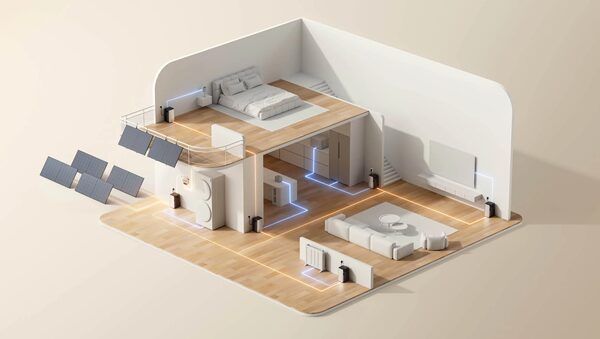
A home battery of any make changes the relationship between a household and its electricity supply, and the change is real but partial. The independence it buys is the ability to use self-generated or cheaply bought electricity at the time the household wants it, rather than at the time the grid delivers it. Solar Energy UK's position is that more homegrown energy means greater energy independence8.
The wider case for storage and flexibility is made in similar terms. Balancing the grid makes the UK less reliant on expensive foreign imports, which both saves money and gives more control over the energy supply9. At household level, renewable energy technologies help a home meet its own energy requirements and reduce its carbon dioxide emissions10. The Energy Saving Trust's picture of an energy efficient house of the future includes solar panels, a heat pump, battery storage, an EV charger, full insulation and smart heating controls as a combined package11.
What remains is the dependence. A PowerOcean system stays connected to the grid, and the household stays a customer of an electricity supplier. The battery shifts when power is drawn, not whether the property is connected. The system's monitoring and control run through the manufacturer's software, which means a continuing relationship with EcoFlow for app access and updates, in the way described in monitoring a home battery. Backup capability during a power cut depends on how the system is wired and what it is configured to keep running, which is covered in battery backup in a power cut.
For households in vulnerable circumstances, there is separate support outside the manufacturer's system. UK Power Networks offers free expert energy advice and tailored practical support for customers struggling with the cost of energy, the energy transition, disability, non-ownership of property or difficulty paying bills12. Scottish and Southern Electricity Networks has run a programme giving home battery packs to customers who need the most support13. Those routes exist independently of any product choice.
The honest summary is that a PowerOcean can reduce how much a household buys from the grid and when it buys it. It does not make a home self-sufficient, and it does not remove the supplier, the connection or the manufacturer from the picture.
Sources14 cited
- EcoFlow PowerOcean Battery Base, HDM Solar, 2026-09-17
- EcoFlow STREAM Ultra, EcoFlow, 2025-09-01
- STREAM Series Plug-In Solar Battery, EcoFlow, 2026-09-17
- How plug-in solar can save UK homes £1,100 on energy bills, Carbon Brief, 2026-04-02
- EcoFlow brings new residential, C&I and plug-in storage to Intersolar - pv magazine Global, pv-magazine.com
- SuperFOIL Shop, SuperFOIL, 2026-09-20
- Solar panel battery storage, Which?, 2026-05-14
- Solar Energy Scotland Manifesto, Solar Energy UK, 2026-09-17
- Balancing the grid, Uswitch, 2026-02-09
- Home energy generation, Planning Portal, 2026
- House of the Future, Energy Saving Trust, 2026-07-15
- Additional services, UK Power Networks, 2026-09-17
- Home battery packs, Scottish and Southern Electricity Networks
- SSEN gives 20,000 home battery packs to customers who need the most support, Scottish and Southern Electricity Networks, 2026
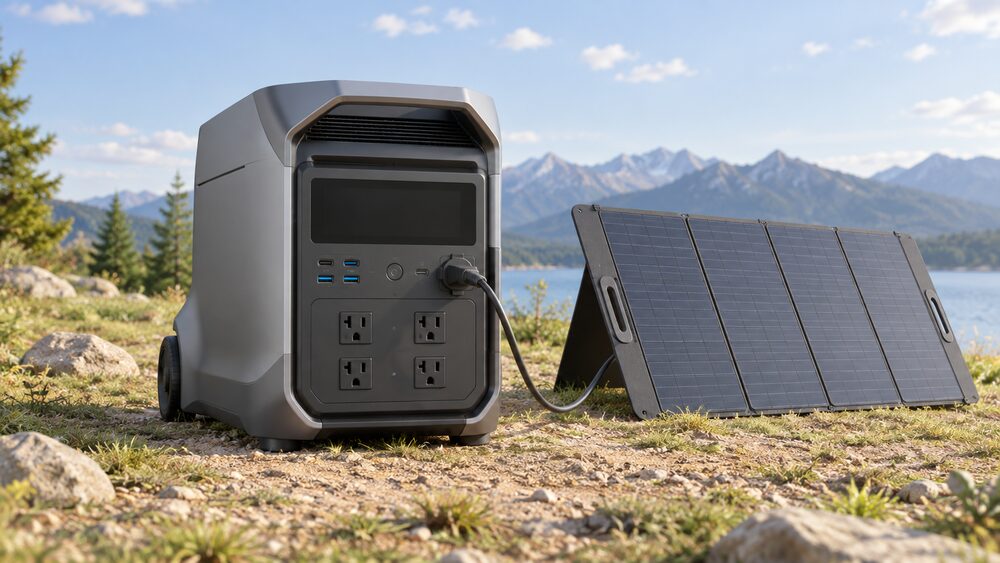 EcoFlow portable power stations and home backup kitEcoFlow is one of the three biggest portable power station makers sold to UK households, with the DELTA Pro 3 for whole-home backup and the RIVER 3 Plus for smaller loads.
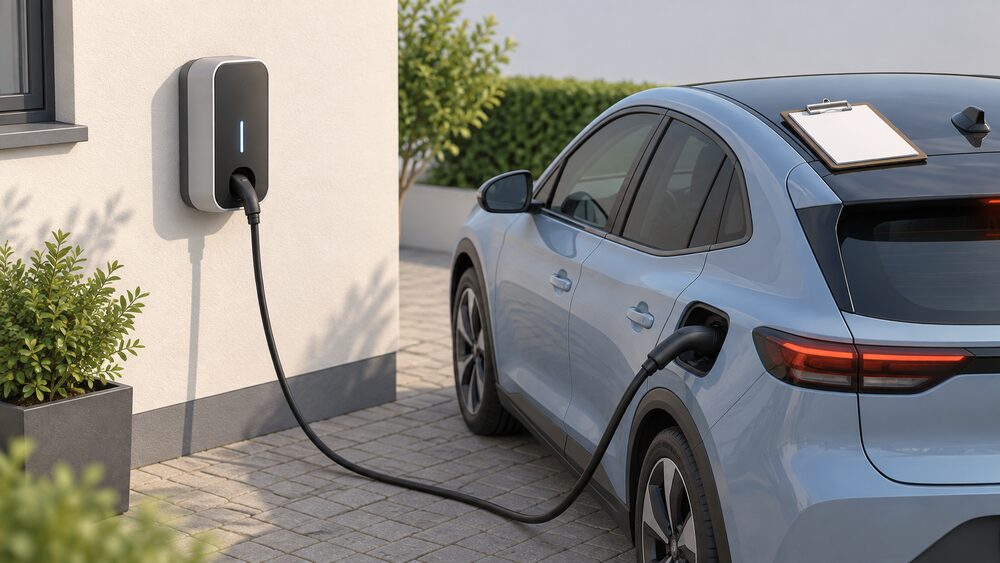 EcoFlow EV chargersEcoFlow makes portable power stations and solar gear, and now a home EV charger called the PowerPulse 2.
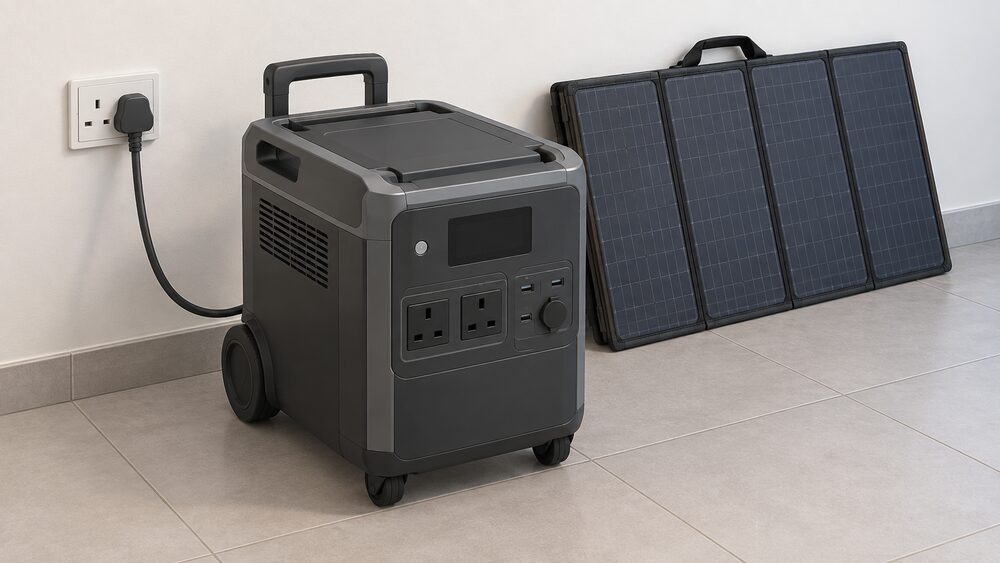 EcoFlow Home Batteries and Portable Power StationsEcoFlow sells both portable power stations you can carry and fixed home batteries wired into your house.