

In this answer
Short answer
Heat pump installations benefit from being exempt from VAT, so a qualifying domestic installation carries a 0% rate rather than the standard 20%1. The relief is not a grant and not a discount negotiated by an installer: it is a VAT treatment set in law, applied by the supplier on the invoice. It covers air-source, ground-source and water-source heat pumps installed in, or in the curtilage of, residential accommodation or a building used solely for a relevant charitable purpose2.
The zero rate is temporary. Energy-saving materials, including heat pumps, are subject to VAT relief at 0% until 31 March 20273. Water-source heat pumps were added to the qualifying list by legislation made in January 2024 and qualify for the temporary zero rate until that same date, reverting to the reduced rate afterwards4. A separate 5% rate applies to heating equipment work funded through an energy efficiency grant, in Great Britain or Northern Ireland, where the household is eligible2.
For a household, the effect is straightforward: the tax does not sit on top of the installation quote. What remains is the capital cost of the unit and the labour, the standing cost of grid electricity to run it, and the fact that the relief is time-limited. The sections below set out what qualifies, how the funded and unfunded routes differ, and what changes in 2027.
VAT relief on heat pump installations: the short answer
The short answer is that a heat pump installed in a home is treated as an energy-saving material, and energy-saving materials installed in residential accommodation and certain charitable buildings carry a 0% rate until 31 March 20277. The same list covers air-source heat pumps, wood-fuelled boilers, central heating and hot water controls, draught stripping, ground-source heat pumps, insulation, micro combined heat and power units, solar panels, water and wind turbines, water-source heat pumps, electrical storage batteries and smart diverters7.
Two conditions do most of the work. First, the equipment has to be installed in the right kind of building: residential accommodation, or a building intended for use solely for a relevant charitable purpose, including the curtilage of either4. Second, the equipment has to be the kind that qualifies. Only air-source heat pumps that are permanently fixed and are not portable or moveable qualify as energy-saving materials5. Mechanical ventilation heat recovery systems do not qualify, because they are not air source heat pumps5.
The relief is applied by the installer or supplier on the invoice. There is no household claim form and no rebate to chase. That matters for how a quote should be read: a compliant installer charges the reduced or zero rate directly, so the figure on the quotation is the figure payable.
What the relief covers: air-source, water-source and other energy-saving materials
The qualifying list has grown. Before the recent changes, the technologies benefiting from the relief were insulation, central heating system controls, hot water system controls, solar panels, wind turbines, water turbines, ground-source heat pumps, air-source heat pumps, micro combined heat and power units and wood-fuelled boilers8. Legislation made in January 2024 added water-source heat pumps, certain electrical batteries and certain smart diverters to the list of energy-saving materials that can qualify for the reduced rate of VAT9. The amended statute now names water source heat pumps directly in the schedule10.
That gives three heat pump categories in scope:
- Air-source heat pumps, provided they are permanently fixed and not portable or moveable5
- Ground-source heat pumps, listed among the qualifying energy-saving materials5
- Water-source heat pumps, added to the list and qualifying for the temporary zero rate until 31 March 20274
The exclusions matter as much as the inclusions. Mechanical ventilation heat recovery does not qualify5. Portable or moveable air-source units do not qualify5. And the building test is not optional: the relief is tied to installation in residential accommodation or a relevant charitable building, or the curtilage of one4.
For a household, this is the difference between a tax-inclusive and a tax-free capital cost on the same hardware. It does not change running costs, which depend on the electricity tariff and the efficiency of the installation rather than on the VAT treatment of the purchase.
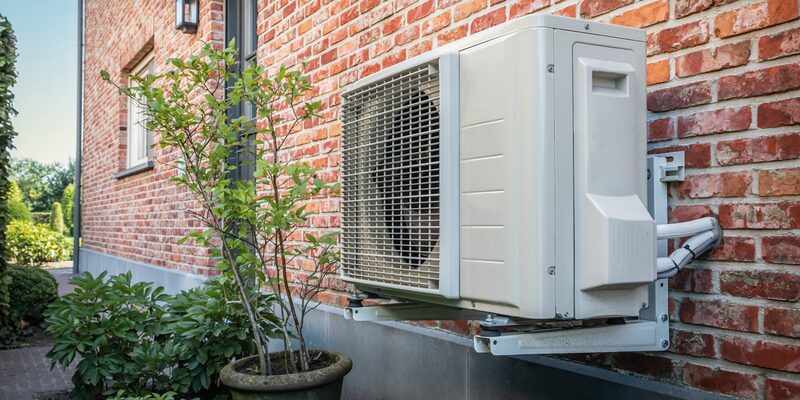
How much you save: roughly £500 on a standard install
The saving is the VAT that would otherwise be charged. On a qualifying supply, the difference between the standard rate of 20% and the zero rate is the whole of the tax. HMRC's own worked example of the reduced rate uses a £1,000 supply, where 5% of £1,000 equals £50 of reduced-rate VAT on the total supply11. The same arithmetic at the standard rate on a larger installation is what the relief removes.
The scale of a heat pump installation is what makes the saving material. With Boiler Upgrade Scheme support, the average upfront cost comes to around £5,000 after the grant6. The tax treatment applies to the supply as invoiced, so the relief is worth a proportion of that figure rather than a fixed sum.
Running costs are a separate question from purchase VAT. Switching to a heat pump appropriate tariff can save up to £330 a year on heating bills12. Separately, modelling of removing VAT from electricity puts the annual saving for a typical heat pump household at £8313. These are different measures of different things: one is a tariff effect, the other a tax effect on electricity, and neither is the installation relief.
Funded and non-funded installations: relief applies to both
Both routes carry relief, but through different mechanisms. Where heating equipment work is funded through an energy efficiency grant and the household is eligible, a 5% rate applies in Great Britain or Northern Ireland2. The reduced rate covers installing certain heating appliances, and the grant-funded list includes installation of heating appliances, installation, repair and maintenance of central heating systems, and installation, repair and maintenance of renewable source heating systems14.
The grant-funded relief has a boundary worth understanding: it applies only to the extent that the supply is grant-funded7. A job part-funded by a grant and part-paid privately is not wholly within the reduced rate on that basis. Schemes such as the Warm Front Scheme, or similar schemes in Wales, Scotland and Northern Ireland, are covered by the relief subject to all the relevant conditions being met7.
Where a heat pump is installed as a qualifying energy-saving material rather than as grant-funded heating equipment work, the temporary zero rate applies instead, and that route does not depend on grant funding. Heating equipment that is not funded through an energy efficiency grant is listed at 20% in the general guidance on energy-saving products, which is why the energy-saving materials route matters: it is the route that takes a privately funded heat pump installation to 0%2.
For a household weighing a grant against a private installation, the practical point is that the tax treatment does not disappear if a grant is used, but the rate and the mechanism change.
What happens when the 0% rate ends
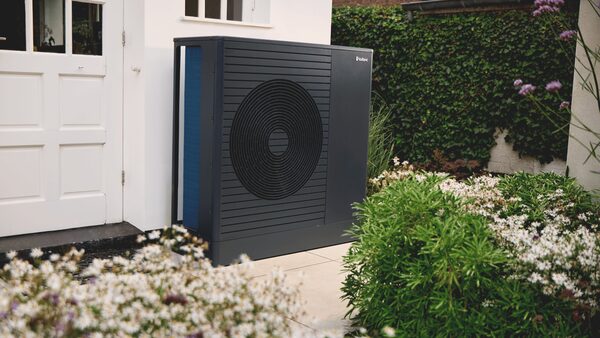
The temporary zero rate ends on 31 March 202715. The relief is currently set to a temporary zero rate of VAT which applies until 31 March 20278. Water-source heat pumps qualify for the temporary zero rate until 31 March 2027 and revert to the reduced rate thereafter4.
That gives two different post-2027 outcomes visible in the guidance. Water-source heat pumps revert to the reduced rate, which is 5%. For other technologies, the guidance sets the end date of the zero rate without setting out a technology-by-technology replacement rate in the material available here. The reduced rate exists as a category, and the grant-funded heating equipment route already operates at 5%2.
What a household can reasonably take from this is a timing point rather than a forecast. An installation completed before 31 March 2027 falls within the zero rate period. An installation completed after it does not. The difference between 0% and 5% on a supply of several thousand pounds is a real sum, and the difference between 0% and 20% is larger still.
How the relief sits alongside grants and other support schemes
The relief is not a grant and does not consume grant funding. It sits underneath whatever scheme pays for part of the work. Government grants are available to cover part of the cost of installing a heat pump, and the Boiler Upgrade Scheme provides upfront capital grants to support the installation of heat pumps and biomass boilers in residential and non-residential properties16. Air-to-air heat pumps appear among the eligible technologies in the scheme rules16. Heat pumps may be eligible for BUS funding where all other scheme rules are met, including for self-build properties18.
Nationally, the picture differs. In Scotland, the Home Energy Scotland scheme provides up to £7,500 as a grant and £7,500 as an interest free loan for the installation of a heat pump19. In Wales, the Nest scheme funds measures including heat pumps, insulation and solar panels20, and a separate Welsh scheme provides a one-off £200 payment to households on the Council Tax Reduction Scheme using heating oil or LPG21. In England, council-level routes exist alongside the national schemes, and help to heat grants are aimed at home owner-occupiers22. The Warm Homes: Social Housing Fund Wave 3 sets out its VAT treatment in section 2.14 of its guidance23.
For a household, the layering is the point. A grant reduces the capital cost; the VAT treatment reduces the taxable base. Neither removes the standing cost of running the system, and neither removes the household's dependence on grid electricity and a supplier. What they change is how much of the upfront cost is carried by the household and how much by the scheme and the tax system.
Sources23 cited
- Heat pump installations and VAT, GOV.UK, 2026
- Tax on shopping: energy-saving products, GOV.UK, 2026
- VAT rates on different goods and services, GOV.UK, 2026
- VAT relief for energy-saving materials: VENSAV2082, HMRC, 2026
- Air source heat pumps and the relief: VENSAV3080, HMRC, 2026
- Heat pumps vs boilers, Which?, 2025
- Energy-saving materials: 0% relief list, GOV.UK, 2026
- VAT relief for energy-saving materials: explanatory memorandum, legislation.gov.uk, 2024
- The Value Added Tax (Energy Saving Materials) Order 2024: note, legislation.gov.uk, 2024
- Value Added Tax Act 1994, Schedule 8, Part II, Chapter 23, legislation.gov.uk
- Reduced rate for grant-funded installations: VENSAV4050, HMRC, 2026
- Renewable technologies: what really cuts energy bills, Energy Saving Trust, 2026
- Tax-free electricity, Nesta, 2025
- Grant-funded heating equipment work: VENSAV4300, HMRC, 2026
- VAT energy-saving materials relief, GOV.UK, 2024
- Boiler Upgrade Scheme: installers, Ofgem, 2026
- Boiler Upgrade Scheme guidance for property owners, Ofgem, 2026
- Boiler Upgrade Scheme guidance for installers, Ofgem, 2026
- Scotland's Climate Change Plan 2026-2040, Scottish Government, 2025
- Nest: free home energy efficiency improvements, Welsh Government, 2026
- Help with oil and LPG heating costs, Welsh Government, 2026
- Getting help with your energy bills, Birmingham City Council, 2026
- Warm Homes: Social Housing Fund Wave 3 guidance addendum, GOV.UK, 2026
 VAT on Energy InstallationsExplains the VAT treatment of energy-saving materials installed in homes, which products and jobs qualify and which are charged at the standard rate.
 Energy IndependenceA heat pump runs your heating on electricity instead of gas or oil, so how much does that really cut what you pay and how exposed you are when fuel prices jump?
 Heat Batteries with Heat PumpsCan a heat battery replace a hot water cylinder if you have no space for one?
 Water Source Heat PumpsYour home sits near a river, lake or the sea.
 Air Source Heat PumpsHow an air source heat pump takes heat from outdoor air, the difference between air-to-air and air-to-water systems, typical efficiency, the £7,500 Boiler Upgrade Scheme grant, noise and planning limits, and what ownership means for a household's energy independence.
 Planning Permission in EnglandDo you need planning permission for an air source heat pump?