
In this comparison
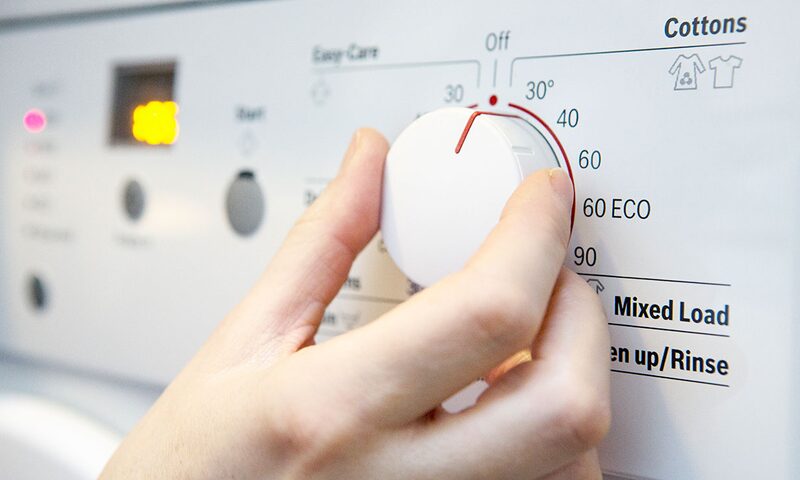
Yes, a 30°C wash costs less to run than a 40°C wash, and the gap is larger than most householders expect. Which? testing puts the reduction at 38%: doing laundry at 30°C rather than 40°C cuts the cost by 38%1. The same figure appears across Which? output from 2020 to 2026, and independent bodies repeat it, so it is the most robust number on the page2.
What that 38% is worth in pounds depends heavily on how often the machine runs and where in the UK the household lives. Published annual savings for washing at 30°C range from £6 to £32, and the spread is not disagreement about the physics: it reflects different assumptions about load frequency, baseline temperature and nation5. A household doing four 40°C washes a week is at the top of that range; one doing a single weekly load is at the bottom.
The mechanism is simple. A washing machine's electricity goes mostly on heating water, so the lower the set temperature, the less energy the element draws. Lower temperatures use less energy, and a 30°C wash could save over a third of the energy used compared with washing at higher temperatures8. The rest of this page sets out the size of the saving, why it varies, when 40°C still earns its place, and how to get a clean load at the lower setting.
The saving: 38% cheaper at 30°C
The 38% figure is the anchor for everything else on this page, and it is unusually well attested. Which? states it in a consumer guide, in a weekend efficiency feature, in a policy article on the price cap, and in a press release on appliance running costs1. The wording barely changes across six years of publication, which suggests a stable test method rather than a one-off result.
Independent organisations carry the same number. Smart Energy GB describes a 30°C wash as reducing energy use by up to 38% compared with a 40°C wash, attributing it to Which?11. Age UK reports that washing clothes at 30°C uses around 40% less electricity over a year than washing at higher temperatures, a slightly different framing because it measures annual consumption rather than a single cycle12. Home Energy Scotland goes further still, putting the electricity reduction at around 57% less than washing at higher temperatures, though that comparison is against an unspecified higher baseline rather than 40°C specifically13.
That difference in baseline explains most of the apparent conflict. A 30°C wash against a 40°C wash is 38%8. A 30°C wash against "higher temperatures" generally is a larger percentage, described as over a third of the energy used14. A 20°C wash against 40°C is larger again, at 62%8. None of these figures contradict each other; they answer different questions.
For a household, the practical reading is that 30°C is the reliable middle step. It is the temperature recommended by the Energy Saving Trust, by Energy Saving Trust Scotland, by the Centre for Alternative Technology, by SGN, by Cadent and by the Northern Ireland executive's own advice service15. The consistency across official, independent and network-operator sources is the strongest signal on the page.
Why lower temperature cuts energy use
A washing machine's energy consumption is dominated by the heating element. The drum motor, the pump and the control electronics draw comparatively little. That is why the temperature dial, not the spin speed or the programme length, is the lever that moves the meter.
The Energy Saving Trust puts the saving at up to 60% of the energy used to heat water during laundry when lower temperatures are used20. Smart Energy GB frames the same point as a reduction of up to 40% in overall energy use from washing at 30°C11. The two figures differ because one measures the water-heating share and the other measures the whole cycle, which includes the fixed consumption of motor and pump. Both are consistent with a machine whose element is the main load.
"Lower temperatures use less energy, and while there has been increased awareness of the advantages of turning to 30 degrees, many people still wash at higher temperatures."
The practical consequence is that the saving scales with how much hot water the cycle would otherwise have used. A lightly soiled load on a short programme at 30°C saves less in absolute terms than a full drum at 40°C, because the baseline is lower. A household that already washes cool has little left to capture; one still running 40°C cycles four times a week has the most to gain.
There is a second-order effect worth noting. A cooler wash leaves more water in the fabric after the spin, and the tumble dryer then has more to remove. Running a dryer on a lower heat setting could save energy compared with a high-heat setting, and a vented or condenser dryer costs approximately £1.21 to £1.56 per cycle according to National Energy Action21. For households that tumble dry, the wash temperature and the dryer setting interact, and the dryer is usually the larger cost of the two.
What the saving means in pounds per year
The percentage is stable; the pounds are not. Published annual savings for washing at 30°C, and for combining it with one fewer load a week, range widely across sources and nations.
| Source | Saving | Basis |
|---|---|---|
| Confused.com | at least £27 a year in Great Britain, £32 in Northern Ireland | 30°C washing22 |
| Scope | £29 a year | 30°C plus one fewer load a week7 |
| Cadent | £12 a year | 30°C rather than higher temperatures18 |
| Energy Saving Trust | £26 a year in GB, £32 in NI | 30°C plus one fewer load a week23 |
| Northern Powergrid | £6 a year | one full load at 30°C24 |
| Confused.com | around £30 a year | one fewer wash a week and 40°C to 30°C25 |
| Consumer Council | around £28 a year | efficient washing machine use26 |
| Energy Saving Trust | £12 a year in GB, £15 in NI | 30°C or cooler27 |
| Home Energy Scotland | £12 a year | three-bed semi-detached gas-heated house13 |
| Energy Saving Trust | £26 a year in GB, £32 in NI | 30°C plus one fewer run a week28 |
| uSwitch | around £27 a year | cold or 30°C cycle29 |
| Which? | up to £23 a year | four washes a week, 30°C vs 40°C8 |
The pattern is clear. Figures that bundle in one fewer load a week land at £26 to £32. Figures that measure the temperature change alone land at £6 to £12. The Which? figure of up to £23 a year sits between the two because it assumes four washes a week, a heavy laundry household8.
Northern Ireland appears separately in several sources, and the gap is consistent: £32 in NI against £26 in GB on the combined habit, and £15 in NI against £12 in GB on temperature alone23. That reflects different electricity tariffs rather than different machines.
When a 40°C wash is still the better choice
The general recommendation across the sources is 30°C where possible, and one maker advises washing clothes at 30°C rather than at higher temperatures30. The phrase "where possible" is doing real work. Official guidance states that washing clothes at 30 degrees can be just as effective for a normally soiled load19. The qualifier is normally soiled.
That leaves a category of loads where the lower setting is not the obvious choice. Heavily soiled workwear, items carrying grease or ground-in stains, and loads from a household with a sickness bug are the cases householders most often raise. No source sets a temperature for these, and none states a germ-kill threshold, so no figure can be given. What can be said is that the 30°C recommendation is framed around normal soiling, not around every load28.
There is also a fabric consideration. No guidance is given on towels, bedding or any specific textile, so no separate temperature can be quoted for them. The general advice stands: 30°C where possible28.
For a household weighing this up, the sensible reading is that 30°C is the default for the bulk of the weekly wash, and that the 40°C setting remains available for the loads where the household judges it necessary. The saving is real but it is not a rule that every load must follow.
How to get a good wash at 30°C
Getting a clean result at the lower temperature is mostly about load management and programme choice rather than detergent chemistry.
- Sort by soil level, not just colour. Normally soiled loads go on 30°C; heavier soiling goes on a higher setting.
- Fill the drum. A full load at 30°C is more efficient per item than a half load, and one source puts the saving from a single full load at 30°C at £6 a year24.
- Use the eco programme where the machine has one. Smart Energy GB recommends washing at 30°C or using eco-cycles if available20.
- Reduce the number of loads. Doing one fewer load a week is what lifts the annual saving from around £12 to £26 to £32 in most sources23.
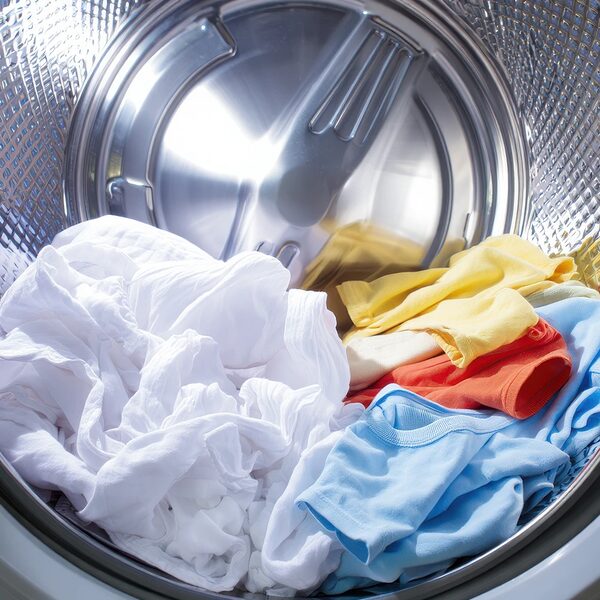
- Consider 20°C for lightly soiled items. A 20°C wash uses 62 per cent less energy than a 40°C wash, against 38 per cent for 30°C8.
What this means for a household's energy independence
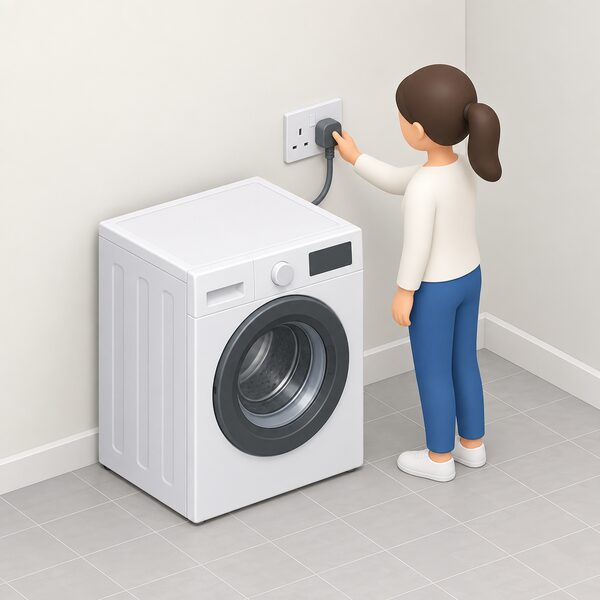
A washing machine is a grid-dependent appliance. It draws electricity from a supplier, and the household has no way to run it from a domestic source unless it has its own generation and storage. The temperature setting does not change that dependence; it changes how much of the grid's output the household needs to buy.
That is still worth something. Cutting a wash from 40°C to 30°C reduces the electricity drawn per cycle by 38%, and the annual saving of £6 to £32 is a reduction in the bill rather than a change in where the power comes from1. For a household with solar panels and a battery, the same reduction means more of the generated electricity is available for other loads, or more exported. For a household without them, it means a smaller payment to the supplier.
The limits are worth stating plainly. The saving is modest in absolute terms, it depends on laundry habits that many households cannot easily change, and it does nothing about the gas or electricity used for heating, which is where most of a home's energy spend sits. The wider steps that reduce dependence, from switching supplier to checking grant eligibility to taking control of your home's energy, are set out elsewhere on this site. The wash temperature is one habit among many, and it is one of the easiest to change.
Sources32 cited
- Make your home more energy efficient in one weekend, Which?, 2026-08-28
- 10 ways to save on energy bills, Which?, 2026-08-27
- Which? reveals cheap and simple changes to help cancel out energy price cap hike pain, Which?, 2024-09-30
- Which? Money Saving Monday: save on appliance running costs, Which?, 2022-09-04
- Which? finds household appliance running costs have risen nearly 60 per cent during cost of living crisis, Which?, 2023-05-01
- Ultimate energy saving tips guide, Smart Energy GB, 2026-04-24
- Energy saving tips, Scope, 2026-09-01
- Change this laundry habit and help cut CO2 pollution by 400,000 cars, Which?, 2020-04-27
- 10 ways to go green with electricity, Electrical Safety First, 2026-09-19
- Five top tips from Which? to cut your energy bills, Climate Action Wales, 2026-03-18
- Washing machine energy saving tips, Smart Energy GB, 2026-08-17
- Energy saving tips, Age UK, 2026-04-02
- Water, always worth saving, Home Energy Scotland, 2026-07
- Energy saving at home, Centre for Alternative Technology, 2025-06-27
- How to save energy and money if you rent your home, Energy Saving Trust, 2025-11-14
- Easy ways to save energy, Home Energy Scotland, 2026-09-20
- Home energy saving tips, Centre for Alternative Technology, 2022-12-20
- Energy efficiency, Cadent, 2026-09-20
- Energy efficiency tips, nidirect, 2026-09-17
- How to save energy when using your washing machine, Energy Saving Trust, 2025-08-27
- Avoid using the dryer, Smart Energy GB, 2026-04-22
- Make your home more energy efficient, Confused.com, 2026-07-06
- Top five tips to save energy in the kitchen, Energy Saving Trust, 2026-05-20
- Your home, Northern Powergrid, 2026-09-19
- Appliances: how much do yours cost to run?, Confused.com, 2025-12-18
- Energy efficiency, Consumer Council, 2026
- Christmas energy saving tips, Energy Saving Trust, 2026-05-20
- Quick tips to save energy, Energy Saving Trust, 2026-08-21
- Free energy saving tips, uSwitch, 2025-10-14
- Energy savings tips, British Gas Energy Trust, 2026-02-27
- Reduce carbon emissions at home, Viessmann, 2022-05-31
- Ecodesign requirements for household washing machines, legislation.gov.uk, 2019-03-11
 Changing Habits SavingsWhat the evidence says behavioural change saves: around £90 to £120 a year for one degree off the thermostat, £100 to £110 a year for using a full set of heating controls, and £304 to £351 a year for a bundle of small changes.
 Do Smart Controls Save Money?Do smart heating controls really cut your bills, and by how much?
 Thermostat and Room TemperaturesWhat temperature should a thermostat be set to, and does it differ from room to room?
 Running CostsA portable air conditioner costs roughly twenty to forty pence for every hour it runs, while a fixed unit uses far less electricity for the same cooling.
 Appliance Running CostsWorking out what your appliances cost to run comes down to two things: how much power they use and what you pay per unit of electricity.
 Heat Pump Running CostsWhat does a heat pump cost to run each year, and is it cheaper than a gas boiler?