
In this answer
Short answer
Yes, a heat pump household can save on a dynamic tariff, and the published figures are consistent in direction if not in size. Ofgem's own consultation work puts the saving at more than £250 a year for households with heat pumps that shift to a smart tariff and use the heat pump flexibly1. The Energy Saving Trust puts the figure for switching to a heat pump appropriate tariff at up to £330 a year on heating bills2, and the government's clean energy campaign cites around £100 a year with smart tariffs3.
The spread is not a contradiction so much as a difference in what is being measured. Some figures cover the whole heating bill, some cover only the flexible portion, and some assume solar and a battery alongside the heat pump. Energy UK reports that a heat pump, solar and battery combination can save £810 more per year when operated flexibly than the same equipment on a single-rate tariff4.
What the saving is not is automatic. A heat pump on a standard flat-rate tariff can cost the same or even more to run than an efficient gas boiler2, and independent research has found that some tariff types can actually increase energy bills5. The tariff, the controls and the fabric of the home all decide whether the number is real.
How much a dynamic tariff can save a heat pump household
The headline numbers come from different bodies using different baselines, and it is worth separating them. Ofgem's draft impact assessment, published in August 2025, states that households with heat pumps could save more than £250 annually by shifting to a smart tariff and using their heat pump flexibly1. That is an official figure and it is the most directly comparable to the question of a dynamic tariff.
The Energy Saving Trust's figure is larger but narrower in scope: switching to a heat pump appropriate tariff can save up to £330 a year on heating bills2. The government's clean energy campaign gives a more conservative around £100 per year with smart tariffs3. The difference between £100 and £330 is largely about how much of the household's load is shifted and what the counterfactual tariff is.
Where solar and storage are added, the numbers rise sharply. Energy UK reports that a heat pump, solar and a battery can save households £810 more per year when operated flexibly than the same assets on a single-rate tariff4. That is a combination figure, not a heat pump alone figure, and it should be read that way.
Parliamentary research confirms the direction without giving a single number: additional savings are possible with flexible electricity tariffs8. Independent modelling by Nesta found that a heat pump on a tri-rate tariff saved £82 a year when run flexibly, against £84 a year on a pass-through tariff9. Those are smaller figures than the headline claims, and they come from a modelled rather than an observed household.
For a household's energy independence, the saving is real but partial. The heat pump still draws from the grid, and the saving depends on a supplier offering the tariff and a meter capable of half-hourly billing. What changes is the household's exposure to peak wholesale prices, not its reliance on the network.
Which tariffs suit a heat pump only home
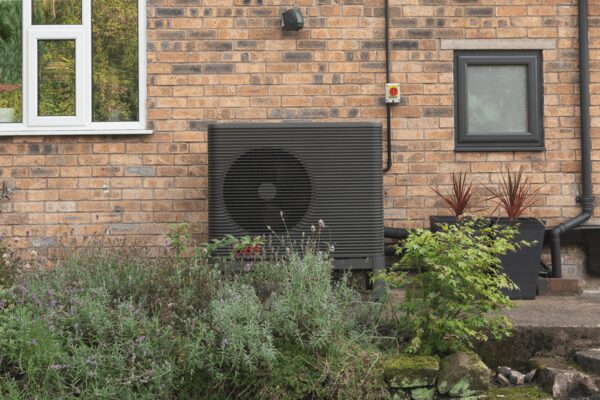
For a home heated only by a heat pump, the Energy Saving Trust advises looking for a dynamic tariff or a heat pump tariff10. Heat pump tariffs are mostly only available for homes with a heat pump10, which makes them a closed category for most households and an open one for this group.
The two products work differently. A heat pump tariff typically offers a set, cheaper rate per kWh regardless of where you live, or a discount compared with the region's standard tariff, and the structure varies by supplier6. A dynamic tariff prices each half hour against wholesale movement, so prices can vary continually and are calculated in real time11.
That difference matters at peak. Heat pump tariffs have been seen up to as much as 50% pricier than standard tariff rates between 4pm and 7pm, varying by supplier6. A household that cannot avoid the peak, because of hot water demand or a cold snap, carries that premium.
Availability is uneven across the UK. ClimateXchange reported in February 2024 that Octopus was the only supplier with a tailored heat pump tariff in Scotland12. The Heat Pump Association's background paper on an interim heat pump tariff discount notes that air-to-air heat pumps and domestic hot water heat pumps are not included in that proposed discount13, so the category is narrower than "heat pump" suggests.
For comparison, a battery-only home is advised to look at either a dynamic tariff or Economy 710. The heat pump case is different because the load is larger and less movable, which is why the dedicated tariff category exists at all.
Smart controls: how much of the saving they unlock
The controls are where the tariff becomes a saving rather than a rate. The Energy Saving Trust's Flexible Futures work looked at over a million heat pump, tariff and technology combinations5, which is the largest single piece of modelling behind this question. Its conclusion is that there are tariffs available now that can unlock these kinds of savings5, but also that some tariff types might actually increase energy bills5.
A smart meter is the gate. Ofgem states that a smart meter gives access to more flexible tariffs, including dual-rate tariffs14, and Smart Energy GB states that they allow access to new flexible energy schemes and tariffs which can help save money15. Citizens Advice is blunter: a smart meter is needed to get a heat pump or electric vehicle tariff7.
Beyond the meter, the control layer does the shifting. Community advice services help households understand how to use their heat pump controls, shift electricity usage to use as much of their solar generation as possible, sign up to export tariffs, and identify which heat pump or time-of-use tariffs might be suitable16. That is the practical work the saving depends on.
Two maker systems appear in this space. tado° Balance for Heat Pumps is stated to work automatically with any energy supplier using dynamic time-of-use electricity tariffs with real-time pricing, with prices retrieved from ENTSO-E by region17. Aira states that with Aira Intelligence the Aira Heat Pump can optimise against any energy tariff18. Neither maker publishes a cash saving figure for these features, so no amount can be attached to them.
The independence point is that a control system is a dependency of its own. It needs the manufacturer to keep the service running, the app to keep working and the price feed to stay available. A household that buys the hardware but loses the cloud service keeps the heat pump and loses the optimisation.
Running the heat pump when prices are low
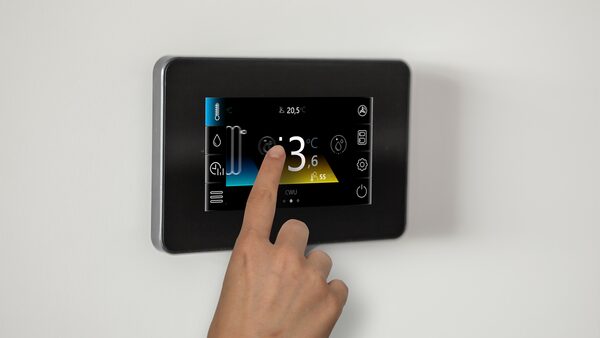
The controls can move heating into cheaper hours, and the evidence says this does not have to cost comfort. Smart Energy GB reports that heat pumps can keep homes comfortable on smart tariffs by heating steadily at times when electricity is cheaper, without noticeable change for most households19. That is the central claim behind flexible heat pump operation.
The mechanics are constrained. MCS Certified advises allowing heating to run at times when electricity is cheaper through time of use tariffs and the demand flexibility service20. The Energy Saving Trust adds a condition: avoid heating hot water or the house overnight when outside air temperatures are significantly lower, unless on a time of use tariff21. The exception is exactly the case a dynamic tariff creates.
There is a physical limit to how far operation can be pushed. Government methodology on heat pump performance notes that below a certain capacity limit the heat pump will cycle on and off22. Modulating down to a very low output is not free, and a unit that cycles loses some of the efficiency the cheap rate was meant to capture.
The bigger risk is the building. The National Insulation Association states that a heat pump operating at a low coefficient of performance can end up costing more to run than a gas boiler, in poorly insulated homes and without pricing reform23. That is the failure mode: a cheap tariff cannot rescue a heat pump that is losing heat through the fabric.
"a heat pump operating at a low COP can end up costing more to run than a gas boiler"
So the controls can shift load, pre-heat, and avoid the peak, but they cannot change the outside temperature, the insulation level or the minimum output of the compressor. What they can do is make the cheap hours count.
Heat pump versus gas boiler on a dynamic tariff
The comparison figures are the most quoted and the most conditional. Which? reports that a household could save as much as 50% and more on running costs with a heat pump compared to a gas boiler, but that this requires high quality installation, high efficiency and a heat pump tariff24. Dr Jan Rosenow's figure is the same shape: more than 50% on running costs, requiring high quality installation, high efficiency and a heat pump tariff25.
Those three conditions are doing a lot of work. The same Energy Saving Trust source that gives the £330 figure also states that most heat pumps on a standard flat-rate tariff cost the same or even more to run than an efficient gas boiler2. So the 50% claim is not a property of heat pumps; it is a property of heat pumps on the right tariff, installed well, in a suitable home.
Nesta's modelling gives a smaller, more specific number: paired with a time-of-use tariff, a heat pump could save £280 versus a boiler26. That sits between the £100 campaign figure and the 50% claim, and it is a modelled rather than an observed result.
Where solar and storage are added, Energy UK reports that in some cases energy bills were reduced by more than 80% compared with a gas-heated home on a standard tariff, when operated on an appropriate tariff4. That is the upper end of what the combination can do, and it depends on the household having the solar and battery as well as the heat pump.
On carbon, Ofgem states that heat pump technology currently offers a carbon saving of up to 65% compared with a gas boiler27. That is a separate claim from the running cost comparison and does not depend on the tariff.
The independence reading is that a heat pump on a dynamic tariff reduces exposure to gas prices, which is the point of the switch. It does not remove exposure to electricity prices, and it does not remove the standing charge, which the government's own modelling scenario removes only in the heat pump case3.
What the price cap and VAT changes mean for tariff savings
The price cap protects standard variable tariffs. Ofgem states that people on this type of tariff are protected by the energy price cap28, and Uswitch describes the standard variable tariff as the type affected by the energy price cap, which changes every three months29. That is the baseline most savings are quoted against.
A dynamic tariff is not that tariff type. Parliamentary research describes dynamic time-of-use tariffs as ones where energy prices can vary continually and are calculated in real-time depending on various factors11. So a dynamic tariff saving is not layered on top of the cap; it is a different pricing method, and the comparison is against whatever the household would otherwise have paid.
The cap itself moves. The July 2026 price cap rose 13% because of wholesale gas price spikes30, and Which? notes that its heat pump savings calculator is updated quarterly to reflect the latest price cap25. A saving quoted against a capped rate therefore changes with the cap, which is why the figures in this article carry dates.
VAT treatment has also changed the comparison. The government cut VAT on electricity to 0% from 1 October 2026 until 31 March 2027, which means electricity rates cannot be compared like-for-like with previous quarters31. Any saving calculated before that date is not directly comparable with one calculated after it.
For a household's independence, the cap is a floor under the default tariff and nothing more. It does not apply to a dynamic tariff, it does not apply to a heat pump tariff, and it does not protect a household that has moved to a flexible product and cannot shift its load. The saving and the exposure come from the same decision.
Where the saving can fail
Three conditions recur across the sources and each one can remove the saving entirely. The first is the meter: without a smart meter, a heat pump or EV tariff is not available7, and flexible tariffs generally need one to deliver their benefits15. The second is the tariff choice: independent research found that some tariff types might actually increase energy bills5, so not every flexible product is a saving.
The third is the building and the installation. A heat pump operating at a low coefficient of performance can cost more to run than a gas boiler in a poorly insulated home23, and the 50% running cost saving requires high quality installation, high efficiency and a heat pump tariff together24. Remove any one and the comparison changes.
There is also a control dependency. tado° Balance and Aira Intelligence are maker systems that optimise against tariffs17, and neither publishes a cash saving figure. A household relying on either is relying on the maker's service continuing, which is a different kind of dependence from the grid but a dependence nonetheless.
Sources31 cited
- Smart Meter Guaranteed Standards of Performance Draft Impact Assessment, Ofgem, August 2025
- Renewable technologies: what really cuts energy bills, Energy Saving Trust, 12 August 2026
- Heat pumps, UK Government Clean Energy Campaign, 10 September 2026
- Clean heat: supporting low-income households, Energy UK, 11 June 2026
- Flexible futures: integrating smart tariffs with low-carbon home technologies, Energy Saving Trust, 10 July 2026
- Time of use tariffs explained, Which?, 23 April 2026
- Deciding if a heat pump is right for you, Citizens Advice, 8 December 2025
- POST note 0699, Parliamentary Office of Science and Technology, 19 September 2026
- Domestic heat pump flexibility modelling, Nesta, 19 November 2024
- Tariffs for renewable technology, Energy Saving Trust, 12 August 2026
- POST note 0655, Parliamentary Office of Science and Technology, 17 September 2026
- Heat pumps on subscription, ClimateXchange, 21 February 2024
- Domestic interim heat pump tariff: background paper 1, Heat Pump Association, January 2024
- Getting a smart meter, Ofgem, 2026
- What is a smart meter, Smart Energy GB, 10 August 2026
- Smart Energy Action Plans, Centre for Sustainable Energy, 26 May 2026
- Smart energy tariff, tado°, 2026
- Aira and Octopus clean energy tariffs, Aira, 17 September 2026
- How smart meters work with heat pumps, Smart Energy GB, 24 April 2026
- Smart meters, MCS Certified, 24 July 2026
- How to ensure a heat pump runs efficiently, Energy Saving Trust, 19 May 2026
- Heat pump methodology, Department for Energy Security and Net Zero, January 2026
- The role of insulation in the Warm Homes Plan, National Insulation Association, 2 March 2026
- An introduction to heat pumps, Which?, 22 September 2025
- Air source heat pump costs and savings, Which?, 14 April 2026
- Factcheck: what it really costs to heat a home in the UK with a heat pump, Carbon Brief, 30 January 2026
- Boiler Upgrade Scheme launch, Ofgem, 17 September 2026
- How your electricity or gas bill is calculated, Ofgem, 2026
- Energy tariffs explained, Uswitch, 17 February 2026
- Gas and electricity prices, Uswitch, July 2026
- How to compare electricity prices, The Energy Shop, 1 October 2026
 Heat Pump Electricity TariffsA heat pump tariff gives you cheaper electricity for part of the day, so running your heating costs less than on a standard rate.
 Energy IndependenceA heat pump runs your heating on electricity instead of gas or oil, so how much does that really cut what you pay and how exposed you are when fuel prices jump?
 Heat Pump Running CostsWhat does a heat pump cost to run each year, and is it cheaper than a gas boiler?
 Controls and Time-of-Use TariffsCheaper electricity at night only saves money if your heating actually uses it then.
 Cost of Energy IndependenceA heat pump and better insulation are the usual starting point, but what does the whole job really cost, and what help is there with the bill?
 Do Smart Controls Save Money?Do smart heating controls really cut your bills, and by how much?