
In this guide
The Sunsynk ECCO is a hybrid inverter range sold into UK homes as the core of a battery package. The headline model is the 5.5kW single-phase hybrid inverter, listed by a distributor at £1,007.06, with a 3.6kW version alongside it1. Both are listed as working with Sunsynk Saver, and the wider Sunsynk hybrid range is described by the maker as optimised for Sunsynk LiFePO4 batteries and guaranteed compatible across the entire Sunsynk battery range3.
The ECCO name covers more than one product generation. Sunsynk's own news pages describe the 3.6kW Hybrid Ecco as supporting up to 16 batteries in parallel, up to 85kWh of battery storage and up to 16 inverters in parallel, with a potential output of 57.6kW in a stacked set-up4. A separate Sunsynk page pairs a 5.5kW inverter with a 5.2kWh battery under the Fusion style5. Some models have since been withdrawn: the Sun 5K ECCO Hybrid Inverter was discontinued on 30 June 2026, and the SUNSYNK-L5.3 battery is listed as discontinued by a trade supplier6.
For a household, the ECCO is a route to storing cheap or self-generated electricity and running selected circuits through a backup supply, but it does not remove the grid, the supplier or the manufacturer's firmware and app from the picture. The sections below set out what the range covers, what it costs, what has been withdrawn, and where the dependencies sit.
The ECCO range: 5.5kW inverter and battery options
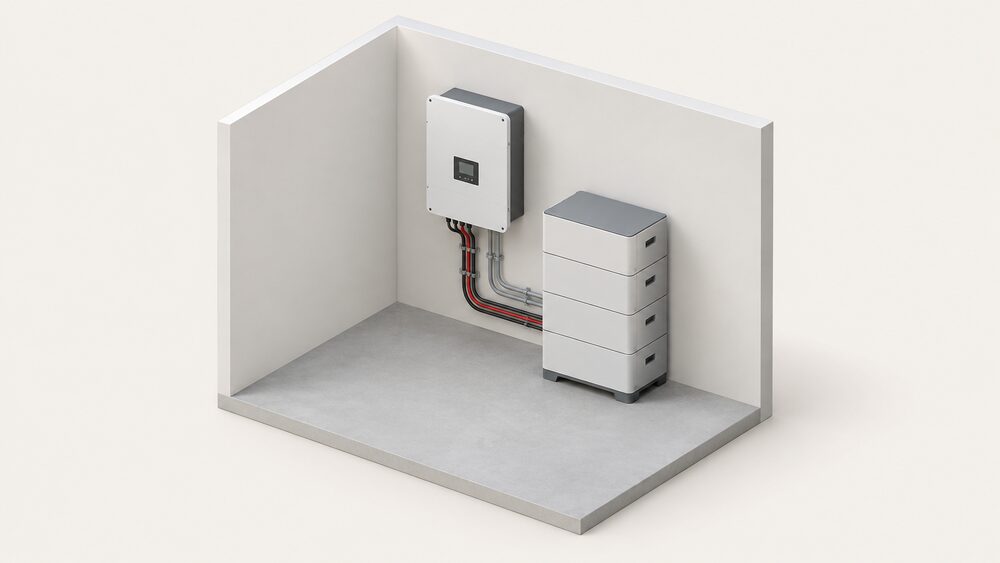
The ECCO line is built around hybrid inverters that combine solar input, battery charging and a backup output in one unit. The 3.6kW Hybrid Ecco is described by Sunsynk as designed to fit snugly into small spaces, equipped with large Maximum Power Point Tracking capabilities so it can handle oversized solar arrays, and able to integrate with an off-grid uninterrupted power supply4. The same page states that the inverter allows simultaneous output to the grid and the load, effectively doubling the inverter's output capacity to 7.2kW, and that it is compatible with generators4.
Scalability is the central selling point. Sunsynk states that the 3.6kW unit can support up to 16 batteries in parallel, allowing up to 85kWh of battery storage, and that up to 16 inverters can be paralleled, giving a potential output of 57.6kW4. The maker frames this as a modular route: three of the inverters can be paralleled to create a modular three phase system, and if one inverter develops a fault the other two continue to provide uninterrupted power4. Sunsynk describes the flexible nature of the set-up as allowing easy scalability in a more cost-effective manner4.
Battery options sit across two families. The S Series Ecco 5.12kWh battery is a low voltage unit with fast paralleling and strong system compatibility, carrying the model number SUN-BATT-5.12 ecco9. The L Series 3.0kWh battery is also low voltage, with the model number SUNSYNK-L3.010. On the all-in-one side, the Sunsynk Elite battery module is a 5.12kWh LiFePO4 unit, scalable up to six modules per stack, with remote monitoring and diagnostics, EPS backup support and generator auto-start compatibility11.
A case study published by Sunsynk describes a Shropshire homeowner cutting energy costs with a system built around a 7kW inverter12. That is a single installation reported by the manufacturer, not a general savings figure, and it should be read as an illustration of what one household achieved rather than a prediction for another.
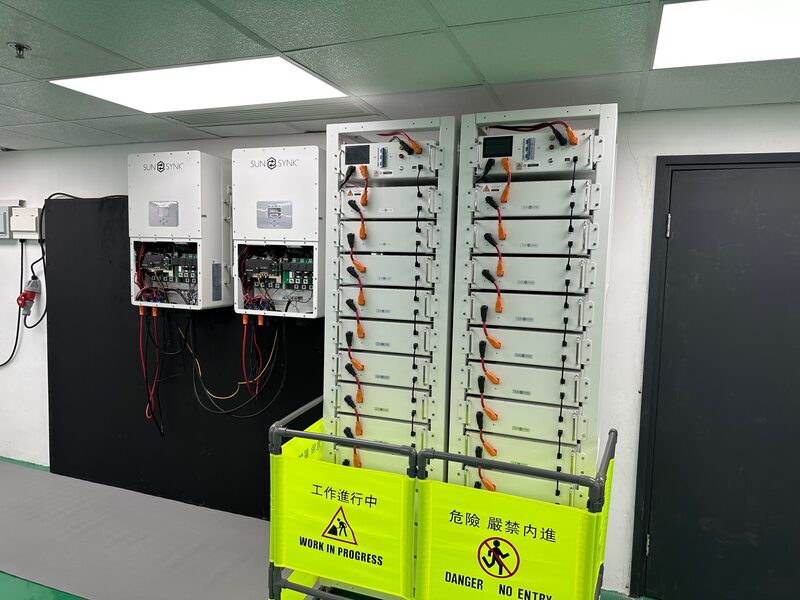
Price: £1,007.06 for the 5.5kW single-phase hybrid inverter
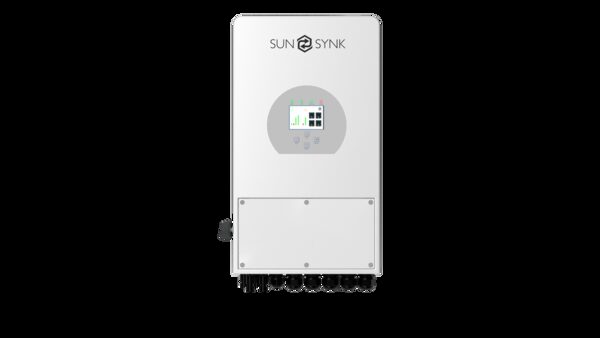
There is no manufacturer list price for the ECCO range. The figures that exist are distributor prices, and they vary between sellers and between dates. The 5.5kW single-phase hybrid inverter is listed at £1,007.06 by one distributor1. The 3.6kW ECCO single-phase hybrid inverter appears at £827.32 from one seller and at £999.08 including VAT from another2. A third pair of listings puts the 3.6kW ECCO hybrid inverter at £882.00 and at £735.002. Two further listings from the same date show £740.00 plus VAT and £734.00 plus VAT2.
The spread reflects different sellers, different dates and, in some cases, whether VAT is included. A household comparing quotes should treat any single figure as one seller's position on one day rather than a market price.
Installed packages are priced separately from the hardware. Installed Sunsynk ACURE hybrid packages with Fogstar Energy IP65 batteries have been listed at £5,070.00 to £11,685.008. That range covers complete installed systems rather than the inverter alone, and it is the figure closest to what a household actually pays for a working installation.
For wider context on what a battery installation costs and how payback is worked out, home battery cost and battery payback and savings set out the method.
Specifications: what the datasheets cover
The ECCO and Elite hardware shares a common set of interfaces and capabilities. The Sunsynk Elite inverter is listed with RS232, RS485 and CAN communication, 200% PV oversizing, an integrated DC switch and generator auto-start compatibility11. The data logger range carries an LCD display15. These are the connections that determine what the system can talk to: CAN and RS485 for battery communication, RS232 for service access, and the DC switch for isolating the array.
PV oversizing at 200% means the array can be rated at twice the inverter's output, which suits a household that wants more generation in weak light without buying a larger inverter13. The 3.6kW Ecco's large MPPT capability is the same idea expressed on the ECCO page: the inverter can handle oversized solar panel arrays4.
One specification point matters for anyone buying the inverter without a battery. Sunsynk states that the Elite is primarily designed as a matched inverter-and-battery storage system, and that a battery-ready installation without batteries should be confirmed with Sunsynk or the supplier before sale16. That is a maker's condition on its own product, and it applies to the Elite rather than to every ECCO model, but it signals that these units are intended to be sold as a package rather than as a bare inverter.
| Item | Published specification | Source |
|---|---|---|
| 3.6kW Hybrid Ecco continuous power | 3.6kW | 4 |
| 3.6kW Hybrid Ecco simultaneous grid and load output | 7.2kW | 4 |
| 3.6kW Hybrid Ecco maximum battery storage | up to 85kWh | 4 |
| 3.6kW Hybrid Ecco parallel batteries | up to 16 | 4 |
| 3.6kW Hybrid Ecco parallel inverters | up to 16 | 4 |
| Elite inverter PV oversizing | 200% | 13 |
| Elite inverter communications | RS232, RS485 and CAN | 11 |
| Elite battery module capacity | 5.12kWh LiFePO4 | 11 |
| Elite battery stack scalability | up to 6 modules per stack | 11 |
The specification set is broad but not complete. Sunsynk's own product pages carry the headline figures, and the full datasheets sit behind them. For how capacity, power ratings and round-trip losses interact in practice, battery capacity and usable capacity and battery power rating and C-rate explain the terms.
Discontinued models: the Sun 5K ECCO and SUNSYNK-L5.3 battery
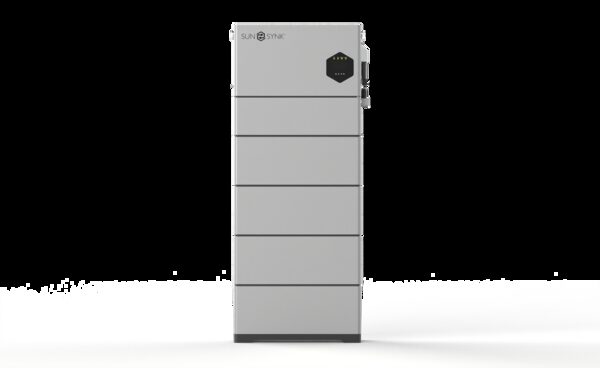
Two products in the wider ECCO ecosystem have been withdrawn. The Sun 5K ECCO Hybrid Inverter was discontinued on 30 June 2026, according to its product page6. The SUNSYNK-L5.3 battery is listed by a trade supplier as discontinued, with no date given7.
The practical effect is on spares, replacements and like-for-like expansion. A household that already owns a discontinued unit can still operate it, but adding an identical second unit later depends on remaining stock rather than on continued production. The current S Series Ecco 5.12kWh battery carries the model number SUN-BATT-5.12 ecco and is a low voltage unit with fast paralleling9, while the L Series 3.0kWh battery carries the model number SUNSYNK-L3.010. Anyone building a stack should check that the modules being added match the existing units in voltage class and communication.
This is a normal pattern in home storage, where ranges turn over every few years. It does mean that a buyer choosing an ECCO package is choosing a product line with a finite production life, and that the resale and expansion value of the hardware depends on the second-hand market. Modular and stackable battery systems covers how expansion works across brands, and adding more batteries later deals with the practical constraints.
Firmware updates and the 100% SOC fix
State of charge is the proportion of a battery's capacity currently held. A battery that will not consistently reach 100% SOC is not fully charging, which reduces the usable capacity of the system and can affect how the battery management system balances its cells. A firmware release dated 28 September 2024 fixed a Sunsynk issue where the battery would not consistently reach 100% SOC17. The same release raised the 15.5kWh Gen 1 charge current limit with Sunsynk from 95A to 195A and corrected a Growatt communication error17.
The charge current change matters because it sets how quickly a battery can be refilled. Raising the limit from 95A to 195A on a 15.5kWh battery shortens the window needed to charge it, which is useful where a household is filling the battery inside a cheap-rate period or from a solar array with a short peak. The Growatt communication fix is a reminder that these systems talk to equipment from other makers, and that interoperability depends on firmware rather than on the hardware alone.
Sunsynk states that firmware updates are occasionally required and that a firmware upgrade is requested by raising a support ticket18. That is the route: the householder or installer contacts Sunsynk support, and the update is applied through the manufacturer. The Acure Ecco models use Wi-Fi and Bluetooth for monitoring and control through Sunsynk Connect Pro19, which is the same connectivity layer that carries remote diagnostics.
This is one of the clearer dependencies in the package. The hardware is owned outright, but the software that governs charging behaviour, battery communication and monitoring sits with the manufacturer and is delivered through its support process. Battery management systems explains what the BMS does with the charge current it is given, and battery monitoring and apps covers what stays available locally when the cloud link is not.
What ECCO means for household energy independence
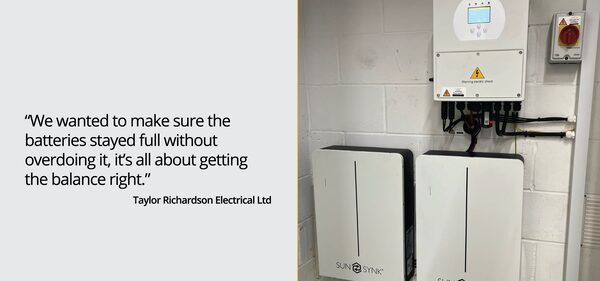
A Sunsynk ECCO package gives a household three things it did not have before: the ability to store electricity rather than export it immediately, a backup supply for selected circuits through the EPS output, and a single unit that manages solar, battery and load together4. The 3.6kW Ecco's simultaneous output to grid and load, its generator compatibility and its off-grid UPS integration are the features that make it useful beyond a straightforward solar self-consumption set-up4.
What remains is a set of dependencies. The system stays connected to the grid for import and export, and to a supplier for whatever it draws. The battery chemistry is lithium iron phosphate, which is the maker's own specification11. Monitoring and control run through Wi-Fi and Bluetooth and the Sunsynk Connect Pro platform19, so remote visibility depends on a home broadband connection and the manufacturer's service. Firmware, including the fix for the 100% SOC issue and the charge current change, arrives through a support ticket rather than through the householder18. And the product line itself turns over: the Sun 5K ECCO was discontinued on 30 June 20266.
The honest position is that the ECCO reduces dependence on imported electricity and on peak-rate pricing, and increases dependence on one manufacturer's firmware, app and support queue. For a household weighing that trade, home batteries and household energy independence sets out the wider picture, and Sunsynk hybrid inverters and home battery storage covers the brand's range as a whole.
Sources21 cited
- Sunsynk ECCO 5kW product page, Sunsynk, 2026-09-17
- Sunsynk ECCO 3.6kW product page, Sunsynk, 2026-09-17
- Sunsynk inverters range, Sunsynk, 2026-09-17
- 3.6kW Hybrid Ecco Inverter: the Mini Beast's endless possibilities, Sunsynk, 2023-09-14
- Sunsynk Fusion style inverter, Sunsynk, 2023-08-27
- Sunsynk 5kW ECCO hybrid inverter, Solar Trade Sales, 2026-06-30
- Sunsynk SUNSYNK-L5.3 battery, TradeSparky, undated
- Installed Sunsynk ACURE battery packages, ITS Technologies, 2026-09-17
- S Series Ecco 5.12kWh battery, Sunsynk, 2026-09-17
- L Series 3.0kWh battery, Sunsynk, 2026-09-17
- Sunsynk All-In-One Elite 5.12kWh battery module, Alternergy, 2026-09-17
- How a Shropshire homeowner cut energy costs by around 58%, Sunsynk, 2026-09-14
- Sunsynk 7kW All-In-One Elite hybrid inverter, Alternergy, 2026-09-17
- Sunsynk Elite 5.1kWh PDU and battery base combo, Alternergy, 2026-09-17
- Sunsynk data loggers, Sunsynk, 2026-09-17
- Sunsynk 3.6kW All-In-One Elite hybrid inverter, Alternergy, 2026-09-17
- Firmware updates, Fogstar, 2024-09-28
- Sunsynk support, Sunsynk, 2026-09-17
- Acure Ecco 5kW (C1, Black), Sunsynk, 2026-09-17
- Acure Ecco 3.6kW (C1, Black), Sunsynk, 2026-09-17
- Acure Ecco 6kW (C1, Black), Sunsynk, 2026-09-17
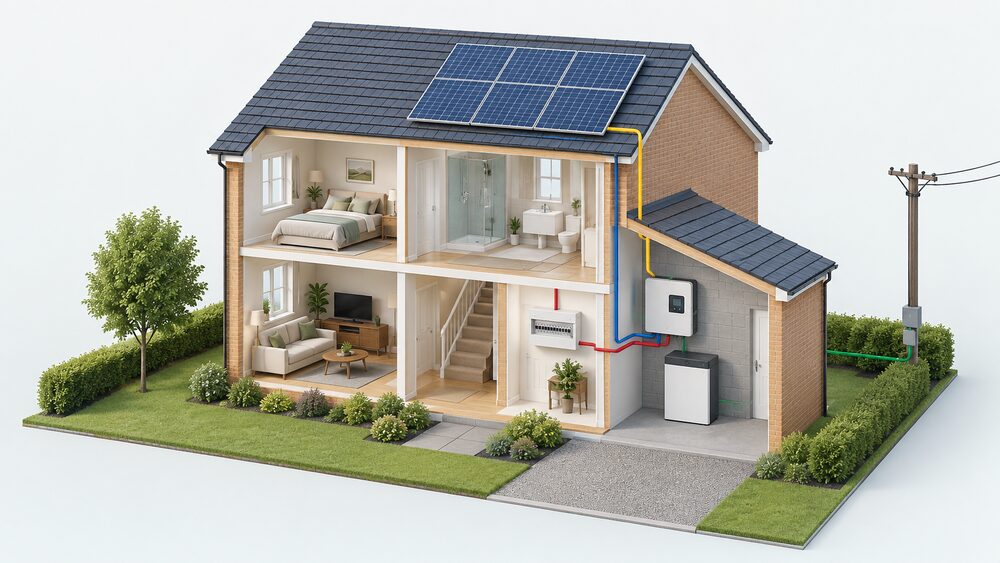 Sunsynk Hybrid Inverters and Home Battery StorageSunsynk hybrid inverters let your home store the solar power it makes and use cheap overnight electricity instead of buying at peak times.
 Sunsynk hybrid inverters and batteriesWhich Sunsynk inverter suits a typical UK home, and what size do you need?
 Sunsynk hybrid invertersWhich Sunsynk inverter suits your home, and what does it cost to fit?