
In this guide
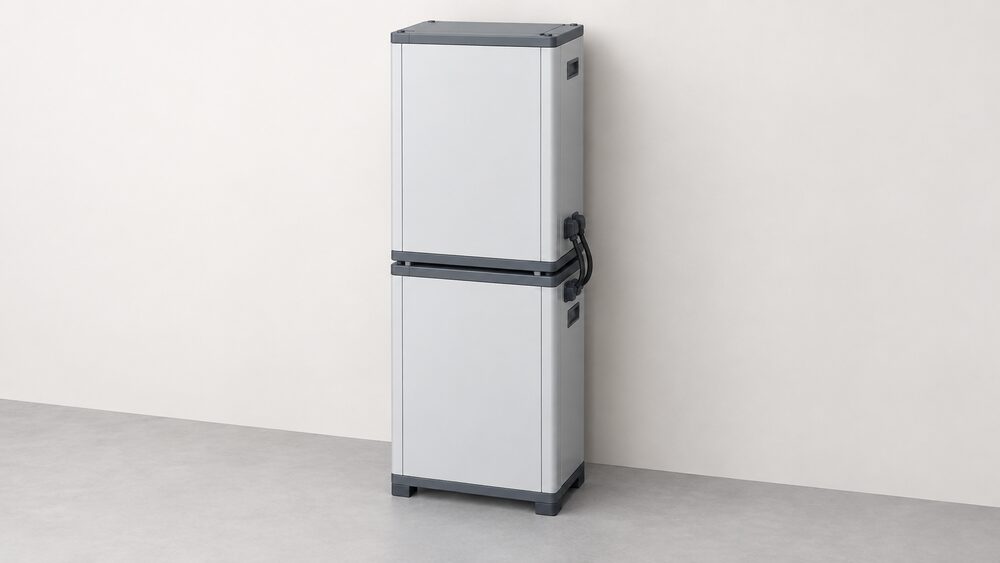
The Fogstar Energy 16.1kWh battery is a UK-designed lithium iron phosphate (LiFePO4) storage module sold as a single unit or as the building block of a modular stack. Fogstar lists the IP65-rated version from £2,199.99, and its own blog puts the price per kWh at £161.491. The cheaper ECO version is listed at £1,949.99, which the maker states works out at £121.12 per kWh3.
Each module is rated at 16.1kWh and 314Ah, built from Grade A EVE MB31 cells, and rated to 8,000 cycles at 91% depth of discharge5. The stack expands in 16.1kWh steps: two modules make 32.2kWh and four make 64.4kWh, all within a single stack6.
This is a battery rather than a complete system. It needs a compatible hybrid or off-grid inverter, an installer, and a control unit if it is to be stacked. What it offers a household is stored energy it owns outright, charged from solar or off-peak grid electricity, with the inverter and the grid connection remaining the points of dependence.
The Fogstar Energy 16.1kWh battery at a glance
Fogstar sells the 16.1kWh capacity in more than one form, and the differences matter more than the headline number. The IP65-rated 16.1kWh battery is the modular stack unit, sealed for indoor or outdoor installation and listed from £2,199.991. The ECO 48V 16.1kWh battery is the lower-cost build at £1,949.99, with a 6-year manufacturer's warranty backed by 10 years of Fogstar customer support4. The 16.1kWh 48V battery is the version sold in inverter bundles, described as 16.1kWh of usable lithium battery storage with a 10-year warranty6.
All three share the same nominal capacity and the same cell format. What separates them is enclosure, warranty term and price. The IP65 stack module is the one designed to be added to over time; the ECO is the value option; the bundle version is sold with an inverter as a package.
The Fogstar Energy ECO 16.1kWh 48V battery is a single-unit, 48V lithium iron phosphate store rated at 16.1 kWh1. The same 16.1kWh capacity is offered in an IP65-rated enclosure for indoor or outdoor mounting, and as an expansion module for stacking alongside an existing unit3. Fogstar also names the 48V 16.1kWh battery as its recommended pairing for its own inverter packages2.
Specifications: 16.1kWh usable capacity, 314Ah cells and 48V nominal voltage
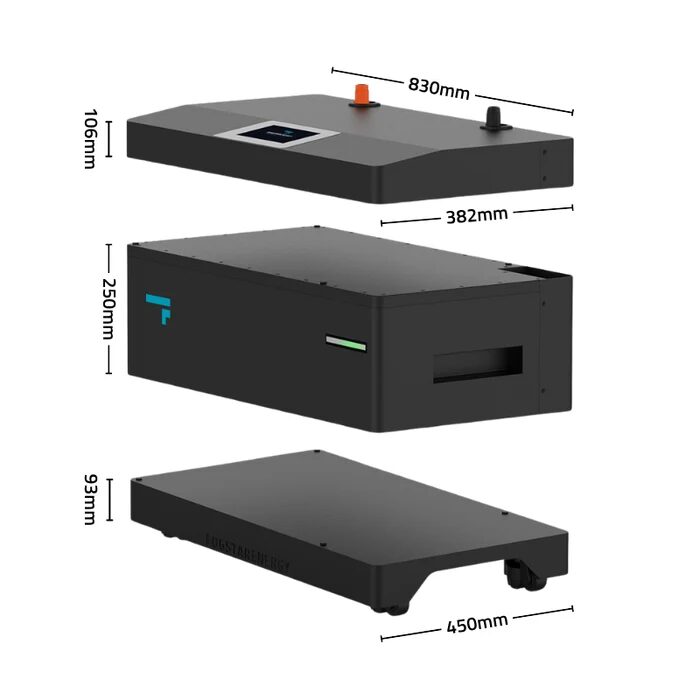
The headline specification is straightforward. Rated energy is 16.1kWh, capacity is 314Ah, and nominal voltage is given as 48V on the 48V battery and 51.2V on the ECO version, which is the same 16-cell lithium pack described at its charged nominal rather than its label voltage5. The expansion module carries the same 16.1kWh rating and 314Ah capacity5.
| Specification | IP65 modular stack | ECO 48V 16.1kWh | 16.1kWh 48V battery |
|---|---|---|---|
| Rated energy | 16.1kWh1 | 16.1kWh4 | 16.1kWh usable6 |
| Capacity | 314Ah5 | 314Ah4 | Not stated |
| Nominal voltage | 48V1 | 51.2V4 | 48V6 |
| Cell configuration | 16S1P5 | 1P16S4 | Not stated |
| Maximum discharge current | 150A1 | Not stated | Up to 200A6 |
| Weight | 148kg1 | 119.5kg ± 3kg4 | Not stated |
| Dimensions | Not stated | 898.5 x 415 x 260mm4 | Not stated |
| Ingress protection | IP651 | Not stated | IP656 |
Two figures deserve attention. The IP65 stack's maximum discharge current is 150A, while the 48V battery is listed at up to 200A discharge for high-demand applications1. That difference affects how much load a single module can carry at once, which matters where a household intends to run heavy appliances through the battery. The 48V battery is also listed as supporting up to 15 batteries connected in parallel6.
Chemistry and cycle life: LiFePO₄ cells rated to 8,000 cycles
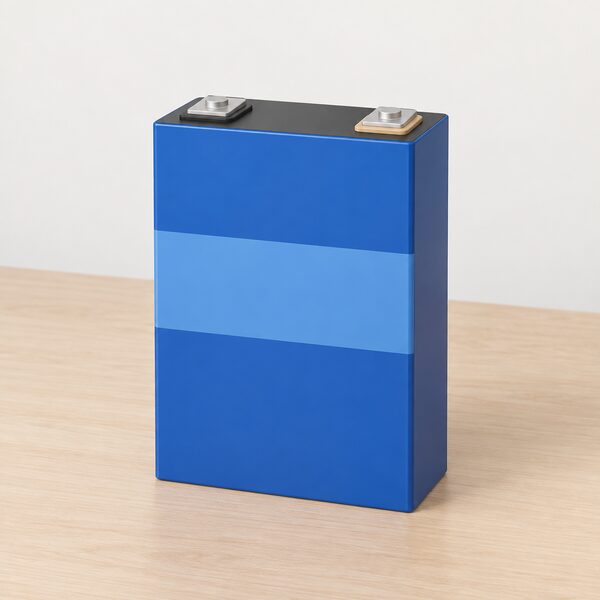
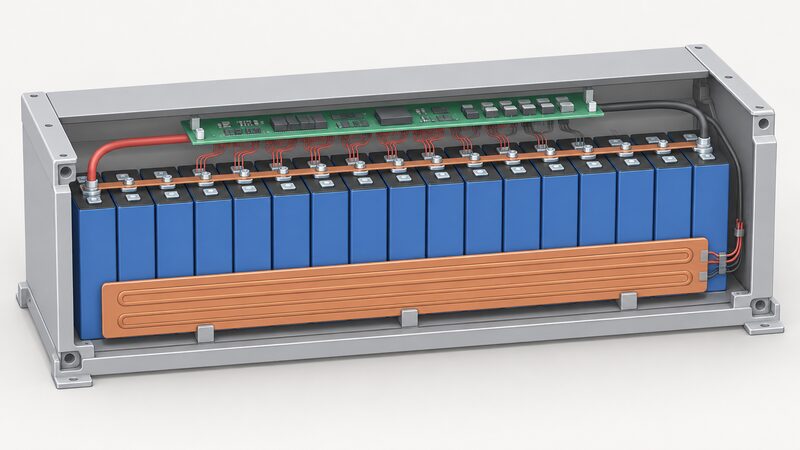
Fogstar builds the 16.1kWh battery around lithium iron phosphate cells, describing them as premium Grade A EVE MB31 LiFePO₄2. The ECO version is built using 3.2V 314Ah Grade A cells in a 1P16S configuration5. Cycle life is quoted as 8,000 cycles at 91% depth of discharge, measured at 25°C with 50A charge and discharge current, a figure repeated across the expansion module and the larger stacks4. Independent descriptions of the chemistry are more conservative, putting LiFePO₄ at 4,000 to 6,000 cycles, or 2,000 or more full cycles to 80% capacity for a quality cell.
The cycle life figure is 8,000 cycles at 91% depth of discharge, repeated across the IP65 stack, the expansion module, the 64.4kWh stack and the ECO battery1. That is a maker's rating under stated test conditions: the ECO figure specifies 25°C with 50A charge and discharge current4.
Other sources in the wider market give lower general figures for the chemistry. One maker guidance page puts LFP cells at over 6,000 full charge cycles, another at 6,000 cycles, and a third at 4,000 to 6,000 cycles9. A fourth describes 2,000+ full cycles to 80% capacity as typical for a quality LiFePO4 battery12. These are general statements about the chemistry rather than tests of this product, and they sit below Fogstar's own rating.
What that means in practice is that the cell chemistry is the durable kind, tolerant of daily cycling, and the rated life is long enough that calendar ageing and the inverter's behaviour may matter as much as cycle count. More on how ratings translate into years is at battery cycle life and degradation.
Price position: from £2,199.99, or roughly £161 per kWh
Fogstar's published prices for the 16.1kWh capacity vary by version and by what is included. The IP65-rated 16.1kWh battery is listed from £2,199.99, and the IP65 modular stack at £2,499.991. The expansion module alone is £2,049.995. The ECO battery is £1,949.99, stated as £121.12 per kWh4. Fogstar's own blog puts the 16.1kWh battery at a price per kWh of £161.492.
| Product | Listed price | Stated cost per kWh |
|---|---|---|
| ECO 48V 16.1kWh battery | £1,949.994 | £121.124 |
| IP65 16.1kWh battery | from £2,199.993 | £161.492 |
| IP65 16.1kWh modular stack | £2,499.991 | Not stated |
| 16.1kWh expansion module | £2,049.995 | Not stated |
| 16.1kWh 48V battery plus inverter bundle | £2,909.03, reduced from £3,161.996 | Not stated |
| 32kWh battery | £3,499.9913 | £103.1213 |
| 64.4kWh stack | £6,999.997 | Not stated |
The pattern is that cost per kWh falls as capacity rises: £161.49 at 16.1kWh against £103.12 at 32kWh on the maker's own figures2. Bundles add an inverter and start higher, with the 16.1kWh ECO bundle from £2,451.79, the IP65 bundle from £2,681.79 and the 32kWh bundle from £3,877.7914.
These are maker prices for the battery, not installed prices. VAT treatment is not stated in the figures, and installation, mounting, cabling and any control unit are separate. Wider UK cost context is at how much a home battery costs.
Warranty and support: 10-year warranty with UK-based service
The warranty term is not one number across the range, and the pages do not agree with each other. The 16.1kWh 48V battery is listed with a 10-year warranty6. The IP65-rated 16.1kWh battery is described with a 10 Year Warranty9. The expansion module, the IP65 modular stack, the 32.2kWh stack and the 64.4kWh stack are all listed with a 6-year warranty and 10 years of UK-based customer service support5. The ECO battery carries a 6-year manufacturer's warranty backed by 10 years of Fogstar customer support4.
The support element is consistent: 10 years of UK-based customer service appears across the stack products and the ECO battery1. Fogstar is a UK company, founded in 2016 to supply lithium cells to the UK market, which is what makes a UK support commitment meaningful rather than a distributor arrangement.
Warranty terms of this kind usually carry conditions on installation, registration and operating limits, and the retained-capacity basis matters as much as the year count. How those terms are typically structured is set out at home battery warranties.
Fire suppression, heating and the IP65 enclosure
The IP65 version of the battery adds two features that matter outdoors: integrated fire suppression and a heating system. Fogstar describes a built-in, heat-activated aerosol fire suppression system providing fast, automatic internal protection with no ongoing maintenance6. The 16.1kWh IP65-rated battery is listed with fire suppression, heating and a 200A PACE BMS, plus additional 2A JK balancing support1. The fully sealed IP65-rated enclosure allows for both indoor and outdoor installation, and integrated wheels are fitted to ease positioning and later maintenance2.
Heating matters in the UK context. The IP65 stack's working temperature is given as 0 to 45°C for charging with heating, and -20 to 45°C for discharge1. That means the battery can be charged in a cold garage or outbuilding in winter, which is where many UK installations end up, rather than being limited to a heated indoor space.
The enclosure is IP65-rated on the stack, the expansion module and the 48V battery, described as fully sealed and suitable for both indoor and outdoor installation, with integrated wheels for easier installation and maintenance1. The IP65-rated 16.1kWh battery is described as engineered for UK conditions15.
Stacking from 16.1kWh to 64.4kWh: how the modular system expands
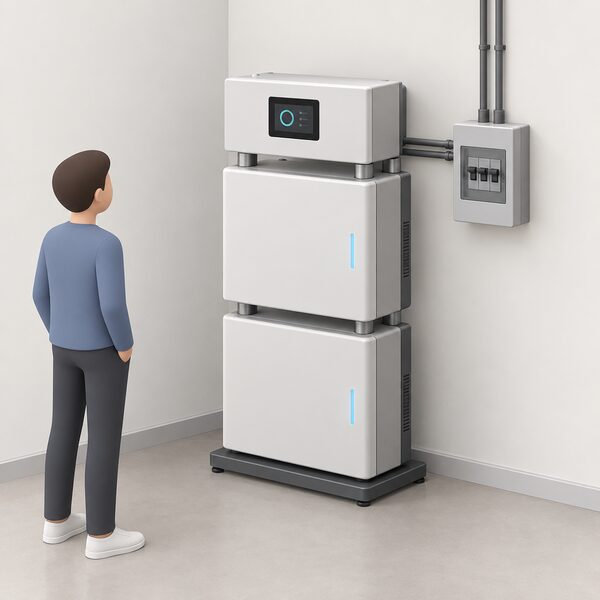
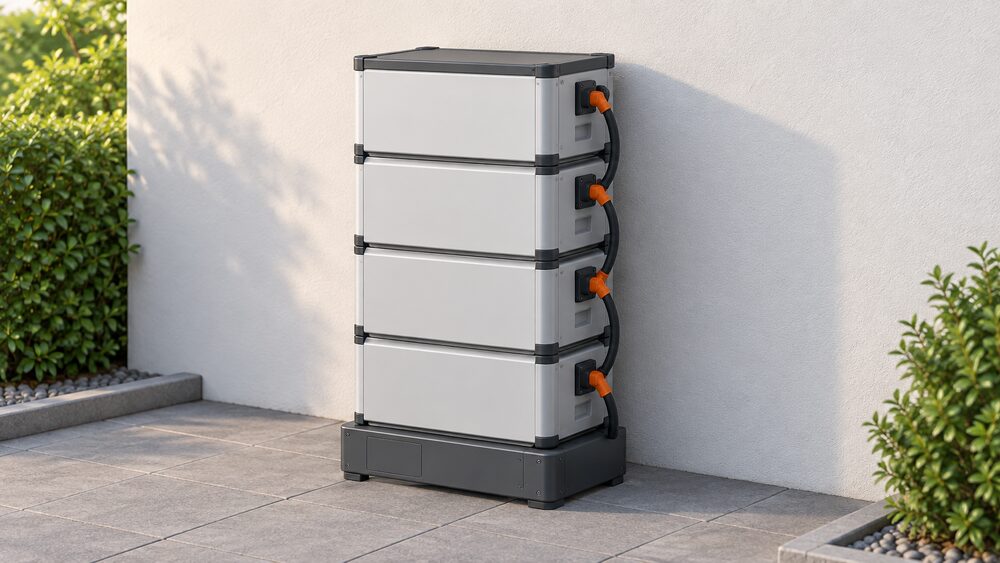
The modular system starts at 16.1kWh using a single battery module and control panel, and can be expanded up to 64.4kWh within a single stack9. Each 32.2kWh stack is built from two 16.1kWh modules managed by a dedicated control unit, and each 64.4kWh stack from four8.
Expansion is not simply a matter of adding a battery. The expansion module is intended for use only with compatible Fogstar Energy Modular Battery Stack systems already fitted with a stack control unit, LCD touchscreen interface, battery base plate and main breaker assembly5. A household buying a single module and later adding a second needs those parts in place from the start.
Beyond a single stack, Fogstar states that up to 16 stacks can be connected together, delivering over 1MWh of energy storage capacity9. The 64.4kWh stack page notes that additional stacks can be added at any stage, which suits phased installations or growing demand7. For a domestic property, the practical ceiling is usually the inverter and the property's supply, not the battery. The general case for building capacity over time is at modular and stackable battery systems.
Inverter compatibility and monitoring: PACE BMS, LCD touchscreen and supported protocols
The battery is not a standalone product: it needs a compatible inverter, and compatibility is the first thing to check. Fogstar lists the 16.1kWh 48V battery as compatible with Luxpower, Victron, Sunsynk, Solis, Growatt, Sofar, Goodwe and many other leading inverter brands6. The IP65 modular stack lists Victron, LuxPower, Sunsynk, Solis, Voltronic and Voltacon, with CAN and RS485 communication1. The ECO battery ships with pre-loaded compatibility for Victron, Sunsynk, Solis, Luxpower and Voltacon4.
The battery's own control layer is the PACE Battery Management System, rated at 200A on the 48V battery, with a 4.3-inch TFT LCD touchscreen used for monitoring and inverter protocol selection6. The stack and expansion module carry an LCD touchscreen for real-time monitoring and system management1. Fogstar describes the PACE BMS as allowing seamless plug-and-play compatibility with popular inverters14.
This is where the dependence sits. Monitoring and protocol selection are local, on the battery's own screen, so the system does not require a cloud account or an app to run. But the inverter is a separate purchase from a separate maker, and its monitoring app, firmware and warranty sit outside Fogstar's control. A household choosing this battery is buying storage, not a complete managed system. The wider picture is at battery management systems and monitoring a home battery.
Where the 16.1kWh battery fits a household's independence
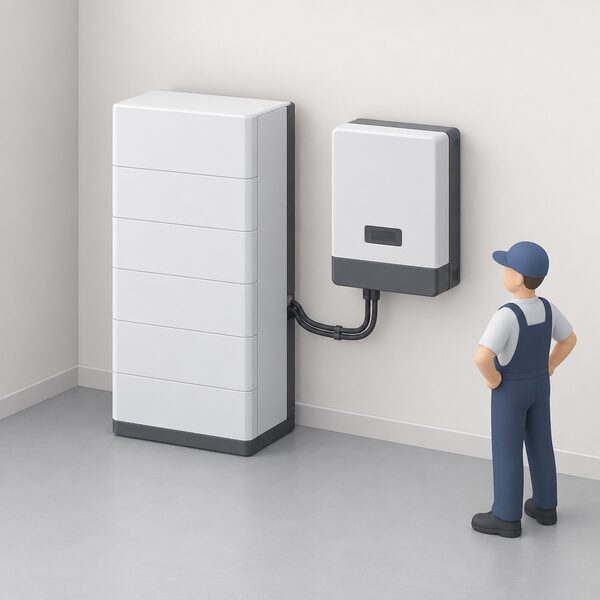
The battery does one thing for energy independence: it stores electricity the household has generated or bought cheaply, and releases it when needed. Charged from solar, it reduces the share of power drawn from the grid. Charged on an off-peak tariff, it shifts consumption away from peak prices. Fogstar's own case study describes 48V batteries used for home backup and off-peak energy savings16, and the company has written about earning around £10 a month by joining a virtual power plant17.
What remains dependent is everything around it. The battery needs an inverter, which is a separate product from a separate maker. It needs a grid connection to charge from off-peak electricity, and a supplier to provide that electricity. It needs an installer for a safe installation, and the warranty depends on the product being registered and used within its stated limits. The 16.1kWh module is heavy, at 148kg for the IP65 stack, and one product page states that professional installation by a qualified contractor or structural engineer is needed because of the weight1.
For a household weighing up storage, the honest position is that this is a well-specified, keenly priced module with a long rated cycle life and a UK support commitment, sold as a component rather than a finished system. The independence it delivers is proportional to what it is paired with. The broader case is at home batteries and household energy independence and home battery storage.
Sources18 cited
- Fogstar Energy IP65-Rated 48V 16.1kWh Modular Battery Stack, Fogstar, 2026-09-17
- Unveiling the Future of Solar Storage: the Fogstar Energy 16.1kWh Battery, Fogstar, 2025-02-28
- Solar Battery Storage collection, Fogstar, 2026-09-19
- Fogstar Energy ECO 48V 16.1kWh Solar Battery, Fogstar, 2026-09-19
- Fogstar Energy IP65-Rated 48V 16kWh Modular Battery Stack Expansion, Fogstar, 2026-09-19
- 16.1kWh 48V Battery and Inverter Bundle, Fogstar, 2026-09-19
- Fogstar Energy IP65-Rated 48V 64.4kWh Modular Battery Stack, Fogstar, 2026-09-19
- Fogstar Energy IP65-Rated 48V 32.2kWh Modular Battery Stack, Fogstar, 2026-09-19
- Fogstar Energy Battery Showdown, Fogstar, 2026-06-17
- Fogstar Energy 48V 10kWh Battery, Fogstar, 2026-09-19
- Solar Battery Storage: the Best Options in 2025, Fogstar, 2025-04-28
- Fogstar x Luxpowertek Gen Pro 8-12k, Fogstar, 2026-09-19
- Fogstar Energy 48V 32kWh Battery with Heating and Fire Suppression, Fogstar, 2026-09-19
- Battery and Inverter Bundle collection, Fogstar, 2026-09-19
- Fogstar Energy collection, Fogstar, 2026-09-17
- Case Study: Fogstar 48V Batteries for Home Backup and Off-Peak Energy Savings, Fogstar, 2026-03-09
- Your Fogstar Battery Can Earn £10 a Month by Joining Axle Energy's VPP, Fogstar, 2026-04-21
- Fogstar Energy 15.5kWh and 16.1kWh Wall Mount, Fogstar, 2026-09-20
 Fogstar power stations and leisure batteriesFogstar sells batteries and power stations direct to UK homes, so what do you actually get for the money?
 Fogstar Energy Home BatteriesFogstar sells home batteries straight to UK householders, so what do the different sizes cost, and which one suits your home?