
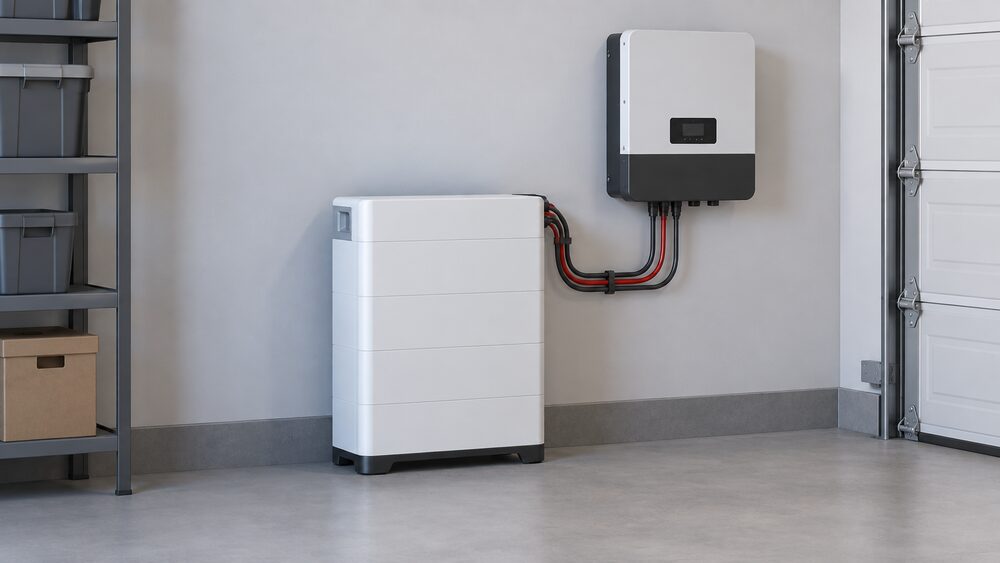
In this guide
Dyness is a Chinese battery manufacturer, headquartered in Suzhou, that sells low-voltage lithium iron phosphate storage modules into the UK market. Its products are batteries only: there is no Dyness inverter in the domestic range, so a household buys a Dyness unit to pair with a third-party hybrid or battery inverter, and the maker publishes compatibility lists to say which inverters it has been matched with1.
The two products most relevant to a UK home are the PowerBox Pro, a 10.24kWh low-voltage unit scalable to 50 units in parallel, and the DL5.0C Pro, a 5.12kWh module that also runs to 50 units in parallel3. Dyness describes itself as a top five global home energy solutions provider, with more than 500,000 users and 500 or more global partners1.
The practical position for a household is that a Dyness battery delivers stored electricity and a degree of independence from peak-rate import, but it does not deliver independence from the grid, from an electricity supplier, or from the manufacturer. It is a component, not a system, and its remote features depend on a WiFi module, an app and the maker's servers. One UK trade listing dated 17 September 2026 states that the PowerBox Pro is discontinued, which matters to anyone planning a purchase or holding a warranty.
Who Dyness are: a top-five global storage maker from Suzhou
Dyness is headquartered in Suzhou, China, and states that it operates more than 20 global branches, three research and development centres and three major manufacturing bases worldwide1. The company positions itself as a top five global home energy solutions provider, with products trusted by more than 500,000 users globally and a partner network of more than 5001. Those are the maker's own figures and are not independently verified in the material available here.
The company entered the UK market explicitly. In a press release dated 30 January 2024 it announced that it had launched a range of low-voltage energy storage products for the UK market, describing the DL5.0C as a featured product for that launch8. That matters because it tells a householder that the UK is a deliberate target market rather than an incidental export destination, and that the DL series was chosen for it.
What Dyness does not make is the rest of the system. There is no Dyness hybrid inverter in the domestic range described here, so the battery is one half of a pair. The maker maintains a low-voltage compatibility list, dated 27 July 2026, setting out which inverter brands its low-voltage batteries have been matched with, and a separate list for its STACK280 and 314Ah series dated 11 June 20262. It has also published a notification letter about matching between Dyness and Kostal inverters9.
For a household's energy independence, the company's location is the point. The hardware is designed and built outside the UK, spares and replacements travel through an import chain, and warranty administration runs through the maker and its distributors. That is a supply-chain dependence, distinct from the operational dependence on the grid that any battery carries. The scale figures suggest a company large enough to support a product line, but they say nothing about how long a particular model will remain in production, which is the question the discontinued listing raises.
The range: PowerBox, PowerBox Pro and the DL series for UK homes
Dyness sells several low-voltage families into the UK, and the naming is not self-explanatory. The PowerBox Pro is the largest single module described here at 10.24kWh3. The DL series is the smaller modular line: the DL5.0C and DL5.0C Pro are 5.12kWh units, and the DL2.5 is a smaller module again, supporting up to 16 units in parallel rather than 504. The PowerDepot H5B is a further low-voltage home unit at 5.12kWh per module, expandable to 51.2kWh in parallel, and one was installed in a suburban house in the south of England in a case study dated March 202510.
Above the low-voltage line sits the Tower series, a high-voltage stack. Dyness states that the Tower has a height of 70cm with two modules and up to 130cm with five modules, at 50.4cm wide and 38cm deep, and that up to five battery modules can be used in combination with a Kostal PLENTICORE Plus or PLENTICORE BI inverter9. The Tower Pro supports up to 12 clusters in parallel, covering 7.68kWh to 276.48kWh, and Dyness describes its high-voltage output as maximising energy efficiency12.
| Product | Nominal capacity | Parallel limit | Chemistry |
|---|---|---|---|
| PowerBox Pro | 10.24kWh3 | Up to 50 units, 10.24 to 512kWh3 | LiFePO43 |
| DL5.0C / DL5.0C Pro | 5.12kWh4 | Up to 50 units, 5.12 to 256kWh4 | Low-voltage lithium6 |
| DL5.0F | Not stated | Up to 50 units5 | Low-voltage lithium5 |
| DL2.5 | Not stated | Up to 16 units5 | Low-voltage lithium5 |
| PowerDepot H5B | 5.12kWh10 | Expandable to 51.2kWh10 | Low-voltage lithium10 |
| Tower Pro | Not stated | Up to 12 clusters, 7.68 to 276.48kWh12 | High-voltage stack12 |
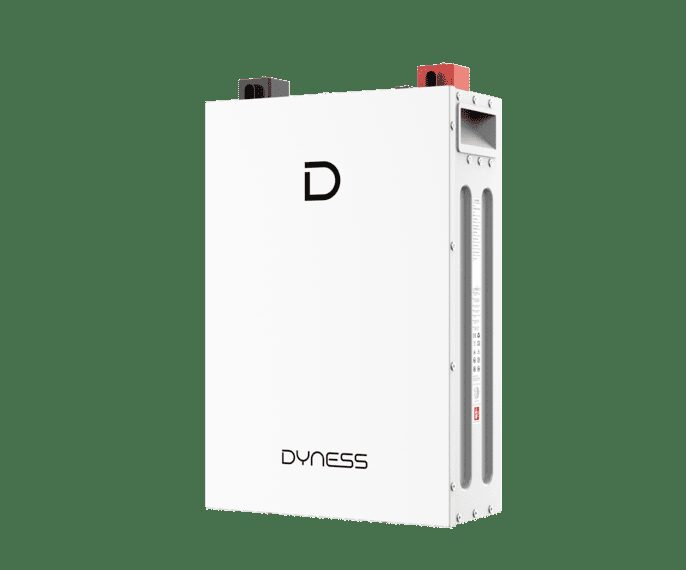
PowerBox Pro: 10.24kWh low-voltage storage, scalable to 50 units in parallel
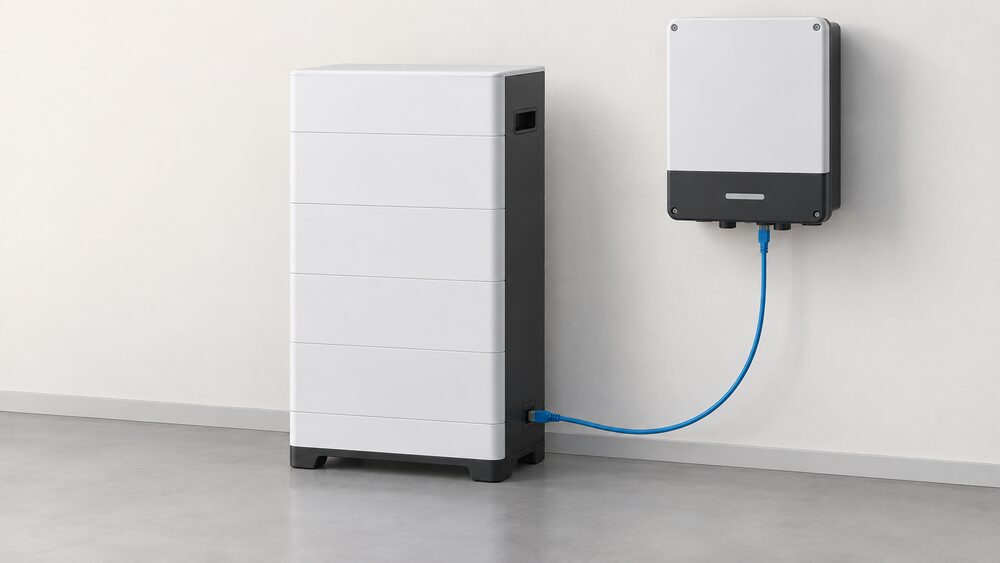
The PowerBox Pro is a low-voltage residential energy storage unit with a nominal capacity of 10.24kWh, built on LiFePO4 chemistry and scalable to 50 units in parallel for an energy coverage of 10.24kWh to 512kWh3. Dyness lists it as part of its low-voltage residential range, and the maker's own case-study material repeats the 10.24kWh figure and the 50-unit parallel limit12.
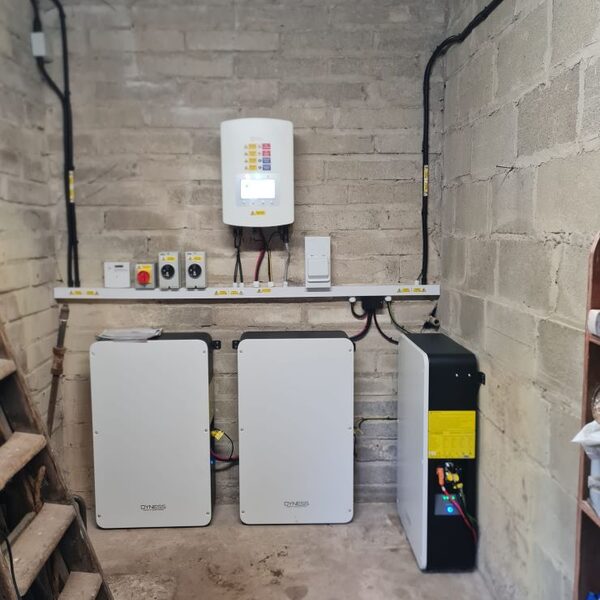
The specification includes features aimed at multi-unit installations. Dyness states that the PowerBox Pro supports mixing modules under different states of charge to ensure battery life, and lists short-circuit lockout and surge resistance among its safety features3. The maker also states that a system with multiple PowerBox Pro batteries may require suitable breakers, fuses, busbars, combiner boxes and correctly sized cables based on the system current and local electrical standards3. That is a plain statement that a large parallel bank is an electrical design job, not a plug-together exercise.
Compatibility is the condition that governs whether the unit works at all. Dyness states that users should verify that the inverter is compatible with the PowerBox Pro and follow the corresponding installation instructions3. The maker publishes a low-voltage compatibility list, dated 27 July 2026, naming the inverter brands its low-voltage batteries have been matched with2. A householder buying a Dyness battery is therefore buying into a pairing decision made before purchase, and the inverter, not the battery, usually determines what monitoring, backup and tariff features the system can offer.
Capacity and scalability: 10.24kWh per unit, expandable in parallel
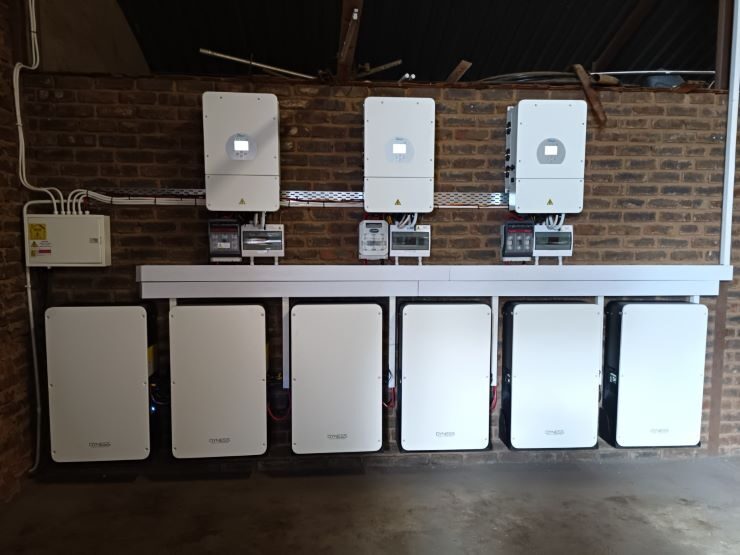
Capacity in the Dyness range is built by multiplication rather than by buying a bigger box. The PowerBox Pro gives 10.24kWh per unit and up to 50 units in parallel3. The DL5.0C gives 5.12kWh per unit and up to 50 units in parallel, which Dyness describes as covering energy requirements from 5.12kWh to 256kWh4. The DL2.5 stops at 16 units in parallel5. The PowerDepot H5B is described as 5.12kWh per unit, expandable to 51.2kWh in parallel10.
Two technical details make large parallel banks more workable than they might otherwise be. Dyness states that its low-voltage series has a current-limiting function that allows it to charge intelligently to realise self-balancing, even when the capacity of the parallel modules differs, and that when connected in parallel the master and slave batteries can be automatically assigned IP addresses, saving commissioning time6. The series also supports up to a 1C charging and discharging ratio, and a pre-discharging function that Dyness says enhances voltage balance6.
For a household, the scalability claim needs reading carefully. A 50-unit parallel bank is a light commercial installation, not a domestic one, and the maker itself frames the 256kWh DL5.0C figure as suitable for light commercial scenarios8. What matters domestically is that capacity can be added later in module-sized steps, which is the same principle covered in modular and stackable battery systems and in battery capacity and usable capacity. Nominal capacity is not the same as usable capacity, and the figures above are nominal.
Monitoring and maintenance: WiFi module, remote troubleshooting and OTA upgrades
Dyness batteries carry their own communications hardware. The maker states that the battery is equipped with a WiFi module enabling real-time monitoring of operating data and remote troubleshooting, and that a remote OTA upgrade function streamlines system maintenance6. The DL5.0C is described as supporting real-time battery status monitoring and remote program upgrade for easy maintenance8. The Dyness Smart APP, developed in house, provides real-time monitoring of system running and battery health condition, including state of charge, and intelligent optimisation of system operation6.
That is a fuller remote package than many battery modules offer, and it is worth being precise about what it depends on. Remote monitoring and over-the-air firmware updates require the WiFi module to be fitted, a working internet connection at the battery's location, and Dyness continuing to run the servers and app behind it. Local operation of the battery continues without any of that, but the monitoring, diagnostics and update path does not. The general pattern is set out in monitoring a home battery.
The maker also publishes fault guidance rather than leaving diagnosis entirely to the installer. Dyness states that abnormal state-of-charge readings on the PowerBox Pro may be caused by the battery not reaching a full charge for an extended period, BMS protection, communication failure, incorrect inverter settings, or an abnormal breaker or cable connection3. On communication failure specifically, it lists an incorrect or damaged communication cable, wrong cable PIN definition, incorrect DIP settings, unsuitable communication ports, missing CAN termination, or incorrect inverter battery settings3. Those are the faults a household is most likely to meet, and most of them trace back to the inverter pairing rather than to the cells.
"the Dyness battery is equipped with a WiFi module, enabling real-time monitoring of operating data and remote troubleshooting"
Cost and buying in the UK: module prices and installed system prices
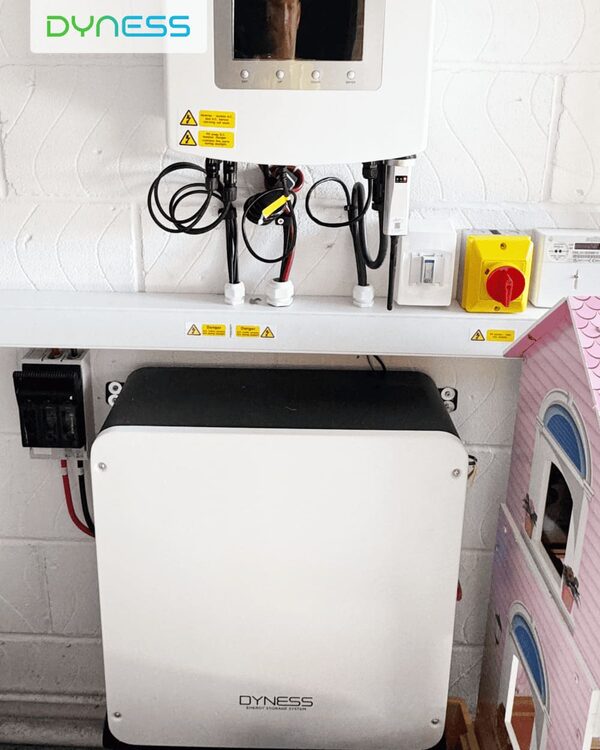
Dyness does not publish a consumer list price for its batteries, and the figures that exist come from two different places: trade module prices and installed system prices. Those are not comparable, because a module on a pallet is not a working installation.
For context on what a finished system costs, independent guidance puts home battery storage at £1,500 to £10,000, with a 5kWh battery system around £4,60013. The same guidance notes that batteries cost from £2,910, or £1,680 if bought with solar panels, in one supplier's pricing15. Maker guidance on retrofit puts a 5kWh standalone or retrofit battery at £3,500 to £5,500 once extra electrical work, possible inverter changes and commissioning are included, and describes premium battery systems at £5,000 or more16. A 5kWh battery measure cost of £2,250 appears in independent guidance on clean heat support17.
The gap between a module price and an installed price is the whole story of buying a Dyness battery. The unit is one line item; the inverter, mounting, cabling, protection, commissioning and electrical certification are the rest, and the inverter is a separate purchase from a different manufacturer. Prices for the battery itself are installer-quoted or trade-quoted, and no published UK figure for the PowerBox Pro or the DL5.0C Pro is available here. Wider cost context sits in how much does a home battery cost in the UK.
Delivery: pallet, kerbside, usually next working day
Dyness equipment reaches UK buyers through the trade distribution chain rather than direct. Trade delivery for equipment of this kind is typically next working day where stock is held, and a 10.24kWh battery travels as a pallet to the kerbside rather than as a parcel to the door. A unit of that capacity is heavy, and moving it into position is part of the installation rather than part of the delivery.
The practical consequence is that delivery and installation are separate events with separate people. The battery arrives on a pallet; an electrician or installer mounts it, connects it to the inverter, commissions the system and completes the electrical certification. Dyness's own installation guidance for the PowerBox Pro assumes a system context, requiring correctly sized breakers, fuses, busbars, combiner boxes and cables based on the system current and local electrical standards3. The sequence a household should expect is set out in home battery installation, and the standards that govern it in the standards governing home battery installation.
Siting matters as much as delivery. A low-voltage battery bank of any size needs a location that meets the manufacturer's temperature and ventilation conditions, and the DL5.0C was specifically promoted as easy to integrate into the environment of old houses, which speaks to the siting problem rather than to the electrical one5. Guidance on where a battery can go is in where a home battery can be installed.
PowerBox Pro discontinued: what that means if you own one or were planning to buy
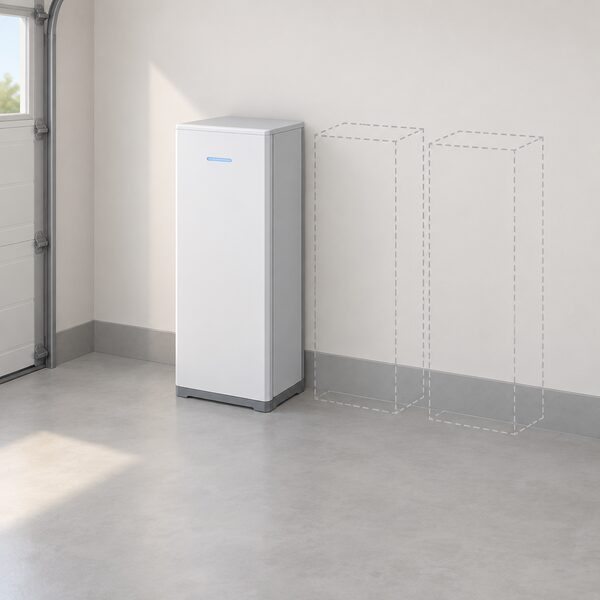
A UK trade listing dated 17 September 2026 states that the Dyness PowerBox Pro is discontinued7. Dyness's own product pages continue to describe the PowerBox Pro, its 10.24kWh capacity and its 50-unit parallel limit3. The two positions are not reconciled in the material available, and the honest reading is that the maker's documentation and UK trade availability disagree.
For an owner, discontinuation of a model is not the same as loss of support, but it changes the questions worth asking. Spare modules for a parallel bank become harder to source once a model leaves production, and adding capacity later depends on finding units that match the existing string. Dyness's own guidance that the PowerBox Pro supports mixing modules under different states of charge to ensure battery life is relevant here, because it speaks to mixing rather than to matching3. The general position on expanding a system after the fact is covered in can I add more batteries to my system later.
For a buyer, the discontinued status is a reason to confirm three things in writing before ordering: that the specific model is in stock, that spares and replacement modules will be available for the expected service life, and what the warranty position is if the model is withdrawn. Battery warranties are covered in home battery warranties, and the wider question of how long a unit lasts in how long does a home battery last.
What a Dyness battery does for household independence
A Dyness battery stores electricity generated on site or bought at a cheap rate, and releases it when the household would otherwise import at a higher price. That is real: it shifts consumption away from peak periods and reduces the volume of electricity bought from a supplier at the most expensive times. The general mechanics are set out in home batteries and household energy independence and in stacking a home battery with smart and time-of-use tariffs.
What it does not do is remove dependence. The household remains connected to the grid, remains a customer of an electricity supplier, and remains dependent on a manufacturer for firmware, spares and warranty administration. The Dyness range adds two specific dependencies on top of that. The first is the inverter: because Dyness sells batteries rather than complete systems, the household depends on a second manufacturer's product for the system's capabilities, and on the compatibility between the two holding as firmware on either side changes. The second is the communications chain: remote monitoring, remote troubleshooting and OTA upgrades all run through the battery's WiFi module, the Dyness Smart APP and the maker's servers6.
There is also a supply-chain dependence. Dyness is headquartered in Suzhou, China, with three manufacturing bases worldwide and more than 20 global branches1. UK buyers of imported battery hardware depend on that chain for replacements, and on the UK distribution network for stock. The discontinued PowerBox Pro listing is a reminder of how that plays out in practice7.
None of this makes the product unsuitable. It makes it a component with a defined role, and the household's independence is bounded by the inverter it is paired with, the app that monitors it, and the company that supports it. Households weighing a battery against alternatives should read the range alongside all-in-one home battery systems and home battery storage for UK homes, which set out what a complete system includes.
Sources17 cited
- Dyness corporate site, Dyness, 2026-09-17
- Dyness inverter matching list, Dyness, 2026-07-27
- PowerBox Pro low-voltage storage batteries for household use, Dyness, 2026-09-17
- DL 5.0 C makes it easy to integrate into the environment of old houses, Dyness, 2025-04
- Dyness energy storage products, Dyness, 2026-09-17
- Joint compatibility of Victron and Dyness allows for an enhanced user experience, Dyness, 2024-09-19
- Dyness PowerBox Pro 10.24kW battery listing, Tradesparky, 2026-09-17
- Dyness leads the way in the UK energy storage market with innovative solutions, Dyness, 2024-01-30
- A notification letter of matching between Dyness and Kostal inverters, Dyness, 2023-10-25
- PowerDepot H5B provides excellent safety and longevity, Dyness, 2025-03
- PowerDepot H 5 B powers resilient living in the storm-prone Philippines, Dyness, 2024-12
- Tower Pro powers a Dutch family's energy independence, Dyness, 2025-08
- Battery storage, Energy Saving Trust, 2026-08-19
- Battery storage, England, Energy Saving Trust, 2026-08-19
- Solar panel battery storage, Which?, 2026-05-14
- 5kW solar battery price UK, Jackery UK, 2026-06-04
- Clean heat: supporting low-income households, Energy UK, 2026-06-11
 Dyness PowerBox ProThe Dyness PowerBox Pro is a home battery you may have seen for sale.