
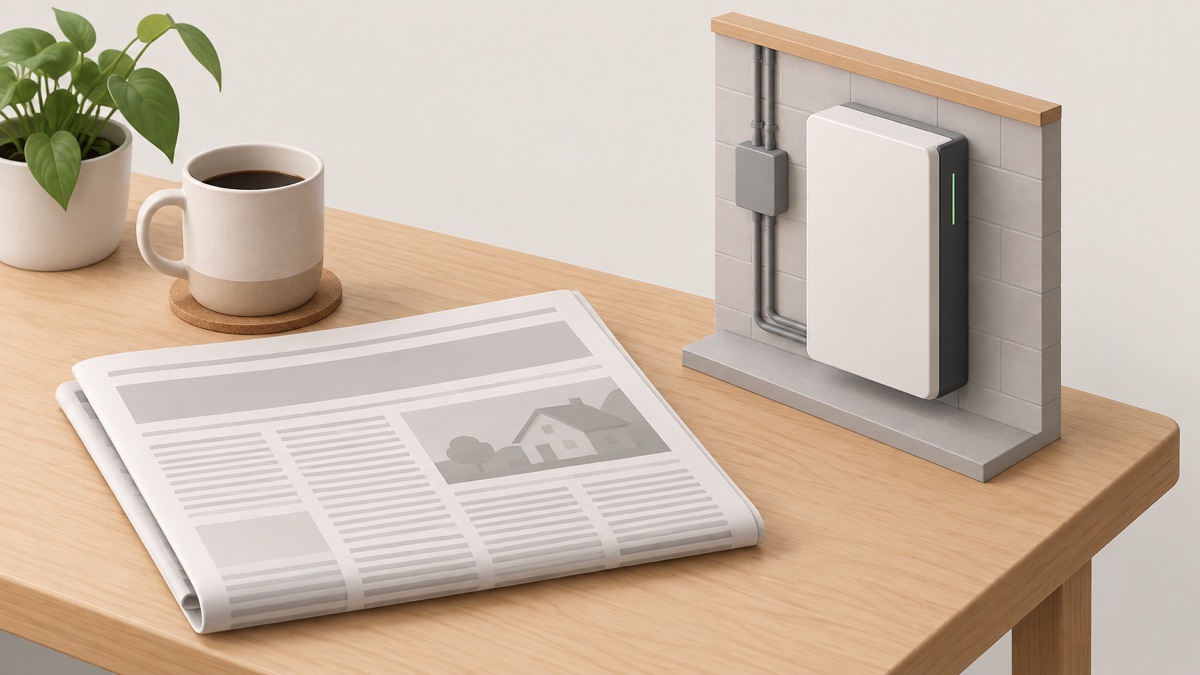
Dyness announced the launch of the Powerbox G2 on 18 November 2024, describing it as a low-voltage residential energy storage system and an upgrade to its flagship home battery1. The announcement was made in a company news post setting out the wider Dyness household range rather than in a separate product release1.
The company says the unit is designed for low-voltage residential scenarios and lists three claimed strengths: output efficiency through what it calls the shortest power path design, system stability through a built-in active fire protection device, and space utilisation through a 30 per cent reduction in volume1. No capacity in kilowatt hours, power rating, price, warranty term or availability date for the Powerbox G2 appears in the announcement, and none has been reported1.
"The latest release, the Powerbox G2, represents a significant upgrade to our flagship residential energy storage system."
The wider Dyness home range described in the same post includes the DL5.0C, which the company says has a 1C charge and discharge ratio, and the high-voltage Tower Series1. Dyness states that the Tower T14, tested with a Kostal PLENTICORE plus G2 10 inverter, achieved a 94.2 per cent system performance index and a B rating, described as good, in the Stromspeicher-Inspektion 2024 by HTW Berlin1. The post also says the Powerbox Pro and Tower Series carry IP65 protection, that the PowerBrick has an optional aerosol fire extinguisher, and that the Powerdepot H5B and DL5.0C can be fitted with an optional self-heating function for operation between minus 20 and 55 degrees Celsius1. Dyness says it has served more than 500,000 users worldwide with no accidents reported1.
| Claimed feature | Detail given |
|---|---|
| System type | Low-voltage residential storage |
| Fire protection | Built-in active fire protection device |
| Volume | 30 per cent reduction |
| Output | Shortest power path design |
Why it matters for households
A built-in active fire protection device addresses one of the questions buyers and installers raise most often about putting a large lithium battery in a home or garage, and it sits alongside the wider safety record of home battery storage that UK buyers tend to weigh. A 30 per cent cut in volume matters where wall space, a cupboard or a garage corner is the limiting factor, and low-voltage architecture matters because it determines which inverters a battery can be paired with. Dyness says its products are compatible with more than 30 inverter brands, including KOSTAL, SMA, Victron, KACO and Solis1, which is the practical question for anyone adding storage to an existing solar array. The announcement gives no usable capacity, so it is not possible to say from it how much of a household's evening demand a single unit would cover, or how it would compare with the PowerBox Pro already in the range. Nothing in the announcement covers grid services, tariff interaction or backup during a power cut, and no UK price, certification or installer availability has been reported.
What happens next
No launch date, price, capacity or UK availability for the Powerbox G2 is given in the announcement, and no further detail has been reported1.