
In this guide
A Hinen battery is a home energy storage product sold into the same UK market as the established brands, alongside portable storage in the consumer power station category. What a household can verify about it from published UK sources is thinner than for the major makers: no Hinen capacity, power, chemistry, warranty term, price or UK support contact appears in the material available here. That absence is the single most important thing to know before comparing it with a brand whose datasheet, warranty document and installer network are all public.
What can be set out is the category itself, and the questions that decide whether any home battery delivers independence. Domestic storage is built principally on lithium, the most common material used for domestic batteries, with cobalt and nickel also used1. Lithium-ion is the main type for domestic use2. A home battery's job is to store excess electricity produced from a solar system3, and the standard measure of what that achieves is self-sufficiency: the percentage of electricity consumed in the property over a year which is met by either behind the meter solar or electrical energy storage4.
What Hinen makes: home batteries and portable storage
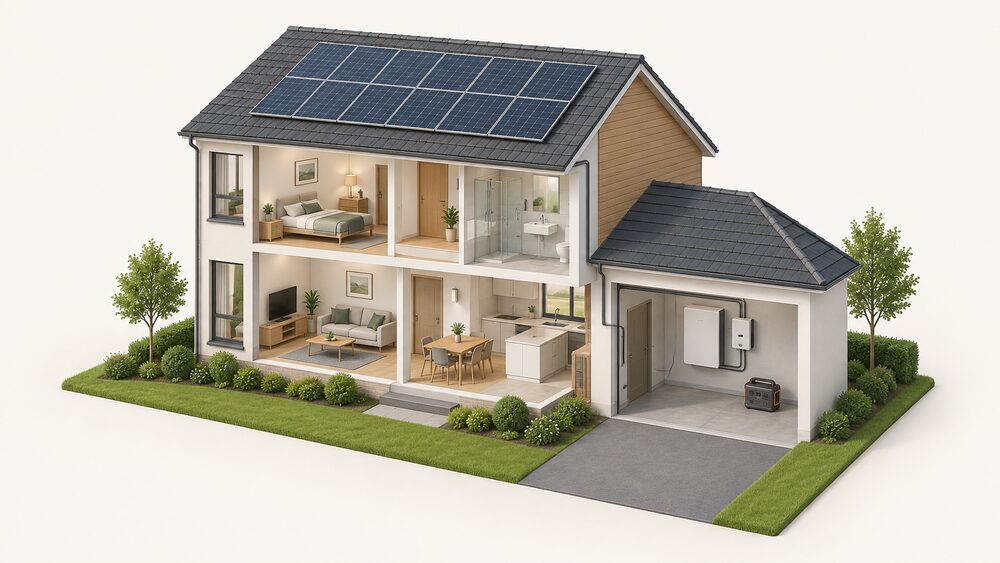
Hinen sits in two product categories at once. The first is fixed home storage, the wall-mounted or floor-standing battery that an electrician wires into a property's supply and that charges from solar, from the grid at cheap rates, or both. The second is portable storage, the consumer power station class that is carried rather than installed. The two are often sold by the same brands and are frequently confused by buyers, but they are not interchangeable: one is a fixed electrical installation, the other is an appliance.
The portable end of the market is dominated by lithium iron phosphate (LiFePO4) chemistry. One portable power station reviewed by Which? is powered by lithium iron phosphate (LiFePO4) batteries7. That chemistry choice is now standard across consumer storage because it is more thermally stable than the older nickel manganese cobalt blends, though it is not risk-free: the safety record of lithium-ion cells in consumer products is the subject of ongoing regulatory attention, and the Battery Breakdown report examines the cause of lithium-ion battery fires and gives recommendations for how safety can be improved8.
For the fixed side, the relevant context is that a home battery is not a standalone appliance. It needs an inverter, a connection to the consumer unit, and in most UK installations a notification to the network operator. The category also carries a recycling obligation at end of life, and most large stores that sell batteries have in-store collection bins for regular household cells, though that route covers AA, AAA, C and D batteries rather than an installed home unit9.
The range at a glance: capacity and power options
No Hinen model list, capacity range or power output is published in the material available here, so the range cannot be described model by model. What can be done is to set out the shape of the category, because that is what any Hinen product would be measured against.
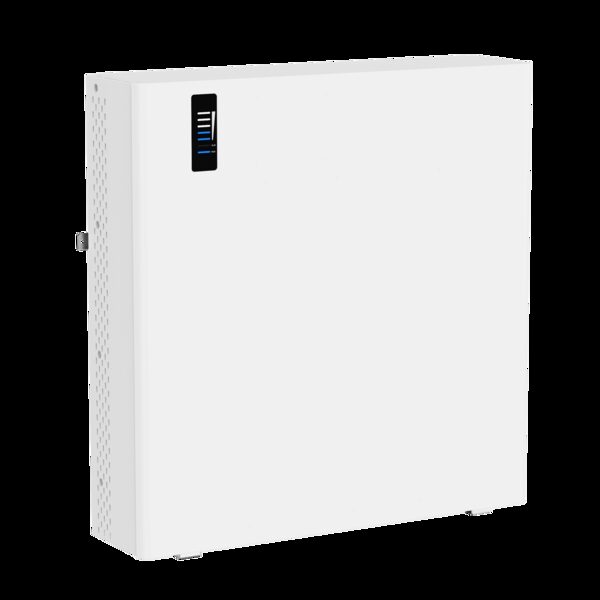
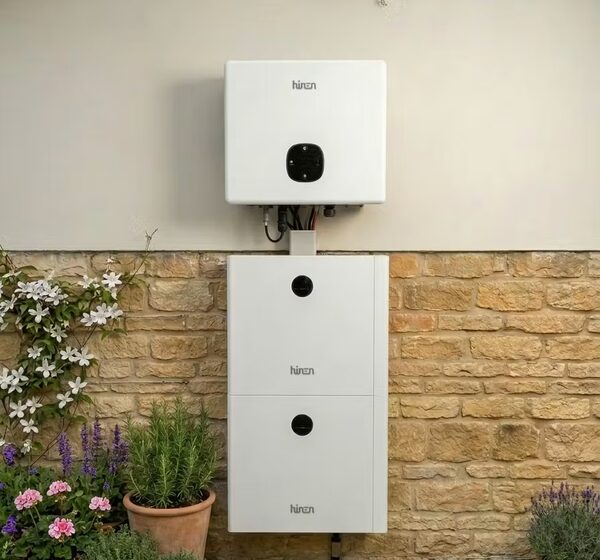
Home batteries are sold in two broad architectures. Modular and stackable systems let capacity be added later by bolting on further modules, which is the approach taken by several UK-sold brands. All-in-one systems combine battery, inverter and often backup circuitry in a single enclosure, which reduces the number of separate boxes on the wall but locks the household into one maker's ecosystem. The choice between them is covered in modular and stackable home batteries and all-in-one home battery systems.
Capacity in the category runs from small single-module units to multi-module stacks. One maker lists expandable battery modules spanning 5 to 20 kWh10, and another offers flexible capacity from 3.1 kWh to 12.3 kWh11. At the larger end, single battery units are quoted at 10 to 40 kWh per unit12, and modular systems reach 30 kWh to 900 kWh13. The gap between total and usable capacity is normal and is the subject of battery capacity and usable capacity. Power output scales with module count: one datasheet gives a maximum charge and discharge power of 12 kW across four battery modules in a three-phase ground-mounted installation10.
| Category | What it is | Typical UK form |
|---|---|---|
| Fixed home battery | Wired storage charged from solar or cheap-rate grid | Wall or floor unit, installer fitted |
| Modular stack | Capacity added by extra modules | Multiple enclosures, shared inverter |
| All-in-one | Battery, inverter and backup in one unit | Single enclosure |
| Portable power station | Carried appliance, not wired in | LiFePO4 cells, socket outlets |
Specifications: capacity, output and battery chemistry
Because no Hinen specification is published in the material available here, the honest position is that a buyer cannot compare a Hinen unit on capacity, continuous power, peak power, round-trip efficiency or chemistry from public UK sources. Those are the five figures that decide whether a battery suits a house, and each of them should be on the datasheet before a deposit is paid.
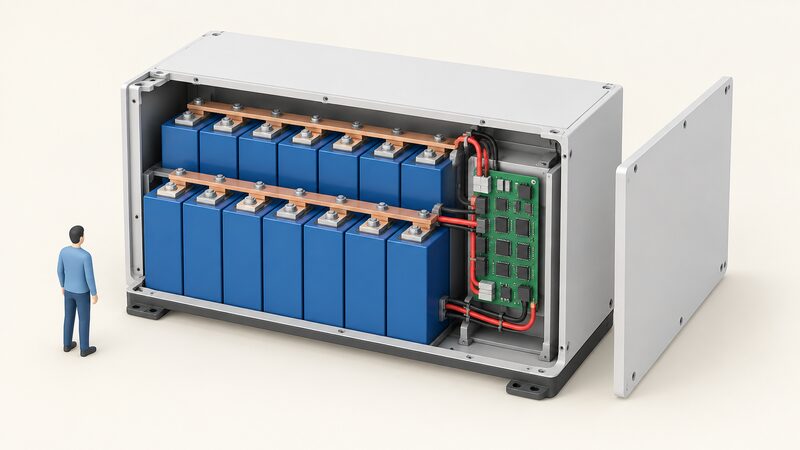
The chemistry question is the one most often asked and the easiest to answer in general terms. Domestic storage is built principally on lithium, the most common material used for domestic batteries, but also cobalt and nickel1. Within that, lithium iron phosphate has become the default for home units. One maker's hybrid home battery uses lithium iron phosphate (LiFePO4) technology and quotes up to 10,000 charge and discharge cycles11. That cycle figure is a maker's claim for that maker's product, not a category standard, but it illustrates the order of magnitude a buyer should expect to see stated.
Lithium-ion is defined in UK legislation as a secondary (rechargeable) battery with an organic solvent electrolyte and positive and negative electrodes which use an intercalation compound in which lithium is stored12. That definition matters because it is the one regulators and safety bodies work from, and it is broad enough to cover both a home battery and a phone. The chemistry landscape across the market is set out in home battery chemistries, and the older lead-acid alternatives in lead-acid, AGM and gel batteries.
Cost and what affects the price
No Hinen price is published in the material available here, and where a maker publishes no list price the figure a household actually pays is installer-quoted. What the UK market does provide is a benchmark band for the category, and it is wide.
Independent guidance puts 8 to 10 kWh batteries at a battery-only price of £2,800 to £4,500, with an installed price of £4,500 to £7,000, as at March 20266. A separate study of retrofit measures records a 10kWh battery at a £4,000 measure cost in two worked cases13. At the retail end, one energy supplier sells Sunsynk and Tesla batteries for £3,995 and £7,795 respectively, with discounted rates if solar panels are bought at the same time14.
Three things drive the spread. The first is capacity: price scales roughly with kWh, so a 5 kWh unit and a 15+ kWh unit are not comparable purchases. A small battery of around 5 kWh is quoted at £1,300 to £2,000, while a 15+ kWh battery for a large home or small business is quoted at £4,000 to £5,00014. The second is whether the battery is bought with solar at the same time, which is where the bundled discounts appear15. The third is installation complexity: a battery fitted in a garage next to an existing inverter is a different job from one that requires a new circuit, a backup interface or a change of location. The general cost picture is worked through in how much does a home battery cost in the UK, and the VAT position in what is the VAT rate on home battery storage.
Warranty and registration

No Hinen warranty term, registration process or serial number location is published in the material available here. That is a material gap, because a home battery warranty is not a simple promise: it is a conditional contract, and the conditions are where claims fail.
The conditions that recur across the category are worth knowing before comparing any brand. Warranties typically require installation by a competent person, registration within a set period of purchase, and compliance with the maker's operating envelope on temperature and ventilation. Some are expressed as a retained capacity guarantee rather than a simple repair promise, meaning the maker commits to the battery still holding a stated percentage of its original capacity after a stated number of years or cycles. The mechanics are set out in home battery warranties and home battery cycle life, degradation and expected lifespan.
For comparison, one maker's hybrid home battery carries a 10 year warranty11, and a UK-supplied battery brand advertises a 10-year warranty alongside strong UK technical support15. Those are maker claims for those makers' own products. The point for a Hinen buyer is not the number but the document: a warranty that cannot be read before purchase, and a support route that cannot be contacted, is not a warranty a household can rely on.
UK availability and installation
No Hinen UK availability statement, distributor list or installer network is published in the material available here. In the UK market generally, availability is expressed in one of three ways: sold through UK installers, quality controlled in the UK with rigorous testing, or simply listed as available for the UK market14. A buyer can reasonably ask which of those applies.
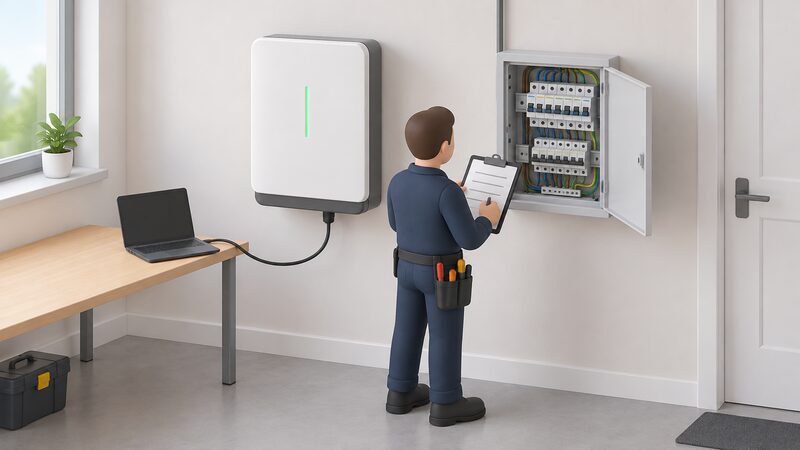
Installation is where the category's rules bite, and they apply to any brand. A home battery is a fixed electrical installation and falls under the wiring regulations, with additional guidance for battery systems on siting, fire separation and ventilation. The standards are set out in the standards governing home battery installation, and the practical sequence in home battery installation. Siting matters more than most buyers expect, and is covered in where a home battery can be installed and ventilation, temperature and operating conditions.
Two further UK-specific steps apply. Most home batteries must be notified to the network operator under the connection rules, explained in telling the network operator about a home battery. Planning permission is usually not required, but the position differs by nation: England, Scotland, Wales and Northern Ireland each have their own rules.
What owning a Hinen battery means for energy independence
A home battery's contribution to independence is real but bounded, and the boundary is worth stating plainly. The gain is self-consumption: with a home battery, surplus solar energy is captured and held for when it is actually needed, including overnight EV charging, whereas without it unused solar electricity is wasted or exported to the grid often at a relatively low rate16. That is the mechanism by which a household raises its self-sufficiency, defined as the percentage of electricity consumed in the property over a year which is met by either behind the meter solar or electrical energy storage4.
The dependence that remains is threefold. First, the grid: a battery shifts when electricity is drawn, not whether it is drawn, unless the household has enough generation and capacity to cover its own demand through a winter. Second, the supplier: most UK batteries are charged at least partly on cheap-rate grid electricity, so the household remains a customer. Third, the manufacturer: monitoring, firmware and warranty service all run through the maker's systems, and a maker with no published UK support route leaves that dependence unresolved.
The wider policy direction supports the technology. More homegrown energy means greater energy independence17, and battery storage is treated as part of that picture. For a household, the practical test is whether the battery reduces the number of things it depends on, or adds one. The full argument is set out in home batteries and household energy independence and how much self-sufficiency can a solar home battery achieve.
Hinen or another brand: how to compare
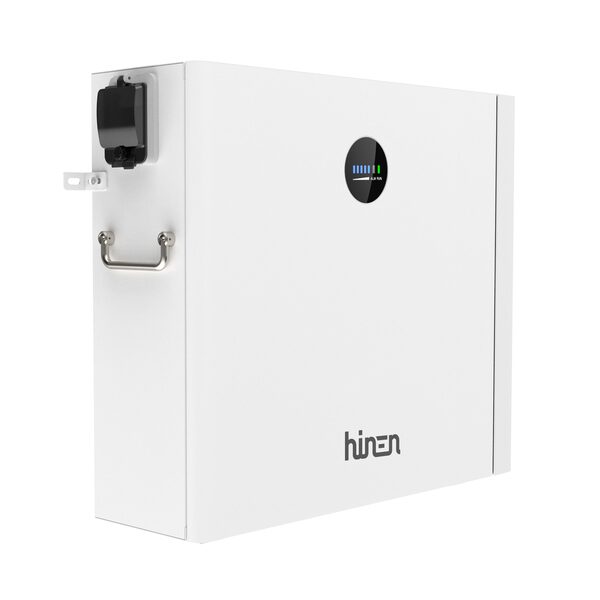
Comparing a brand with no published UK specification against brands that publish full datasheets is not a like-for-like exercise, and the comparison should be made on documents rather than on marketing. Six things decide it.
- Published capacity and usable capacity. Total and usable figures differ, and only the usable number matters for sizing.
- Continuous and peak power. A battery that cannot meet the house's peak demand will import from the grid at that moment.
- Chemistry and cycle life. Lithium iron phosphate is the domestic default; cycle life should be quoted as a number, not an adjective.
- Warranty terms in writing. Term, retained capacity threshold and the conditions that void it.
- UK support and installer network. Who attends when it faults, and how they are reached.
- Price with the VAT position stated. Battery-only and installed figures are different numbers.
On the chemistry comparison, lithium-ion has practical advantages over the older lead-acid option: they can be more efficient than lead-acid batteries, weigh two thirds less, can discharge more stored energy, and have a longer life2. That is a category comparison, not a brand one. For households weighing a specific alternative, the closest published comparisons are Tesla Powerwall 3, GivEnergy All in One and Sigenergy SigenStor, each of which publishes the specification set a buyer needs.
Where a maker's own figures are the only ones available, they should be read as the maker states them. Where an official or independent figure exists for the same point, that is the one to use. The starting point for the whole category remains home battery storage for UK homes.
Sources17 cited
- Battery storage advice, Centre for Sustainable Energy, 2025-10
- Electrical energy storage systems, Flexi-Orb, 2025-04-22
- Batteries in the home, Solar Energy UK, 2026-09-17
- MCS 032: self-consumption calculation, MCS Certified, 2025-02
- Battery storage, Home Energy Scotland, 2026-09-20
- Balancing investment in clean heat and energy efficiency in Scottish housing retrofit, ClimateXChange, 2026
- How to buy the best generator, Which?, 2026-01-20
- Battery Breakdown, Electrical Safety First, 2026-09-17
- Recycling electricals and batteries, Electrical Safety First, 2026-09-17
- Sigen Battery datasheet, Sigenergy, 2026-09-17
- sonnenBatterie hybrid 9.53, sonnen, 2026
- [Lithium-ion Battery Safety Bill [HL]](https://bills-api.parliament.uk/api/v1/Publications/56005/Documents/4984/Download), UK Parliament, 2024-07-29
- Clean heat: supporting low-income households, Energy UK, 2026-06-11
- Solar panel battery storage, Which?, 2026-05-14
- InstaGen batteries, Midsummer Wholesale, 2026-09-19
- Can solar panels charge electric cars?, The CPA, 2026-04-15
- Solar Energy Scotland manifesto, Solar Energy UK, 2026-09-17