In this guide
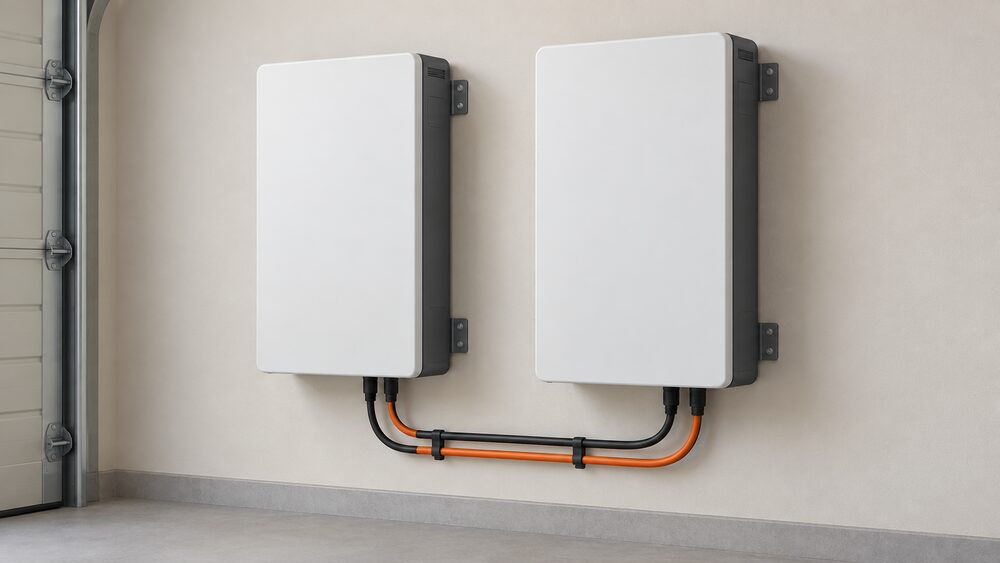
PowerDepot is not a manufacturer. It is a product line sold by Dyness, a battery maker that launched a range of low-voltage energy storage products for the UK market in January 20241. The best-known unit in the line is the PowerDepot H5B, a 5.12 kWh low-voltage lithium iron phosphate module that can be stacked in parallel to build a larger store2.
For a household, the proposition is modularity. One unit is a modest store; several units, wired together, become a system sized to the house. Dyness states the H5B is expandable to 51.2 kWh in parallel, and that it supports flexible expansion so additional parallel units can be added later according to demand2. The chemistry is lithium iron phosphate, rated by the maker at over 6,000 cycles2.
The dependence is the same as any low-voltage battery: it needs a compatible inverter, a competent installer, and it stores only what the house generates or buys. It does not generate anything, and it does not remove a grid connection.
PowerDepot at a glance: Dyness's home battery range
Dyness sells a family of low-voltage home batteries rather than a single product. The product pages list the PowerDepot G2, the DL5.0C, the DL5.0F and the DL5.0C Pro, each given as 5.12 kWh with up to 50 units in parallel6. The H5B sits in the same capacity class, described in the maker's own case studies as 5.12 kWh per unit2.
The range is positioned for the UK specifically. Dyness states it launched a range of low-voltage energy storage products for the UK market, and one of the featured units, the DL5.0C, is described as capable of supporting up to 50 units in parallel, which the maker says could become an energy storage system of 256 kWh able to supply light commercial scenarios1. That upper figure is a commercial-scale claim, not a domestic one, but it shows the modular logic the whole line shares.
Two features recur across the low-voltage series and matter for anyone expanding later. The first is a current-limiting function that Dyness says allows the battery to charge intelligently and self-balance even when the capacity of parallel modules differs7. The second is a pre-discharging function that the maker states enhances voltage balance and supports product stability and durability7. The series also supports up to a 1C charging and discharging ratio7.
Dyness publishes compatibility lists for its low-voltage batteries and for the STACK280 and 314Ah series, dated 27 July 2026 and 11 June 2026 respectively, which is where an installer would confirm an inverter pairing8. For the wider picture of how modular systems are built and expanded, modular and stackable home batteries sets out the options, and Dyness home batteries covers the maker's other ranges.
The H5B: 5.12 kWh per unit, expandable in parallel
The H5B is a single module of 5.12 kWh, and the maker's case studies repeat that figure consistently2. Capacity is added by paralleling units rather than by swapping in a bigger box, which is why the same product appears in a one-unit Surrey installation and in a claim of 51.2 kWh for a full stack2.
That modular approach has practical consequences. A household can start with one unit and add later, which spreads cost and matches capacity to what the house actually uses. It also means the battery's total capacity is a decision made at installation and revisited afterwards, not a fixed specification. Dyness states the H5B supports flexible expansion so that additional parallel units can be added in the future according to the demand for electricity3.
The limits are worth stating plainly. Parallel expansion is not a plug-in upgrade: modules must be wired, fused and configured as one system by someone competent to do it, and the inverter must be able to manage the combined bank. The maker's own maintenance guidance warns that different types of batteries, or batteries of different capacities, must not be mixed during installation9. Adding a second H5B to an existing H5B is the intended path; adding a different battery alongside it is not.
For how capacity, usable capacity and depth of discharge differ from the nominal figure on the label, battery capacity and usable capacity explains the distinction, and adding more batteries later covers the practicalities of expansion.
Lithium iron phosphate chemistry and over 6,000 cycles
The H5B is powered by a lithium iron phosphate battery with over 6,000 cycles, according to Dyness2. Lithium iron phosphate, usually shortened to LFP, is one of the two main chemistries sold for home storage, and it is the more thermally stable of the two. The same chemistry appears elsewhere in the market: an independent press release describes a boiler product powered by six non-rare-earth lithium iron phosphate batteries10.
Cycle life figures need reading carefully. A cycle rating is a laboratory statement about how many charge and discharge cycles the cells should complete before capacity falls to a defined threshold, not a calendar lifespan. A household that cycles its battery once a day will reach 6,000 cycles over a very long period; a household on an aggressive tariff that cycles twice a day will reach the same count in half the time. The maker's figure is a cell-level claim, and the warranty terms that govern what happens in practice are a separate document.
The chemistry also shapes where the battery can go and how it behaves in cold. LFP is generally specified for a narrower charging temperature window than discharging, which is why cold-weather charging behaviour matters, and why the H5B's heating function exists. For a fuller comparison of what is sold in the UK and how the chemistries differ, home battery chemistries covers LFP, NMC and the rest, and battery cycle life and degradation explains how cycle ratings translate into expected service life.
Cold weather and UK climate: automatic heating and IP65

Cold is the constraint that catches British battery owners out, because a battery that charges happily in July may refuse to charge in January. Dyness addresses this directly: the H5B has good protection and automatic heating, and the maker states it can stably cope with the cold and wet winter climate in the UK3. The self-heating technology is described as improving charging efficiency in cold environments2, and the automatic heating function is said to let the unit operate stably even in mountainous areas with large temperature differences4.
The protection level is IP65, which Dyness states ensures stable operation in heavy rainfall2. That is a meaningful rating for an outdoor or semi-outdoor installation, and it is the reason the maker can describe the unit as suitable for conditions well beyond a heated indoor cupboard.
Two caveats belong here. First, self-heating consumes energy from the battery itself, so a cold spell carries a running cost that a mild one does not. Second, IP65 is the maker's stated rating for the enclosure, not a statement that any outdoor position is acceptable: siting rules, ventilation and the installer's judgement still apply. Independent guidance on where batteries normally go lists garages, external walls and utility rooms11, and ventilation, temperature and operating conditions covers the temperature envelope in more detail.
"has good protection and automatic heating, and can stably cope with the cold and wet winter climate in the UK"
Wall or floor mounting: what suits a British house
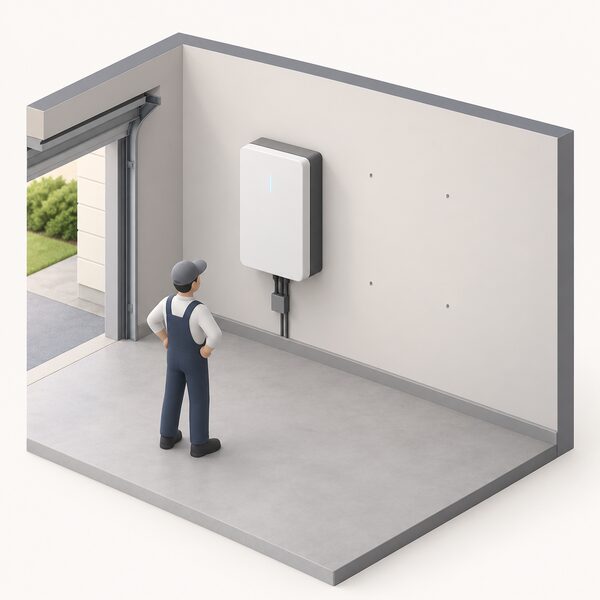
The H5B supports a variety of mounting methods, and Dyness describes its slim body as flexible for indoor wall-mounted or floor-mounted installation2. The maker also states it supports a variety of installation methods and is especially suitable for brick and timber buildings, which it describes as common in British households3.
The reported UK installation is a Surrey house in the south of England, where a family with a sustainable lifestyle added storage, and the unit was wall-mounted inside the garage, saving space and not affecting the interior layout3. A separate maker case study describes the H5B chosen for a residential installation in a suburban house in the south of England2. Both are maker accounts rather than independently verified installations, and neither gives a count of UK units in service.
For a household weighing positions, the trade-offs are familiar. A garage wall keeps the battery out of living space and is the most common choice. A utility room keeps it warm, which helps cold-weather charging, but takes floor or wall space indoors. An external wall suits a house with no garage, and the IP65 rating covers the weather, though the installation rules and the fire-safety guidance for the position still apply. Independent guidance puts the usual locations as garages, external walls or utility rooms, depending on the choice made11.
Inverter compatibility and low-voltage coupling
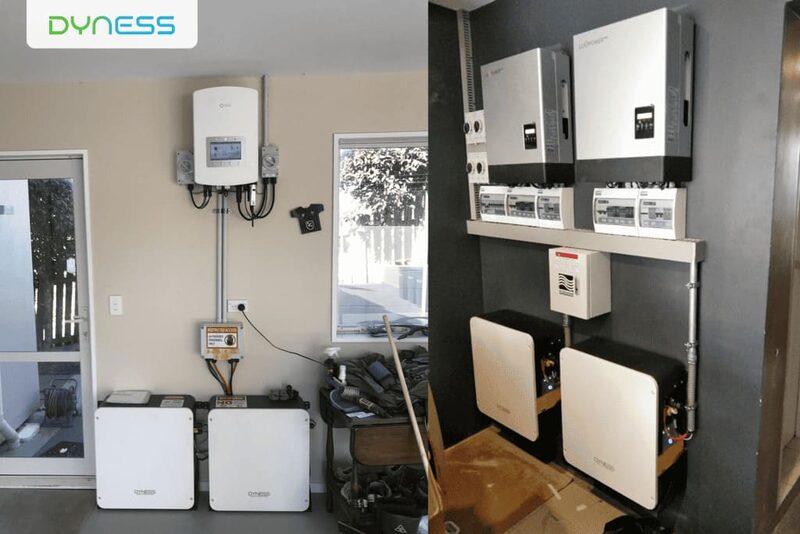
The H5B is a low-voltage battery, and Dyness describes it as part of a low-voltage home energy storage system4. That determines what it can be paired with: low-voltage hybrid or battery inverters, not the high-voltage stacks that some other systems use. The maker states the H5B is compatible with mainstream inverter brands, which it says makes later expansion more flexible3.
Compatibility is not a matter of brand reputation but of a published list. Dyness maintains a low-voltage battery compatibility list with inverter brands, dated 27 July 2026, and a separate list for the STACK280 and 314Ah series dated 11 June 20268. An installer confirming a pairing should work from the current version of that list rather than from a general claim of compatibility.
The wider argument for low-voltage coupling is that it sidesteps some of the matching problems that afflict other architectures. One maker's guidance states that an AC-coupled approach eliminates compatibility issues associated with different MPPT algorithms, ensuring seamless integration with all microinverter brands12. That is a different architecture from the H5B's, but it makes the same point: the coupling method, not the battery alone, decides how easily a system goes together. AC-coupled and DC-coupled battery systems sets out the difference, and battery management systems explains what the unit's own electronics do.
Cost: £805 plus VAT from distributors
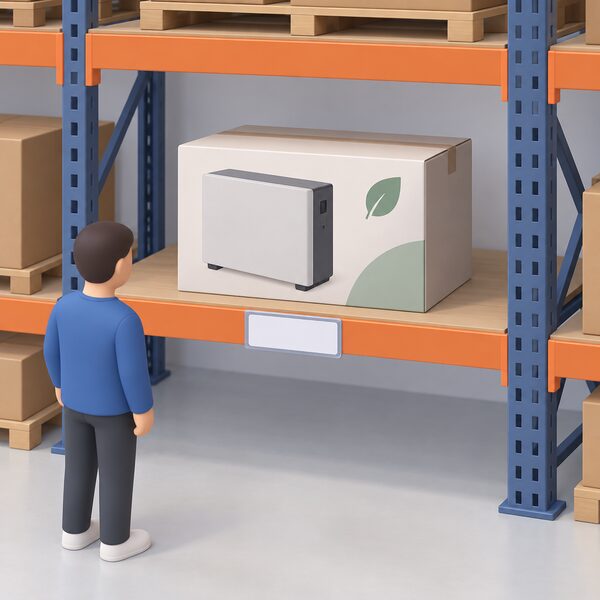
There is no published manufacturer list price for the PowerDepot H5B. The nearest published figure in the UK is a distributor price for a comparable 5 kWh lithium iron phosphate module, the HBP-5.0-A, listed at £805 plus VAT5. That is a module price, not an installed price, and it is for a different product, so it should be read as an indication of where a 5 kWh module sits rather than as a quote for an H5B.
Installed costs are a different order of magnitude. Independent guidance puts 8 to 10 kWh batteries at £4,500 to £7,000 installed, with a battery-only price of £2,800 to £4,500, as at March 202613. The same source notes that the up-front cost of installing a battery can be up to £2,544 more than the alternative14. Those figures cover a larger store than a single H5B, and they include the inverter, mounting, wiring and labour that a module price excludes.
VAT treatment depends on the installation. Official guidance sets out a worked example where an installer charges £5,385 excluding VAT, made up of £3,500 materials and £1,885 labour, and where materials are 65% of the total, so standard 20% VAT applies to materials and 5% to labour15. That example applies to Northern Ireland, where materials are more than 60% of the total cost. What is the VAT rate on home battery storage? covers the rules, and how much does a home battery cost in the UK? gives the wider cost picture.
What owning a PowerDepot battery means for energy independence
A battery changes when a household uses electricity, not where it comes from. Independent guidance is direct about the purpose: home storage batteries store your electricity to use later, making your energy system more independent from the National Grid16. The gain is real but bounded, and it is worth being precise about what is gained and what remains.
The clearest gain is self-consumption. Great British Energy states that adding a battery to a solar installation increases self-consumption from 30 to 40% to 70 to 80%17. That is the difference between exporting most of a sunny afternoon's generation at a low rate and using it in the evening instead. A battery also captures surplus solar for overnight electric vehicle charging, where without it the surplus is wasted or exported cheaply18. Combining solar with a home battery lets a household store renewable electricity to power a heat pump, which the Energy Saving Trust describes as making the home less reliant on grid electricity19.
The dependence that remains is substantial. The battery needs an inverter, and the inverter needs the grid to be useful in most configurations. It stores only what the house generates or buys, so a household without solar is filling it from the grid on a cheap tariff rather than generating anything. The economics depend on the tariff: independent guidance states battery storage is most worthwhile where a household wants backup power, does not have full-retail export rates, or can access cheap overnight charging tariffs20. Installing storage also lowers the amount exported, so export payments fall, though the same source states overall savings are greater than relying on export payments21.
For a household in Scotland, Wales or Northern Ireland, the surrounding policy differs, and home batteries and household energy independence covers the wider picture. What the H5B offers within that is a modular, cold-tolerant, low-voltage store that can grow with the house, and a dependence on a compatible inverter, a competent installer and the grid that remains.
Sources21 cited
- Dyness Leads the Way in the UK Energy Storage Market, Dyness, 2024-01-30
- PowerDepot H5B Provides Excellent Safety and Longevity, Dyness, 2025-03
- H5B Supports Suitable for Brick and Timber Buildings, Dyness, 2025-04
- PowerDepot H5B Powers Resilient Living in the Philippines, Dyness, 2024-12
- HBP-5.0-A Haier Smart Cube 5kWh Battery Module, Alternergy, 2026-09-17
- Energy Storage Products, Dyness, 2026-09-17
- Joint Compatibility of Victron and Dyness, Dyness, 2024-09-19
- Inverter Matching List, Dyness, 2026-07-27
- Common Faults and Maintenance Methods of Home Energy Storage Batteries, Dyness, 2024-01-18
- Luthmore Appoints Former Dyson Innovation Director as CEO, CIPHE, 2026-02-27
- Battery Storage, Energy Saving Trust, 2026-08-19
- DC-Coupled vs AC-Coupled vs Hybrid Solar Battery Storage, Hoymiles, 2025-09-23
- Balancing Investment in Clean Heat and Energy Efficiency in Scottish Housing Retrofit, ClimateXChange, 2026
- Solar Panel Installation, Maintenance and Repair, NICEIC, 2026-09-17
- VAT on Energy Saving Materials, HMRC, 2026-09-20
- Solar Panel Battery Storage, Which?, 2026-05-14
- POST Note 0771: Energy Storage, UK Parliament, 2026-06-25
- Can Solar Panels Charge Electric Cars?, CPA, 2026-04-15
- How to Ensure a Heat Pump Runs Efficiently, Energy Saving Trust, 2026-05-19
- Solar Battery Storage Guide: Is a Home Battery Worth It?, IAA, 2026-09-20
- Battery Storage, Home Energy Scotland, 2026-09-20