In this guide
The BYD Battery-Box Premium is a family of lithium iron phosphate (LFP) home batteries sold as modules and stacks for use with an external inverter. The range splits by system voltage: the low-voltage LVS, LV Flex and LVL families, and the high-voltage HVS, HVM and HVL families. This page covers the low-voltage line in detail, because that is where the LVS and LV Flex names sit, and sets out what the high-voltage models offer for comparison.
The headline numbers are these. A single LVS stack takes between one and six modules for 4.0 to 24.0 kWh of usable capacity, and up to 16 such stacks can run in parallel for a maximum of 256 kWh1. The LV Flex scales from 5 kWh to 320 kWh2. The LVL starts at 15.36 kWh and extends to 983 kWh3. Every one of these is a battery only: the inverter is bought separately, and the warranty requires it to be a model on BYD's certified list4.
That external inverter is the central fact about owning one. The Battery-Box Premium stores energy and manages its own cells, but it cannot convert, export or island your home on its own. What it does for a household's independence depends on the inverter and controls it is paired with, and on the grid connection that remains.
What the Battery-Box Premium range is
The Battery-Box Premium is a modular battery pack for use with an external inverter, built around lithium iron phosphate cells1. LFP is the cobalt-free chemistry that has become the default for stationary home storage, and BYD's low-voltage LV Flex datasheet names it explicitly as lithium iron phosphate, cobalt-free2. The maker's own materials describe the range as modular, with high-power backup capability5.
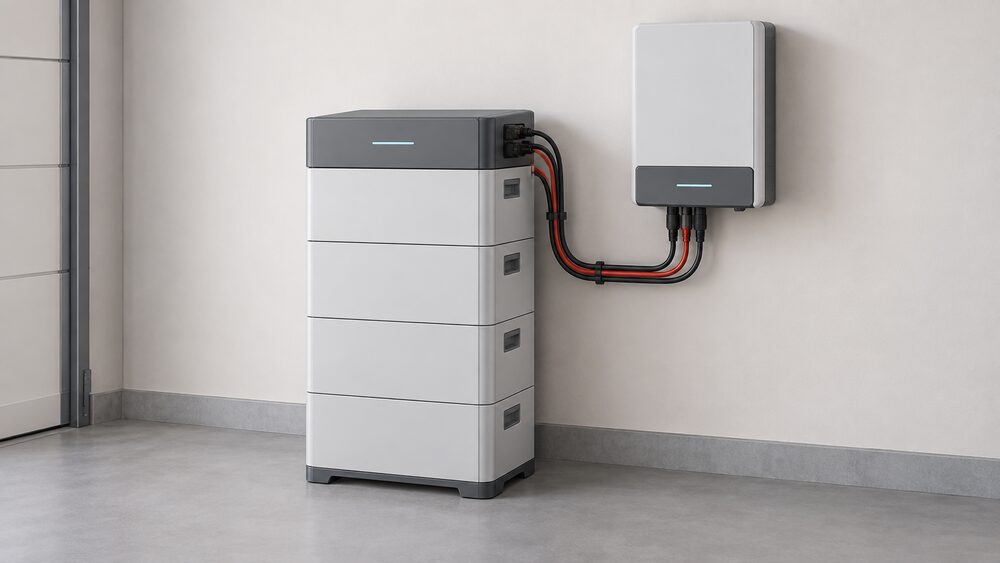
The architecture is a stack of identical modules wired together, topped by a battery management unit. The BMU is sold separately and is described as the battery management unit for use with the Battery-Box Premium LVL and LVS battery systems, available in IP20 and IP55 versions6. Communication between battery and inverter runs over CAN across the low-voltage families7. The high-voltage HVS and HVM families use the same principle at higher voltage, described as modular high voltage LFP battery packs for use with an external inverter10.
Because the battery is a separate box, the system is assembled from three parts: battery modules, a BMU or PDU, and an inverter. The LVS needs one pair of DC battery connectors per stack for connection to the LVS power distribution unit11. The HVS and HVM families use tool-less connections10. That separation is what makes the range flexible, and also what makes the choice of inverter the decisive one.
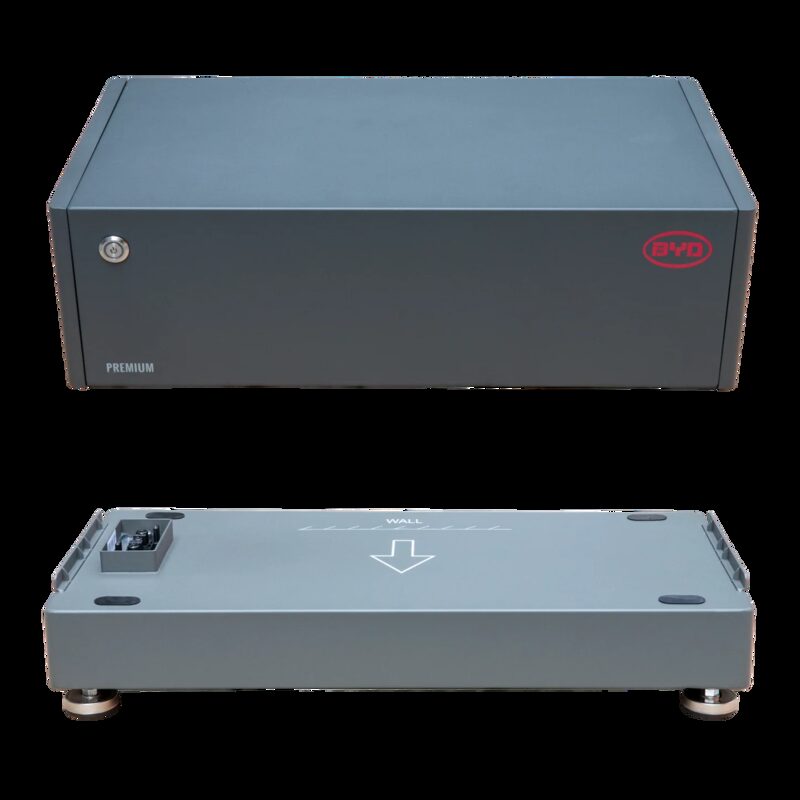
LVS, LV Flex and LVL: which model fits which home
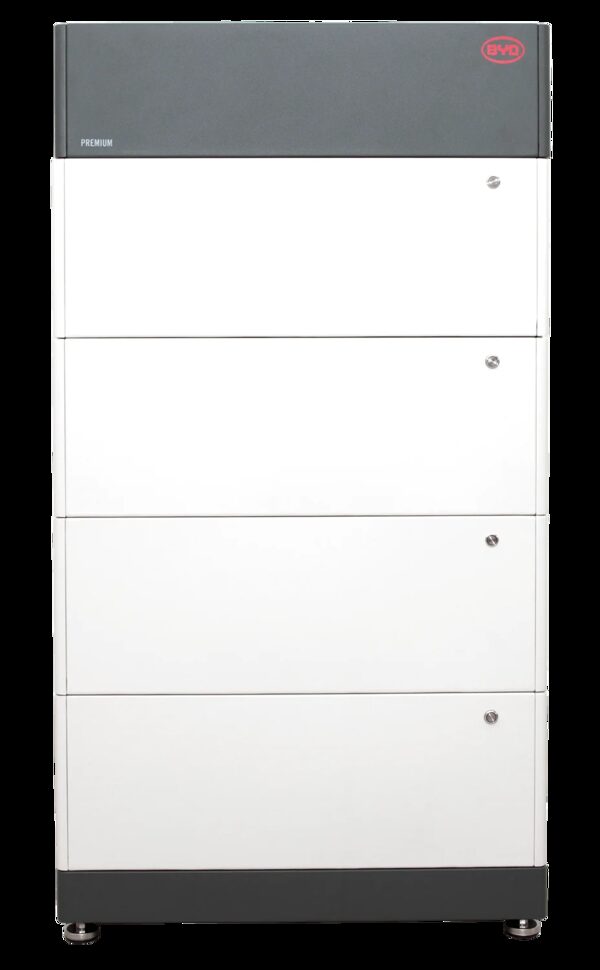
The three low-voltage families differ mainly in module size, format and ceiling. The LVS is the mainstream 48V stack, with a nominal storage capacity of 4 kWh per module and a system battery voltage of 48V1. The LV Flex is a 3U format modular battery, with a nominal capacity of 5.0 kWh and a usable energy figure of 5.0 kWh per unit, dimensions of 132 x 482 x 525 mm, a maximum continuous output current of 70A and a peak output current of 105A for 5 seconds2. The LVL is the high-capacity 48V option, sold as a 15.4 kWh module and stackable two high to save floor space3.
| Family | Voltage | Module capacity | System ceiling | Environment |
|---|---|---|---|---|
| LVS | 48V1 | 4 kWh nominal1 | 256 kWh1 | IP551 |
| LVS Lite | Low voltage | 4 kWh per module7 | 32 kWh7 | Not stated |
| LV Flex | Low voltage | 5.0 kWh nominal, 5.0 kWh usable2 | 320 kWh2 | Indoor9 |
| LVL | 48V3 | 15.36 kWh3 | 983 kWh3 | Not stated |
The LVS Lite is a smaller variant, scalable from 4 kWh to 32 kWh with a maximum of 8 modules in parallel7. It is a battery pack for use with an external inverter, and its compatible inverters are listed in a separate minimum configuration list7.
Which fits which home is a question of daily energy and available space rather than brand. A single LVS module at 4 kWh suits a flat or a small household shifting a modest evening load. A four to six module LVS stack, at 16 to 24 kWh, suits a home with solar and a heat pump or an electric vehicle. The LVL's 15.4 kWh module suits larger demands where fewer, bigger units are preferred. The LV Flex's 3U format is a rack-style unit, and its datasheet lists its environment as indoor9.
Scalability: from 4 kWh single stacks to 320 kWh in parallel
Scalability is the range's strongest claim, and the figures are large. Between one and six battery modules can be used in a single LVS stack to give 4.0 to 24.0 kWh of usable capacity, and up to 16 LVS stacks of between one and four modules can be connected in parallel for a maximum of 256 kWh1. The same product page states a maximum of 64 modules connected in parallel1, and the LVS datasheet gives the parallel maximum as 64 modules, 256 kWh, single tower only8.
The LV Flex goes further: scalable from 5 kWh to 320 kWh, with a maximum of 64 units in parallel2. The LVL is larger again, starting at 15.36 kWh and extending to 983 kWh using parallel interconnection of up to 64 batteries3.
For a domestic installation these ceilings are theoretical. A UK house rarely needs a battery at the top of these ranges, and the practical limit is usually the inverter, the available circuits and the space. The value of the figures is that a household can start small and add modules later without changing the battery family, which is the point of a modular design. Adding capacity later is covered in modular and stackable home batteries, and the difference between nominal and usable figures is set out in battery capacity and usable capacity.
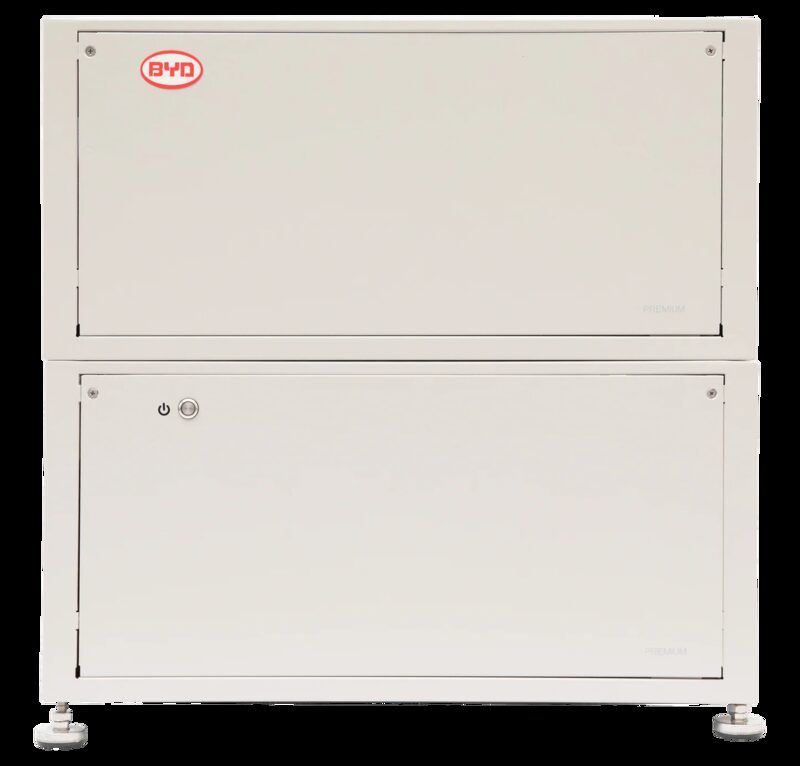
Specifications at a glance
The module-level figures are consistent across the warranty and datasheet documents. A Battery-Box Premium module has a rated capacity of 54Ah, a usable energy of 2.78 kWh, a nominal voltage of 51.2V and a voltage range of 40 to 59V, with an operating temperature range of minus 10°C to 50°C4. The LVS module is listed at 4 kWh nominal storage capacity and a 48V system battery voltage1.
| Specification | LVS | LV Flex | LVL |
|---|---|---|---|
| Nominal capacity | 4 kWh1 | 5.0 kWh2 | 15.36 kWh3 |
| Usable energy | 4.0 to 24.0 kWh per stack1 | 5.0 kWh2 | Not stated |
| Nominal voltage | 48V1 | Not stated | 48V3 |
| Max continuous output current | Not stated | 70A2 | Not stated |
| Peak output current | Not stated | 105A for 5s2 | Not stated |
| Communication | CAN8 | CAN2 | Not stated |
| IP rating | IP551 | Not stated | Not stated |
| Warranty | 10 years8 | 10 years2 | 10 years3 |
The high-voltage families sit alongside these. The HVS takes two to five modules in series for a usable capacity of 5.1 to 12.8 kWh, and up to three identical HVS units can be connected in parallel for a maximum of 38.4 kWh10. The HVM reaches 66.2 kWh across three parallel units10, and the HVM+ and HVS+ variants carry the same parallel ceilings12. The HVE is a modular high-voltage LFP battery for use with BYD's Power-Box range of inverters, which is a closed pairing rather than an open one13.
The HVS and HVM families are described as capable of high-powered emergency backup and off-grid functionality10. That capability belongs to the inverter and the changeover arrangement as much as to the battery, and is covered in battery backup power and EPS.
Warranty: ten years with a 60% usable energy guarantee
The Battery-Box Premium carries a ten-year limited product warranty from the warranty start date, covering defects in materials or workmanship4. The performance element is a retention guarantee: the product must retain sixty per cent of its usable energy for ten years from the warranty start date, or reach the minimum throughput energy, whichever comes first4. The ten-year term appears across the family datasheets, including the LVS Lite, the LVS, the HVM, the HVS and HVM and the LVL module7.
The warranty start date is not the day of installation. It is the first day after six months from the production date of the product, or, at the original buyer's choice, the first day after thirty days from the delivery date if that date is proven in writing4. The product must then be installed within one month from the warranty start date4. The Battery-Max Lite warranty uses the same construction, with the delivery date provable by a receiving note or other written document18.
The throughput condition matters as much as the calendar. A battery that cycles heavily can reach its minimum throughput energy before ten years, and the guarantee ends at that point. How retained capacity and throughput interact is explained in home battery warranties.
The conditions that can void the warranty
The exclusions are specific and worth reading before purchase. Operating the product with an inverter that is not a BYD certified inverter, as specified in the relevant compatible inverter list, voids the warranty4. Not operating the product for any period of six months or more voids the warranty4. Exposure to movement or shaking after installation, or to temperatures greater than 50°C or less than minus 10°C, voids the warranty on the LVL15.419. The Battery-Max Lite warranty sets the low-temperature limit at minus 20°C rather than minus 10°C, so the documents differ on that figure18.
The warranty is governed exclusively by local law, without regard to its choice of law provisions, and the local courts of Rotterdam have non-exclusive jurisdiction4. It applies to products installed in Europe4.
"operation of the Product with an inverter that is not a BYD certified inverter which are specified in the BYD Battery-Box Premium LVL Minimum Configuration List voids the warranty"
If a defect appears, the original buyer must notify BYD or a BYD authorised service partner within 30 days of becoming aware of the defect or deterioration4. The Battery-Max Lite warranty sets the same 30-day limit from the date of the occurrence18. The claim is reported in writing to a BYD Partner, or to BYD Global Service if the original buyer cannot contact them, and must include the installation date, invoice number, Battery-Box configuration, product serial number and inverter4.
The remedy is repair or replacement of the non-conforming product or parts at no charge, or a partial refund, with the choice determined by BYD in its sole discretion4. The original warranty periods still apply to any repaired or replacement product, so the remaining term is what carries over rather than a fresh ten years4. Any replaced product or parts must be made available for pickup within four weeks after the replacement, otherwise BYD may invoice the replacement at full market price4. For additional modules bought later, the LVL warranty applies the same clause from the sale date recorded in the seller's invoice19.
Inverter compatibility and the certified inverter list
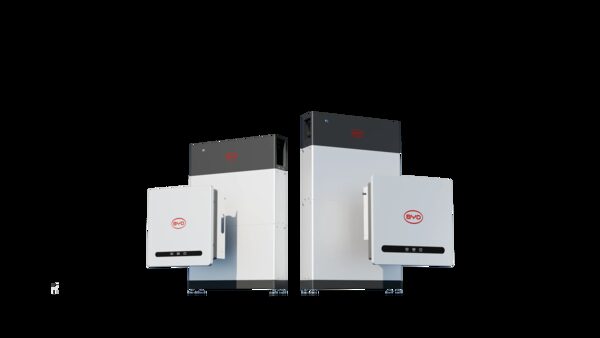
The Battery-Box Premium must be operated with a BYD certified inverter specified in the relevant compatible inverter list, published at bydbatterybox.com and eft-systems.de4. Each family has its own list: the LVS Lite refers to a minimum configuration list7, the LV Flex to its own minimum configuration list2, and the HVS and HVM to the HVS/HVM compatible inverter list15. The LVL has a separate list, updated to version 2.5 with a document date of 16 May 202519.
The maker describes the LVS as compatible with market leading single and three phase inverters1, and the LV Flex as compatible with market leading single and three phase inverters2. Those are marketing descriptions; the lists are the operative documents, and the warranty turns on them.
This is the practical constraint on the range. A household cannot simply buy a Battery-Box Premium and pair it with whatever inverter is already on the wall. The inverter must appear on the list for that battery family, and in some cases at a minimum firmware version. The HVE takes this further by pairing only with BYD's own Power-Box inverters13. The Power-Box SH3 single-phase high-voltage hybrid inverter is listed for use with the HVE storage system14, and the Power-Box TH5/6/8/10/12/15K three-phase hybrid inverter is listed as coming soon with expected availability in Q4 202620. Up to three Power-Box TH inverters can be connected in parallel, each with up to 70.7 kWh of storage, allowing systems up to 45kW output including during backup and 212 kWh of storage capacity20.
Cost and what owning one means for household energy independence
BYD publishes no UK list price for the Battery-Box Premium, and prices are installer-quoted. The wider market figures give the frame. The Energy Saving Trust estimates that battery storage costs can be up to £10,000 depending on size, with a typical 5kWh system around £4,60022. Independent guidance puts the range at £1,500 to £10,000 depending on the type and size of battery23. A battery added to a solar installation will increase the cost but allows more of what is generated to be used on site24.
What the battery buys is self-consumption. Adding a battery to a solar installation increases self-consumption from 30 to 40% to 70 to 80%, according to Great British Energy22. That is the independence case: more of the generation is used in the home rather than exported, and less evening demand is met from the grid.
What remains is substantial. The Battery-Box Premium is a battery only, so the household still depends on an inverter, on a certified pairing, and on the grid connection for import and export. The warranty depends on a continuing relationship with a BYD Partner for claims and on the inverter staying on the certified list. The battery management unit and any monitoring run through the maker's hardware and, where an app is used, through the manufacturer's platform. The LVS, LVL and HVS/HVM families require a device capable of running the BYD Be Connect app for commissioning, available for the Apple App Store and Google Play Store1. The HVE and Power-Box pairing extends that with compatibility with the BYD app for unified monitoring and support14.
For a household weighing independence, the position is that the Battery-Box Premium is a long-lived, scalable LFP store with a ten-year retention guarantee, and a set of dependencies that come with the modular design: an external inverter from a certified list, a manufacturer's app for commissioning and monitoring, and a warranty whose start date runs from production or delivery rather than from the day the system is switched on. The wider context is set out in home batteries and household energy independence and home battery storage.
Sources24 cited
- BYD Battery-Box Premium LVS, Wind & Sun, 2026
- BYD Battery-Box LV Flex Datasheet V1.4, BYD, 2026
- BYD Battery-Box Premium LVL Module 15.4 kWh, Wind & Sun, 2026
- BYD Battery-Box Premium HVS and HVM Limited Warranty, Europe, BYD, 2026
- Best LFP Battery Suppliers: Safe, Expandable Storage, SolaX Power, 2026
- BYD Battery-Box Premium LVL and LVS BMU, Wind & Sun, 2026
- BYD Battery-Box Premium LVS Lite Datasheet, BYD, 2026
- Battery-Box Premium LVS Datasheet, BYD, 2026
- Battery-Box LV Flex Datasheet V1.1, BYD, 2026
- BYD Battery-Box Premium HVS and HVM, Wind & Sun, 2026
- BYD Battery-Box Premium LVS Connectors, Wind & Sun, 2026
- BYD Battery-Box Premium HVS+ and HVM+, Wind & Sun, 2026
- BYD Battery-Box HVE, Wind & Sun, 2026
- BYD Power-Box SH3 Single Phase Hybrid Inverter, Wind & Sun, 2026
- BYD Battery-Box Premium HVS and HVM Datasheet V1.7, BYD, 2026
- Battery-Box HVM Datasheet V1.4, BYD, 2026
- BBOX HVM Datasheet, BYD, 2026
- BYD Battery-Max Lite Limited Warranty, BYD, 2025
- BYD Battery-Box Premium LVL Limited Warranty, Residential Europe, BYD, 2022
- BYD Power-Box TH5/6/8/10/12/15K, Wind & Sun, 2026
- BYD Battery-Box HVE and Power-Box Hybrid Inverters, Wind & Sun, 2026
- POST Note 771: Battery Storage, Parliamentary Office of Science and Technology, 2026
- Battery Storage Advice, Energy Saving Trust, 2026
- Installing Solar Panels to Help Reduce Your Carbon Footprint, Energy Saving Trust, 2025
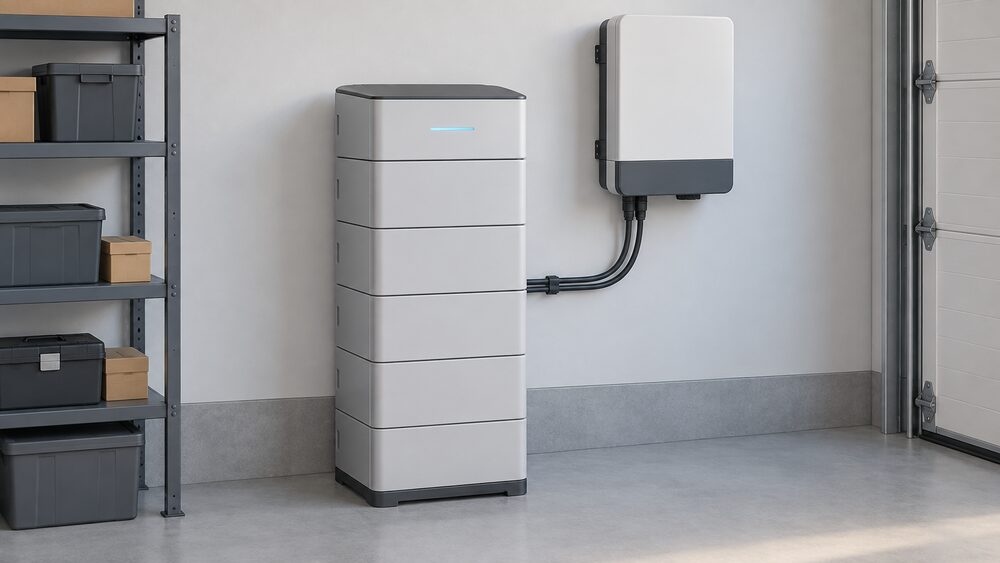 BYD Battery-BoxBYD Battery-Box is a home battery you add to your existing solar setup, sold in sizes from a small single unit up to very large linked systems.