
In this guide
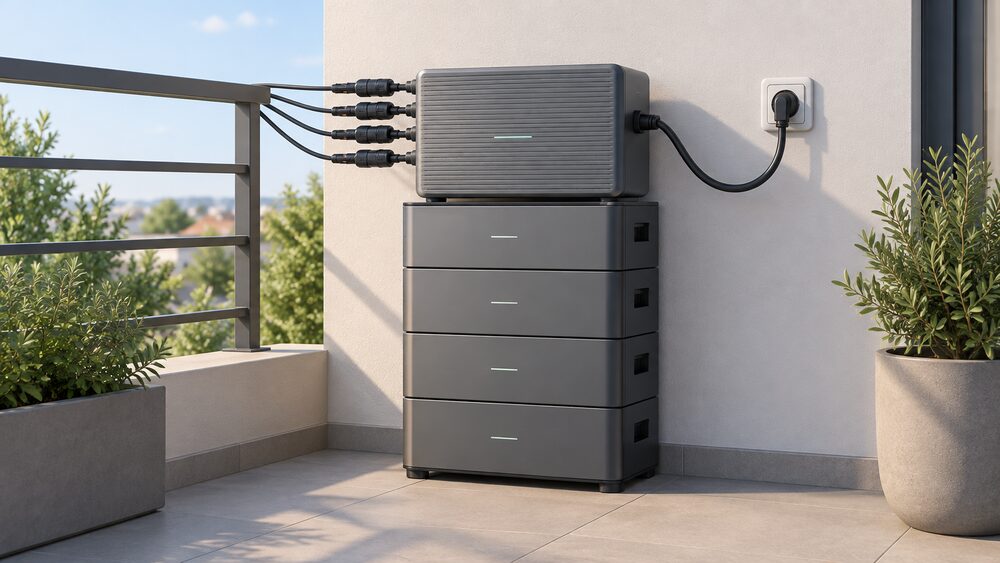
The Zendure SolarFlow Hyper 2000 is a plug-in, AC-coupled battery unit that stores solar or off-peak grid electricity and pushes it back into the home through a standard socket. Zendure describes it as "the world's first multi-sets coordination plug-in solar system with bidirectional AC-coupled storage solution"1. Each unit delivers 1,200W of bidirectional AC power, accepts up to 2,400W of solar input through an 1,800W MPPT, and stacks with AB1000 and AB2000 batteries2.
The headline numbers are the ones a householder will search for. A single Hyper 2000 takes a stack of four batteries, with a maximum total capacity of 7,680Wh2. Three units on the same phase reach 23.04kWh of storage, and Zendure states that battery capacity across the range runs from 0.96kWh to 23.04kWh3. The unit is IP65 rated, weighs approximately 8.5kg excluding accessories, and measures 350 x 202 x 78mm2.
What the Hyper 2000 does for independence is real but bounded. It shifts when a home draws from the grid, and it can keep essential appliances running in off-grid mode, but it does not take a household off the grid, off a supplier, or off the gas network. It also introduces a dependence on Zendure's app, its servers and a Wi-Fi connection for anything beyond local control. This page sets out the specifications, the warranty position, the pricing picture and the company's status, and links to the wider plug-in battery storage and home battery storage guides where the rules and alternatives are covered.
What the Hyper 2000 offers a UK household
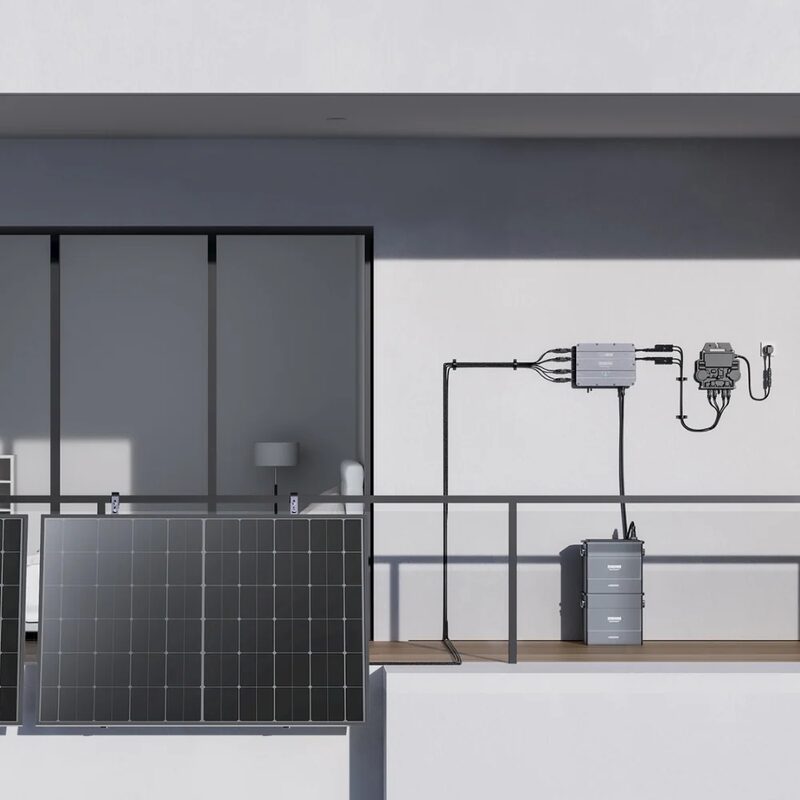
The Hyper 2000 is a plug-in system, which is the point of it. Zendure states that installation takes three minutes without altering existing wiring, and that the unit is AC-coupled and plug-and-play, avoiding complex rewiring4. It is designed for balconies, workshops, gardens and most outdoor environments, and the IP65 rating supports that2.
The architecture is what separates it from a conventional home battery. Rather than a single inverter wired into the consumer unit, the Hyper 2000 uses hybrid microinverters and a 48V platform, which Zendure states reduces energy loss by 25% compared to a 16V platform2. It has four sets of solar connectors and can connect up to four groups of solar panels, with dual MPPTs that Zendure says suit most installation conditions and can increase efficiency2.
Phase handling matters in a UK context. Zendure states that when Hyper units sit on different phases, each works independently and can reach its full 1,200W capacity, while units on the same phase automatically network and unify their total output to 0 to 1,800W2. The multi-unit power limit for a ZenLink setup is stated as 3,000W7. For a household on a single-phase supply, which is the common UK arrangement, the same-phase behaviour is the one that applies.
The unit also supports bidirectional charging, meaning it can be charged both from solar panels and from the electricity grid4. That is the feature that makes tariff stacking possible rather than solar-only operation, and it is covered in more detail below.
Specifications: 1,200W AC, 1,800W MPPT, 48V platform
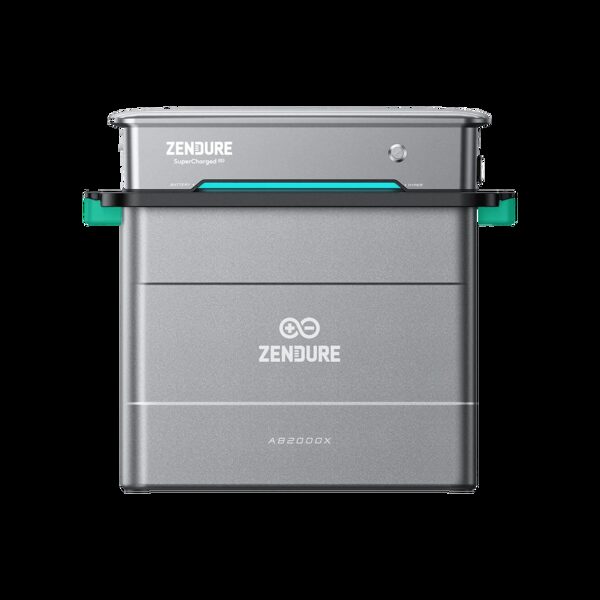
The table below sets out the figures Zendure publishes for the Hyper 2000. Where a figure applies to a bundle rather than the bare unit, the bundle is named.
| Specification | Figure | Applies to |
|---|---|---|
| AC output | 30 to 1,200W, adjustable in 1W steps7 | Hyper 2000 system |
| Bidirectional AC power | 1,200W7 | Hyper 2000 |
| Peak AC output | 1,500W, 3,000W peak7 | Hyper 2000 with AB1000S and AB2000S, 1300Wp panels |
| Solar input | 2,400W2 | Hyper 2000 |
| MPPT power | 1,800W2 | Hyper 2000 |
| MPPT range, clustered | 1,800W to 5,400W2 | Up to three units |
| Solar array range | 2,400W to 7,200W2 | Clustered system |
| Recommended power per MPPT input | 350W to 600W2 | Per MPPT input |
| Voltage range per MPPT input | 15V to 55V, Voc below 55V2 | Per MPPT input |
| Battery capacity per unit | 7,680Wh maximum, four batteries2 | AB1000 and AB2000 combined |
| Storage across three units | 23.04kWh3 | Same phase |
| Platform voltage | 48V2 | Hyper 2000 |
| Weight | approximately 8.5kg excluding accessories2 | Hyper 2000 |
| Dimensions | 350 x 202 x 78mm2 | Hyper 2000 |
| Ingress protection | IP652 | Hyper 2000 |
Two limits are worth stating plainly. Zendure warns that the open circuit voltage on each MPPT input must be lower than 55V, and that panels above 55V may cause permanent damage2. Where panels are small, between 100W and 350W, Zendure states that two or three can be connected in parallel on a single set of solar connectors, provided the Voc stays between 15V and 55V2. The battery chemistry is LiFePO₄, and the AB2000 and AB2000S each hold 1,920Wh with operation down to minus 20 degrees C4. Below 0 degrees C outdoors, Zendure recommends only the AB2000, or siting the system indoors above 0 degrees C2.
Warranty: 10 years claimed, 5 years in the policy
The warranty position is the weakest part of the Hyper 2000's published record, because Zendure's own documents disagree. Product and sales pages state a 10-year warranty and a 15-year product lifetime for the Hyper 20002. The company's warranty policy page, which carries an effective date of 12 December 2023, lists the Hyper 2000 at 5 years for the EU and Switzerland5.
The same policy page shows how much the terms vary across the range. The SolarFlow 800 is listed at 12 years, the SolarFlow 800 Pro and 800 Plus at 10 years, and the SolarFlow 2400 AC, SolarFlow 1600 and SolarFlow 2400 Pro at 3 years5. Other Zendure pages state a 10-year warranty and 15 years of use for the SolarFlow battery with up to 6,000 cycles9. The Hyper 2000's own product page repeats the 15-year lifetime claim2.
What the warranty covers is not set out in the material available: no retained capacity threshold, throughput limit or cycle count is stated for the Hyper 2000 specifically. For how these terms are usually structured across the market, and what to check before relying on a headline figure, see home battery warranties.
Tariff stacking and time-of-use operation
The Hyper 2000's grid charging capability is what makes it a tariff-stacking device rather than a solar-only one. Zendure states that the unit can charge its batteries using home AC power, that charging can be scheduled during off-peak hours, and that it charges automatically from AC when the batteries are low2. Multi-unit ZenLink setups on the same phase charge at 1,200W to 1,800W7.
Zendure markets this as advanced cost optimisation through time-of-use tariffs, and the Hyper 2000's price lists describe the same feature7. The company also publishes guidance on time-of-use operation10. The logic is straightforward: charge when electricity is cheap, discharge when it is expensive, and let solar top up in between.
Two operational details shape how well that works. First, the Smart CT mode: Zendure states that the Hyper 2000 automatically switches to charging mode when it detects that solar production exceeds 80W for one minute, with a 50W safety buffer, and that this requires Hyper 2000 Master firmware V2.1.18 or higher2. Second, the reserve behaviour: when the batteries are nearly depleted, the unit uses AC and/or solar power to keep them at 5%, and otherwise enters sleep mode2.
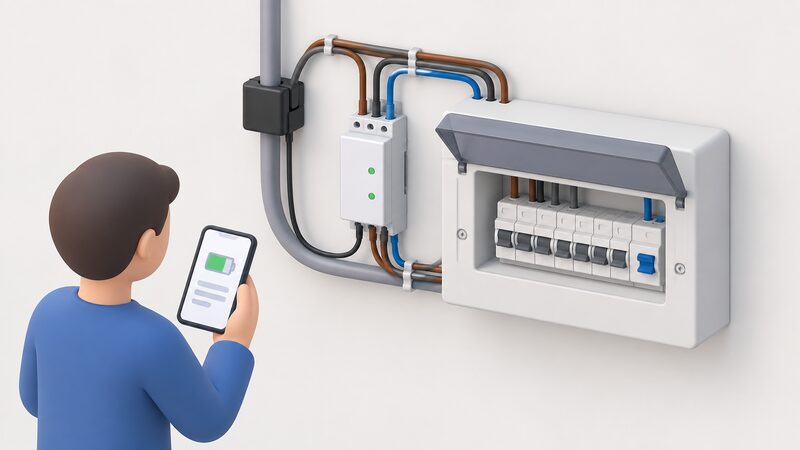
The unit supports Shelly Pro 3EM, Shelly 3EM, Zendure Satellite Monitor CT, Zendure Satellite Plug and Shelly Plus Plug S for metering and control2. Zendure states that the Hyper 2000 pairs with a Shelly Pro 3EM through local communication without relying on the internet2. That matters for the independence question, because it means the core control loop can run without a cloud service. For how these arrangements compare across the market, see stacking a home battery with smart and time-of-use tariffs.
What the Hyper 2000 costs
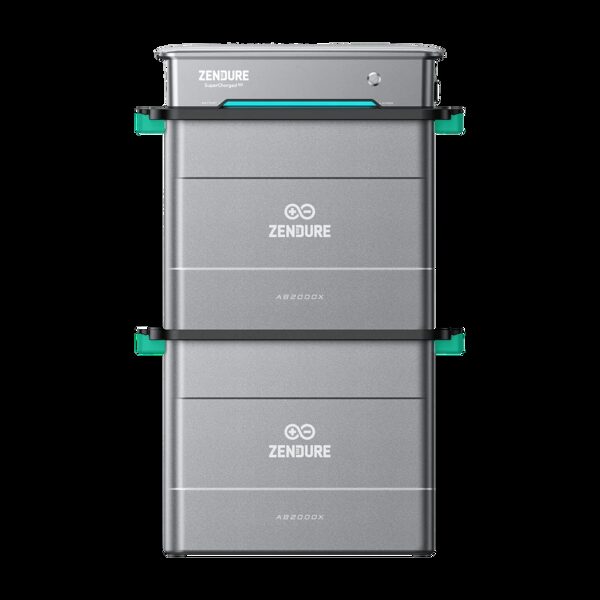
Zendure does not publish a standalone UK price for the Hyper 2000 in the material available. Bundle prices on its store are recorded in Shopify price units rather than as stated GBP figures, so they cannot be read as confirmed retail prices11.
Availability is also uneven across the range. The SolarFlow 800 Pro is listed as sold out, with Zendure pointing buyers to the SolarFlow 800 Pro 2 as an alternative12. The Hub 2000 balcony power plant page carries an inventory flag showing available false for the variants shown, even while the page states 100% in stock and dispatch in 3 to 5 days11. Stock should be checked at the point of order rather than assumed from a banner.
For the wider cost picture across plug-in and fixed systems, including how VAT treatment differs, see how much does a home battery cost in the UK and what is the VAT rate on home battery storage.
Company status and UK availability
Zendure sells through a UK storefront alongside its main site, and the Hyper 2000 appears across its UK-facing product and pricing pages13. The company is trading and shipping, and its product catalogue continues to be updated: the AB3000L battery listing was created on 5 February 2026, and the SolarFlow 2400 Pro base variant carries a created and updated timestamp of 27 April 202615.
The Hyper 2000 is described as a new release on Zendure's home energy page6. It is compatible with the AB2000L battery, which Zendure states works only with the SolarFlow 1600 AC+, SolarFlow Hyper 2000, SolarFlow Hub 2000, SolarFlow 800 and ACE 150013. The wider SolarFlow range includes the Mix series, the 4000 Mix AC and the balcony solar system sets16.
On certification, Zendure states that the Hyper 2000 has obtained VDE-AR-N 4105 certification for Germany and VFR 2019 certification for France, allowing direct plug-in to standard household sockets in those markets2. No equivalent UK certification is stated. That distinction matters: German and French approvals for plug-in operation do not carry across to the UK, where the rules for connecting storage are set differently. For the UK position on plug-in units, see plug-in and balcony battery storage in the UK and are plug-in batteries safe for UK homes.
Zendure also states that no VAT is payable on the Hyper 2000 under Section 12 of the German Value Added Tax Act2. That is a German tax position and does not describe UK VAT treatment.
What it means for household energy independence

The Hyper 2000 shifts a household's relationship with the grid in three ways. It lets solar generation be stored and used later rather than exported at a low rate. It lets cheap off-peak electricity be bought and discharged during expensive periods. And in off-grid mode, Zendure states that it provides backup power for essential household appliances, with a 20ms UPS switchover for devices on standby7.
What remains is substantial. The unit does not disconnect a home from the grid, and it does not remove the need for a supplier. It draws from the grid whenever it charges from AC, which is the basis of its tariff-stacking function. Its solar input depends on panels being sited and connected, and its output is limited to 1,200W per unit, or 1,800W unified across units on the same phase2. A household with high simultaneous demand will still draw from the grid.
The dependence on Zendure as a company is the other side of it. Local control is genuinely local in places: the Shelly Pro 3EM pairing runs without the internet, and units communicate over ZenLink without Wi-Fi2. But remote monitoring, scheduling from away and firmware updates run through Wi-Fi at 2.4GHz or 5GHz, Bluetooth, and Zendure's own app and servers2. The SolarFlow 800 is described as running on the ZEN+OS control system with reliability even without internet, which suggests the direction of travel, but the Hyper 2000's remote features remain tied to the manufacturer's platform19.
For how plug-in systems compare with fixed storage on independence, backup and cost, see plug-in and balcony battery storage in the UK, battery backup in a power cut and home batteries and household energy independence. The wider context on homegrown energy and independence is set out by Solar Energy UK20.
Sources20 cited
- SolarFlow Hyper 2000 product page, Zendure, 2026-09-19
- SolarFlow Hyper Balcony Power Plant, Zendure, 2026-09-19
- SolarFlow Hyper 2000 storage across three units, Zendure, 2026-09-19
- Solar battery storage: the complete guide, Zendure, 2025-11-05
- Zendure warranty policy, Zendure, 2023-12-12
- SolarFlow new gen evolved, Zendure, 2026-09-19
- Home energy solution, Zendure, 2026-09-19
- Exclusive BXGY sale, Zendure, 2026-09-19
- SolarFlow balcony solar system set, Zendure, 2026-09-19
- Zendure time-of-use guidance, Zendure, 2026-09-19
- SolarFlow Hub 2000 balcony power plant, Zendure, 2026-09-19
- SolarFlow 800 Pro, Zendure, 2026-09-19
- Zendure main site, Zendure, 2026-09-19
- Zendure winter sale, Zendure, 2026-09-19
- Zendure news feed, Zendure, 2026-01-15
- SolarFlow Mix series, Zendure, 2026-09-19
- SolarFlow 4000 Mix AC, Zendure, 2026-09-19
- SolarFlow 800, Zendure, 2026-09-19
- Zendure UK store, Zendure, 2026-09-19
- Solar Energy Scotland manifesto, Solar Energy UK, 2026-09-17
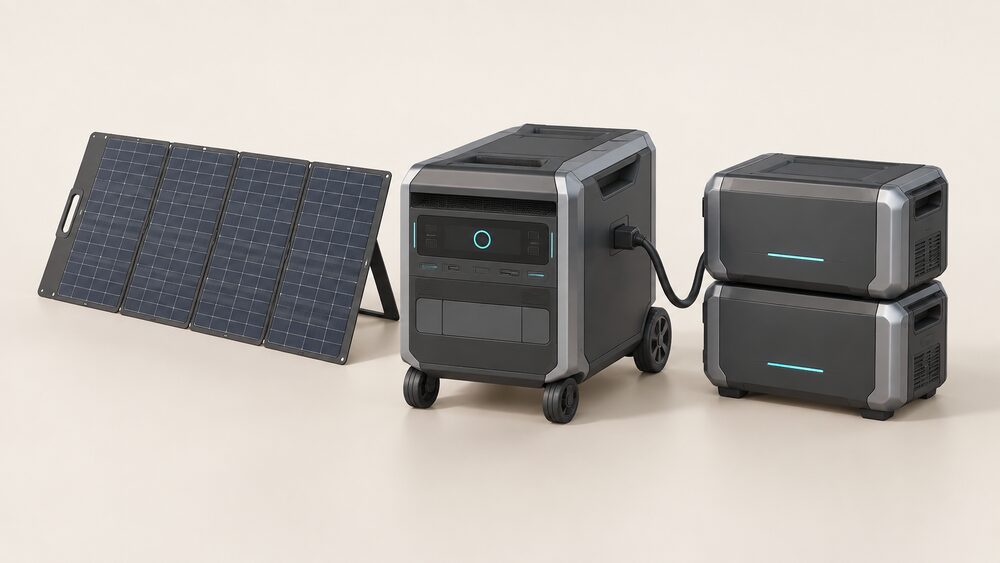 Zendure portable power stations and home batteriesZendure's UK range of portable power stations, plug-in home batteries and the Home Panel, with capacity figures, warranty terms, local control and what the kit does for household energy independence.
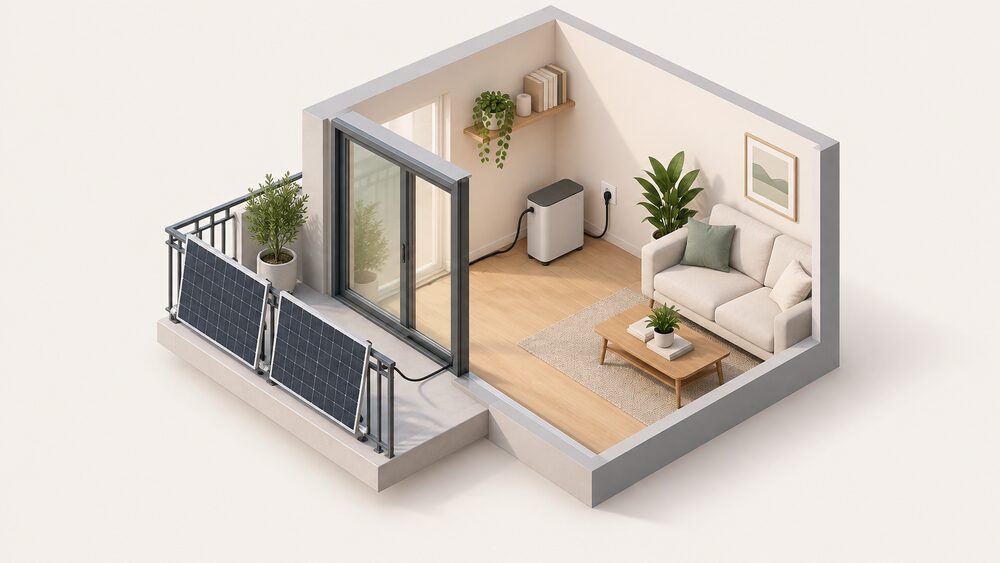 Zendure SolarFlowThe Zendure SolarFlow range of plug-in balcony batteries: models, specifications, warranty terms, prices and what the systems mean for a household's energy independence.