On this page
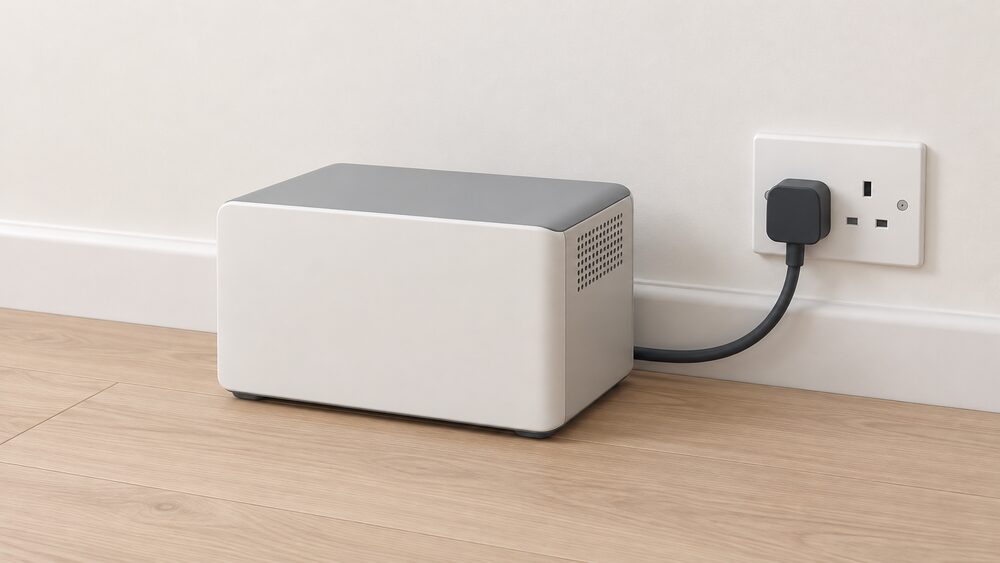
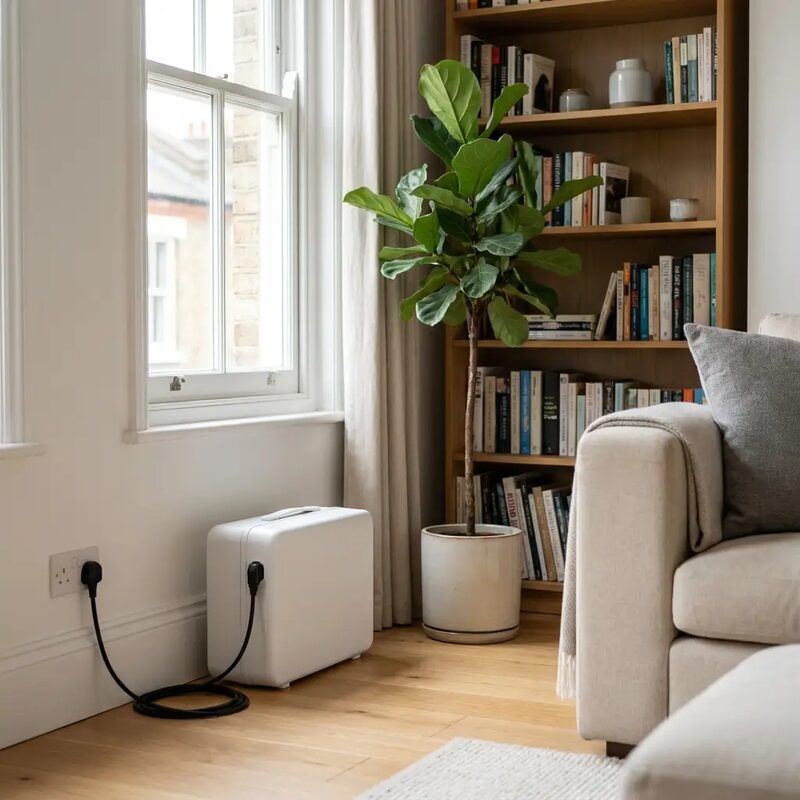
Octopus Energy has announced its own home battery range, called Nook, with two products: the Nook Cube, a shoebox-sized 2kWh battery that plugs into a standard wall socket, and the Nook Colossus, a wall-mounted battery available in 5kWh or 10kWh models that can be stacked to suit larger homes1. The range was announced on 22 June 2026 and is due to go on sale in 2027, exclusively through Octopus Energy, across the UK, Germany, France, Italy and Spain1.
No price has been announced for either product. Octopus has said the Colossus will be "about a third cheaper than the best-known battery brands", which is the maker's own positioning claim rather than a figure anyone can check1. Both systems carry a 12-year warranty, but Octopus has not named the manufacturer behind it3. Until prices, the maker and the warranty terms are published, everything about the Nook is a promise rather than a product a household can buy.
For energy independence, the Nook range is aimed squarely at the households that conventional home batteries have so far missed: renters and flat dwellers who cannot install a wall of lithium in a cupboard they do not own. That is a genuine gap in the market. But the dependence that remains is worth naming: the batteries will be sold exclusively through one supplier, tied to that supplier's tariffs and app, and backed by an unnamed manufacturer.
The range: Cube and Colossus
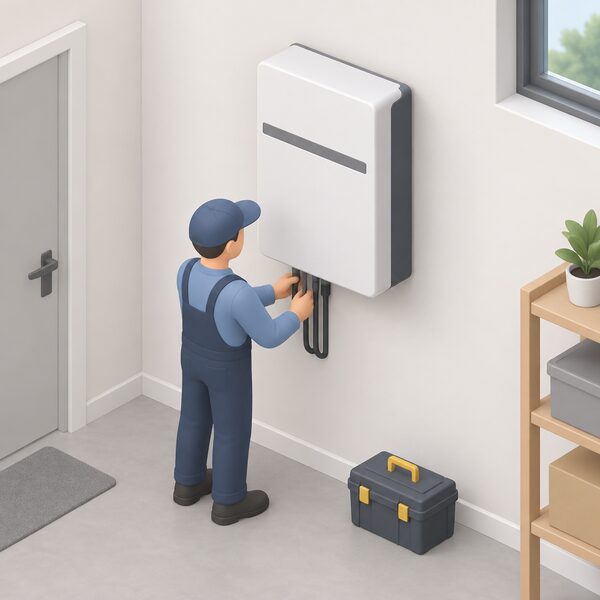
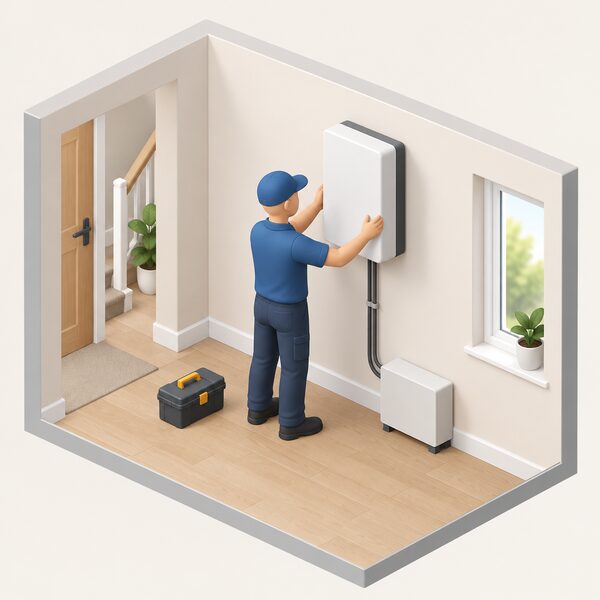
The two products serve two quite different households, and the split is deliberate. The Nook Cube is described by Octopus as a "compact, shoebox-sized 2kWh battery that simply plugs into a standard wall socket", and the announcement is headed, for this product, "For renters and flats"1. The Nook Colossus is "a full-sized home battery available in 5kWh or 10kWh models that can be stacked to suit larger homes", a "wall-mounted 5kWh or 10kWh battery installed by Octopus engineers", aimed at homeowners1.
| Nook Cube | Nook Colossus | |
|---|---|---|
| Capacity | 2kWh | 5kWh or 10kWh, stackable |
| Form | Shoebox-sized, plug-and-play | Wall-mounted, installed |
| Fitted by | Householder, into a standard socket | Octopus engineers |
| Aimed at | Renters and flats | Homeowners |
| Solar compatible | Yes, per Octopus | Yes, per Octopus |
| Warranty | 12 years | 12 years |
All figures are the maker's own, from the announcement and product page1.
The Cube's 2kWh is small by the standards of installed home batteries: a typical 10kWh installed battery holds five times as much. What 2kWh can do is shift the cheapest electricity of the night into the evening peak for a modest load, or buffer a plug-in solar kit. Whether stacking several Cubes is possible, and at what cost, has not been announced. The Colossus, at 5 or 10kWh per unit with stacking, sits squarely in the mainstream of UK home battery capacities, comparable to the ranges sold by established makers. For context on what those capacities mean in practice, see battery capacity and usable capacity and home battery sizing.
Price: nothing announced yet, and payback claims to treat with care
The primary question most households will ask, what the Nook costs, has no answer yet. Octopus has published no price for either model. The only pricing signal is the maker's own claim that the Colossus will be "about a third cheaper than the best-known battery brands"1. That is a marketing position, not a price, and it cannot be verified against anything.
What can be said is what comparable hardware costs today. A 10kWh battery-only, entry or mid-range system in the UK typically costs £4,000 to £6,000, and 8 to 10kWh batteries carry an installed price of £4,500 to £7,000 as at March 20264. A 10kW solar battery in the UK market currently costs about £8,000 to £10,0004. Battery installation can add up to £2,544 more in upfront cost compared with a panel-only installation, according to independent guidance6. If the Colossus genuinely lands a third below the established brands, it would be a significant price move, but the claim is unverifiable until a price is published.
On payback, treat any short-period claim with caution. Independent advice from the Centre for Sustainable Energy models a time-of-use example in which a battery costing £4,600 pays back in 9 years7. Maker guidance on standalone UK battery systems without solar gives 10 to 15 years as a realistic estimate, with 6 to 9 years only in optimistic scenarios8. Configurations that pair solar with a battery, or that add backup capability, come in faster in makers' own modelling: 6 to 8 years for a 4kWp solar array with a 5kWh battery on a time-of-use tariff, 8 to 10 years with a 10kWh battery, and 8 to 12 years for battery-only Economy 7 arbitrage9. The general pattern in these figures is that batteries without solar pay back more slowly than batteries with solar, because arbitrage margins between cheap and expensive hours are thinner than the value of using stored self-generated power. Our home battery payback page works through the arithmetic.
Who the Nook is aimed at: renters and flat dwellers
The Cube is the more interesting of the two products, because it targets households that installed batteries cannot reach. Renters and flat dwellers have been largely locked out of home battery storage: a wall-mounted unit needs a wall the householder controls, an installer visit and usually a landlord's consent. A battery that "simply plugs into a standard wall socket" removes the installation step entirely1.
The wider context supports the idea. Plug-in solar battery systems for tenants typically range from £500 to £1,500 for mainstream systems with micro-inverters, with payback usually estimated at 4 to 6 years on kits starting at £500 to £700, figures the maker gives as reference only11. Smart meters, which any tariff-linked battery needs, are installed "at no extra cost to you or your landlord"12. Octopus itself became the first major UK energy supplier to offer plug-in solar in September 2026, with kits from £45013, so the Cube extends a direction the company had already taken.
What remains unknown is the regulatory and practical position of a plug-in battery in Great Britain, which is covered on our plug-in battery storage and plug-in battery safety pages. A 2kWh battery drawing and returning power through a domestic socket raises questions about notification to the network operator that a plug-in device may not answer in the same way as an installed system. Octopus has not published its position on this, and until it does, the Cube's ease of installation is a claim rather than a settled process.
How the Nook stores cheap electricity and pairs with Octopus tariffs
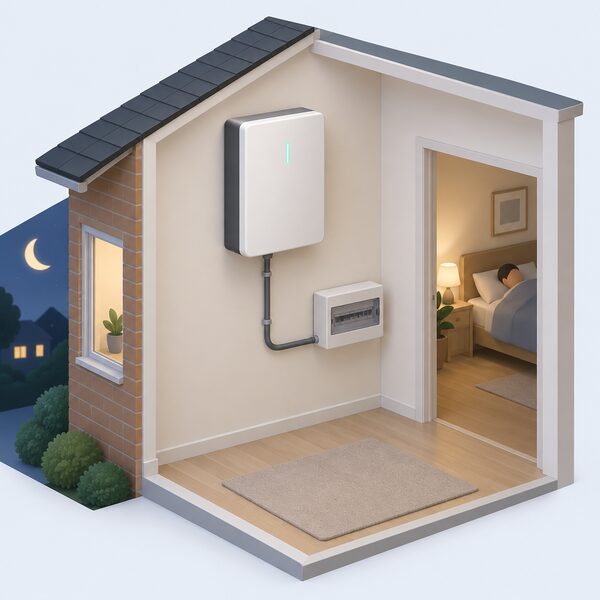
The economic case for any battery without solar rests on tariff arbitrage: charge when electricity is cheap, discharge when it is expensive. Octopus says the Nook "can be paired with Octopus's smart tariffs to maximise bill savings"1. The supplier's tariff suite gives a sense of what that means in practice. Octopus Go offers off-peak rates as low as £0.07 per kWh from 23:30 to 05:3014. Intelligent Octopus has six hours of cheaper electricity overnight15. Octopus currently offers three EV tariffs, which work via an app customers can download16.
Two things follow. First, the Nook's value proposition is inseparable from being an Octopus customer: the batteries will be sold exclusively through Octopus, and their headline benefit depends on that supplier's tariffs. A household that switches supplier loses the pairing that makes the battery pay. That is a real dependence, and anyone weighing the Nook should weigh it alongside the hardware. Our batteries and smart tariffs page sets out how stacking works across the market.
Second, tariff availability changes. Octopus's own guidance on Intelligent Octopus Flux states the tariff is only compatible with GivEnergy, Enphase, SolarEdge and Tesla Powerwall batteries17, and its solar and battery product pages name Intelligent Octopus Flux as the best tariff for those configurations18. Whether the Nook will join that compatibility list, or work on a tariff of its own, has not been announced. A battery bought on the strength of one tariff can find that tariff withdrawn or altered, and the best tariffs for home batteries change over time.
Solar compatibility and the wider Octopus ecosystem
Octopus states that both Nook systems are compatible with solar panels1. For the Colossus, that is unremarkable: it is a conventional installed battery, and pairing with a solar array is what installed batteries do. For the Cube, solar compatibility means a plug-in unit working alongside plug-in solar panels, the combination Octopus began selling in September 2026.
For households considering solar alongside a Nook, Octopus's own installed prices give a benchmark: its prices start at £6,663 for a 2 panel installation with no battery, and its most popular system, a 12 panel installation with a 10kWh smart battery, costs £11,115, based on April 2026 prices19. Households with solar who export surplus power can be paid under the Smart Export Guarantee; Octopus operates export tariffs paying monthly, including its SEG tariff which includes battery storage20. The export side matters to the independence picture: a solar-paired Nook household reduces grid import but remains connected, both to sell surplus and to top up the battery.
Warranty: 12 years from a maker Octopus has not named
Both Nook products are, in Octopus's words, "backed by a 12-year warranty"3. Twelve years is at the longer end of the UK home battery market, and it matches the twelve-year manufacturer's warranty attached to an approved battery innovation measure in Ofgem's ECO4 Innovation scheme, which shows the term is not unheard of in UK-supported installations21.
The problem is that the manufacturer is unnamed. A warranty is a promise from a company, and its value depends on who that company is, whether it has a UK presence, and whether it has a record of honouring claims. Octopus, as the seller, will presumably stand in front of the customer, but the warranty's ultimate backing is unknown. Battery recalls do happen in this market, and withdrawal notices have been issued by the Office for Product Safety and Standards against overseas manufacturers in adjacent product categories22, which is a reminder that the entity behind a battery matters. Until the maker is named, the 12-year term should be treated as a stated intention rather than an assessable guarantee. Our home battery warranties page explains what to check, and what happens if your home battery manufacturer goes bust covers the failure case.
UK availability and the wider European rollout
The Nook range will launch across the UK, Germany, France, Italy and Spain, with sales beginning in 2027 and no specific date announced1. The rollout is exclusive to Octopus Energy in all five countries, which means no third-party installers, no independent retailers and no price competition between suppliers of the same hardware.
For UK households, the practical consequences are three. First, availability is at least several months away, so anyone needing storage sooner must look at the existing market. Second, the exclusive sales channel ties the purchase to one supplier's ecosystem: tariffs, app, installers and warranty service all come from or through Octopus. Third, a five-country launch divides the maker's attention and support across markets with different rules, and it is not yet clear whether UK installations will follow UK standards such as the certification and notification requirements covering solar panel and battery installation work6. Our battery installation standards page sets out what those require.
One open question for homes with EV chargers
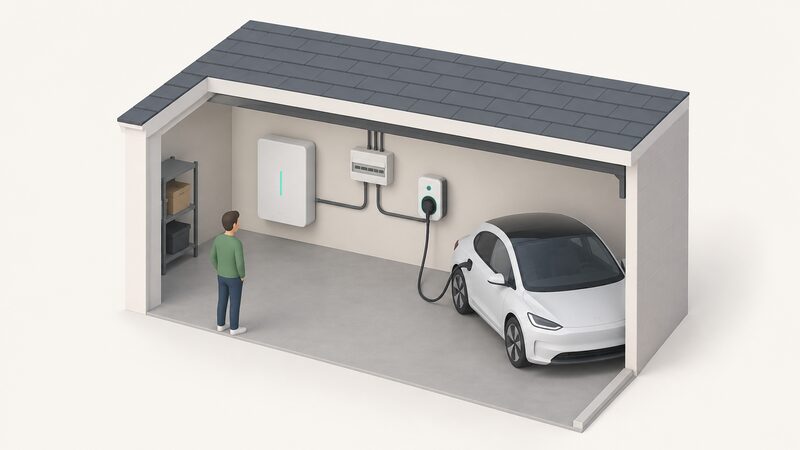
Octopus has not said how the Nook interacts with a home EV charger, and for the growing number of households with both a battery and a car, this is the question that matters. A battery charging on the cheap overnight window and a car charging on the same window draw from the same supply, and how the two are coordinated, or not, determines whether the household gets the full benefit of both.
The stakes are visible in the numbers. Fully charging a 77kWh EV battery at Octopus Go's off-peak rate would cost about £5.39, while the same charge at peak rates of around 28.69p per kWh could cost £22.29 or more14. Charger makers already integrate directly with smart tariffs: Ohme chargers integrate with tariffs like Intelligent Octopus Go, automatically charging at the cheapest times, and the maker claims this can cut a 60kWh charge to as little as £5 to £823. An EV home charger costs between £250 and £1,000 depending on the type and any grants24.
Whether the Nook's control system coordinates with, ignores or conflicts with an EV charger's tariff integration has not been addressed. A household running both could find the battery discharging into the car, or the two competing for the same cheap hours. Our battery heat pump and EV charging page covers the general position, but for the Nook specifically this is a question to put to Octopus before buying.
Sources24 sources
- A battery revolution: Octopus announces the Nook range, Octopus Energy, 2026-06-25
- Octopus Nook Review: the Home Battery, Smart Solar Homes, 2026
- Octopus Nook product page, Octopus Energy, 2026
- 10kW solar battery price in the UK, Jackery, 2026-06-04
- Balancing investment in clean heat and energy efficiency in Scottish housing retrofit, ClimateXChange, 2026-06
- Solar panel installation, maintenance and repair, NICEIC, 2026-09-17
- Battery storage advice, Centre for Sustainable Energy, 2025-10
- Home battery storage in the UK without solar, Jackery, 2026-05-29
- Why solar PV battery storage is essential for UK homeowners, Jackery, 2026-08-27
- Best home battery storage in the UK, Jackery, 2026-07-02
- Solar battery for tenants, Jackery, 2026-07-28
- How to get a smart meter, Smart Energy GB, 2026-08-03
- Octopus becomes first major energy provider to offer plug-in solar, The Eco Experts, 2026-09-03
- Electric car charging guide, Carwow, 2025-07-16
- How to choose the best energy company, Which?, 2026-01-19
- Octopus EV energy tariffs, Uswitch, 2025-10-09
- Intelligent Octopus Flux FAQs, Octopus Energy, 2026-09-17
- Octopus solar and battery options, Octopus Energy, 2026-09-17
- Battery only installation, Octopus Energy, 2026
- Smart Export Guarantee, Solar Energy UK, 2026-05-12
- ECO4 Innovation: Approved Innovation Measures v1.6, Ofgem, 2024-01
- Dangerous e-bike battery notice issued by government body, Electrical Safety First, 2026-09-17
- New to EVs, Ohme, 2026-07-09
- EV charger home installation process, Uswitch, 2022-02-03