
In this comparison
OVO Charge Anytime and Octopus Go are both electricity tariffs built around charging an electric car at home for less, but they are not the same kind of product. Charge Anytime is an add-on to an OVO electricity tariff that discounts charging whenever OVO's system decides to schedule it, and OVO states it can be added to any OVO tariff for household electricity1. Octopus Go is a standalone time-of-use tariff with a fixed cheap window, and Octopus states that any vehicle will work with it and that you do not need a home EV charger to join2.
The headline rates are close enough that the choice rarely turns on price alone. Octopus Go has been quoted at off-peak rates as low as 7p per kWh between 23:30 and 05:30, against peak rates of around 28.69p per kWh3. OVO's pay as you go Charge Anytime rate was recorded at 14p per kWh on 4 November 2025, with an exclusive partner rate of 7p per kWh for Volvo drivers on the same date, against OVO's UK average standard variable rate of 26.34p per kWh4.
What separates them is control. Octopus Go asks nothing of your car or charger beyond plugging in during the window. Charge Anytime requires full control over charging, which means the car itself must integrate with OVO, or a compatible charger must bridge the gap5. That single condition decides which households can actually take each tariff.
Charge Anytime and Octopus Go: what each tariff actually is
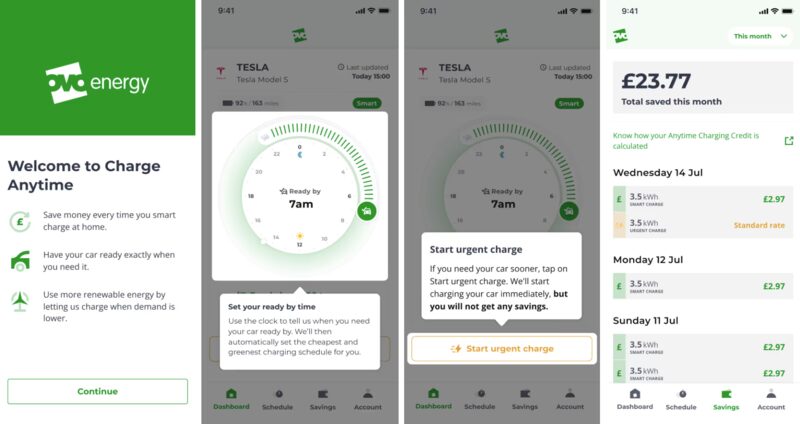
Charge Anytime is not a supply tariff in its own right. OVO's scheme rules describe it as an add-on product to OVO's eligible electricity tariffs, and the tariff applies only to EV charging while sitting on top of whatever OVO tariff supplies the rest of the home1. OVO states it can be added to any OVO tariff for household electricity for free6. The mechanism is that OVO optimises your EV charging times to charge at the cheapest time in the wholesale market and at the greenest times of the day, so the discount follows the half-hourly market rather than a clock1.
Octopus Go is a conventional two-rate time-of-use tariff. It gives a fixed cheap window overnight and a higher rate for everything else, and Octopus states your tariff will change automatically to Octopus Go once you are on it2. It has been described in independent guidance as the original EV tariff, enabling customers to get five hours of cheaper energy every night to charge their car7. Octopus Energy currently offers three EV tariffs, so Go sits alongside the intelligent variants rather than being the only option7.
The practical difference is where the intelligence sits. On Octopus Go the household decides when to plug in and pays the cheap rate if the clock is right. On Charge Anytime the supplier decides when the car charges, and the household is paid a discounted rate for handing over that decision. That is the same trade described more broadly in independent research, where propositions promise lower pricing in exchange for handing over control, as with Intelligent Octopus Go8.
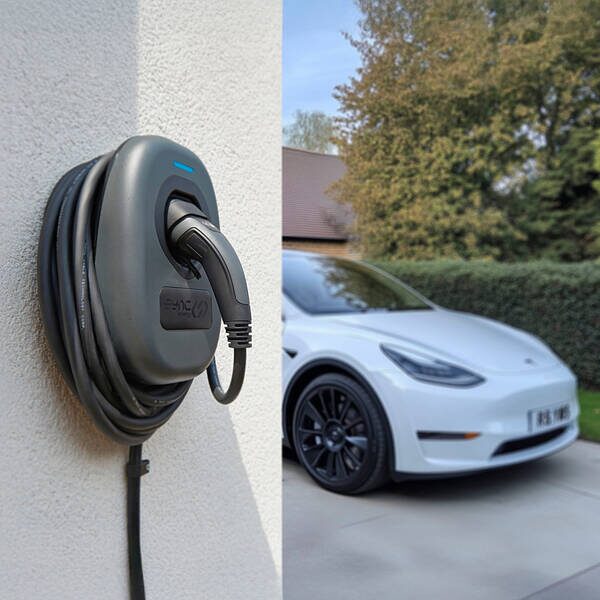
Rates compared: 7p and 14p per kWh against Octopus Go's overnight window
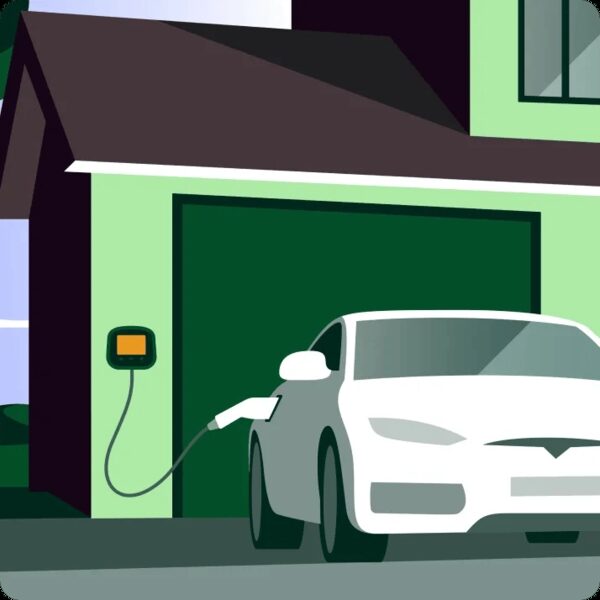
The rate comparison is messier than the marketing suggests, because both suppliers publish more than one figure and the figures move.
Octopus Go's cheap window has been quoted at off-peak rates as low as 7p per kWh from 23:30 to 05:30, with peak rates of around 28.69p per kWh3. The same source puts the arithmetic in concrete terms: charging a 7kW wallbox during the window can add around 28kWh for just £1.96, while fully charging a 77kWh battery at the off-peak rate would cost about £5.39, against £22.29 or more at peak rates3. Independent guidance published in July 2025 lists Octopus Go at 8.5p per kWh between 12.30am and 5:30am, and Intelligent Octopus Go at 7p per kWh between 11:30pm and 5:30am9. A maker's guidance table gives an overnight EV tariff such as Octopus Go at 9p per kWh, with a full recharge of a 60kWh usable battery at £5.4010.
OVO's side is similarly layered. The pay as you go add-on rate on Charge Anytime was recorded at 14p per kWh on 4 November 2025, and the exclusive partner rate for Volvo drivers stood at 7p per kWh on the same date4. OVO has previously stated that, compared with flat rate tariffs at around 30p per kWh, Charge Anytime guarantees savings of over 60% on drivers' home charging costs whenever they smart charge11. OVO also states that Charge Anytime customers have saved over £11 million since its launch in 202212.
| Octopus Go | OVO Charge Anytime | |
|---|---|---|
| Product type | Standalone time-of-use tariff2 | Add-on to an OVO electricity tariff1 |
| Cheap rate quoted | 7p per kWh, 23:30 to 05:303 | 14p per kWh pay as you go, 4 November 20254 |
| Other quoted cheap rates | 8.5p per kWh, 12.30am to 5:30am9; 9p per kWh10 | 7p per kWh exclusive partner rate, 4 November 20254 |
| Peak rate quoted | around 28.69p per kWh3 | standard OVO tariff rate for urgent charging1 |
| When the discount applies | fixed overnight window3 | whenever OVO schedules the charge1 |
The two documents disagree on Octopus Go's cheap rate, quoting 7p, 8.5p and 9p per kWh across sources of different dates and types, and the figures are not directly comparable because they were published at different times and in different areas. The Volvo partner rate of 7p per kWh is a branded offer rather than the standard Charge Anytime rate, so it should not be read as the rate a typical OVO customer receives.
Eligibility: why Charge Anytime needs full control over charging
This is the section that decides most households. Charge Anytime requires full control over charging, meaning the car must also be compatible5. The same condition applies to the intelligent Octopus tariffs, and a charger maker states plainly that its chargers and smart app work with all OVO tariffs, however, as the OVO Charge Anytime tariff requires full control over charging, your car must also integrate with them5.
Octopus Go carries no such condition. Octopus states that any vehicle will work with the Octopus Go tariff and that you do not need a home EV charger to join2. Independent guidance repeats the point, noting that any vehicle will work with the Octopus Go tariff7.
Where a car is not compatible, a charger can sometimes stand in. waEV-charge states its chargers and smart app are compatible with all Octopus and OVO tariffs, and separately that they are compatible with all Octopus tariffs including Octopus Intelligent Go13. For the intelligent Octopus route, connecting an Ohme charger instead of a compatible EV requires filling in Octopus Energy's request form first, which normally takes one working day to process, and the app will only offer to connect using your EV at first if you have both14.
The independence question sits underneath all of this. A tariff that requires a compatible car or charger, a supplier app and a live connection to the supplier's systems is a tariff that depends on a manufacturer's integration list and a company's continued support. Octopus Go, by contrast, needs only a meter that records time bands and a car that charges when plugged in.
Charging flexibility: any time against a fixed overnight window
The two products answer different questions. Octopus Go answers "when is electricity cheap", and the answer is a fixed window. Charge Anytime answers "when should the car charge", and the answer is whenever OVO's optimisation decides.
OVO states that EV drivers can access the discounted charging rate at any time of day or night, with cars automatically optimised to charge when energy emissions and prices are low12. That is a genuine difference from a clock-based tariff: a household that arrives home at 6pm and needs the car at 9pm is not confined to an overnight window, provided OVO schedules the charge and the car is plugged in.
The intelligent Octopus tariffs work differently again. Intelligent Octopus Go provides up to 6 hours of super cheap smart charging every 24 hours for the EV, and those 6 hours can be scheduled during the 11:30pm to 5:30am off-peak window, outside it, or across a mix of the two11. Once those 6 hours are used, any further charging is billed at the peak rate, even if it happens during the 11:30pm to 5:30am window12. The same source notes that the tariff includes six hours of reduced rates every night from 11:30pm to 5:30am for the entire home15.
For Octopus Go itself, the flexibility is the window and nothing more. Independent guidance describes customers selecting the time they need their car by and the amount of charge they need, with Octopus's systems charging at the cheapest times, as the intelligent model rather than the plain Go tariff7.
"Enjoy smart charging at just 8p/kWh, including six hours of reduced rates every night from 11:30pm to 5:30am for your entire home"
Smart charging and peak demand: what the 30% trial reduction means
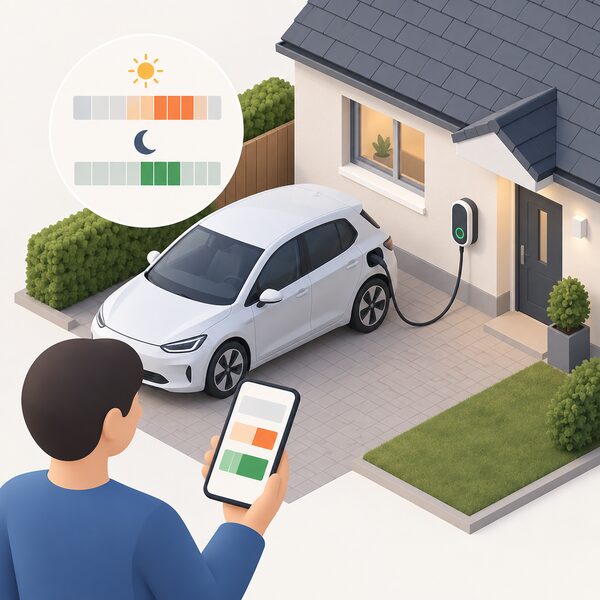
The case for supplier-controlled charging rests on grid evidence as much as on household bills. OVO, with Nesta and Kaluza, published results of a three-month trial of 58 households on Heat Pump Plus showing automatic heating shifts cut peak electricity demand by 30%16. The finding matters for EV tariffs because it demonstrates the mechanism that Charge Anytime uses for cars: the supplier moves flexible load away from peak and the household is paid a discounted rate for allowing it.
Independent research on home energy management makes the same point about consent. In the Heat Pump Plus trial, two participants felt unsure whether they would be comfortable providing continued control to OVO and one participant clearly stated that they would not accept continued automation17. That is the trade in plain terms: a lower rate in exchange for ongoing control, and not every household is comfortable with it.
The wider evidence on smart charging is that shifting works. A UK trial showed that shifting EV charging can help manage renewable energy, and Intelligent Octopus Go was described as Octopus Energy's most popular smart tariff in reporting on that trial18. Independent guidance notes that having an EV, heat pump or home battery makes smart tariffs much more valuable, which is the underlying reason suppliers build these products19.
For a household, the independence question is direct. A supplier-controlled tariff reduces exposure to peak wholesale prices and to the carbon intensity of the grid at the moment of charging, but it increases dependence on the supplier's app, the car's integration and the supplier's continued operation of the service. A fixed-window tariff keeps the decision in the home and the dependence limited to the meter.
Beyond the EV tariff: Heat Pump Plus, Battery Boost and OVO Beyond
OVO's wider product set has changed, and households comparing the two suppliers should know what has closed.
Heat Pump Plus is no longer open to new customers. OVO confirmed to a forum customer on 3 December 2025 that it had suspended accepting new customers, and stopped all new sign-ups as of 1 February 2026, contacting affected customers20. The tariff had only been available as an add-on to customers who install a heat pump through the OVO and Heat Geek offer, or who have a compatible heat pump as listed on the OVO website21. Independent guidance had already noted that the OVO heat pump tariff was only available as part of a bundle with a new heat pump, as an introductory offer22.
Battery Boost has also ended. The add-on was no longer available after January 2026, and OVO discontinued it in February 202623. Households that had planned to charge a home battery on a cheap OVO rate no longer have that route.
What remains is OVO Beyond, a rewards programme rather than a tariff. OVO promotes prize draws, partner discounts, banked solar panels, EV miles and heating credit offers under it, and lists up to £35 bill credit for an EV charger and subscribing to a Charge Anytime tariff, plus free heating for a future heat pump24. Rewards of this kind are worth what the terms say they are worth, and they are not a substitute for a rate.
Octopus's position is different in shape. Octopus Energy supplies and installs heat pumps, including to non-customers, and its Turbo service focuses on installing high-temperature heat pumps while limiting other changes25. Octopus Energy's customer service record shows no web chat channel26. Seasonal switching between EV and heat pump tariffs is possible with suppliers such as Octopus, typically with a notice period of 30 days9.
Which tariff fits which household

The choice follows eligibility and charging pattern rather than a single cheapest rate.
Octopus Go suits a household with any electric car, no requirement for a compatible charger, and a routine that puts the car on charge overnight. Octopus states any vehicle will work and no home charger is needed2. The trade is that daytime charging is billed at the peak rate, quoted at around 28.69p per kWh3.
Charge Anytime suits a household already supplied by OVO with a car that integrates with OVO, or a compatible charger that bridges the gap, and a pattern where charging times vary. OVO states the discounted rate is accessible at any time of day or night12. The trade is the integration requirement and the dependence on OVO's scheduling5.
For households with more than an EV, the picture widens. Independent guidance puts a typical UK household with an EV and a heat pump on a time-of-use tariff such as Octopus Go at £1,250 per year in total, of which £500 is EV charging9. That is a modelled figure for a specific household type, not a quote.
Two further points bear on the decision. OVO's exit fees on a sample bill were £50 per fuel, electricity and gas, if the customer switched before the final 49 days of the contract27. And OVO stopped buying REGO certificates to boost its renewable energy figures, which affects how its supply is described rather than what it costs28.
Households weighing a broader switch between the two suppliers can compare their full ranges on OVO Energy tariffs and Octopus Energy tariffs, and the wider mechanics of supplier-controlled charging are set out in smart charging tariffs. For households with a battery as well as a car, import tariffs designed for solar and battery homes covers the options that remain after Battery Boost closed.
Sources28 cited
- Charge Anytime terms, OVO Energy, 2 September 2026
- Octopus Go, Octopus Energy, 16 September 2026
- Electric car charging guide, Carwow, 16 July 2025
- OVO Charge Anytime, Uswitch, 9 October 2025
- waEV-charge support FAQs, waEV-charge, 17 September 2026
- Charge Anywhere, OVO Energy, 17 September 2026
- Octopus EV energy tariffs, Uswitch, 9 October 2025
- Global lessons in incentivising EV smart charging, Kaluza, 12 February 2026
- Best tariffs for EV and heat pump, Uswitch, 2 July 2025
- EV charging costs, Spirit Energy, 2026
- Prioritise savings or your target with Intelligent Octopus Go, Ohme, 4 August 2026
- OVO partners with Andersen, Andersen EV, 12 September 2024
- EV tariffs, waEV-charge, 17 September 2026
- Troubleshooting for Intelligent Octopus Go and Ohme, Ohme, 18 August 2026
- Intelligent Octopus Go 6 hour smart charging FAQs, Ohme, 17 September 2026
- UK first trial shows shifting EV charging can help manage renewable energy, UK Power Networks, 24 June 2024
- The future of heat, Nesta, 24 October 2025
- Intelligent Octopus, waEV-charge, 17 September 2026
- Should I switch to a time of use tariff, Energy Saving Trust, 23 January 2026
- Heat Pump Plus tariff: what's happening, OVO Energy forum, 1 February 2026
- A heat pump might be a lot cheaper than you think, Which?, 26 November 2024
- Future of energy retail report, Nesta, 29 April 2024
- OVO SEG tariff, Sunsave, February 2026
- Greener heat hub, OVO Energy, 17 September 2026
- How to get homes more ready for heat pumps, part 2, Nesta, 12 February 2026
- Octopus Energy customer service details, Citizens Advice, 20 September 2026
- How do I read my OVO Energy bill, Uswitch, 10 September 2025
- Where does my energy come from, Uswitch, 3 August 2026
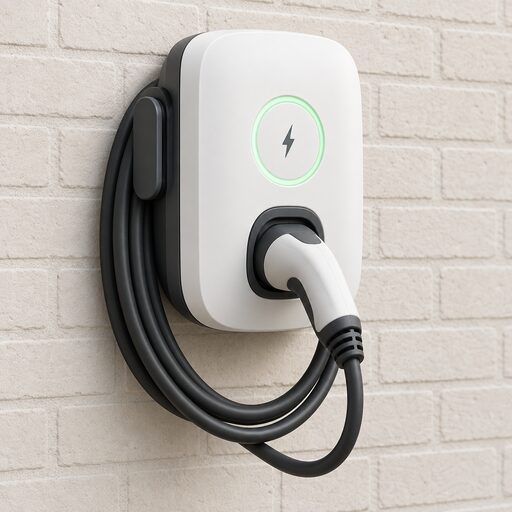 Home EV Charger ManufacturersWhich home EV charger brands are worth considering, and how do you choose between them?
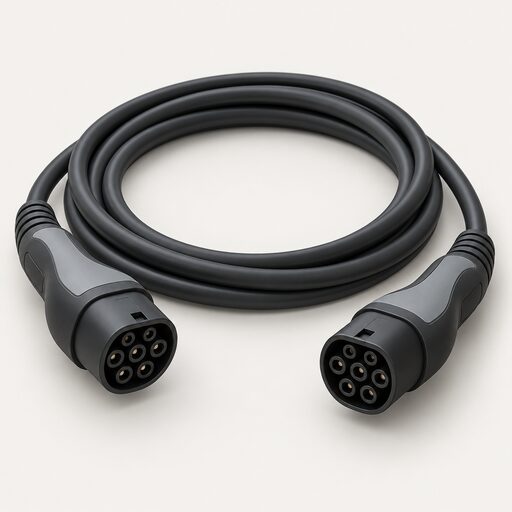 Types of Home EV ChargerWhich home charger suits your car and your driveway?
 The Full EV Charging GuideCharging an electric car at home usually means a wallbox, but do you need one, and what will it cost to fit and run?
 EV Charging Speeds and TimesHow long an electric car takes to charge depends on the charger and the car together, so a faster charge point will not always speed things up.
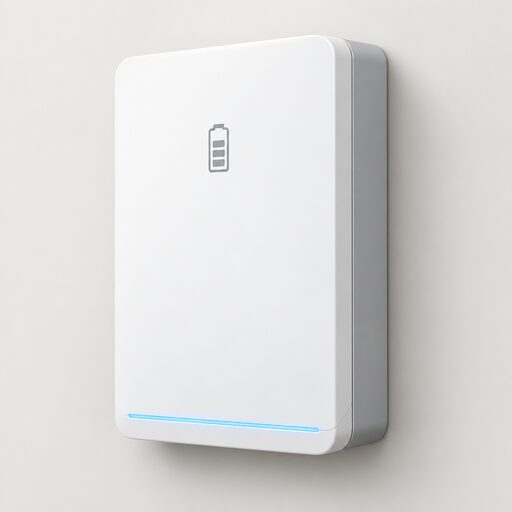 Charging With a Home BatteryHow a home battery and an EV charger share one supply, whether a battery can usefully charge a car, and how combined systems are controlled so the battery is not discharged into the vehicle at a loss.
 Cost to Charge an EV at HomeHow home charging cost is worked out from battery size, efficiency, the unit rate paid and the tariff behind it, with full-charge costs of about £8 to £17, cost per mile, annual running costs and what changes for EV owners from April 2028.