In this guide
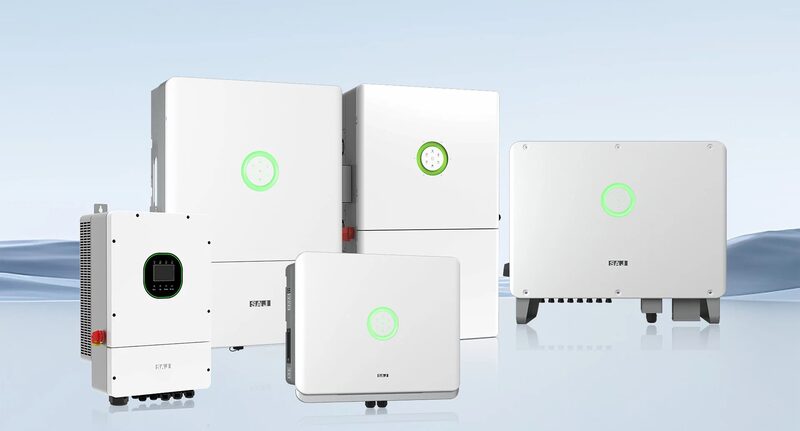
SAJ is a hybrid inverter and battery manufacturer whose products appear in UK installations without a documented UK service, price or distribution route. Its residential hybrid inverters are described as supporting both grid-tied and backup operation and as compatible with lithium battery energy storage1. The H2 series is the main hybrid family, sold in single-phase and three-phase variants with model designations covering 3-6K-S, 5-10K-S, 5-10K-T and 10-30K-T2.
The range extends beyond the H2. SAJ lists the HS3 Series, M2 Series and H2 LV Series among its recommended products3, and the HS3 was launched in March 2025 as a six-in-one home energy storage system integrating solar inverter, EV charger, battery PCS, battery pack, backup and energy management in one unit. The AS2 and AS3 series are AC-coupled storage systems, and the HS5 and HS2 are all-in-one storage units.
What a household gains is a hybrid inverter that can run a solar array, a battery and a backup circuit from one box, with UPS-level changeover quoted at 10 milliseconds or less on the AS24. What remains is dependence: on the grid for normal operation, on an installer for support, on a manufacturer whose UK presence is not documented in the material reviewed, and on a cloud platform for monitoring. This page sets out what SAJ publishes, and where it stops.
SAJ at a glance: a 20-year inverter maker and its UK-relevant range
SAJ marked its 20th anniversary with a new brand story, which places the company's founding two decades before 20268. That longevity is the main thing a household can verify about the maker from its own published material. The company sells into residential, commercial and utility segments, and its residential line is built around hybrid inverters that combine solar conversion, battery management and backup in a single unit.
The UK-relevant part of the range is narrower than the global catalogue. SAJ lists the HS3 Series, M2 Series and H2 LV Series as recommended products3. The M2 is a smart micro inverter, described as compatible with a wide range of PV modules and offering rapid shutdown connectivity9. The H2 LV Series is the low-voltage hybrid inverter line, and the HS3 is the all-in-one storage system launched in 2025.
What is not published matters as much. There is no UK price list, no named UK distributor and no UK support contact in the material reviewed for this page. The H3 Series EK60 page references a client testimonial in the Netherlands and a case reference in Sweden rather than UK installations7. A household considering SAJ is therefore buying through an installer who has chosen the brand, not through a manufacturer with a visible UK retail or service presence.
For energy independence, the position is mixed. A hybrid inverter with battery storage reduces the share of household electricity drawn from the grid, and a backup circuit keeps selected loads running when the grid fails. It does not remove the grid connection, the electricity supplier, or the need for an installer and a manufacturer to support the hardware over its life. The dependence on a company with no documented UK route is the part worth weighing before purchase.
The range: HS3, M2 and H2 series and what each is for
SAJ's residential catalogue splits into three jobs: converting solar, storing it, and managing it. The H2 Series is the hybrid inverter family, with model variants listed as 3-6K-S, 5-10K-S, 5-10K-T and 10-30K-T2. The suffix distinguishes single-phase from three-phase and the output band, so the family spans small domestic systems through to larger three-phase installations.
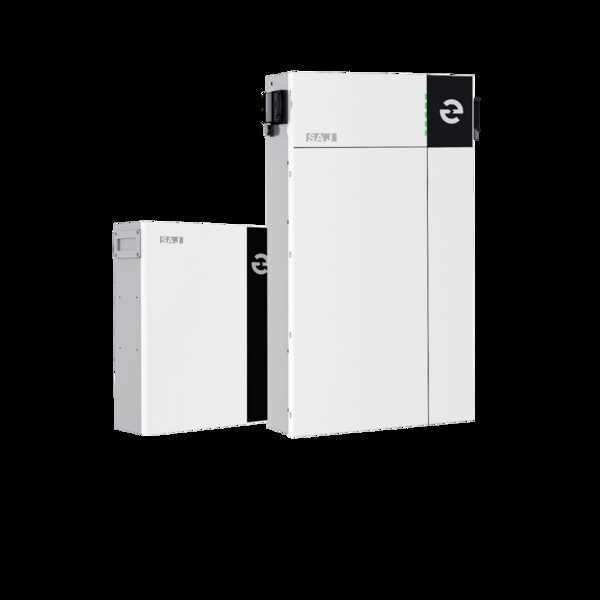
The HS3 Series is the newest and the most integrated. Launched in March 2025, it combines solar inverter, EV charger, battery PCS, battery pack, backup and energy management system in one unit. SAJ describes the B2 and B3 low-voltage batteries and the HS2 and HS3 all-in-one systems as following a standard modular design for easy sizing, and states that they use premium LiFePO4 cells10. The HS5 Series sits alongside with a 314 Ah cell and five-layer battery protection11.
The HS2 series is quoted at 3 to 10 kWh nominal capacity6, and the iPower HES1-3K/3K6/5K/6K S2 series is described as an integrated residential solar-storage-charging solution with expandable battery capacity up to 35 kWh per unit12. The AS2 and AS3 are AC-coupled storage systems, with the AS3 described as scalable13.
| Series | Type | Key published figure |
|---|---|---|
| H2 | Hybrid inverter, single and three phase | Variants 3-6K-S to 10-30K-T2 |
| H2 LV | Low-voltage hybrid inverter | Generator and smart load access14 |
| HS3 | Six-in-one home storage system | Launched March 2025 |
| HS5 | All-in-one storage | 314 Ah cell, five-layer battery protection11 |
| HS2 | All-in-one storage | 3 to 10 kWh nominal capacity6 |
| AS2 | AC-coupled storage | 10ms or less UPS switchover4 |
| AS3 | AC-coupled storage | Scalable capacity13 |
| M2 | Smart micro inverter | Rapid shutdown connectivity9 |
Hybrid operation: grid-tied with backup when the grid fails
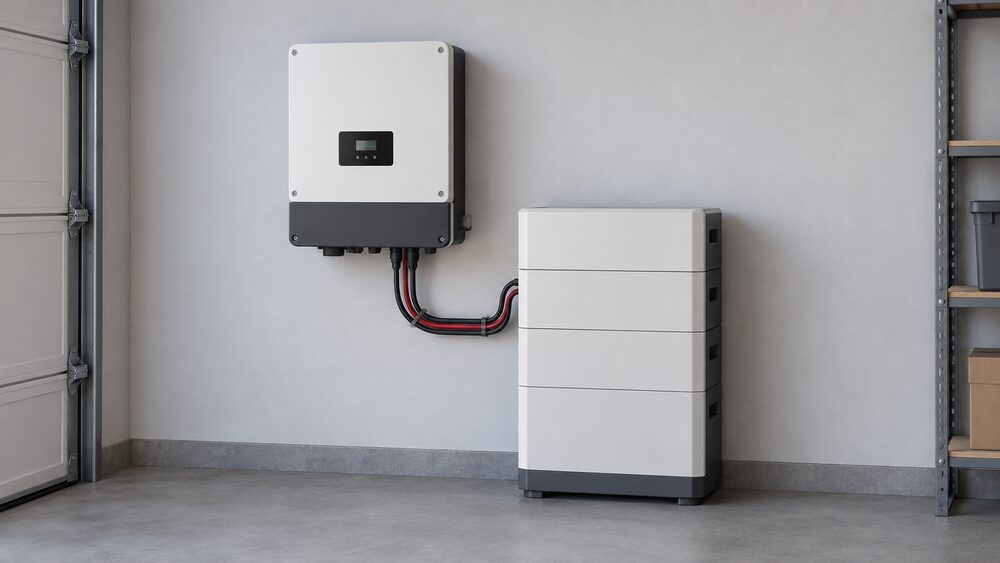
A hybrid inverter's defining feature is that it manages a solar array, a battery and a backup circuit together. SAJ describes its residential hybrid inverters as supporting both grid-tied and backup operation1, which is the standard architecture: the system runs parallel to the grid in normal conditions, importing when the battery is empty and exporting surplus when it is full, and switches to an isolated backup circuit when the grid goes down.
That backup capability is what separates a hybrid inverter from a plain solar inverter. SMA, another maker, states the principle plainly: when paired with a battery storage system, hybrid inverters ensure households have access to electricity in case of a grid failure15. Fronius lists a grid back-up function as a feature of its DC-coupled battery storage solution16. SAJ's own low-voltage H2 series is described as offering uninterrupted power during outages with smart energy management and reliable backup power14.
The limits are structural rather than brand-specific. Backup covers the circuits wired to the inverter's backup output, not the whole house unless the installation is designed that way. The inverter must be able to island the property from the grid, which is a wiring and certification matter handled at installation. And the battery has to hold charge at the moment the outage begins, which depends on how the system is programmed and on the weather in the preceding days.
For a household, this is the difference between a battery that only shifts cheap electricity to expensive hours and one that also keeps the lights on. Both reduce grid dependence; only the second changes what happens during a power cut. The wiring, the protected circuits and the changeover behaviour are set at installation, so they are questions for the installer rather than settings a householder can change later.
UPS-level backup: how quickly power switches over
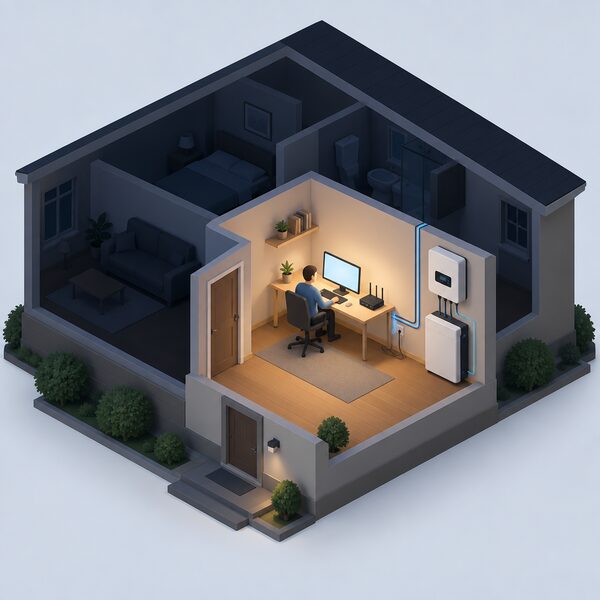
The figure SAJ publishes for changeover is on the AS2: a UPS switchover time of 10 milliseconds or less, described as ensuring uninterrupted power during outages4. That is the gap between the grid failing and the backup supply taking over. Ten milliseconds is short enough that most equipment does not notice it, which is why the term UPS, uninterruptible power supply, is used rather than the longer changeover times associated with some generator or manual transfer arrangements.
The practical consequence is that a desktop computer, a router, a fridge or a boiler control board will typically ride through the switch without rebooting. Equipment with a sensitive power supply or a long internal start-up sequence may still reset, and anything not wired to the backup circuit is unaffected by the inverter either way. The 10 millisecond figure applies to the AS2 specifically; SAJ does not publish an equivalent changeover figure for the H2 or HS3 ranges on the pages reviewed.
Backup duration is a separate question from backup speed. A 10 millisecond switchover into a battery that is nearly empty buys very little. How long the backup lasts depends on the battery capacity fitted, the load connected to the backup circuit, and the state of charge when the outage begins. SAJ's HS2 series is quoted at 3 to 10 kWh nominal capacity6, which gives a sense of the smallest systems in the range, while the iPower series is described as expandable up to 35 kWh per unit12.
H2 series: whole-home backup, generator input and indoor or outdoor siting
The H2 family carries the features that matter for a household planning backup. The low-voltage H2 series is described as supporting generator and smart load access14, and the split-phase variant adds compatibility with generator input for backups and support for whole home backup power5. Generator input matters where a household already has a standby generator or wants one as a longer-duration fallback behind the battery.
Siting is flexible on paper. The H2 series smart low-voltage split-phase hybrid inverter is described as supporting indoor and outdoor installation5. That widens the options for a property without a garage or utility room, though outdoor siting brings its own considerations around weather, temperature and access for maintenance. The HS5 Series is described as offering whole-home backup, switching seamlessly to backup power during blackouts or system maintenance and keeping critical appliances such as refrigerators, air conditioners and water heaters running11.
The split-phase variant also supports storing energy from a diesel generator5, which is an unusual feature in a domestic hybrid inverter and points to markets where generator backup is common. In a UK context, the generator input is more likely to be relevant on a rural property with an existing standby set than on a standard grid-connected home.
Whole-home backup is a design outcome, not a product specification. It requires the backup output to be sized for the whole installation, which in turn requires an inverter and battery combination large enough to carry the peak load. SAJ's H2 model variants run from 3-6K-S up to 10-30K-T2, so the larger three-phase units are the ones that could carry a whole house. The smaller single-phase units are better matched to a protected circuit list.
Battery compatibility: lithium storage with high-voltage and low-voltage options
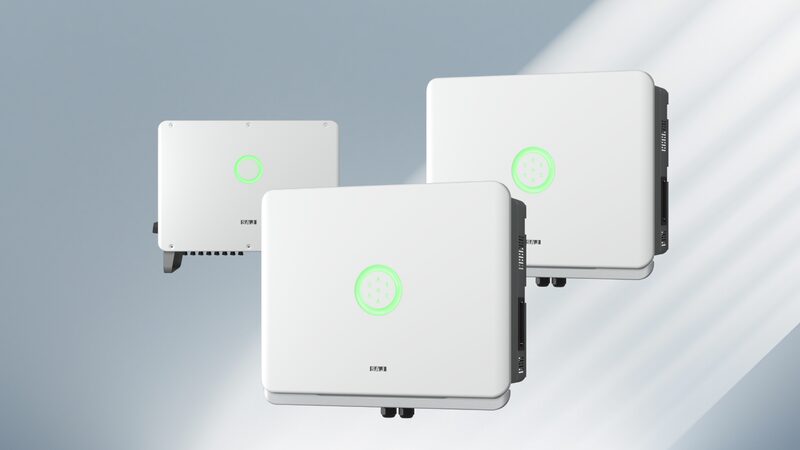
SAJ states that its hybrid inverters are compatible with lithium battery energy storage1, and the low-voltage H2 series is described as compatible with both LFP and lead-acid batteries5. That dual compatibility is a legacy feature: lead-acid remains in use on off-grid and rural systems where a household is replacing an older bank, while LFP is the chemistry used across SAJ's own storage products.
SAJ's own batteries use LiFePO4 cells. The B2 and B3 low-voltage batteries and the HS2 and HS3 all-in-one systems are described as using premium LiFePO4 cells for peak performance10. The HS5 Series is quoted with a 314 Ah cell and five-layer battery protection11. The B3 series low-voltage battery also supports remote firmware upgrades where paired with a compatible SAJ inverter8.
What SAJ does not publish on the pages reviewed is a list of approved third-party battery brands. Compatibility with lithium storage is stated in general terms, and the low-voltage H2 accepts lead-acid as well, but the specific battery models tested and approved are not named. That matters because hybrid inverters communicate with batteries over a control protocol, and a pairing that is not on the maker's list may work electrically while losing the detailed battery management data the inverter needs.
For a household, the practical route is to buy the battery and inverter as a matched pair from the same supplier, or to ask the installer for the manufacturer's compatibility list before committing. The wider question of which chemistry suits which home is covered in home battery chemistries, and the difference between AC and DC coupling is set out in AC-coupled and DC-coupled battery systems.
Single-phase or three-phase: which system fits which home
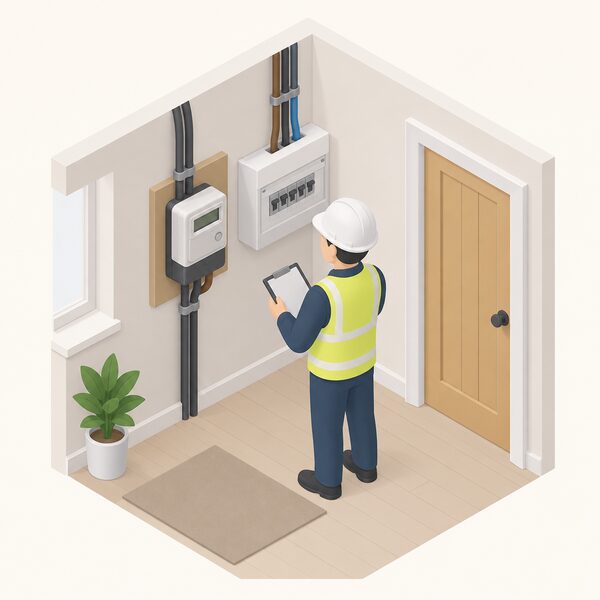
Most UK homes have a single-phase supply, and the H2 range covers that with the 3-6K-S and 5-10K-S variants2. Three-phase supplies, more common in larger properties and in homes with a high-capacity connection, are served by the 5-10K-T and 10-30K-T variants2. The H3 Series EK60 is described as three-phase and as adding energy storage with reliable whole-home backup7.
The choice is not a preference. It follows the supply at the property, which the installer confirms at survey. A three-phase inverter on a single-phase supply is not an option, and a single-phase inverter on a three-phase supply limits what the system can do across the phases. SAJ's own model numbering makes the distinction explicit in the suffix, so the range is legible once the supply type is known.
Three-phase matters more as loads grow. A home with a heat pump, an EV charger and an electric cooking load draws more current than a single-phase supply comfortably carries, and a three-phase connection spreads that load. The larger H2 variants and the H3 EK60 are aimed at that situation. For a standard gas-heated home with a modest solar array, the smaller single-phase units are the relevant part of the range.
The wider question of matching a battery system to a property type is covered in which homes suit battery storage, and the process of confirming supply type and system design at survey is set out in home battery installation.
Monitoring: 24/7 real-time visibility of home energy
SAJ describes 24/7 real-time home energy monitoring as a feature across several products: the H2 Series2, the AS24, the H2 series smart hybrid inverter17 and the HS2 series6. The same phrase appears on each page, which suggests a common monitoring platform across the residential range rather than a feature unique to one product.
What that means in practice is a live view of generation, consumption, battery state and grid flow through an app or portal. For a household, the value is in seeing whether the battery is actually charging from solar, whether the system is exporting when it should be storing, and how much of the day's demand is being met without importing. Smart meters provide a comparable near-real-time view of total consumption18, but they do not break the figure down by source the way an inverter platform does.
The dependence this creates is worth naming. A cloud platform requires a working internet connection, a manufacturer's servers and an app that continues to be supported. If any of those fail, the system still runs, but the visibility stops. Local access at the inverter, where it exists, is the fallback. The general question of app access and local data is covered in monitoring a home battery.
Monitoring also underpins tariff work. Time-of-use tariffs reward shifting consumption to cheaper periods, and several providers offer them, including British Gas, E.ON Next and EDF Energy19. Without monitoring data, a household cannot tell whether the battery is being charged at the right times. The interaction between storage and tariff structure is covered in stacking a home battery with smart tariffs.
Fault codes, warranty registration and support: what is not published
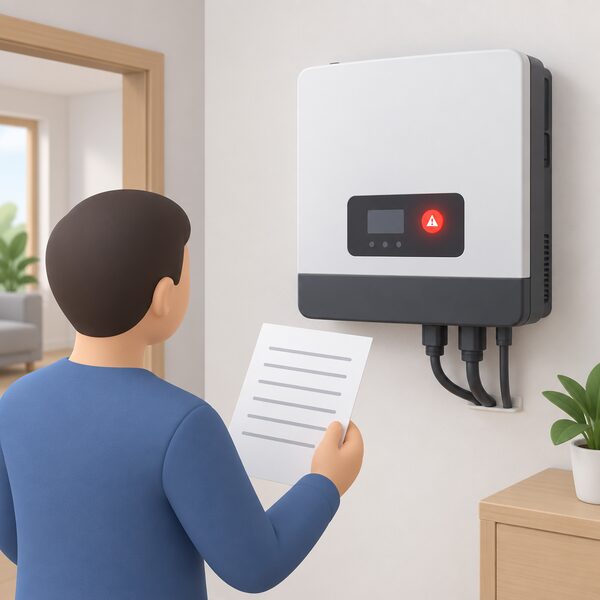
Three practical questions about SAJ ownership have no answer in the material reviewed for this page, and that absence is itself the finding. SAJ does not publish a fault code list, a warranty registration procedure or a UK support contact on the pages examined. A household buying the brand is therefore dependent on the installer for all three.
On fault codes, the general position is that they are not standardised. Fault codes are not standardised across brands, models or firmware versions, and the same number can have different meanings on different inverter brands and models20. A red fault light alone does not identify the problem; the display or app message alongside it carries the detail20. One common cause of inverter faults is grid voltage mismatch21, which is a network issue rather than a hardware failure.
On warranty registration, the only dated figure available comes from a UK grant scheme rather than from SAJ. The Barcud Solar Panel Installation Scheme specification requires inverter product registrations to activate guarantees and warranties to be completed within 48 hours of commissioning22. That is a scheme rule, not a SAJ term, but it shows the kind of deadline that applies where a grant is involved.
For comparison, other makers do publish these things. SMA states that its hybrid inverters can operate both with and without a battery, and that a battery can be added at any time without an additional battery inverter15. That is the kind of clarity a household can plan around. Where a maker does not publish it, the installer becomes the single point of both information and support, and that relationship outlasts the installation itself.
What SAJ storage means for household independence
A SAJ hybrid inverter with battery storage does three things for a household's position. It reduces the electricity imported from a supplier by storing solar generation for evening use. It keeps a defined set of circuits running when the grid fails, with changeover quoted at 10 milliseconds or less on the AS24. And it gives a live view of where the household's energy is going2.
What it does not do is remove dependence. The property stays connected to the grid and to a supplier for the periods when generation and storage fall short. The system depends on an installer for commissioning, fault diagnosis and warranty work, and on a manufacturer whose UK service route is not documented in the material reviewed. Monitoring depends on a cloud platform, an internet connection and an app.
That is the honest position for any hybrid inverter, not a criticism of SAJ specifically. The brand-specific part is the thinness of the published UK information: no price, no distributor, no support contact, no fault code list, no warranty registration route. A household weighing SAJ against a maker with a visible UK presence is weighing the hardware against the support behind it.
For the wider picture, home battery storage covers the technology and the market as a whole, and home batteries and household energy independence sets out what storage can and cannot change about a home's relationship with the grid. The question of what keeps running during an outage is covered in battery backup in a power cut.
Sources22 cited
- Residential Hybrid Inverter, SAJ
- H2 Series, SAJ
- Residential Smart Meters, SAJ
- AS2 Series, SAJ
- H2 LV Split Phase Series, SAJ
- HS2 Series, SAJ
- H3 Series EK60 Smart Hybrid Inverter Solutions, SAJ
- B3 Series, SAJ
- M2 Series Smart Micro Inverter, SAJ
- How Many Batteries Does a Home Need, SAJ
- Home Energy Storage System HS5 Series, SAJ
- iPower HES1-3K/3K6/5K/6K S2 Series, Livoltek
- AS3 Series, SAJ
- H2 LV Series, SAJ
- Hybrid Inverters, SMA
- Storage Solutions Residential, Fronius
- H2 Series Smart Hybrid Inverter, SAJ
- Benefits of Smart Meters, Smart Energy GB
- Time of Use Tariffs Explained, Which?
- Solar Inverter Fault Codes, SolaX
- Managing Voltage Changes in Your Property, Electricity North West
- Barcud Solar Panel Installation Scheme Specification, Sell2Wales