
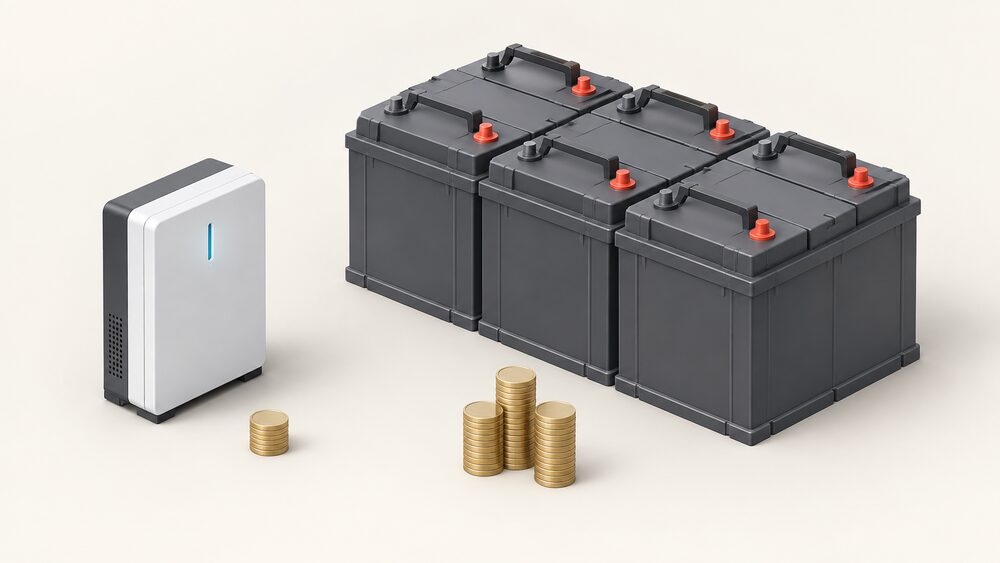
Two chemistries dominate the conversation about storing solar power at home: lithium-ion and lead-acid. Lithium-ion is the main type for domestic use and the most common and popular choice for residential solar storage, while lead-acid remains a common choice for residential projects but is less popular1. The practical difference is not subtle. Lithium-ion batteries weigh about two thirds less than lead-acid for comparable storage, discharge more of their stored energy, and last far longer2.
The trade-off is money. Lead-acid batteries have a lower price, making them a viable option for tight budgets, and are described as the cheapest among the main types3. Lithium-ion batteries could have a greater upfront cost, but could offer greater long-term savings2. Lead-acid is cheaper upfront but ends up costing more over time due to shorter life, lower usable capacity and required maintenance5.
For a household weighing energy independence, the choice shapes how much of your own generation you can actually keep. A lead-acid bank stores less usable energy per pound spent and needs replacing sooner; a lithium-ion battery stores more, loses less and lasts longer, but ties the household to a manufacturer's warranty terms and, in most cases, an app. This page sets out the cost, popularity, safety and lifespan evidence behind both.
Lithium-ion vs lead-acid: the core difference for a home solar setup
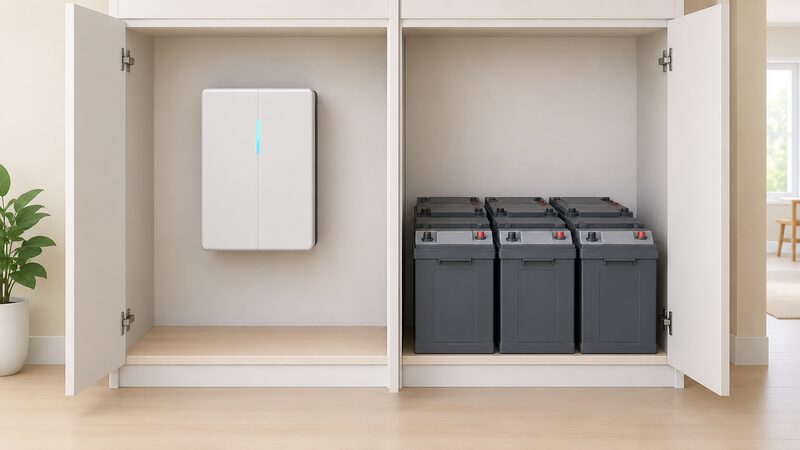
The two chemistries sit at opposite ends of a design trade-off. Lithium-ion batteries typically have higher energy density and capacity than lead-acid batteries of the same size, so a given wall space or cupboard holds more usable kilowatt hours7. They also offer a higher depth of discharge, longer lifespan, faster charging and lower self-discharge8. Older-style lead-acid batteries are physically more significant for a comparative battery capacity than the more modern lithium-ion ones, meaning a lead-acid bank of the same nominal capacity takes up considerably more room9.
That difference in usable capacity matters more than the headline number. A lead-acid battery that can only be discharged part way before its life is shortened delivers less of its rated capacity in daily cycling, which is why lead-acid is described as suitable for smaller solar setups with less excess power, while lithium-ion is described as suitable for all home solar systems10. If a household generates a large surplus in summer and wants to shift most of it to the evening, lead-acid's lower usable capacity and slower charging work against that.
Compatibility is not the barrier. Hybrid solar inverters commonly accept lithium-ion, lithium iron phosphate (LiFePO4) and lead-acid batteries, so the choice is a system design decision rather than a wiring constraint11. Modern home batteries use lithium iron phosphate chemistry, which lasts longer and is safer for indoor use than older lithium chemistries12.
Cost: why lead-acid is the more affordable option
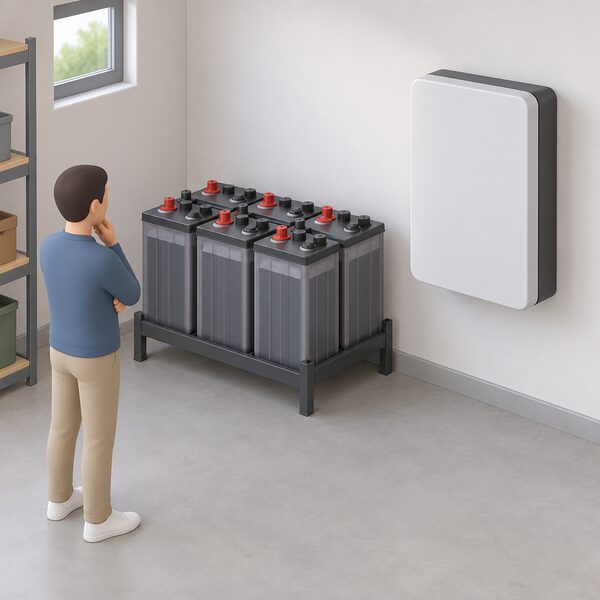
Lead-acid wins on the purchase price and loses on the total cost of ownership. Lead-acid batteries have a lower price, making them a viable option for tight budgets, and are the cheapest among the main battery types3. Lithium-ion batteries are typically more expensive than lead-acid, and could have a greater upfront cost2. That upfront gap is the single reason lead-acid survives in the residential market at all.
The gap narrows once replacement and usable capacity are counted. Lead-acid batteries are cheaper upfront but end up costing more over time due to shorter life, lower usable capacity and required maintenance5. A lead-acid bank that needs replacing after five to seven years has to be bought again within the life of a single lithium-ion battery quoted at 10 to 15 years or 5,000 to 10,000 cycles3. Maintenance is a further cost in time: lead-acid needs attention that lithium-ion does not.
There is a countervailing claim in the market. One maker states that lithium-ion batteries are the most affordable option for solar energy storage today, on the basis of being affordable, widely available and proven13. That sits against the independent position that lithium-ion could have a greater upfront cost than lead-acid2. The two statements are not strictly contradictory: one is about value across the life of the system, the other about the price at the till. For a household comparing quotes, the useful question is the cost per usable kilowatt hour per year, not the invoice total.
Prices for home batteries in the UK are installer-quoted and vary with capacity, inverter choice and installation, so no single figure covers the market. The VAT treatment of domestic energy storage is a live policy question, with industry bodies calling for a cut14.
Popularity: why lithium-ion dominates UK residential installations
Lithium-ion is not merely the newer option; it is the default. Lithium-ion batteries are the most common and popular choice for residential solar storage, and lithium-ion is the most popular for residential use4. Lead-acid solar batteries are another common choice for residential projects, but they are less popular than lithium-ion3. The market has effectively settled.
The reasons are the ones set out above: energy density, usable capacity, lifespan and maintenance. Lithium-ion is more efficient, has a longer lifespan and requires less maintenance than lead-acid, making it the preferred choice for home storage15. A household specifying a system today is choosing between lithium-ion products, not between chemistries, in most cases.
The wider battery ecosystem reinforces the trend. Lithium-ion batteries are the most common type of battery for electric vehicles, and most current EVs use lithium ion or lithium polymer batteries because of the high energy density that can be achieved16. Domestic energy storage sits in the same supply chain, and the same chemistry, as transport and grid-scale storage14. Volume production for vehicles and grid storage has driven cost down and availability up.
Brand choice among UK owners is concentrated. A Which? survey of solar panel battery owners found the most popular brands were Tesla, Solax, Powervault and LG18. All four are lithium-ion system makers. That survey dates from 2019, so it reflects the early residential market rather than today's, but it shows how quickly lithium-ion became the only serious option for a mainstream installation.
For a household, the practical consequence is that lead-acid is now largely an off-grid, cabin, boat or budget-constrained choice rather than a mainstream grid-tied one. The lead-acid, AGM and gel batteries page covers where those systems still make sense, and the home battery chemistries page sets out the lithium variants sold in the UK.
Safety: lithium-ion fire risk and the UK regulatory response
Lithium-ion batteries store a great deal of energy in a small space, and that is the source of both their advantage and their risk. The primary risk is thermal runaway6. Non-compliant or incompatible battery components, and the use of batteries outside their safe design parameters, can lead to thermal runaway, causing fires19. Even if a fire is extinguished, it is common for the fire to start again, which is why fire services treat these incidents differently from conventional electrical fires6.
Heat is a trigger. High temperatures can cause batteries, especially lithium-ion, to overheat and potentially catch fire20. Lithium-ion batteries also require protection from impact and water ingress21. The larger the battery, the larger the danger, and some of the largest lithium batteries found in UK homes are in mobility vehicles rather than wall-mounted storage22.
The regulatory response is still forming. A Lithium-ion Battery Safety Bill was introduced in the House of Lords by Lord Redesdale on 29 July 2024 as HL Bill 8, session 59/123. Its first purpose is to better protect householders and communities from the dangers of lithium-ion batteries23. The bill as drafted would require sellers to display a prominent warning about the dangers of improper disposal and to attach information on cell chemistry and safe disposal as part of the sale23. It also contains market restrictions for electric-powered micromobility vehicles and their batteries, tied to a conformity assessment list published by the Secretary of State23.
Alongside the bill, the government has consulted on a new product safety framework, identifying non-compliant or incompatible battery components as a route to thermal runaway19. The All-Party Parliamentary Group for Electrical Safety has secured a commitment that lithium-ion battery fires will be recorded under the new UK fire reporting system, which matters because poor incident data has hampered regulation24. The charity Electrical Safety First runs a Battery Safety Campaign calling for a third-party safety assessment, conducted by a government-approved body, for all e-bikes, e-scooters and their lithium-ion batteries before they enter the UK market25.
"The primary risk is thermal runaway."
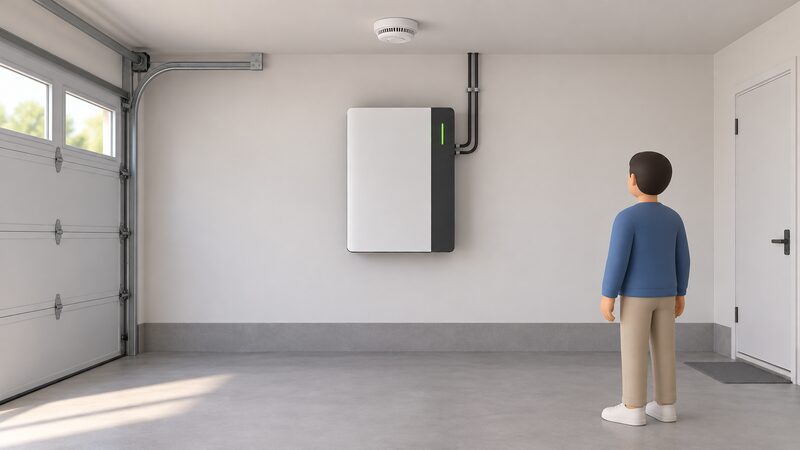
Most of this regulatory activity concerns micromobility batteries rather than home storage, and the distinction is worth holding on to. A fixed home battery installed to the relevant standards, with a battery management system and correct siting, is a different proposition from a cheap e-bike pack charged in a hallway. The home battery fire safety page covers containment, siting and fire service guidance for installed systems, and what is thermal runaway explains the mechanism.
Which battery chemistry fits which household
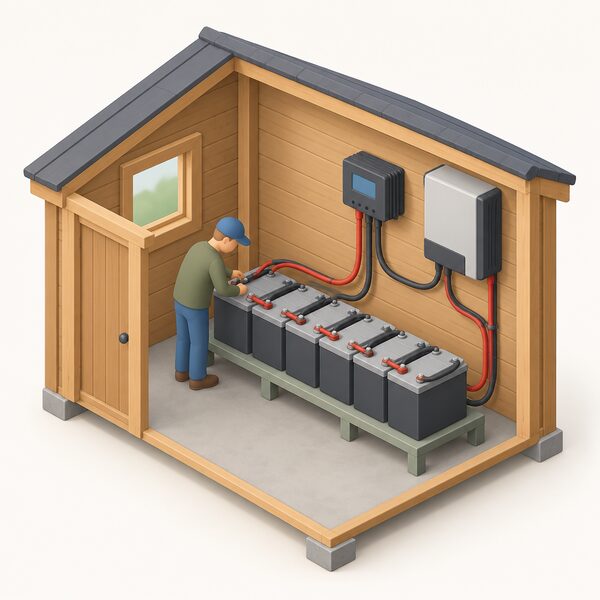
The choice comes down to how much surplus power the household generates, how much space is available, and how long the system is expected to serve.
Lead-acid suits smaller solar setups with less excess power, where the budget is tight and the storage requirement is modest10. It is also the traditional choice for off-grid and remote installations where a large, heavy bank in a shed or outbuilding is acceptable and the lower upfront price matters more than the footprint. The off-grid battery systems page covers that use case in detail. The penalties are a shorter lifespan, generally five to seven years before replacement, and lower usable capacity3.
Lithium-ion suits all home solar systems, and most commercial ones, with improved energy density and efficiency and a longer lifespan that offsets the higher upfront cost10. For a grid-tied home with a typical roof array, it is the chemistry the market supplies and the one installers quote. The battery capacity and usable capacity page explains why nominal and usable figures differ, and battery cycle life and degradation covers what to expect over the years.
One route is closed for now. Plug-in solar becomes legal for UK homes from 27 August 2026, but the draft rules will not allow use with batteries26. Plug-in solar panels should not be connected via extension leads, cable reels, multiway adaptors, travel adaptors or plug-in RCD adaptors, and must never be connected to lighting circuits or circuits supplying fixed equipment such as ovens and hobs28. Batteries for plug-in solar are already being developed for the UK market, but the current rules do not permit them30. A household wanting battery storage therefore needs a fixed installation, not a plug-in kit.
What the chemistry choice means for energy independence
A battery's contribution to household energy independence is measured in how much of your own generation you keep and how much grid import you avoid. On that measure, lithium-ion's higher usable capacity, higher depth of discharge and lower self-discharge translate directly into more self-consumption per kilowatt hour installed8. Lead-acid's lower usable capacity means a larger nominal bank is needed for the same delivered energy, and its shorter life means the independence it provides has to be rebuilt sooner.
Neither chemistry removes dependence. A grid-tied home battery still relies on the grid for winter top-up, on a supplier for import and export arrangements, and on the manufacturer for warranty support, monitoring apps and replacement parts. A lead-acid bank adds a further dependence on regular maintenance and on the installer or owner understanding how to look after it. The home batteries and household energy independence page sets out where the boundaries of self-sufficiency actually fall.
The safety picture is part of the independence calculation too. A chemistry that requires protection from impact and water ingress, and that can reignite after a fire is extinguished, imposes siting and containment requirements that shape where a system can go in a home6. Those requirements are manageable in a fixed installation designed to the relevant standards, and they are one reason the market has converged on lithium iron phosphate for indoor home storage12.
For most UK households with a roof array and a grid connection, the evidence points to lithium-ion as the chemistry the market supplies, with lead-acid retained for smaller, off-grid or budget-constrained installations. The home battery storage guide covers the wider system design questions, and how long does a home battery last covers what to expect from a lithium-ion unit over its service life.
Sources30 cited
- Solar battery storage guide: is a home battery worth it?, The IAA, 2026-09-20
- Electrical energy storage systems, Flexi-Orb, 2025-04-22
- What type of battery is best for solar?, Marley, 2026-09-17
- Solar panel battery storage, Fuse Energy, 2026-08-13
- How many batteries does a home need?, SAJ, 2026-07-22
- Battery breakdown, Electrical Safety First, 2026-09-17
- Battery capacity, EcoFlow, 2025-06-16
- How do solar batteries work and store energy, So Energy, 2024-06
- How many storage batteries are needed to power a house, Duracell Energy, 2024-05-25
- Solar battery, E.ON Next, 2026-09-17
- How choosing the right hybrid inverter can reduce household solar panel costs, LuxPowerTek, 2026-07-15
- Solar battery cost, BLUETTI UK, 2026-08-03
- Best batteries for solar system, LuxPowerTek, 2025-09-25
- REA and industry call for domestic energy storage VAT cut, REA, 2020-12-22
- Home solar battery storage solutions, SolaX Power, 2025-06-04
- Electric vehicle battery basics, Energy Saving Trust, 2025-09-16
- An introduction to battery electric vehicles, Cenex, 2021-05
- Solar panel battery popularity is booming: should you buy one?, Which?, 2019
- The UK's new product safety framework, GOV.UK, 2026-03-31
- Be summer ready, Electricity North West, 2026-09-19
- How e-bike and e-scooter design can be improved, Electrical Safety First, 2026-09-17
- Lithium-ion batteries, North Wales Fire and Rescue Service, 2026
- [Lithium-ion Battery Safety Bill [HL]](https://bills-api.parliament.uk/api/v1/Publications/56005/Documents/4984/Download), UK Parliament, 2024-07-29
- Westminster, Electrical Safety First, 2026-09-17
- Battery safety campaign, Electrical Safety First, 2026-09-17
- Plug-in solar explained, Low Carbon Hub, 2026-07-27
- Industry welcomes plug-in solar progress, Solar Energy UK, 2026-06-17
- Plug-in solar panels, Electrical Safety First, 2026-09-17
- Plug-in solar consumer guide, Electrical Safety First, 2026-08
- Plug-in solar to become legal in the UK, Which?, 2026-04-24
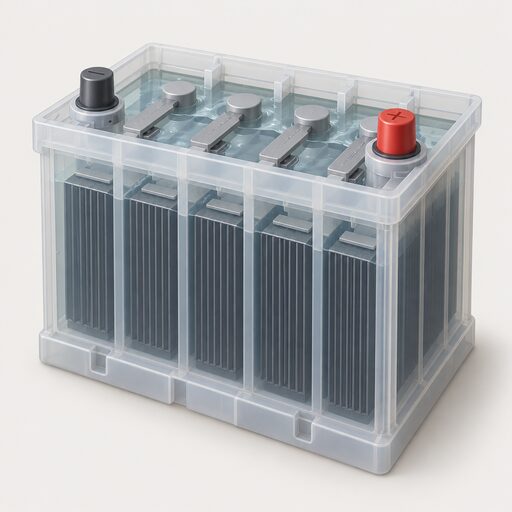 Lead-Acid, AGM and Gel BatteriesAre lead-acid batteries still worth using for solar or an off-grid home?
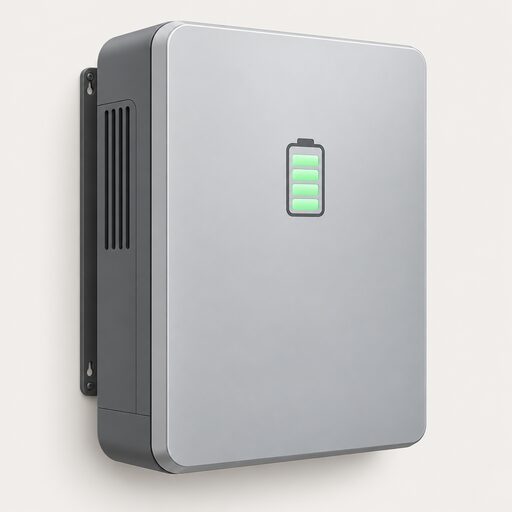 The Full Home Batteries GuideA home battery stores cheap or solar power for later, but will it really cut your bills enough to be worth it?
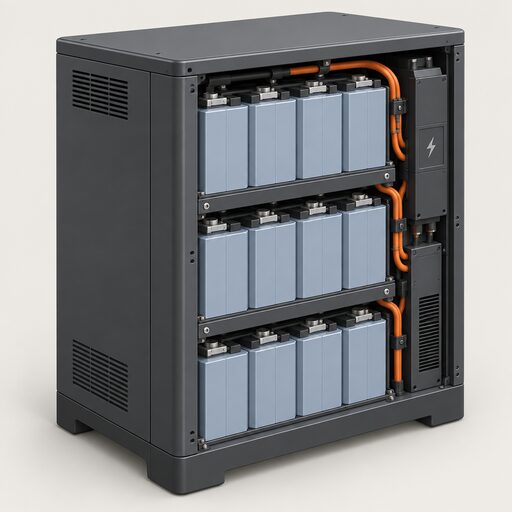 Sodium-Ion Home BatteriesSodium-ion cells are being offered for home storage in the UK, but almost all published performance data still comes from makers.
 Battery ChemistriesWhich home battery lasts longest, and is it the safest?
 Power Station BatteriesWhat kind of battery is inside a portable power station, and does it matter?
 Lithium Battery SafetyLithium batteries power phones, e-bikes, scooters and home storage, and any of them can catch fire.